

Games that take place within a single enclosed space often have a much stronger emotional impact than large-scale projects with dozens of locations. The limited scope allows developers to focus on details, atmosphere, and a sense of personal presence, turning every little thing into part of the overall narrative. It is due to this chamber approach that such projects involve the player more deeply and create an almost theatrical sense of participation in what is happening.
It’s enough to recall Papers, Please, a cult indie project where the routine work of a border guard suddenly turns into a tense moral drama. A minimum of space, a static interface, and repetitive actions did not prevent the game from holding attention, but rather increased the pressure of choice and emotional response. Unsurprisingly, over time, she gained a lot of ideological followers inspired by this unique game design solution.
Against this background, Strange Horticulture looks like a respectful dialogue with the legacy of Lucas Pope, rather than an attempt to mechanically copy his formula. The project really evokes associations with the works of Lucas Pope, but instead of direct imitation it offers its own path: a more mysterious atmosphere, an emphasis on research, work with objects and a gradual immersion into a dark, almost mystical story. It’s not speed and action that are important here, but attentiveness, logic, and a sense of mystery that slowly but surely captures the player.
Table of Contents
Strange Horticulture Free Steam Account
The action takes place in the gloomy town of Andermere, where a shop with the telling name “Mysterious Plants” lurks on one of the quiet streets. The main character inherits this place after his uncle’s death, and with it comes the responsibility for a strange shop filled with magical flora. You will not have to master the basics of this unusual craft alone: the player literally becomes the protagonist’s partner, step by step immersing himself in the structure of the world, its internal logic and hidden rules on which the local reality is based.
From the very first minutes, the game interface makes it clear that this is not just a trading simulator, but a verified system of interactions where every detail matters. The screen is designed so that all the information is at hand, and over time you begin to perceive it as a full-fledged workspace of an herbalist. Visually and functionally, it is divided into several key zones:
-
shelves with plants at the top of the screen, where the assortment looks modest at first, but gradually expands;
-
a window with visitors on the right, through which the residents of Andermere enter the store with their stories and problems;
-
a desktop at the bottom with a drawer where a map, a magnifying glass, notes and the mainstay of gameplay are stored — an encyclopedia.
It is she who fills in new pages as she progresses, recording the names of plants, their properties and visual features, which directly affects the depth of immersion and the success of solutions.
Since trading in this store is far from commonplace, customers ask for help for very atypical reasons. Someone complains about muffled voices near the ceiling and is looking for a remedy to sharpen their hearing, another chooses a plant “for work”, focusing only on vague symptoms. Sometimes the requests sound particularly gloomy, such as buying flowers for your own grave. The atmosphere highlights the eccentricity of the locals: there are fanatics and openly disturbing characters among them, which increases the sense of hidden threat and creates a tense emotional background.
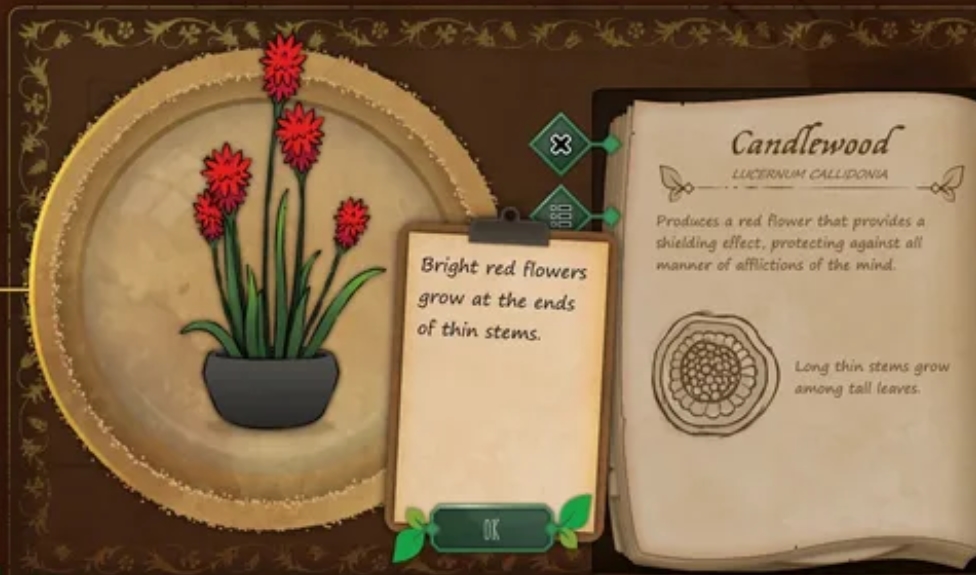
Most often, the main character intuitively understands which plant is required by the visitor, even if he does not pronounce its name directly. Next, the analytical part of the gameplay begins: you need to open the encyclopedia, compare the customer’s complaints with the descriptions, study the images and capture the details. Sometimes the hints are given by text — the color of the petals or the shape of the leaves, and sometimes you have to rely solely on visual hints. Mistakes do not go unnoticed here: an incorrectly issued product is counted as a miss, and after several failures, the game unobtrusively punishes you with a mini-test before returning you to the counter. This approach is not annoying, but on the contrary, it disciplines and teaches mindfulness.
Choose from a wide variety of genres in our free steam accounts section!
Situations where the customer himself does not fully understand what exactly he needs bring special pleasure. In some cases, he offers several options to choose from, in others he is limited to a couple of vague phrases. Then you have to analyze not only the encyclopedia, but also the context of his words, building a logical chain. At such moments, the gameplay is unexpectedly reminiscent of Return of the Obra Dinn, where the truth was made up of small clues and careful conclusions. Each successful decision evokes a similar sense of satisfaction—a rare sense of intellectual victory, enhanced by an atmosphere of mystery and unhurried exploration.
Gameplay and exploration in Strange Horticulture
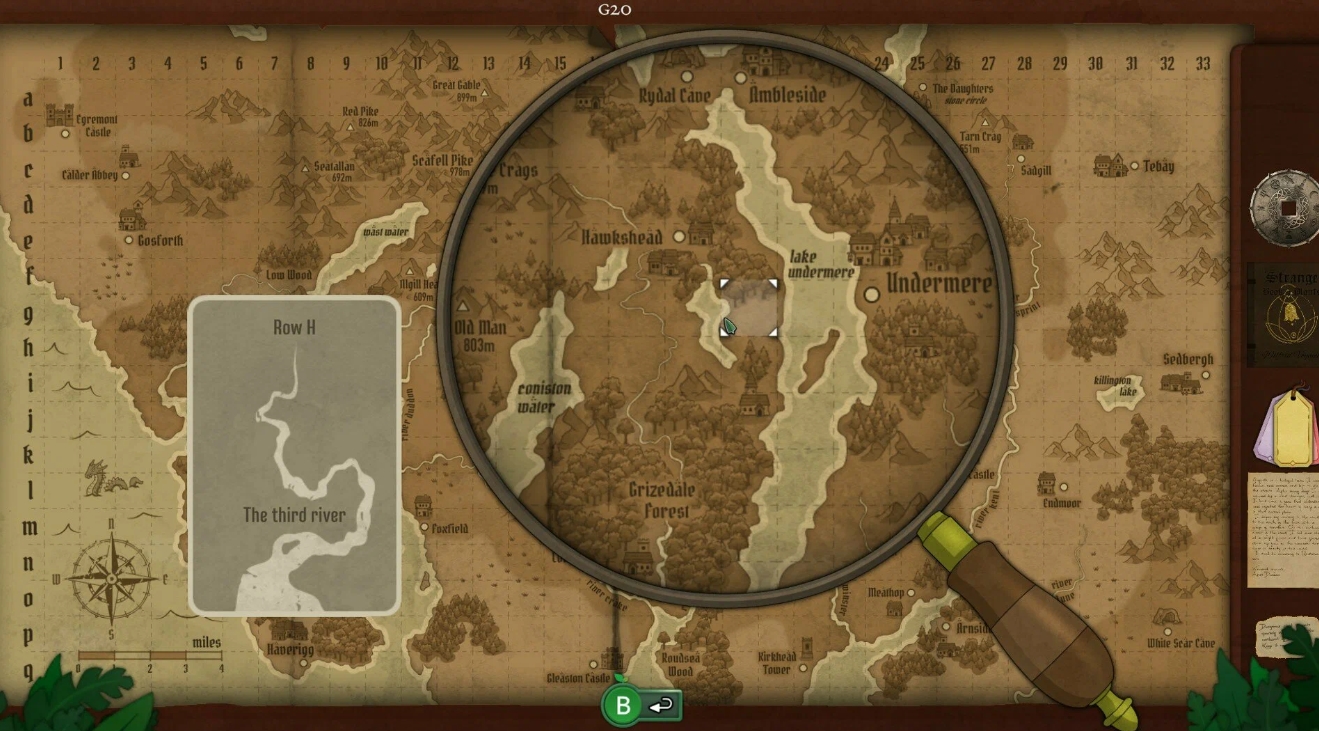
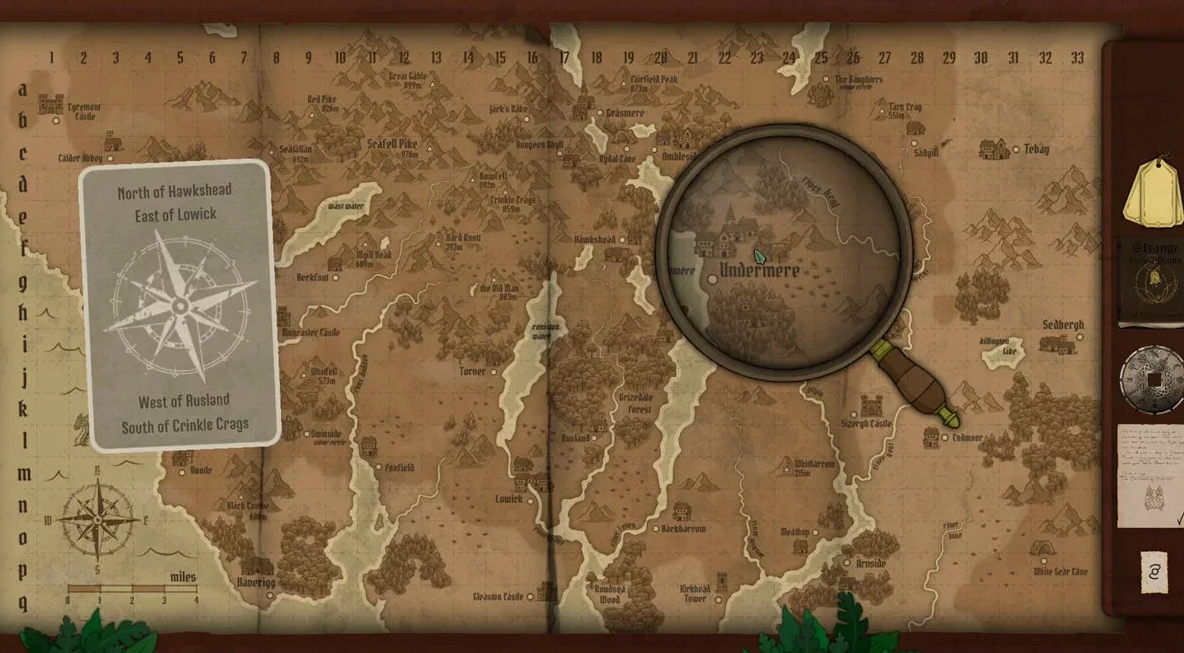
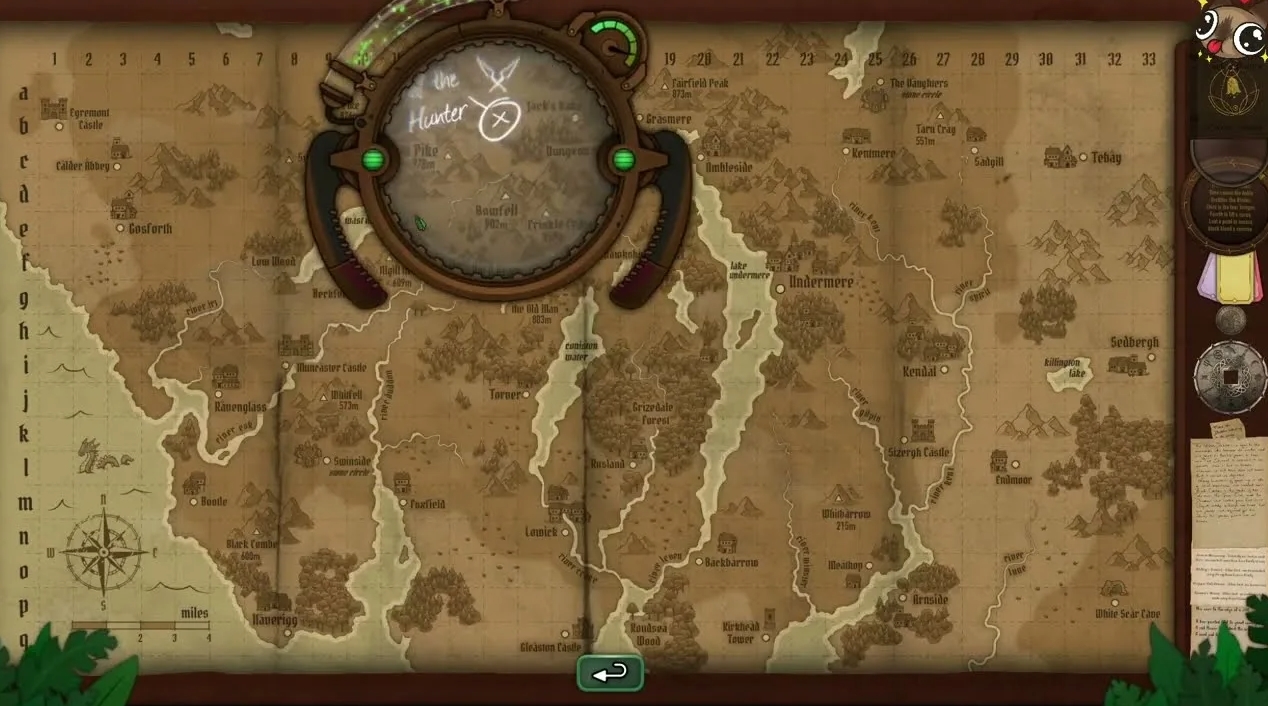
However, Strange Horticulture is not limited to the role of a camera simulator of a shop — the game consistently expands the scope with new puzzles and layers of interaction. The very card hidden in the desktop drawer turns out to be one of the key progression tools. Either the visitor will hand over a piece of note, or a vague hint will appear between working days — and in each such hint there is an encrypted description of the place where you can find a rare plant. These signals should not be ignored: the demand for exotic flora is growing rapidly, and without regular outings, the store simply will not be able to meet customer needs.
At the same time, the hero never physically leaves the shop — the travels here are presented in a deliberately abstract form. The player selects a point on the map, and then reads a short text report about how the character climbed a slope or explored a dark cave. It looks a bit paradoxical: a customer enters the store, waits patiently at the counter while you are “absent”, and then still calmly waits for his order. Even more arbitrary are the moments when a certain plant is required to access a location — it is simply taken from the shelf. But these rough edges do not destroy the integrity of the experience and do not interfere with immersion in the atmosphere.
The pace that the game sets deserves special mention. Timers and time pressure are completely absent here: customers are not nervous, there are no deadlines, and the working day lasts exactly as long as the developers intended. Even the watering can in the store does not require regular use — it serves only as a formal element of the progression. This approach creates a rare sense of calm and allows you to focus on analysis, logic and careful work with details, without being distracted by conditional hours and queues.
It is this unhurried rhythm that enhances the atmosphere and turns every transaction into a small investigation. When the plant collection grows to dozens of specimens, you begin to treat each visitor as a separate case, balancing the role of a detective and a professional botanist. The tag system looks particularly successful: instead of automatically labeling pots, the player enters the names himself, selects the color of the label and decides exactly where to place the plant on the shelf. Thanks to these mechanics, the shop gradually acquires individuality, and an almost tangible attachment arises to its own collection.
Against the backdrop of a minimalistic scene, the developers manage to maintain a variety of gameplay. The same characters come back over and over again, and their personal stories — dreams, conversations with spirits, disturbing events outside the store — add up to a complete mosaic of the world. The mechanics are constantly alternating: somewhere you need to identify a plant by name, somewhere by description or image, and then read the map by textual landmarks, then by schematic symbols. In the second half of the game, alchemy is added to this, and the process becomes even more intense. Even if there is a difficulty, the hint system always remains at hand, without breaking the feeling of independent discovery.
All these elements are closely intertwined with the plot, which is valuable for influencing the ending. Dialogues, notes, and travel descriptions are read with the same pleasure as in In Other Waters, and periodically the game requires you to make an informed choice. You may be warned about a certain person’s visit and offered to deceive them, or you may be invited to join a secret community by setting a specific condition. It is such decisions that form different endings and make a repeat passage not just possible, but truly desirable.
Why Strange Horticulture is worth a visit: pros, cons, and emotions
The year 2026 is just beginning to pick up pace, and projects are already emerging in the industry that can pleasantly surprise without loud marketing and unnecessary noise. Strange Horticulture is just such a game. It’s not often talked about, but it would be a big mistake for anyone who appreciates atmospheric puzzles and thoughtful detective stories to pass it by. This is not a test of endurance or a set of complicated tasks for the sake of complexity — the game takes a delicate job with mood, neat gameplay and a rare sense of comfort, which hides an alarming unknown.
The project skillfully balances accessibility and depth. The puzzles here are intuitive, but they require attention to detail, logic, and the ability to read the context. Non—standard mechanics do not look far-fetched – they are organically integrated into the process and enhance immersion. The visual style is concise and expressive: it does not overload the screen, but at the same time perfectly maintains a mystical atmosphere and makes the game world memorable even in its camera frames.
The characters and plot presentation deserve special attention. It is really interesting to observe the lives of visitors, and their stories are gradually forming a complete picture of the world. During the passage, the player regularly has to make choices, and these decisions do not feel like a formality — they are reflected in the development of events and the final accents of the story. Due to this, each passage is perceived as a personal experience, rather than a pre-set scenario.
Despite the modest set of basic mechanics, the gameplay remains diverse. Puzzles are constantly encountered, but they do not tire, and the change of tasks and situations keeps you interested until the very end. The game works competently with pace, alternating quiet moments of exploration with episodes where concentration and analytical thinking are required. The only element that stands out from the overall quality level is the soundtrack: It’s not annoying, but it remains too neutral and is rarely remembered.
Pros:
-
expressive atmosphere with a sense of comfort and hidden anxiety;
-
solid visual style and pleasant artistic design;
-
interesting characters and watching their stories;
-
plot decisions that influence the development of events and the fate of the characters;
-
simple but fascinating puzzles throughout the game;
-
diverse gameplay with a small number of mechanics.
Cons:
-
the soundtrack is rather poor and poorly remembered.
Strange Horticulture System Requirements
Strange Horticulture – PC
| Minimum | Recommended |
|---|---|
| Operating System: Windows 7 or newer | Operating System: Windows 10 / 11 |
| CPU: Dual-Core processor (2.4 GHz) | CPU: Modern Dual-Core 3.0 GHz |
| RAM: 1 GB | RAM: 2 GB |
| GPU: 512 MB video memory | GPU: Integrated or dedicated graphics |
| Storage: 1 GB available space | Storage: 1 GB available space |
How to play Strange Horticulture for free on Steam via VpeSports
There are games that don’t require haste. You don’t have to prove your strength or react in a split second — they just slowly tighten up, like fog outside the window on a cold evening. Strange Horticulture is exactly like that. You are the keeper of a small shop of rare plants, where floorboards creak, battered books are on the table, and each visitor says a little more than he would like … or vice versa, too little. It is important to listen, doubt, reread notes and trust your own intuition, because the right leaf or root can save a life, and a mistake can lead to alarming consequences that will be felt later.
We understand how easy it is to lose interest when the path to the game starts with tedious settings. Therefore, everything is done so that you almost do not notice this stage. A couple of simple steps — register, log in to your account and click GET AN ACCOUNT at the beginning of the article — and you no longer think about buttons and forms. You think about the map, the strange symbols, and whether you should trust the next customer standing on your doorstep.
Over time, you want to be not just a player, but part of a small community of the same lovers of mystery and quiet tension. To do this, we have a Telegram channel where news, updates and live discussions appear. And if something suddenly gets confusing – whether it’s starting a game or an ambiguous moment in the passage — you can always look into the detailed guide or write to the chat. In the world of Strange Horticulture, questions are inevitable, and this is exactly the case when they are pleasant to ask.