

Some games don’t pretend to be something they’re not. Amid Evil is one of them. It doesn’t promise an open world, doesn’t shove narrative in your face, and doesn’t try to explain why you should care about the protagonist’s backstory. Instead, you get seven episodes of pure, unfiltered carnage set across fantasy worlds, weapons charged by the souls of your enemies, and a pace that leaves no room for thinking — only moving and killing. That’s an honest deal. And strangely enough, in 2026, honest deals are hard to come by.
Table of Contents
What Is Amid Evil and Who Made It
Amid Evil was released on June 20, 2019. The developer is a small studio called Indefatigable; the publisher is New Blood Interactive — the label that, around that time, was essentially riding the wave of the retro FPS renaissance. Before Amid Evil, New Blood had already shipped DUSK, one of the best old-school shooters of the modern era. Then came Amid Evil, then Ion Fury. Three games, three different takes on the same idea.
Amid Evil, though, is not another Doom clone. Its inspiration comes from a different place entirely: Heretic and Hexen, the fantasy FPS titles from id Software and Raven Software in the mid-90s. Instead of shotguns and plasma rifles — magic staves, axes, swords. Instead of Martian bases — seven episodes, each set in a visually distinct universe, from Gothic catacombs to dead star systems. What looks like chaotic eclecticism on paper turns out to be a deliberate design choice: give every segment of the game its own identity.
Under the hood, everything runs on Unreal Engine 4 — which in 2019 felt almost paradoxical. A retro shooter with pixelated textures and neon glow, powered by one of the most modern engines in the industry. The combination produces an unexpected result: the game feels stylized rather than dated.
Amid Evil Gameplay: Movement, Weapons, and Combat Rhythm
Put simply — Amid Evil plays fast. Very fast. The core design principle is straight out of the classics: no cover mechanics, no health regeneration without a pickup. Stand still and you die. Keep moving and you live. A formula that felt self-evident in 1994 now reads as almost radical against the backdrop of modern shooters where crouching behind a crate is a valid strategy.
Weapons in Amid Evil: Seven Tools of Destruction
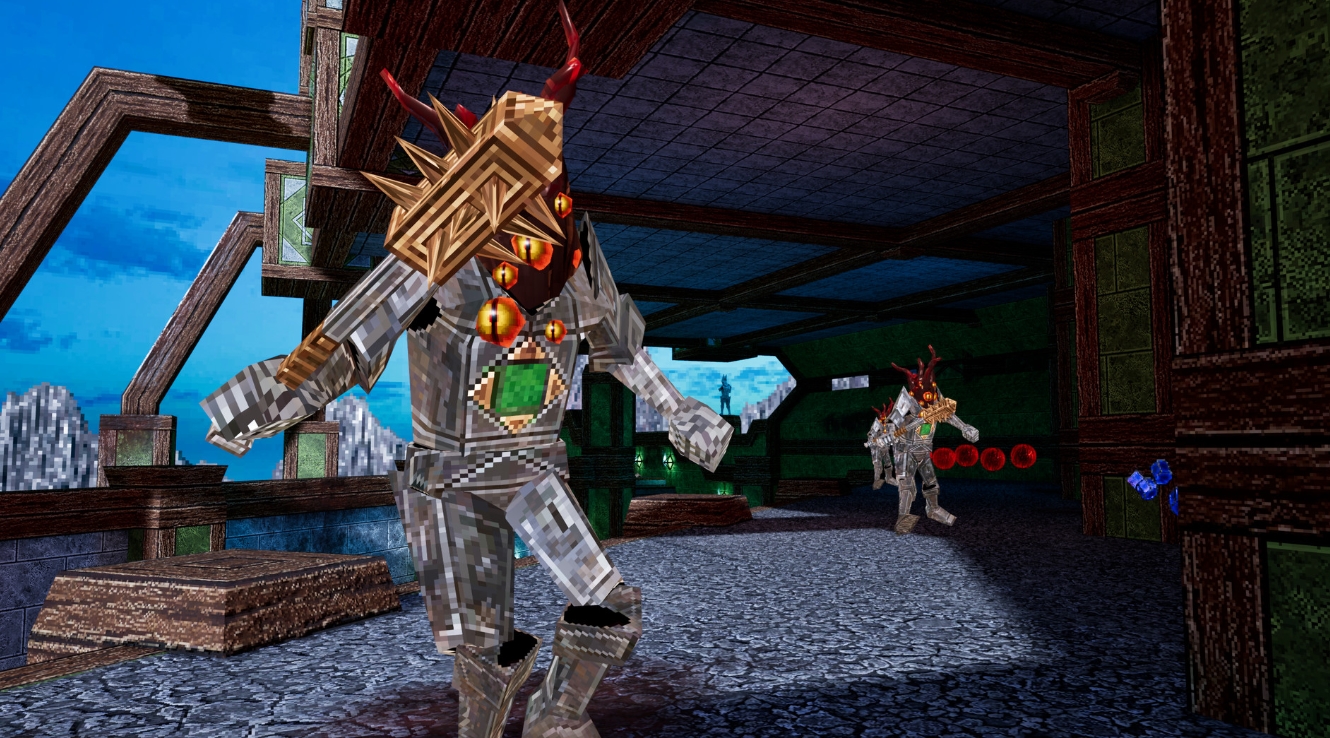
Each of the game’s seven weapons is its own story. There’s no “starter pistol” or “beginner’s option.” The game hands you something real from the very first level:
-
The Star of Torment — a long-range spell that ricochets off walls
-
The Aeturnum — a melee axe with a surprisingly large hit radius
-
The Heathen Blade — fast sword strikes with a powerful charged slash
-
The Voltride — a lightning attack that chains between enemies
-
The Trident — fires concentrated energy bolts
-
The Orrery — shoots actual planets. Literally
-
The Nexum — the local BFG equivalent, devours crowds
But the standout mechanic is the Soul Mode. Kill enough enemies, collect enough souls, and your weapon transforms into an empowered state. The axe starts throwing vortices of damage. The staff fires a piercing beam. The Orrery launches multiple planets at once, each detonating on impact. This isn’t just a damage bonus — it’s a temporary transformation of your entire combat style, and it’s genuinely thrilling.
Level Structure: Seven Worlds, Seven Enemy Rosters
The campaign is divided into seven episodes, each with three standard levels and a boss fight. Each episode is a new world, a new color palette, a new set of enemies. By the time you’re halfway through episode two, you haven’t had the chance to get bored with episode one — because everything already looks completely different.
| Episode | World Name | Atmosphere |
|---|---|---|
| 1 | The Forges of Flesh | Gothic catacombs, fire and brimstone |
| 2 | The Gyre | Psychedelic towers, portals |
| 3 | The Astral Equinox | Dark space, dead star systems |
| 4 | The Temple of Silence | Forests, grim nature |
| 5 | The Sickened Realm | Organic, living walls |
| 6 | The Black Labyrinth | Dense mazes, high difficulty spike |
| 7 | The Underworld | The final act |
Levels are non-linear — branching paths, secret rooms, hidden passages. Finding secrets in Amid Evil feels organic: the game doesn’t plaster your screen with markers, but it also doesn’t bury everything behind pixel-perfect hunts. A balance that actually works.
Amid Evil and Heretic: What the Comparison Actually Means
Almost every review of Amid Evil cites Heretic and Hexen as its primary inspirations. That’s fair — but with caveats. Amid Evil borrows their fantasy FPS aesthetic, magic-based weapons, and the castle architecture of the early episodes. But the movement speed, arena structure, and overall combat pace feel closer to late-era Quake or its modern interpretations than to the slow-burning Hexen, where you could wander the same corridors indefinitely hunting for a key.
To be honest about it: Amid Evil isn’t trying to simulate 1994. It’s more of a reinterpretation of that era’s spirit — stripped of its most annoying traits, like poor spatial orientation or sluggish controls.
Amid Evil vs DUSK: Which One Is Better and Why They’re Different
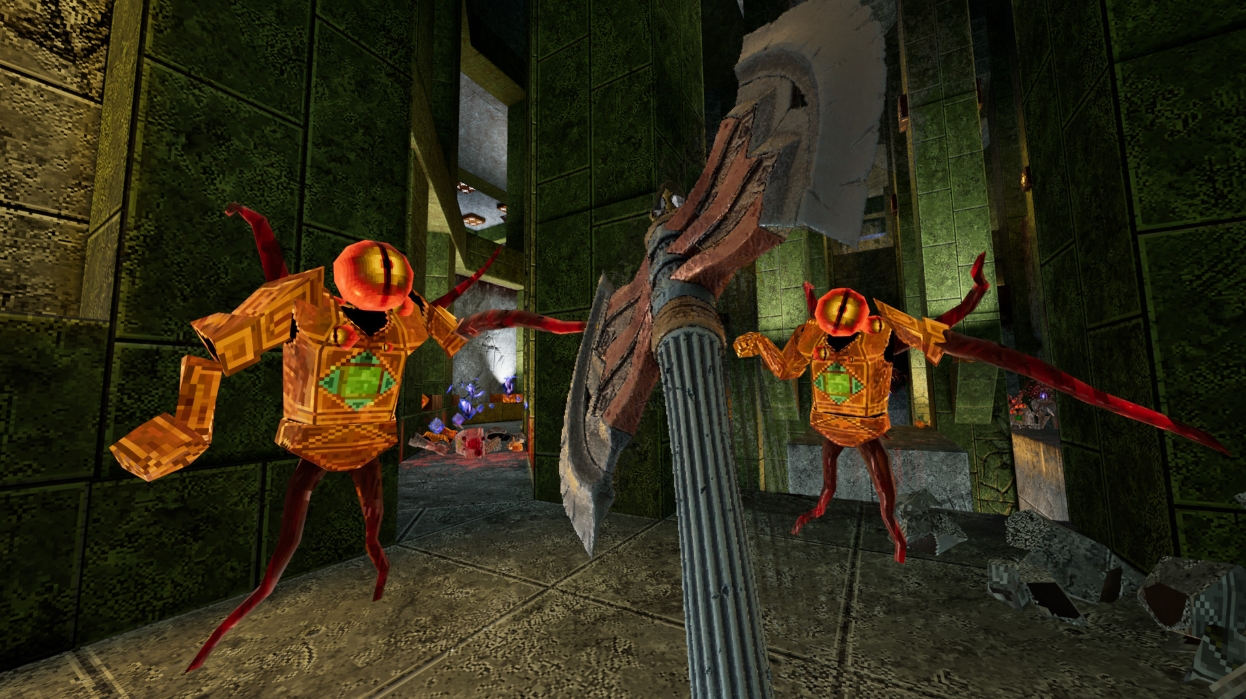
The comparison is unavoidable. Both games came out around the same time, both published by New Blood Interactive, both inspired by retro FPS classics. But they’re different games with different priorities.
| Category | Amid Evil | DUSK |
|---|---|---|
| Primary Inspiration | Heretic, Hexen | Doom, Blood, Quake |
| Setting | Fantasy, multi-world | Dark industrial + rural horror |
| Variety | Visual | Gameplay-driven |
| Soundtrack | Atmospheric but forgettable | A masterpiece on its own |
| Length | 6–8 hours | Comparable |
| Difficulty | Moderate with spikes | Consistently demanding |
DUSK diversifies its scenarios more aggressively — trap-heavy levels, melee-only sections, unexpected set pieces. Amid Evil bets on the visual diversity of its worlds and the depth of its Soul Mode combat. Both games are excellent. Both belong in any retro FPS collection. If forced to pick one — DUSK leaves a stronger overall impression. Amid Evil lands harder as a pure combat system.
Visual Style and Ray Tracing: Retro With a Twist
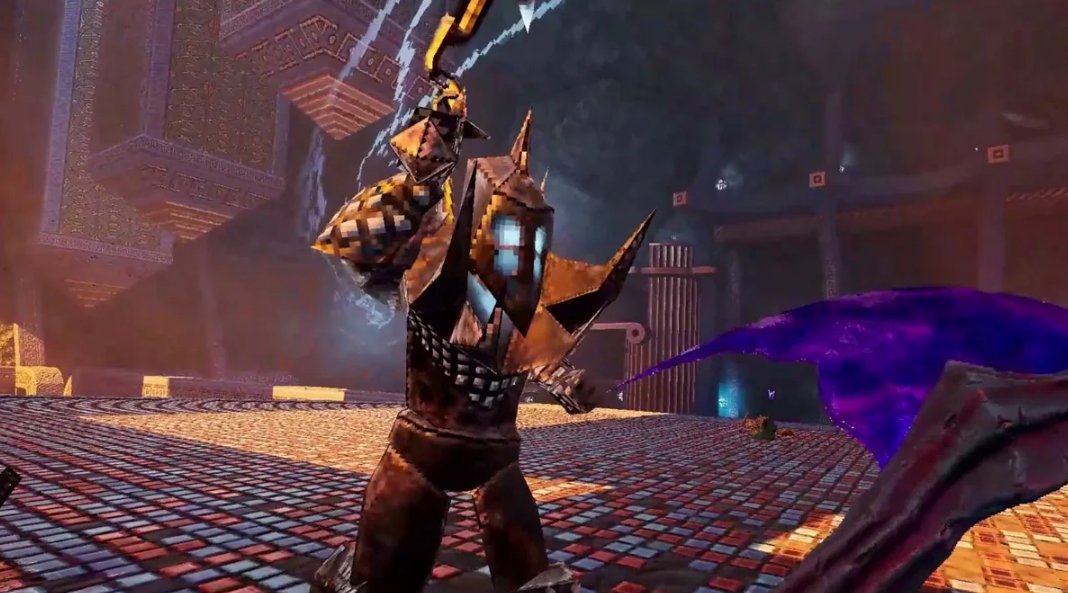
One of the most surprising things about Amid Evil is how it looks. The developers deliberately chose the pixelated texture aesthetic of old-school games but layered it with modern lighting — and got something genuinely distinctive out of it. The game looks expensive on what was clearly a modest budget.
Post-launch, Amid Evil received Ray Tracing support — one of the very few indie games to add the technology retroactively. The effect isn’t revolutionary, but it’s noticeable: shadows gain depth, light cones become more convincing, and dark areas feel denser and more atmospheric. It’s not a reason to buy a new GPU, but if you already have an RTX card, turning it on for at least the first episode is worth it.
The soundtrack is the one area where Amid Evil falls short of expectations. The music was composed by Andrew Hulshult — the same person responsible for DUSK’s score. But where DUSK’s music burned itself into memory and works perfectly outside the game, Amid Evil’s soundtrack functions more as atmospheric wallpaper. No individual themes stick.
Choose fun over fees with free steam accounts with games.
Evil Horde Mode and Replayability
Beyond the main campaign, the game includes the Evil Horde mode — endless waves of enemies across dedicated arenas. It’s not the primary content, but for players who want to drill weapon efficiency or just unwind for twenty minutes, it’s a solid option.
Campaign replayability is driven largely by difficulty settings. The difference is real. On the highest difficulty, the game transforms from a comfortable arcade shooter into a test of reaction time and resource management. On a normal first playthrough, Amid Evil can feel somewhat generous with health pickups — especially if you’re regularly triggering Soul Mode. At higher difficulties, that generosity disappears.
The game also includes cheat code support — a deliberate nod to the traditions of classic FPS design, and a respectful acknowledgment that some players just want to see the levels without the stress.
Amid Evil System Requirements: Will It Run on Your PC
Built on Unreal Engine 4, the game’s hardware profile reflects that. It doesn’t demand top-tier specs, but it’s not going to run on a toaster either.
| Component | Minimum | Recommended |
|---|---|---|
| OS | Windows 10 (64-bit) | Windows 10 (64-bit) |
| CPU | 3.5 GHz | 4.0 GHz / multi-core |
| GPU | NVIDIA GTX 470 / AMD Radeon 6870 | NVIDIA GTX 970 / AMD RX 480 |
| RAM | 8 GB | 16 GB |
| Storage | 4 GB | 4 GB |
| DirectX | Version 12 | Version 12 |
On modern hardware, the game runs without any notable issues. Levels don’t cause frame drops even with effects enabled — solid optimization for an indie title.
The Black Labyrinth DLC: Is the Expansion Worth It
In 2022, Amid Evil received the The Black Labyrinth expansion — an eighth episode with new levels, a new enemy type, and a new final location. Structurally it’s the same Amid Evil, but built with a sense of finality: level design is tighter, and the difficulty curve is noticeably steeper.
If you enjoyed the base game, the DLC adds several more hours of quality content within the same system. The price is minimal. There’s nothing critically wrong with it.
Should You Buy Amid Evil in 2026
Short answer: yes. Longer answer: with context.
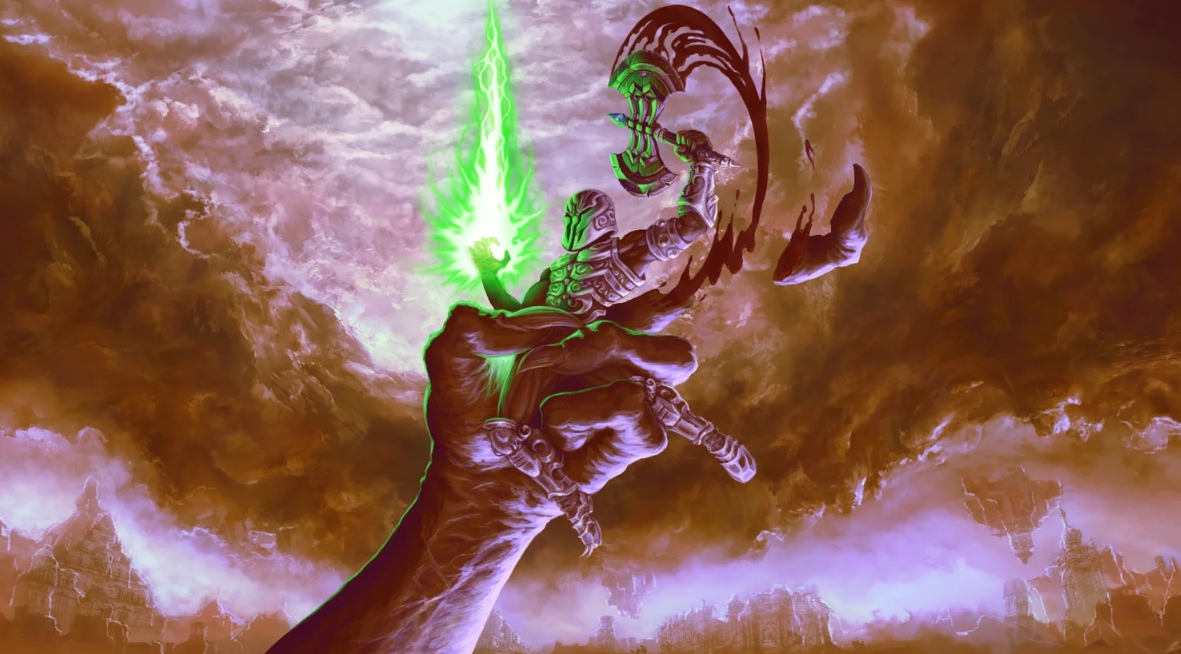
Amid Evil is an honest game without pretension. It does exactly what it promises: delivers a dense, fast, visually striking retro FPS with a well-designed combat system and seven visually distinct episodes. Soul Mode is one of the best individual mechanics the genre has produced in years. The levels don’t overstay their welcome. The weapons feel good.
Who will love it:
-
Fans of Heretic, Hexen, and early Quake
-
Anyone who finished DUSK and wants more
-
Players who value fast-paced action without excess narrative
-
Anyone tired of modern FPS games with health regeneration
Who might not click with it:
-
Players who need story and character depth
-
Those who prefer slow, exploratory pacing
-
Anyone expecting DUSK-level situational variety
The honest criticism: Amid Evil is somewhat repetitive in terms of scenario types. Most levels follow the same pattern — find the key, kill the wave, move forward. The variety here is visual, not mechanical. That’s not a flaw — it’s a genre trait. But if you came looking for narrative twists, you’re in the wrong place.
A 94% positive rating on Steam from over 5,000 reviews speaks for itself. Within the narrow genre of retro FPS, this isn’t just a good game. It’s one of the benchmark examples of how the genre is supposed to work.
How to play Amid Evil for free on Steam via VpeSports
Amid Evil is not just a game, it’s a punch right in the face of modern trends. No open world, no tedious cutscenes, no “upgrade your cooking skill” — just you, a staff in your hands, and a horde of otherworldly creatures who really want to kill you. Seven dimensions, each of which looks like an artist’s nightmare of the 90s in the best sense of the word. Here you will be greeted by floating temples above the abyss, icy catacombs and neon-lit arenas with a heavy syntwave soundtrack. You’re either going to fall in love with it from the first minute, or it’s just not yours—and that’s honest.
So that you don’t waste time on unnecessary movements, we’ve already done everything for you. Register on the website, log in to your account and click GET AN ACCOUNT at the beginning of the article — it explains step by step what to do next. No technical hell, no hours-long adjustments. You just take it and play.
And to keep up to date with everything, subscribe to our Telegram channel. New accounts, patches, news, and live discussions with fellow fans are all there. If something suddenly went wrong, the “How to play for free — the Complete Guide” section will close most of the questions. Well, if not, write to the chat, we will not leave.