

When Icarus was released on Steam, it became clear: this icarus game is not going to flirt with the player. This is not a cozy survival simulator, but a harsh experiment that tests you and your computer from the doorstep. High system requirements — an RTX 3060 Ti graphics card and as much as 32 GB of RAM — instantly turned the release into a subject of controversy. For some, it looked like a technical overkill, for others — as a hint of scale, complex simulation of the world and advanced graphics.
The interest in the project was also fueled by the man behind the scenes. Dean Hall, the author of the iconic DayZ, has returned to the survival genre again — but on a different scale. His approach is immediately recognizable: there is no sense of security in Icarus, and the planet itself seems to be set against you. This is a classic icarus survival game where the environment is the main enemy, and survival is based not on action, but on calculation, attentiveness and the ability to adapt.
However, a big name and an ambitious concept are just a starting point. To understand what the icarus pc game really is, I spent dozens of hours on the planet: exploring biomes, hunting, mining resources, building shelters, and mastering a complex crafting system. Here, every action has consequences — procrastination can cost lives, and a sudden change in the weather easily negates carefully laid plans. The atmosphere of constant pressure and lack of time creates a rare feeling for the genre — you are not a hero, but just a guest who is not welcome here.
As a result, Icarus leaves behind an ambiguous but complete impression. This is not a universal survival for everyone, but a niche project with a character that requires patience, engagement, and powerful hardware. Below, I’ll look in detail at what this game really catches, where it stumbles, and whether it’s worth diving into this dangerous world for those who are looking for deep and intense survival rather than quick wins.
Table of Contents
ICARUS Free Steam Account
It’s not often mentioned today, but DayZ started out as a fan mod for ArmA 2. And it was in this format that the project suddenly shot up, proving to be much more influential than many full-fledged releases of that time. Over time, the mod has grown into an independent game, albeit an extremely problematic one. At the start, DayZ was literally bursting at the seams: technical glitches, strange balance, crude mechanics and frankly weak optimization caused a flurry of criticism. However, even then there was a rare potential behind this chaos — the one that cannot be fixed with patches, but can be ruined with a soulless approach.
The main thing that distinguished DayZ from its competitors was the unique atmosphere of survival. It was not just a post-apocalypse simulator, but a game that worked on the emotional level. Every exit from the shelter caused alarm, every rustle made you freeze, and a meeting with another survivor rarely ended peacefully. The players fought for food, carefully explored the locations, closely monitored the character’s condition and realized that one mistake and dozens of hours of progress would disappear. This level of tension and immersion was a real rarity back then.
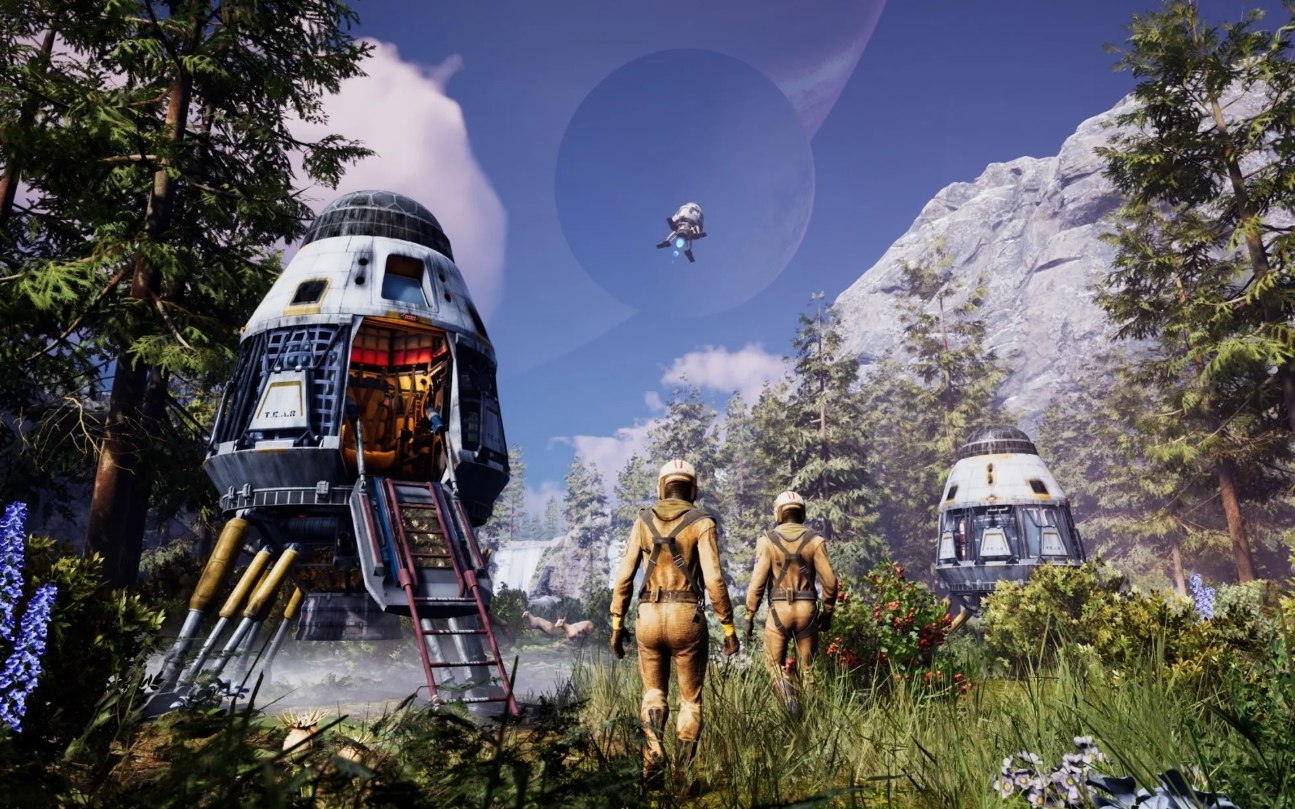
It was this experience that Dean Hall, a designer with a bright but complex creative handwriting, gave the industry. He subsequently left Bohemia Interactive, deciding to move on and create new worlds. Unfortunately, his subsequent career turned out to be much less stable: some projects, like Ion, never made it to release, while others went almost unnoticed. Nevertheless, Hall’s name is still associated with the survival genre, so the release of Icarus automatically caused a surge of interest and brought the game to the top of the weekly Steam charts.
But the main question remains the same: is Icarus worth your time? If you are a fan of hardcore “survival games”, appreciate the atmosphere of a dangerous world and have a really powerful PC, this icarus pc game can captivate you — at least at first. However, problems quickly become apparent. The project desperately lacks fresh ideas, many mechanics look secondary, and the technical condition and optimization are puzzling. Compared to other representatives of the genre, where the gameplay is deeper and the balance and performance are more stable, icarus survival game runs the risk of getting lost and quickly disappearing into the shadows.
Play your favorite games for zero cost! Get a free steam account with today.
ICARUS Plot
In the world of Icarus, humanity suddenly turned out to be an example of success. The earth has not been destroyed by wars and nuclear disasters, technology has not reached a dead end, and civilization has confidently stepped into the future. People have learned to conquer space, explore distant systems, and view alien planets not as a mystery, but as a potential source of resources. In this sci-fi setting, space expeditions have become commonplace, and the search for new worlds is a matter of benefit, progress, and survival of the species.
One of these finds is the harsh and inhospitable planet Icarus. Once it seemed to be an ideal candidate for the role of a new home for humanity, and therefore a large-scale terraforming project was launched. Scientists have tried to recreate a familiar ecosystem: mountain ranges have grown on the planet, forests have turned green, lakes and animals suspiciously similar to terrestrial ones have appeared. However, the key element failed — the atmosphere turned out to be toxic. All efforts have gone to waste, and Icarus has become a symbol of human arrogance and technological miscalculation.
Over time, the planet became almost an anecdote, a kind of meme inside the ent: if something failed, “it turned out like with Icarus.” But the story got an unexpected sequel. Researchers have discovered rare resources of enormous value on the surface. So a new gold rush began, and a wide variety of profit seekers reached out to the dangerous world. As one of them, the player goes to Icarus, knowing full well that each sortie may be the last.
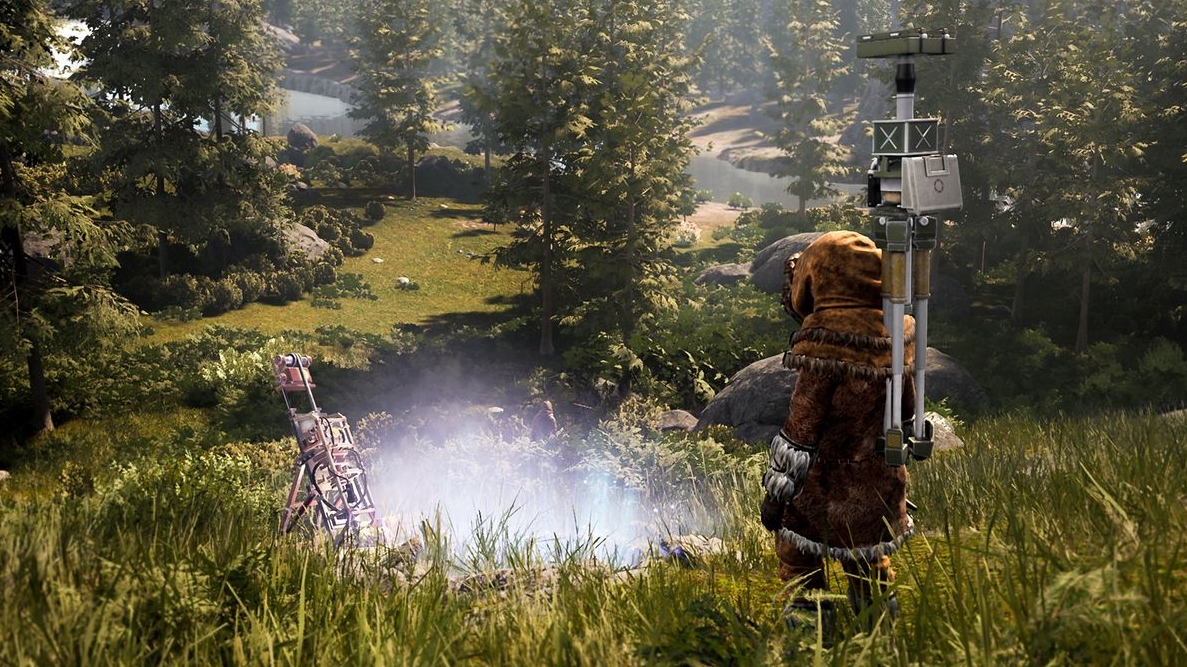
In fact, this is where the plot of Icarus ends. During missions, you can piece together information about the planet’s past, terraforming mistakes, and Earthlings’ technology, but you shouldn’t expect a deep narrative. The story serves an auxiliary function here — it sets the framework for what is happening and explains why the player risks his life over and over again for the sake of resources.
This is especially noticeable in the way lore is confronted with gameplay decisions. It feels like the developers first designed a classic survival game with crafting and hunting, and only then tried to fit it into a futuristic context. As a result, a number of logical questions arise:
-
why is a character sent on an important mission without high-tech gear;
-
why chop down trees with a stone axe in the age of interstellar travel;
-
for what reason does the poisoned planet supply the player with perfectly clean drinking water;
-
how does the local fauna calmly survive in an atmosphere dangerous to humans;
-
and why is the drop capsule not equipped with at least minimal facilities for rest?
Such inconsistencies gradually accumulate and increase the feeling of dissonance. After the stories about the outstanding achievements of mankind, it is strange to run through the forest, hunt rabbits with a wooden spear and manually build primitive housing. However, to be fair, it’s worth admitting the obvious: Icarus is unlikely to attract an audience with its plot. The main focus here is on hardcore survival, intense missions, timers, exploring biomes and fighting hostile environments, and the story serves only as a backdrop for survival gameplay.
Icarus Survival Gameplay and Mechanics – Missions, Progression and Crafting
The main task of the player in Icarus is formulated quite simply: to make a hostile planet as habitable as possible, albeit temporarily. During each sortie, the hero must establish a way of life, provide himself with resources, food, water and shelter, and then safely leave the surface. It is important that this is not a classic open world without a purpose: the gameplay is built around missions that need to be completed and completed on time, returning to orbit and leaving all the acquired goods behind.
The start of the game is extremely mundane and even deliberately slow. The first tasks introduce you to the basic mechanics of survival: explore the surroundings, collect branches, break stones, catch fish and cook simple food. A little later, the player will be entrusted with a research probe and sent to scan the territory at several points. It is here that the pressure of the environment begins to be felt for the first time — you have to go far from the capsule and monitor the indicators of thirst, hunger and endurance.
Gradually, the tasks become more complicated and begin to require more serious preparation. The game encourages the construction of strong bases, long-term expeditions to dangerous regions and trips to extreme biomes like the local Arctic. You can’t do without equipment and weapons there anymore — encounters with polar bears and harsh weather conditions become a real test for survival skills.
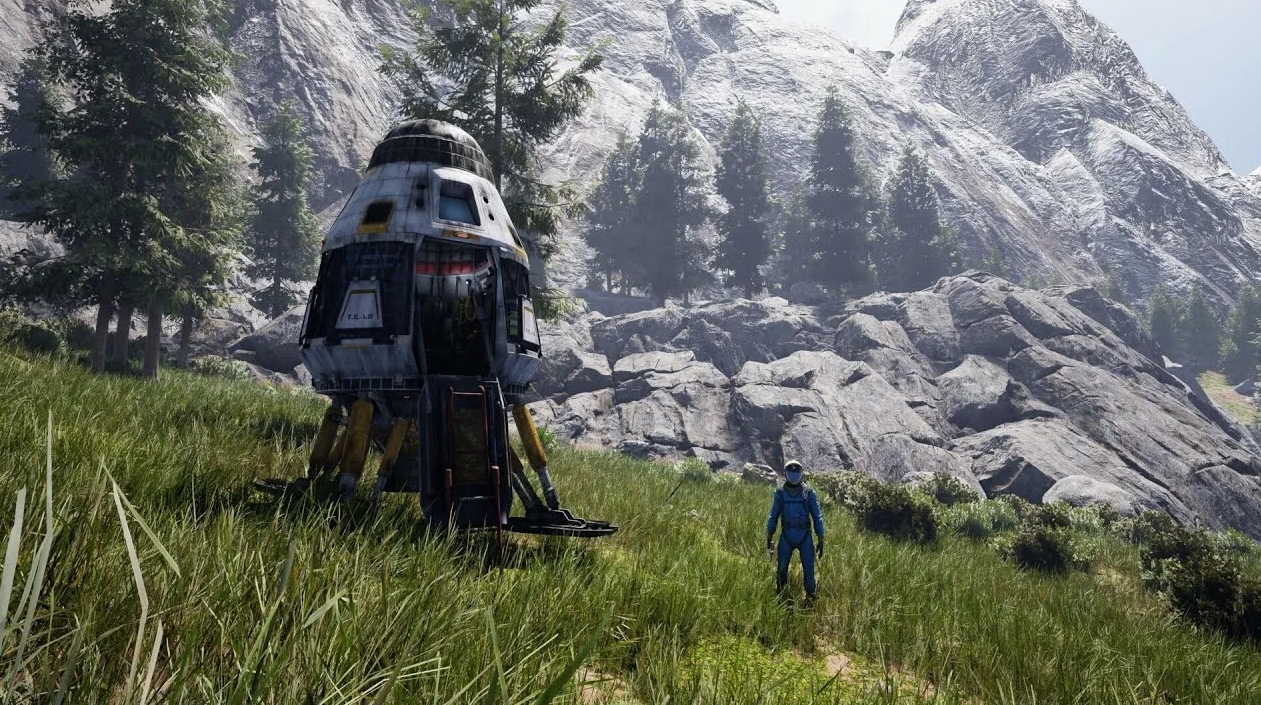
The key feature of the Icarus structure is a hard time limit. There are seven real days for each mission. If you took up the task on Monday, by the next Monday you either need to complete the goal or urgently evacuate. The death of a character on the planet is not fatal: it can be resurrected by losing some of the experience and equipment. But the delay of the mission is a verdict. If you don’t have time to leave Icarus in time, the character disappears forever.
At the same time, the end of the sortie feels ambiguous. After leaving the planet, the hero loses absolutely all his equipment — from weapons to pathetic stones in his pocket. Technically, some of the items can be loaded into a capsule, but in practice, these mechanics have been unstable for a long time. As a result, each new mission starts from scratch, which increases the routine and repeatability.
To better understand what the game cycle is based on, the Icarus mechanics can be reduced to several key elements:
-
Landing on a planet with a minimum set of features;
-
Collect resources and basic crafting of tools and weapons;
-
Building a shelter and providing the character with food, water and oxygen;
-
Completing mission objectives in a timer and hostile environment;
-
Escape to orbit while maintaining the progression, but without equipment.
However, not everything is so ruthless. Despite the loss of equipment, the character’s progression persists. The hero is leveling up, discovering new technologies and perks that stay with him forever. Over time, he becomes noticeably more effective: if in the first sorties there are not enough skills even to craft a sleeping bag or bow, then later the character starts already prepared and is able to quickly arm himself and go hunting.
Leveling up in Icarus
The growth is also felt in the characteristics. Each level allows you to improve key parameters: increase your health, reduce your food and water intake, and increase your stamina. This makes even completing familiar missions a little less painful. If you realize that you are not meeting the deadlines, you can always fly into orbit and return later — more experienced and prepared, even if you need to perform familiar actions again.
Otherwise, the gameplay of Icarus strictly follows the canons of the survival genre. After landing on the planet, the player collects everything that comes to hand and gradually improves the living conditions. Wood and stone turn into tools, tools accelerate the extraction of resources, onions are made from fibers and sticks, sleeping bags and clothes are made from hides. The crafting chain is extensive and understandable, but hardly surprising.
At the same time, the game constantly reminds you that the hero is an ordinary person. He suffers from hunger and thirst, needs oxygen, freezes in bad weather and easily dies without shelter. Water can be drunk directly from lakes, oxygen can be extracted from oxide deposits, and food can be harvested or hunted. To survive in storms and frost, you will have to build houses and choose the right equipment.
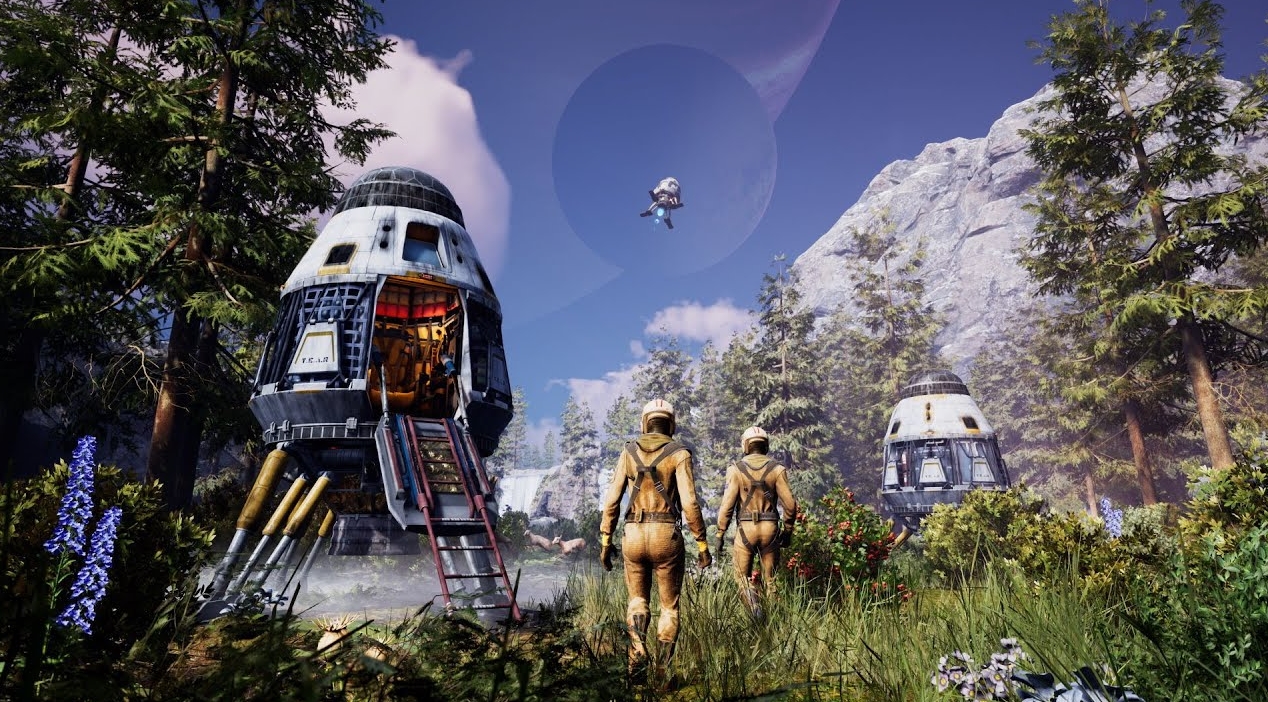
It’s really nice to play Icarus — the process is addictive, and the “preparation → risk → evacuation” cycle works as it should. But the problem is different: the mechanics of crafting and survival are secondary. Players have already seen almost all of this in Rust, The Forest or Valheim. There are a minimum of new ideas here, and even Dean Hall’s rich experience has not helped bring the formula to a new level.
Customization also looks like a weak point. The character editor offers a modest set of options: multiple faces, one beard, a couple of scars and tattoos. As a result, the characters look the same and, to put it mildly, not too attractive — which is strange for a modern PC game.
Separately, it is worth noting the lack of PvP. Icarus can be played co-op with friends, but there are no collisions with other players. All the battles come down to confrontation with the wild nature — wolves, bears and other predators. For some, this is a plus, for others it is a missed opportunity.
So is Icarus just another “survival game” that fans of the genre will love? Probably, yes — if it weren’t for one serious “but”, which is worth talking about separately.
Icarus System Requirements
Icarus system requirements are a rare case when getting to know a game begins not with the menu, but with a nervous glance at the characteristics of your own PC. To simply enter the planet, developers require a 6 GB GTX 1060, 16 GB of RAM, and an Intel Core i5-8400 processor. But this is just an entrance ticket. If you want to play without constant FPS drawdowns, turn up the graphics settings higher and not be afraid of each new biome, you will have to prepare a much more serious configuration: RTX 3060 Ti, 32 GB of RAM and Intel Core i7-9700. For a survival game, the request is, to put it mildly, audacious.
At this stage, a logical question arises: what are such sacrifices for? Usually, such voracious projects boast of technological wonders — photorealistic images, complex environmental simulations, or revolutionary visual effects. But Icarus quickly removes the rose-colored glasses. At “high” settings with the so-called “legendary” textures, the game looks… normal. Not bad, but also not so bad that you want to review screenshots and pause for a beautiful frame.
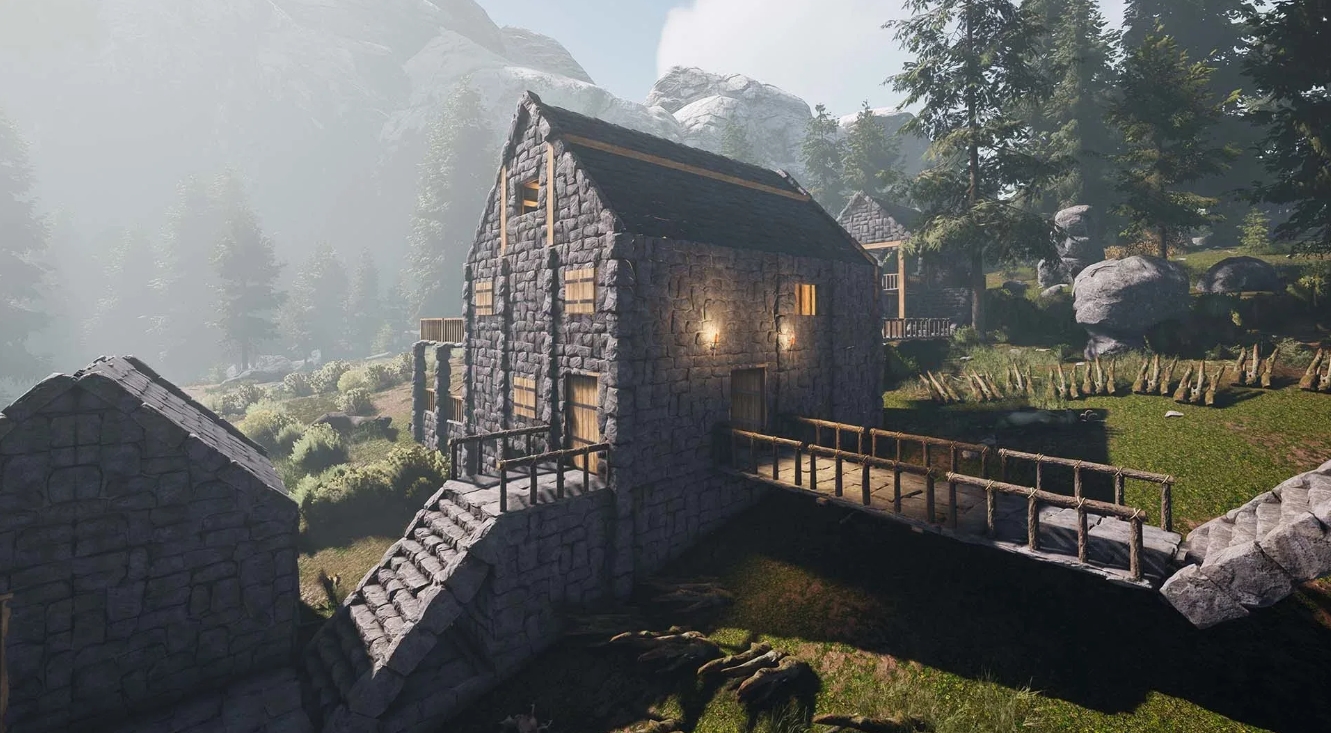
Yes, sometimes a project can make an impression. The morning fog is spreading through the forests, the sun’s rays are breaking through the foliage, the snowy regions look cold and inhospitable — the atmosphere of survival is working. But we’ve already seen all this in other survival games, which run and run much more stable on more modest hardware. Visually, Icarus does not offer anything that would justify such a high entry threshold.
Gradually, an unpleasant realization comes: it’s not about ambition at all, but about banal optimization. The game loads the system more than it should, the graphics card and processor are working hard, and performance can sag for no apparent reason. It feels like the PC version has never been brought to mind, and FPS issues have become part of the gameplay along with the character’s hunger and thirst.
As a result, Icarus looks like a project that requires too much from the player — not only patience and time, but also a powerful computer. And if these requirements hid a technological revolution, there would be fewer complaints. But when expensive hardware is spent on a “just normal” picture, a legitimate question arises: was it worth it?
Icarus PC System Requirements
How to play Icarus for free on Steam via VpeSports
Landing on Icarus always starts the same way — and it feels different every time. A few seconds of silence, a strange sky overhead, and the realization that there would be no help. This planet is not trying to please: it crushes with cold, scares with sounds in the dark, and constantly pushes you to choose whether to take a risk or retreat. Over time, you stop perceiving survival as a set of mechanics and begin to feel it intuitively. Fire becomes a friend, shelter becomes salvation, and returning with loot is a small personal victory. And you can enter this world without paying, just by taking a chance.
We’ve specifically removed everything that usually discourages you from starting. No long instructions or unnecessary actions. You register on the site, log in to your account, and return to the top of the page. There is a GET AN ACCOUNT button there — it opens access to the game and clear further steps. Everything is done so that you don’t get distracted by formalities and get to a place where only your decisions are important as soon as possible.
And so that this path is not a lonely one, there are always living people nearby. In our Telegram channel, we don’t just publish news and updates on Icarus – we discuss unsuccessful outings, successful races, and share experiences. If something doesn’t work out or you have questions, you can take a look at the detailed guide or write to the chat. Here you will be heard, prompted and supported, because even the harshest planet is easier to bear when you know that you are not alone.