

If a couple of years ago it seemed that horror remained the most reliable and understandable direction for indie developers, today this role is increasingly shifting to games inspired by Papers, Please. The change of focus looks logical: the market is tired of the same type of screamers, and the audience is increasingly drawn to projects that involve thinking, attention to detail, and create tension not through monsters, but through gameplay situations and moral choices.
This emerging genre is based on simple and intuitive information verification mechanics. It is easy to scale and does not require complex production: just one screen, a set of documents and clear rules are enough. At the same time, from the point of view of game design, developers have a huge scope for experimentation. By adding new conditions, non-standard scenarios, and unexpected limitations, the authors enhance the depth of gameplay without overloading the player with an interface or unnecessary mechanics. The whole action can unfold in one location, but the feeling of tension and involvement only grows.
Last year was a clear confirmation that the format has ceased to be a niche format. Games built around data reconciliation and decision-making began to come out one after another and regularly come to the attention of streamers, journalists and a wide audience. Releases No, I’m not a Human, Static Dread: The Lighthouse and TROLEU, and then the announcements of Gate Guard Simulator and Quarantine Zone: The Last Check made it clear: we are no longer just imitators, but an established genre with its own rules, expectations and recognizable atmosphere.
The Quarantine Zone stands out in particular: The Last Check, which may well surpass the popularity of the very progenitor of the direction. The fact is impressive in itself: a small team of domestic developers has managed to collect almost 1.3 million additions to the Steam wish list, which indicates tremendous interest from the players. Moreover, the project has attracted the attention of Devolver Digital, one of the most reputable and recognizable publishers in the indie scene. This is no longer just a successful experiment, but a signal that the genre of checks, documents and decisions with consequences has reached a new level and is seriously entrenched in the industry.
Table of Contents
Quarantine Zone: The Last Check Free Steam Account
Most of the projects inspired by Papers, Please, have traditionally focused not so much on the game system itself as on the atmosphere and presentation of the story. This is also true for the original: it was remembered primarily by the people on the other side of the table — their fears, hopes, and how other people’s fates gradually intertwined with the protagonist’s personal drama. The mechanics of document reconciliation here were not an end in themselves, but an instrument of pressure, forcing the player to doubt, make mistakes and make morally difficult decisions.
The domestic indie hit No, I’m not a Human has become one of the most visible continuators of this idea. From the very beginning, the project was positioned not as a game about rules and systems, but as an interactive narrative. In fact, this is a visual novel with elections, where the Papers, Please format is used more as a form of plot presentation than as an independent gameplay challenge. The story, characters, and emotional tension come to the fore here.
Against this background, the Quarantine Zone: The Last Check looks like a notable exception. The project deliberately abandons dense storytelling and relies on clean gameplay. This decision is especially unexpected in a post-apocalyptic setting, where players expect drama, tragedy and personal stories of survivors by default, rather than a dry, almost procedural check of people at the entrance to the camp.
Make the most of your time with a steam account free!
The cultural background works against expectations. For years, we’ve been conditioned to view the post—apocalypse through the lens of emotional stories, whether it’s TV series like The Walking Dead, games like The Last of Us, or classic movies like I Am Legend. These have always been stories of loss, fear, and humanity in the ruins of the world. In the Quarantine Zone: This approach is deliberately abandoned by The Last Check: there is no need to look for a vaccine, worry about the fate of loved ones, or unravel complex personal dramas. The focus immediately and without compromise shifted to the game mechanics.
Quarantine Zone: The Last Check gameplay
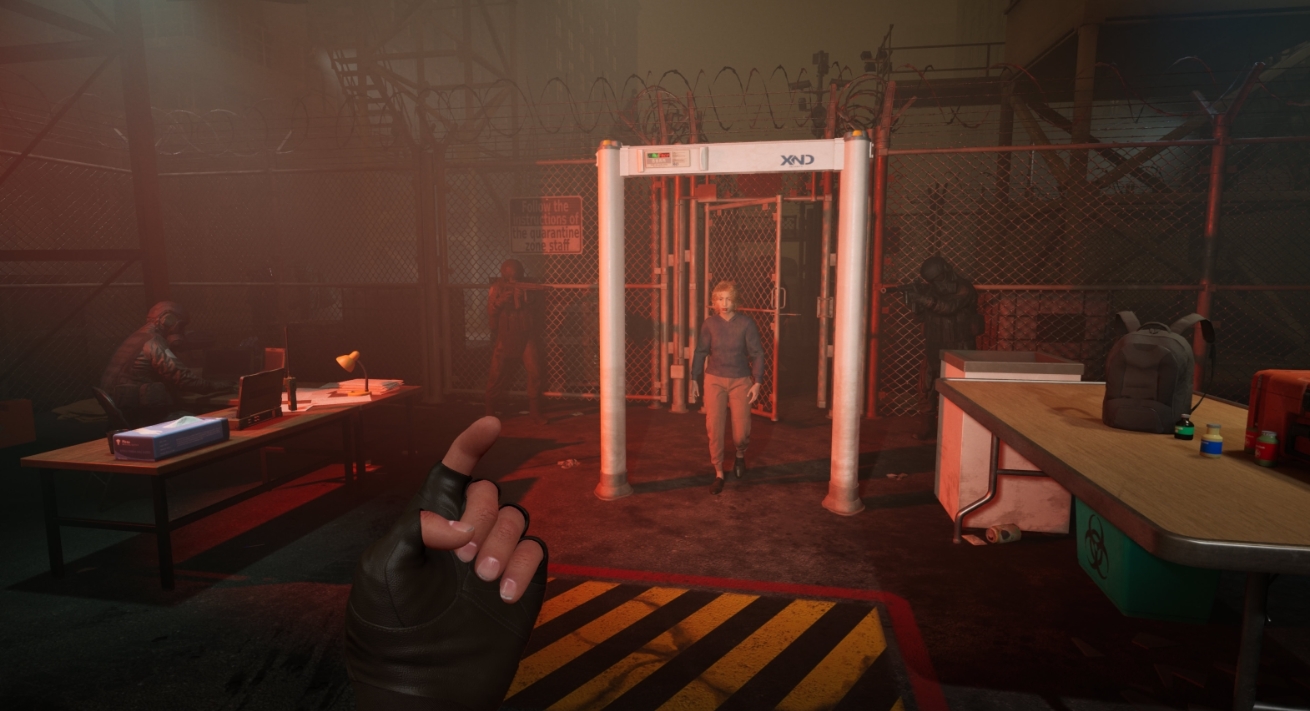
Gameplay in the best traditions of the genre is grasped literally from the first seconds. The player stands at the edge of the survivors’ camp and checks everyone who tries to get inside. The zombie virus manifests itself in dozens of ways, and not all symptoms are visible to the naked eye. That is why the arsenal of tools plays a key role: a thermometer with a heart rate monitor, a hammer for checking reflexes, a retinal scanner and other diagnostic tools form the basis of the gameplay and create a sense of pseudo-realism.
It’s all unexpectedly lively and even fun to play. Projects of this genre rarely pamper players with detailed graphics and truly immersive interaction tools. Here, each test is physically felt: to test reflexes, you need to literally hit the character with a hammer. Overdoing it, the suspect flies off to ragdoll. If you hesitate, you can get change. Such moments add dynamics and turn a routine check into an almost farcical but intense action.
In the early hours of the Quarantine Zone: The Last Check is absolutely addictive. New conditions, constraints, and tools appear exactly when the old ones begin to break, maintaining a sense of pace and constant development. The game confidently keeps the player in a state of flow, when decisions are made automatically, and time is slipping away unnoticeably. However, it is after this initial ascent that problems begin to appear, which become difficult not to think about as you progress further.
Quarantine Zone Gameplay Analysis: Balance, Pacing, and Frustration
In many ways, Papers, Please was remembered not for the number of rules, but for how skillfully it played with the player’s expectations. The project didn’t just expand the list of conditions for checking documents — it constantly broke the patterns it had learned. Once you got used to one algorithm of action, the game dramatically changed the context, forcing you to rethink the process and adapt to the system again. It was this feeling of instability that made the gameplay really intense and lively.
Quarantine Zone: The Last Check, alas, chooses a different development trajectory. Instead of rethinking the existing patterns of detecting a zombie virus, the game methodically increases the number of rules and tools. Each new stage brings additional devices and conditions, but it hardly changes the logic of the checks. As a result, the screening of one survivor can take several minutes over time, which inevitably breaks the pace and begins to tire.
The reward system also makes the situation worse. Quarantine Zone actively pushes the player to fully check each character, even when the infection is obvious from the first seconds. An attempt to save time and send an infected person for disposal immediately results in a fine: the game reports a “poor-quality check” and deprives some of the leveling points. From the point of view of gameplay, this looks strange, because one hundred percent symptom is more than enough to make a decision.
Gradually, there is a feeling that the developers from Brigada Games have made an excessive bet on showiness and virality. The desire to fit as many bright mechanics as possible leads to the opposite result: the gameplay begins to work against itself. Instead of meaningful analysis and intense choices, the player is increasingly faced with an overloaded system in which the number of solutions does not grow into quality.
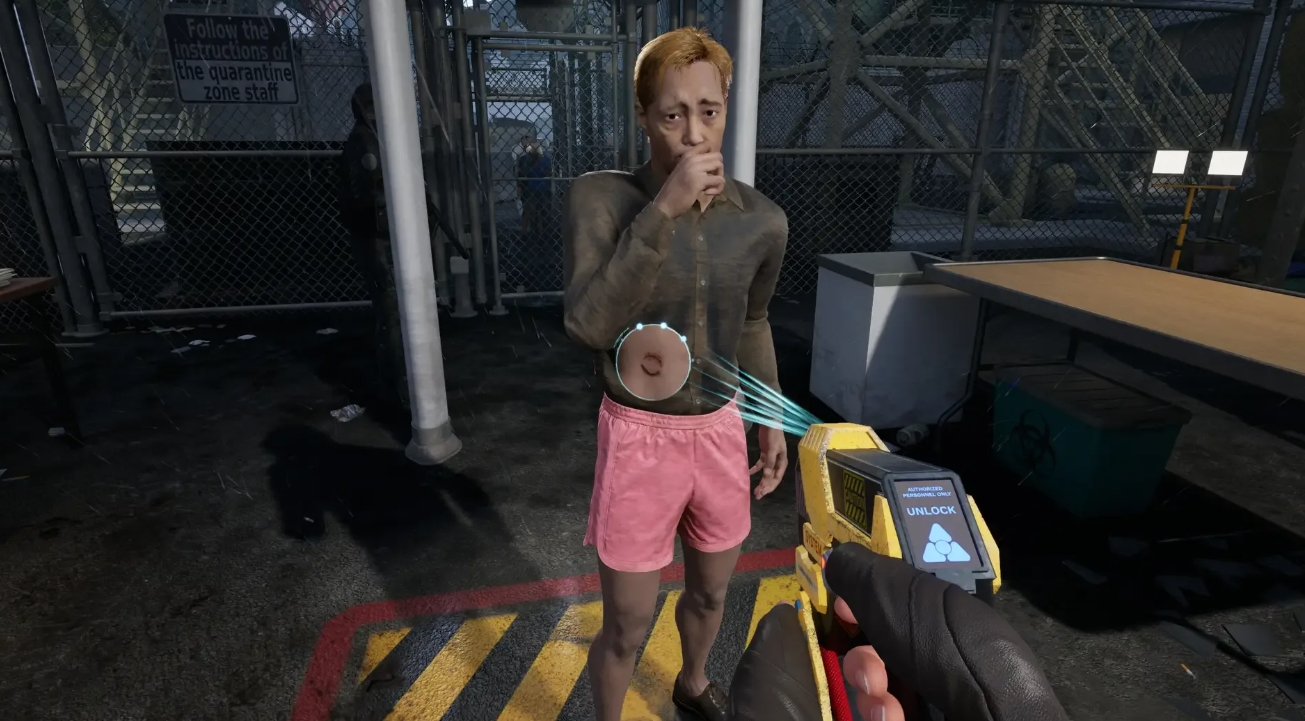
The problem is particularly acute in the visual signs of infection. The survivors get a lot of small, barely discernible details, which turn the check into a tedious pixel-hunting. The player has to pay attention to:
-
subtle differences in skin tones and spots of the same gradient;
-
minimal deformations of models that are easy to miss in dynamics;
-
signs that do not have a clear visual hierarchy and compete with each other.
As a result, verification is increasingly based not on analysis and decision-making, but on banal attentiveness and good eyesight. This quickly causes frustration and knocks you out of the flow, especially in the later stages of the passage.
It’s all the more disappointing that this issue could have been solved much more elegantly. Instead of subtle visual nuances, the game could offer more expressive and readable signs of infection or develop existing ideas more deeply. For example, infected people could have extra fingers or unnatural deformities of their limbs — a decision that is both noticeable, ironic, and works well for recognition in an era of talk about AI and mutations.
The situation is similar with the tools. At the beginning, the Quarantine Zone pleases with tactile and visual devices directly related to the characters. However, towards the end, many of them are reduced to separate interfaces and mini-games. The same retinal scanner actually takes the player out of the main process and destroys the immersiveness, turning the check into an abstract interaction with the menu.
At the same time, the development of already established mechanics was self-evident. There is, for example, a great hammer for testing reflexes, which the characters react to physically. Why not force the virus to evolve by requiring blows to certain limbs or a series of actions to detect a reaction? Such an approach would be both clearer and more organic than another separate interface.
There are plenty of options for deepening the gameplay. You can check the coordination of survivors through gestures, as highway patrols do with drunk drivers, or force characters to use special drugs, after which the infection would manifest itself at the level of behavior, rather than color markers. All this would enhance engagement and preserve the integrity of the gameplay.
It is important to emphasize that we are not talking about the fact that the developers made a bad game or added unnecessary ideas due to incompetence. On the contrary, the Quarantine Zone has plenty of successful and interesting mechanics. The problem is that at some point there are too many of them. Instead of stopping and honing the systems that are already working, the project continues to grow, overloading the gameplay and blurring its focus.
Structural issues of Quarantine Zone: The Last Check and their impact on the game
It is at this moment in the Quarantine Zone: The Last Check is time to start counting off your fingers. After a relatively clear and focused stage of checking the survivors, the game suddenly expands and begins to throw up more and more new game systems. Full-fledged camp management becomes one of the key tasks: the player has to monitor the reserves of energy, medicines and food, while simultaneously choosing improvements that will allow the base to survive and meet the ever-growing evacuation quota. On paper, this looks like a logical expansion of the gameplay, but in practice, the system exists separately from the main game cycle.

Contextually, management feels alien. At first, it even scares with volume, but it quickly boils down to primitive optimization. The player actually repeats the same set of actions:
-
purchases the maximum amount of available resources;
-
increases the capacity of key buildings, primarily quarantine and residential areas;
-
ignores alternative improvements that do not directly affect the survival of the camp.
When the mechanics do not form new solutions and do not enter into dialogue with the main gameplay, the question naturally arises whether it is really necessary within the framework of the overall concept.
Shooting with drones also causes similar sensations. In each quota, the camp is attacked by zombies, and the player must repel them by flying a flying machine. However, only one scenario is acceptable here — victory. The error does not lead to a shortage of resources or to long—term consequences: the only way out is to restart. As a result, this element is perceived not as a full-fledged game system, but as a mandatory mini-game built into a strictly designated time.
The situation is no better with the research laboratory. Formally, it should deepen the understanding of the virus: suspicious survivors are sent there to identify new symptoms and features of infection. In practice, the system often breaks feedback. The player notices clearly different visual anomalies, conducts research — and sometimes does not receive any new information at all. This creates uncertainty and destroys the sense of logic of what is happening.
In addition to large systems, the game also has a lot of secondary activities. They work more as a way to dilute the routine than as a meaningful development of mechanics. A mini-quest to find poetry, a strange tamagotchi with an infected person in a cage, or shooting rats that are always running around the camp add atmosphere, but have almost no effect on the player’s key decisions.
At the same time, I don’t want to criticize the developers for their ambitions. The desire to create a large-scale and intense game with many interconnected systems seems sincere and understandable. However, in its current form, it seems that a significant part of these features could be painlessly cut out, finalized separately and returned through updates without overloading the basic gameplay at the start.
But there is an aspect for which the authors really want to sincerely praise. It’s about endless mode, a rare but extremely important feature for the genre. For some reason, many competing projects ignore it, although even in Papers, Please, it was this format that largely ensured the game’s long life and viral popularity. The ability to play without a harsh ending fits perfectly with the mechanics of checks and management, turning the routine into an addictive and truly replayable process.
Visual ambiance and optimization for Quarantine Zone: The Last Check
The atmosphere is one of the strongest elements of the project. The game takes not with loud plot twists, but with attention to the little things that form the feeling of a living space. The player is given a rare freedom of observation for the genre: at any moment, you can move away from the main process and just walk around the camp, take a closer look at everyday life in isolation, and see how the daily life of the survivors proceeds. It feels especially good in the details:
-
how is the disposal and disposal of bodies organized;
-
what are infected people doing in quarantine zones;
-
how survivors spend time in residential camps and react to what is happening around them.
Such scenes do not directly move the plot, but they work for immersion much more effectively than any cut scenes, creating a whole and convincing atmosphere.
A special pleasure comes from the cultural context. Since a domestic team worked on the project, the game is filled with recognizable motifs and local references, which are read almost intuitively. At the same time, the developers do not focus only on the “inner kitchen”: there are enough hints of pop culture, neat crossovers, and ironic winks at the player. In one of these moments, you may even come across a reference to Dead by Daylight, which unexpectedly but fits seamlessly into the overall mood.
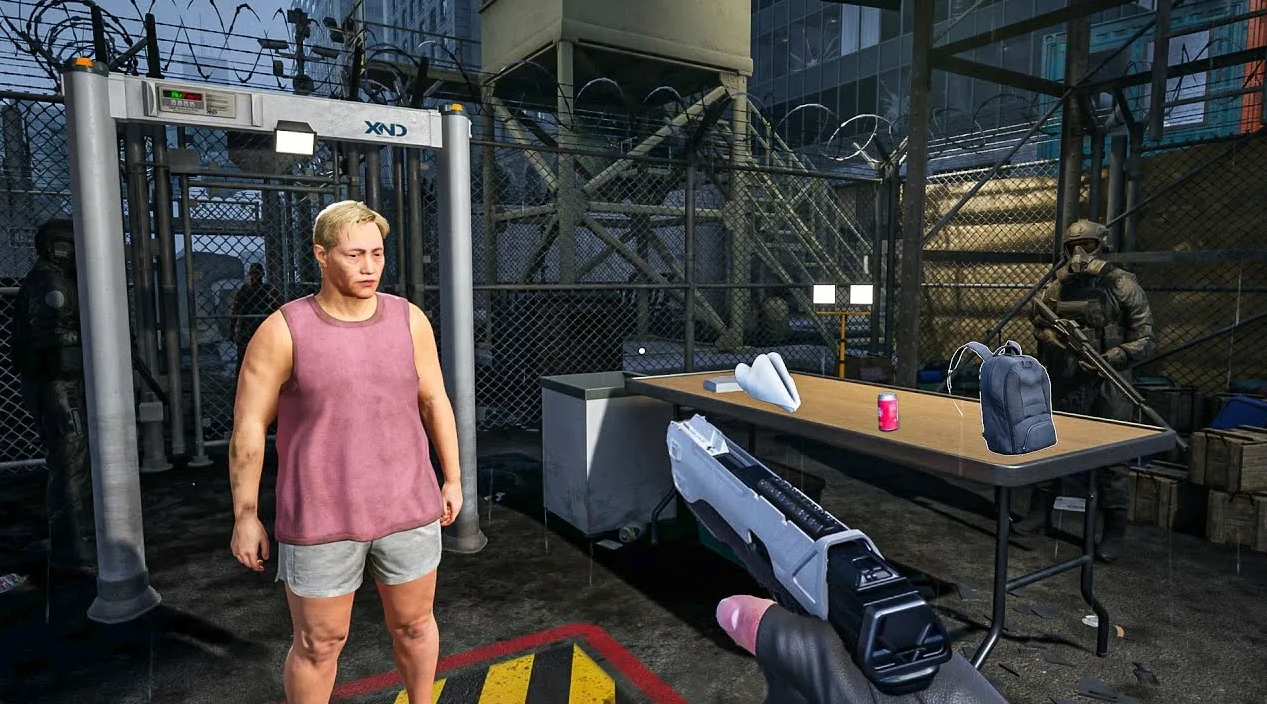
Such attention to detail, however, played an ambiguous joke with the authors. One seemingly harmless asset, a book with the history of the Chinese Communist Party, provoked a sharp reaction from the Chinese community. Local streamers quickly noticed it, after which the developers had to urgently remove the object to avoid potential problems. The situation is illustrative: the game lives in a global information field, and even minor elements of the environment can unexpectedly acquire political overtones.
From a technical point of view, the project looks confident, especially if we take into account several major patches released after the release. Most of the softlocks have already been eliminated, and they rarely became critical before — in the worst case, the game day could simply be restarted without losing progress. Optimization is worth noting separately: with fairly realistic graphics and rich set design, the game works stably and does not require hard hardware, which is a pleasant exception rather than the rule for an indie project of this scale.
Quarantine Zone: The Last Check System Requirements
Quarantine Zone: The Last Check
How to play Quarantine Zone: The Last Check for free on Steam via VpeSports
There are games that don’t entertain, but seem to be talking to you alone. Quarantine Zone: The Last Check is exactly such a story. There is no usual action and big wins here. There’s a tired man on the other side of the screen, a cold verification post, and an endless stream of faces in which you try to discern the truth. Every “skip” or “stop” echoes heavily inside, because you understand that the consequences will not be borne by the character, but by the whole world of this game.
The atmosphere is gradually getting heavier. The night drags on endlessly, alarms sound more often, and doubts become almost physical. You start to notice little things— trembling hands, a strange look, a voice that is too quiet. And at some point you find yourself thinking that you are no longer playing, but making decisions the way you would in real life. This is exactly the power of the Quarantine Zone — it makes you feel, not just press buttons.
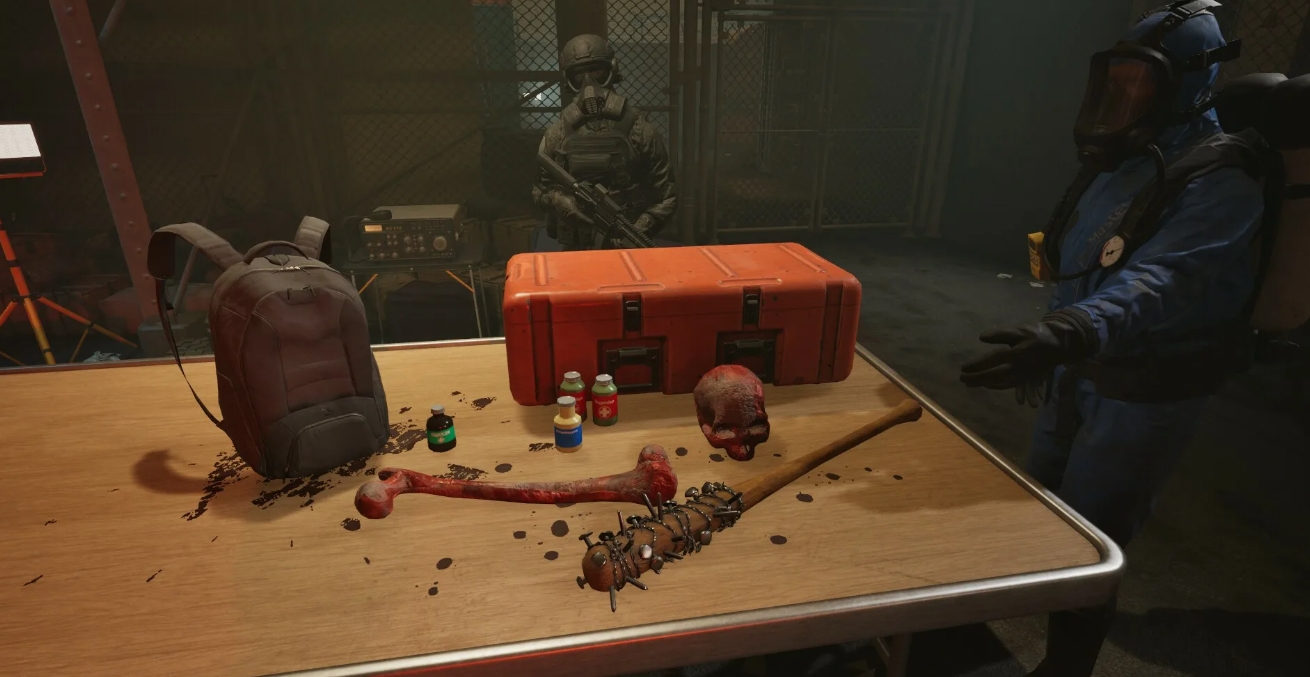
We understand that after such a description, you want to experience all this yourself as quickly as possible, rather than deal with technical issues. Therefore, access to the game is made as simple and human as possible. Quick registration, login to your account, return to the beginning of the article and click GET AN ACCOUNT — then everything happens without too much fuss. No complicated schemes or waste of time, just a direct path to the game.
If it is important for you to feel that you are not alone, even when there is an empty zone and a closed barrier on the screen, take a look at our Telegram channel. There are live people, live discussions, news, updates and help without formalities. And if something goes wrong, you can always refer to the detailed guide or write to the chat. We are here to support you — because after a shift in the Quarantine Zone, everyone wants a little human warmth.