

Nobody asked TT Games to make an Arkham game. Rocksteady built that franchise over a decade, and when it ended, fans assumed that particular style of Batman game ended with it. Then LEGO Batman: Legacy of the Dark Knight showed up and quietly made everyone reconsider what a licensed LEGO title is even capable of.
Released on May 22, 2026, Legacy of the Dark Knight isn’t coasting on brand recognition or nostalgia. It swings hard at a specific target — capturing what made the Arkham series great — and lands more often than it misses. The result is something genuinely unusual: a LEGO game that serious Batman fans are talking about in the same breath as Arkham City.
Table of Contents
LEGO Batman: Legacy of the Dark Knight — What It Is and How It Got Here
This is the fourth game in the LEGO Batman line and the fifth entry in the wider LEGO DC catalogue. Developer Traveller’s Tales has been building these block-based adaptations for years, but Legacy of the Dark Knight represents something different — a studio finally given the room to be genuinely ambitious rather than just competent.
The announcement came at Gamescom 2025. A second trailer, “Heroes & Villains,” dropped at The Game Awards in December with a confirmed release date of May 29, 2026. Then in March 2026, that date moved — forward, not back — landing on May 22. Moving a game’s release date up is rare enough to be worth noting: it suggests a team that was ready ahead of schedule rather than scrambling behind it.
At launch, the game is available on PS5, Xbox Series X|S, and PC through both Steam and the Epic Games Store. A Nintendo Switch 2 version is confirmed but hasn’t been given a release date yet.
Built on Unreal Engine 5 — and It Shows
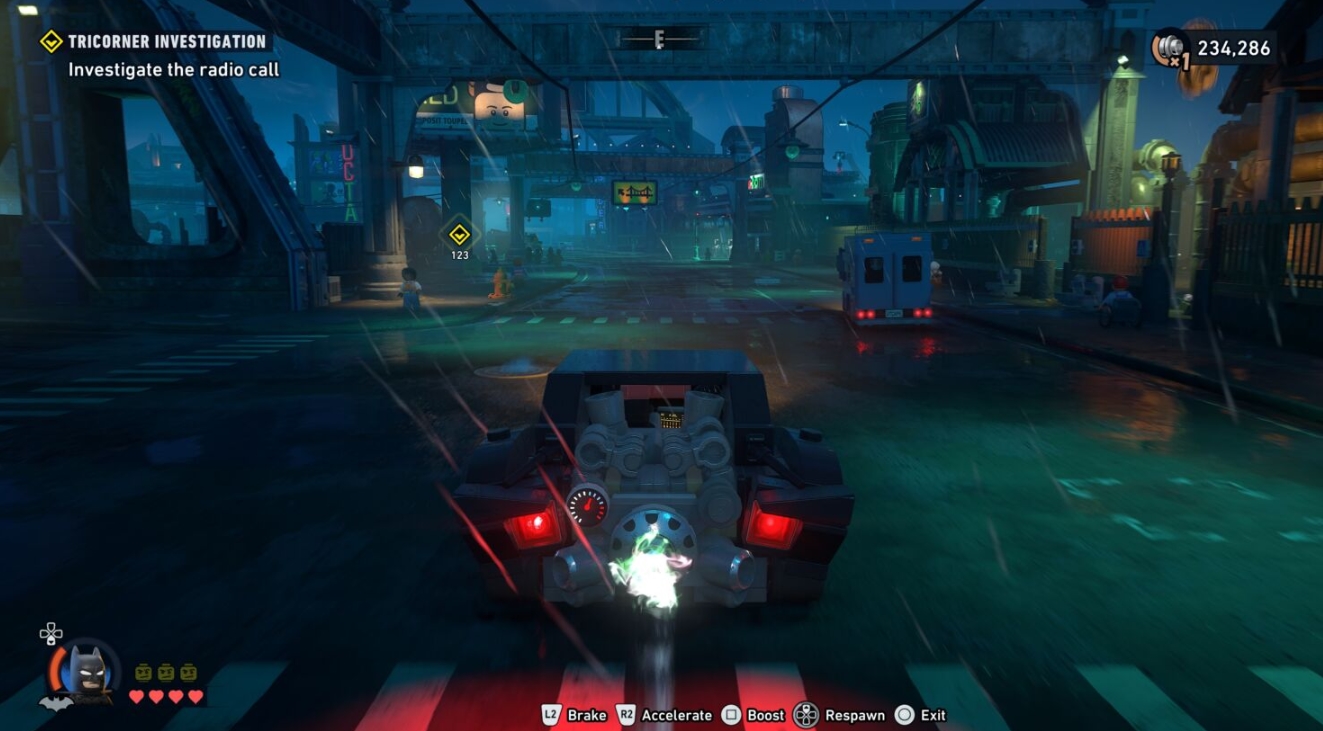
The Skywalker Saga’s troubled development — years of crunch, a custom engine that fought back — pushed TT Games toward Unreal Engine 5 for future projects. Legacy of the Dark Knight is one of the first big results of that shift. Gotham here has genuine weight to it: rain-slicked streets, neon signs bleeding color across dark concrete, a skyline that feels perpetually threatening. It doesn’t quite match Arkham Knight’s oppressive visual density, but it’s closer than anyone had reason to expect from a LEGO game.
The Story: One Batman, Drawn from Every Batman
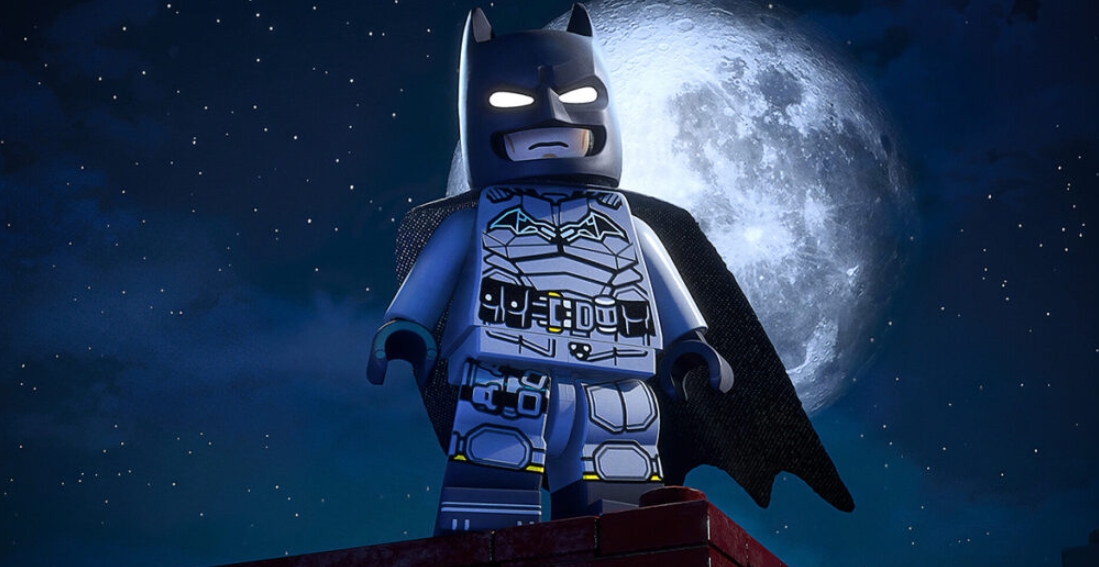
Rather than adapting a specific arc or film, TT Games built something new from borrowed parts. Nolan’s grounded origin, Burton’s theatrical menace, the ’90s animated series’ warmth, decades of comics — it’s all pulled apart and reassembled into a single original story about Bruce Wayne’s life from grieving child to aging legend.
That structure lets the game work through the full Bat-family roster organically: Gordon as a young officer, Dick Grayson becoming Robin before eventually stepping into his own identity, Barbara Gordon finding her footing as Batgirl. Villains are paced throughout rather than front-loaded — the Joker, the Penguin, Poison Ivy, Ra’s al Ghul, and Bane, the last of whom is voiced by Matt Berry in what’s already become one of the more talked-about casting choices of 2026.
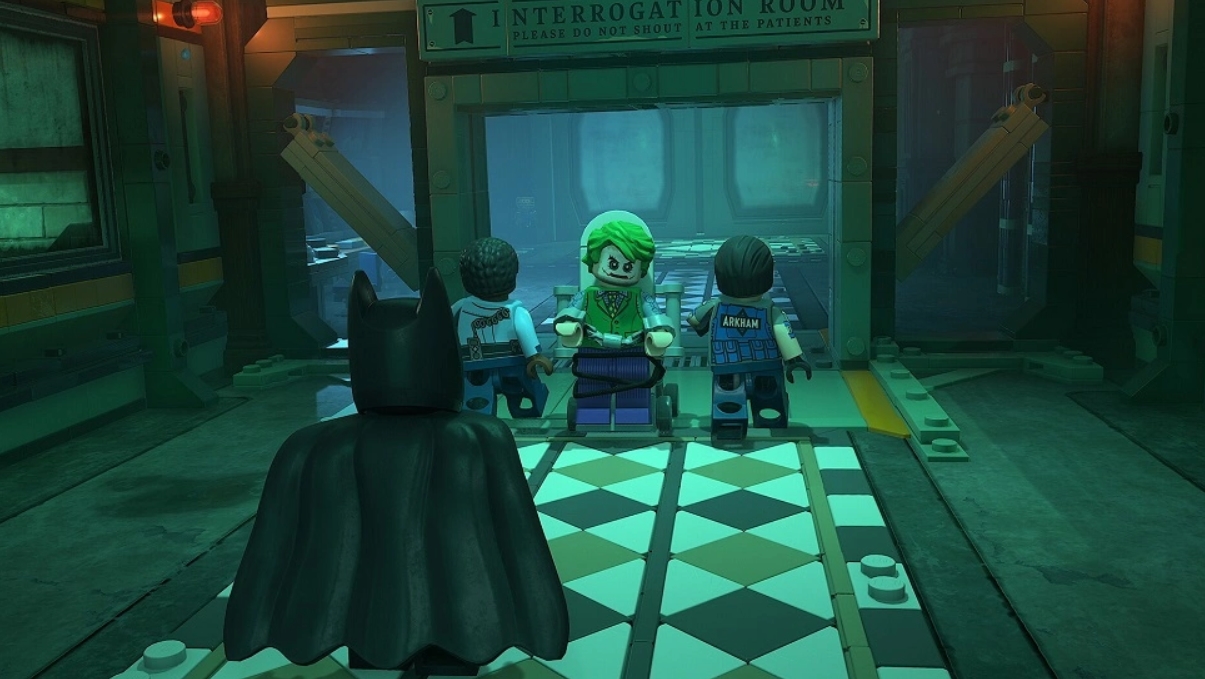
The humor is intact — this is a LEGO game, and a cutscene where cleanup crews use the iconic orange brick-separator tool on a wrecked street gets a genuine laugh. But the writing treats the story with respect. The darker moments land. That tonal balance is harder to pull off than it sounds, and Legacy of the Dark Knight mostly gets it right.
Combat in Legacy of the Dark Knight: Arkham’s Skeleton, LEGO’s Skin
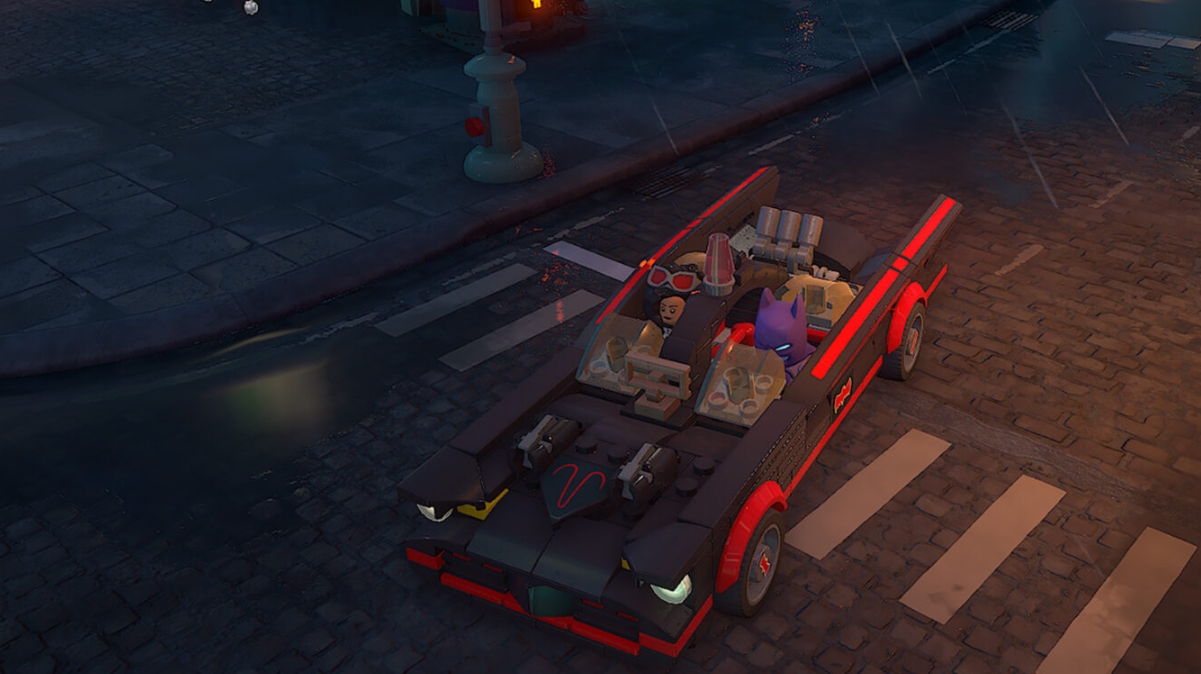
The combat conversation around this game starts and ends in the same place: TT Games didn’t borrow from Arkham, it reconstructed it. Flowing melee chains, the triangle-button counter system, enemy hierarchies that ask you to prioritize shield-bearers and gun-toting thugs — every beat of the Arkham combat loop is present, translated into a slightly bouncier register.
This wasn’t accidental. Rocksteady holds an official co-developer credit on the project. How deeply the studio was involved remains unclear, but the fingerprints are obvious to anyone who has spent time in Arkham City or Arkham Knight.
One reviewer put it plainly: “It feels like TT Games looked at the games market, noticed nobody was building a new Arkham game, and decided to do it themselves.” That reads as criticism but it isn’t, really — it’s a description of something useful being made to fill a gap.
Three Difficulty Settings — a Genuine First for the Series
LEGO games have historically offered one difficulty: easy. Legacy of the Dark Knight introduces three:
| Setting | Name | What It Means in Practice |
|---|---|---|
| Easy | Classic | Traditional LEGO experience, accessible to all ages |
| Medium | Caped Crusader | Balanced challenge for players who want some resistance |
| Hard | Dark Knight | Reduced health, more dangerous enemy compositions |
Dark Knight difficulty doesn’t reach the level of a punishing action game — a prepared player will get through it without losing all their lives — but it shifts the combat from background noise to something that actually demands attention. Brutes and armed enemies appear in greater numbers, and the margin for sloppy play shrinks. For a series that has historically felt slightly too easy for anyone over twelve, this matters.
Stealth, Skill Trees, and Gadget Progression
The combat system shares space with a stealth layer that pulls directly from the Arkham playbook: perches on gargoyles, silent takedowns from above, the constant temptation to work a room without ever being seen. Gadgets unlock and upgrade over the course of the campaign, and each character carries their own skill tree — a level of mechanical depth TT Games hasn’t attempted in this form before.
Gotham as an Open World: Four Islands, Built to Explore
The city is divided into four distinct islands, each with its own visual character and density of activity. Ace Chemicals, the Botanical Gardens, Arkham Asylum, Wayne Tower — familiar landmarks are present and recognizable, but the map has been constructed as a playground rather than a checklist of canonical locations.
Getting around works three ways: the grapple launcher for vertical movement, the Batglider for covering distance between rooftops, and a fleet of over twenty vehicles — Batmobiles and Batcycles pulled from different decades of Batman history. Traversal is quick and tactile. Several reviews noted the same thing independently: at speed, gliding through this version of Gotham, it stops feeling like a LEGO game and starts feeling like something else entirely.
Side Content Worth Doing
-
Riddler and Cluemaster challenges — environmental puzzles with a detective-game texture
-
AR-based combat and racing trials scattered across each district
-
Spontaneous street crimes that interrupt exploration in satisfying ways
-
Environmental puzzles that use each character’s specific toolkit
-
Collectibles and display trophies that feed back into Batcave customization
The Batcave customization system is deeper than it first appears. Vehicles, trophies, and props from across Batman’s history can be arranged and displayed — over 250 items in total. The developers described wanting to build something that “honors previous iterations while giving players a completely new experience,” and the trophy room is where that intention is most visible.
Every Playable Character in LEGO Batman: Legacy of the Dark Knight
Seven characters. That number will read as small to anyone used to LEGO games where rosters reach triple digits. The difference here is that each of those seven has been built as a fully distinct playstyle rather than a reskin with slightly different statistics.
Character Roster and Abilities
| Character | Primary Gadgets | What They Unlock |
|---|---|---|
| Batman | Batclaw, Batarang | The backbone of the entire campaign |
| Robin | Cable Launcher, Birdarang | Multi-target throws, tightrope traversal |
| Nightwing | Electrorang, Electric Cable Launcher | Robin’s toolkit plus electrical interactions |
| Batgirl | Hackarang, Drone | Hacking terminals, map-area reveals via radio towers |
| Jim Gordon | Foam Sprayer | Police-specific environmental interactions |
| Catwoman | Whip, Claw | Safe-cracking, wall-climbing, glass-cutting |
| Talia al Ghul | Blowdarts, Ninja Dash | Short-range teleportation, gap-crossing, sleep darts |
Robin transitions into Nightwing at the end of Chapter 4 — they share gadget functions, so Nightwing effectively replaces Robin for puzzle purposes without removing him from the roster. For completionists, Batgirl and Catwoman are the two characters most essential to 100%: Batgirl’s radio tower interactions reveal collectibles across entire districts, while Catwoman’s safe-cracking unlocks content that’s otherwise inaccessible.
On the villain side, you’ll go up against the Joker, Penguin, Mr. Freeze, Poison Ivy, Ra’s al Ghul, Bane, and a supporting cast drawn from across Batman’s history.
100-Plus Costumes to Unlock
Every character has over 100 costume variants unlockable through the campaign. The Deluxe Edition expands this with Arkham Trilogy, Batman Beyond, and Party Music packs — adding themed suits, vehicles, and Batcave props. Wearing Batman’s Arkham Asylum suit while fighting through this game’s version of Gotham is a small detail that lands harder than it should.
PC System Requirements for LEGO Batman: Legacy of the Dark Knight
Unreal Engine 5 and an open-world Gotham come with a price. The requirements here are higher than most LEGO games players have dealt with before — particularly the RAM ask, which caught some potential buyers off guard when the specs were first published.
The minimum configuration targets 1080p Low at 30 FPS, but that target is only reachable with FSR or XeSS Balanced upscaling and frame generation enabled. Native performance at minimum settings falls short of 30 FPS on the listed hardware. Windows 11 is required across every tier — Windows 10 is not supported — and a 50 GB SSD is mandatory regardless of resolution target.
| Spec | Minimum (1080p / Low / 30 FPS) | Recommended (1440p / Medium / 60 FPS) | 4K (2160p / High / 60 FPS) |
|---|---|---|---|
| OS | Windows 11 | Windows 11 | Windows 11 |
| CPU | Intel Core i5-10600K / AMD Ryzen 5 1600 | Intel Core i7-12700 / AMD Ryzen 7 5800X | Intel Core i9-14900K / AMD Ryzen 9 7900X3D |
| RAM | 16 GB | 16 GB | 24 GB |
| GPU | NVIDIA GTX 960 / AMD RX 6400 / Intel Arc A580 | NVIDIA RTX 2070 Super / AMD RX 6650 XT / Arc B580 | NVIDIA RTX 5070 Ti / AMD RX 7900 XTX |
| VRAM | 4 GB | 8 GB | 12 GB |
| Storage | 50 GB SSD | 50 GB SSD | 50 GB SSD |
| DirectX | 12 | 12 | 12 |
| Upscaling | FSR / XeSS Balanced + Frame Gen | DLSS / FSR / XeSS Quality + Frame Gen | DLSS / FSR / XeSS Quality + Frame Gen |
Five Things Worth Knowing Before You Install
-
16 GB RAM is a hard floor, not a recommendation. The open world demands it at every tier. TT Games originally listed 32 GB for the 4K configuration — community pressure brought it down to 24 GB, but the minimum stayed fixed at 16 GB throughout.
-
Windows 10 is a dead end here. No workaround is officially supported. If you haven’t upgraded, factor that into the total cost of entry.
-
The GTX 960 minimum figure is upscaling-dependent. That card won’t reach 30 FPS at native 1080p. The spec assumes FSR Balanced and frame generation are doing significant lifting.
-
GPU requirements are reasonable for everything below 4K. An RTX 2070 Super or RX 6650 XT handles the recommended tier — hardware that sits comfortably in the mid-range by 2026 pricing.
-
No HDD support, full stop. The SSD requirement appears at every tier with no exceptions listed.
Legacy of the Dark Knight vs. Previous LEGO Batman Games
The original LEGO Batman launched in 2008. Its two sequels expanded the roster and the scale of fan service but kept the same fundamental design language: breezy combat, collectible-hunting, enormous character counts. Legacy of the Dark Knight abandons most of that deliberately.
| Feature | LEGO Batman 1–3 | Legacy of the Dark Knight |
|---|---|---|
| Combat | Basic attacks, minimal depth | Arkham-style combos, counters, gadget integration |
| World design | Linear levels with hub areas | Fully open-world Gotham City |
| Difficulty options | Single setting | Three tiers with meaningful differences |
| Playable characters | 100–150+ | 7, each with a distinct toolkit |
| Progression | Stud collecting and character unlocks | Skill trees and upgradeable gadgets |
| Design reference | LEGO game conventions | Arkham trilogy mechanics, LEGO presentation |
The smaller roster is a philosophical position, not a budget limitation. TT Games traded breadth for construction quality — every character has unique puzzle interactions, a progression path, and a combat identity. Whether that trade was worth it depends on what you came for, but the depth argument holds up in play.
Editions, DLC, and What’s Already on the Way
The Standard Edition is the base game. The Deluxe Edition bundles in three themed packs at launch under the “Legacy Collection” banner:
-
Arkham Trilogy Pack — Arkham-era costumes for all seven characters, an Arkham Batmobile, and five Batcave props including an Arkham Asylum diorama and a Riddler Trophy display.
-
Batman Beyond Pack — the full cast reskinned in Batman Beyond aesthetics, with a matching Batmobile.
-
Party Music Pack — a deliberately lighter set that makes more sense once you’ve seen it in context.
Deluxe Edition buyers had access from May 19 — three days before general release. Max and HBO subscribers received the Black Lantern and Dark Knights of Steel suits as a separate bonus at no additional cost.
A second wave called the “Mayhem Collection” has been confirmed but not detailed yet.
Review Roundup: How the Game Has Been Received
Legacy of the Dark Knight is sitting at 96% positive on Steam from several thousand reviews — a number that holds up against any major release, not just within the LEGO catalogue. Critical coverage has been warmer and more substantive than LEGO games typically receive.
The open world pulls the most consistent praise: reviewers describe Gotham as genuinely pleasurable to move through, with the traversal system doing enough to make exploration feel like a reward rather than a chore. The final two chapters are highlighted repeatedly as the game’s strongest section — fan service density climbs sharply, callbacks get more specific, and Bane’s Matt Berry performance arrives at full force.
The recurring criticisms cluster around three areas: stealth that works conceptually but lacks the precision of the Rocksteady originals, sections of the map where the collectible tasks become repetitive, and Robin and Nightwing sharing a toolkit closely enough that keeping both on the roster feels slightly redundant.
Join the fun instantly with a free steam account with games!
Should You Play LEGO Batman: Legacy of the Dark Knight
For lapsed Arkham fans waiting for Rocksteady to return to form — this is the closest thing available, and it’s genuinely good. TT Games has made something that functions as a companion piece to those games rather than a pale imitation of them.
For players who loved earlier LEGO Batman entries for their sprawl and collectible density — the DNA is still present, just concentrated. Less surface area, more depth per square meter.
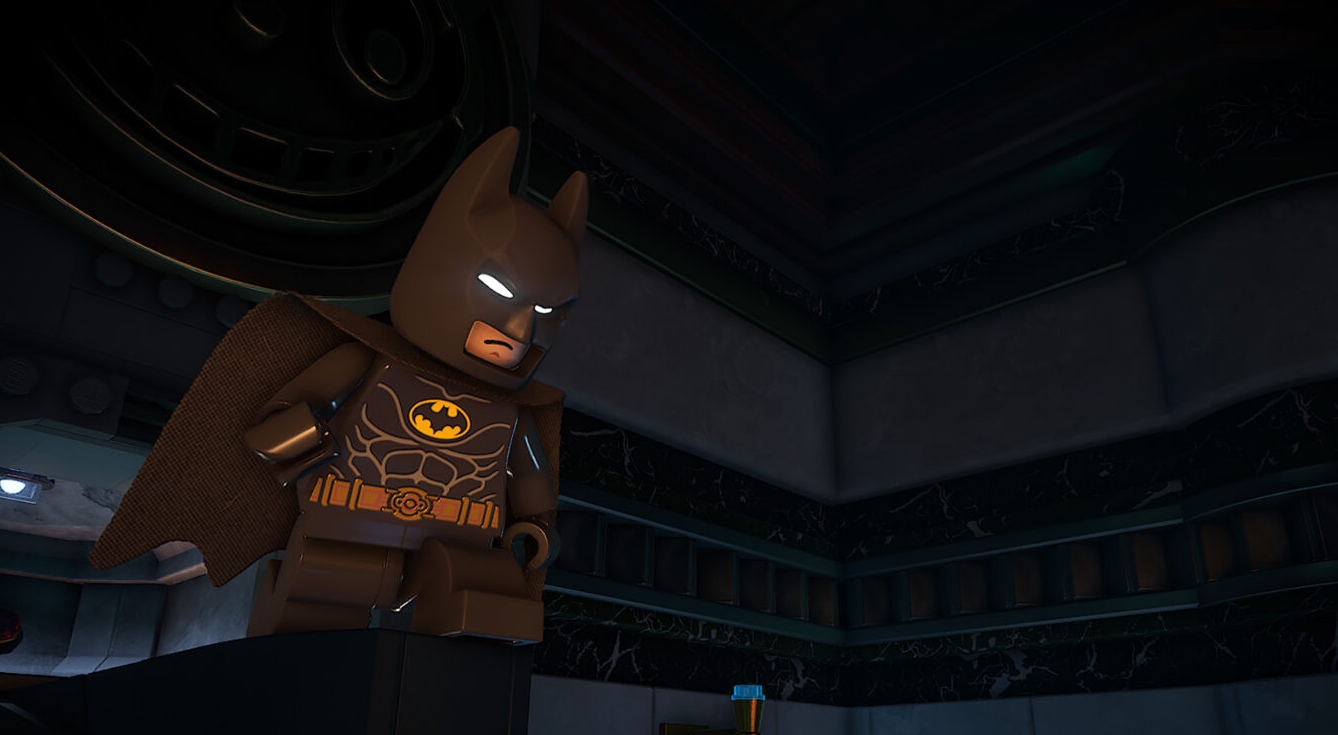
For players who haven’t touched either franchise — the three difficulty settings, two-player couch co-op, and self-contained story make this a reasonable starting point. No prior knowledge required.
And yes, it works for kids. Classic mode was designed with younger players in mind, and the humor never fully abandons its LEGO instincts regardless of which difficulty you pick.
How to play LEGO Batman: Legacy of the Dark Knight for free on Steam via VpeSports
Do you know the feeling when you find a game that you just can’t break away from? Here’s LEGO Batman: Legacy of the Dark Knight — just like that. You literally sit down to play for half an hour before going to bed, and then you look at your watch and realize it’s two o’clock in the morning, and you’re still chasing the Joker across the rooftops of Gotham with a goofy smile on your face. The game is really addictive – the dark atmosphere of the city, recognizable villains, unexpectedly funny moments in the signature LEGO style and fights that really take your breath away. Batman is here the way you’ve always wanted him to be—cool, but not without a bit of self-irony.
We know how it is — you just want to play, rather than having to figure out a bunch of incomprehensible instructions and waste time registering somewhere. That’s why we tried to make sure that the path from “I want to try” to “I’m already playing” was as short as possible. Register on the website, log in to your account, go back to the beginning of the article and click GET ACCOUNT — everything is laid out on the shelves, step by step. No unnecessary headaches, we promise.
And to keep up to date and not miss anything important, take a look at our Telegram channel. It’s not just dry news, there are real people who are just as fanatical about games as you are. We discuss patches, share accounts, enjoy updates, and sometimes just chat. If something doesn’t work out or you have a question, first look at the section “How to play for free – the complete guide“, everything you need is collected there. Well, if you haven’t found an answer there either, write to the chat, we are real people and we will definitely help.