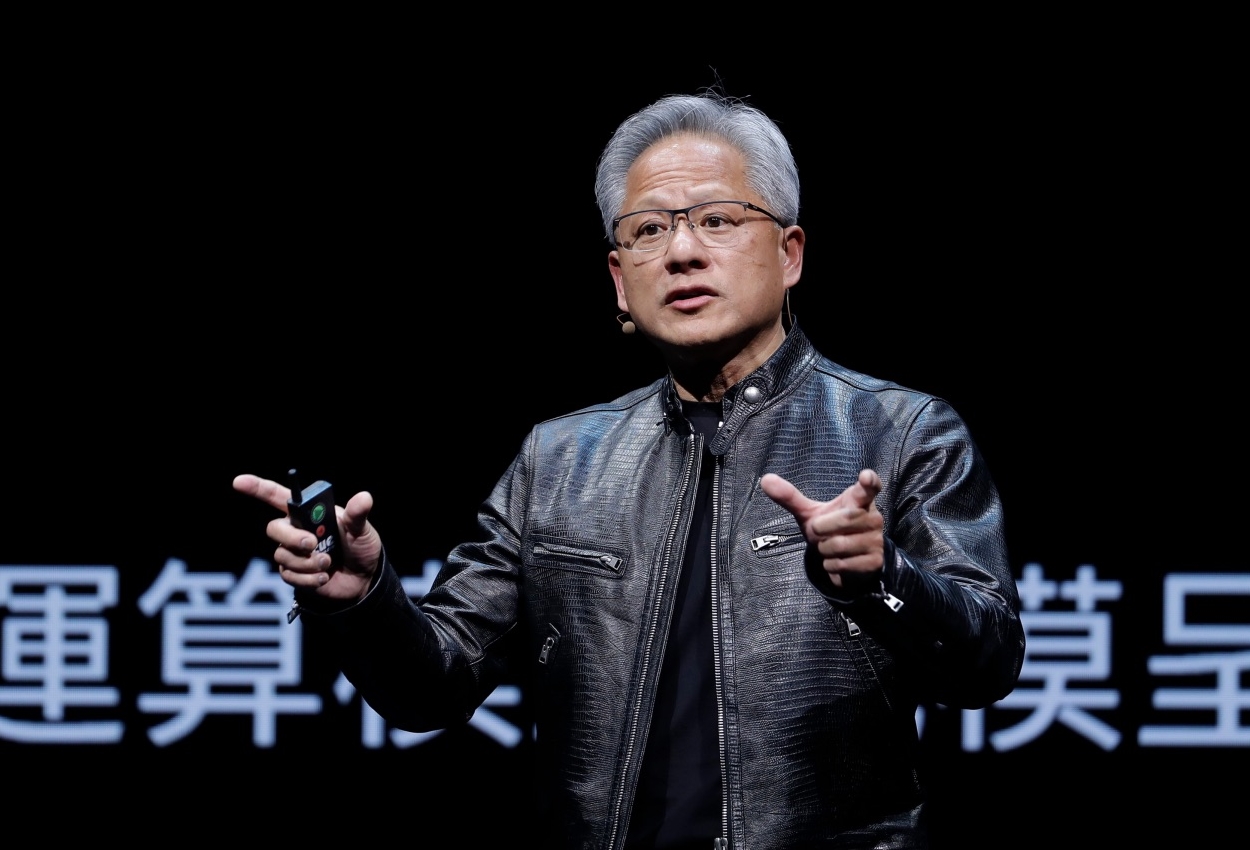
NVIDIA CEO Jensen Huang has once again come out in favor of artificial intelligence — and he has done so with his inherent confidence. Speaking to students at the Stanford Graduate School of Business, the head of the most expensive technology company on the planet said: there will be no mass unemployment due to AI. But those who refuse to take neural networks as allies will have a hard time.
Huang compared what was happening to the Industrial Revolution, only in fast—forward. According to his logic, I need to be perceived not as random, but as a tool that changes the very nature of work. Before algorithms displace live specialists, he considers it exaggerated: another scenario is much more realistic — the job is lost by the one who loses the competition to a more adaptive analogue that has already mastered neural networks. The wording, which Huang repeats not for the first time, is gradually becoming the mantra of the entire industry.: AI doesn’t replace people — people replace people using AI.
How artificial intelligence is changing the profession: an example from the head of NVIDIA
The head of NVIDIA gave an unexpected but illustrative example. Generative tools, he says, open up space for a career change — and without years of retraining. A carpenter armed with a neural network will be able to design interiors and produce ready-made drawings, actually moving into the appropriate profession of an architect or designer. The barrier to entry into creative professions is striking, and Huang doesn’t see it as a social elevator. The key word in his logic remains “human adaptability” — it is the speed with which he learns new tools that determines his position in the labor market over the years.
Huang alone has an unprecedented rate of AI proliferation — in his opinion, no technology in history has ever been consumed so quickly in the world. The reason is simple: accessibility and low entry threshold. To use a neural network, you don’t need to learn programming or buy expensive equipment — just open a browser. And as the AI infrastructure grows, Huang is convinced, the total number of jobs on the planet will also go up, not down. Optimism, of course, is convenient — especially for a person whose company sells the chips on which the revolution works. But his arguments sound the same.