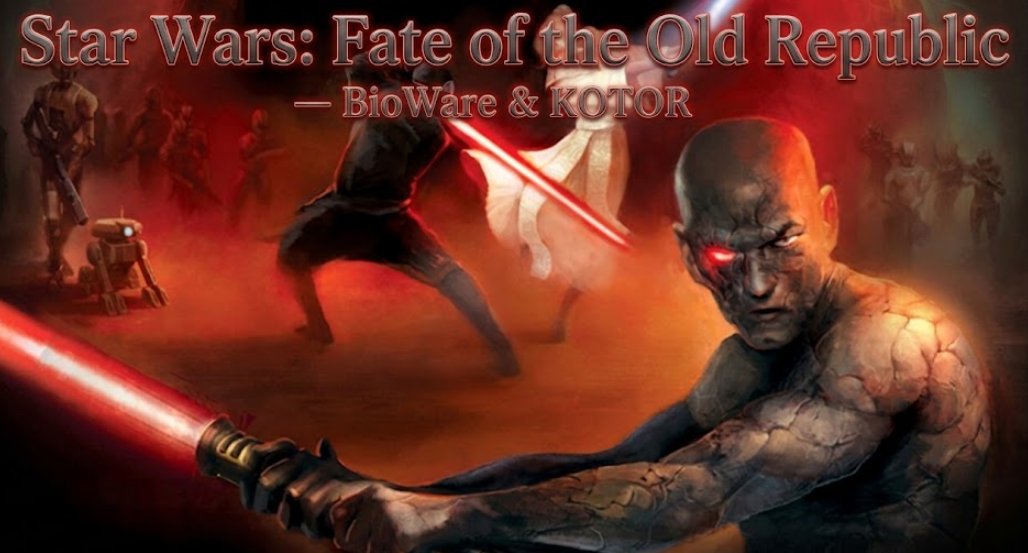
Yesterday’s Star Wars Day stirred up the fandom—Arcanaut Studio, the team behind Star Wars: Fate of the Old Republic, confirmed that a whole team of veterans is working on the game alongside Casey Hudson. Hudson, as a reminder, is the director of the original KOTOR and the Mass Effect trilogy. The announcement at The Game Awards 2025 had already sparked excitement, but now the intrigue has reached a new level.
Table of Contents
Who exactly is on the team?
Dan Fessenden, Melanie Faulknor, Caroline Livingston, Ryan Hoyle, and Pascal Blanche. We’re not sharing their names, so let’s clarify. Almost all of them are BioWare veterans. Fessenden, Livingston, and Hoyle worked on the original Star Wars: Knights of the Old Republic. Fessenden, incidentally, later worked on the MMO Star Wars: The Old Republic, and his last major project was Dragon Age: The Veilguard. Livingston has been doing voice work on BioWare projects since 2003, from Neverwinter Nights to Mass Effect and Dragon Age. Faulknor joined later, during the development of Mass Effect 3. Before that, she led projects on Star Wars: The Old Republic, and then made her mark on the production of The Outer Worlds 2 through Beamdog, a studio founded by former BioWare employees. A reputable company, to be sure.
Who is responsible for what at Fotor, and when can we expect the game?
Pascal Blanche is an exception to this rule. He’s not from BioWare, but his resume is impressive: art director on Myst IV: Revelation, Assassin’s Creed, Splinter Cell: Conviction, and Far Cry: New Dawn. He’ll be doing the same for Star Wars: Fate of the Old Republic. The rest of the team is split as follows: Fessenden took over technical design, Faulknor is responsible for external development, Livingston has been appointed Director of Production and Performance, and Hoyle is Technical Director. Hoyle, incidentally, worked on Neverwinter Nights and Jade Empire, also classics of the old BioWare, in addition to KOTOR.

The Arcanaut Studio website has already posted brief profiles of the entire team. It looks impressive. One can hope that this lineup, under Hudson’s leadership, will deliver an RPG worthy of KOTOR’s legacy. Hudson himself founded Arcanaut Studios just a year ago, and FOTOR is the studio’s first project. Openings for artists and designers are already open. This appears to be the early stages of active development. Hudson previously promised to release the game before 2030. But it’s unlikely to be much sooner. The main question—”when”—remains unanswered. And we’re unlikely to find out anytime soon.
Assembling such veterans is an excellent sign. If Hudson can recreate the magic of the original KOTOR in a modern setting, Star Wars will have a new great RPG. For now, all we can do is keep an eye on job openings and wait for new announcements.
How does Fate of the Old Republic compare to KOTOR and Mass Effect?
Fate of the Old Republic is clearly molded along classic BioWare lines, but don’t expect a blind imitation of the cult classic. This isn’t a remake. According to the developers at Arcanaut, the studio isn’t trying to roll out a direct sequel, but rather carefully transplanting familiar DNA into fresh soil. (The core remains the same: charismatic companions, gray morality, and branching paths that make you sweat over every click.) If you break down the emotions, the following situation emerges:
The main contrast between KOTOR and Mass Effect lies in the very approach to development. The old BioWare relied on a monolithic structure and hardcore RPG math. The new game, however, can take the best ideas of the past and package them in an expensive production, with expert outsourcing and Hollywood production.
Which BioWare mechanics will migrate to Fotor?
The company is relying on proven industry veterans. Arcanaut’s staff includes people who are experts in branching dialogue and reputation systems. Behind the scenes, Ryan Hoyle, Caroline Livingstone, Melanie Faulknor, and Dan Fessenden (they were the ones who handled the technical foundation, processes, and external studio collaborations at BioWare) are working. Sounds dry? In fact, it’s a critical foundation. This background ensures that the script doesn’t fall apart by the third act—and that the companions don’t turn into soulless dummies. To stand alongside the greats, FOTOR must pull off KOTOR’s key trick: making gamers physically feel the weight of their decisions, changing the team’s attitude and the tone of the entire campaign.
How will the new game surpass Mass Effect and KOTOR?
The balance of power is crystal clear. Shepard’s space opera captivates with its direction, while Revan’s adventures captivate with their impenetrable RPG depth. But Fate of the Old Republic holds all the cards to skillfully combine these approaches. The result should be a hybrid with a brisk, modern pace, large-scale scenes, and that unique squad chemistry. If the developers at Arcanaut don’t veer into mindless action, the project will hit the jackpot precisely on balance. We’re promised not a banal shooter with damage numbers, but a complex RPG story. The parallels with KOTOR and Mass Effect serve as a legitimate reference point for the genre’s DNA, not cheap PR.