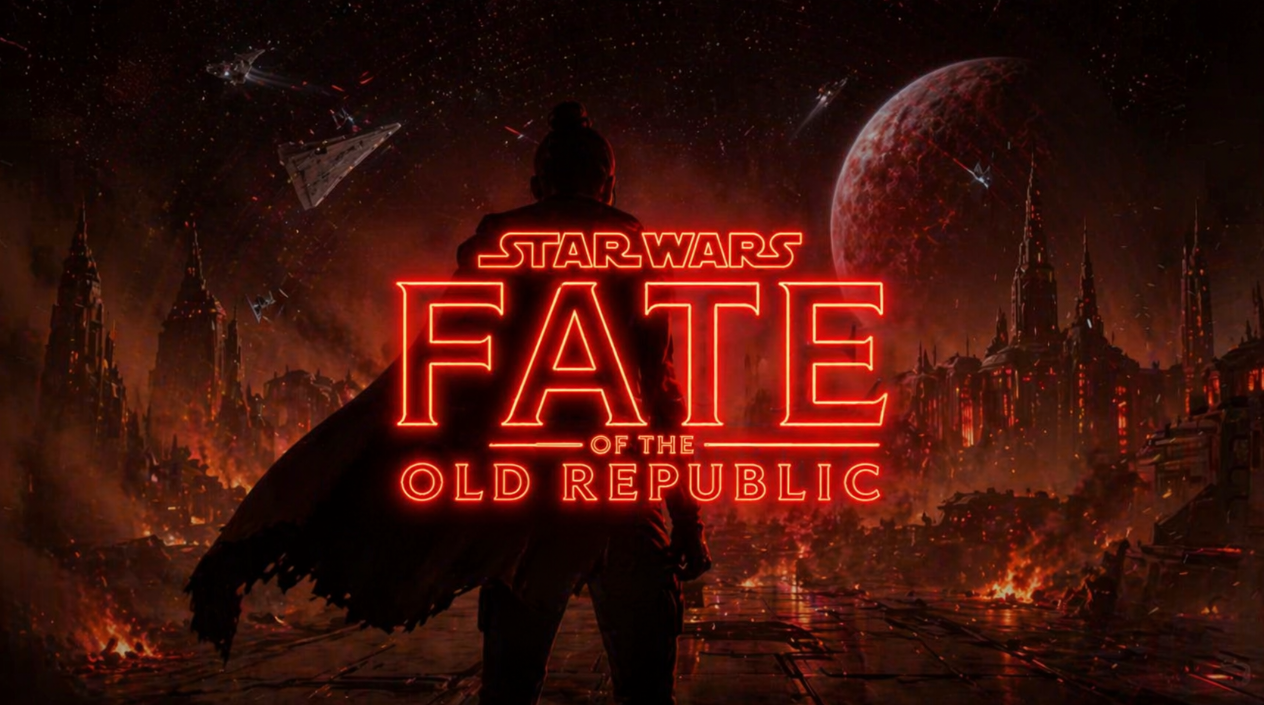
Announced for late 2025, Star Wars: Fate of the Old Republic—the very same story-driven RPG set in the legendary era of the Old Republic—has fans on edge. The December trailer has aired, the hype has died down somewhat, and with it came some unpleasant inside information: it looks like we’ll have a very long wait for the game. Arcanaut Studios, represented by Casey Hudson, has officially announced that the project will be released before 2030.
Yes, you heard that right. Before the end of the decade.
Table of Contents
Fate of the Old Republic: What’s Known About Development
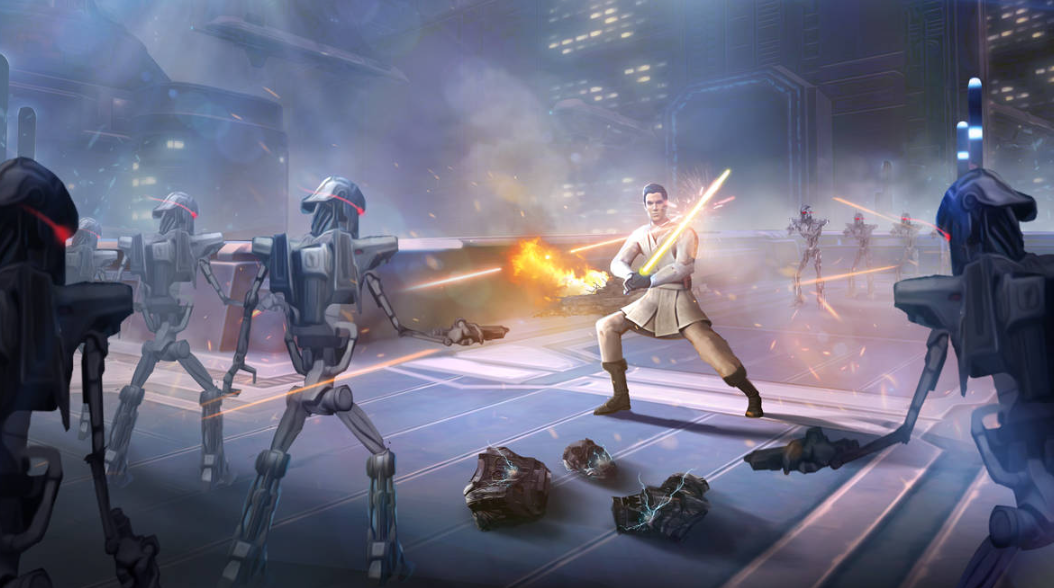
Since the December 2025 reveal, news about the game has been scant. This is, of course, par for the course for a project in its early stages. No one expected a release six months after the teaser. But the statement “release before 2030” sounds less like reassurance than like a cold shower. Especially for those who already imagined themselves wielding a lightsaber as a Force user sometime in 2027.
Casey Hudson of Arcanaut Studios commented on the situation amid rumors of multi-year delays. He confirmed that the game will reach players before 2030. Whether this statement represents a real production plan or an attempt to blunt the negative publicity remains unclear. The studio did not reveal any further details.
Fate of the Old Republic Development History, from Rumors to Announcement
Let’s get down to the backstory—without it, all the hype surrounding the project is half-meaningless.
Rumors about returning to the Old Republic era have been circulating online since 2019. It was then that it was leaked that BioWare Austin was developing a remake of the original KOTOR—with a separate team under the wing of Aspyr Media. Then began the production nightmare. In 2022, Bloomberg published a story about the studio’s freeze: the art director and lead designer had left. Two years later, Embracer Group finally put the kibosh on the remake—a wave of layoffs left no chance. Meanwhile, Casey Hudson and Mark Darrah—figures at the core of the old BioWare—formed their own studio, Humanoid Origin, which later became Arcanaut Studios. They went it alone. And, apparently, they were right.
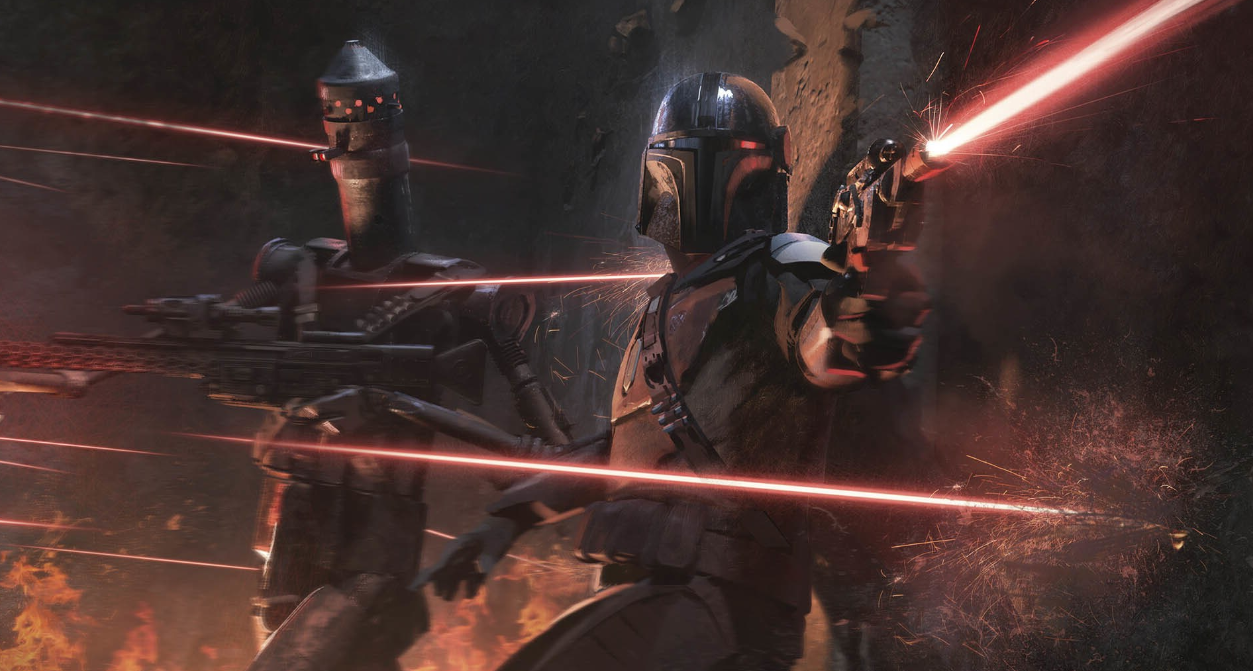
The big leak arrived in October 2025. Tom Henderson—yes, that same insider—published an internal document codenamed “Project Helios” on Insider Gaming. The documents mentioned the Mandalorian Wars, a Dragon Age-style companion system, and a focus on moral choice. EA and Arcanaut kept silent for exactly two months. Until December 12th and The Game Awards 2025, where the CGI trailer for Star Wars: Fate of the Old Republic landed. Zero gameplay. But there’s a hologram of Revan, the silhouette of an Interdictor-class Star Destroyer, and the Unreal Engine 5 logo in the end credits. Short and to the point.
Development & Announcement Timeline
An interesting touch from Henderson himself: some veterans of the original KOTOR (2003) and KOTOR II: The Sith Lords (2004) migrated to Arcanaut from the disbanded Obsidian team. This, in fact, explains why Lucasfilm Games so readily handed over such a lucrative IP to yesterday’s newcomers. On paper, it’s a young studio. In reality, it’s a collection of narrative RPG veterans with thirty years of experience on the team.
A Brief Guide to KOTOR Lore for Beginners
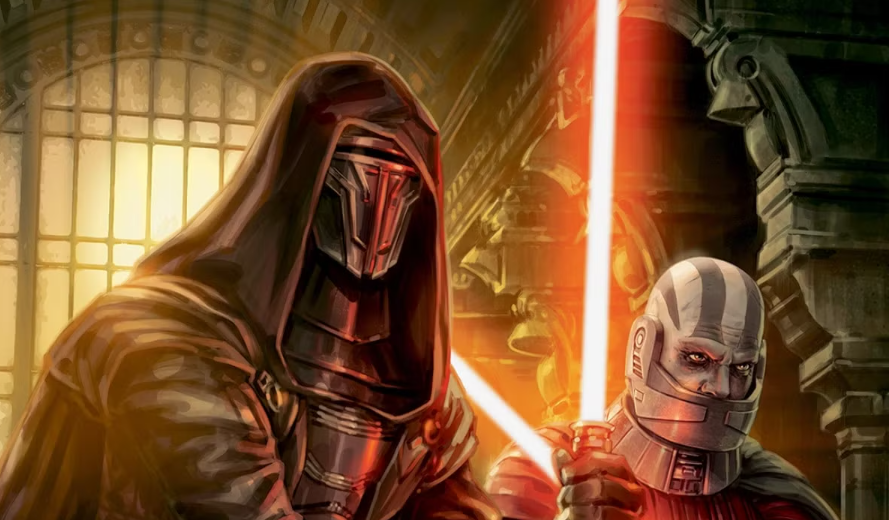
The events of the original duology take place 4,000 years before A New Hope—this era in the expanded universe was dubbed the Old Republic. The Republic and the Jedi Order rule the galaxy, but the balance is precarious. Mandalorians are surging from the Outer Rim, and the ancient Sith Empire is returning from the Unknown Regions. The air is thick with gunpowder. KOTOR (2003) centers on Revan, a former Jedi general who led the Republic fleet in the Mandalorian Wars and fell to the dark side along with his apprentice, Malak. The first game’s main MacGuffin is the Star Forge, an ancient rakkata factory churning out fleets directly from star matter. Obsidian’s KOTOR II: The Sith Lords (2004) continues the story with the Exile and the trinity of Sith Lords: Darth Nihilus, Darth Sion, and Darth Traya. Each is a distinct archetype of evil. Before starting Fate of the Old Republic, it’s worth combing through at least the basics:
-
The Mandalorian Wars — a protracted bloodbath in which future Dark Lords were forged
-
Revan and Malak — the archetype of the fallen hero that set the tone for the entire era
-
The Star Forge — a key artifact of the Rakatan civilization and the driving force behind the plot of KOTOR (2003)
-
Jedi Guardians, Consulars, and Guards — three classic specializations of the Order during the Old Republic era
-
The Sith Empire — not the one under Palpatine, but much older, fanatical, and, frankly, creepy
For a quick onboarding, a playthrough of KOTOR in the Aspyr version on Nintendo Switch or mobile platforms, the Star Wars: Knights of the Old Republic comic from Dark Horse (2006–2010), and the novel Revan by Drew Karpyshyn will suffice. The best way to browse the Mandalorian Wars chronology is through the Wookieepedia—the timeline is laid out by BBY year, down to the exact battle.
Unreal Engine 5 and Fate of the Old Republic System Requirements
Arcanaut Studios is building the project on Unreal Engine 5.5, with Nanite enabled for planetary geometry and Lumen for global illumination—technical director Eric Orama confirmed this in an interview with IGN in February 2026. The studio deliberately abandoned its own Frostbite engine, the same one BioWare struggled with during the development of Anthem and Dragon Age: The Veilguard. The logic is simple: licensed UE5 speeds up the pipeline and eliminates dependence on Electronic Arts‘ internal tools. Less headaches, more results.
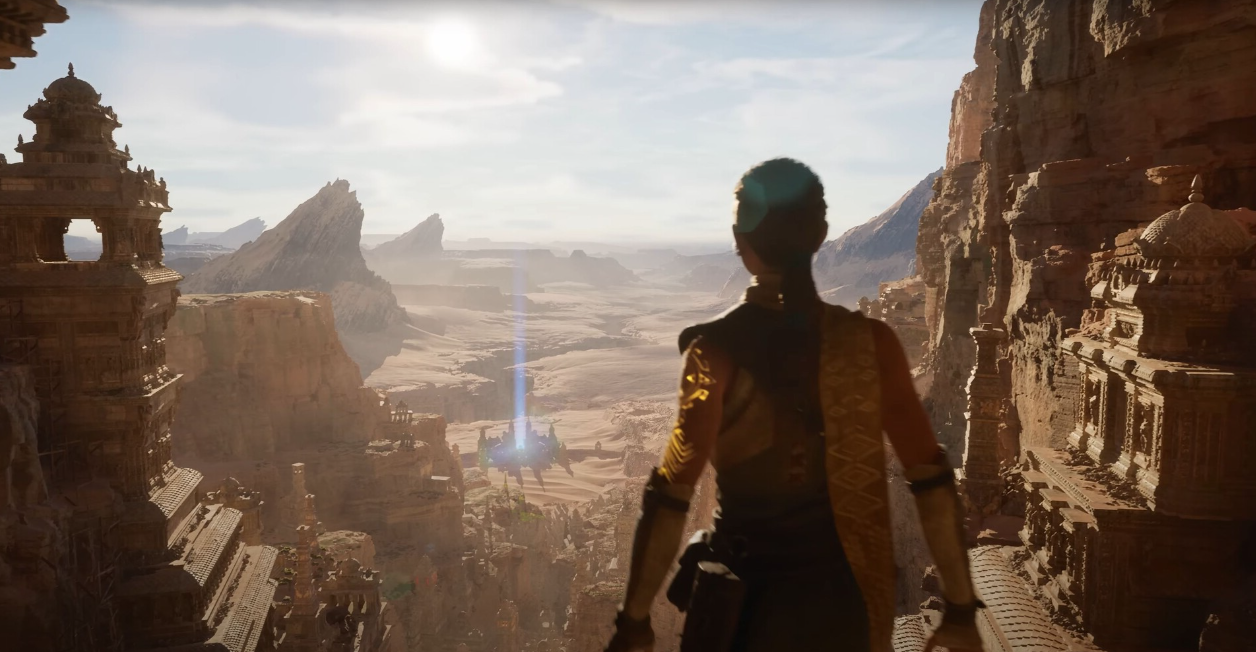
There are no official system requirements, and none will appear for the next two years. However, based on related projects running on UE 5.5 with Nanite and Lumen (Black Myth: Wukong, The Witcher 4, Fable), the range is already clear:
Estimated System Requirements
A full range of upscaler features is announced: DLSS 4 with Multi Frame Generation technology for RTX 50-series graphics cards, FSR 4 for Radeon RX 9000, and XeSS 2 for Intel Arc. Ray tracing is optional, with two modes: classic Ray Tracing for reflections and global illumination, plus Path Tracing for high-end configurations—a system proven on Cyberpunk 2077 and Alan Wake 2. DirectStorage 1.2 is included out of the box, so an NVMe SSD goes from a luxury to a basic necessity. SATA won’t cut it anymore.
Console releases are also on the table. PS5, PS5 Pro, and Xbox Series X|S are officially confirmed. Nintendo Switch 2 is in limbo: porting a UE5 title from Nanite to a Nintendo hybrid is technically feasible (Wukong is a precedent), but Arcanaut Studios is evasive when asked. For now, neither yes nor no.
Community Reaction to the Star Wars: Fate of the Old Republic Delay
This topic has instantly become one of the hottest on Reddit. Players’ reactions vary: some shrug philosophically, others are downright sarcastic.
One of the most insightful comments came from user Abelian75, who aptly captured the absurdity of the current reality of the gaming industry:
“It says a lot about the state of budgets and timelines in game development when the phrase ‘don’t worry, this game whose trailer we just saw will be released in less than five years’ is a statement that actually has to be made publicly.”
It’s hard to disagree. Just a decade ago, the words “the game will be released within five years” would have caused shock and outrage. Now, it’s almost the norm. Sadly, the norm.
Should we expect Star Wars: Fate of the Old Republic?
The question remains open. The very concept—a story-driven RPG set in the Old Republic—still sounds like a dream come true for any Star Wars fan. The period surrounding the Mandalorian Wars and the Rise of the Sith remains a gold mine for narrative gameplay. But the information vacuum and such “reassurance” statements don’t inspire confidence.
One can only hope that Arcanaut Studios is truly using these years wisely and hasn’t simply shelved the project. For now, Star Wars: Fate of the Old Republic is entering hypersleep. It won’t awaken until 2028-2029.
Star Wars: Fate of the Old Republic Plot and the New Chapter of the Galaxy
Casey Hudson is open about the original KOTOR being conceived as the perfect adventure for every Star Wars fan. 25 years have passed. Those ambitions, he says, have not faded—they’ve only grown stronger and are now enhanced with new technical capabilities. Fate of the Old Republic is a chance for Arcanaut Studios to re-enter a galaxy where player freedom, cinematic presentation, and total immersion take center stage.
Incidentally, the story will be a clean slate. It’s being written specifically for this project, ensuring that the game’s varied playthroughs don’t conflict with the feeling of a true, cohesive adventure. Don’t expect any direct connections to the KOTOR plot. Only the spirit, only the recognizable approach.
Lucasfilm Games is closely overseeing the development, and the company tirelessly emphasizes that the Old Republic era is an “open canvas.” A vast creative sandbox where original stories can be crafted without the constraints of films and TV series. New characters, unexplored worlds, galactic-scale conflicts, and personal dramas—all at the team’s disposal. Hudson emphasizes that the project came to fruition thanks to a rare coincidence: Arcanaut Studios’ vision perfectly matched Lucasfilm’s willingness to entrust them with a new chapter in the Star Wars story.
Philosophy of the Force? Yes. Political intrigue and moral dilemmas? Of course. The developers want to retain the depth and cinematic quality that KOTOR is still adored for, while also telling a standalone story. One that will satisfy both veterans and newcomers without leaving them feeling lost.
However, details are still scant. The game is in its early stages, so specifics regarding characters, planets, and key events are being kept under wraps. What is known is that the conflicts and heroes will be entirely new, and every decision will be truly meaningful. In the spirit of the best traditions of the old BioWare, but adjusted for 2026 and the capabilities of modern engines.
Star Wars fans react to the announcement of Fate of the Old Republic
Star Wars fans are on edge: there’s hope for a new major RPG, but many are skeptical. So many years have passed since Knights of the Old Republic—the legendary KOTOR—that any new release in this universe seems like a godsend. However, the joy of the announcement of Star Wars: Fate of the Old Republic was instantly mixed with the bitterness of disbelief.
Reddit is already seething—and not from hype. The thread that started after Casey Hudson’s statements resembles a battlefield, where doubts attack every word. Users are wondering: what about the promises of Mass Effect 3, which, in their opinion, never came to fruition? And then they add fuel to the fire—the recent history of Star Wars game releases doesn’t inspire optimism. Too many high-profile projects have stumbled at the start or were unfinished.
One user, HearTheEkko, summed up the fear succinctly: “I want to believe it, but I’m extremely skeptical that a newly founded studio can pull off a single-player Star Wars RPG in less than five years.” What can you add to that? The logic is ironclad.
And yet, hope remains. A warm, smoldering one. Fans are secretly praying that the game will ultimately be good. For now, the safest course is to keep expectations low and keep a cool head. Fortunately, there are plenty of other games on the market. And it’s always more profitable for studios to spend an extra year polishing than to release a half-baked product. Right now, disappointingly little is known about Star Wars: Fate of the Old Republic—no dates, no gameplay, not even a clear release window.
Incidentally, an important detail: Casey Hudson is more than just a name. This is the man who crafted the narrative of the original Mass Effect trilogy. His specialty is deep characters and spine-tingling plot twists. This inspires cautious optimism. What’s the setting? The Old Republic era—thousands of years before the events of the original saga—is one of the most densely developed and fan-favorite chapters of the expanded universe. There’s plenty of scope for both writers and game designers to explore.