Twenty-eight years. That’s how long it took Nintendo to finally go back and rebuild one of the most important games ever made — from the ground up. The Legend of Zelda: Ocarina of Time is coming to Nintendo Switch 2 as a full remake, and that single word makes all the difference. Not a remaster. Not an HD port. A remake — with what Nintendo officially calls an “updated design.” Here’s why that matters more than it might seem.
Table of Contents
Remake vs. Remaster: Why the Distinction Changes Everything for Ocarina of Time
The gaming industry has trained us to be cautious with labels. A remaster typically means the same game with a higher resolution, maybe a smoother framerate, and cleaned-up textures. That’s what many fans expected — something along the lines of what Capcom did with Resident Evil HD or what Square Enix has done repeatedly with Final Fantasy titles.
But Nintendo’s official North American store page for the game says something different: “The Nintendo 64 classic is reborn as a full remake on Nintendo Switch 2.” And right alongside that — the phrase “updated design.”
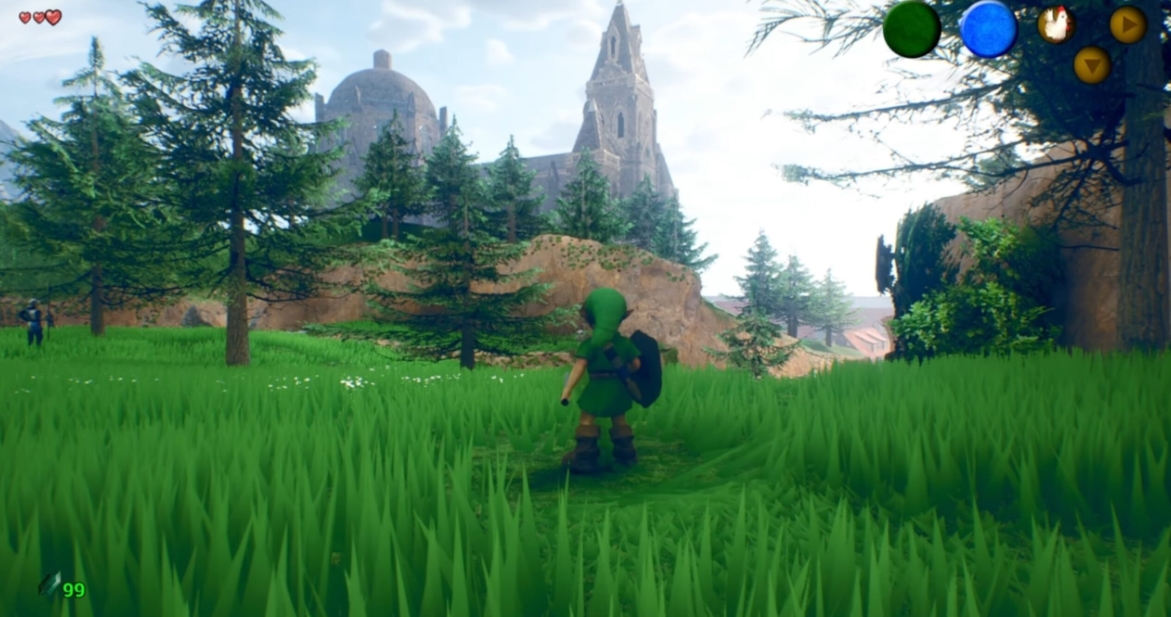
That’s not marketing filler. In the context of a confirmed remake, “updated design” is a direct signal that the visual overhaul goes deep — character models, environment architecture, animations, possibly UI and select gameplay systems. This is closer to what Capcom did with Resident Evil 2 (2019) than a simple technical refresh.
The Nintendo Direct Announcement: Teaser, Official Description, and What We Actually Saw
Nintendo saved Ocarina of Time for last during the latest Nintendo Direct — and that placement alone tells you something. The company tends to hold its biggest announcements for the final slot, and this one landed exactly as expected: the internet went loud within seconds.
What was actually shown was brief — a short teaser, no gameplay footage, no runtime details. But the official product description filled in the most critical gap:
“Dive into the world of Ocarina of Time with updated design and timeless gameplay.”
Pay attention to that second part: “timeless gameplay.” This strongly suggests Nintendo intends to preserve the original’s core mechanics rather than reinvent them. The dungeons, the Z-targeting combat system, the ocarina puzzles — all of that appears to be staying intact. What’s changing is the shell around it.
Why Ocarina of Time Still Matters — and Why Remaking It Is Such a Big Risk
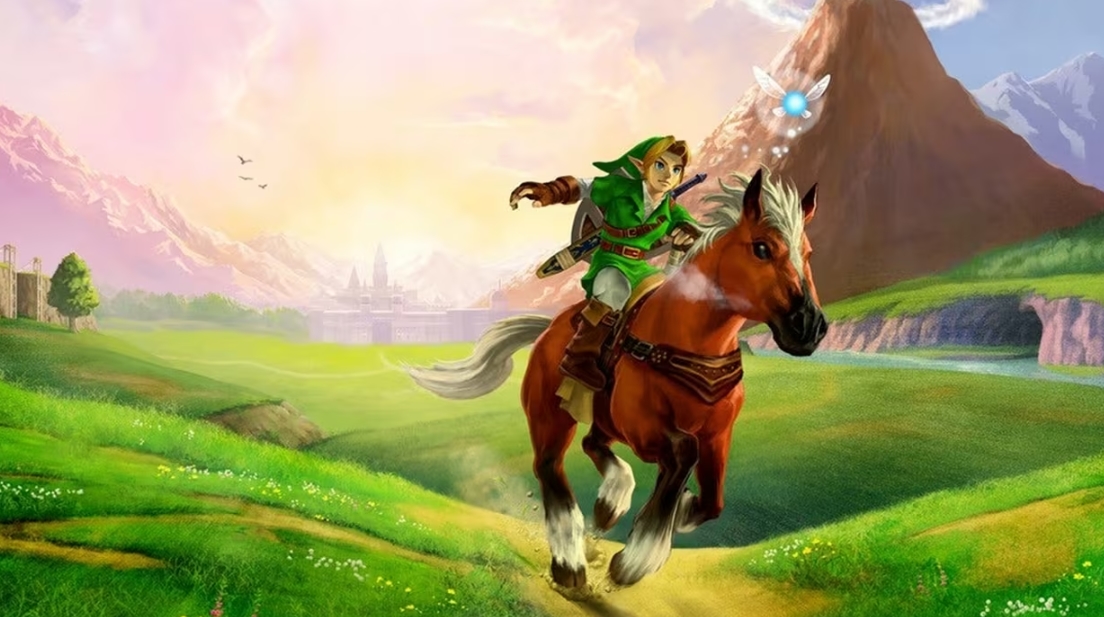
For anyone coming to this fresh: The Legend of Zelda: Ocarina of Time launched in 1998 on the Nintendo 64 and is widely considered one of the most influential games ever created. It didn’t just define the Zelda series — it helped shape what 3D action-adventure games look like across the entire industry.
| Feature | What Ocarina of Time Contributed |
|---|---|
| Z-Targeting | Redefined 3D combat lock-on — a system still copied by developers today |
| Open World Design | Hyrule as a living, connected space rather than a string of disconnected levels |
| Narrative Structure | Link’s transition from child to adult as a storytelling device — emotional and mechanical |
| Dungeon Design | The gold standard for puzzle-based level design across the genre |
| Music Integration | The ocarina as a playable in-game instrument woven into core puzzle mechanics |
Remaking a game this revered carries serious weight. The fanbase is split between veterans who have decades of muscle memory and emotional attachment to every pixel of the N64 version, and a younger generation that has never played it at all. Nintendo has to satisfy both — and that’s a genuinely difficult needle to thread.
What Will Actually Change in the Ocarina of Time Remake on Switch 2
Official details are thin right now. But “updated design” paired with “full remake” gives us enough to make educated guesses about the scope of changes.
What Will Almost Certainly Be Overhauled
-
Graphics — a full rebuild, not an upscale or filter pass
-
Character models and environments — new geometry, textures, and lighting systems
-
Animations — brought up to modern standards of fluidity and weight
What’s Likely Being Updated
-
UI and inventory system — modernized for current players
-
Controls — adapted for Joy-Con 2 and Switch 2 capabilities
-
Audio — potentially a re-orchestrated soundtrack alongside updated sound design
What Nintendo Will Probably Leave Intact
-
Dungeon structure and progression order
-
Core mechanics — Z-targeting, ocarina songs, collectibles
-
The main story and its beats (though the localization may be refreshed)
This approach makes strategic sense. The mechanics of Ocarina of Time are considered near-perfect by a significant portion of the gaming community. Touching them risks backlash. Rebuilding the presentation while keeping the foundation is the safer — and arguably smarter — move.
What We Still Don’t Know: Release Date, Gameplay, Developer
To be straight about the gaps in what’s been revealed so far:
| What Everyone Wanted to Know | Current Status |
|---|---|
| Release date | Not announced |
| Full gameplay footage | Not shown — teaser only |
| Developer | Unconfirmed (Nintendo internally or external studio) |
| Depth of gameplay changes | Unknown |
This is entirely in line with how Nintendo handles major announcements — confirm the thing exists, let the internet process it, then reveal details closer to launch. A dedicated showcase or a deep-dive Nintendo Direct segment focused on the game is the most likely next step.
What This Announcement Means for Players — and What Comes Next
The Ocarina of Time remake announcement is bigger than one game. It’s a statement about Nintendo’s approach to Switch 2 as a platform: the company is betting on reimagined classics alongside new IP, not just next-generation sequels. That’s a pattern worth watching.
For Zelda fans specifically, this is arguably the most significant announcement in years. The original Ocarina of Time is barely accessible to modern players without emulation or a Nintendo Switch Online Expansion Pack subscription. A ground-up remake on Switch 2 puts it in front of an entirely new generation — and if Nintendo executes this well, it could be one of the defining releases of the platform’s library.
The real test comes when Nintendo shows actual gameplay. That’s the moment that will settle the debate — whether this is a genuinely deep reimagining, or a polished remaster wearing a remake’s name badge. Until then, the wording on that store page is all we have. And honestly? It’s enough to be cautiously excited.