

If every boomer shooter were judged by its first five minutes, Dread Templar would fail spectacularly. Muddy textures, rough-looking monsters, practically no story — compared to the slick trailers of Ion Fury or the brooding atmosphere of DUSK, it looks underwhelming. And yet this is exactly the game that’s hardest to put down: you boot it up for an evening and come back to reality past midnight, surrounded by demon corpses and a rune collection you really don’t want to abandon.
Dread Templar is largely the work of a single developer going by T19 Games. A year and a half in Early Access, a full release on January 26, 2023, published by Fulqrum Publishing — and a Steam rating of Very Positive (83% of over 1,000 reviews). Modest numbers, but for an indie shooter with an austere visual style, convincing enough. Let’s dig into what’s actually here.
Table of Contents
Dread Templar at a Glance: What Kind of Game Is This and Who Is It For
Genre-wise, it’s a classic old-school FPS in the spirit of the mid-to-late 1990s: no health regeneration, no cover system, no aim-down-sights. Your hero charges forward, guns down hordes of monsters, collects medkits, and hunts for keycards. A familiar formula.
But Dread Templar layers several modern elements on top of that retro foundation: a rune-based upgrade system, a dash, bullet time, and a branching arsenal with real customization depth. The result sits precisely at the crossroads of two eras — authentic enough to satisfy fans of Quake and early Doom, and accessible enough not to alienate players who discovered the genre through modern retro shooters.
Who should play it:
-
Boomer shooter fans — DUSK, Prodeus, Ion Fury, Ultrakill
-
Anyone who grew up on Quake and Hexen and wants something new in that spirit
-
Players who care about upgrade systems and level exploration within the genre
-
People with 6–10 hours for a tight, no-filler playthrough
Who should skip it:
-
Those expecting rich visuals or cinematic storytelling
-
Anyone who can’t stand pixel-art aesthetics
-
Multiplayer shooter fans — there’s no online mode here
Movement Feel and Controls: Why Tempo Matters More Than Graphics
The first thing you understand after a few minutes with Dread Templar is that the controls are done right. Not “acceptable,” not “decent for an indie” — actually right.
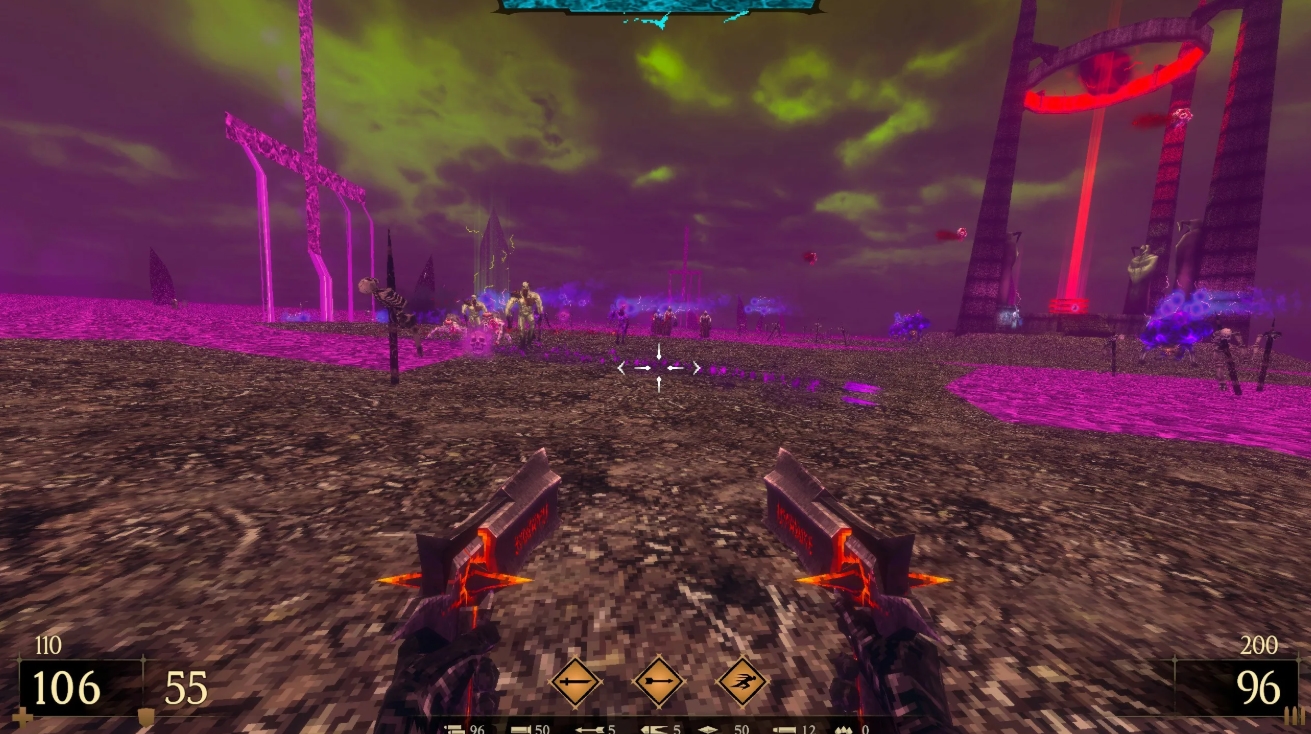
The character responds instantly, with no input delay and none of the floaty inertia that turns every turn in lesser shooters into a fight against the controls themselves. Movement speed is noticeably higher than most modern FPS games, and that’s a deliberate choice. If Doom Eternal is a sports car with razor-sharp responses, the Templar feels like something jet-powered: accelerates instantly, changes direction without lag.
The movement toolkit includes a dash — not a grappling hook, not a jump pad, just a clean directional burst that lets you dodge a volley or slip around a corner. Bullet time is also in the mix, slowing everything down for a second to land that awkward shot. Both mechanics slot naturally into the rhythm of combat without feeling like bolted-on features.
This is why Dread Templar pulls you in faster than expected. The underwhelming visuals stop mattering because the feel of movement and shooting simply works.
Dread Templar’s Arsenal: From Pump Shotgun to Hellish Revolver
A shooter’s character lives in its weapons. Here, there’s plenty of character to go around.
You start with dual pistols and a pair of katanas that can be fused and thrown like a javelin — the game signals within the first minute that it isn’t going to bore you. From there the arsenal expands organically: new weapons are scattered across levels, with several hidden in secret areas.
| Weapon | Notes |
|---|---|
| Dual Pistols | Starting weapon, versatile, ammo-efficient |
| Pump Shotgun | Workhorse weapon, excellent balance of damage and range |
| Double-Barrel Shotgun | Higher burst damage, shorter range, heavy kick |
| Bow | Infinite quiver, precise shots, silent fire mode |
| Rocket Launcher | Area damage, slows combat tempo |
| Hellish Revolver | One-shot headshots, high style coefficient |
| Electric Traps | Stun enemies in place, reward positional play |
| Katanas | Melee mode + throwable projectile mode |
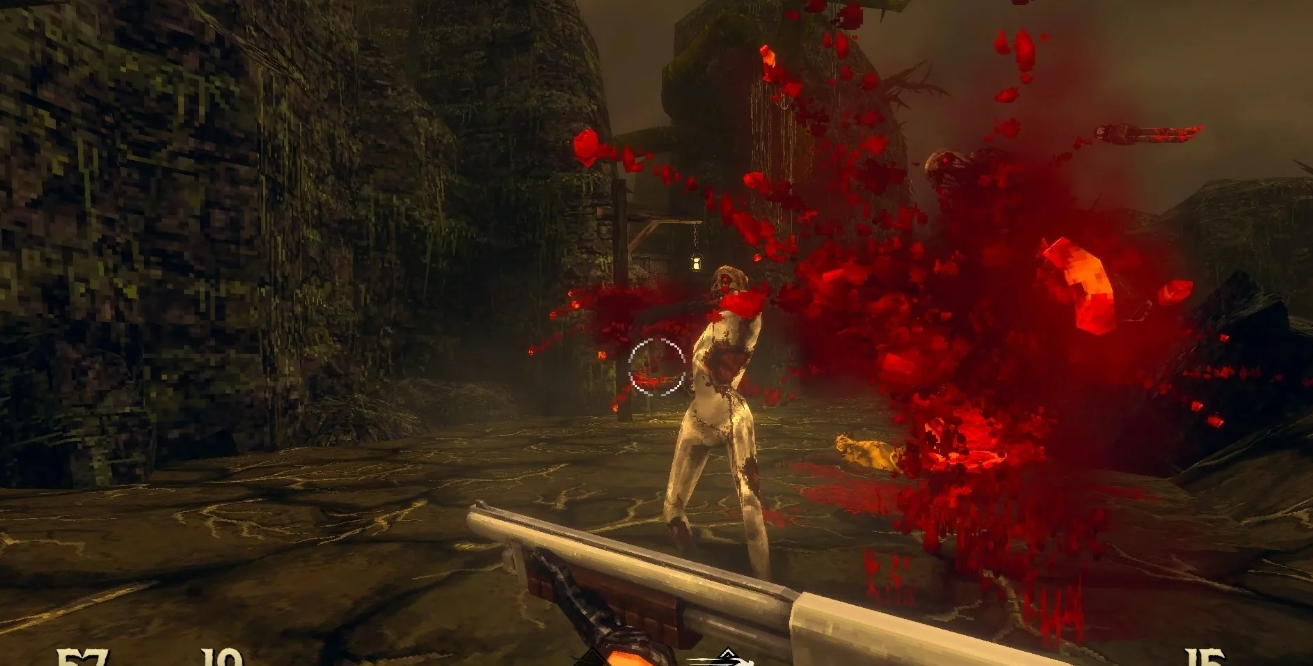
The hellish revolver tends to become a personal favourite — it looks the part and does exactly what a weapon with that name should do: removes heads with a precise shot. The pump shotgun, meanwhile, is a dependable workhorse that stays relevant through the final levels.
What Sets Dread Templar’s Weapons Apart From Standard Boomer Shooters
Most retro shooters give you a bunch of guns with different stats and call it a day. Here the design philosophy is different: the game never forces a specific weapon into a specific situation. Want to clear every fight with the shotgun? Works fine. Prefer to snipe from range with the bow? Also works. The balance holds up across approaches — which is rarer in the genre than it should be.
Game freely with no risks – get a free account in steam.
The Rune and Upgrade System: 100+ Unlocks — That’s Actually Serious
This is where Dread Templar separates itself most clearly from the competition. The rune system is a genuine build-crafting layer inside a genre where “progression” usually means finding a bigger gun.
Two types of resources are scattered across levels: blood shards (currency for unlocking upgrade slots) and the runes themselves. Each weapon has three slots to open.
How Silver and Gold Runes Work
Silver runes are standard stat upgrades: increased damage, faster fire rate, larger ammo capacity. Nothing surprising, but they’re effective and you feel the difference in practice.
Gold runes are where things get genuinely interesting. Each gold rune fundamentally changes how a weapon behaves:
-
Explosive arrowheads for the bow
-
Slowing effect for the shotgun (turns it into an ice cannon)
-
Armor-piercing rounds for the pistols
-
Chain lightning for the electric traps
There are around a hundred runes in total. They’re the main reason to actually explore every corner of every level. Missed half the secrets on a map? Then half your potential upgrades are locked, and your build will need rethinking.
A separate layer on top of that: “super secrets” — special puzzles where you have to notice something out of place (a suspicious object, a symbol that doesn’t belong), perform a ritual, or trigger a hidden mechanism. The reward is a unique fire mode for a specific weapon. These don’t come from button-mashing — and that’s exactly why they feel satisfying when they click.
Level Design and Secrets: 25+ Maps Full of Hidden Areas and Puzzles
A year and a half in Early Access wasn’t just time served — it produced real, tangible improvements to the level architecture. The difference between Act One and what follows is noticeable: the opening crypts and graveyards are functional but visually repetitive. Act Two — frozen canyons, ice caves, massive shipwrecks buried under frost — is a different proposition entirely.
Each chapter shifts its aesthetic and emotional tone. The pirate-themed section of Act Two is a particular standout, with its icy seascapes and matching soundtrack creating something unexpectedly atmospheric — almost melancholy — inside a game about slaughtering demons.
What to expect across the levels:
-
Over 170 secrets distributed across the full game
-
19 hidden side areas behind non-obvious passages
-
More than 20 puzzles with meaningful rewards
-
10 bosses with distinct attack patterns
-
20+ enemy types with different behaviors
The game lets you replay any completed level without losing progress — useful, given that missing half the secrets on a first pass is completely normal. The one frustrating omission: detailed per-level statistics aren’t accessible from the main menu. Working out what you missed and where requires either memory or outside help.
Combat design is also thoughtful. Situations where you’re locked in a tiny room with five dangerous enemies are rare. Almost every fight gives you space to maneuver, fall back, reposition. That’s not a given in a genre where many developers mistake “fair difficulty” for unfair traps.
Difficulty and Game Feel: Hardcore Without the Cheap Shots
There’s a widespread belief among retro shooter developers that old-school games must make you sweat and rage — typically achieved through deliberately unfair situations: enemies spawning behind you, instant deaths with no warning, maps with unreadable layouts.
Dread Templar sidesteps that temptation. Even on the third of four difficulty settings (the recommended choice for genre veterans), the game stays legible: enemy attacks can be read, patterns can be learned, and death almost always feels earned rather than arbitrary.
That said, you won’t be coasting. Enemies respond fast, some monsters are dangerous even solo, and a mixed crowd of demons rewards careful weapon selection and positioning. Anyone who stands still gets torn apart in seconds.
Worth noting separately: there’s a secret fourth difficulty setting — not accessible from the menu, but unlocked through a specific in-game sequence. Finding it is a small puzzle in itself. Completing the game on it is for people who have internalized the genre at the reflex level.
Dread Templar vs. DUSK, Ion Fury and Other Boomer Shooters: Where It Fits
The retro FPS market has grown crowded enough that competition inside the genre is real. So where does Dread Templar actually sit?
| Game | Pace | Progression | Difficulty | Visuals | Length |
|---|---|---|---|---|---|
| DUSK | High | Minimal | High | Low-poly 3D | ~6 hrs |
| Ion Fury | Medium | None | Medium | Build engine | ~8 hrs |
| Prodeus | High | None | Medium | Modern pixel | ~6 hrs |
| Ultrakill | Very High | Deep | Very High | Stylized 3D | 10+ hrs |
| Dread Templar | High | Deep | Medium–High | Retro pixel | 6–10 hrs |
Dread Templar sits closest to DUSK in spirit and pacing. Both prioritize speed and tactile shooting, both avoid cheap difficulty. But Dread Templar gains an edge through its rune system — DUSK offers a clean, almost spartan experience, while the Templar adds a meaningful customization layer on top of it.
Against Ion Fury — the tempo is higher, the visuals are more austere, but the action is denser. If Ion Fury feels like a proper spiritual successor to Duke Nukem 3D, Dread Templar reads more like a Quake heir with traces of Heretic.
Ultrakill is a different league in terms of mechanical depth and difficulty. If style-ranked combo systems and high-execution demands appeal to you — that’s the one. If you want a retro-flavored rest with real upgrade depth but without needing to memorize enemy patterns frame-by-frame — Dread Templar delivers.
Graphics, Sound, and Visual Style: Retro Pixels With a Personality
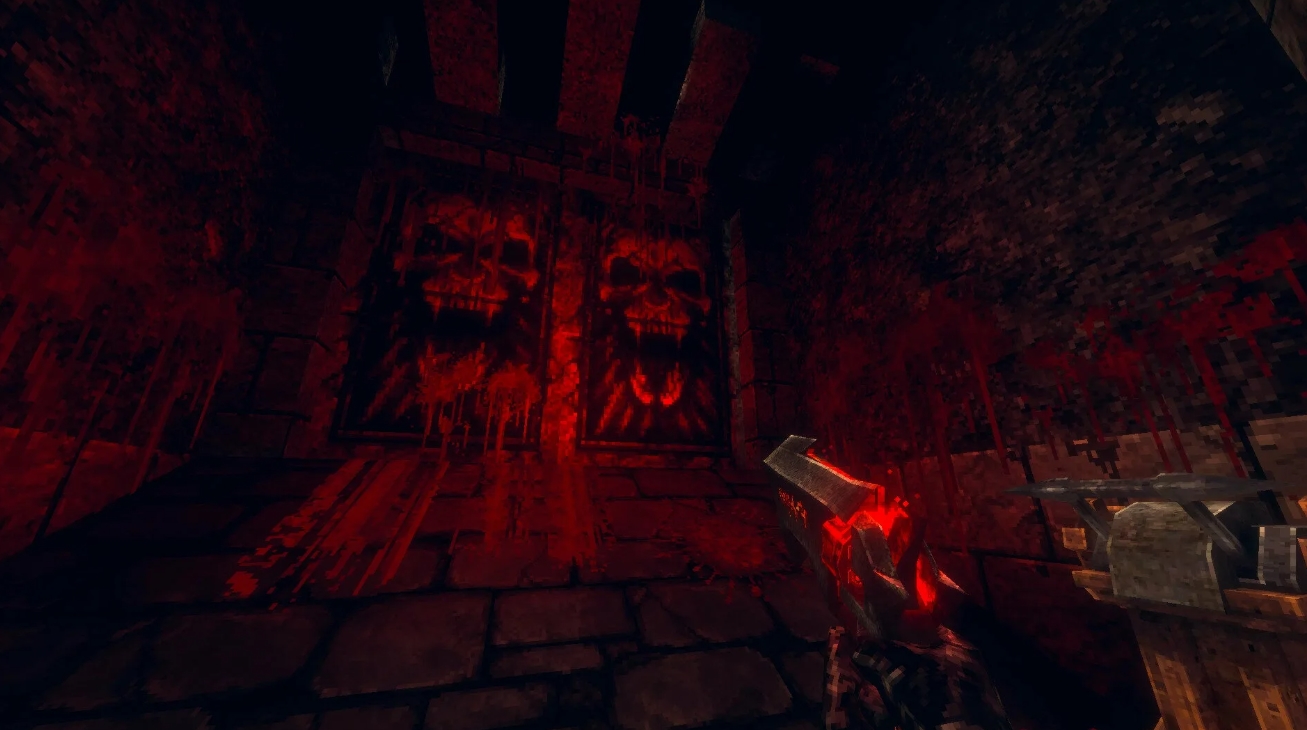
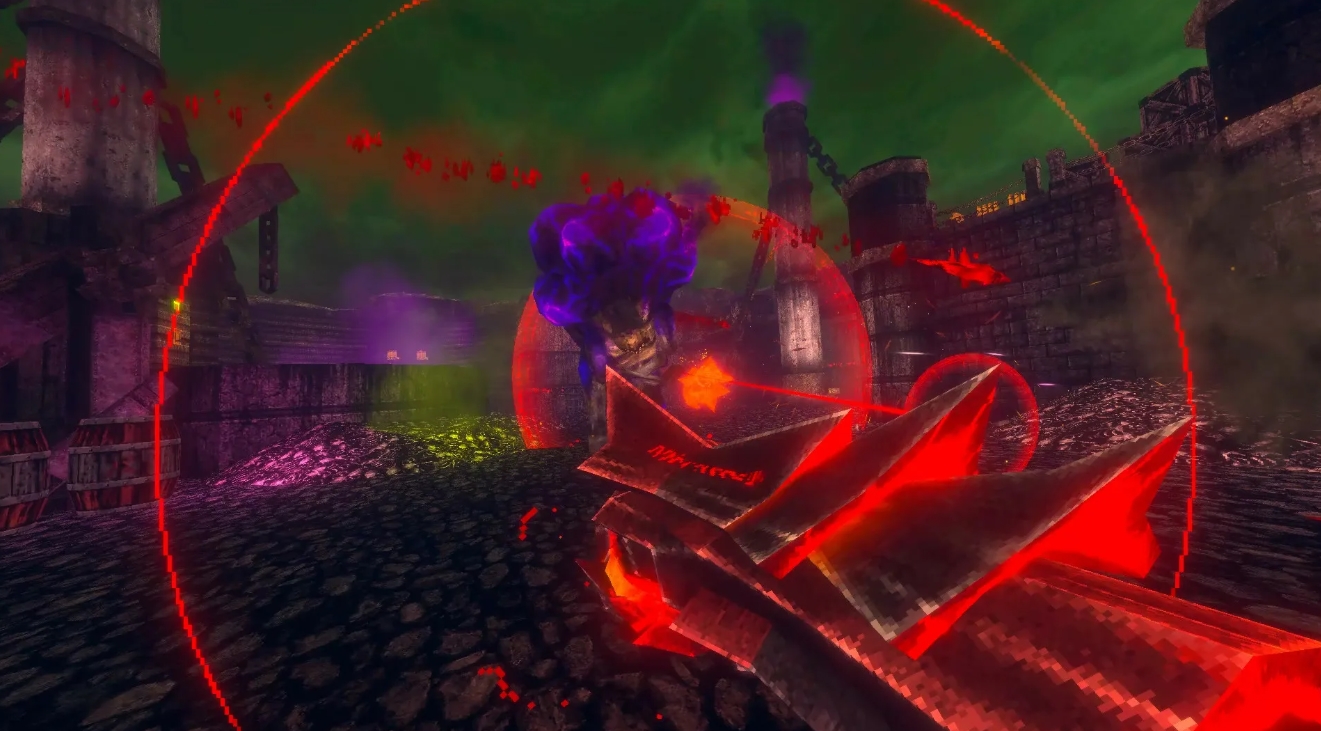
Honest assessment: Dread Templar’s screenshots won’t sell the game to anyone unfamiliar with the genre. The pixel aesthetic is deliberately sparse, the monsters look rough, and the UI is minimalist to the point of austerity.
But the game does have a visual identity — an actual identity, not an accidental visual noise. The weapons carry weight in their designs: the hellish revolver looks the part, the katanas in flight are genuinely satisfying to watch. Several environments — especially the frozen pirate ships of Act Two — achieve a memorable atmosphere precisely by working skillfully within the format’s constraints.
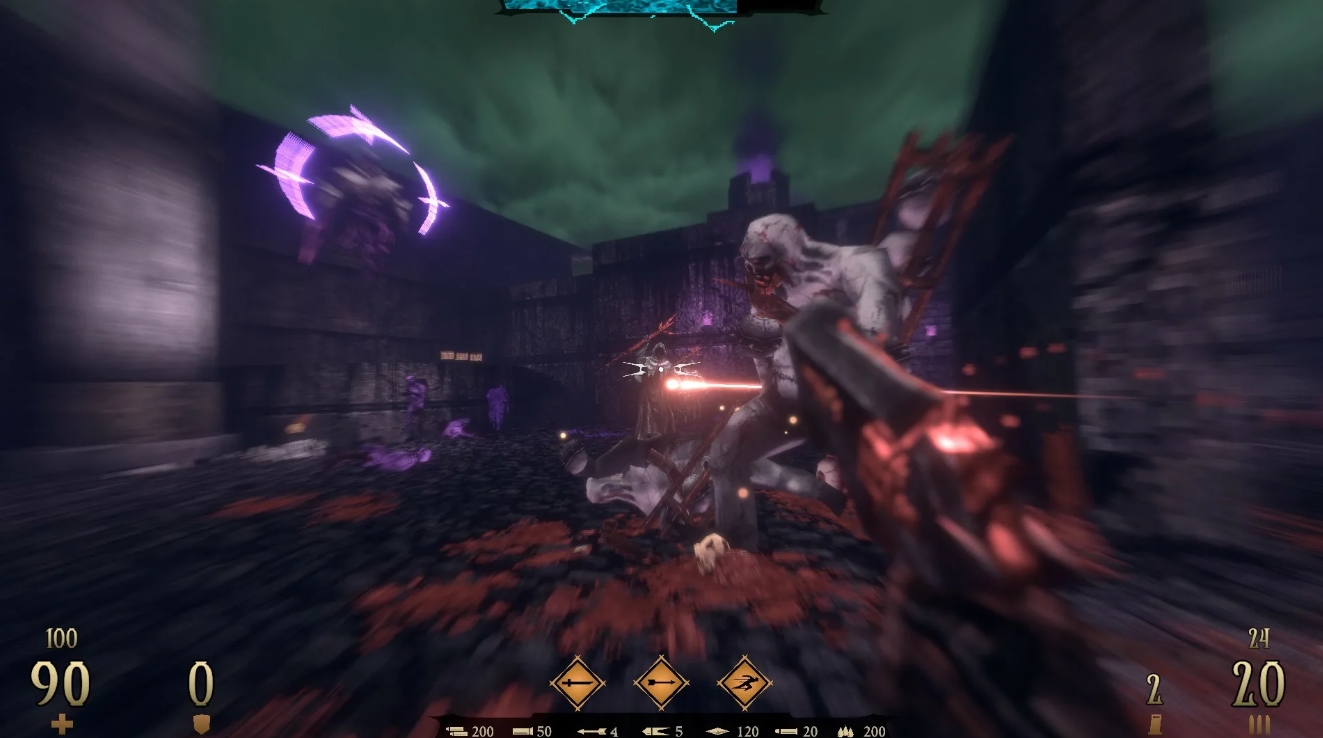
A pleasant bonus: five visual filters are available, each changing the overall look. You can add a CRT screen effect, film grain, or a sharper pixel rendering. A small but appreciated detail for fans of ’90s aesthetics.
The soundtrack is punchy industrial with a memorable main theme. The music lands well in each act’s mood — the pirate-inflected tracks of Act Two are a particular highlight, creating something unexpectedly atmospheric against the frozen backdrops. The weakness: variety runs thin. By mid-game, certain tracks start repeating more noticeably than you’d like.
Dread Templar PC System Requirements
The game is undemanding — which makes sense given the pixel-art aesthetic. It’ll run on virtually any machine from the past decade or more.
| Spec | Minimum | Recommended |
|---|---|---|
| OS | Windows 7 64-bit | Windows 10 64-bit |
| CPU | 2.5+ GHz | 3+ GHz |
| RAM | 4 GB | 4 GB |
| GPU | NVIDIA GTX 560 | NVIDIA GTX 750 Ti |
| DirectX | Version 10 | Version 10 |
| Storage | 2 GB | 2 GB |
The game runs stably. There are minor rough edges: invisible walls appearing in unexpected spots, occasional animation mismatches on enemies (they shoot in a direction they’re not facing), and some UI elements that aren’t immediately intuitive. Nothing game-breaking, but after a year and a half in Early Access, you’d expect slightly tighter polish.
Final Verdict: Is Dread Templar Worth Buying on Steam?
Dread Templar is the rare indie shooter that starts with doubt and ends with respect. It doesn’t try to compete with AAA productions on visuals or storytelling. It does what it does — and does it well.
Strengths:
-
Perfectly responsive controls — the foundation everything else rests on
-
A rune system with real depth: 100+ upgrades, dozens of build combinations
-
Honest difficulty that challenges without cheating
-
Level variety that grows stronger with each act
-
Minimal hardware requirements
-
Replayability through secrets, hidden areas, and build experimentation
Weaknesses:
-
Act One takes longer to find its footing than the rest of the game
-
Enemy animations can misread — attacks sometimes don’t telegraph clearly
-
No per-level secret statistics in the menu — tracking what you missed is frustrating
-
Soundtrack variety runs thin in the back half
If you’ve finished Quake Remastered and want more, if DUSK clicked for you but you wanted more depth — Dread Templar fills that gap. Around 8 hours of confident, balanced, honest action with a genuine upgrade system underneath. At $19.99 on Steam, the value is solid.
How to play Dread Templar for free on Steam via VpeSports
If you’re one of those people who grew up on Quake and Doom and still misses the feeling when the game isn’t holding your hand, Dread Templar will hit you right in the heart. This is not a modern shooter with hideouts and cutscenes every five minutes. Everything is fair here: you, the cannon, the darkness around you, and hordes of demons who really want to stop you. The atmosphere is thick, the pace is frenzied, and the levels are designed so that you want to explore every corner. In short, you’ll be stuck for a long time, and this is not a warning, it’s a promise.
The good news is that you can try it all for free, and we’ve already done most of the work for you. Register on the website, log in to your account and click GET AN ACCOUNT at the beginning of the article — then everything is described in steps, nothing superfluous. No confusing instructions or hours-long settings, just pick up and play.
And to keep up to date with everything, subscribe to our Telegram channel. There’s live chat, fresh accounts, patches, and news earlier than anywhere else. If something doesn’t go according to plan, the “How to Play for Free — The Complete Guide” section probably already contains the answer to your question. Well, if not, write to the chat, we are not bots, we will respond in a human way.