

Picture this: you get thrown behind a magical barrier, surrounded by killers and thieves, and the very first creature with three fangs tears you apart in seconds. No hints. No map marker. You died, your last save was ten minutes ago, and the only thing keeping you going is a strange, inexplicable urge to try again. That feeling — raw, unforgiving, almost masochistic — is exactly what made the original Gothic a cult classic back in 2001. And it’s exactly what Gothic 1 Remake, released on June 5, 2026 for PC, PlayStation 5, and Xbox Series X|S, has preserved.
The real question is whether Spanish studio Alkimia Interactive, under the wing of THQ Nordic, managed not just to repaint an old game, but to breathe genuine life into it for a new generation. Let’s find out — honestly.
Table of Contents
What Is Gothic 1 Remake and Why Does It Matter
The original Gothic by German developer Piranha Bytes launched in March 2001 and became one of those rare cases where a small team created a world that felt genuinely real. Not beautiful, not heroic — real. Dirty, dangerous, and somehow deeply alive. A prison colony trapped under a magical dome on the island of Khorinis, three warring factions, a nameless hero with no past — all of it spawned one of the most devoted fanbases in European gaming history.
Gothic 1 Remake is not an HD port or a remaster. It’s a full reconstruction built on Unreal Engine 5, preserving the original’s structure while completely overhauling the technical foundation. The project was developed by Alkimia Interactive and published by THQ Nordic. The road to release was long and messy: multiple delays, a controversy around pre-release demo footage filled with bugs, and vocal community calls to postpone the launch by another six months. The game shipped on June 5, 2026 — and immediately sparked debate.
Story and Setting: Faithful to the Original in a New Skin
The story takes place in the fantasy kingdom of Myrtana, locked in a grinding war against the Orcs. Magic ore is needed to forge powerful weapons, so King Rhobar II exiles all criminals to the mines on Khorinis. Mages erect a barrier to prevent escape — but something goes wrong. The dome spirals out of control, trapping not just the prisoners but the guards and the mages themselves.
You are a nameless convict thrown behind the barrier at the very start. No backstory, no heroic past. Just survive.
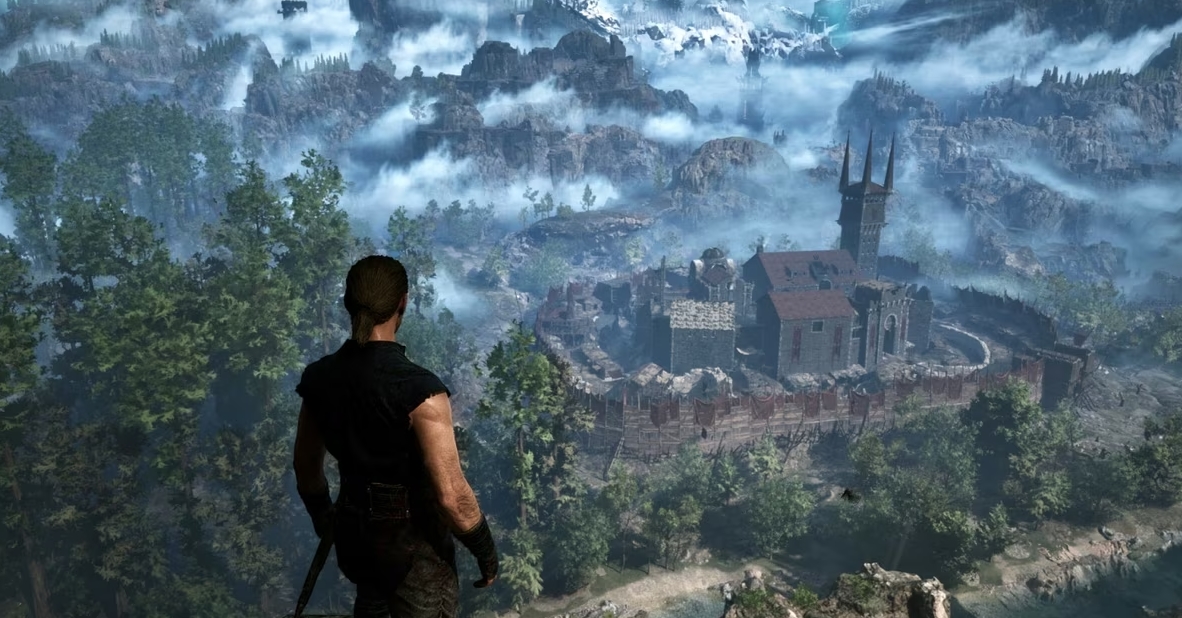
The narrative of Gothic 1 Remake is structurally identical to the original, but enriched with details: expanded quest systems, new dialogue and cutscenes, more developed NPC storylines. Developers also introduced a new questline involving the mage Muxir, complete with a diving mechanic — a small but satisfying addition for series veterans.
The Gothic lore remains untouched: three camps with conflicting ideologies, the Fire and Water mage factions, the cult of the Sleeper. For newcomers, it’s a coherent living world with understandable character motivations. For veterans, it’s a chance to rediscover every detail in a stunning new visual form.
The Open World of the Valley of Mines: What Changed Since Gothic 2001
Arguably the remake’s greatest technical achievement is the seamless open world. The original Gothic was divided into zones separated by loading screens; in the remake, the entire Valley of Mines exists as a single continuous space. The move to Unreal Engine 5 made this possible without sacrificing atmosphere.
The game world has grown by roughly 10–30% compared to the original. Dense forests are denser, dark caves are darker, wooden camp structures have a level of detail that simply didn’t exist technically in 2001. Yet Alkimia Interactive’s artists managed to preserve the most important thing — that oppressive, gritty atmosphere that made Gothic feel unique.
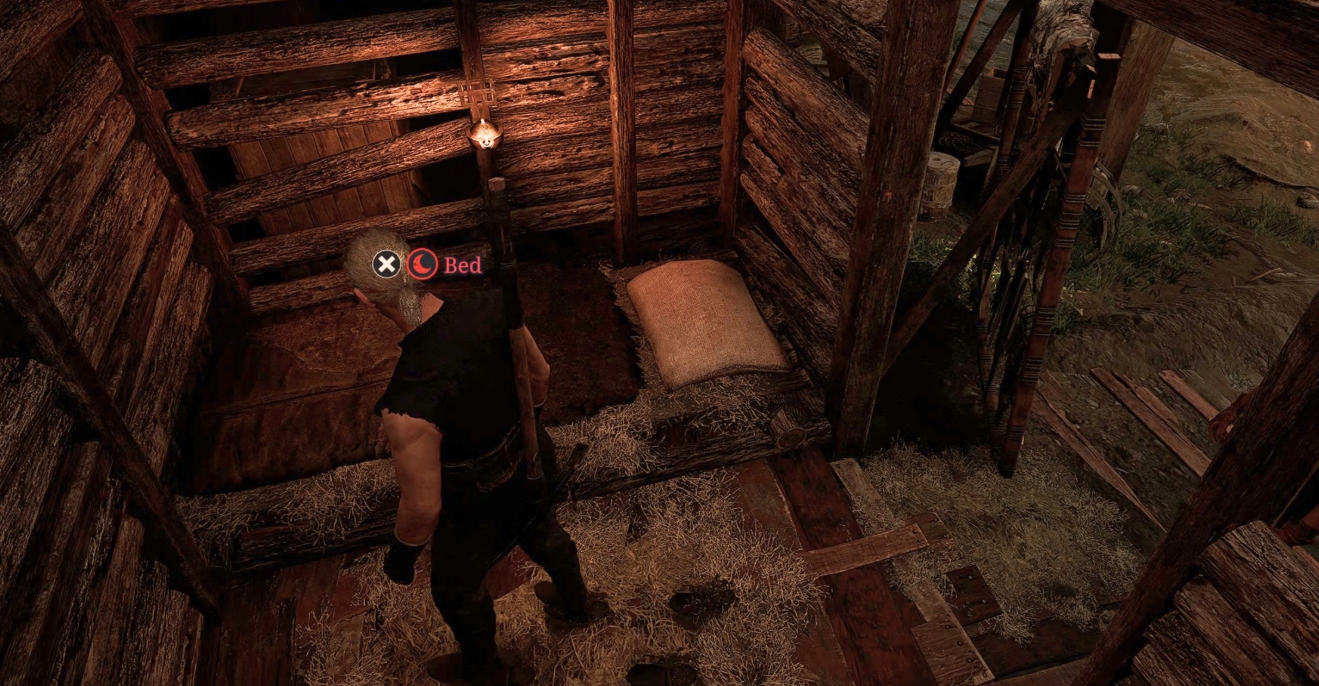
The NPC system deserves special attention. Every character and creature follows a complex schedule tied to the time of day and weather: prisoners sleep, work the mines, train with weapons, cook meals over fires. The world genuinely feels alive — as much as the original did, and sometimes more so.
The Three Camps: How They Look in the Remake
| Camp | Ideology | Location |
|---|---|---|
| Old Camp | Power and order, trading ore with the King | Center of the valley, fortress |
| New Camp | Freedom, escape plan via the water mages | Near the lake |
| Swamp Camp | Cult of the Sleeper, narcotic herbs | Northern swamps |
Each camp is not just a quest hub — it’s a distinct social system with its own hierarchy, internal conflicts, and opportunities for the player. Your faction choice early in the game doesn’t lock you out of other paths, but significantly shapes how NPCs perceive and interact with you.
Combat System in Gothic 1 Remake: Modern Mechanics, Original Spirit
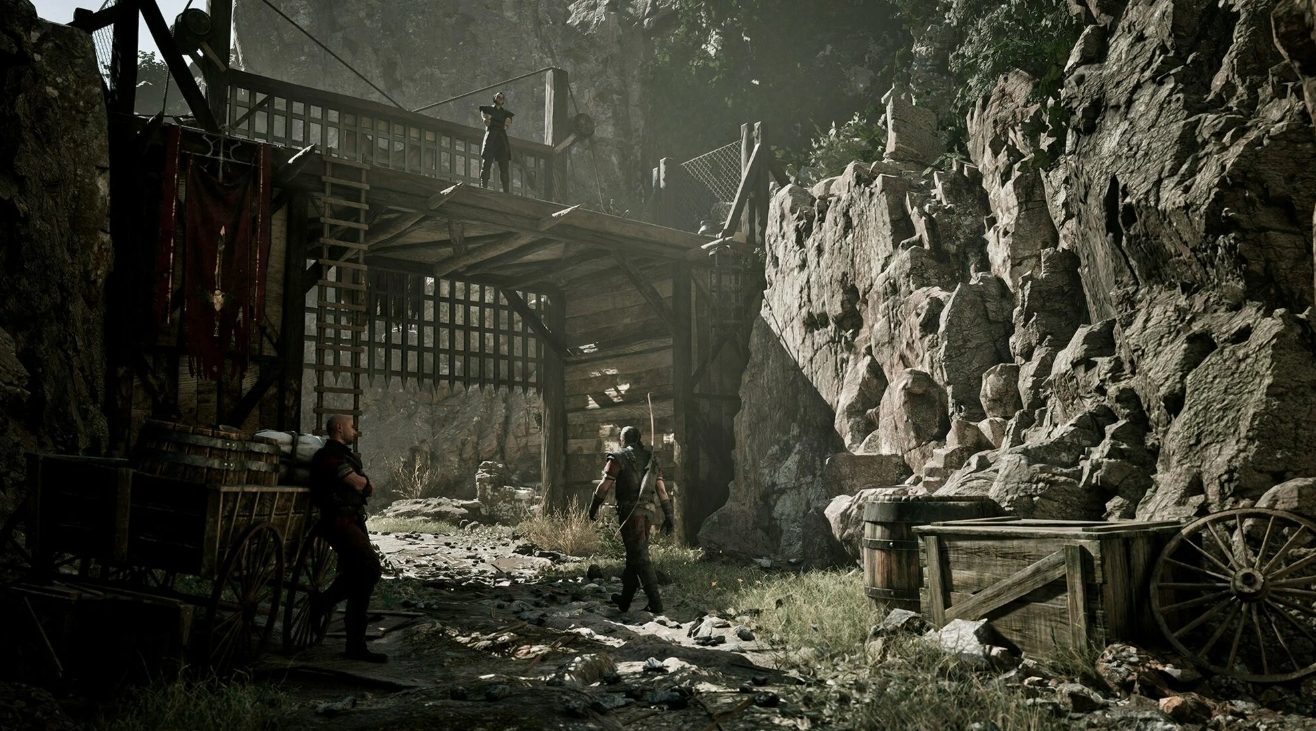
The combat system is one of the most debated aspects of the remake. Alkimia Interactive faced an uncomfortable trap: the original Gothic was famous for its clunky but oddly fair combat. Make it too “modern” — lose the soul. Leave it as is — face backlash from new players.
The studio found a workable middle ground. Combat is smoother and more responsive, but retains the tactical depth of the original: you can’t just mash attack and win. Position, timing, and distance all matter. Combat training is now delivered through in-game dialogue with characters rather than pop-up tutorial windows — preserving immersion throughout.
Key changes at a glance:
-
Improved attack animations — movements are more readable, enemy attacks easier to anticipate.
-
Reworked block system — more responsive, though multi-enemy situations can still feel chaotic.
-
New traversal options — ledge drops, diving, more flexible environmental interaction.
-
Preserved skill-leveling system — experience points are spent at trainers, not in a menu. You can’t grind random enemies and become a powerhouse; you have to find the right NPC.
An important note for newcomers: Gothic 1 Remake is not a Soulslike. Developers explicitly stated they abandoned that formula. But the game is still tough — especially early on, when the Nameless Hero is almost completely helpless against most enemies.
Graphics and Technology: Unreal Engine 5 Comes to Khorinis
Visually, Gothic 1 Remake is a colossal leap forward. The 2001 original ran on Piranha Bytes’ proprietary engine with polygon counts typical of PlayStation 2 hardware. The remake runs on Unreal Engine 5 with full support for Lumen (global illumination) and Nanite (geometric detail).
The results are striking: sunsets over the Valley of Mines, water rippling across the swamp, deep shadow play inside caves — all of it creates the sensation of a living, breathing world. The art direction remains deliberately dark and grounded — no fantasy gloss, everything dirty, worn, and tangible.
System requirements increased from earlier announcements. A comfortable mid-settings experience requires something in the range of an RTX 3070 or RX 6800 XT and at least 16 GB of RAM. Developers explicitly warned: without an SSD, the game can become a miserable experience — lengthy load times and stuttering on traditional hard drives.
Gothic 1 Remake PC System Requirements
| Component | Minimum | Recommended |
|---|---|---|
| OS | Windows 10 64-bit | Windows 11 64-bit |
| CPU | AMD Ryzen 5 3600 / Intel Core i7-8700K | AMD Ryzen 7 5800X / Intel Core i9-10900K |
| RAM | 16 GB | 32 GB |
| GPU | RTX 2070 / RX 5700 XT | RTX 3080 / RX 6800 XT |
| Storage | SSD, 60 GB | SSD, 60 GB |
Critic Scores and Community Reaction: What the Reviews Say
Critical reception of Gothic 1 Remake landed in solidly mixed-positive territory. Metacritic sits at around 73 out of 100 — a score that reads as “good, but with real problems.” The Steam picture is notably warmer: roughly 83% positive reviews at launch, with a peak concurrent player count exceeding 61,000 on release day.
What critics praised:
-
Respectful treatment of the original’s spirit and structure — they kept what made Gothic special
-
A living, immersive world with detailed NPCs that genuinely react to player actions
-
Visual upgrade that fits organically within the series’ dark aesthetic
-
Extra content for original fans — new questlines, expanded dialogue
-
Deep RPG systems that still hold up brilliantly 25 years later
What critics criticised:
-
Technical issues and bugs — crashes, dialogue freezes, enemies clipping through geometry
-
Performance problems on PC, especially noticeable without an SSD
-
Excessive backtracking across the world without fast travel between key points
-
High barrier to entry for newcomers — the game doesn’t explain much and doesn’t apologise for it
Notably, THQ Nordic launched an official public bug tracker before release — a rare act of transparency signalling genuine commitment to post-launch support. The roadmap already includes Patch 1.1 in late June (critical bug fixes, PC optimisation) and Patch 1.2 in July (photo mode, quest fixes).
Save time and money using an account steam free.
Gothic 1 Remake vs Gothic 2001: What Changed, What Didn’t
The central question for series veterans is how closely the remake mirrors the original. The honest answer: very closely in the things that matter, noticeably different in the details.
Preserved:
-
World structure and camp placement
-
Main storyline and key characters
-
Trainer-based skill progression system
-
Faction relationship logic
-
Atmosphere, tone, and the feeling of a dangerous, living world
-
Non-linear progression within the faction framework
Changed and added:
-
Entirely new technical foundation (UE5 replacing the proprietary engine)
-
Seamless open world with no loading screens between zones
-
World expanded by approximately 10–30%
-
Reworked combat system with new animations
-
New mechanics: diving, more flexible traversal
-
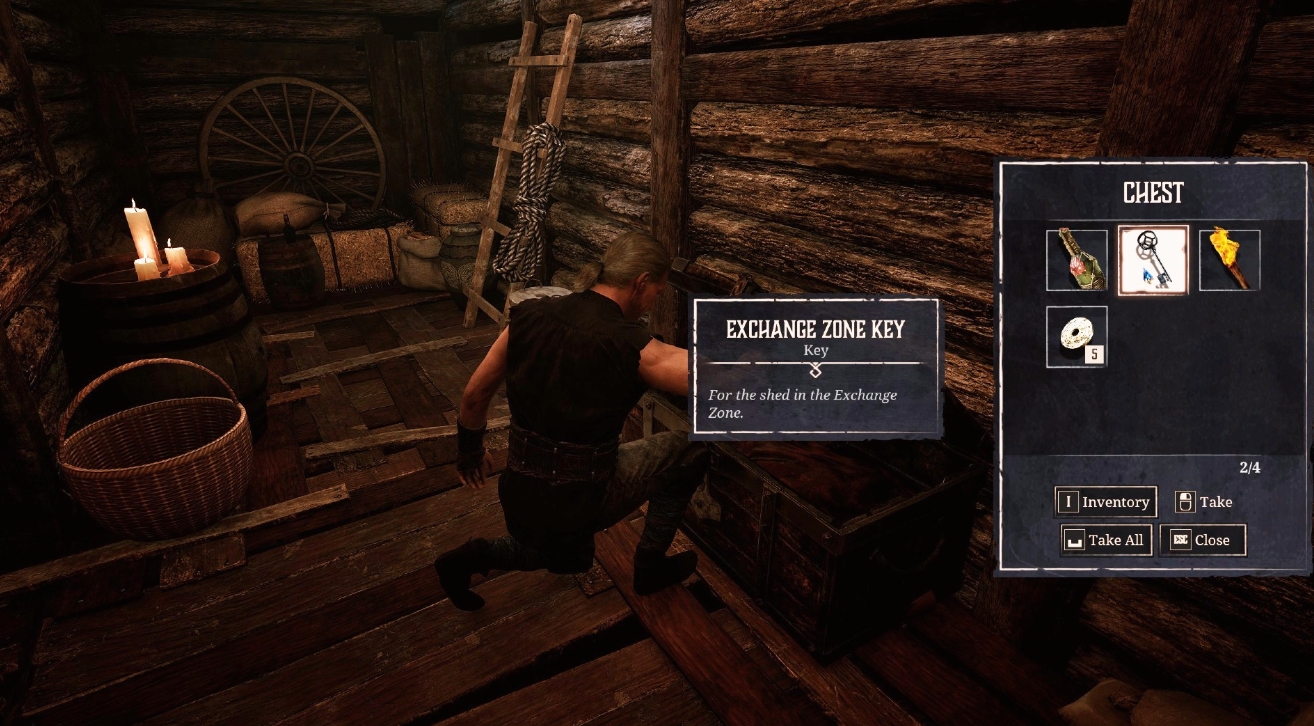
Expanded crafting — alchemy, cooking, scroll-making
-
Additional questlines not in the original
-
Updated NPC behaviour with full day/night cycles
Put simply: Gothic 1 Remake is the same game you remember, wrapped in a modern shell with a handful of smart additions. Whether that’s a strength or a limitation depends entirely on what you’re looking for.
Who Is Gothic 1 Remake For: Audience, Difficulty, and Comparison to Similar RPGs
Every design decision in Gothic 1 Remake signals who Alkimia Interactive built this for: the existing fanbase. The preserved combat difficulty, the sparse UI, the deep respect for original structure — veterans who remember every path and every conversation will get exactly what they’ve been waiting for.
For newcomers, the situation is more complicated. Gothic 1 Remake is not Mass Effect, not Skyrim — games that patiently hold your hand. Here you learn from failure, you listen carefully to characters, you figure out the world’s logic through experience. The first few hours can feel brutal: the Nameless Hero is weak, resources are scarce, and enemies are everywhere.
But if you love hardcore RPGs with genuinely alive worlds — games where progress feels physical, where beating a tough enemy costs real effort — this game is for you without reservation.
| Game | Open World | Difficulty | Atmosphere |
|---|---|---|---|
| Gothic 1 Remake | Contained valley, richly detailed | High | Dark, immersive |
| The Witcher 3 | Vast, densely packed | Medium | Epic |
| Morrowind | Open, freeform | High | Exotic |
| Baldur’s Gate 3 | Multi-layered | Medium | Dark fantasy |
| Of Ash and Steel | Small, intimate | High | Closest to Gothic |
Technical Problems in Gothic 1 Remake: How Bad Is It Really
Any honest assessment of this game has to confront the technical elephant in the room. Gothic 1 Remake shipped with real problems that can’t be brushed aside.
Press reviewers working with pre-release code documented: random crashes to desktop, freezes when initiating dialogue with moving NPCs, enemies clipping through geometry, a disappearing crosshair during archery, and situations where kills yielded no experience points. Some of these issues appear to have been specific to review builds and don’t show up in the retail version — but others remain present.
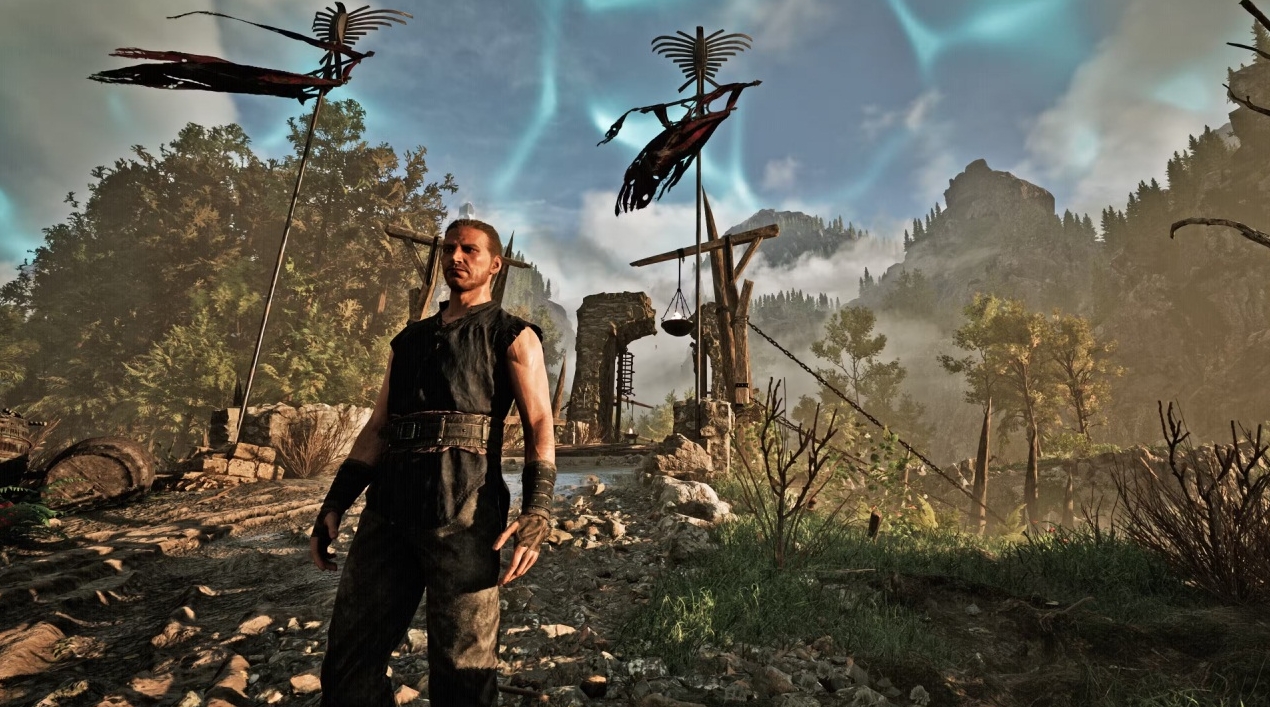
The fact that THQ Nordic proactively opened an official bug tracker and published a post-launch patch roadmap signals genuine intent to fix things. Whether the pace matches player expectations is the open question.
Current recommendation: if you have an SSD and reasonably modern hardware, you can play now — the majority of issues don’t block enjoyment. If technical polish matters deeply to you, wait for Patch 1.1 at the end of June.
How to play Gothic 1 Remake for free on Steam via VpeSports
Do you remember that feeling when you first find yourself behind a magical barrier and realize there is no turning back? Gothic 1 Remake is exactly about that. Not just a remake of a cult game, but an opportunity to relive every moment that once made you sit at the monitor until three in the morning. The same Old Camp, the Swamp Camp and the New Camp, the same charismatic characters with their own principles and character — but now it all looks the way you imagined as a child. The world has become more alive, NPCs react differently, and the atmosphere of oppressive hopelessness has not gone away. That’s why we loved the original.
So that you don’t waste time on unnecessary firebrands, we’ve already done everything for you. Just register on the website, log in to your account and go back to the beginning of the article — there you will see the GET ACCOUNT button. You click, follow the steps, and in a couple of minutes you’re running around the Colony. No complicated instructions or hours-long settings.
Well, in order not to miss new accounts, patches and all the interesting things about the game, subscribe to our Telegram channel. There is live communication, fresh news and sometimes such discussions that you get stuck no worse than in the game itself. If something goes wrong or you have any questions, see the “How to play for free – complete guide” section and our chat is always nearby. We’ll figure it out.