

Brilliant mind, defiant eccentricity and almost hypnotic charisma — Sherlock Holmes has long ceased to be just a literary hero. He has become a cultural reference, a standard of the image of a detective, with which every new character in the detective genre is inevitably compared. The London apartment on Baker Street, deductive method, cold logic and impeccable sense of observation have become an integral part of the mass consciousness and literary heritage.
And yet, despite centuries of popularity and dozens of interpretations in books, movies and TV series, the origin of Holmes himself remained in the shadows for a long time. His formation as a person, the years of his youth, the first psychological traumas and internal conflicts rarely became the subject of a detailed story. What exactly turned a gifted young man into a detached analyst? What events shaped his worldview and why is his relationship with his brother Mycroft filled with hidden tension? These questions have repeatedly arisen among fans of the universe, but almost always remained without clear answers.
Attempts to look behind the scenes of the biography have been made before — screenwriters and writers have repeatedly experimented with the image of the young Holmes, adding new details to the familiar myth. However, it was Frogwares studio that decided to go further and make the past a key element of the narrative. In Sherlock Holmes: Chapter One, the focus shifts from investigations per se to the character’s personality, memory, emotions, and painful growth points, turning the detective story into a psychological journey.
This approach turned out to be risky: the game not only reveals new facts, but reveals the character’s internal contradictions, forcing them to look at the legend without the usual halo of infallibility. And as Chapter One shows, not every secret of the past is worth bringing to light — some of them can change the perception of a hero more than any high-profile investigation.
Table of Contents
Sherlock Holmes Chapter One Free Steam Account
The second half of the 19th century. In the heart of the Mediterranean, the island of Kordona lurks — formally part of the British Empire, but in fact a world in contrast. For the European nobility, it serves as a luxurious resort with sea breezes, villas and an idle life, while for the locals it remains a stuffy, exhausting space of hard work and social distortions. Tragedies have been accumulating here for years behind the external calm, and the earth itself seems to have absorbed them into the stones, streets and dilapidated buildings, forming a gloomy atmosphere that is important for the future narrative.
It was at the Cordon that the life of Lady Violet, an aristocrat, an avid collector of antiquities and the mother of Sherlock Holmes, ended. Death from tuberculosis in April 1869 was a severe psychological trauma for the boy, the consequences of which dragged on for many years. As an adult, Sherlock decides to return to the island, hoping to finally close the painful gestalt and leave the past behind. However, instead of inner peace, he and his companion John — not the same Watson, but a completely different person — find themselves embroiled in a web of lies, innuendos and strange contradictions. The abandoned family mansion, where the hero spent his childhood, holds many more secrets than it seems at first glance, and each of them undermines the familiar image of the future legend.
Sometimes a project can intrigue with just one idea. A silent interactive drama, a western with an unreliable narrator, or an action game that breaks the basic rules of genre — the gaming industry has repeatedly proved that a bold concept can turn an apparently ordinary release into an event. At first glance, the new part of the Sherlock Holmes series also begs to be included in this list: its idea promises a fresh look at a familiar character and an attempt to rethink the canon through emotions and personal history.

At first, though, Sherlock Holmes: Chapter One looks almost deceptively familiar. The gameplay follows familiar patterns: investigations, crime scene inspections, evidence collection, logical conclusions that seem to form themselves into a coherent chain. There’s a city to explore, there are action sequences with awkward shootouts, QTE, and regular moral dilemmas. All this is well known from previous games in the series, and to imagine how the next 15-20 hours will pass, just look at any trailer or gameplay fragment of the old parts.
But this set of mechanics is just a shell, a respectful nod to the classic adventure format. In fact, the crimes here are secondary: they serve as the backdrop for a much more personal story, rooted in Holmes’ childhood trauma of eleven years ago. The realization of this does not come immediately, but as soon as the hero crosses the threshold of the ancestral home, the focus shifts. Chapter One turns out not to be a dynamic prequel in the spirit of “becoming a hero” and not another Victorian detective story, but a chamber psychological drama, surprisingly close in mood and structure to Gone Home, but in the entourage of the works of Arthur Conan Doyle.
At the level of ideas, the game tries to combine several directions at once, each of which is important in its own way for the overall plan:
-
The personal drama of growing up and living through loss, where emotions are more important than the investigations themselves;
-
A detective narrative that uses crimes as a tool to uncover character, rather than as an end in itself;
-
An open world that works not as an attraction, but as a metaphor for the memory and inner state of the hero;
-
An interactive narrative in which the environment and the details of the environment tell a story as well as dialogues.
Sherlock returns to the place he once left, wanders through empty rooms, examines old letters, things and scraps of memories, gradually restoring a picture of events that can no longer be influenced. These parallels are read instantly and are not released until the final. However, Frogwares studio did not limit itself to borrowing other people’s finds. Instead of one house, the developers have made an entire island a therapeutic space. The cordon here is a reflection of the hero’s inner state: ruins and alleys become metaphors of memory, and the urban landscape gives context to the past, linking personal drama with the history of the place.
Game the smart way – through free steam accounts with games!
An adventure game focused on the psychology and experience of loss; a sandbox where the collectible elements are not abstract objects, but fragments of someone’s broken life – Chapter One is based on many bold and potentially powerful concepts. They are not always original, but they are almost always curious. The problem is different: their implementation does not reach its potential. As a result, the new Holmes story does not work either as a full-fledged drama, nor as a fascinating detective story, and, most frustratingly, nor as a deep dive into the inner world of one of the most complex characters in world literature.
Why Sherlock Holmes: Chapter One Didn’t Live Up to Fan Expectations
There’s something almost painfully wrong with that. After all, Frogwares is a studio that has been building a reputation as the main gaming interpreter of the legacy of Arthur Conan Doyle for years. Their Sherlock Holmes encountered the cult of Cthulhu, engaged in an intellectual duel with Arsene Lupin (without caricature pseudonyms), unraveled the Jack the Ripper cases – and with each new part, the series became deeper, bolder and dramaturgically richer. It makes it all the more painful to wonder: where exactly did everything go wrong? The answer, alas, is prosaic — the peak was reached in 2014, and then, as often happens, a protracted recession began.
Sherlock Holmes: Crimes & Punishments can still be considered one of the most powerful interactive detective stories of the 21st century. Even without going into the details, it was obvious that the game was made by people who perfectly understood the laws of the genre. The intrigues were carefully arranged, the tense scenes worked for the atmosphere, and the evidence was distributed so that the player really felt like Sherlock Holmes, and not a bystander. After such success, the developers were expected not just to continue, but to evolve — new revelations that could shake up detective adventureSherlock Holmes: Crimes & Punishments can still be considered one of thde.
Sherlock Holmes came out next: The Devil’s Daughter is a game that preferred the development of mechanics to excessive melodrama and intrusive action with clunky QTEs. This was followed by The Sinking City, a project overgrown with scandals due to a conflict with a publisher and remembered primarily for weak shooting and a dead, tedious open world. In a matter of years, Frogwares seemed to have lost its creative flair and began to work by inertia, rapidly wasting the credibility earned by Crimes & Punishments.
Against this background, Sherlock Holmes: Chapter One is initially perceived as an attempt at rehabilitation. From the very first hours, the desire to correct old mistakes is noticeable. Kordona, for example, is much richer in content than Okmond: you no longer have to look for side tasks with a magnifying glass, the magazine is regularly updated with cases, and navigation finally stops annoying. The boats disappeared, movement became easier, and the gameplay as a whole became more tolerable — albeit no more than a walk-through.
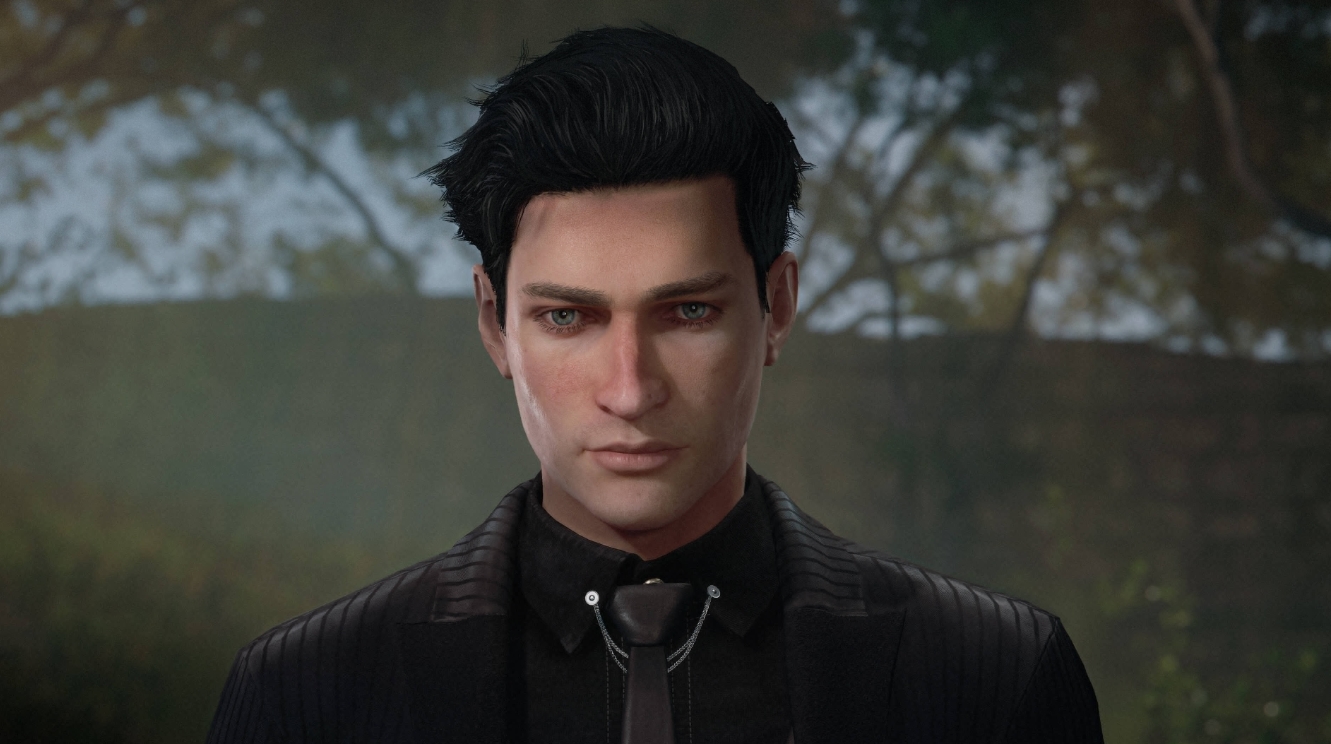
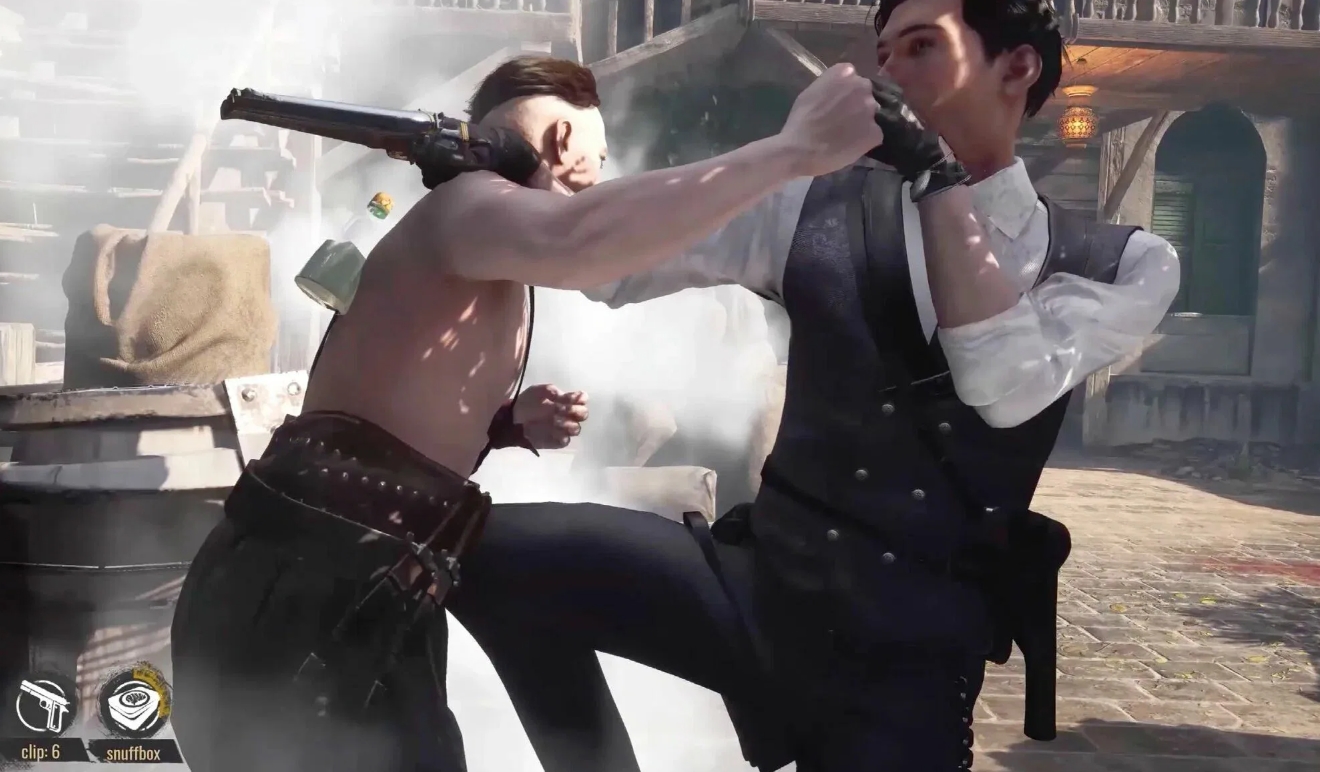
The most noticeable changes affected the action. Theoretically, the new system looks sensible: moving between shelters, using the environment, the ability to neutralize opponents without killing. It’s definitely more interesting than mindlessly shooting at monsters, but a legitimate question arises — why is all this necessary here at all? The answer suggests itself: “because it was necessary to add something.”
And this is exactly where one of the key problems of Chapter One lies. The game constantly contradicts itself, as if the authors are desperately trying to sit on several chairs at once. It’s not so much about script inconsistencies as about the integrity of the project as a whole. He stubbornly refuses to form a single work and breaks up into disparate elements at the first opportunity.
It seems like a noble idea to dedicate an entire game to Holmes’ inner world and his past. But in practice, no plot investigation works to uncover a character. On the contrary, business feels like an obstacle on the way to the main topic. The developers talk about becoming a legendary detective, but at the same time they transfer control over the “key” decisions to the player, which in fact do not affect anything and only blur the author’s message. Formally, we have a young and inexperienced hero in front of us, but in reality he is already almost formed: witty, brilliantly quick-witted, shoots well, understands chemistry and, if desired, masters the violin. The “prequel” here is conditional and is needed rather in order to present Holmes with the appearance and habits of a hero from Detroit: Become Human.
There was still hope that the gameplay would pull the game out. If the idea is stalling, the execution must take its toll. But even here, Chapter One disappoints. Even with the edits, it feels like The Sinking City 2.0. Mandatory investigations — with rare exceptions — are of the same type and devoid of tension, side tasks are a little more vivid, but they also quickly fade from memory. The action, despite its interesting ideas, is clumsy and annoying. And the Cordon itself, to be honest, seems dead: neither repetitive memories nor visually pleasing views are able to breathe life into the empty streets of the island.
The desire to preserve the familiar format and develop old finds is not a vice in itself. The problem is that Chapter One is too dependent on the past and at the same time tries to be everything at once — a chamber psychological drama, the heiress of Crimes & Punishments and an open-world detective. As a result, the game loses focus. At that moment, the series needed a shake-up and a clean start, rather than the mechanical baggage of previous parts. Paradoxically, the prequel would have been enough for Holmes and the family mansion: the city, the action and the decorative moral choice only stretch the passage and emphasize the weaknesses.
If we discard everything superfluous, the main thing remains — the story, the very thread that was supposed to connect the disparate elements into a single whole. But it is she who disappoints the most. And if you don’t want to spoil your impression with spoilers, it’s better not to read further: the finale and another portion of harsh criticism are ahead.
Sherlock Holmes: Chapter One’s Plot: Trivial Drama Instead of Depth
It is worth emphasizing right away: the Sherlock Holmes: Chapter One script cannot be called frankly bad. There are no crude plot “grand pianos” that make you want to roll your eyes, the dialogues are generally sustained in the spirit of Victorian detective fiction, and excessive melodramatism is carefully hidden until the finale — where it formally belongs. The problem is much deeper and more unpleasant: for all its outward accuracy, the story turns out to be frighteningly empty in meaning and painfully predictable.

The entire drama of Chapter One revolves around one banal idea — Sherlock Holmes had a difficult childhood, and it was supposedly it that shaped his character. This thought is chewed over and over again, pronounced directly and without the slightest nuances, until it leads to the finale, which is read at the start and looks both mawkish and deliberately tearful. It feels as if the scriptwriters were methodically marking items in a pre-prepared list of psychological stamps:
-
Early parental loss as a universal explanation for all personality traits;
-
An emotionally detached brother, necessary for conflict, but lacking depth;
-
Loneliness reduced to the straightforward image of an “imaginary friend”;
-
Minor tragedies, added solely to enhance pity.
Simple stories themselves are not a vice. With proper skill, even an elementary plot can be presented in such a way that it touches a nerve. But Frogwares is not up to the task. The intrigue drags on artificially, attention is constantly distracted by side crimes and symbolic “closed doors”, and bombastic arguments about truth, lies and justice keep popping up in the dialogues. All this sets the stage for the final breakdown into an outright melodrama. Technically, this is probably better than another story about the cult of Dagon or Cthulhu, but there is almost no difference in depth and expressiveness — the cat didn’t cry either way.
John deserves a separate conversation — the same “childhood friend” who relentlessly follows Holmes. In theory, his role seems justified: he comments on what is happening, gently guides the player, and sometimes initiates side quests related to the hero’s inner state. However, in practice, two serious problems arise. Firstly, this companion is simply annoying. He is talkative, invulnerable, makes inappropriate jokes, chastises the player for any step aside and behaves like a cartoon character who knows no sense of proportion. Secondly — and this is much more important — he destroys the very concept of the mysterious detective.
Sherlock Holmes has always been an unsaid figure. In classical works, he reveals himself through the gaze of Dr. Watson, while the inner world remains behind the scenes, which only enhances the appeal of the image. Frogwares chooses the opposite path: young Holmes endlessly pronounces emotions, conducts internal monologues and shares experiences with an imaginary companion. The mystery disappears completely. Behind the mask of genius, there is a banal, albeit observant introvert with a set of standard psychological traumas — a character who needs a therapist rather than a pedestal of legend.
Even if we take these reflections out of the brackets, John clearly highlights the general problems of staging. With some successful visual finds, the game as a whole looks bland. In an attempt to diversify the presentation, the director periodically imitates the techniques of Zack Snyder, but the effect is the opposite. Mediocre animation and poor cinematography of dialogue scenes cannot stand up to the pathos: prolonged slow motion, classical music and grotesque images do not look artistic, but simply vulgar. The desire to look “like in a big movie” only emphasizes the lack of its own expressive language.
Is Sherlock Holmes: Chapter One Worth Playing in 2026?
The word “gone” is, alas, the most accurate definition that comes to mind after the end credits of Sherlock Holmes: Chapter One. The project simply has nothing to counteract the accumulated problems. The gameplay looks sluggish and poorly connected to the plot, investigations rarely cause excitement, and the story basically turns out to be banal and predictable. The only thing I want to cling to is the very idea of a psychological drama, an attempt to look into the inner world of a young Sherlock Holmes. But even here a logical question arises: does a good idea matter if its implementation turned out to be fragmented, contradictory and ultimately helpless?
With all this, Chapter One is not completely hopeless. Like chewing gum, it can take time if you don’t make high demands on it. I want a detective entourage, exotic scenery and a familiar image of a detective — Cordon Island can brighten up a couple of evenings. Yes, an empty city gets tired quickly, a melodrama is read long before the denouement, and emotions rarely go beyond those on duty. But given the scarcity of alternatives, spending time with Holmes is still more enjoyable than spending hours on frankly second-rate reading. It’s a weak recommendation, but to be honest, it fits the game perfectly.
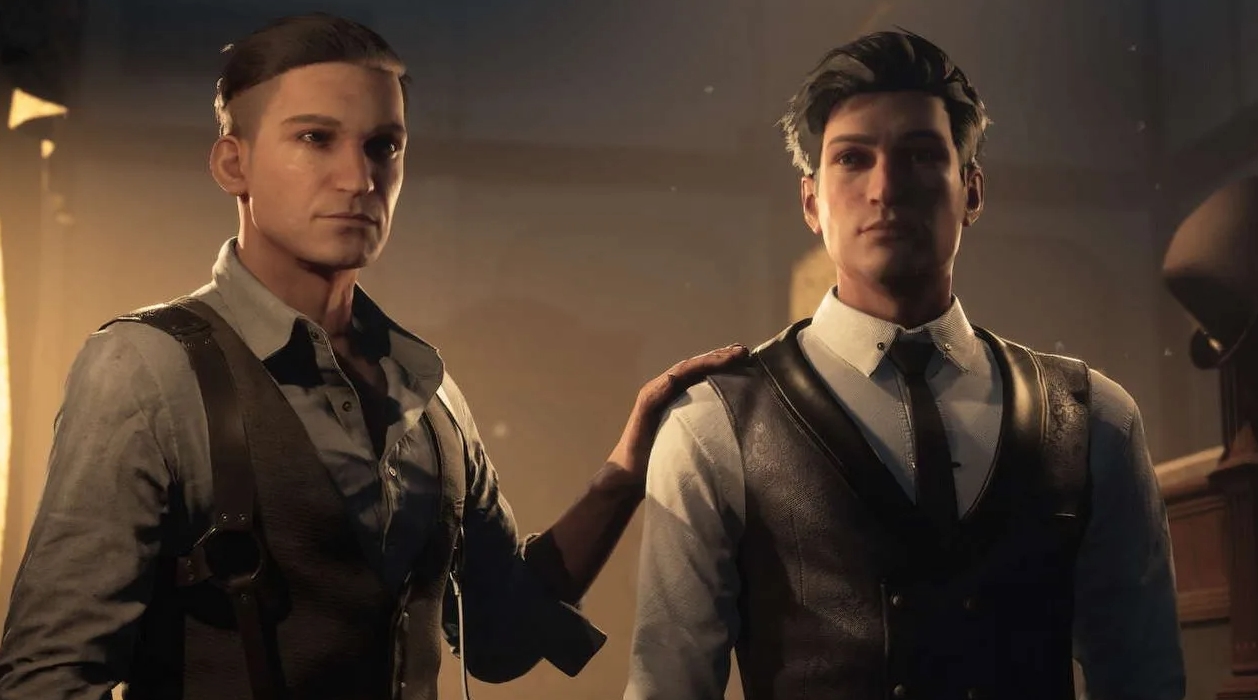
If we try to summarize our impressions, the picture looks like this.
Advantages of the game:
-
nice graphics and a well-chosen color palette that works for the atmosphere;
-
the dialogues are really witty in places;
-
several investigations that can interest and arouse excitement;
-
high-quality musical accompaniment;
-
a potentially interesting idea with redesigned action mechanics.
Disadvantages of the game:
-
a pretentious and empty plot with no depth;
-
poor direction and featureless staging of scenes;
-
a dead, optional open city that does not affect the narrative;
-
overloaded with mechanics and ideas from the studio’s past games;
-
more secondary cases about archaeologists and excavations;
-
the objectives of tasks are not always obvious and the presentation of tasks is poor;
-
an annoying partner who breaks the tone of the narrative;
-
monotony of gameplay;
-
an obsessive search with references to everything.
Basically, Sherlock Holmes: Chapter One looks like a game that wanted to be bigger and deeper than its own decisions allowed it to be. She tries to talk about trauma, growing up, and the personality of the legendary detective, but is drowned in platitudes, unnecessary mechanics, and uncertain directing. The result is not a failure in its purest form, but certainly not the return to form that Frogwares was expected after past successes.
Sherlock Holmes Chapter One System Requirements
Sherlock Holmes Chapter One – PC
How to play Sherlock Holmes Chapter One for free on Steam via VpeSports
Sometimes you don’t just want to start a game, but to open the door to someone else’s life and go through it step by step. Sherlock Holmes Chapter One is just about that. Here you are not playing “legend” — you become a person who is just going to her. Young Sherlock is still not sure of himself, he argues with inner voices, clings to the past, draws conclusions and sometimes makes mistakes. The island looks warm and almost resort-like, but the longer you walk around it, the more clearly you realize that behind the smiles and beautiful facades there are fears, secrets and other people’s tragedies. And it’s up to you to decide what’s true and what’s a convenient lie. The best part is that it’s all available for free.
We are well aware of how annoying complex instructions and “dancing with a tambourine” are before launching the game. That’s why we did everything humanly. Register on the website, log in to your account, return to the top of the page and click GET AN ACCOUNT. Then you are literally led by the hand — calmly, clearly and without unnecessary fuss. No hidden conditions or waste of time, just a direct path to the game.
And if you want to communicate and feel that you are not alone here, we have a Telegram channel. There are no dry announcements, but live updates, news, new accounts and conversations with the same players. You can ask a question, share your impressions, or just read the discussions. If something doesn’t work out, there is a detailed guide and a chat where real people answer. We sincerely want your experience to be comfortable and interesting, and not turn into a struggle with technical details.