Publisher Riot Games has finally revealed a detailed plan for the development of the VALORANT Game Changers 2026 ecosystem in North America for the 2026 season. Admittedly, the stakes are rising this year — the total prize pool will be a solid $150,000 (which is about the same as £112,000).
The entire competition cycle will last from February to September. The structure, by the way, looks pretty tight: we are waiting for one Kickoff warm-up tournament, two full-fledged Main Events stages and five events of the updated Raidiant Academy at once.
It should be understood that the NA Game Changers structure is a key part of Riot’s global initiative to support women and players of other marginalized genders. This is not a local story, but part of a huge network spanning EMEA, LATAM, Brazil and China, culminating in the annual World Cup.
Table of Contents
Kickoff Tournament and match schedule in February
The start of the 2026 season in North America, apparently, will be marked by the Kickoff tournament. This is, in fact, an ideal sandbox where teams can test updated roasters before really important matches.
-
Open selections: Will be held from February 4 to February 9.
-
Participants: Up to 32 teams, but only the top 8 will advance to the main stage.
-
Final: From February 20 to March 1 in the double-elimination format.
Interestingly, no Championship Circuit points are awarded for this stage, but the teams will compete for a $10,000 fund. Almost all the games will be shown on the Raidiant channel on Twitch, but the final battles, of course, will be transferred to the official resources of VALORANT Americas.
Stages Stage 1 and Stage 2 in the scoring system
After the “warm-up”, the real heat will begin. The season is divided into two identical stages: Stage 1 (from April 15 to June 5) and Stage 2 (from July 3 to September 13).
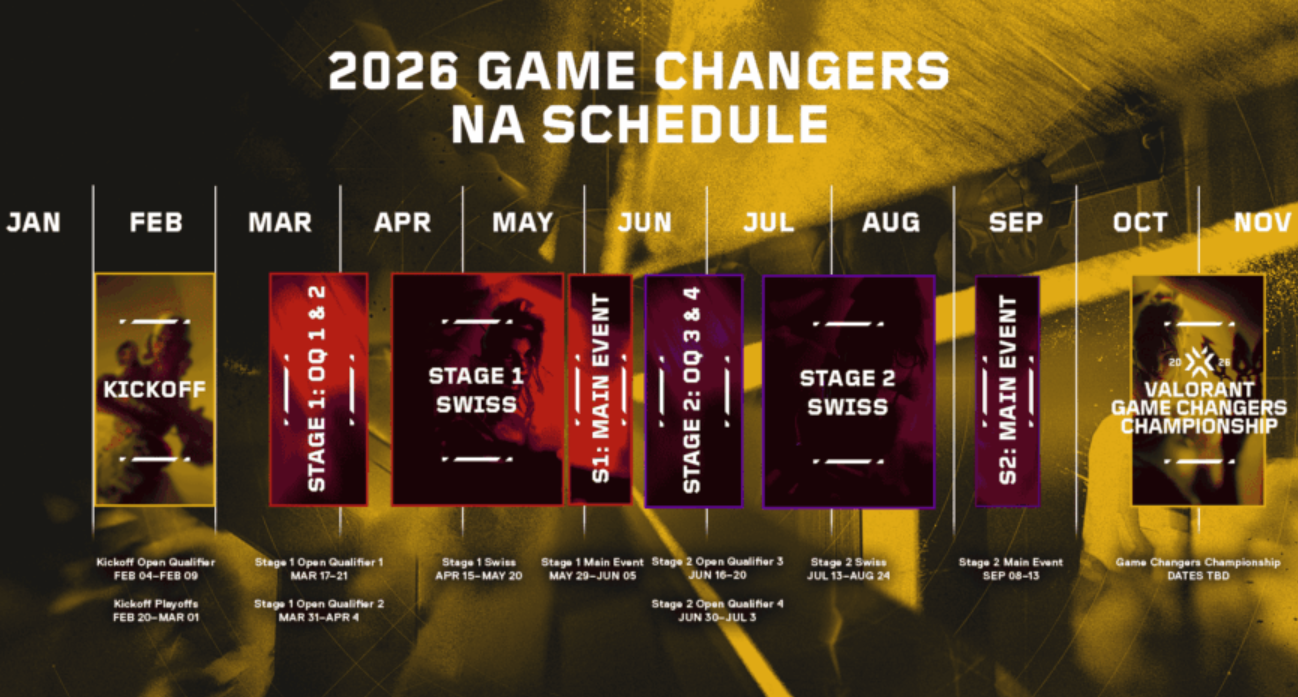
Here, the system becomes more complicated — teams go through a sieve of two open qualifications, after which they enter the Swiss Stage (Swiss grid for 16 teams). Only 8 teams qualify for the playoffs.
Important details:
-
Direct invitations: Last year’s top 2 teams – Shopify Rebellion Gold and Wadadaa — have already booked seats in the top Swiss team.
-
Tier 2 Valorant path to pro: The top eight from the first stage automatically advance to the second.
-
At stake: $65,000 in prize money for each stage and the very rating points that decide who goes to the World Cup or the Last Chance Qualifier.
Raidiant Academy Program and Talent Support
In 2026, the Academy’s usual format will be rebranded — now it is the Raidiant Academy. The name, by the way, refers to the main organizer of tournaments in the region.
To tell the truth, this initiative is awesome: it was created for those who want to grow not only as a player, but also as a commentator or technical specialist in the “lite” mode. During the year, the seasonal splits schedule will be presented, which includes five weekend tournaments (series 301 to 305).
| Tournament | Event Date | Prize Pool |
|---|---|---|
| Series 301 | January 2026 | $2,000 |
| Series 302 | To be announced | $2,000 |
| Series 303 | October 2026 | $2,000 |
| Series 304 | November 2026 | $2,000 |
| Series 305 | December 2026 | $2,000 |
In fact, Riot is building a full-fledged vertical. If you want to get into pro esports, you now have a clear map. The main thing is not to miss registration on Raidiant social networks, because this is a great chance to make yourself known, isn’t it cool?
Comparing VCT systems and the League of Legends women’s scene
The League of Legends women’s pro scene now resembles a battlefield without rules — the toxicity is off the charts, there is no money, and there are essentially zero prospects.
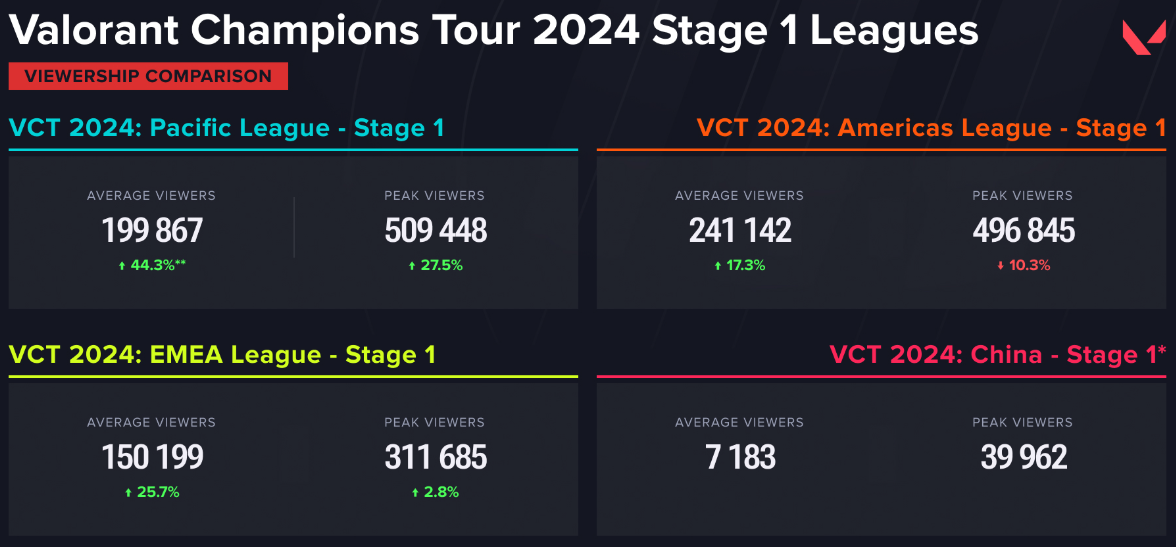
While Riot Games esports strategy is building a perfect vertical in the shooter, the girls in the MOBA discipline are running into a glass ceiling. Teams of the caliber of G2 Hel or SK Gaming are being hacked, but without a clear road to Worlds, it looks like running on the spot. Let’s look at why Valorant flew into space, while the League is stalling, and how VCT 2026 roadmap changes can turn the game around.
Toxicity issues and barriers in professional LoL
Remember that very clash with Vaevictis — a 4:84 defeat on the cards, support bans from rivals and a total haight. By the way, this is not about skill, but about attitude. The girls in the voice chat hear “let’s go out, there’s a woman here” more often than the information on the map. Streamer Daria Ostrovskaya, for example, catches tons of dirt for her looks, even if her macro acting is impeccable.
It takes nerves of steel to break through.
-
Fact: 40 million players participated in the Fortnite World Cup qualifiers, but the voice chat worked as a filter there — sexism screened out talent in batches.
-
Solution: Closed communities. Discords like FEMALE GG really save — they train there without pressure, as they have been doing in CS 2 for a long time.
Money decides: Why are sponsors leaving?
Finances are a separate pain, really. The IESF World Esports Championship is quietly pouring out $160k each for CS2 and Mobile Legends tournaments, and women’s LoL events like LGC Rising are collecting pennies. It is easier for organizations to keep male roasters: there are no housing problems, no risks of “office affairs” and fan backlash.
Clubs like FURIA Female are trying to break through the FACEIT Pro League, but without serious investment, it’s a dead end.
Insider for the pros: If you want to make money, learn from Sasha Scarlett. The legend of StarCraft II raised $459k solely on stability and skill. In LoL, for now, we have to grind local leagues for “thank you.”
Integration of the Premier system and qualification formats
The system is broken, apparently. There is simply no equivalent to Premier in LoL — teams like Team Siren or the same Vaevictis disappear from LCL after the first failures. The Equal Esports Cup 2025 at Paris Games Week (8 teams in total, by the way) is cool for the experience, but it’s a “safe bubble.” Slots in LEC or LCS are tightly closed with stereotypes about “low rank”.

In Valorant, on the contrary, the Premier integration VCT 2026 works as an elevator. Without such a system, LoL just loses frames. Without such a system, LoL just loses frames.
VCT model and Ascension qualification for the 2026 season
The scheme in Valorant is a ready—made rescue instruction. The Premier mode allows Immortal 3+ level stacks to directly enter the Challengers EMEA ecosystem (or other regional leagues).
How it works in numbers (Champions 2025 in France, $2.25M at stake):
-
Stage 1: The top 4 of the groups advance to the playoffs. It’s a tough game there — the 2nd and 3rd places must be won by three Bo3s to pick up the slot.
-
Stage 2: International League promotion is being played with 2 direct slots per region (Americas, EMEA, Pacific, China).
-
Points: The rest get places through Championship Points.
The regional balance of power is interesting, by the way:
| Region | Current Leaders | Qualification Dynamics |
|---|---|---|
| Americas | Cloud9, Sentinels | Teams like 2GAME can break through via the lower bracket |
| EMEA | GIANTX, Heretics | Tight competition for top-2 spots based on points |
| Pacific | Gen.G, Paper Rex | Traditionally strong macro-oriented strategies |
| China | Bilibili Gaming | Aggressive playstyle capable of reshaping the meta |
Prospects for the development of women’s esports in 2026
Riot, in the process, you just need to copy your own work. The women’s VALORANT Champions Tour grew by 48% in views — that’s 16 million hours! The numbers don’t lie.
To save the League, we need to implement an analog of Premier, where Ascension tournament qualification will become a transparent goal for everyone. Otherwise, this scene will remain a beautiful setting.