

Some seriously believe that Unreal Tournament was created by none other than the gods themselves, descending from heaven. Others call it the greatest online shooter of all time without further ado. And the boldest and most daring claim that against the backdrop of Epic Games’ creation, even the legendary Quake 3 can only quietly sob on the sidelines. We will leave the pathos aside and simply remember what this game hooked us with back then – and why, even 15 years later, its ideas still hit the spot where modern online arenas fall short.
Table of Contents
Unreal Tournament: Game of the Year Edition Free Steam Account
In the late 90s, Unreal was released — a technical breakthrough in which everything, from the sound to the visuals, seemed like a step into the future. The graphics were mind-blowing, the weapons felt good in your hands, and the atmosphere seemed to draw you into an alien universe. But the game had one drawback: it was strictly single-player. Those who liked to fight in a group had to look for adrenaline elsewhere. And so Epic Games made a knight’s move: what if we take the same foundation, the same engine, the same principles, but do everything exclusively for the sake of online battles? Thus, Unreal Tournament was born — not just a multiplayer version of Unreal, but an independent beast that was supposed to undermine everything we knew about shooters at the time. At a time when the Internet was a luxury (especially in countries where computers were just beginning to be introduced), clubs with a line of five machines were a sanctuary. It was for these places that UT was created.
When the game was first announced, the reaction was mixed. Quake III Arena was already looming on the horizon, and the public did not really believe that anyone would be able to displace the legend. “Epic have gone crazy,” many thought. But soon those same people were installing UT on every computer in the area. Quake was still great, but more and more players preferred Unreal Tournament. Why?
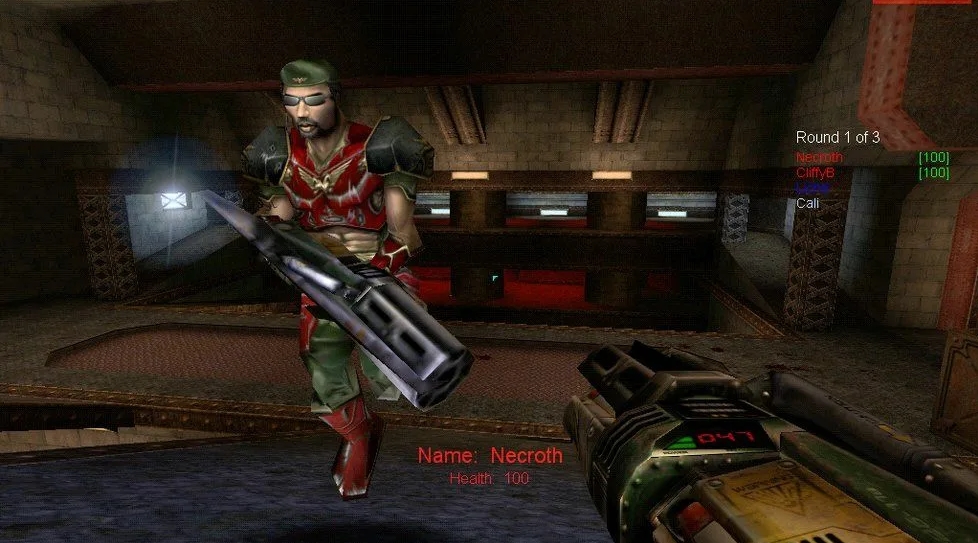
Because UT didn’t alienate newcomers. Unlike other shooters that required instant reaction and years of experience, here you could turn on a match with bots and just play. And not just for show: the artificial intelligence was truly smart, adaptive and sometimes inhumanly accurate. For challenge lovers, there was a solo campaign, where the difficulty varied from a walk in the park to a real massacre with Xan, the final robot boss, about whom players whispered legends. The difficulty levels allowed for adaptation: from a newbie to a veteran, everyone found their place. The game didn’t throw ice water in your face – it gave you time to get used to it, feel the taste of victory and only then raised the stakes.
One of UT’s main trump cards is the dominance mode. Back then, it was a revelation: teams fought for neutral points on the map, repainted them in their colors, and held them until the enemy took control. Before Unreal Tournament, such gameplay simply did not exist. Epic invented a new genre layer, which was then picked up by dozens of games.
And this was not the only innovation. For example:
-
Translocators allowed instant movement, changing the pace of the battle.
-
Jumper boots gave the opportunity to attack from above, literally “jumping” across the map.
-
A range of modes: from deathmatch and capture the flag to large-scale assaults with missions.
Each element turned the slaughter into a dance – fast, deadly and strategically thought out.
What really stuck in my memory were the maps. They weren’t just arenas, but full-fledged locations with their own plot, spirit, and visual character. Here you are racing along the roof of a train at full speed. Here you are storming a submarine. Here a ship is cutting through the waves, while two people with flare guns are running around the deck. Each map is a small performance. The game didn’t just offer to shoot – it drew you into a world where the design of the locations worked no worse than the script in a story-driven game.
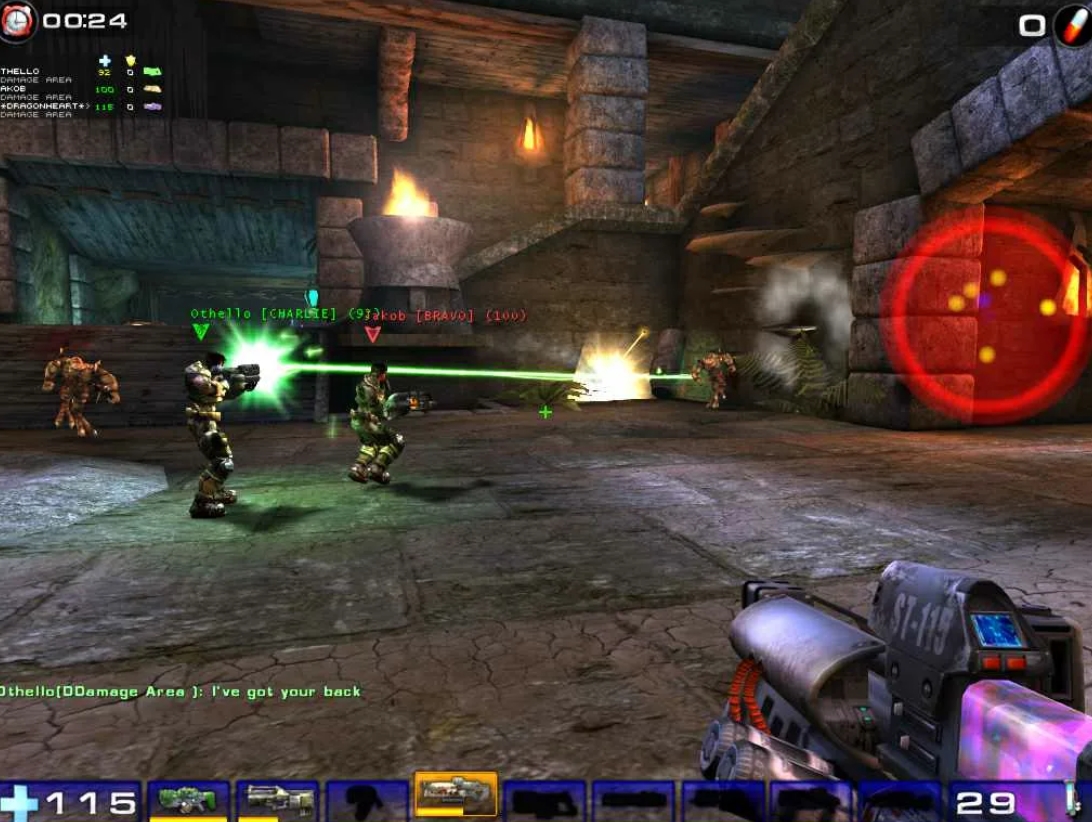
The Assault mode deserves special attention. One team defended the object, the other attacked in stages. For the first time, a structure appeared where they not only shot, but also completed missions: activate switches, break through defenses, defend points. It was this approach that, several years later, became the foundation for a whole wave of multiplayer games with equipment, branched objectives, and roles within the team.
Unreal Tournament wasn’t just a great game — it influenced the entire industry. It made it clear that a shooter can be about more than just shooting — it can be about tactics, style, design, dynamics, teamwork, and even atmosphere. It proved that even in a life-or-death battle, there’s a place for art. And today, despite the years, it remains alive in the memories of gamers. Not just as “that shooter with a cool soundtrack,” but as the game that changed everything.
One click, endless fun – claim your free steam account with now.
Why Unreal Tournament Still Feels Faster and Smarter Than Modern Shooters
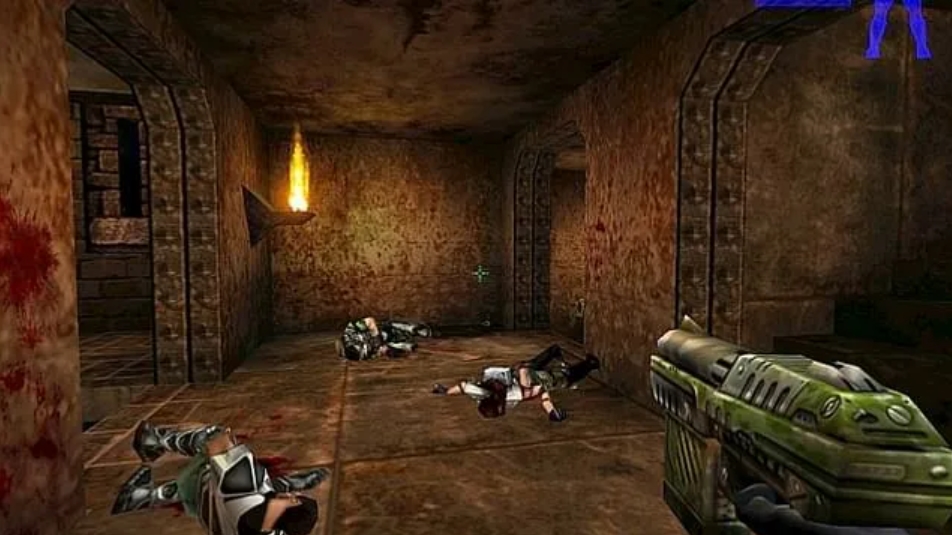
Maybe it was all about the weapons? There wasn’t a single passable gun in Unreal Tournament — each one had character, style, and felt almost like an extension of your arms. Even the most basic Enforcer, the same pistol that threw you into battle with at the start, could be deadly if you knew how to use it. Its recoil, rate of fire, and accuracy often saved you in tense moments. And when the Shock Rifle or Pulse Gun appeared in the arsenal, a real pain fest for the enemy began. One successful shock combo could destroy everything alive, not to mention the famous Redeemer — a giant guided missile capable of turning half the map into a flaming crater. It wasn’t just a gun — it was a doomsday weapon.
Flak Cannon? A real test of accuracy and ricochet sense. Having mastered it, you turned into a machine of destruction, capable of fighting in the most difficult conditions. Such weapons did not forgive mistakes — and this is what gave the battles flavor.
But this game didn’t live by weapons alone. The maps were also a work of art. Their design was subject to both visual aesthetics and balance: in some places you felt like a hunter, in others – like a prey. Some arenas rewarded mobile players, while others, on the contrary, inclined them to defense and camping. And yes, not all of them were perfect – there were moments when the design pushed towards monotonous gameplay. But the overall picture was still bright: each arena was memorable, recognizable, with its own logic of movement, rhythm and spirit.
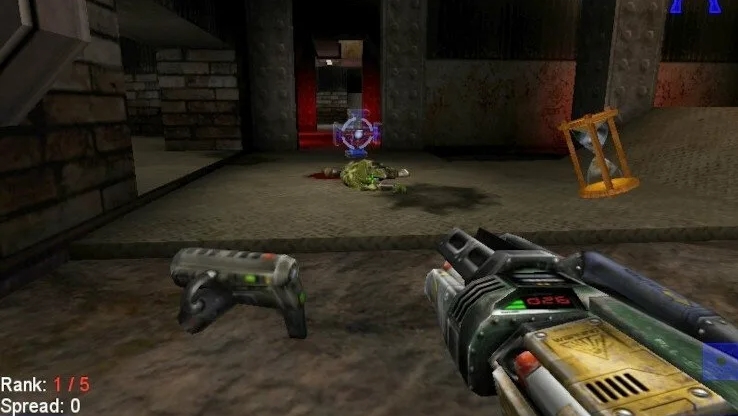
Technically, Unreal Tournament was also a cut above most games of its time. In 1999, requiring a video card with 4 MB and 3D acceleration was almost madness. But it was worth it. Detailed graphics, dynamic lighting, smooth animation and interface design – all this created the impression that you were in the future. And the music? Electronic track compositions, composed with a sense of drive, perfectly emphasized the atmosphere of the match, without distracting, but increasing the tension. The audio design was generally brilliant. An experienced player could understand where the enemy was, what he was carrying and where he was moving by the steps, shots, even the smallest sound of a falling shell. It was not just shooting – it was listening to a symphony of death.
But the main thing is in the sense of tempo. Unreal Tournament was not just fast. It required lightning-fast thinking from you. Here, not only the reaction is important, but also the instant analysis of the situation: who appeared in the frame, what he was carrying, where he came from, where he could go, and how to intercept him. A mistake for a second – and you are already reborn at spawn. Did not recognize the signal, did not hear the sound of armor selection – consider yourself late. After such an experience, looking at modern multiplayer shooters with their “training zones”, slow gameplay and emphasis on casuals, you can’t help but cry out through clenched teeth: “What is this? Why has everything become so slow, as if it were designed for people in slippers and with a validol at hand?”
What Made Unreal Tournament Special
There was a time when the gaming community was seriously divided into two camps: those who considered Unreal Tournament to be the pinnacle of arena shooters, and those who remained loyal to Quake III Arena. Forum battles and kitchen arguments between friends could drag on for hours, but the reality was this: yes, you could play both games, but Tournament felt like it won on almost all fronts.
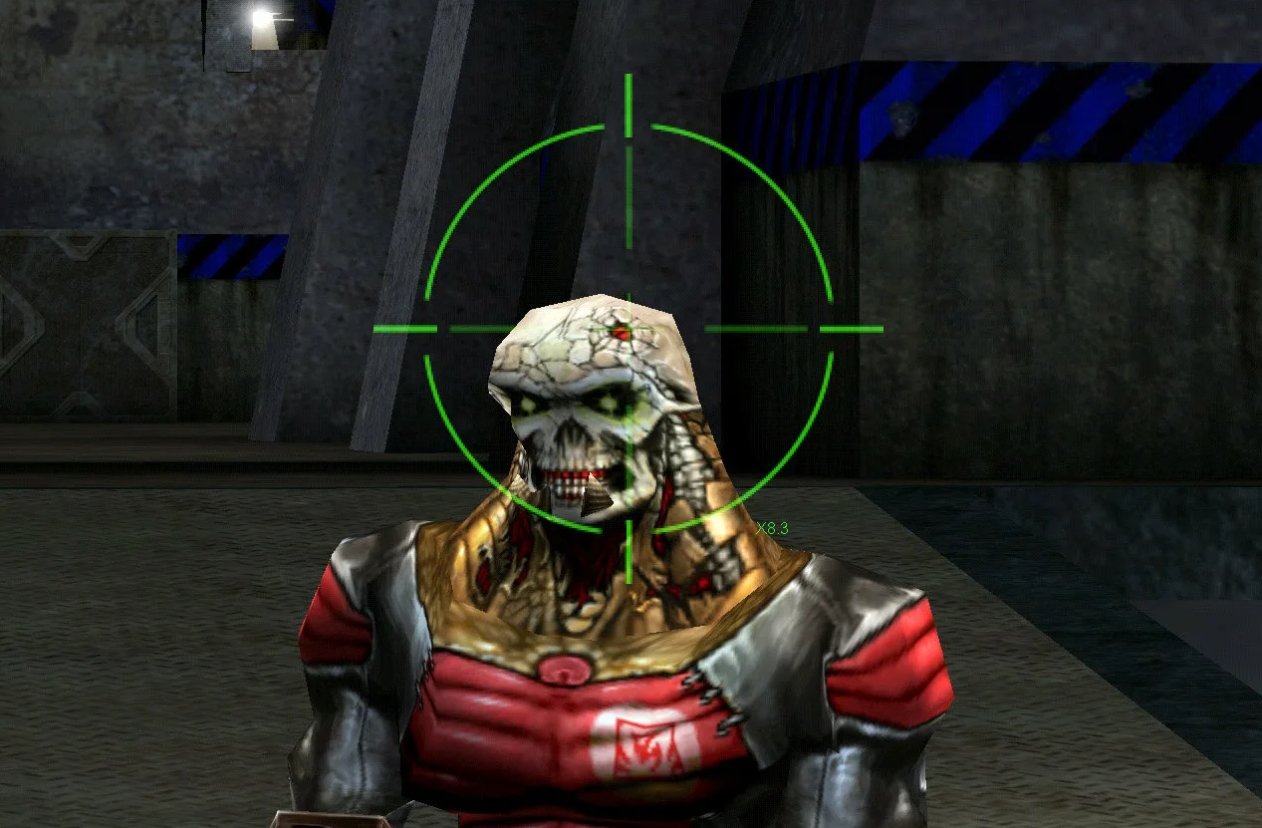
UT won in sound — its voice acting became iconic. It delighted with maps that were thought out not only in architecture, but also in the rhythm of the battle. Even bots in a single-player game seemed not soulless targets, but worthy opponents. Not to mention the overall style — original, recognizable, daring. Against this backdrop, Quake III looked like a solid, but still more traditional project. Nevertheless, it was it that gained much greater popularity in the countries of the former USSR. Why? Maybe it was the active support of pirates, or maybe Quake was simply more accessible at that time. In any case, these are already details – we’ll leave them to gaming historians.
To understand why Unreal Tournament was so loved, it’s enough to remember how it stood out from its competitors:
-
Unique sound atmosphere — phrases like “Headshot!” or “Monster Kill!” became memes long before memes appeared;
-
Map design — each arena felt like a mini-masterpiece, created not only for battles, but also for exploration;
-
Advanced bot AI — opponents in a single game could seriously surprise, especially at higher difficulty levels;
-
Clear pace and balance — matches were fast, intense, but almost always fair;
-
Charisma and style — UT did not try to be realistic, it was original, with a powerful visual presentation and its own aesthetics.
But you may ask: why are we talking about Unreal Tournament in the past tense, if the servers are still working, players are there, and activity, albeit small, is there? It’s simple — the game, for all its tenacity, has long passed into the category of legends. For modern players, it has become roughly the same as DOS graphics for zoomers – interesting archaism. When UT first came out, the current generation did not yet have YouTube, TikTok, or even thoughts about eSports. Games were made differently back then, and played differently. Over time, the shooter audience began to change rapidly. Battlefield, Halo, then Call of Duty, and so on came onto the scene. Unreal tried to come back – first in the form of UT2003, then UT2004, but did not achieve the same success. In the new reality with rapidly changing trends, the good old Tournament lacked freshness, lacked the wow effect, and the industry as a whole was going in a different direction.
Nevertheless, in the memory of those who played Unreal Tournament at the dawn of the 2000s, this game remained as the standard of arena shooters. It is associated not only with fast gameplay and cool frags, but also with the spirit of the times – LAN parties, screaming headlines in gaming magazines, cybercafes where schoolchildren hung out until closing time, trying to arrange another monster kill. Although the Unreal era is behind us, its mark on the history of the genre is not just noticeable, but fundamental. And anyone who has ever heard the cherished ULTRAKILL in headphones will understand why even after decades UT has devoted fans and live servers.
Unreal Tournament: Game of the Year Edition System Requirements
System Specs for Unreal Tournament: GOTY Edition
How to play Unreal Tournament: Game of the Year Edition for free on Steam via VpeSports
Remember the time when games didn’t take you on long story walks, but threw you straight into the meat? Unreal Tournament: Game of the Year Edition is from that era. There’s no need to explain anything here. You appear in the arena – and that’s it, the clock is ticking. No one will give you a head start. A rocket launcher, plasma, a flag at gunpoint – survive if you can. This is the quintessence of an arena shooter that, decades later, still hasn’t aged. It’s just honest. It’s fast. It’s incredibly addictive.
Do you want to experience that same thrill when you rush into battle, not knowing where the next bullet will come from? Here, every match is like a mini-war, where you learn to think faster, shoot more accurately, and not be afraid of death, because respawn is in a second. Old maps like Morpheus, Curse or Facing Worlds still shine with brilliant design, and who would have thought that arenas from twenty years ago would look cooler than many modern locations?
And the best part is that you don’t have to pay a penny. Everything is ready: just register on the site, go to your profile, and you will receive detailed instructions, as well as the ability to launch the game through a free Steam account. We have done everything so that you don’t have to dig into the settings – just launch and dive into chaos.
If after a couple dozen frags you want to tell how it was – write a review. Sometimes comments need to be slightly corrected so that they pass moderation, but after confirmation, all the necessary login data will immediately be sent to your email.
And, of course, don’t forget to check out our Telegram – there we share fresh accounts, news, mods and just chat with those who still consider UT a real arena, and not just “old school”. Any questions? The full “How to play for free” guide is always at hand – or write to us in the chat. We will answer. We love this game too.