

Two Point Studio once again pleases fans with its signature approach – after the hospital and university, the developers decided to take a swing at a new field and created a museum simulator. At first glance, Two Point Museum strongly resembles the studio’s previous games, but, surprisingly, there is no feeling of “secondary” here. All thanks to a successful balance between familiar mechanics and fresh ideas: the construction system has become more flexible, funny Easter eggs have appeared, and managing the museum and exhibits requires much more attention and strategic thinking than one might expect.
Table of Contents
Two Point Museum Free Steam Account
This summer, I finally got around to something I had been putting off for a long time — I launched Two Point Hospital, the very first game in the series. Honestly, I expected something cute and relaxed, with podcasts to listen to in the background. But in the end, I literally got hooked: the game is so addictive that I completed all the levels in a couple of days with a gold medal, simultaneously watching TV series and not really distracted by what was happening on the screen. The gameplay is routine, but pleasant — just what you need to relax. And then I decided to try Two Point Museum. And that’s where everything really started spinning. If Hospital was a quiet time eater, then Museum is a real time predator hiding under the guise of a cozy simulator. There is almost no routine here, but there is an incredibly flexible system of construction and design. I was so carried away by creating exhibition halls, choosing wallpaper, furniture, lighting and arranging exhibits that I did not notice how it began to get light outside the window. I spent the last room decorating until dawn — simply because I couldn’t stop.
If in Hospital and Campus the gameplay was built around the employees — teach, upgrade, improve skills, repeat on each map — then in Museum the focus has shifted to the exhibitions themselves. The player’s main task is to collect exhibits, decorate themed rooms and turn the museum into a real work of art. And this is not just decoration: the amount of donations, and therefore the museum’s income, directly depends on the quality and interest of the exhibition. Here you don’t just build — you create an atmosphere, make a place where people want to come again and again.
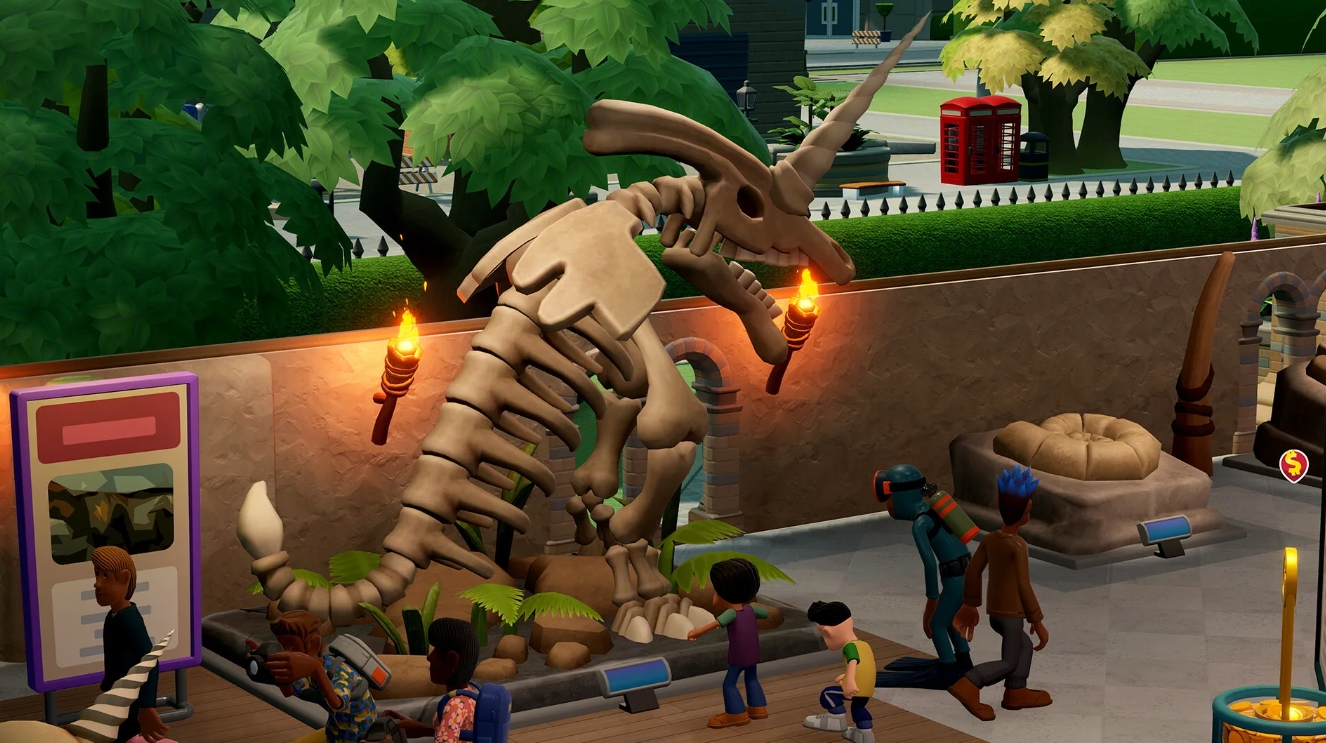
What’s especially nice is that the game literally doesn’t let you get bored. If you want, put signs and descriptions for each exhibit, hang banners, create background music, launch excursions or come up with a storyline for each room. You can collect themed collections, hunt for rare artifacts, decorate each room with soul. You can even create toys here — and sell them, if you want. Previous games in the series suffered from monotony: the same maps, just change the scenery. In Museum, each location is unique – both in visuals and in tasks. The first mission is a prehistoric museum, where you work with fossils and dinosaurs. Then you are sent to the marine museum, where you build aquariums, get rare sea creatures, decorate the halls with algae and corals. Next – a paranormal museum, full of ghosts, strange artifacts and mysticism. Each mission is not just a new map, but a completely different style and approach to control.
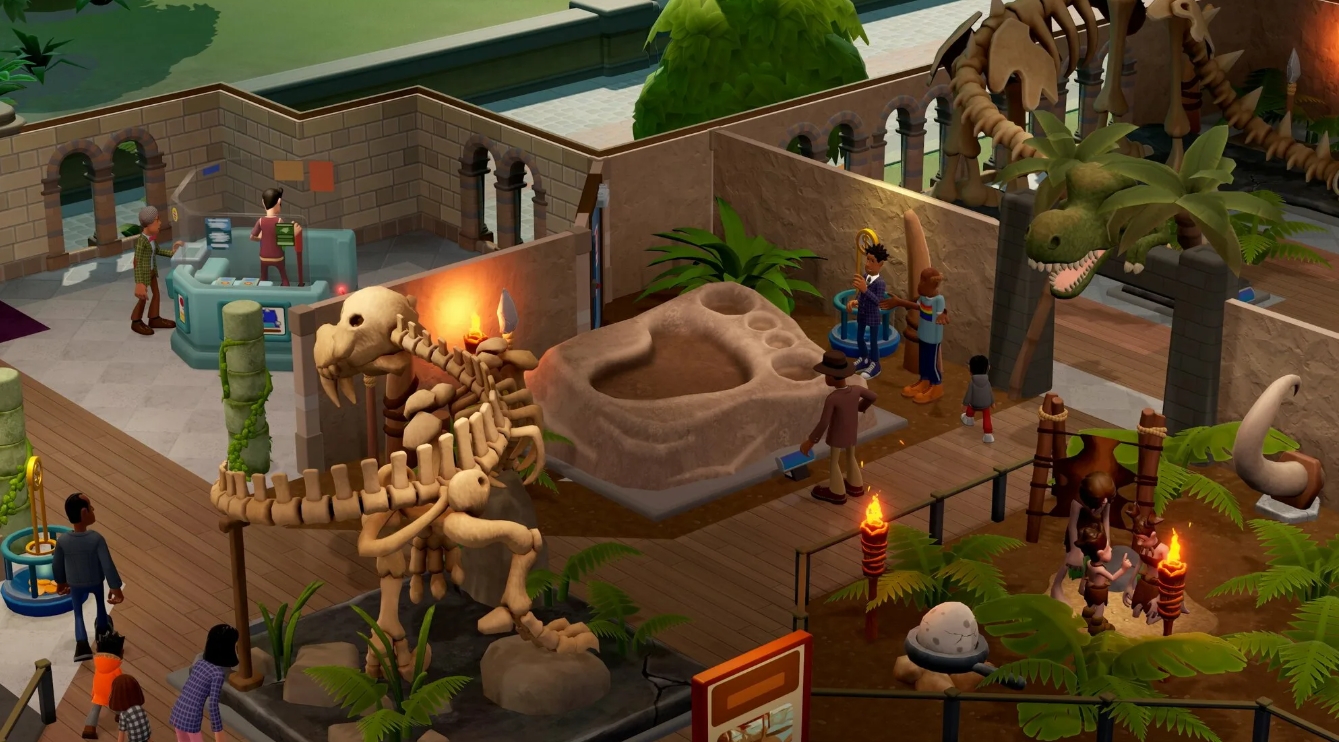
Returning to old maps is now not only possible, but also desirable. The game gives reasons: you can open new regions, find unique exhibits, improvements, items for decoration. And also – buy additional buildings for old museums and open a completely new exhibition there. Such flexibility was simply not there before in the series. In Two Point Campus, for example, if you opened a school of magic – forget about everything else, combining themes was impossible. And here – please, build whatever you want, combine, experiment.
Each museum works by its own rules. Exhibits influence each other: some have positive bonuses when placed next to each other, while others have whims and strange effects. For example, one damned doll scares visitors so much that they immediately run to the toilet. And for some reason, the dinosaur skeleton makes everyone yawn and reduces the overall interest in the exhibition. And so you sit and think: how to place everything so that everyone is comfortable, interested and at the same time beautiful? The gameplay encourages creativity – this is not just management, this is a real art of balancing the atmosphere, logistics and aesthetics.
At some point, you realize that you are turning into a museum curator, designer and manager at the same time. A mini-business plan is spinning in your head: “Aha, here I will put a knight’s armor, next to a harp to set the mood. But not too close to the mummy, otherwise the visitors will feel uneasy again.” Two Point Museum doesn’t just continue the series’ traditions, it refreshes them. Less routine, more flexibility, atmosphere, and creative freedom. This is not a simulator about numbers and efficiency – this is a game where you want to arrange every corner, because you are genuinely interested in the result.
Install, play, repeat – all thanks to a free steam account with games.
How the construction regime has changed
The construction mode has evolved significantly compared to the first two parts of the series. Now players have more freedom: they can build partitions, build rooms of non-standard shapes, and the room painting system has become much more flexible. If you want, just fill the walls with one color, or experiment with the palette, highlighting different zones and creating an atmosphere for each room.
Of course, it is still far from the level of The Sims 4 – after all, there the construction was brought almost to perfection. In comparison, many other games seem crude. For example, here you still can’t place objects too close to each other due to collision restrictions. But there are now variations of objects: now the same object can have several colors and shapes, making it easy to choose a design for any exhibition – from prehistoric to marine.
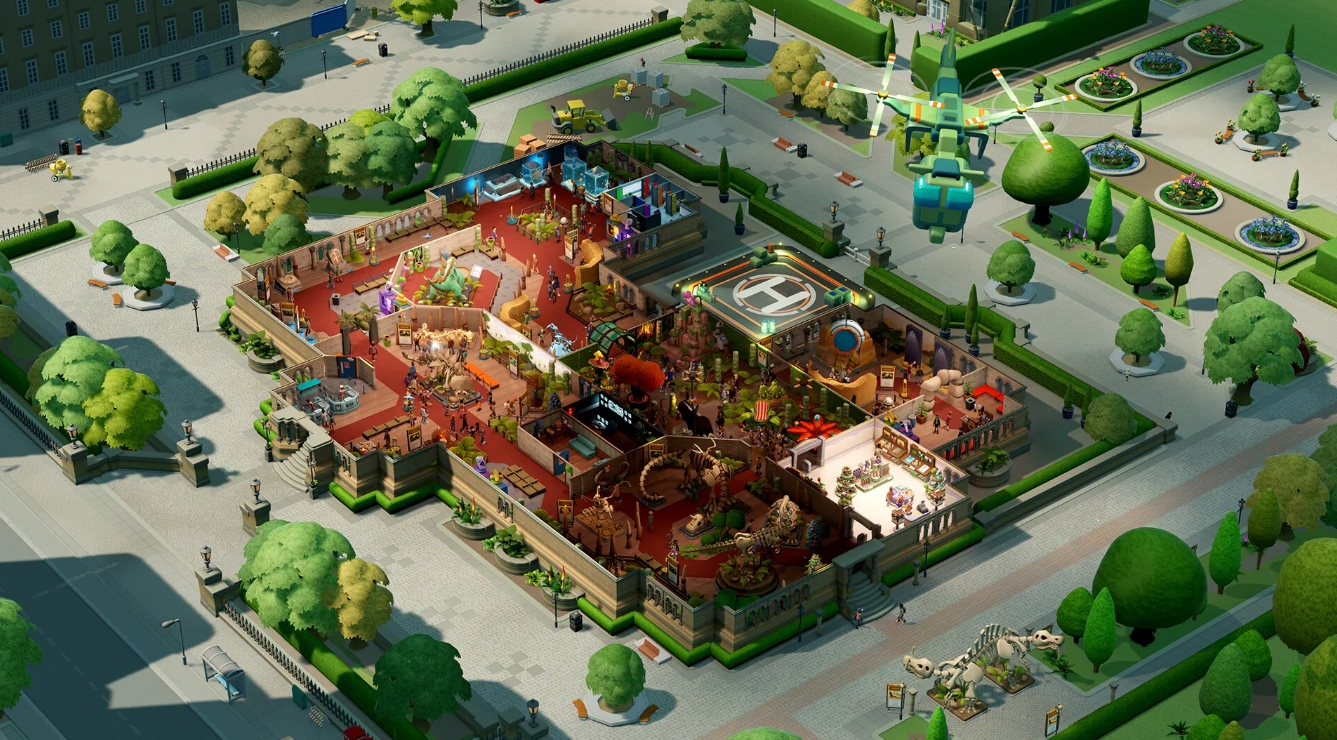
Some rooms have returned from previous parts: toilets, recreation areas, lobbies and classrooms. However, everything else is new and thematic. For example, a workshop for creating interactive exhibits, a souvenir shop with goods related to the current exhibition (which increases the interest of visitors), a security office, a science lab, aquariums, as well as special sealed rooms for keeping ghosts.
As the plot develops, more and more functions are opened, and the game really begins to sparkle with new colors. But no matter how exciting the construction of the museum and the design of the exhibits are, all this is just decoration. The main thing here is the exhibits, and the process of obtaining them is the most exciting part of the game!
Expeditions and Artifacts Guide
Every self-respecting museum needs its own professional relic hunter — a kind of Indiana Jones on a salary. This desperate explorer will fly to the most remote corners of the planet (and not only!) in search of forgotten artifacts to replenish the museum collection with something truly rare and exciting. But it’s not that simple. The more dangerous the place you send your archaeologist to, the higher the chance of finding valuable and unique finds. But the risk of losing a person or money also increases. At first, expeditions will seem like a walk in the park — dirt on your boots or a minor injury at most. But the further you progress in the game, the more serious the challenges become. Abandoned ruins, snowy ridges, jungles inhabited by wild animals — it’s better not to go there without proper preparation. To minimize losses, you need to form a team correctly: a pilot for reliable delivery, a survival specialist, a guard in case of attacks – all this is not a luxury, but a necessity. And each member of the expedition must have useful perks, otherwise your heroes may not return.
The weather in the game is not just a backdrop. The risks of forays depend on the season and climate conditions. In some places, seasonal storms, landslides, or floods occur. Sometimes it is wiser to wait a little than to send people into a storm. Although if the team is selected wisely, and all possible threats are taken into account, you can take a risk. This is the beauty of planning: you want to get the artifact as quickly as possible, but haste can cost you an expensive mistake. Although expeditions are automatic, they do not always go according to plan. Periodically, events arise that require your intervention – small quests where you need to make a decision. For example, explore a suspicious cave or pass by? Help the locals or take what you found and run? Such events make the process more interesting: success will bring valuable bonuses – new artifacts, experience, or money. And failures threaten illness, loss of equipment, or even the death of expedition members.
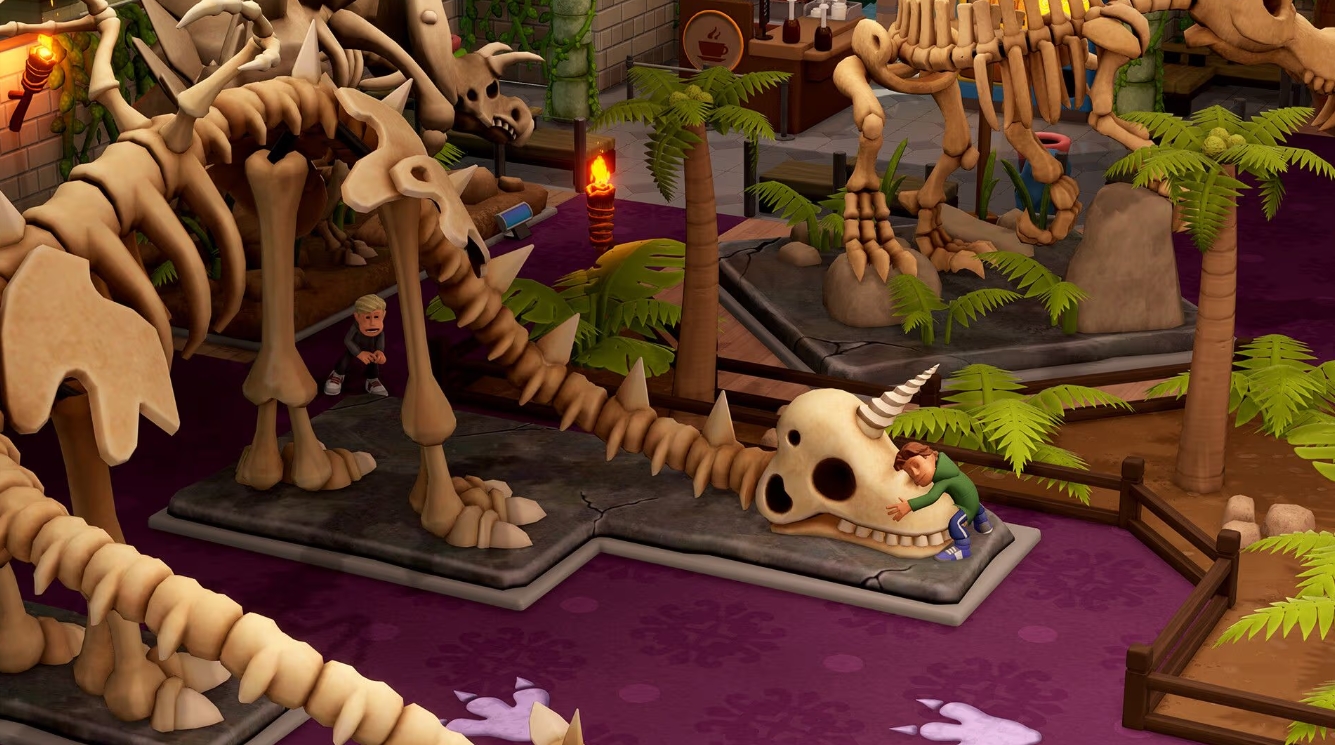
If everything went well, the archaeologist returns with a new exhibit. But simply putting the find on the shelf is not enough – it is important to present it beautifully. Each item has a “hype” parameter, which shows how interesting it is to the public. This indicator depends on the design: frozen remains look great among artificial snow and ice blocks, and cursed things are enhanced in the company of other “dark” artifacts. Some exhibits are parts of a single complex – and to get the maximum effect, you need to collect them all. One piece of an ancient statue is, of course, not bad, but the whole composition causes real delight in visitors.
An exhibition is not only a show, but also routine work. The excitement can drop if there is dust nearby, insufficient lighting, or a lack of descriptive signs. A good manager monitors cleanliness, directs cleaners, waters plants, provides each find with an explanatory text. All these are small things, but they are what make the museum lively and exciting for visitors. At the beginning, each exhibit has only one science point – a little information that can be shared with visitors. But over time, you will open a research room, where your archaeologists will begin to study objects, take them apart piece by piece and find new meanings. Research increases scientific value, but there is a nuance – after analysis, the artifact disappears. However, it can always be replaced with a new one – just send the team on another expedition.
As you delve into the game, you begin to notice a lot of details. Tours that do not correspond to the theme of the exhibition irritate visitors. An employee possessed by an evil spirit can disrupt the atmosphere and even scare the guests – he needs to be either isolated or cured. It is better not to defrost frozen remains: the consequences can be… not the most pleasant. And the ghosts remaining in the museum are not always happy with this situation – if you overdo it, they will simply disappear into the afterlife. Your museum is visited by different people: adults, children, curious tourists, serious scientists. And everyone needs their own approach. Children, for example, are not interested in scientific tablets – they need toys and interactive activities. In the workshop, you can create mechanical dinosaurs or fish, so that the little ones have something to do. Your task as a manager is to make sure that each visitor finds something of their own in the museum. After all, a satisfied guest is a potential donation, a contribution, and, of course, a reputation.
Why Two Point Museum is the best museum simulator of 2025
Two Point Museum is not just a continuation of the cozy and ironic simulators from Two Point Studios, but a real find for everyone who loves management tycoons. If I somehow calmly skipped Two Point Campus – there were plenty of similar games back then – then the museum theme seemed truly fresh and unusual. After all, museums are a whole world of history, artifacts and creative ideas for design. And who, if not Two Point, could turn this theme into an exciting adventure that is impossible to tear yourself away from?
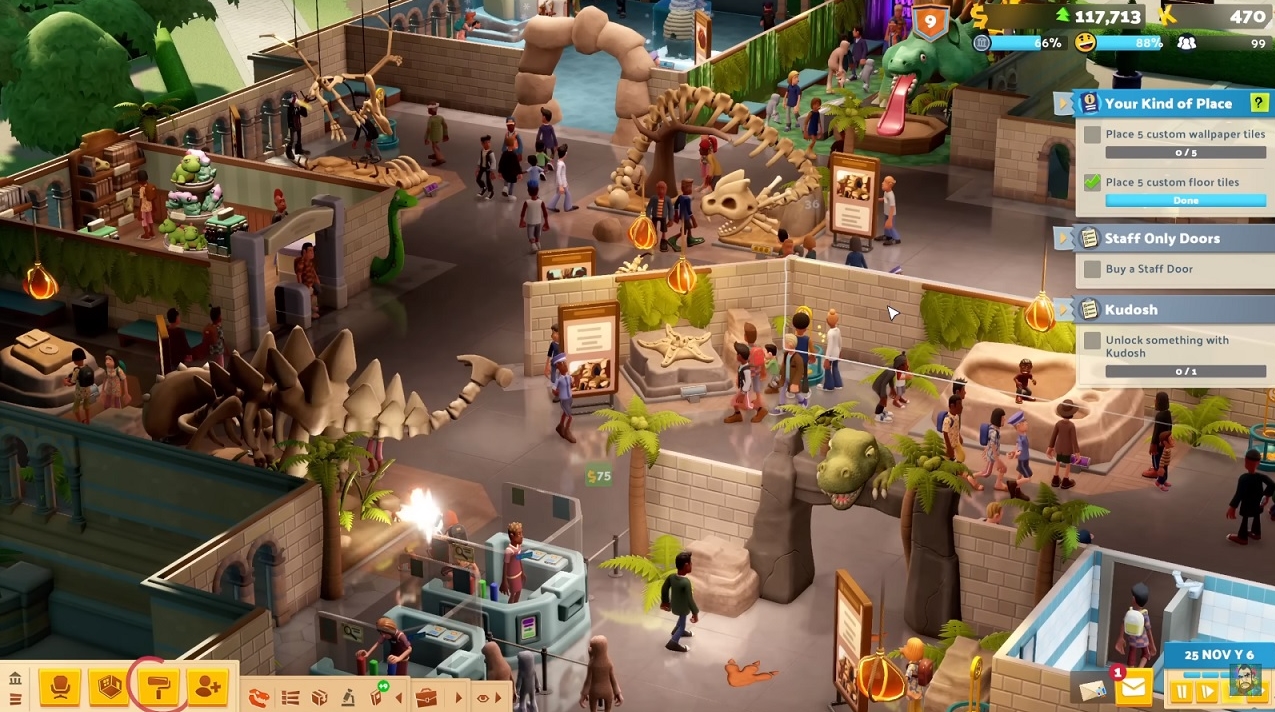
The game is addictive from the first minutes. Build unique halls, organize exhibitions, send expeditions for antiquities and decorate each room to your taste – all this makes the management process not only interesting, but also very diverse. There is no sense of routine, as in most similar games. On the contrary, every day in your virtual museum is like a new challenge.
What was especially pleasing:
-
Construction has become more convenient and enjoyable — the system of placing objects and planning space has been improved and feels more flexible than before.
-
Expeditions for exhibits are a great mechanic: you assemble a team, choose a direction, and then wait with bated breath to see what they bring back. This adds a spirit of adventure.
-
The maps are pleasingly diverse — each with its own conditions, style, and theme, thanks to which the game does not become boring.
-
There is no tedious routine — instead of endless routine, you are constantly doing something new: either you will design an exhibition, or you will start restoration.
There is a fly in the ointment:
-
Sometimes there are minor bugs — walls can “disappear” or conflict with other objects, which is a little annoying.
-
Although the construction mode has improved, it still lacks flexibility: I would like a little more freedom in design and placement.
-
And, frankly speaking, I lost two days of my life. Without sleep, without food, with a cup of coffee and a bunch of plans for the museum’s development. Work? What about work, it can wait.
Two Point Museum System Requirements
System Specs for Two Point Museum
How to play Two Point Museum for free on Steam via VpeSports
Step into a world where dusty history meets pure absurdity. In Two Point Museum, you’re not just a curator—you’re the mastermind behind a chaotic cultural empire. From mysterious fossils to otherworldly artifacts, every decision you make shapes the strangest museum the public has ever seen. Hire oddball staff, wow your visitors, and try to keep your haunted displays from causing a panic. It’s weird, it’s witty, and it’s totally unforgettable.
Getting started is as easy as unlocking a sarcophagus with a post-it note. We’ve handled all the boring setup stuff so you don’t have to. Simply register on our site, log in to your profile, and your personal gateway to Two Point Museum will be ready—whether you launch it directly or through a free Steam account. No complicated installations or endless guides. Just hit play and start filling your museum with the wildest curiosities imaginable.
Once your exhibits are running and the crowds are flooding in, take a moment to tell us what you think. Your feedback matters, and while every review goes through moderation, you’ll get login details by email once your comment gets the green light. If it doesn’t show up right away, give it a small polish and resend.
Want insider access to new accounts, fresh patches, or bizarre update news? Subscribe to our Telegram channel and never miss a thing. We drop exclusive content, discuss game strategies, and keep the community buzzing. And if anything confuses you along the way, don’t worry—we’ve packed everything into the “How to play for free – Complete guide” section. Still stuck? Shoot us a message in chat. We’re always around… unless the time-traveling exhibit malfunctions again.