

Torchlight is a truly rare and even slightly paradoxical case. This is a game inspired by Diablo… and created by those who once gave us Diablo itself!
The logical question is: why did the legends of the genre suddenly decide to repeat themselves? Why, instead of continuing the cult series, did they take on something new — but painfully familiar?
Table of Contents
Torchlight Free Steam Account
The story of this game begins in the difficult year of 2003. Then Vivendi Universal, finding itself in a difficult financial situation, decided to get rid of its gaming division, trying to sell it for an impressive 2 billion dollars. This package included such industry giants as Sierra and Blizzard North. But there were no buyers, and the price began to fall rapidly – first to one and a half billion, then to a billion, and eventually stopped at 800 million. Panic began in the ranks of Blizzard North: people felt that the ground was slipping from under their feet, and began to run away.
One of the first to leave was Bill Roper – the man who stood at the origins of Diablo and its sequel. Officially, he said that he just wanted to “try himself in something new.” New turned out to be a good old thing – creating video games. Together with former colleagues from Blizzard North, he founded the Flagship Studios studio. Their first project was the dark and ambitious Hellgate: London. Unfortunately, the game, which had high hopes, especially in South Korea, turned out to be a failure. And not only in Asia – it was met with a cool reception all over the world.
The main source of irritation was the paid multiplayer: to get “elite” access, players had to shell out 10 euros a month, in addition to the cost of the game itself. The very idea of paying to remove the restrictions that the same developers had set up caused understandable indignation among players. And the promise of a “lifetime subscription” for 150 dollars became a subject of ridicule when Hellgate’s servers were finally shut down on January 31, 2009. Some still remember how they invested money “for life” and received several years of dubious pleasure.
But the story did not end there. After the collapse of Flagship Studios, former employees did not go their separate ways, but gathered their courage and founded a new company – Runic Games. Over the course of a year of work, they gathered strength, experience, and inspiration — and Torchlight was born. For $20, players got a stylish, lively, and in a good way tube clone of Diablo, made by those who once created this very Diablo. After the failure of Hellgate: London, appetites were moderated, but love for the genre remained — and this is felt in every minute of gameplay.
Dive into games you’ve always wanted using a free steam account with!
Why Torchlight’s Graphics and Atmosphere Are Captivating From the First Minutes
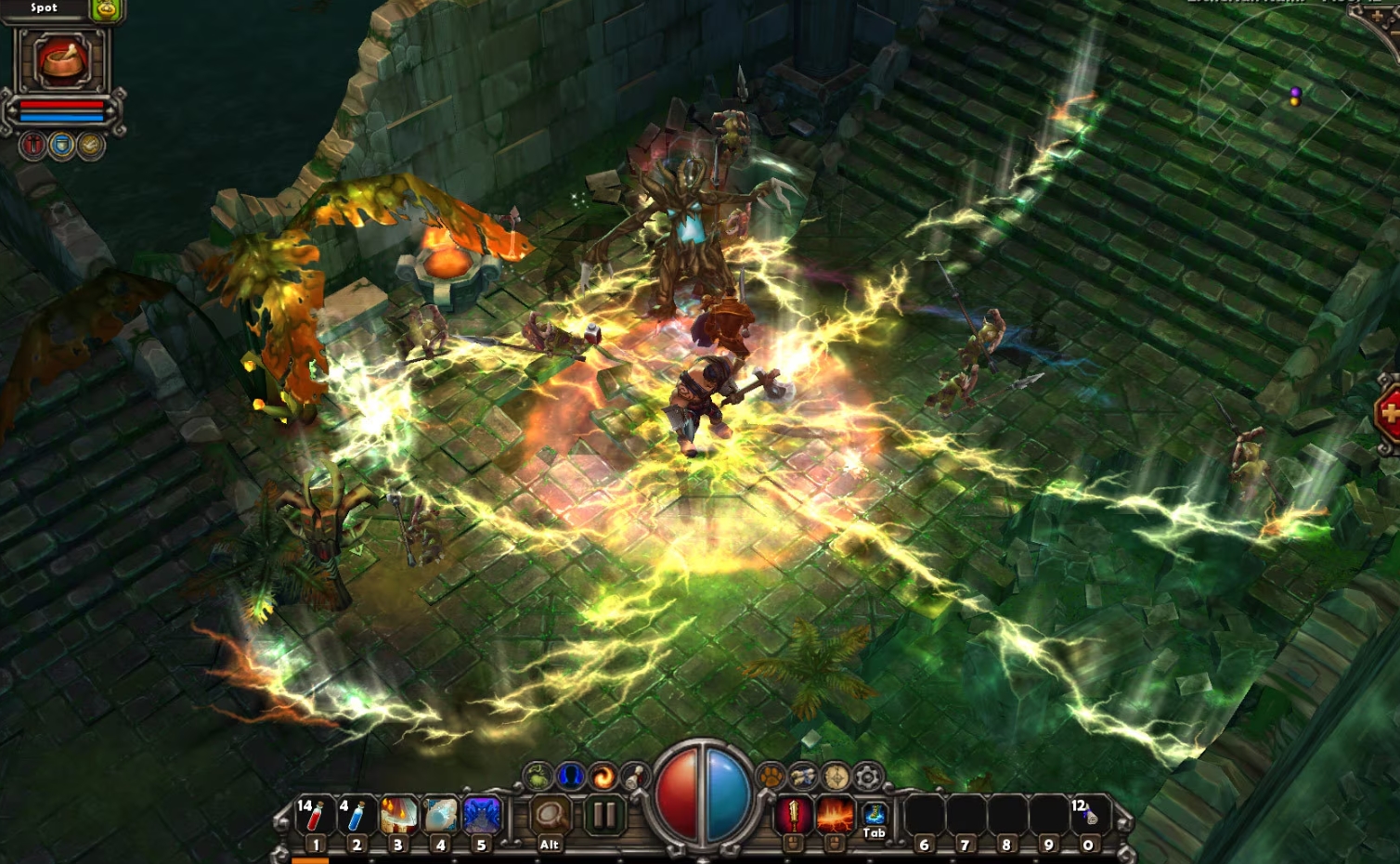
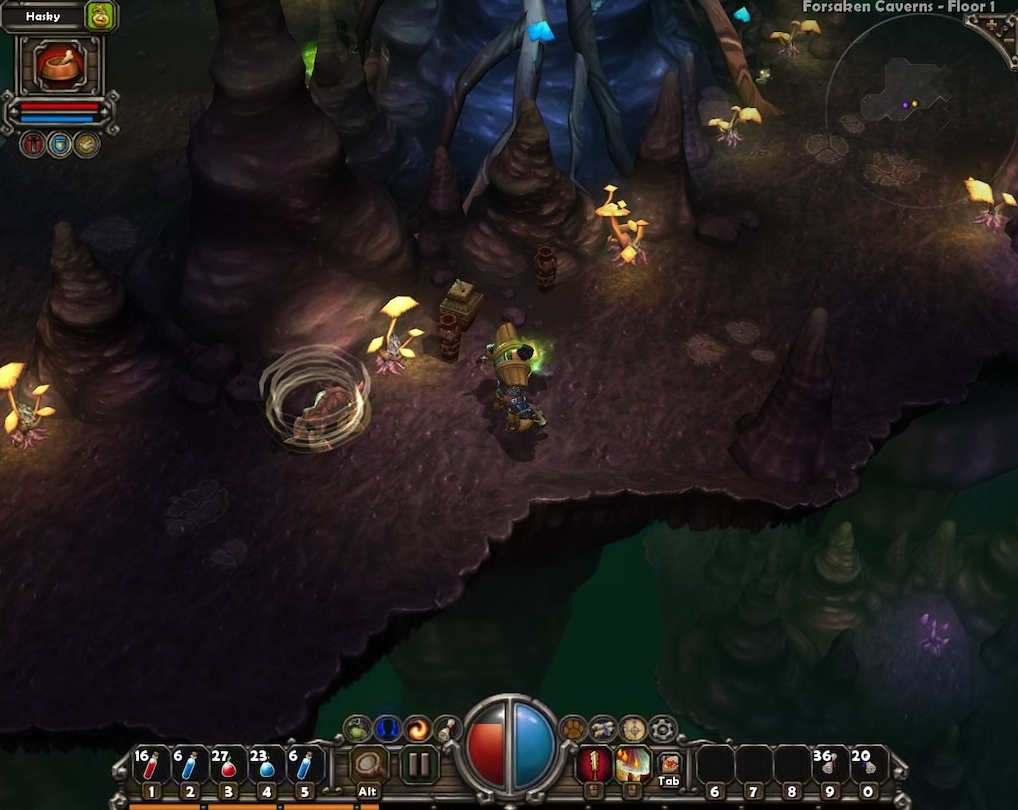
Torchlight immediately stands out against the background of the gloomy “devilish” series – first of all, with its appearance. Instead of dark and realistic tones, there is stylish cel-shading, which gives everything that happens a deliberate cartoonishness. It seems as if everything around is living illustrations that have burst from the pages of a comic book. The same technology was used, for example, in Prince of Persia and Borderlands. Although, it must be admitted, cel-shading does not always work well – anyone who had the strength to watch Star Wars: The Clone Wars – Republic Heroes to the end will understand.
From the first minutes, you are greeted by a tiny town – the place where the path of one of the three heroes begins: a warrior, a magician or an archer. And, I must say, this place is surprisingly cozy. Everything looks as if it was lovingly sculpted by hand: neat houses, paved paths, artisan shops – the warmth of King’s Bounty or Trine immediately comes to mind. The music only enhances this feeling: the main theme is painfully reminiscent of the camp melody from Diablo 2 – as if it was playing from the good old past.
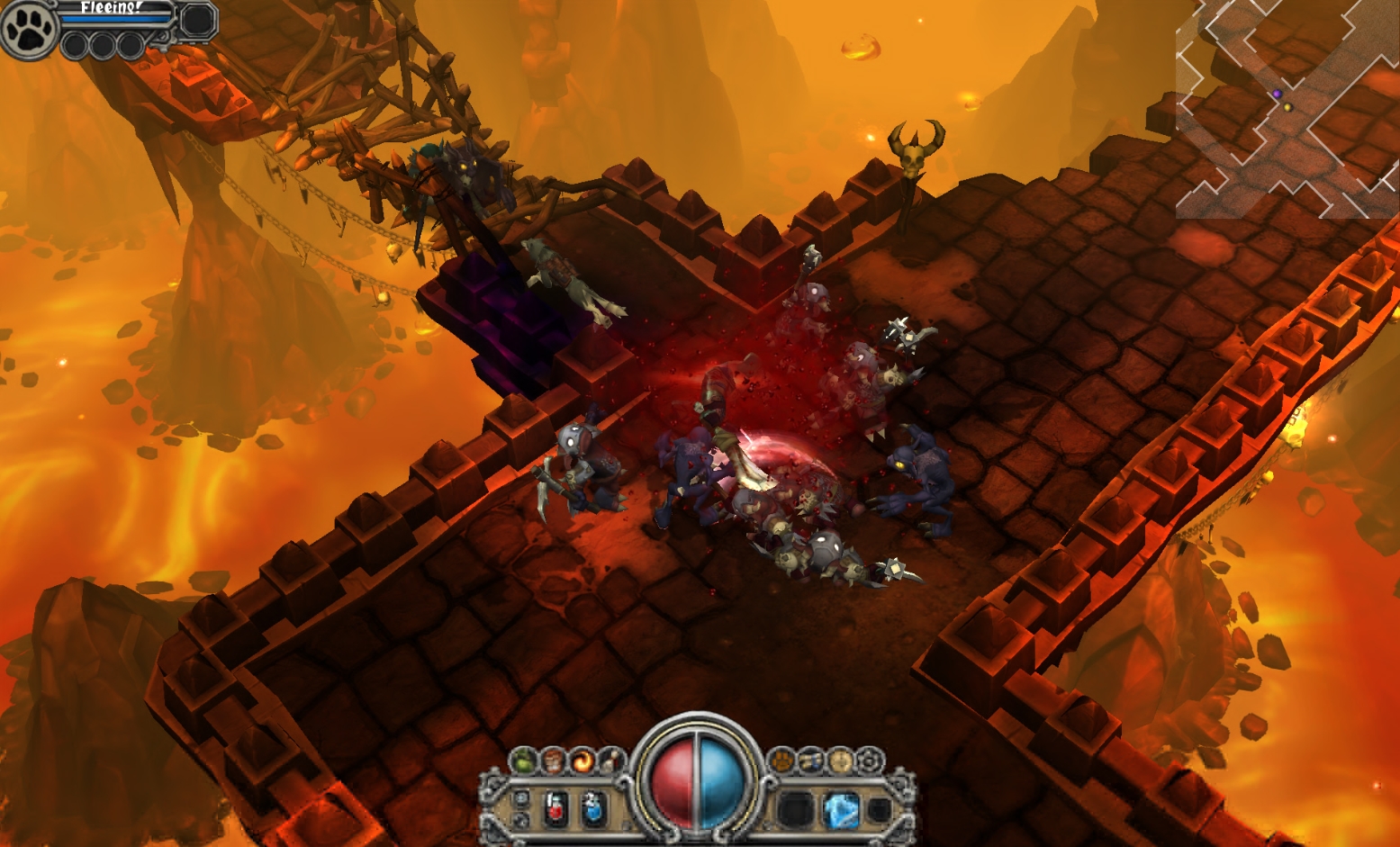
But as soon as you leave the gates, all this idyll evaporates like smoke. The old obsession, familiar from the creations of the former Blizzard North, returns: procedural generation of locations. What did not work in Hellgate: London does not shine here either. Dungeons replace each other, but the feeling that you are walking in circles does not go away. The spaces seem to be cut like a carbon copy, and even after a couple of visits you begin to get confused – was there or not. And more and more often the question creeps in: how do people live here? The town is blocked, the bridge is destroyed, and the only way leads to endless caves with corridors twisted like intestines and tiny dead ends.
Fortunately, Torchlight has a trump card – accessibility. The game runs briskly even on netbooks, which by the standards of modern titles sounds almost like magic. At the same time, real fireworks sometimes happen on the screen: flashes, explosions, magic – everything is colorful and shimmering, making you forget about the meager design. On powerful machines, the game shines like a Christmas tree. Sometimes even too much: in the heat of battle, you can lose sight of what exactly you should be doing. To top it all off, the developers added a pause – press Enter, and time freezes. The camera begins to slowly circle around your hero, giving you the opportunity to admire the surroundings or save a beautiful shot. However, combat tactics are not provided at this moment – this is more of a “hang out with the camera” function than a tool in the spirit of Baldur’s Gate.
Why Torchlight is called a Diablo clone and why it is loved
Yes, let’s not beat around the bush: the core of the gameplay is honestly borrowed from Diablo. And it’s not about inspiration – it’s practically a clone. You wander around locations, crush crowds of monsters, collect tons of loot, level up and go crushing again. And it seems like we’ve seen all this somewhere – and more than once. But there is something meditative in this cycle. Especially when each defeated creature bursts out with a bunch of drops, which fall so pleasantly to the ground – gold, swords, armor … a collector’s joy.
But Runic Games went for one trick, which ultimately made the process a little more comfortable. You are given a companion to help you – fluffy and useful. A cat or dog (optional) doesn’t just run around, it actively helps: bites enemies, drags away goods, and most importantly, can gallop off to the city to sell all the junk while you continue to slap demons. Returns quickly and with money. Honestly? I want such a beast in real life. But the map is a strange thing. It seems to exist, but it’s of little use. Its style is technogenic, not fitting in with the rest of the picture, and it’s hard to read, to put it mildly. But despite its crookedness, you can’t do without it: you can easily get lost in the dungeons, and the mini-map at least somehow tells you where to go next. Even if it’s a strain on the eyes.
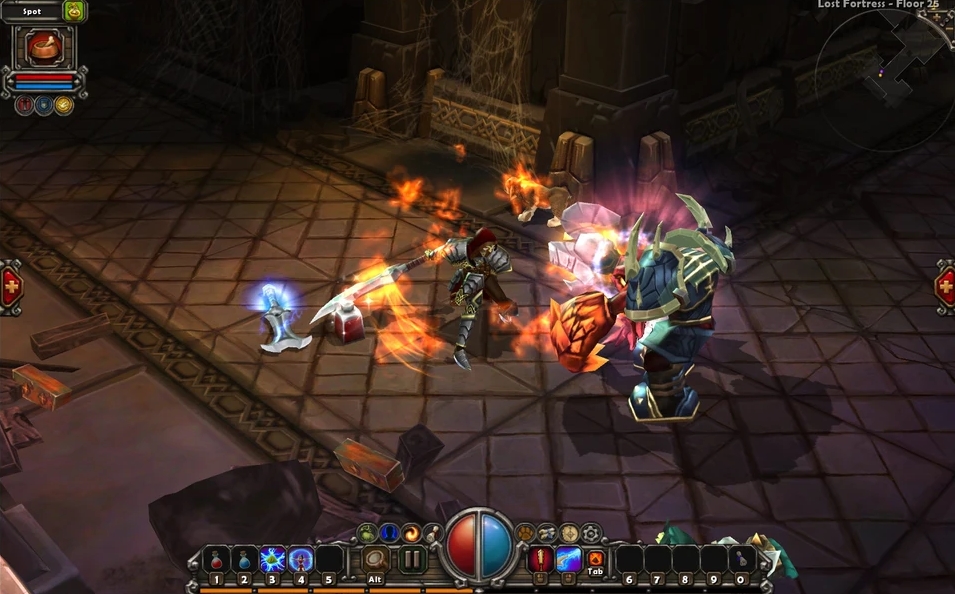
The skill system is a separate pain. The skill tree seems to be large, but there are two or three really useful skills for the entire class. The rest is ballast. After a couple of hours, it becomes clear: the combat is starting to get boring. Especially when the game starts throwing endless enemies at you from portals. And now you’re no longer a hero going to a feat, but a person who dreams of simply reaching the finale to forget about this routine.
The finale? Well, it’s also without surprises. The villain. Portals. The big boss who suddenly “awakens”. Intrigue – zero. If you try to guess who the last enemy will be, you’ll almost certainly guess. But despite all this, there is something cozy in Torchlight. It seems like a run-of-the-mill game, but with soul. Like an old T-shirt – faded, but beloved.
Is Torchlight Worth Playing: Pros and Cons
In Torchlight, the developers decided to add a few “unique” elements, as if specifically to be able to tick off the list of features and say: “We have that too.” Let’s take fishing, for example. In some zones, you are allowed to cast a line and try to pull out a fish. And not just for the sake of the collection – the caught fish can be fed to your pet, so that it temporarily transforms into another creature with different abilities. Sounds unusual, right? But in reality, everything is extremely simple and quickly gets boring.
The fishing mechanics come down to one action: you watch the animation of the narrowing ring, wait until it coincides with the center, and click on the hook icon. The caught fish goes to the inventory. No tension, no particular satisfaction from the process – just a one-time curiosity. In addition, these transformations are often of little use, especially if you do not delve into the mechanics of the pet.
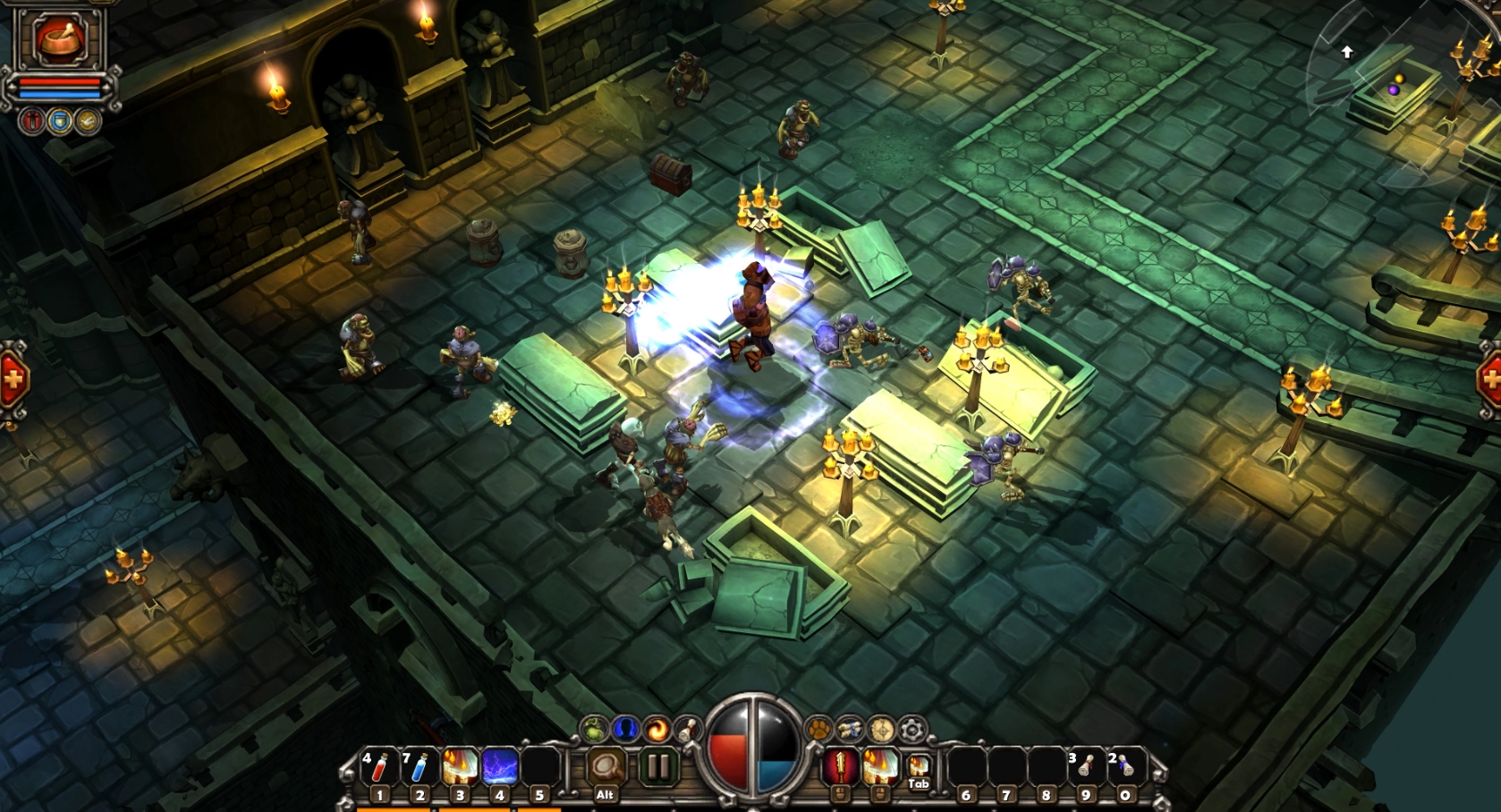
The second “feature” is side quests. In cities, you may encounter NPCs with requests that are typical to the point of predictability: “Kill a monster” or “Bring an item.” No interesting stories, no motivation – just “go and do it.” It seems like an RPG, but it feels like a checklist. And this is where it becomes especially offensive, because the story missions are no better. No intrigue, unexpected turns or development of the world – they seem to have been hastily and without much desire.
Torchlight quickly draws you in – colorful graphics, dynamic combat, lots of loot. But the game lets go just as quickly. After about a few hours, it becomes clear: the novelty has evaporated, and everything else begins to repeat itself. It is not surprising that the brain itself goes into “standby mode”, and you just click on everything in a row, without thinking. An excellent choice for those who want to while away the evening or get distracted after work, but definitely not for those who are looking for meaning and depth in games. Interestingly, this is already the second project from former Blizzard employees after Hellgate: London. And judging by the results, it seems that Blizzard itself has not lost anything from their departure – on the contrary, it seems like it has shed some extra ballast.
Pros:
-
Colorful shell and pleasant gameplay at the start.
-
Simplicity and accessibility: does not require any effort to get involved.
Cons:
-
Superficial mechanics like fishing and quests.
-
Interest is quickly lost, the game does not keep you in suspense.
-
The plot can be ignored – it will not hook you anyway.
Torchlight System Requirements
System Specs for Torchlight
How to play Torchlight for free on Steam via VpeSports
There’s something magical about Torchlight. It’s that feeling you get when you descend into the unknown — lantern in one hand, sword in the other — not knowing what lurks in the shadows or what treasures wait just around the corner. The town above may feel cozy and safe, but beneath its surface lies a world of danger, mystery, and addictive dungeon-crawling that pulls you in and doesn’t let go.
You don’t need a fancy setup or a tech degree to start your journey. Everything’s already prepped — just head over to our site, make a quick profile, and you’re ready to dive into the mines. And the best part? You can play it all through a free Steam account, no purchases, no nonsense. Just pure action.
What makes Torchlight really shine isn’t just the monsters or the loot — it’s the little moments. Watching your pet sprint back from town with fresh supplies. Uncovering a hidden lever that opens a treasure-filled chamber. Or simply blasting through a mob of creatures with your favorite spell and feeling like a true hero.
When you’re done tearing through the dungeons (or when you finally take a break), we’d love to hear how your adventure went. Share your story with us — we read every single comment. If it doesn’t pop up right away, don’t worry — it’s just being checked. As soon as it’s live, your access details will be sent straight to your inbox.
Want to stay in the loop? Our Telegram channel is full of fellow adventurers, updates, giveaways, and fresh Steam accounts for other games too. And if something goes wrong or you’re just a bit lost, our “How to Play for Free” guide is always just a click away — or shoot us a message, we’ve got your back.