

The Hungry Lamb: Traveling in the Late Ming Dynasty is a rare case where the game makes it clear from the very first minutes that there will be no usual “entertainment” here. It’s not about winning, it’s not about leveling up, and it’s not about spectacular scenes. It’s a story where you’re pulled into quietly, almost imperceptibly, and then you don’t let go.
By genre, this is a hybrid of a visual novel and an interactive adventure. The main tool of interaction is choice: cues, actions, solutions in difficult situations. Everything else is secondary.
The game was released on PC and, despite its rather niche format, quickly found its audience. Largely because it offers something rare: an emotionally difficult but honest experience where no one tries to please the player.
Table of Contents
The plot and setting of the game
The story in The Hungry Lamb doesn’t start with high-profile events. It unfolds gradually, like a conversation in which at first you don’t understand where everything is going, and then suddenly you catch yourself deep inside.
You play as a wanderer trapped in a world where survival is a daily task, not an abstract concept. There is no global goal to “save the world.” There is only a path, the people on that path, and the decisions that have to be made, even if none of the options seem right.
The strongest thing here is the feeling of reality of what is happening. You are not an observer, but a participant. And sometimes you just want to stop and not choose at all, because every choice breaks someone.
The atmosphere of the late Ming Dynasty
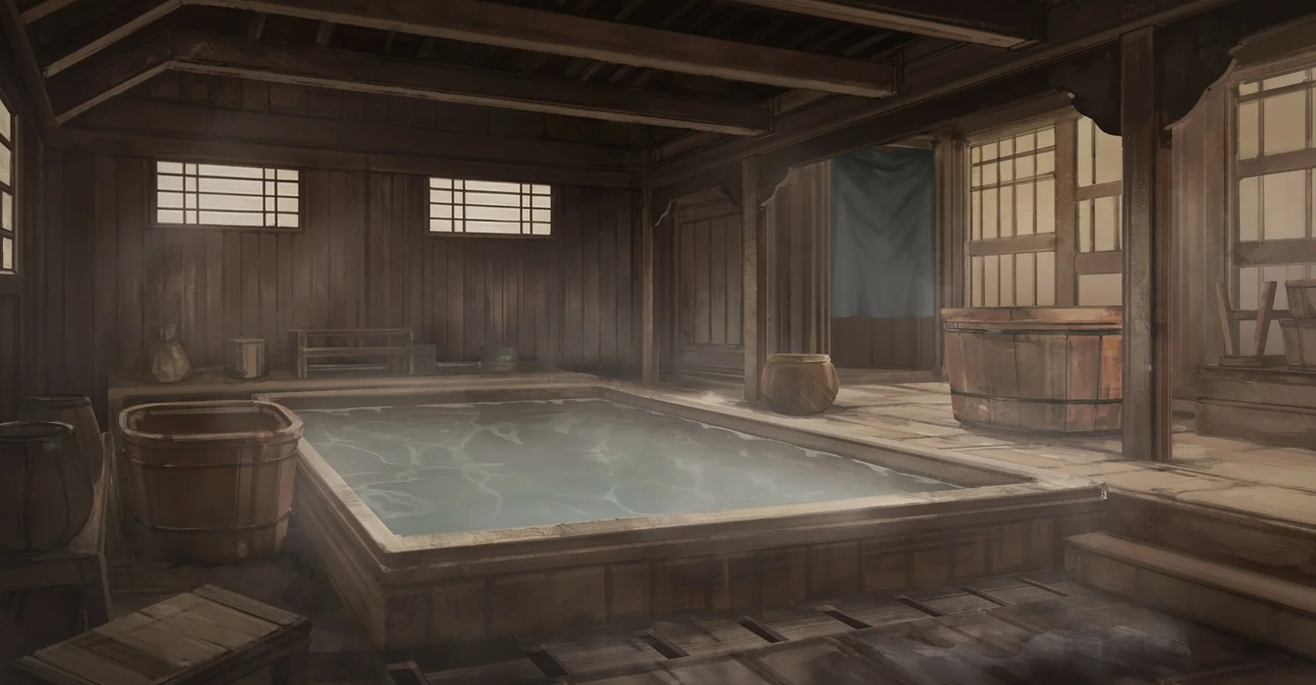
The game does something that even large projects rarely do — it makes you feel the era not through references and dates, but through the state.
The late Ming Dynasty here is not a decoration, but a mood. The world is on the verge of disintegration. People are tired. There is little hope, and it is quickly running out.
You walk through a village and it seems empty, not because there is no one there, but because the life has been squeezed out of it. Conversations are short, looks are heavy, and behind any dialogue you can feel that everyone has their own trouble, and it’s no less than yours.
This is the case when the atmosphere doesn’t just surround you, it presses you down.
Gameplay of The Hungry Lamb — how to play
If you describe the gameplay as honestly as possible, this is a game about elections and consequences. But there is much more to this simple description.
You’re constantly in a state of mild tension. Even in ordinary dialogue, you catch yourself thinking: “And if I say this now, what happens next?”
The game mechanics are tied to simple but important things:
-
conversations where every phrase can change the attitude towards you;
-
managing resources that are almost always running out;
-
situations where you need to quickly decide whether to help or pass by;
-
random events that disrupt plans.
The game does not explain how to “play correctly”. There are no hints like “this is a good choice” or “this is a bad one.” Just you and the consequences.
And at some point you start playing not as a “player”, but as a person who is just trying to survive and not lose himself completely.
The impact of decisions and endings
One of the things that is especially memorable is that the game does not forget your decisions. Even the ones that seem small.
You can do something at the beginning, and the consequences will catch up with you in a few hours. And it’s not always an obvious connection.
In The Hungry Lamb, you don’t feel like you’re “going through the content.” Rather, you’re living through a chain of events where every fork is a small internal conflict.
The endings here are not divided into “good” and “bad” in the usual sense. They are different in mood. Somewhere there is bitterness, somewhere there is quiet relief. But there is no ideal outcome.
And that’s probably fair.
Graphics, sound and atmosphere
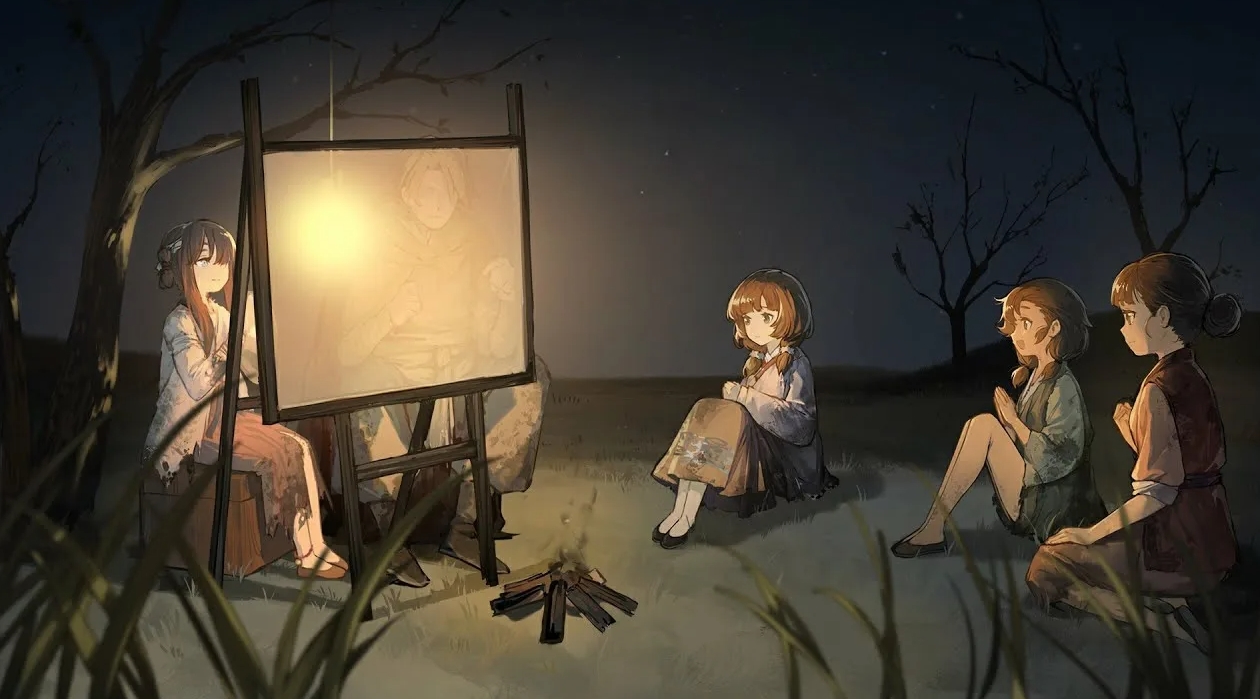
Visually, the game looks modest — and that’s its strength. She doesn’t try to impress with details, but works through the mood.
The painting resembles old illustrations: slightly blurred, with muted colors, as if faded by time. And it fits the theme perfectly.
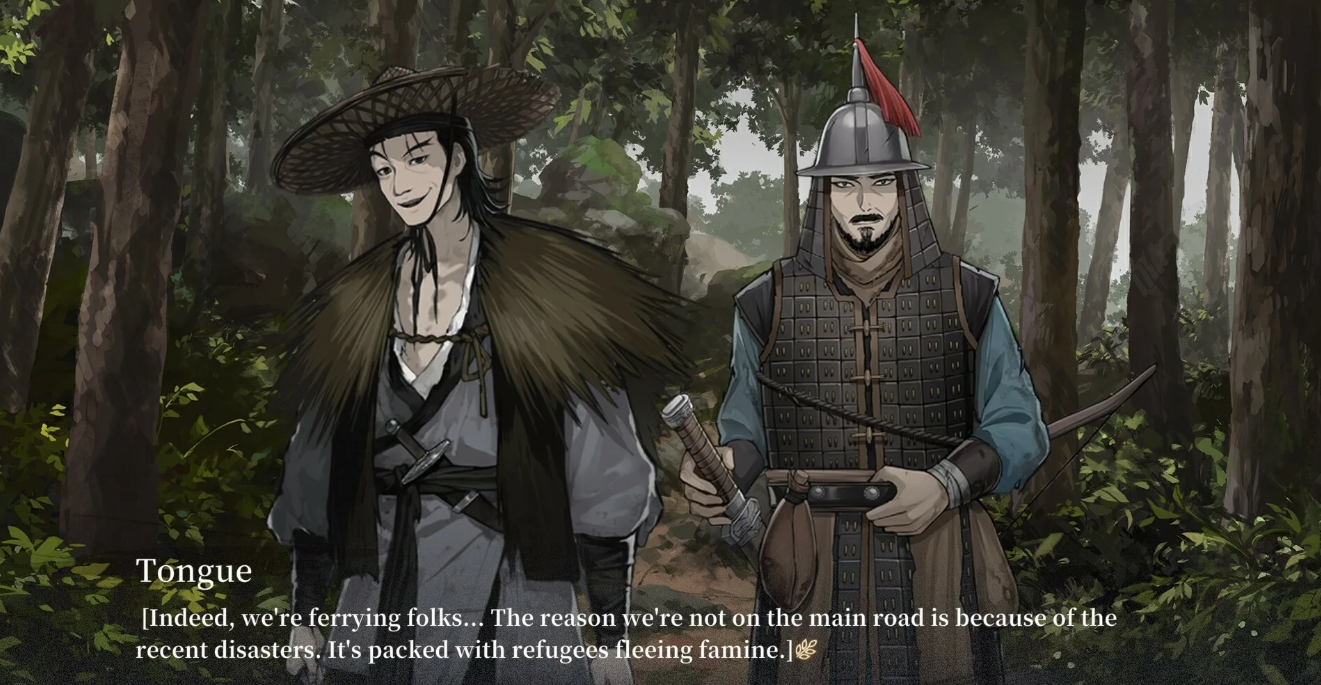
The faces of the characters are especially memorable. There are a lot of emotions in them, but they are presented with restraint. No theatrics, no excesses.
Sometimes one look says more than a long dialogue.
Music and voice acting
The music here is not the background, but part of the atmosphere. She appears rarely, but always on time.
Sometimes it’s a quiet melody that enhances the feeling of loneliness. Sometimes it’s almost completely silent, and you only hear the sounds of the outside world.
It creates a strange sense of presence. It’s like you’re not playing, but you’re inside what’s happening.
Voice acting (where it exists) does not overdo the attention. She’s neat, even restrained in places, and that’s why she works.
A free account in steam can help you understand how everything works.
The Hungry Lamb: Traveling in the Late Ming Dynasty System Requirements for PC
The Hungry Lamb: Traveling in the Late Ming Dynasty system requirements pleasantly surprise with their accessibility. The game does not require a powerful computer and runs perfectly even on budget systems with 2 GB of RAM and integrated Intel HD Graphics 3000 graphics. For a more comfortable passage, the developers recommend 4 GB of RAM and Windows 10. The small disk space (only 3-6 GB) makes the game an excellent choice for weak PCs and laptops, allowing you to enjoy an atmospheric adventure without unnecessary upgrade costs.
| Specification | Minimum Requirements | Recommended Requirements |
|---|---|---|
| Operating System | Windows 7 / 8.1 | Windows 10 |
| Processor | Intel Core i3 (2.0 GHz) or AMD A10 | Intel Core i3 (2.0 GHz) or AMD A10 |
| Graphics | Intel HD Graphics 3000 | Intel HD Graphics 3000 |
| Memory | 2 GB RAM | 4 GB RAM |
| DirectX | Version 11 | Version 11 |
| Storage Space | 3 GB available | 6 GB available |
Pros and cons of The Hungry Lamb
Positive:
-
a story that won’t let go even after the end;
-
elections that you really have to answer for;
-
an atmosphere that you gradually but deeply immerse yourself in;
-
characters that look like real people, not archetypes;
-
a solid artistic style.
Minuses:
-
slow pace — the game is not in a hurry and does not rush;
-
a minimum of “game” mechanics in the classical sense;
-
an emotionally difficult experience that won’t suit everyone;
-
sometimes it is difficult to understand what this or that choice will lead to.
Is it worth playing The Hungry Lamb
This game is not for a wide audience, and that’s okay. It is rather for those who are not looking for entertainment, but for experience.
It will fit if you are close to:
-
a thoughtful passage without haste;
-
stories with moral dilemmas;
-
atmospheric, slightly gloomy worlds;
-
games that leave an aftertaste, not just a “tick in the list.”
If you want dynamics, drive, and a clear sense of progress, that’s not the case here.
The Hungry Lamb: Traveling in the Late Ming Dynasty is a game that doesn’t try to please. She doesn’t flirt with the player, doesn’t simplify topics, and doesn’t give easy answers.
And that’s why it works.
This is not a project that you will recommend to everyone. But if he “gets in,” he’ll stay with you for a long time. In my thoughts, in my feelings, in the questions that have never been answered unequivocally.
And, perhaps, it is for the sake of such games that it is sometimes worth going beyond the usual.
How to play The Hungry Lamb: Traveling in the Late Ming Dynasty for free on Steam via VpeSports
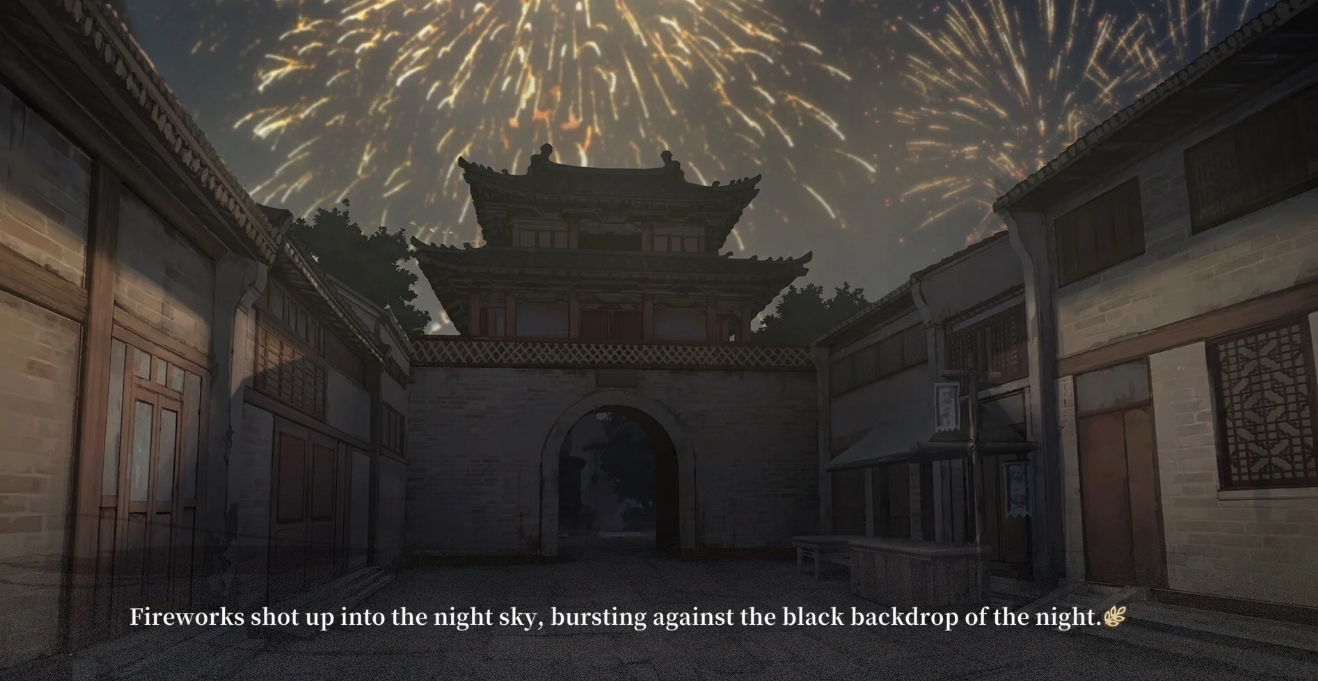
Sometimes there are games that don’t entertain, but seem to be lived together with you. The Hungry Lamb: Traveling in the Late Ming Dynasty is one of those. This is not a story about heroes and victories, but about people who just need to make it to the next day. They don’t save the world here — they try not to disappear into it.
You walk along the road, and there doesn’t seem to be anything special: dust, wind, and sparse villages. But the further you go, the more you start to feel that something is wrong behind this silence. People look wary, conversations stop in mid-sentence, and sometimes even a simple meeting turns into a moral choice that you can’t get rid of later. And at such moments, you find yourself thinking that the game isn’t just telling a story— it’s quietly asking questions of yourself.
That’s her strange power. She doesn’t scream, she doesn’t use special effects, but on the contrary, she speaks almost in a whisper. And because of this, everything feels much more real. There is no feeling of “the action is about to begin” — but there is a constant tension, as if the world around you could completely break down at any moment.
The best part is that you don’t have to waste time on complicated settings or figure out a bunch of unnecessary steps. Everything is done humanly. You register, log into your account, go back to the top of the page and click GET AN ACCOUNT. Then everything is intuitive — just a couple of minutes, and you’re already inside this story.
If you want to stay in this world and find out what’s going on in it, you can check out our Telegram channel. We share updates, new features, and just discuss the game — without formalities, as people who are really interested in it usually talk. And if something suddenly doesn’t work out or a question appears, you don’t have to Google for hours – you can immediately write to us or open a detailed guide. We are in touch and will calmly help you figure it out.