

On May 23, Tainted Grail: The Fall of Avalon was released — an atmospheric role-playing game from indie developers that has already managed to win the hearts of players. Many compare it to such giants as The Elder Scrolls and Dark Souls, and for good reason — the enthusiastic reviews online speak for themselves.
The project takes players to a dark and reimagined version of the legends of King Arthur. This is not a familiar fairy tale with knights and castles, but a harsh world of dark fantasy, where danger awaits around every corner. The developers promise 50-70 hours of rich content: you will find a huge open world, a full-fledged story campaign, first-person battles and a flexible leveling system, with which you can adjust the hero to your style of play — from a stealthy assassin to an invincible warrior.
Tainted Grail: The Fall of Avalon is already being called one of the most interesting RPG projects of the year – and it looks like this is just the beginning.
Table of Contents
Tainted Grail: The Fall of Avalon Free Steam Account
You might think that Tainted Grail: The Fall of Avalon came out of nowhere, as if it was simply pulled out of the fog, like a sword from water. But this is not a hasty improvisation. It all started with a board game of the same name, which collected a lot of admiration and, most importantly, money. Then the developers went further and released Tainted Grail: Conquest – a deck-based RPG that managed to cling to an overcrowded genre, where everything has long been decided and laid out on the shelves. And now they have reached a large form: a serious, ambitious RPG that is not afraid to reach for legends.
You know how great role-playing games like Baldur’s Gate, The Elder Scrolls or Fallout were created? A group of people obsessed with fantasy and “DND” adventures got together, and between them flared that very spark that you rarely see now. In the case of The Fall of Avalon, this is exactly it. Among the endless copies and predictable plots, something real suddenly appears here, as if the forgotten recipe for a good RPG was once again in the right hands. The game does not just tell a story – it does so against the backdrop of a solid, well-worn world. This Avalon is not a textbook fantasy map, but a place with a soul, history and pain. Yes, the phrase “dark fantasy” may already make you yawn – the genre is oversaturated and predictable. But this is different. Here is a new interpretation of Arthurian myths, turned inside out and passed through a filter of despair and death.
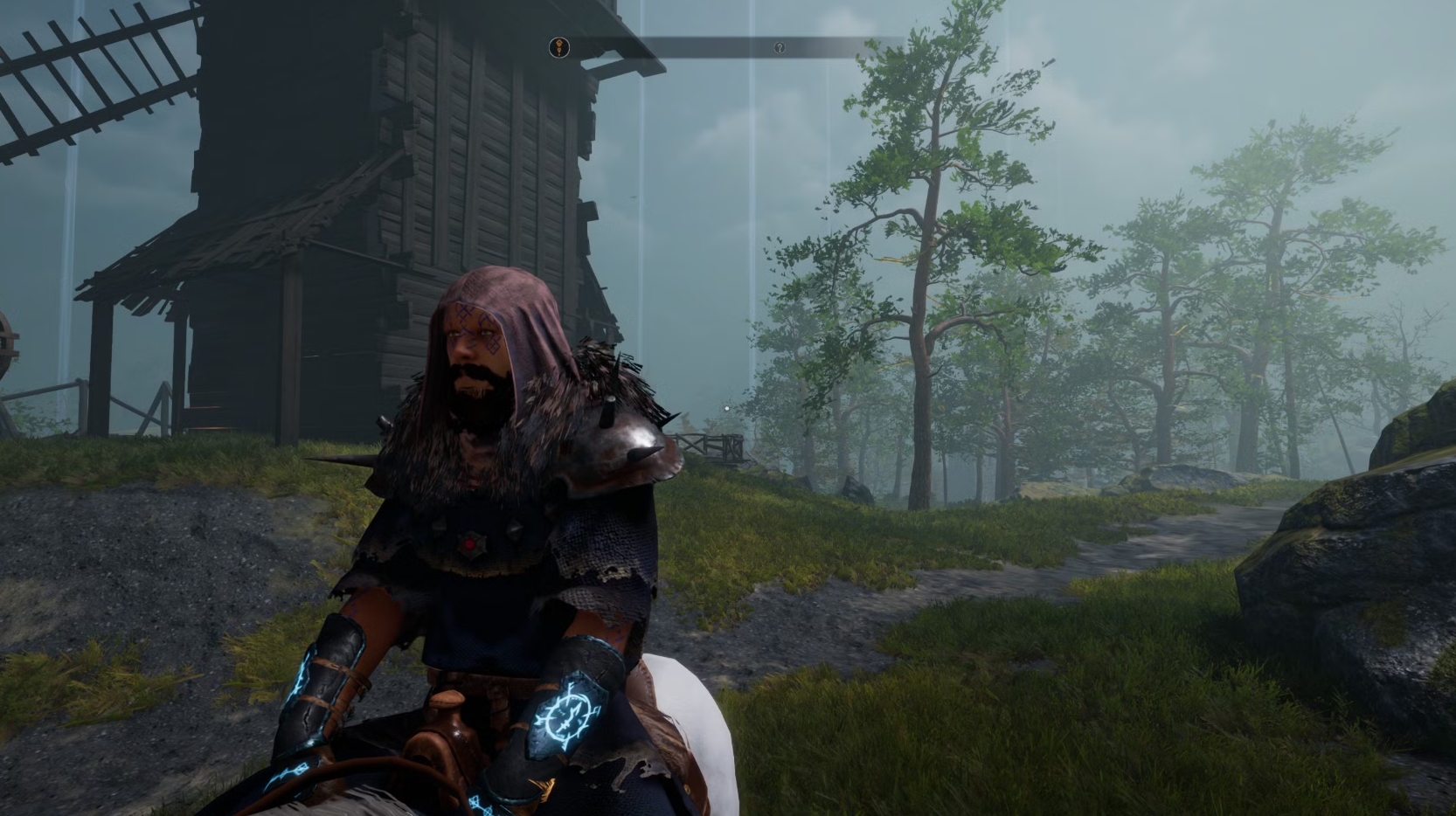
Avalon in this version is the last refuge of humanity. An island to which the survivors of the battle with ancient magic fled. But even here there is no peace waiting for them. Every night, the land is consumed by darkness called Maryu. It brings with it monsters and infection – the Red Plague, turning people into the living dead. Once upon a time, the Knights of the Round Table triumphed over this darkness. But time, as we know, spares no one – neither heroes nor myths. And now, centuries after Arthur’s death, the plague has returned. Only now everything is much worse.
Although it would seem that the end has come for the ruler, he has not disappeared completely. His pale ghost penetrates the body of the protagonist – the same one who, following the traditions of The Elder Scrolls, wakes up in a damp and gloomy prison cell. On him is a death sentence: the last stage of the Red Plague. And yet the hero is miraculously healed, although it remains unclear how and why. This is where the miracles end: the soul of the legendary ruler is weak, and in order to restore its strength, you will have to collect fragments of the heroic essence lost in ancient relics. The first step is to get the sword Excalibur, which is stuck in the stone for a reason, as if it itself was confused in its own destiny. Arthur does not rise above the player – he is nearby, he is weak and remembers almost nothing. With each new find, a piece of the past awakens in him, but it is still a long way from complete recovery. It is interesting that even after an hour and a half prologue, where we escape from a hospital that is more like a dungeon, the game refuses to follow the usual rails. Here you are not proclaimed the chosen hero, to whom they immediately compose ballads and try to lick the boot at the first meeting. It’s the other way around.
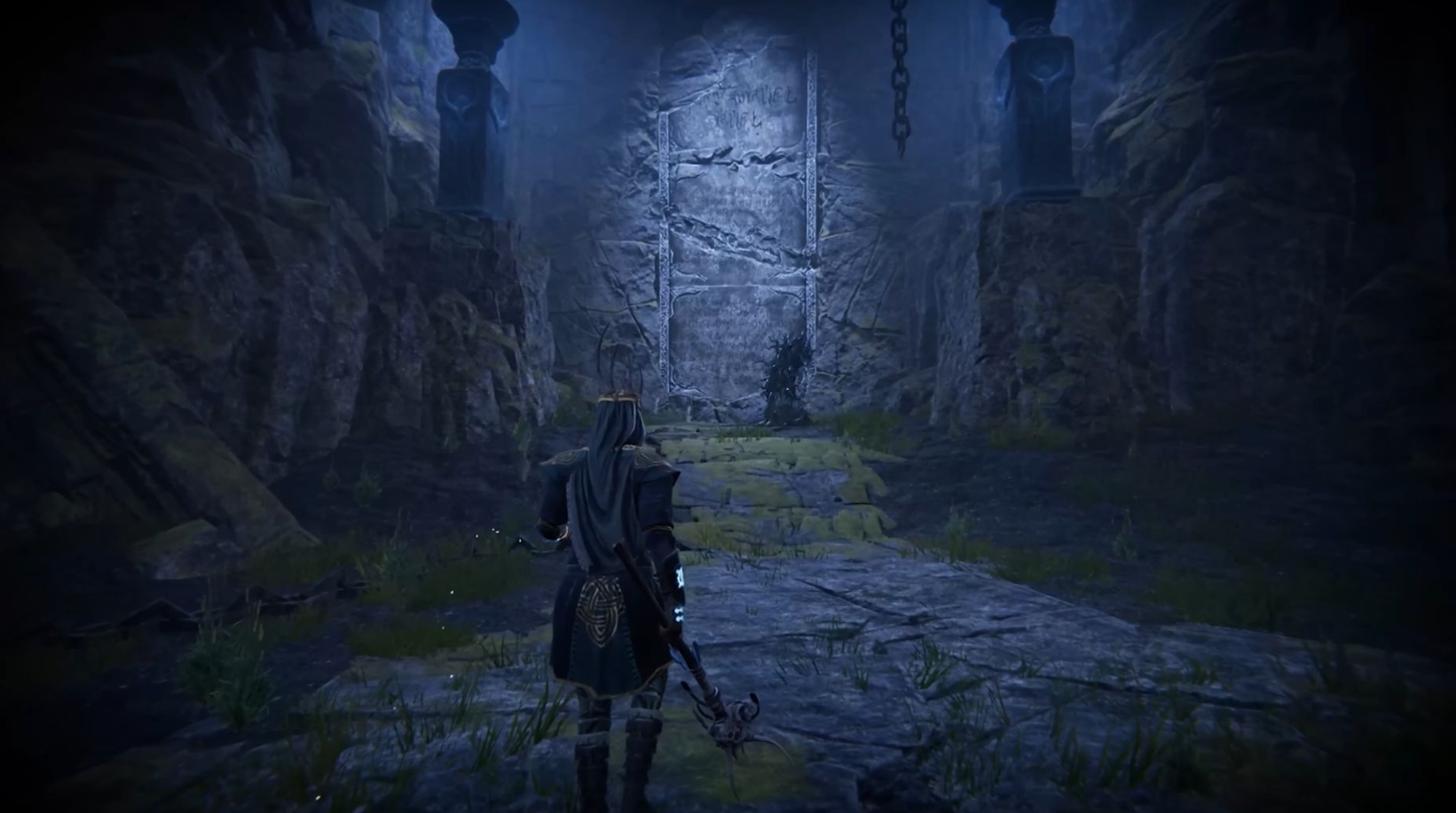
The one who saved us – and perhaps knows more than he says – immediately expresses his attitude to Arthur’s ghost. He does not see him as a holy spirit, but rather a parasite that would be better to get rid of. And what’s more, he states that this “guest” often looks for new hosts. And it is unlikely that this has ever ended well. Sometimes Arthur will enter into a dialogue with us – not as often as we would like, but enough to feel his presence. He resembles a local Johnny Silverhand: sarcastic, lost, with internal contradictions. The scriptwriters deftly balance between sympathy and mistrust, forcing the player to constantly doubt the motives of the fallen monarch. The further you go along the plot, the more difficult it will be to judge his nature unequivocally, because behind one truth there is always another.
Make the most of your time with a steam account free!
Story-Driven Gameplay and Focused World Design in The Fall of Avalon
The Fall of Avalon makes it clear pretty early on that it’s going its own way, even if it does harken back to classics like The Elder Scrolls. The focus here is on the story, with a central storyline and carefully crafted quests playing a key role. The approach is deliberately more restrained and focused. The game’s world is still open-world, but it’s smaller in size and exploration feels more focused. There aren’t many dungeons, but each one feels special – some are even designed solely for the sake of self-contained story branches.
The narrative structure, dialogue delivery, and character development are closer to Obsidian than Bethesda. You can actually choose your lines, and – best of all – your words have consequences. As you progress through the story missions, you’ll often find yourself caught between a rock and a hard place, with different factions trying to get the upper hand, and even a seemingly trivial “fetch and bring” quest can hide a difficult moral dilemma.
The Fall of Avalon knows how to pleasantly surprise. Sometimes you encounter something unexpected in the most inconspicuous location – not for the sake of it, but because the developers really wanted to tell an interesting story, and not just stretch out the running time. That is why the game in terms of the script is closer to Fallout: New Vegas or Vampire: The Masquerade – Bloodlines, and not to the more “content-oriented” titles from Bethesda.
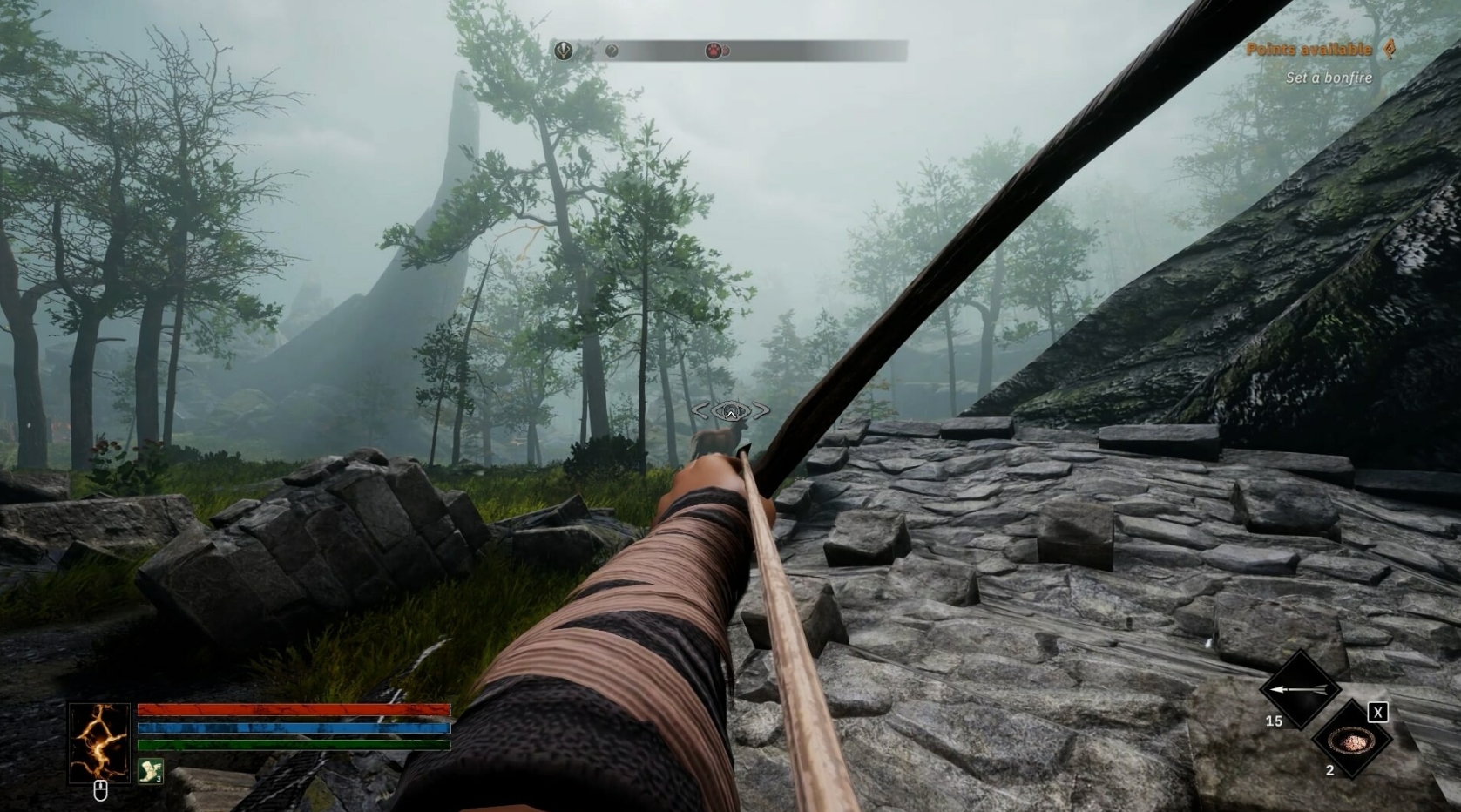
And the world itself is built differently. Instead of one giant map where you can wander for hours without a goal, there are three medium-sized zones. Enemy levels do not adjust to the player, so if you decide to stick your nose in the wrong direction, the game will immediately make it clear. There are no stripes with skulls or red inscriptions – you just suddenly realize that you should not be here. Unlike Skyrim, where events are scattered chaotically around the world, here progression occurs in stages and logically: the map is closed sequentially, step by step.
Don’t get me wrong – the game world is still wide enough that you can accidentally stumble upon a forgotten dungeon somewhere in a remote corner of the map. There are just fewer of them now, but the reward for exploration feels much more significant. Instead of rusty gloves and a handful of coppers, you are most likely waiting for something really interesting: an unusual quest, a rare spell or powerful armor, which, however, you are unlikely to be able to use right away – the stats are not right yet. And now you are already reviewing the entire build: you decide that it’s time to pump up strength to tame this armor. And that’s what happened to me – from a cautious spellcaster, I unexpectedly turned into a furious battle mage, flying around the battlefield in dashes, charging enemies with lightning and handing out slaps at close range.
As night falls, the world seems to freeze and is enveloped in the Mist — and becomes noticeably more dangerous. New monsters appear, old ones become much stronger. If this is almost not felt in the starting zones, then further on, real nightmares will begin to lie in wait for you — for example, huge invulnerable golems, from which it is better to run away while you are still in one piece. You can survive if you prepare in advance: collect weightless cobwebs from possessed enemies and burn them in a fire. A small safe circle is created around the flame, where the Mist temporarily retreats. A great place to sleep and meet the morning already rested — when the world becomes a little friendlier again.
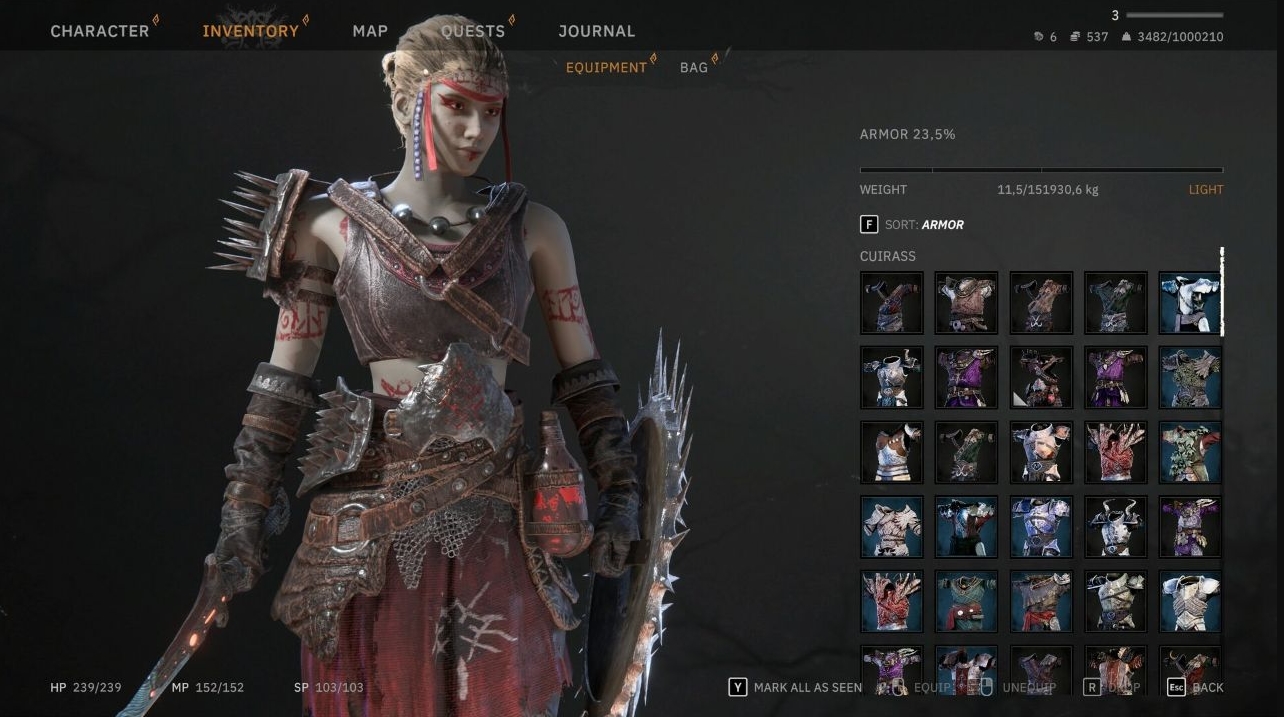
Such small but clever touches literally permeate the entire game design. Even seemingly banal systems — such as crafting — are cleverly adapted here. No one forces you to grind your way through the blacksmithing level: instead, you can upgrade your favorite items step by step, strengthening them with special inserts. Slots for regalia appear in weapons and armor, which provide bonuses like elemental damage or vampirism. Want your sword to also set you on fire? Please. Everything is simple and functional.
Alchemy, fortunately, has not turned into a farming fest for gold. Here it serves survival. Health and mana jars are worth their weight in gold, and if you want to have them, brew them yourself. The main ingredients are grass and alcohol, so during the day you look for sage and devil’s mouth in the forests, and at night you rummage through basements and kitchens in search of bottles of alcohol. Experiment, mix – and over time you find out what works best. Even food is not useless here: while raw vegetables restore health at a snail’s pace, cooked dishes provide a full regen. Unlike the same Skyrim, there are no decorative carrots for the background – here you really look for food so as not to die of hunger.
At first, the leveling system in The Fall of Avalon may seem trivial: the same old bonuses like “+10% damage” or “-5% reload time”. But the further you go, the clearer it becomes how well-designed it is. Sometimes it’s enough to invest just one point – say, in reducing the penalty to maximum mana during an active summon – and instead of two skeletons on the field, three are already beating enemies for you. A trifle, but it feels like a real breakthrough. Progress is slow, levels accumulate slowly, but each upgrade really changes something. Now you’ve finally gotten the right attribute, and voila – the set of battle mage armor that was gathering dust in your inventory can finally be put on. It immediately gives +20% to spell power, and if your health drops below your mana level – another +16% on top. And as if on cue, they unlocked a skill that boosts charged spells by 25%. Everything comes together in one big leap forward – and you feel that the hero is growing, developing and becoming truly dangerous.
Combat System in Tainted Grail: The Fall of Avalon
Calling the combat system of Tainted Grail: The Fall of Avalon elegant is an understatement. It is perhaps the most controversial and uneven part of the game. But, to be fair, the developers clearly tried, and they even succeeded in some things. Questline Studio tried to comprehend the familiar Skyrim mechanics of “two free hands for magic and weapons” and squeeze out something more from it than just clicking on the enemy until you win. They generously seasoned this formula with the spirit of Dark Souls – and the idea itself is, without a doubt, excellent. But the implementation did not go smoothly.
Such “punishing” systems work only under one condition: when the player receives honest, accurate and instant feedback. He must read every movement of the enemy, literally pixel by pixel, in order to dodge or parry in time. This requires filigree precision – clear animations, legible swings, understandable, but requiring a reaction, “windows” for blocking. In all fairness, this is no longer about mechanics, but about real martial arts. And here we have to admit: Fall of Avalon does not reach this level.
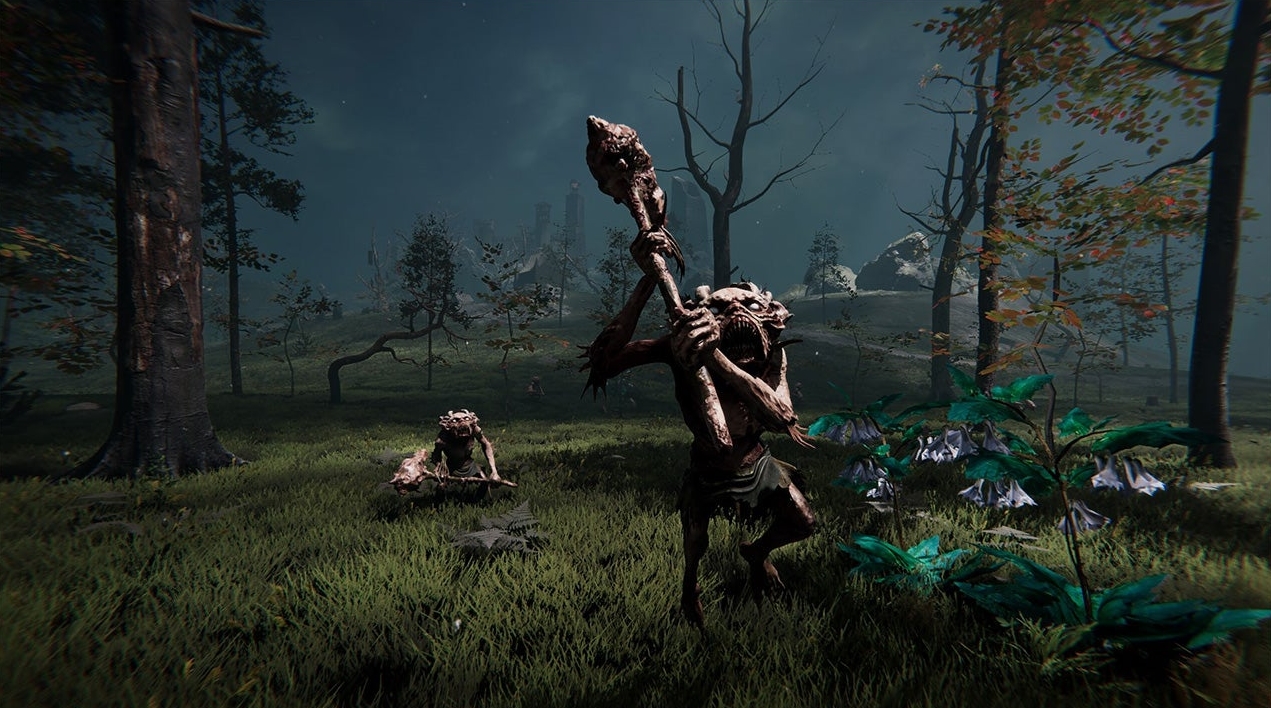
The enemy animations seem to be filmed in slow motion – sluggish, without tension. Sometimes you can’t even tell: is he about to strike, or did he just stumble? The distance is also a problem: the enemies seem to stick to you, covering a couple of meters in the air in one jerk. There are dodges, but there is no sense of control – everything is blurry, there is no response. Parries? On paper, they should be salvation, completely blocking the blow if you hit the right window. In practice, it’s a lottery with the same problems: incomprehensible animations, confused logic and the feeling that everything is not working as it should.
Now imagine: you play on medium difficulty, and enemies knock you out in a couple of hits. Some bosses don’t stand on ceremony at all – hit them once, and you’re on the loading screen. It doesn’t sound too inspiring. While Dark Souls or, say, Lies of P masterfully balance difficulty, The Fall of Avalon does it with much less grace. But despite the rough edges, this madness still has its charm.
To be honest, the combat system can’t be called an outright failure. Over time, you get used to its strange rhythm, the hero becomes stronger, and at a certain point you catch yourself thinking – after all, the game has become interesting. The battle mage build was especially helpful for me: weapons were used only as a backup while mana was being restored, and spells did the main work. This style seemed much more pleasant and expressive than, for example, in Skyrim — especially when compared to the recent Oblivion remaster, which I completed just a couple of weeks ago. The Fall of Avalon feels more lively: you need to constantly select suitable spells, adapt to enemies and monitor the situation.
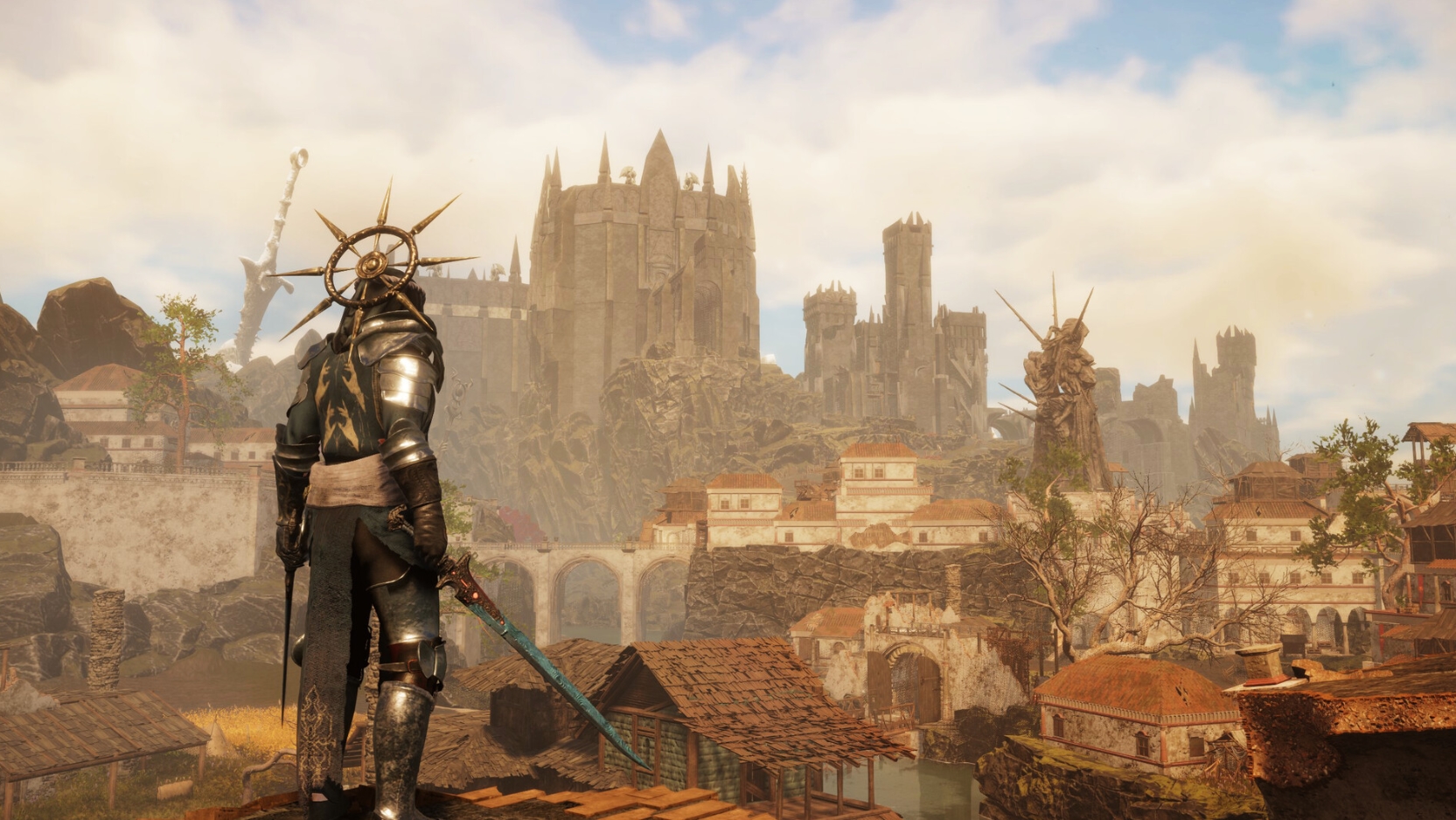
Speaking of magic — it is really better developed here than in TES 5. Despite the external similarity, the spells feel different. The same ball lightning sounds and looks like something much more impressive — as if it were not a fantasy bullet, but a full-fledged shotgun with magic gunpowder. And the arsenal itself is pleasing — here are just some of the interesting skills that can be used:
-
Ethereal charges, flying out in series and similar to arcane spells from WoW
-
Chain lightning, jumping from one enemy to another
-
Fire beam, piercing everything in its path
-
Classic projectiles – fireballs, ice spikes, lightning
-
Spells with effects: setting enemies on fire, freezing, weakening defense
Some skills impose status effects – you can, for example, set an enemy on fire or freeze him, and then finish him off with bonus damage.
The leveling up was also pleasing – you can summon not one, but several creatures at once, although this takes away some of the maximum mana. Shields work on the same principle: the more reliable the defense, the less resource remains for the rest. But that’s the beauty – the game gives you freedom. No one is stopping you from giving up magic altogether and choosing the path of a barbarian with a two-handed sword or a quiet archer – all the familiar TES archetypes are here. How they feel in practice – I can’t say, I was exactly that magician who was saved more than once by an army of summoned assistants at first. But I suspect that even without magic there is something to be interested in here.
Tainted Grail: The Fall of Avalon System Requirements
Expecting a Polish indie band to shine like an expensive blockbuster is a losing proposition. And that’s not what we’re talking about here. In some places, the models, textures, facial animations, and voice acting seem to be stuck somewhere between 2015 and 2008, evoking a slight nostalgia for the times when everything was simpler. For some, this is immediately “off” – the graphics decide. But sometimes it’s the other way around: a game suddenly grabs you not with its visuals, but with its atmosphere. And sometimes the scenes on the screen are so picturesque and expressive that they easily reach the best moments of AAA products.
System Specs for Tainted Grail: The Fall of Avalon
| Specs (Minimum) | Specs (Optimal) |
|---|---|
| Operating System: 64-bit Windows 10 | Operating System: 64-bit Windows 11 |
| CPU: Intel Core i7-6800K / AMD Ryzen 5 2600X | CPU: Intel Core i5-10600K / AMD Ryzen 5 3600X |
| Installed RAM: 16 GB | Installed RAM: 16 GB |
| Graphics Card: GeForce GTX 1070 Ti or Radeon RX 5700 | Graphics Card: GeForce RTX 2080 or Radeon RX 6800 XT |
| DirectX Support: Version 12 | DirectX Support: Version 12 |
| Storage Type: SSD, 125 GB available space | Storage Type: SSD, 125 GB free required |
Honestly? This doesn’t bother me at all. I’ve been telling everyone for a long time: I don’t need your ray tracing and other ultra-bells and whistles. Better give me a project with an outdated picture, but with character, an idea, a soul. I always believed that the future belongs to such “b-games”, to small games that people put their hearts into. But I admit that in recent years this belief has been shaken. Too often such projects have turned out to be empty shells, not inferior in their template and boredom to their “big brothers” from the AAA segment. Alone in the Dark, the new Outcast – the list can go on and on.
How to play Tainted Grail: The Fall of Avalon for free on Steam via VpeSports
There’s something strangely magnetic about a land left to rot—where legends lie in ruins, kings speak in riddles from beyond the grave, and even the trees seem to whisper of ancient sins. Tainted Grail: The Fall of Avalon isn’t here to guide you gently. It throws you into the heart of a decaying world, and dares you to find meaning in the madness. This is dark fantasy at its most personal: no chosen ones, no glory—just you, a rusted blade, and the weight of your choices.
We’ve made it easy to step into this haunting journey. You won’t have to wrestle with endless settings or download labyrinths of files. Just register on our site, follow a few simple steps, and you’ll be ready to begin. If you prefer, we’ll even help you start your adventure using a free Steam account—yes, it’s real, and yes, it’s yours.
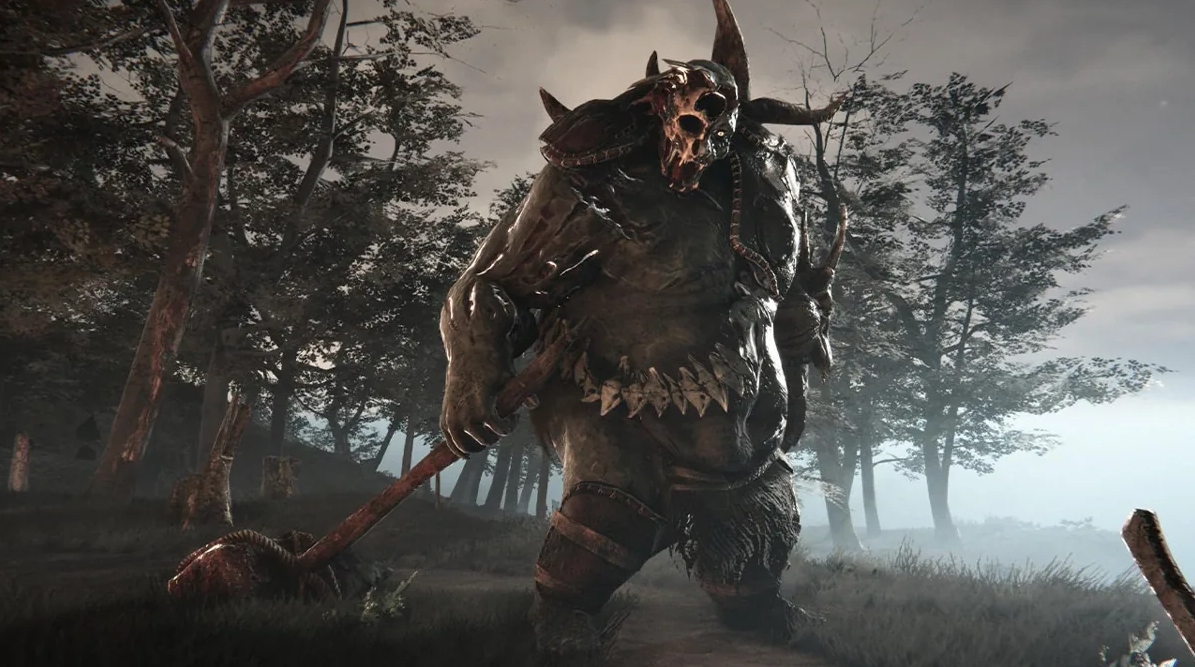
Once you set foot on the bloodstained soil of Avalon, you’ll quickly realize this isn’t just a game. It’s a space where your curiosity is rewarded, your patience tested, and your morality questioned. Every broken shrine or cursed cave holds a fragment of a bigger story—and every battle is as much a test of will as it is of skill.
And when the dust settles after your first descent into this bleak and beautiful realm, we want to hear from you. Tell us what you saw, how it made you feel, what choices you made when no outcome seemed right. Your review matters, and once it’s approved (it usually just takes a tweak if it doesn’t go live right away), you’ll receive everything you need to continue exploring.
Want to stay in the loop? Our Telegram channel is the beating heart of this world—there you’ll find fresh accounts, community theories, update news, and more. And if you ever need help, just check out our full guide on how to play for free, or talk to us directly—we’re real people, and we’re here for you. Because some journeys don’t begin with a prophecy. They begin with a choice.