

Asian culture has left an indelible mark on the world of video games — and these are not just big words. Japan has given us many iconic genres, South Korea has become the epicenter of eSports, and anime has long merged with games into one. Plus, there are talented authors from different parts of Asia, whose games have become true masterpieces.
In recent years, interest in Asian themes has only grown. Why? Perhaps it is because large publishers are increasingly exploring the Chinese market, one of the largest in the world. Or maybe developers have simply found an inexhaustible source of inspiration in the rich history of the East — after all, both the setting and cultural layers provide unique opportunities for fresh scenarios. Whatever the case, high-profile releases like Total War: Three Kingdoms, Nioh, Sekiro: Shadows Die Twice and Ghost of Tsushima clearly show that games with Eastern themes are in demand and loved all over the world.
Against this background, it is quite logical that Firefly Studios decided to send the cult series of Stronghold strategies in a completely new direction – to the East. The new part is betting on two trump cards at once: on the one hand – nostalgia for fans of the original “city builders”, on the other – interest in the history and atmosphere of Ancient Asia. But did the developers manage to hit the target with at least one shot? Or did both bets turn out to be a risky adventure?
Table of Contents
Stronghold: Warlords Free Steam Account
The developers of Warlords decided not to limit themselves to any one period of history and went for broke — the game found a place for the legendary strife of the Sengoku Jidai era in Japan, and the formation of the Vietnamese nation under the leadership of Thuc Phan, and, of course, the great conquests of Genghis Khan. Even the era of the Warring States of China flickers against the background of the general narrative. It is obvious: the creators sought to cover the widest possible layer of Asian history.
But at the same time, you should not expect Warlords to pedantically follow historical realities. If you compare them with global strategies from Paradox Interactive, their games look like solid university monographs against the background of Stronghold. In Warlords, “historicality” ends where it begins — in the story campaign. We are given five sequentially linked chains of missions, each with its own plot. The campaign for the state of Jin, for example, is more peaceful, although there are battles there too. The rest focus on military actions. True, this division is rather nominal – even for the peaceful Emperor Aguda, you will have to deal with the military economy and resource extraction.
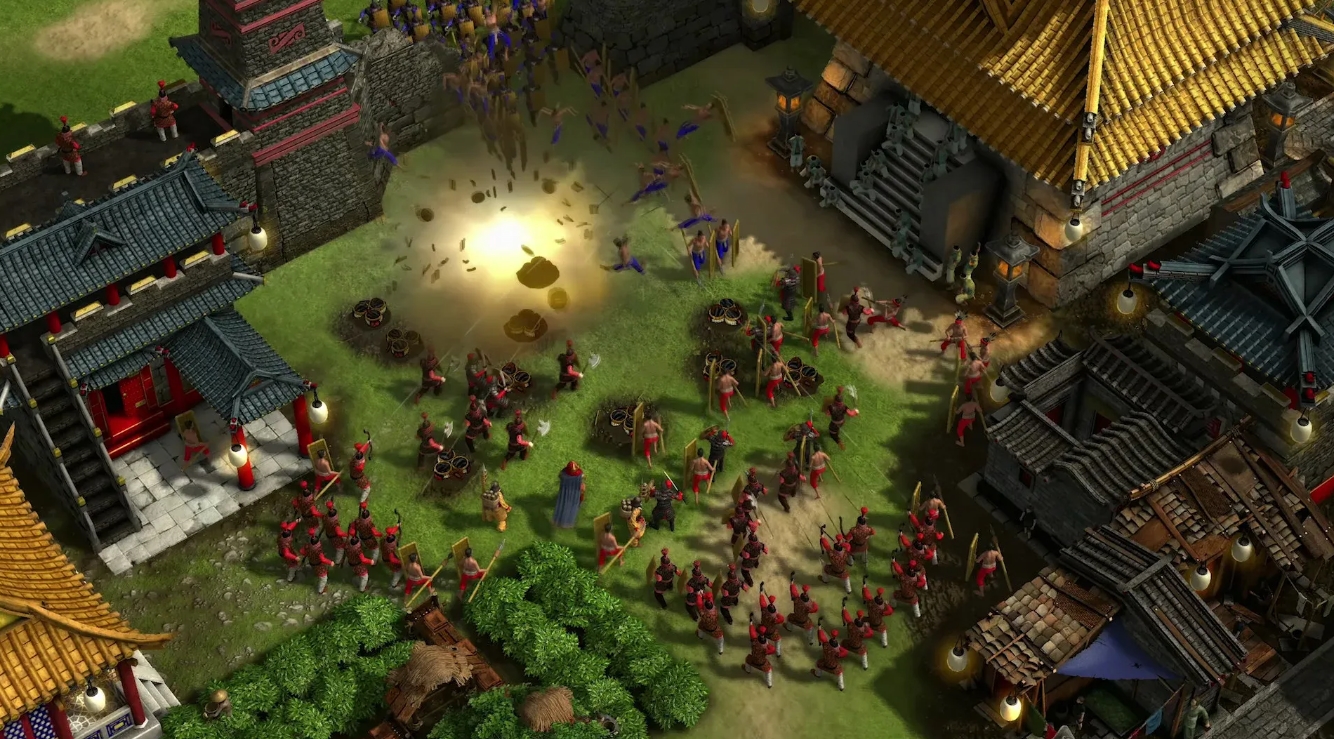
There is enough Asian atmosphere here – rice replaces wheat, Buddhist temples rise instead of church bell towers, and the peasants are frightened not by wolves, but by tigers. Nevertheless, the difference with the “European” parts of the game is largely superficial. The architecture of the buildings is an average Asian style, as if copied from engravings. Unfortunately, there are no unique cultural features of the factions. The developers either did not want, or simply did not bother with the diversity between nations. In the campaign, this is masked by the fact that the player is not given access to units of other cultures – for example, Thuc Phan will not be able to hire Mongol cavalry. But in custom battles and online matches, all restrictions disappear: each player can build whatever he wants and hire any troops.
This is certainly an oversimplification. But to be fair, Stronghold never aimed to be a history encyclopedia. This is a strategy game, first and foremost, about mechanics, not academic accuracy. The campaign, as before, serves more as a training tool. It gently introduces the player to the gameplay, showing how buildings, resources, and units work. You shouldn’t expect a deep or intriguing plot in these missions. If you are already familiar with the previous parts of the series, then you can skip this part – the basis is the same, and all the changes, in fact, come down to changing the scenery to Asian ones. The question arises: is this simply a “repainted” Stronghold: Crusader? In some ways – yes. But still – not quite.
Experience top-tier gaming today with a free steam account – no payment needed!
Stronghold: Warlords Gameplay
Before we even try to understand how Stronghold: Warlords differs from previous Firefly Studios games (yes, spoiler: nothing special), it’s worth refreshing our memory of why we love this good old series in the first place. Once upon a time, almost two decades ago, the developers offered us not just a strategy game about the Middle Ages and construction – they gave us a real castle simulator. Not a city, not an army, but a fortress, with its towers, walls, gates, loopholes and eternally hungry peasants behind the walls.
The main feature of Stronghold has always been a clear division between economics and military affairs. You didn’t just build buildings – you thought about how your fortress would look, where it would be more convenient to place barns and forges, and where to build the most powerful wall. Every decision had consequences: if you move production outside the castle, you risk losing workers at the first raid. If you want to keep everything inside, get ready for a constant lack of space and resources. This made you think, adapt, and sometimes panic and rebuild your walls right during a siege. There was more than enough dynamics here.
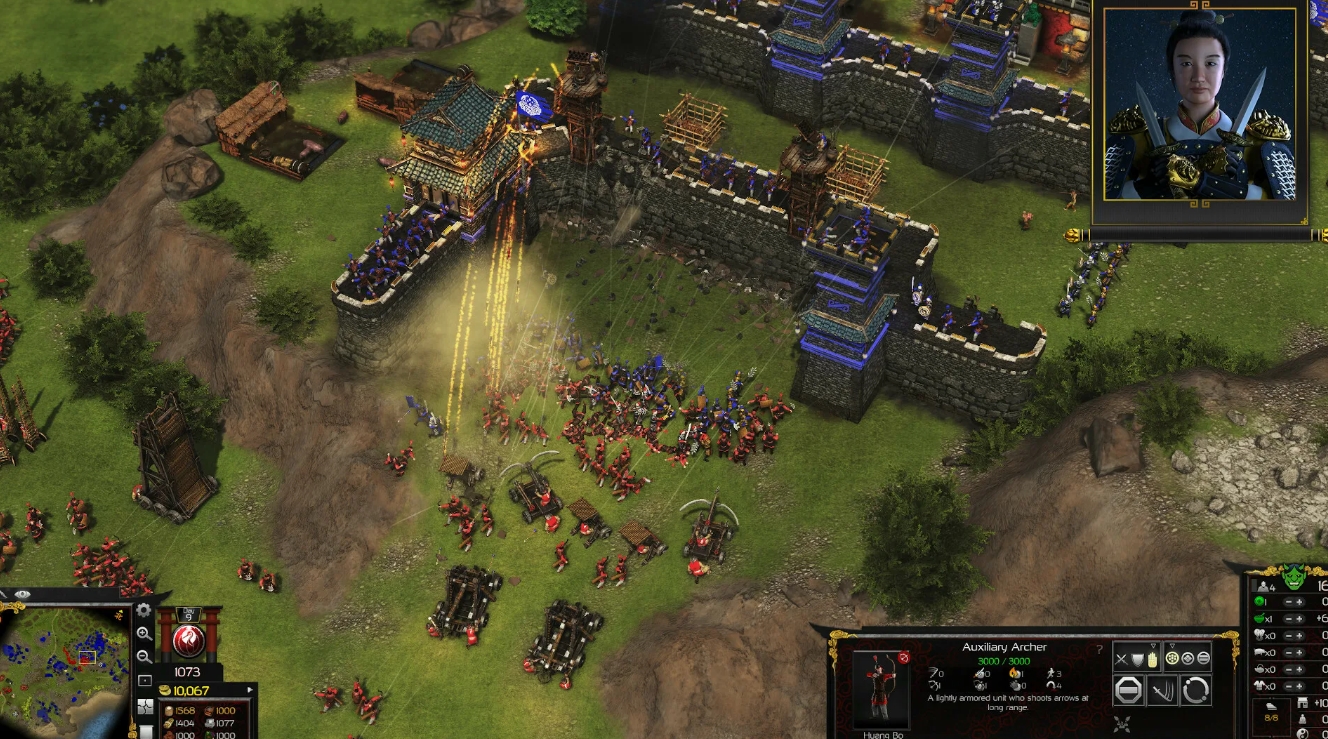
But you could do it differently. If your soul was asking not for war, but for comfort, you turn on the sandbox mode and simply develop your settlement. You set up production chains, watch how the mill grinds grain, how the peasants chat by the fire or run to put out the fire. This was the magic of Stronghold: you decided how to play – with a sword or with a shovel. Unfortunately, Warlords seemed to have lost all this magic. Instead of steps forward – a step back. Take the economy, for example. The production chains here are simplified to the limit. Almost all resources and fighters literally appear “out of nowhere”, without intermediate stages. Even clothing, which for some reason was made three-stage, is completely unnecessary for survival. Resources are either transferred manually or magically teleported – no logic. Storage is infinite, and this kills the whole point of planning: why think about logistics if everything works anyway?
The popularity system, responsible for taxes and the influx of new residents, has remained almost unchanged. If you want people to come, give them tasty food, normal housing and at least a shadow of spirituality. And if you are greedy, they will run away. Everything is as before, and this seems to be good, but nothing new has been added. Among the ways to influence the mood of residents, the following are still available:
-
Increasing or decreasing taxes;
-
Improving the diet and frequency of food distribution;
-
Building temples and entertainment venues;
-
Decorating the city or, conversely, using frightening objects – like gallows and stocks.
The ability to increase labor motivation with gallows and stocks has also not gone anywhere – atmospheric. But it’s hard to understand how effectively buildings with a radius of action (for example, temples or barrels of water) work. Warlords doesn’t even have a simple interface for displaying zones of influence, and this is almost a must-have in strategies.
As a result, if we talk only about construction, Warlords is almost no different from its predecessors. Moreover, it feels like this is just DLC with an Asian setting – only without novelty. Playing in a sandbox has become boring: rice instead of wheat, pagodas instead of towers… Yes, it’s beautiful, but there is no soul. There is no desire to rebuild the perfect castle for the hundredth time, because it is not yours – it is as if someone else’s, a template, without character.
War Strategy in Stronghold: Warlords
Fortunately, this game is not just a peaceful construction far from restless neighbors. In fact, everything is the opposite: it seems that the developers initially relied on the military component. And they were right. Battles with AI and especially multiplayer battles turned out to be much more exciting than leisurely campaigns or sandbox mode. If we turn again to the ancient Asian setting and look at it through the prism of war, then here the authors really tried to add a twist. For example, they reminded the world of gunpowder, invented in Ancient China. Mortars, rockets, flamethrowers and even suicide buffalos appear on the battlefield – exotic things that not every strategy project allows itself. However, AI opponents do not always manage to use this arsenal without consequences – allied troops often suffer from their own attacks.
The interest in battles is easy to explain – in the previous parts of the series, they were also a central element, and in the new game they evoke the same familiar emotions. Building a fortress under time pressure, the constant fight with enemy spies, attacks on the rear, amassing an army for a decisive assault, the joy of a broken wall or a destroyed enemy economy – all this is present in Warlords and does not lose its appeal.
But there are also some innovations. The most noticeable of them is the system of military leaders, the very warlords who gave the game its name. On the map, they are presented as small fortifications with a garrison. At first, such settlements are neutral or even hostile to all players, but they can be persuaded to your side – either by force, by capturing the castle and capturing the ruler, or by diplomacy, with the help of special points produced in the city.
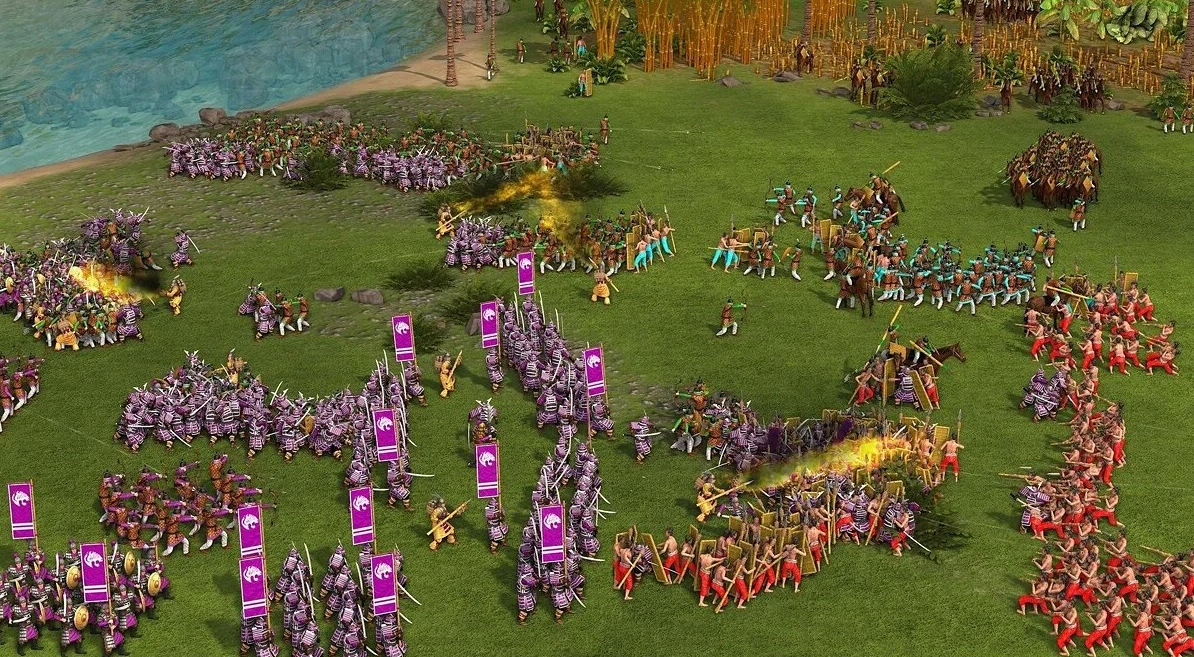
And this is not just decoration – an alliance with a warlord can become a serious help. He is ready to share resources, supply things, help in battles or attack on your order. Of course, all this is not free – you will have to pay for the services with the same diplomatic points. Each warlord is unique: one is good at supplying wood or stone, another can attack on your command, a third easily surrenders in battle, and a fourth is better persuaded to join forces peacefully. This diversity gives scope for tactical decisions — from building a defense to cunning offensive maneuvers.
It is because of these nuances that battles become multi-layered. If at the beginning of the match warlords only interfere with a quick attack on an enemy that has not yet strengthened its position, then in the middle of the game they already turn into the most important points of control. Especially considering that you can only build on your own territory — even a small vassal castle in a good place can change the course of the entire game. But, as often happens, the implementation does not live up to the idea. The diplomacy interface is inconvenient: to find out what is happening with an allied warlord, you either have to go to a separate menu and be distracted from other matters, or hope for luck. After all, an ally can suddenly go over to the enemy’s side — and you will find out about it too late.
In addition, general control issues are not a thing of the past. The interface seems outdated, overloaded with trivialities and unfriendly to the player. To find out the necessary information, you have to make a lot of unnecessary clicks – even a banal resource consumption is hidden behind hovering the mouse over the icon. Commanding an army is also annoying. Sometimes you give an order, and the soldiers react only on the second or third try. And sometimes they completely ignore the command: for example, archers suddenly stop shooting while the enemy is destroying your walls. Defeat due to inadequate AI is hardly something worth entering the battle for.
Stronghold: Warlords – Is the Outdated Strategy Game Worth Playing?
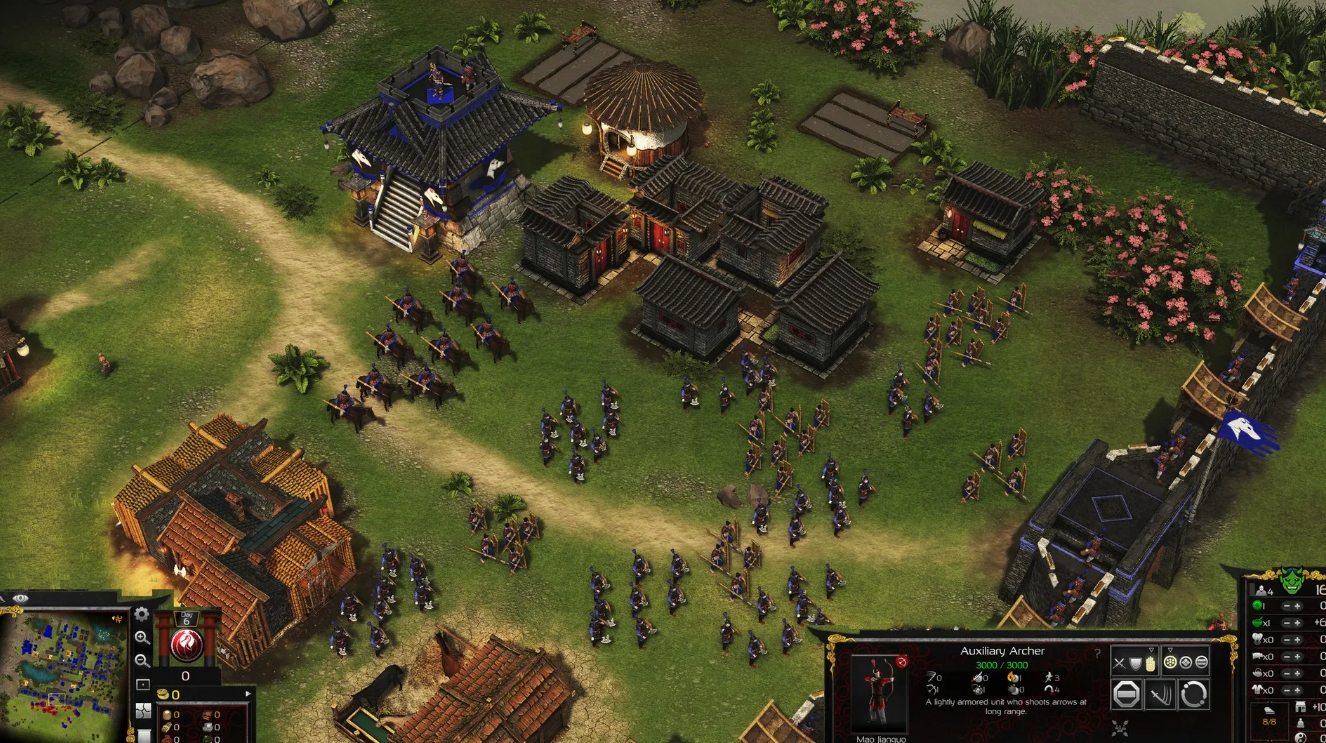
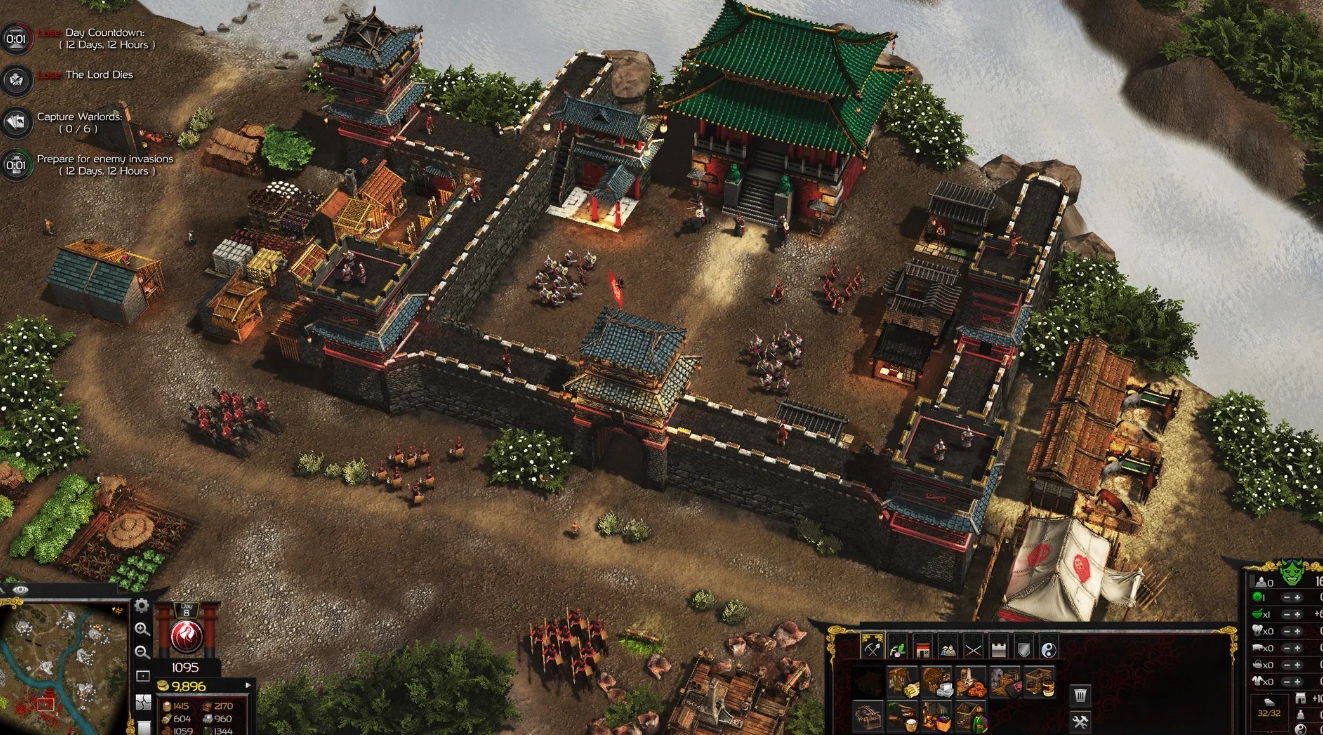
Honestly, I don’t even want to talk about the graphics – the screenshots speak for themselves. Visually, the game looks outdated, as if it was stuck somewhere in the early 2000s. This is especially noticeable when compared to modern strategies. If Warlords had come out 15 years ago, it might have become a hit, but now it’s hard to understand what it could possibly be.
The exotic setting of the East and the rather curious mechanics with warlords are perhaps the only things that make the game stand out. Unfortunately, this is not enough to make you fall in love with the project. Nevertheless, I do not rule out that Warlords will have its own audience – primarily among fans of the series and multiplayer lovers. After all, this is Stronghold, and the name still means something.
What I liked:
-
interesting system of warlords
-
possibility to play in multiplayer or against AI
What I didn’t like:
-
controls and interface feel awkward
-
graphics are frankly outdated
-
castle building is reduced to the bare minimum
Stronghold: Warlords System Requirements
System Requirements for Stronghold: Warlords
How to play Stronghold: Warlords for free on Steam via VpeSports
What if ruling an empire wasn’t just a game, but a battle of wits, honor, and survival? Stronghold: Warlords doesn’t just invite you into history — it throws you into the chaos of medieval Asia, where diplomacy can be as sharp as a blade, and every stone you lay in your fortress could decide the fate of your people.
You’re not following a script here. You’re building it. From the dusty roads of Imperial China to the rugged terrain of feudal Japan, each campaign demands your full attention. One day you’re forming alliances with powerful warlords using cunning negotiation, the next you’re sending siege towers crashing into enemy walls while your archers rain fire. Every choice matters. Every resource counts. Every battle leaves a mark.
Getting started shouldn’t be harder than conquering a kingdom — and it isn’t. We’ve made sure the path into this world is simple and fast. Once you sign up and log in, the game is ready and waiting. No complex setup, no technical mess — just one smooth launch. And yes, we’ve got you covered: everything runs through a free Steam account, so you can jump into the action without paying a dime.
And when the dust settles — whether you’ve emerged as a legendary tactician or learned from a hard-fought defeat — we’d love to hear your story. Leave a review and share your experience. All comments go through moderation, so if yours doesn’t pop up right away, feel free to adjust it slightly and resubmit. Once it’s approved, your login info will arrive in your inbox, ready for the next battle.
To stay ahead of the curve, don’t forget to check out our Telegram channel. That’s where you’ll find exclusive updates, new account drops, strategy guides, and a growing community of players like you. And if you’re stuck or just curious about how it all works, our full “How to Play for Free” guide is there to walk you through it. Or chat with us directly — we’re always around to help a fellow warlord.