

The detective genre in video games has been stalling for decades, as if stuck in an alley without evidence. Interactive media finds it difficult to transfer the same intense investigative mechanics that work so well in film and literature: logical chains, unexpected plot twists, live characters with secrets. Even with a strong scenario, the player often turns out to be either a passive spectator, as in adventure games and visual novels, or led by the hand of a figure walking along the pre-scattered “bread crumbs” of hints. The atmosphere is there, the emotions are there, and the freedom of choice is gone.
Hence the main question that torments developers and gamers: is a detective game with real freedom of action possible at all, where the investigation does not turn into a tour of markers, and the gameplay is based on thinking and observation? Where do the player’s decisions really affect the course of events, and not just activate the following script? This conflict between non-linearity and plot control has long been considered almost insoluble.
Indie studio ColePowered Games, familiar from the Concrete Jungle urban simulator, decided not to patch up the old schemes, but to rewrite the rules. In the Shadows of Doubt game, the developers have relied on the maximum interactivity of the world — at the level of the best representatives of the immersive sims genre. Here, every door, every NPC, every apartment and office is part of a living system where information is extracted not from dialog boxes, but from the environment, the behavior of characters and small details hidden in locations.
Table of Contents
Shadows of Doubt Free Steam Account
The Shadows of Doubt campaign does not start with a cutscene or a linear tutorial, but with the birth of an entire city. In a matter of minutes, procedural generation builds blocks of high-rise buildings inhabited by hundreds of NPCs — each with their own housing, work, daily routine, social connections and, most importantly for the plot, potential motives for crimes. Then the player is released into this live system in the role of a private detective — and released on all fours. A couple of text prompts, an optional murder case study, and complete freedom. Where to go, who to talk to, what assignments to take, and how to earn money are up to you. This is not just an open world, but a rare example of a real “detective sandbox” where the passage is shaped not by the script, but by your decisions.
The lore and internal logic of the city are not just decorative. If you dive into the Shadows of Doubt wiki, you will quickly notice how carefully the social structure, corporations and everyday life of citizens are thought out. This background work directly affects investigations and makes even small cases feel grounded.
Shadows of Doubt Gameplay Review: Investigation, Interactivity, and an Open World
The city itself, a gloomy metropolis of more than a dozen skyscrapers, drowning in rain and neon, lives according to the strict laws of late capitalism. Vandalism, theft, industrial espionage, attacks and murders are perceived here as a background, not an exception. The atmosphere is oppressive, tension is felt in every alley, and your character can be a participant in any criminal story — voluntarily or accidentally. And not necessarily on the side of the law: no one will forbid you to open the office of a corporation for the sake of secret documents or earn extra paparazzi, tracking down “interesting” characters. The economy is simple and cynical — money is more important than reputation. But murder investigations remain the deepest and most intense in gameplay: with a handful of scattered clues, it is necessary to identify the perpetrator, collect evidence, find the weapon of the crime and, ideally, bring the case to arrest.
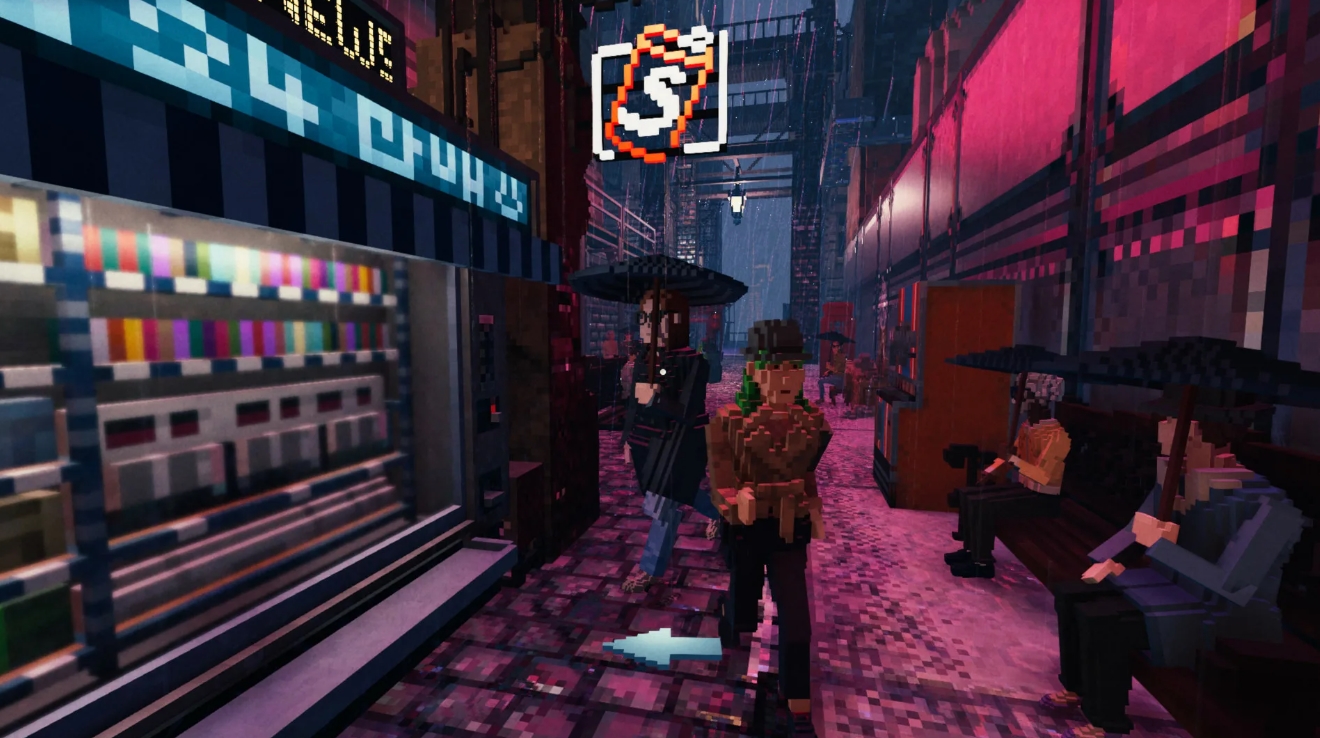
At the heart of each case is the creation of an accurate portrait of the wanted person. Any little thing can be a clue: fingerprints, shoe size, eye color, handwriting, habits, travel routes. The type of evidence found dictates tactics. Did you find out the suspect’s place of work? So, it’s time to interview colleagues, rummage through documents and read corporate correspondence. They found his apartment — you can quietly get inside, take fingerprints, break into the safe and examine personal records. Did you find out which bar he goes to in the evenings? It’s a great reason to go into the archive of surveillance cameras and establish your appearance. The investigation here is a constant analysis of data, a comparison of facts and a hunt for missing pieces of the puzzle.
Break into gaming without spending anything – try a steam free account.
Ingenuity is important, but the detective’s main tool is the incredible interactivity of the environment. In spirit, Shadows of Doubt is closer to immersive sim classics like Deus Ex or Prey than to the usual Sherlock Holmes quests. Almost every object in the world is part of the gameplay, and the player’s capabilities go far beyond the standard mechanics:
-
breaking into doors, computers, safes, and security systems;
-
stealthy movement through ventilation, crevices and service areas;
-
scanning the environment for fingerprints and shoe prints;
-
access to phone lines, address books, and archives;
-
interrogation, bribery and blackmail of witnesses;
-
distracting, stunning, and neutralizing guards.
Cupboards, drawers, refrigerators, safes — everything is subject to search. Guards can be distracted with a coin, stunned, handcuffed, and pickpocketed. The only thing that is almost absent here is firearms. The topic of shadows of doubt guns regularly comes up in discussions, but their absence is a conscious design decision: the emphasis is not on action, but on tactics, stealth and analysis.
In order not to drown in the flow of information, the developers have added a user-friendly interface in the form of an investigation board with evidence and links between them. This is your analytical center, where data is sorted, collated and verified. Did you find prints next to the body? We need to find out who this man was, whether he had a motive and alibi, and how he was connected to the victim. Sometimes the answer is hidden in an inconspicuous detail — a phone call, a scrap of note, or an entry in a trash can. They made a mistake in interpretation, and the investigation goes off on the wrong track, taking with it not only the reward, but also the resources: lock picks, money, and time. Here, every mistake is felt, and every right decision brings real satisfaction.
Shadows of Doubt World Overview: Setting, Implants, and Interactivity
The immersiveness of Shadows of Doubt is felt not only in investigations and missions. The procedurally generated city has a life of its own and is literally packed with interactive locations: bars and eateries, pharmacies and pawnshops, government offices, underground markets and points of sale of stolen goods. Each establishment is not just a decoration, but a part of the gameplay ecosystem, where you can get information, resources or trouble.
The neuroclinic stands out in particular — the local temple of upgrades, where implants are installed for a round sum that enhance characteristics, unlock new skills, and even give access to unique abilities like determining a person’s age from a photograph. These implants are known in the community as shadows of doubt sync disks, and some of them are leveled up, while others may have side effects — a detail that works great for atmosphere and realism, even if it has not yet been fully implemented.
Immersion is enhanced by the character’s state system. The protagonist, like any NPC, is subject to physical and psychological effects: fractures and bleeding after a fight, frostbite from walking in the snow, cheerfulness after a cup of coffee. It is important to monitor nutrition and fluid levels, otherwise the gameplay will start to punish. It’s funny that for all the depth of the simulation, there are no sleep mechanics yet, although money can be spent on buying and arranging your own apartment. But they allow you to waste time sitting on a bench, which is extremely convenient for planning — whether it’s a visit to the office during business hours or a sneak peek at night. This little thing unexpectedly adds tactical flexibility and emphasizes the non-linearity of the passage.
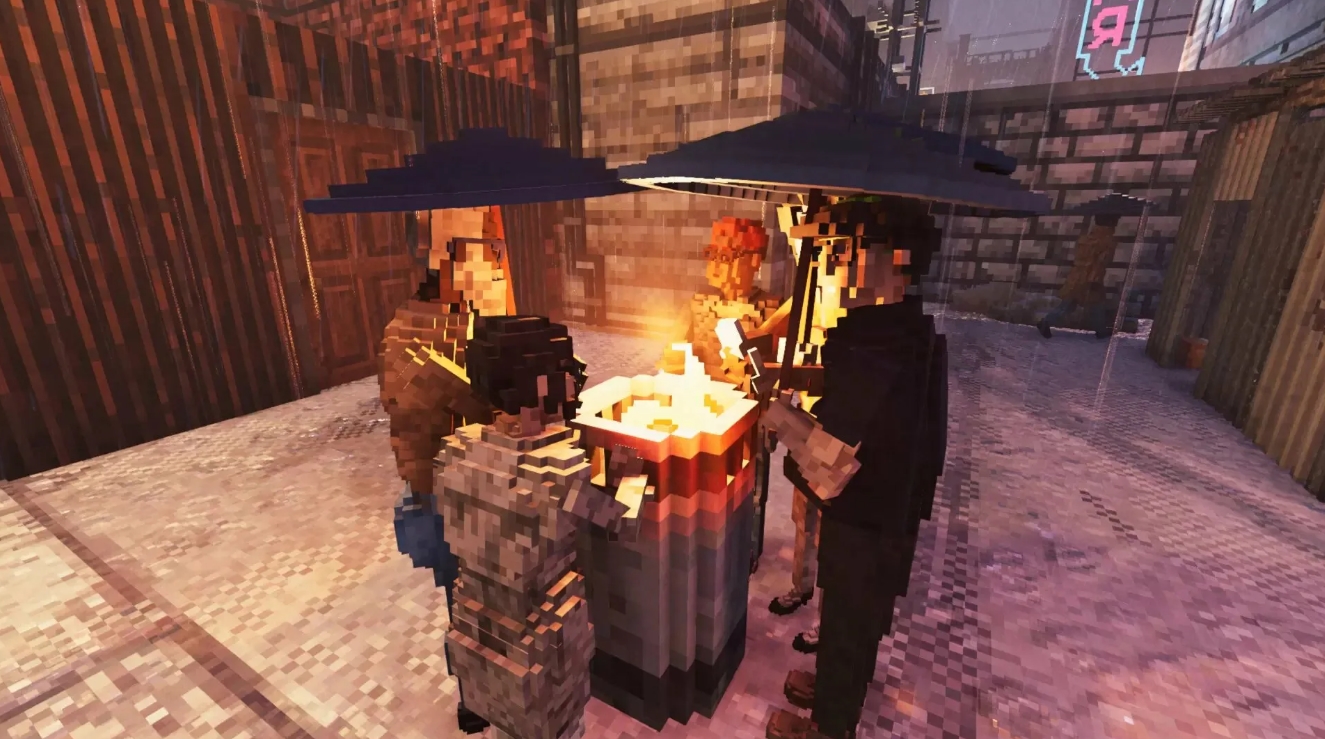
Despite the dominant role of procedural generation, the game world does not look faceless. On the contrary, Shadows of Doubt has a clear and expressive setting that gradually unfolds through ENT. The loading screens are sometimes excessively long, which is why players jokingly call them shadows of doubt snail moments. These screens throw up information about factions, politics, and the structure of society, and as the game progresses, you come across newspaper clippings, flyers, TV broadcasts, and ads. All these details form the context and work for immersion. The action takes place in an alternative version of the USA of the late 1970s — gloomy, damp, soaked in neon and cynicism. The visual style deftly mixes noir and cyberpunk, creating an atmosphere of decadence, where technology coexists with moral decay, and emotions hide behind the cold facades of skyscrapers.
The social system here is a grotesque parody of decaying techno-capitalism with a system of social ratings and total control. Ideology is not just a decoration, it is woven into the gameplay. The winner of the presidential election is not a man, but the mega-corporation Starch Kola, a producer of soda and snacks. And this is not a joke for the sake of a joke. If you regularly drink presidential Cola, you will soon discover an addiction, and the brand’s branded vending machines will offer a “profitable” implant with an instant bonus of 5,000 credits. However, you will have to pay even more for removal, and then the game of greed begins: every can you drink reduces the extraction price, while competitors’ products, on the contrary, increase it. The economic trap, wrapped in a wrapper of humor, works as an excellent social satire and a rare example of how the setting directly affects the mechanics.
It is at such moments that Shadows of Doubt truly reveals itself. When the world does not just exist in the background, but interferes with the player’s decisions, pushes, provokes, deceives. I would like to see more such situations — when ENT, atmosphere and gameplay converge at one point and create the effect of surprise. Such scenes are more memorable than any scripted cutscenes and make the passage lively, unpredictable and truly fascinating.
Procedural Generation, Repeatability, and the Limits of Detective Simulation
No matter how inspiring the idea of procedural generation is, it has a downside — and Shadows of Doubt faces it in full growth. Over time, it becomes noticeable that the missions begin to repeat each other in structure, and the interiors of apartments, offices, and shops form a recognizable pattern. The novelty effect gradually wears off, and the player begins to discern the algorithmic “seams” of the world.
This is also where discussions about a possible shadows of doubt city editor appear. Many players would like to fine-tune the generated city manually or create their own districts, but so far such tools remain only a dream.
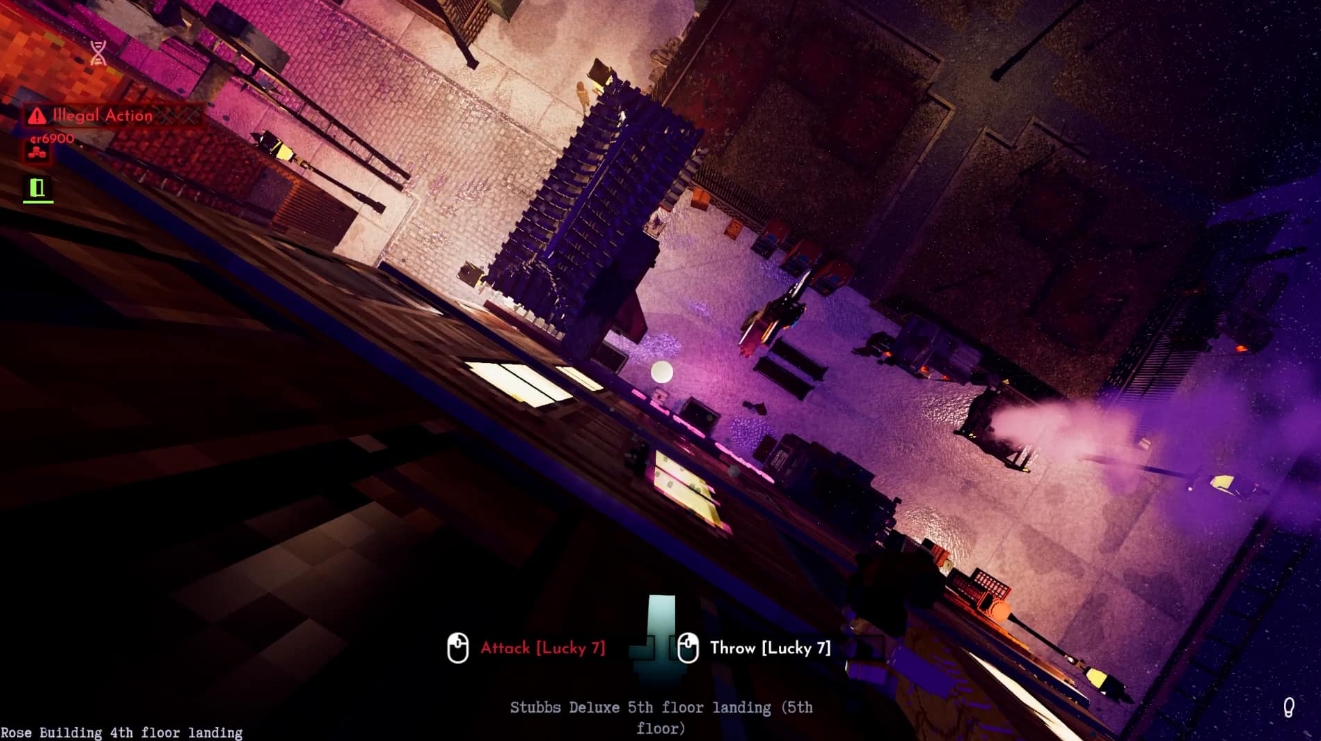
Most of the time, the procedural limitations show up in the same details:
-
repetitive room layouts and the same logic of the arrangement of objects;
-
notes with codes from computers that seem to be cloned from office to office;
-
an abundance of lock picks and tools in random places;
-
similar investigation scenarios based on the same template.
Once you master the basic investigative techniques, the gameplay turns into a practiced, almost automatic cycle of actions. The atmosphere and immersiveness are still working, but the element of surprise is fading into the background.
That is why, first of all, I would like to recommend the game not to fans of classic detective stories in the spirit of Conan Doyle or Agatha Christie, but to those who enjoy the methodical, unhurried process. For this audience, games like Shadows of Doubt — with their slow pace, systemic depth and procedural structure — are often more appealing than tightly scripted thrillers. Those who are able to carry cargo for hours in Euro Truck Simulator 2, accompany caravans in Fallout, or complete endless procedural tasks in Space Rangers will feel at home here. Patience, attention to detail, and a love of system gameplay are important here, not a thirst for dramatic plot twists.
With all the innovative approach to the genre, it’s still not easy to call Shadows of Doubt a full-fledged detective story. There is almost no suspense, unexpected denouements and emotional climaxes in the game. Yes, mechanics interact with each other competently, creating the ground for interesting investigations, but artificial intelligence is not yet able to compose truly exciting stories. The local criminals have motives, but no character. They are functional, logical, integrated into the system, but devoid of individuality. No matter how many NPCs roam the streets and no matter how carefully their routines are prescribed, there is no sense of living personalities — rather, they are complex, but still extras. In this sense, the parallels with Daggerfall are self-evident.
Like the iconic second part of The Elder Scrolls, Shadows of Doubt impresses with its scope and ambition, but at the same time leaves a feeling of understatement. The potential of the project is enormous, and it is especially disappointing that it has not yet been fully realized. How much richer the investigations could be if they felt the “human hand” — the author’s dialogues, thoughtful characters, dramaturgy.
The community is actively discussing the future of the project, especially the possibilities of shadows of doubt mods. Even now, individual enthusiasts are experimenting with modifications, and a full-fledged support for user content could seriously expand the life of the game. The same applies to every shadows of doubt mod that adds new mechanics, cases or quality-of-life improvements. A mission editor, user scenarios, or a full-fledged storyline — any of these steps can take the game to a whole new level.
The main thing is that developers do not become hostages of their own technology. Procedural generation is a powerful tool, but it should not replace creativity. The history of the gaming industry already knows examples when relying solely on algorithms led to sterility and monotony. So far, the city created by AI can’t even be fine-tuned for itself, and it looks like a missed opportunity. Shadows of Doubt is already unique, but it’s the balance between the system and the author’s approach that can make it truly great.
Results and technical realities: is Shadows of Doubt worth playing now?
Finally, about the technical side of Shadows of Doubt, and here the game behaves exactly as you would expect from an ambitious indie project in early access. If you decide to dive into the investigations now, you will have to be patient: freezes, slowdowns, rare crashes and protracted downloads are part of the current reality. Minor bugs like object clipping or strange collisions occur regularly, and flaws are noticeable at almost every step. Many objects exist “for furniture”, having no practical application, although logic suggests the opposite. The NPC’s artificial intelligence sometimes behaves absurdly and illogically, disrupting immersion. Inventory is a separate pain: without leveling, it holds only four items, regardless of their size, whether it’s a tiny ring or a huge suitcase. This design looks archaic and controversial, especially against the background of the overall depth of gameplay.
Against this background, the quality of the Russian-language localization is pleasantly surprising. The translation is done neatly, without eye-cutting blunders and crooked wording, which is rare for projects at an early stage of development. However, there are some technical rough edges here: some fonts can become transparent when playing in Russian, which is why the text simply disappears from the screen. The bug is annoying, but, fortunately, not critical — there is hope that it will be fixed promptly. Moreover, the developers actively interact with the community, and the main menu provides a convenient tool for sending bug reports. Such openness inspires cautious optimism: the project is complex and risky, but the team is clearly determined to bring it to mind.
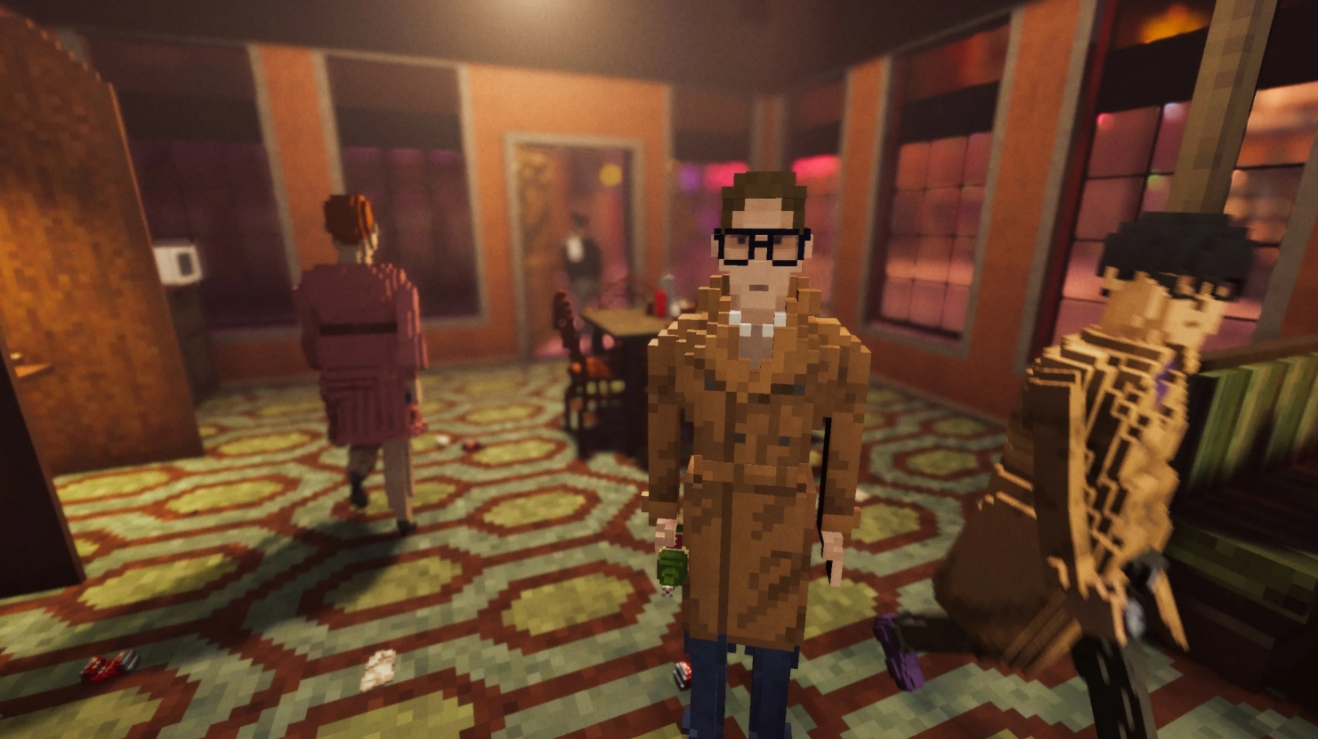
If we try to summarize the impressions in a concise and visual format, the picture turns out to be as follows.
What’s worth playing for:
-
a unique and rare approach to detective gameplay for the genre;
-
high immersiveness and real freedom of action;
-
the original setting is a dark retrofuturistic techno-capitalism with elements of noir;
-
there is a huge potential for development, expansion of mechanics and content.
What can spoil the pleasure:
-
procedural generation is still inferior to man-made design in terms of variety and expressiveness;
-
annoying font bugs spoil high-quality localization;
-
lack of optimization and a general feeling of “dampness” characteristic of early access.
In the future, I really want to see either a full-fledged storyline with well-developed characters and drama, or a powerful custom content editor — or better yet, both options at once. This is what can transform Shadows of Doubt from a daring experiment into a truly outstanding detective simulator. The game has potential, the only question is whether the developers will be able to fully realize it.
Shadows of Doubt System Requirements
Questions about Shadows of Doubt PS5 and other console versions regularly appear, but at the moment the project is primarily focused on PC. System requirements are typical for an ambitious indie game with heavy simulation and procedural generation, and performance strongly depends on CPU rather than GPU.
Shadows of Doubt
How to play Shadows of Doubt for free on Steam via VpeSports
The city greets you with the hum of ventilation, the flicker of neon and the feeling that you are a stranger here. Silhouettes flicker in the windows, elevators creak, and the entrances smell of dampness and mystery. Shadows of Doubt is not just a detective story, it feels like you really live in this dark world where everyone has a past, everyone has something to hide, and no one will tell the truth just like that. You are not a hero, you are an ordinary person with a notebook, lock picks and perseverance, who, step by step, makes his way through other people’s lives, reads other people’s letters, listens to other people’s conversations and collects a picture from fragments.
There is no feeling of being led by the hand. Sometimes you’ll make mistakes, sometimes you’ll walk through the wrong doors, sometimes you’ll wander around the floors for hours looking for the right apartment. And that’s the magic of it. Every revealed case feels truly yours, suffered, and deserved. You find the clues yourself, you compare the facts yourself, you decide who to believe and who to suspect. And at some point you find yourself thinking that you are no longer playing, but living in this city.
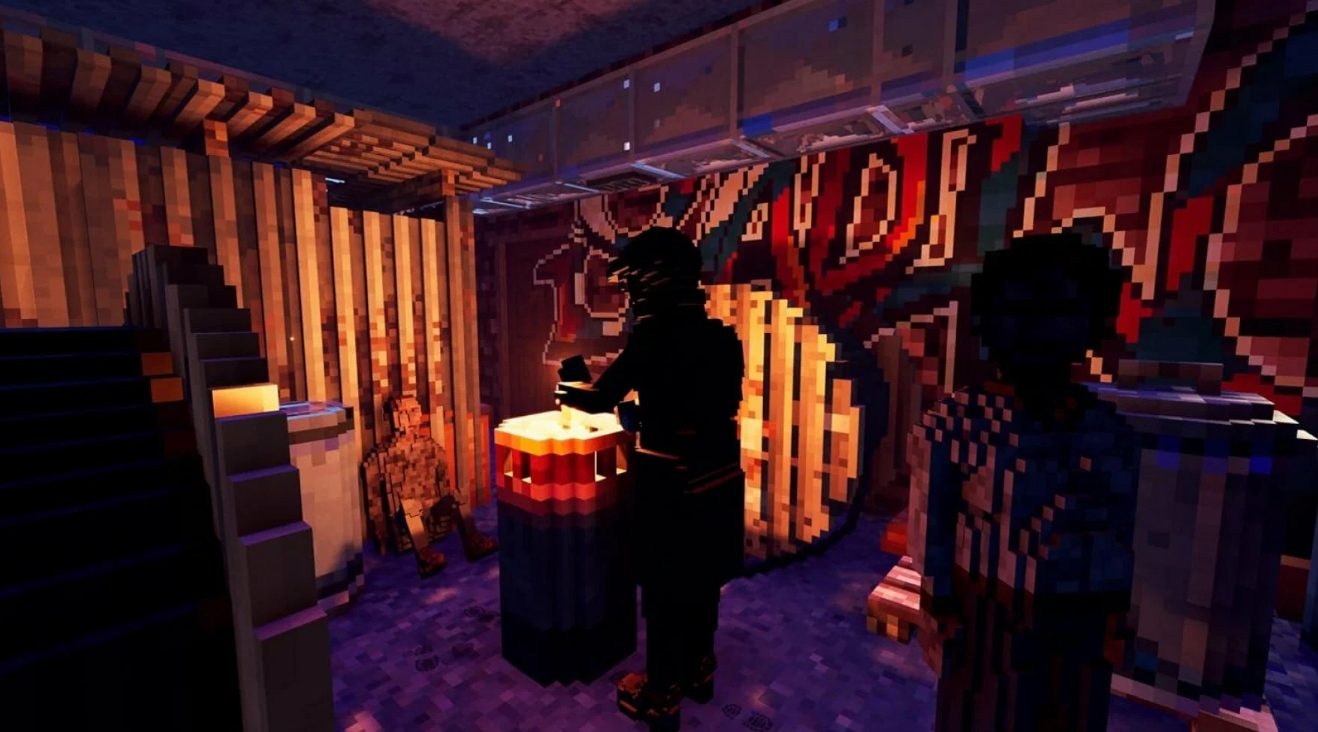
We’ve done everything so that you can get into this world without too much fuss and annoyance. No complicated circuits, long instructions, or headaches. You register, log in to your account, return to the top of the page and click GET AN ACCOUNT. And now you’re standing in the rain, listening to the noise of the street, and you realize that your first job is just around the corner.
If you want to keep up to date, do not miss updates, new items and interesting details, visit our Telegram channel. There are real people, lively discussions and normal human communication without pathos. You can ask, you can argue, you can just read. And if you suddenly get confused, get stuck or don’t understand where to go next, there is always a guide and a chat where they will prompt and help. There’s enough loneliness in this city as it is, so you definitely won’t be alone here.