

This project really stands out from its contemporaries. It skillfully combines dynamic action, classic CRPG mechanics and a light strategic element, creating a complete and unusual game canvas. In my memory, such genre hybrids often suffer from imbalance: one component displaces the others, making the game one-sided. An example is Brutal Legend, where attempts to combine combat scenes with army management and free exploration seemed strained and often irritating due to clumsy implementation. But here everything is different. Control over minions is not only logical and intuitive, but also gives real pleasure. In this aspect, the game pleasantly surprises. However, even such a strong game is not without its weaknesses, which are worth discussing separately. I suggest we understand this step by step.
The plot unfolds around the Dark Lord, whom the heroes overthrew after their victory over the embodiment of evil. Now, finding himself on the ruins of his destroyed tower, he seeks revenge on each of these heroes – each who embodies one of the seven deadly sins. This is not just a story of revenge – it is a path to the return of former power and the title of absolute evil.
The narrative is thought out to the smallest detail: the storyline is not only logical, but also captivating, slowly leading to the climax. And the final plot twist, available only to those who complete the game to the end, gives the whole story an additional layer of intrigue that can leave a deep impression. Particularly worth noting is the presence of two alternative endings, each of which is formed on the basis of the moral decisions made by the player throughout the campaign. This is not just a cosmetic difference – each choice affects the development of events and is reflected in the ending, adding not only replayability to the game, but also personal meaning. It is these decisions that make the gameplay truly memorable.
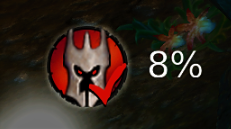
To hit 100% on this morality scale, you’ll really need to put in the effort—random choices alone won’t get you past 35–40%. Your progress on the scale depends entirely on the actions you take and the decisions you make throughout the story.
Every time you do something significant—whether it’s a noble act or something more sinister—a special notification will pop up to let you know exactly what kind of deed you just performed.
If you manage to fully max out the morality scale at 100%, you’ll unlock the Villain ending. But if you finish with anything less than that, you’ll get the ending of a neutral character within the story.
Table of Contents
Overlord Free Steam Account
Let me be completely honest with you—the gameplay gets repetitive fast. The sense of progression basically stalls around the 3–4 hour mark, right after you unlock the blue minions. From that point on, it’s mostly just rinse and repeat. But let’s break it down.
Is the game interesting? Absolutely. It has a solid rhythm when it comes to introducing new features. Just when you start getting bored with your current arsenal, the game throws something new at you—a spell, a new tower room, or a different type of minion. And these minions? They’re not just cannon fodder or glorified pack mules. Each type has unique abilities, and relying on only one kind just won’t cut it. You really have to mix things up if you want to survive.
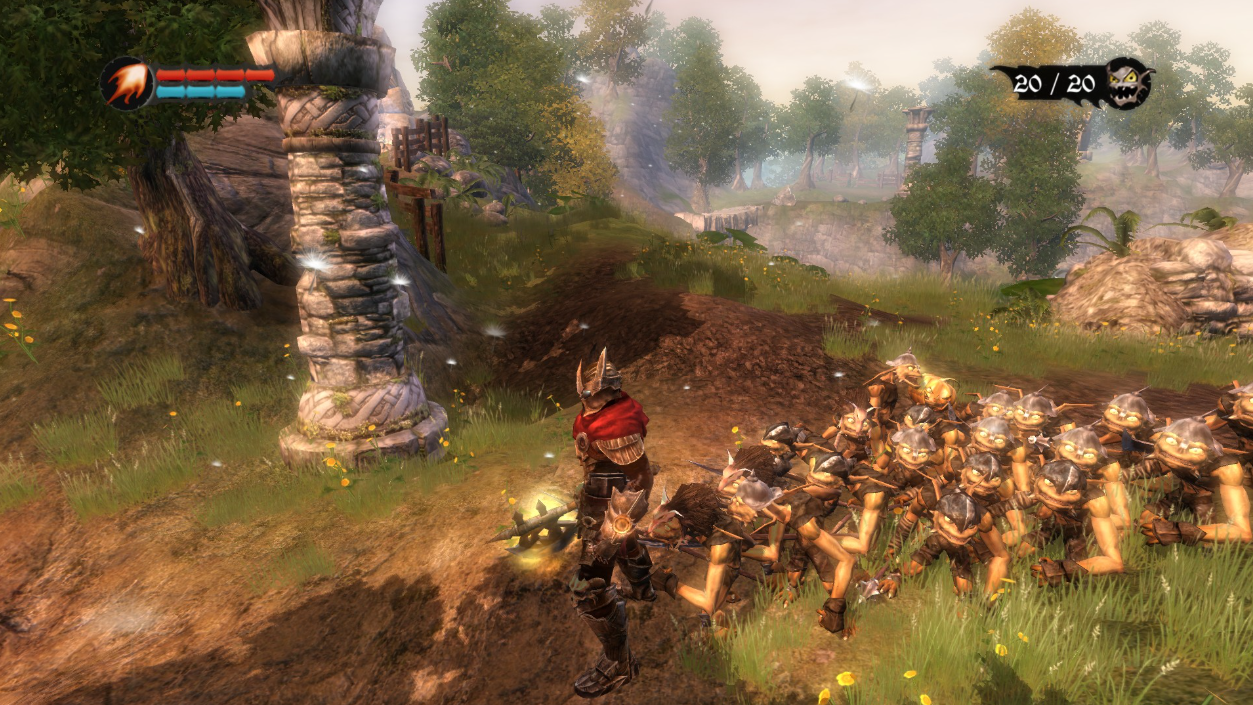
On top of that, minions are more than just soldiers—they’re your most valuable resource. Need better armor? They’ve got you. Low on health or mana? They’ll help replenish that too. Sure, there are collectible items scattered throughout the world, but unlike in many other games, in Overlord, every collectible directly boosts your power. By the time I hit the final stretch of the game—and I was doing a fairly thorough playthrough—my character was geared up so well, I could wipe entire enemy squads without even needing minion support.
Lackeys
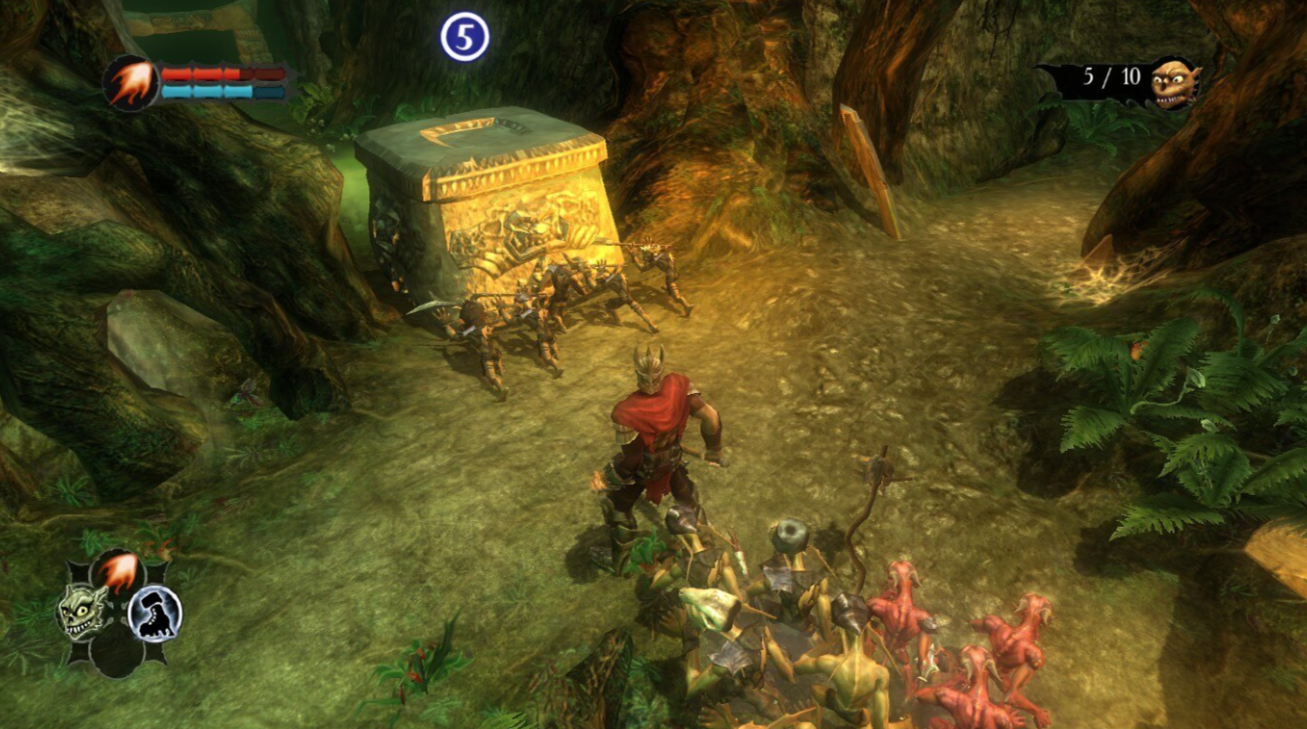
Minions are your main combat force. You summon them by trading a colored orb for a minion of the matching color. There are four types in total:
Brown Minions
These are your frontline warriors. They’re tough, take the most damage, and are perfect for soaking up hits when the fight gets rough. Expect to rely on them the most in battle—they’re your go-to grunts for any direct confrontation.
Red Minions
Your ranged attackers. They hurl fireballs at enemies from a distance but are practically useless in close combat—though that never stops them from charging in and getting themselves killed after a couple of hits. Still, they’re invaluable when you run into fire-blocked paths or flaming levers—thanks to their fire immunity, they can walk right through the flames unharmed.
Green Minions
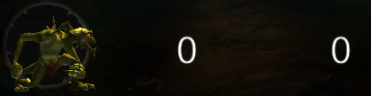
These sneaky types are immune to poison. They’ll inhale toxic spores and clear the way so your squad doesn’t get wiped out by poisonous plants. They’re also ambush specialists—leaping onto enemies from behind to deal solid damage. Unfortunately, like the reds, they go down fast if left exposed.
Blues:
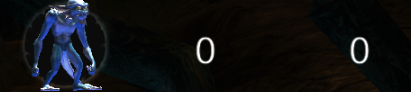
They’re terrible fighters, no doubt about it—but what they lack in combat prowess, they more than make up for in utility. Blue minions can resurrect fallen allies, rescue drowning comrades, and walk on water—abilities none of the other minion types possess. That means you’ll often find yourself either rerouting the others or just telling them to “stay put” while the Blues handle things no one else can.
Browns
These guys are scrappy and resourceful. Browns eagerly loot whatever junk they find in crates, and they’re not shy about grabbing weapons from enemies they’ve just taken down.
They’ll throw on any armor they come across, and if you’ve smashed some pumpkins, don’t be surprised if they pop one on their head like a helmet.
A single Brown with decent armor and a solid weapon can fight as well as two—or even three—unarmed, unarmored minions.
Combat system
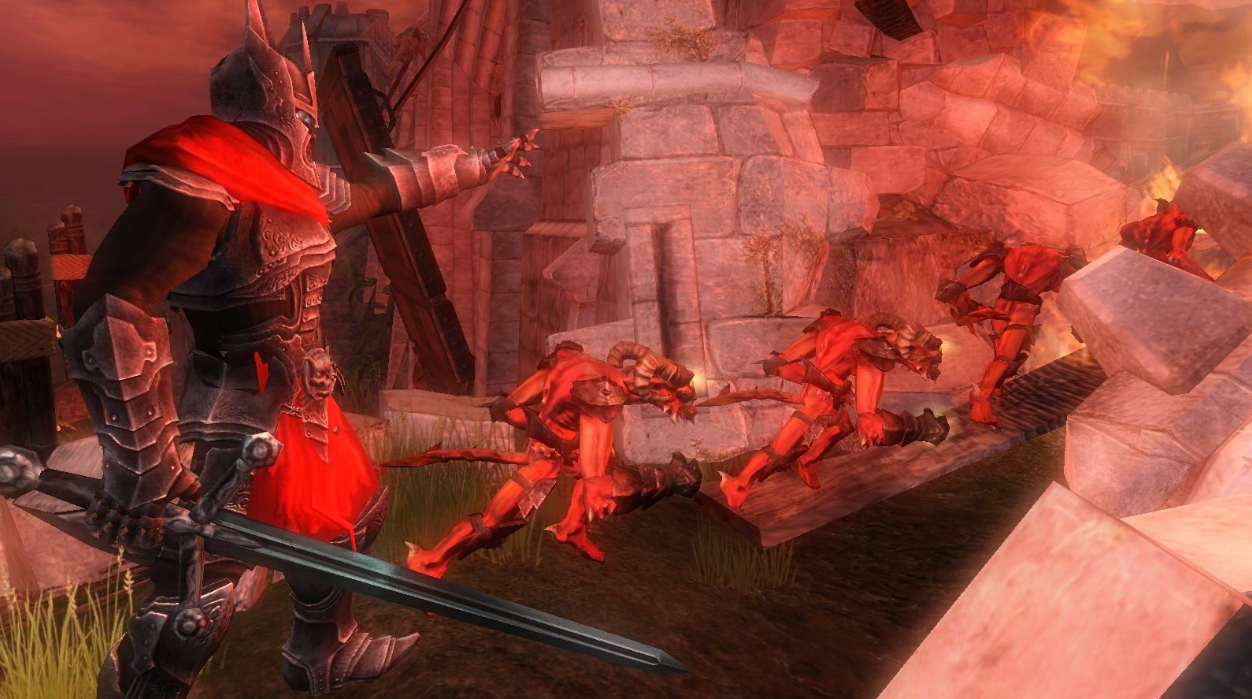
As I mentioned earlier, the “Minions” are our main combat force. Sure, we can jump into melee ourselves, but the close-quarters combat is clunky and far from satisfying. Too often, our attacks just phase right through enemies without dealing any damage. On top of that, our move set is painfully limited to just three types of strikes:
-
A swing from the left
-
A swing from the right
-
A downward cleaving blow
Overall, melee just doesn’t feel good to use. Thankfully, magic is handled much better and is far more enjoyable.
Pumping
There are no levels here. No glowing XP bars. Power is earned through blood, steel, and sacrifice. You grow stronger by reforging your weapons and armor—bending them to your will through arcane forging. But such power comes at a price: each upgrade demands the lives of your loyal minions, and sometimes, the cost borders on cruelty.
To push further into the unknown, you’ll need Artifacts—ancient relics that pulse with forgotten energy. They expand your vitality, deepen your mana reserves, and let you command more minions into battle.
Wander far enough, and you might stumble upon Spellshrines—forgotten statues that whisper to the arcane. Kneel before them, and your spells will surge with unnatural strength.
Bosses
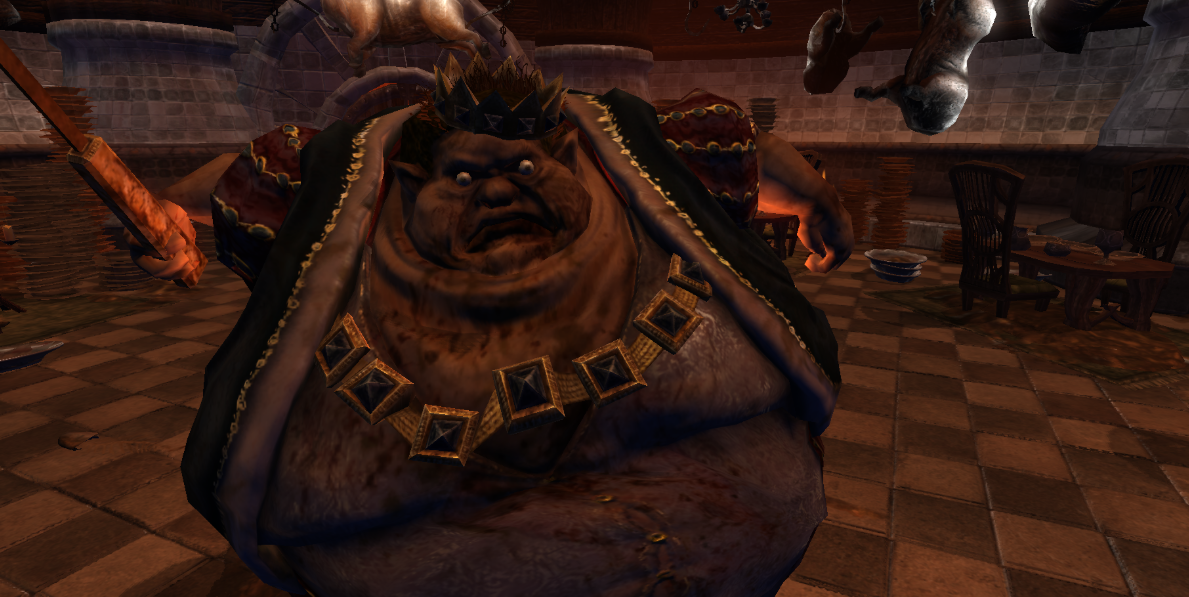
Melvin the Girthy
Once hailed as a noble hero, Melvin gave in to gluttony. Obsessed with food, he now commands the Halflings to raid the village of Merrymouth just to satisfy his endless cravings. His body has transformed—he’s now a massive ball of flesh with stubby legs, waddling around like a walking buffet disaster.
Oberon the Mistbound
Oberon once led the ancient forest of Gloomwood to victory over evil. But after the war, he fell into a deep, magical slumber—abandoning his homeland and forgetting his people. During his absence, his former ally, Goldo, took advantage and plundered the forest.
Today, Oberon stands fused with a colossal tree, a solemn reminder of power lost to neglect.
Sir William the Black
A once-radiant paladin and sworn protector of the Celestial Sanctum, Sir William turned away from his duties and drowned himself in decadence. Once a symbol of honor, now he’s a shadow of the man he used to be.
Goldo Goldbeard
The Dwarven King returned from the war against darkness only to succumb to his deepest vice: greed. Not only did he plunder Oberon’s sacred lands, but he also stole the Mother-Goddess statue—an artifact many sought to claim for themselves.
In combat, you’ll face his armored war machine—his “Tank.” It’s more bark than bite, though, so don’t sweat it.
Yulia
Once a brave warrior in the fight against evil, Yulia became obsessed with stealing anything that sparkled. Jewels, relics, or coins—it doesn’t matter. If it glitters, she wants it.
Khan the Warlord
After the war, Khan was consumed by his own fury. Now, he speaks only through violence—except with one person: Yulia. She’s the only one who can calm him, for she’s the one he loves.
World
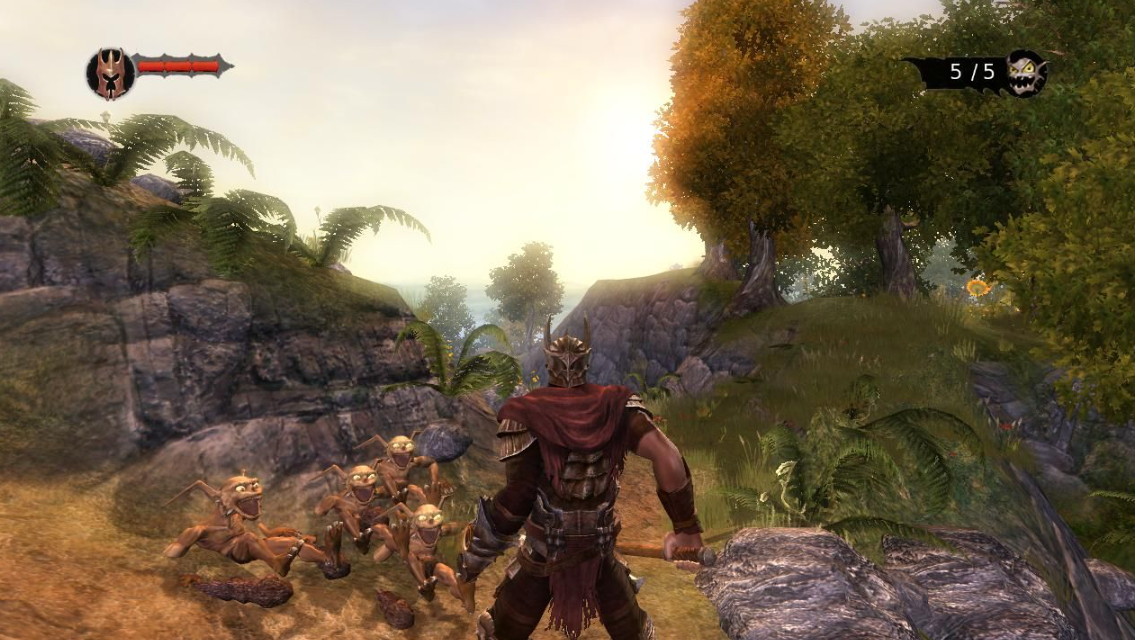
The game’s narrative unfolds in a world whose name remains a mystery, adding an air of intrigue. Instead of an open world, we explore relatively open areas that can sometimes feel maze-like and complex. Along our journey, we may stumble upon mystical fountains that replenish our health or mana in exchange for offerings from our loyal minions.
The environments are quite diverse and include:
-
A cheerful village filled with bustling activity
-
A cozy settlement of industrious dwarves
-
A vast, arid desert that stretches endlessly
These locations are crafted in such a way that you’ll often find yourself asking, “How on earth do I get there?!” While this can be engaging and spark curiosity at first, it may start to feel tedious and frustrating as you progress to the mid-point of the game, potentially impacting the overall experience.
Tower
The tower acts as the main hub, from where access to any point for instant movement is opened. All rare artifacts that we find during our journey are automatically transferred here – to this space of memory and aesthetics, where they serve as both decorative elements and evidence of our adventures.
If desired, the appearance of the tower can be personalized – decorated with rich details: from a velvet carpet to elegant sculptures and unique decorative elements. Some of these decorations will adapt depending on the chosen “Mistress”, changing the atmosphere – for example, the second tier room can be entwined with fragrant roses or, on the contrary, remain in strictly verified minimalism.
Particular attention is paid to the treasury: its contents directly reflect our progress. If resources are few, a bag of coins will modestly be placed on the shelf. But as soon as our wealth increases, the room is transformed – flooded with the light of gold bars, jewelry and relics, forming an impressive visualization of our achievements.
Grafonium
The year the game was released was packed with major titles that pushed visual boundaries. BioShock made waves, Crysis stunned with its tech, and Mass Effect captured hearts everywhere. Competing with such giants is no easy feat—but in my opinion, Overlord still looks fantastic even today. The environments are genuinely beautiful, and the visual effects are easy on the eyes—just a treat to look at. That said, some character models are so low-poly it’s almost off-putting… but honestly, it’s a forgivable flaw.
Sound
The voice actors really delivered — the emotions came through clearly and felt genuine. The soundtrack doesn’t particularly stand out, but it does its job without being distracting. The main theme is actually quite pleasant. I played with the original audio, but from what I’ve heard, there’s a dubbed version available too — and it’s supposedly pretty solid.
Conclusion
Overall, Overlord rightfully occupies a special place among video games – it is a powerful, thoughtful project that has deservedly earned recognition since its release. Even today, finding something similar in spirit and style is not an easy task. If you missed it during the release, are looking for new gaming emotions or just want to once again plunge into the atmosphere of dark, but delightfully ironic fantasy – welcome to the unique world of Overlord.
This game masterfully and humorously parodies the classic canons of fantasy, giving them an unexpected and funny shade. The passage gives real pleasure – from the beginning to the final scenes. However, closer to the end, some elements may begin to seem monotonous, which slightly blurs the overall impression. So is it worth playing?
Definitely yes! However, it is important to understand: not everyone will reach the climax. There is a chance that someone will leave the game in the middle, feeling the repetition of the mechanics. But even with these moments, the game is still a joy to play – its signature style and witty humor make for a truly memorable experience. If you’re willing to embrace its quirks and unconventional approach, you may have a gem to discover.
Overlord system requirements
If you’re planning to dive into Overlord, make sure your system is up to the task. The bare essentials include at least 512 MB of RAM and around 4.5 GB of available hard drive space. While the game will technically run with a Radeon 9500 graphics card, don’t expect miracles—visuals and frame rates will be on the modest side.
For those who want a richer, more fluid experience, the developers suggest stepping up to a GeForce 7800 GT. It handles effects and rendering far more comfortably, giving you a smoother ride through the game’s darker fantasy realms.
As for the CPU, an Athlon XP 2400+ will get the game running, but performance may stutter during more intense scenes. If you’d rather not compromise, a Core 2 Duo E4300 or anything stronger will let you raise the settings and enjoy consistently responsive gameplay without hiccups.
How to play Overlord for free on Steam via VpeSports
What if you are not a hero? What if you are evil, no longer hiding in the shadows, but stepping onto the stage with an army of darkness and an iron will to dominate? Overlord is not a game, it is your rise to the tyrant, whose laughter sounds louder than battle trumpets, and whose tread makes villages burn to the ground.
Forget about moral dilemmas and boring tutorials. Here you are not taught – here you command. In a world where everything is rotten – from kingdoms to knights – you are the only one: a true Overlord. Strong, dark and … damn charming. You are served by minions – implacable, mad creatures ready to die for you, kill and make a feast on the bones of your enemies.
Each mission is a theater of black humor and destruction, where you decide: crush, subdue or burn. The game is not built on the usual RTS or RPG mechanics – it is a unique mix of power, chaos and strategic thinking. It’s important not just to win, but to do it with style – let every piece of land remember who its new master is.
You won’t have to mess around with installations, codes and annoying windows. Registration on our website will take less than a minute – and you will instantly get access to a ready-made Free Steam account. Everything is as simple as possible: register, launch, become Darkness.
Don’t forget to leave a review – we are closely monitoring your tyranny. If the comment does not appear immediately – don’t worry, sometimes manual activation is required. As soon as everything is confirmed, the necessary information will be sent to your email.
And in order not to miss fresh accounts, updates and secrets of dark dominion – subscribe to our Telegram. There we post the most important things about Overlord, fantasy games and even a few insidious plans. And if something is unclear – instructions and live support are ready to help. We do not leave our own – especially if they are in armor and with horns.