

When Sega fans demanded the continuation of their favorite hits from the Mega Drive in the late 90s, the company decided to play it differently. Instead of the usual sequels, she increasingly offered fresh and bold ideas — sometimes daring, sometimes risky, but almost always ahead of their time.
This is how Jet Set Radio was born, a vibrant street action game that blew the imagination of players with its style and atmosphere. The iconic game turns 25 on June 29. The history of the project is full of paradoxes: it gave the industry a new lease of life and became a legend for fans, but at one time it failed to conquer the market. We recall why this happened in our article.
Table of Contents
Jet Set Radio Free Steam Account
The cult project was developed by the young studio Smilebit, founded by people who had previously worked on the Panzer Dragoon series. The first two installments of the franchise were dynamic rail shooters set in a fantasy universe, while Panzer Dragoon Saga moved completely towards the role-playing genre. But in the case of Jet Set Radio, the team decided to take a chance and create a game unlike any of their previous works. It’s funny that most of the employees were not even 25 years old at the time — and today the game itself is about to turn the same age, because Jet Set Radio celebrates its anniversary on June 29.
According to the memoirs of designer Ryuta Ueda, the idea came to him after a vivid presentation of PaRappa the Rapper at the Tokyo Game Show 1996. The dance hit immediately stood out for its unusual gameplay and bold visual presentation. Ueda transferred these impressions to his project. And although Jet Set Radio is set in Japan, where the locations were inspired by the real-life areas of Shibuya and Shinjuku, visually the game is more reminiscent of Western street culture. Everything here is imbued with the spirit of graffiti, hip-hop and teenage gangs fighting for their place in the city.
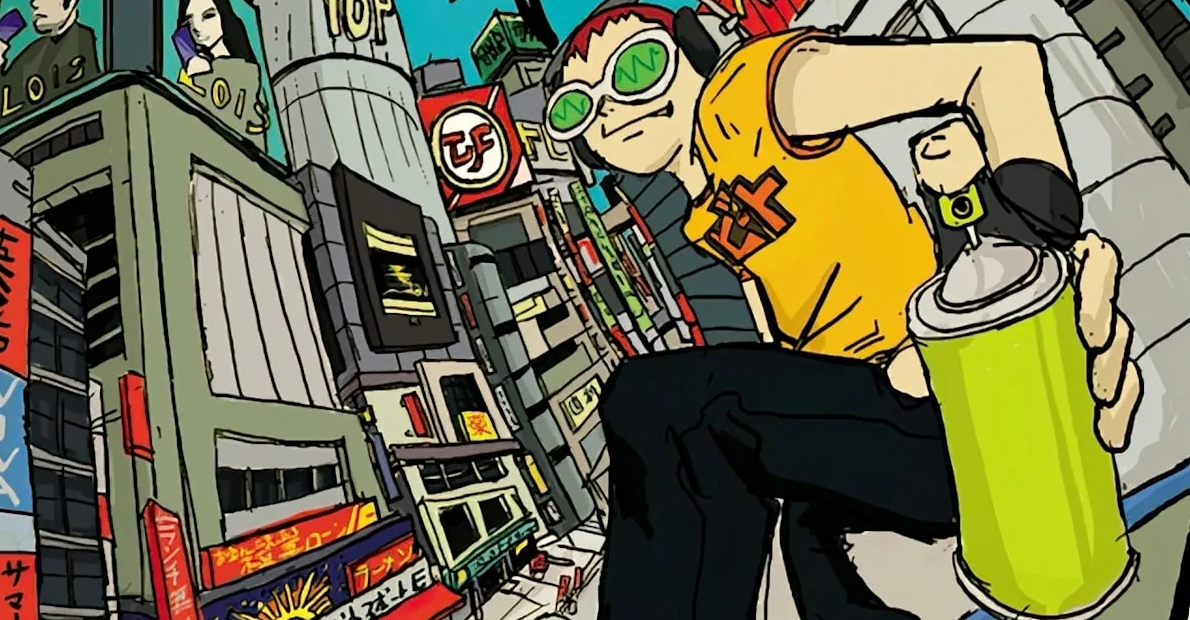
The authors themselves admitted that the atmosphere of the game largely echoes the philosophy of the “Fight Club” — the protest of youth against the imposed system, freedom of expression even through vandalism. The police act as opponents, and the confrontation with them is far from serious: the guards are ready to fire shells from tanks at roller skaters and even conduct targeted fire from sniper rifles. And closer to the finale, the player is waiting for a plot twist, which is better not to tell in advance — let it come as a surprise.
But much more interesting is the gameplay of Jet Set Radio itself and its unique technical performance, thanks to which the game has forever entered the history of the industry.
Don’t hold back – a free steam account with is waiting for you!
Gameplay, style and legacy of Jet Set Radio
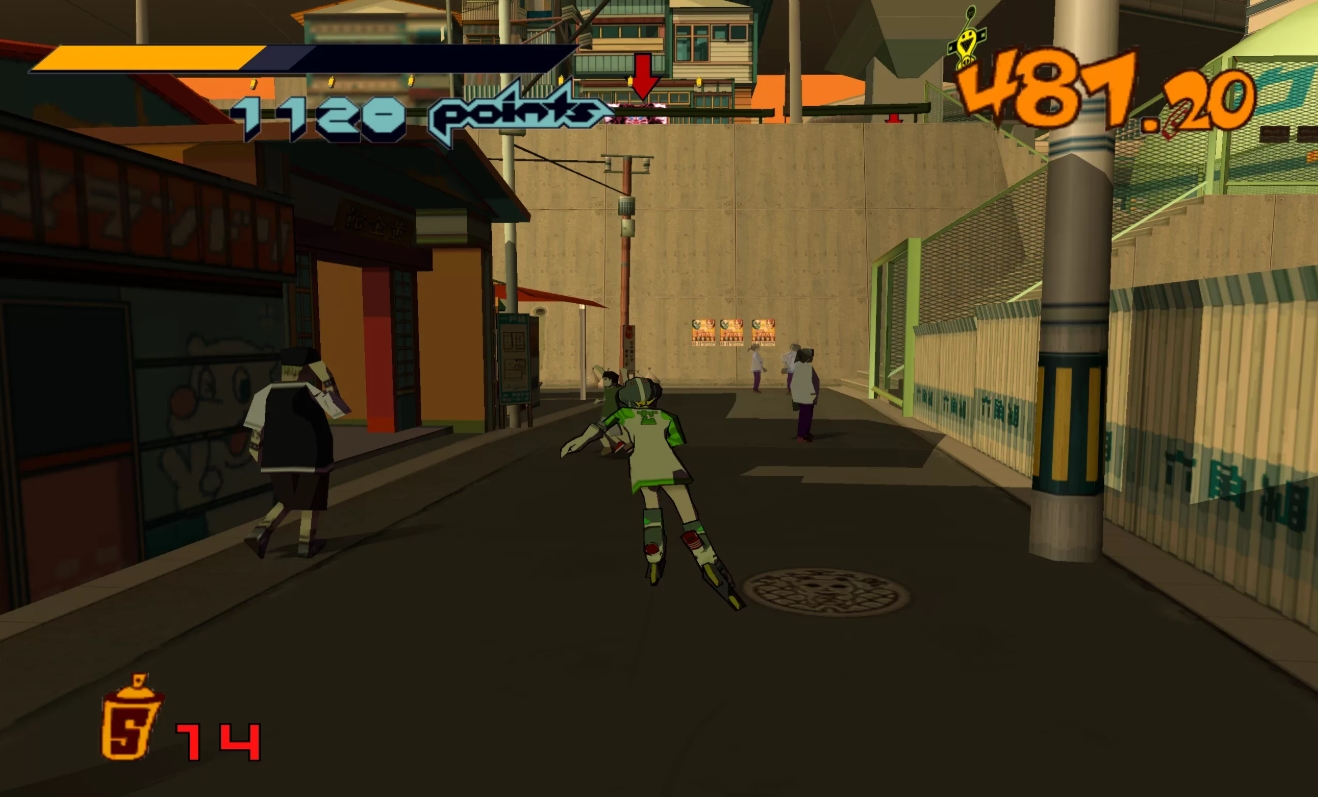
Jet Set Radio is based on a simple but incredibly addictive idea — to paint the gray streets of the city with bright graffiti. Each mission is a separate area where you need to leave your mark in strictly defined places. But getting to them is not so easy: sometimes the path to one point turns into a series of falls and attempts, where success comes only from the tenth time. The physics of the game are merciless — the slightest slip in the jump, and you fly down, without the right to “magnetic” hints like those found in Uncharted. Here, every mistake costs time and nerves.
And time is catastrophically short — the timer is ticking mercilessly, the spray cans are quickly emptying, and the police are breathing down your neck. At first it’s just a couple of cops with batons, but the further you go, the more serious the resistance. Special forces, firearms, armored vehicles — all this is raining down on you for a single graffiti.
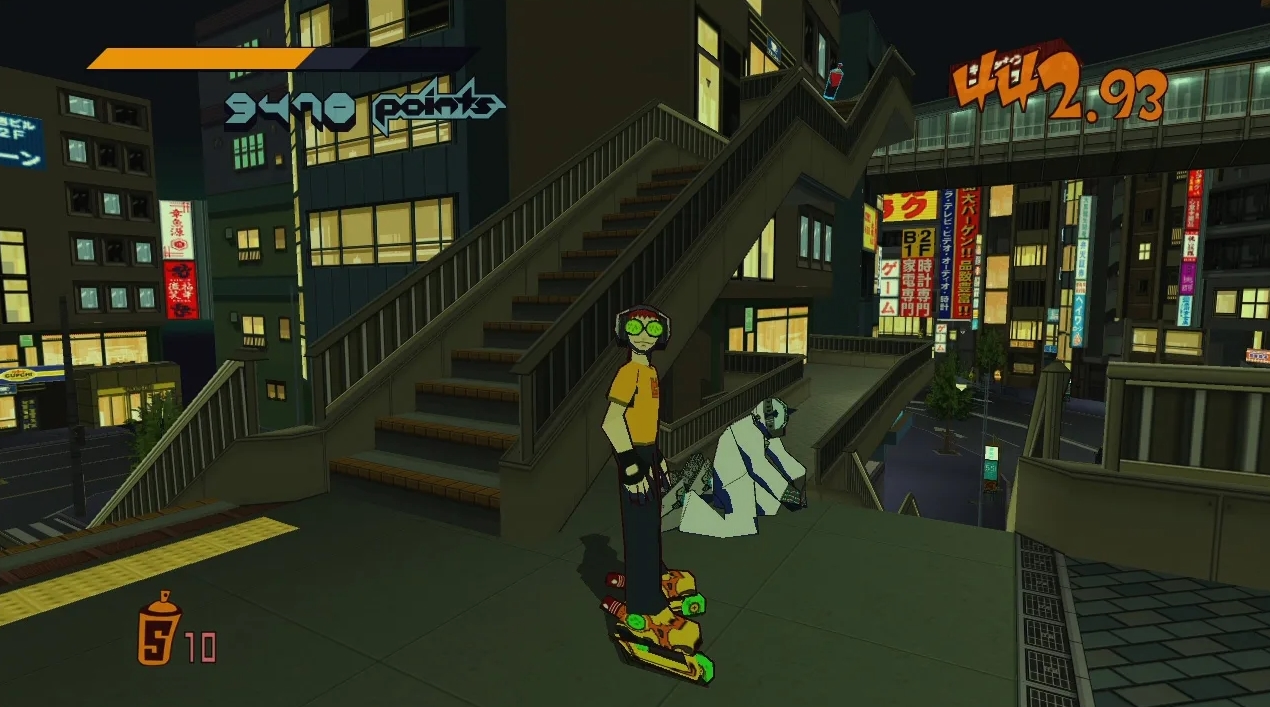
To get a high rating, it’s not enough just to paint over the walls. You need to score points with spectacular tricks, building long combo chains. The variety of tasks is also surprising: somewhere you have to repeat the movements of your rivals, somewhere you have to compete in a race to the finish line, and sometimes you have to graffiti members of an enemy gang until time runs out. It would seem that the concept is elementary — “we ride and draw”, but Sega was able to squeeze the most out of it.
The real magic of Jet Set Radio, however, was its unique style. The then-rare cel-shading technology turned three-dimensional graphics into a live comic strip, making the game look like animated street art. This visual language was perfectly combined with the audacious soundtrack: original hip-hop and electronic compositions were juxtaposed with licensed tracks. The North American version, released under the name Jet Grind Radio, stood out especially — it added powerful industrial and nu metal from Rob Zombie, Cold and Professional Murder Music, which gave the project a more aggressive sound.
Nevertheless, the commercial success was modest. Despite rave press reviews, awards, and cult status among fans, Jet Set Radio’s sales did not even reach a million copies. But this particular game proved that style and bold ideas can be more important than hard numbers.
The Rebirth of Jet Set Radio: From Dreamcast to New Hopes
At the beginning of the 21st century, Sega was on the verge of survival, betting on the release of games for third-party platforms. The company did not abandon the legacy of the Dreamcast — almost all the brightest hits migrated to other devices, and some even received sequels. One of these projects, which appeared on Xbox in 2002 in an updated form called Jet Set Radio Future.
Despite popular opinion, this was not the second part, but rather a free remake with the action moving into the future. Xbox’s power has allowed developers to increase the frame rate from 30 to 60, and the maps have become much larger. There has not been a full-fledged open world yet, but the feeling of freedom has become more noticeable. The Smilebit team also made a drastic change to the mechanics — they completely removed the timer. For many players, this decision was a fatal mistake: the dynamics disappeared, and with it the feeling of challenge. As a result, the passage turned into a leisurely ride through the levels, albeit spectacular, but with intricate architecture. Sometimes it was impossible to figure out exactly where the right point for graffiti was located — above or below. Only challenges from other characters could save the situation, where it was necessary to perfectly repeat a series of tricks.
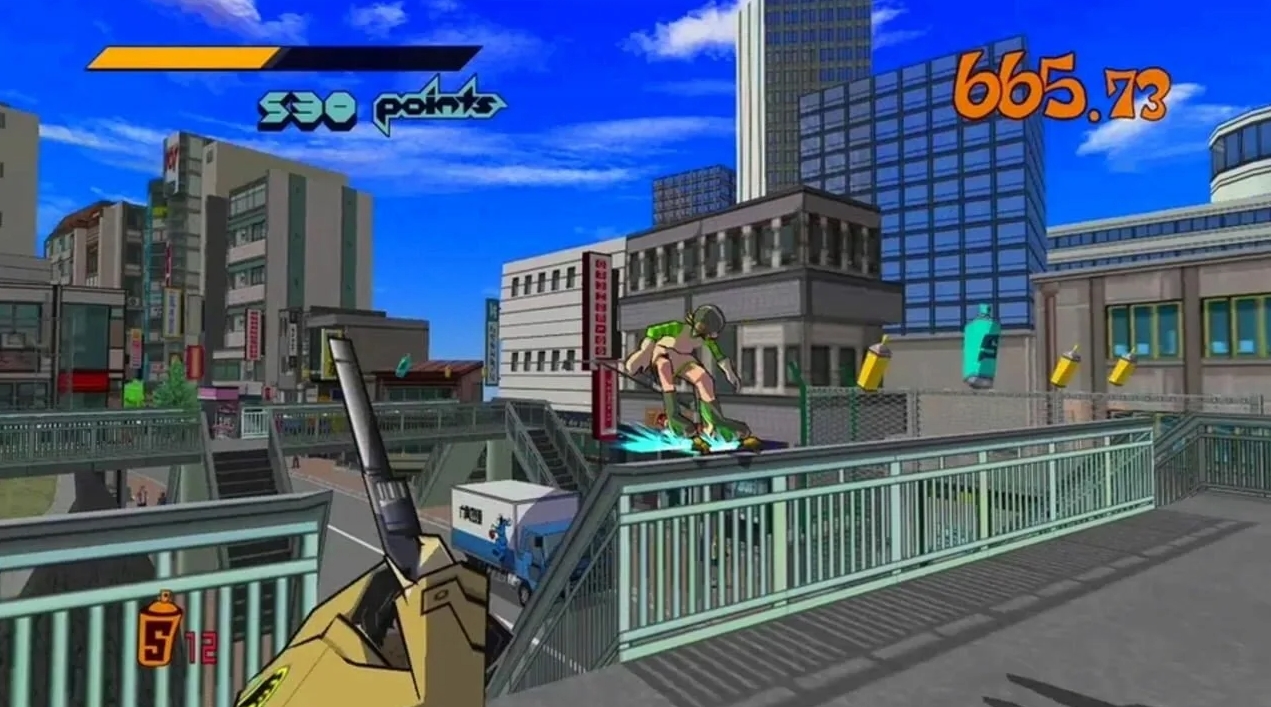
Major changes in Jet Set Radio Future:
-
Increase the frame rate from 30 to 60;
-
Larger and more detailed levels;
-
Removing the timer, which greatly affected the dynamics;
-
A new focus on challenges and tricks from other heroes.
However, critics received the project favorably, generously giving high marks. Sales turned out to be even more modest than those of the first part. In 2003, Sega tried again, releasing Jet Set Radio on the Game Boy Advance. Despite the simplifications and isometric perspective, the portable version has surprisingly accurately captured the atmosphere of the original. The series later returned as HD re-releases for Android, iOS, Xbox 360, PS3, PS Vita, and PC. But the history of the franchise actually stopped there, giving way only to references in other games of the company — for example, Jet Set Radio characters appeared in Sega Superstars Tennis and Sonic & All-Stars Racing Transformed.
Sega’s management is well aware that the game has loyal fans and a cult status has long been established around the brand. But with all this, the series has never been a project on a scale comparable to the same Silent Hill 2, the remake of which naturally became a commercial hit.
Nevertheless, the fans’ dreams were heard. At The Game Awards 2023, Sega announced the return of several iconic series: Jet Set Radio, Crazy Taxi, Shinobi and Streets of Rage. But what exactly awaits Jet Set Radio is still a mystery. Some sources talk about a full-fledged remake, others about a relaunch, and some even claim that Sega is working on both options at once. In the meantime, two years after the big announcement, the public has only a handful of screenshots and a sea of unanswered questions.
How Jet Set Radio has influenced the gaming industry over the past 25 years
Despite the fact that Jet Set Radio was a real breakthrough at the time and set the tone for a whole direction in game design, for a quarter of a century the game turned out to have surprisingly few imitators. In the early 2000s, KOEI Studio tried to repeat its success by releasing the Yanya Caballista: City Skater project for PS2, where roller skates were replaced by skateboards. It turned out to be bright in appearance, but in terms of gameplay, the game left only a vague impression, because the stylish decorations could not hide the mediocre mechanics.
Years later, in 2023, Bomb Rush Cyberfunk appeared on the scene, a project that seemed to many to be almost a copy of Jet Set Radio Future. The visual style, the structure of the levels, and most importantly, the music, to which Hideki Naganuma himself, the composer of the original, had a hand, made the references too obvious. But nostalgia did not save the game: the press met the game with restraint, and the players quickly lost interest. The reason is simple — the authors relied on the past, but forgot to offer new ideas and the very replayability, without which it is difficult to survive in modern gaming.
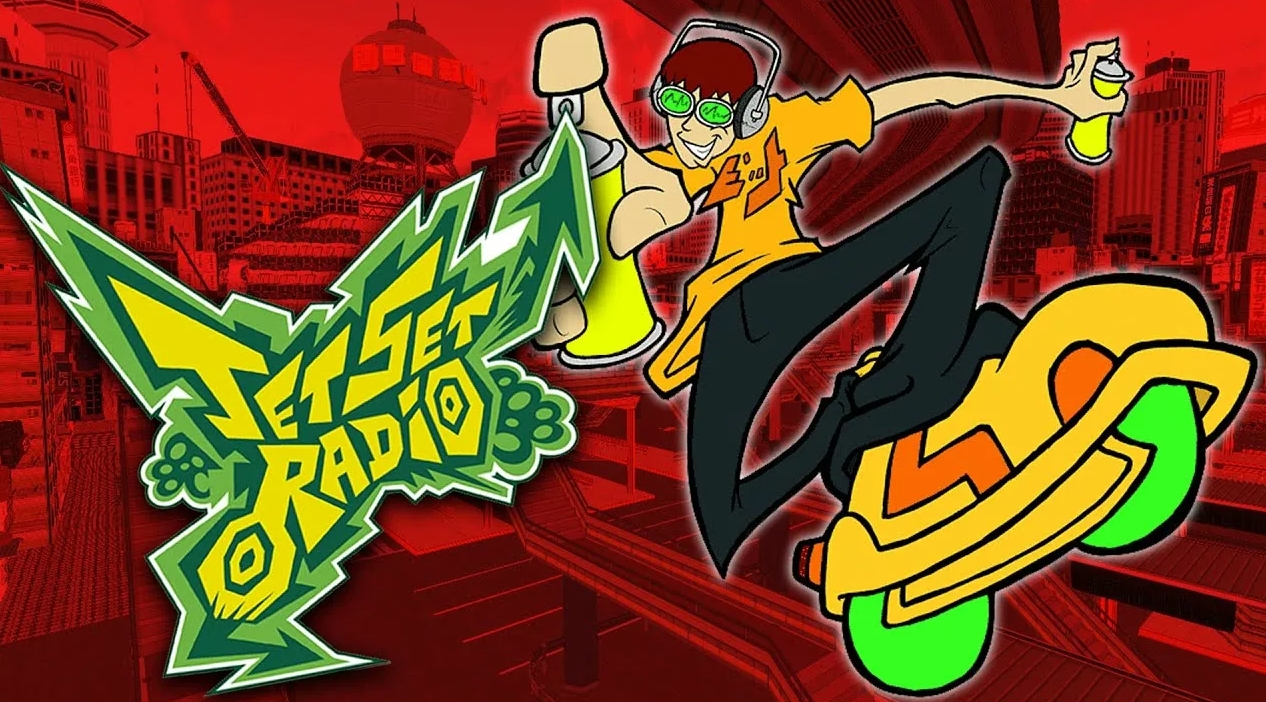
Insomniac Games was much more successful in trying to be inspired by the legend. Their bright, driving and truly creative Sunset Overdrive action game is still remembered by Xbox One fans. Ted Price, the studio’s founder, bluntly admitted that Jet Set Radio had become their main source of inspiration. And this is evident in every detail — from acrobatic stunts to gameplay, where the player is constantly pushed to stay off the ground and rush over railings, roofs and wires. Unfortunately, despite its charisma and uniqueness, the game was barely able to recoup the costs, and the chances of a sequel tend to zero.
But one legacy of Jet Set Radio has survived both time and financial failures — this is the cel-shading technology. It was this game that pioneered the style, and then it migrated to wherever possible: fighting games, platformers, and even racing arcades. In the early 2000s, this technique made it possible to hide the technical limitations of consoles, but today it has become a fashionable artistic choice. It is enough to look at Genshin Impact to understand that cel-shading still works and sets trends in the gaming industry.
Jet Set Radio System Requirements
Jet Set Radio System Specs
How to play Jet Set Radio for free on Steam via VpeSports
The city comes alive when you put on the rollers. Narrow streets, rooftops, and gray walls turn into your personal playground for self-expression. Jet Set Radio is not just a game, it’s a cry of freedom, where your every trick sounds louder than police sirens, and every paint sign becomes a challenge to the whole world. You can’t be inconspicuous here — style and audacity decide everything.
We made it as easy as possible to get into this rhythm. Forget about complicated settings — just register, log in to your account, and the game will be waiting for you. For the most impatient, there is an option to launch through a free steam account so that you can break into this world without delays and unnecessary barriers.
Jet Set Radio captures not only the gameplay, but also the spirit. The soundtrack makes your heart beat faster, and every rooftop race turns into a story where your style is your weapon. Compete, leave your mark and prove that you are the one who sets the rules of the streets.
After the game, we are waiting for your opinion. Each review is moderated, and as soon as it is confirmed, the login details immediately fly to your email. This is how your voice becomes a part of our community, which grows with the game.
And if you want to keep your finger on the pulse, join our Telegram channel. There are fresh accounts, hot news, updates and real live conversations of the players. Well, if you suddenly encounter difficulties, the “How to play for free — The Complete Guide” section or the support chat will always help.