

There’s a particular kind of anticipation that builds when a game series keeps promising something for over a decade and never quite delivers it. Forza Horizon fans asked for Japan from day one. British countryside, Australian outback, the Alps, Mexico — all of them were great. None of them were Japan. Then, at Tokyo Game Show 2025, a teaser played that ran through license plates from every previous game in the series, one by one, before cutting to Mount Fuji. The crowd lost it. You already know why.
Forza Horizon 6 launched on May 19, 2026, debuted with a Metacritic score of 92 — the highest-rated game of the year — and set a franchise record with over 550 cars on day one. But a 92 doesn’t tell you whether the Japan setting actually earns its reputation, or whether Playground Games just gave a beloved formula a very expensive paint job.
Here’s the honest breakdown.
Table of Contents
Forza Horizon 6 Release Date, Platforms and Editions — What You Need to Know
Microsoft confirmed the official release date during the Xbox Developer_Direct in early 2026: May 19, 2026 for Xbox Series X/S and PC (both Microsoft Store and Steam). Premium Edition owners got four days of early access starting May 15, with reviews dropping alongside that window.
A PlayStation 5 version has been confirmed for a post-launch release later in 2026 — a notable step for a franchise that only made its PS5 debut with FH5’s late port. Last-gen consoles are out entirely: no Xbox One, no PS4. That’s a deliberate call by Playground Games, and one that paid off in terms of map scale and visual fidelity.
The game is included in Xbox Game Pass Ultimate and PC Game Pass from day one, which means subscribers get access at no additional cost.
| Edition | Access Date | What’s Included |
|---|---|---|
| Standard Edition | May 19, 2026 | Base game |
| Premium Edition | May 15, 2026 (early access) | Game + Car Pass + Welcome Pack + early access |
| Game Pass Ultimate | May 19, 2026 | Base game via subscription |
| PlayStation 5 | Later in 2026 | Post-launch release |
Pre-ordering any edition before launch awarded a 2017 Ferrari J50 in a pre-tuned configuration — an exclusive variant not available separately anywhere in the game.
Why Japan Was Worth the Wait — and What the Map Actually Looks Like
Japan has been the most requested Forza Horizon setting since the original game. It’s the birthplace of drifting, the home of JDM culture, touge mountain pass racing, legendary tracks like Ebisu and Tsukuba — and somehow it had never made it into the series. Xbox exec Matt Booty called it “the most-requested location since the very first game” when announcing FH6 at Tokyo Game Show 2025.
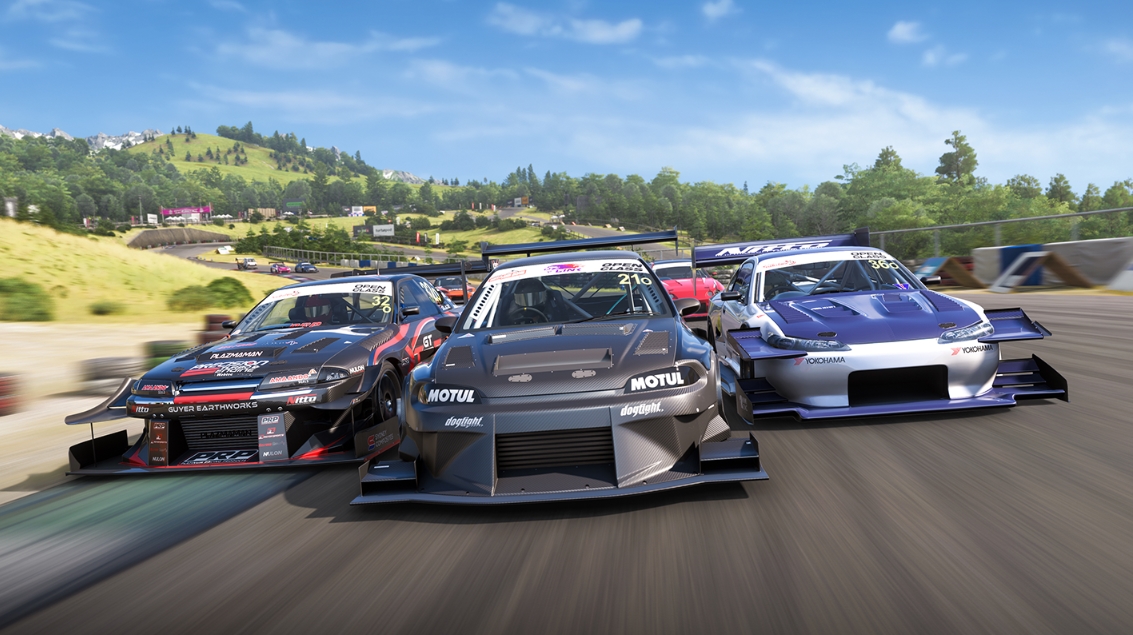
Playground Games were upfront about their approach. Art Director Don Arceta and Cultural Consultant Kyoko Yamashita explained that the goal was never photographic accuracy — it was capturing the essence of Japan filtered through the Horizon lens. “Consequence-free traversal” in a hypercar, open-world exploration, earning points for spectacular crashes — that’s what Horizon is, and real Japan had to be remixed to fit that. On paper it sounds like a compromise. In practice, it works better than you’d expect.
The map covers fictional representations of the Kantō, Chūbu, and Kansai regions, and it’s the largest in franchise history. According to GameSpot, driving from the southernmost point to the northernmost is approximately 21 miles — compared to around 10 miles in Forza Horizon 5. That extra distance isn’t just more of the same; it’s a fundamentally different kind of terrain.
What’s on the map:
-
Dense urban streets inspired by Tokyo, with elevated expressways and a Daikoku-style parking area where you half-expect a GT-R to pull up next to you
-
Narrow mountain passes in the Japanese Alps, some flanked by walls of snow and ice (modeled on the real Yuki-no-Otani Snow Corridor)
-
Rural countryside with rice paddies and tea plantations
-
Coastal highways
-
Dedicated circuit areas for competitive racing
The defining new quality is verticality. Every previous Horizon map has been relatively flat. Japan’s mountain terrain creates dramatic elevation changes that make the same route feel entirely different depending on season, time of day, and what you’re driving. A rear-wheel-drive coupe on an icy touge pass in winter is a completely different proposition from the same road in summer in an AWD rally machine. That’s a real gain for the open-world loop.
One valid criticism: Mount Fuji is visible on the horizon but not driveable. It’s there as a backdrop, not a destination. That’s a missed opportunity — racing up Fuji’s flanks would have been one of the game’s signature moments.
Touge Battles — The Best New Mechanic in Forza Horizon 6 Explained
Of all the new features in FH6, Touge Battles generate the most discussion — and they’ve earned it. Touge (Japanese for “mountain pass”) racing is one of the pillars of Japanese car culture: two cars, a narrow winding road, no room for error, and the outcome decided by feel and precision more than horsepower.
For Forza Horizon, this format is genuinely new territory. There’s no “throw enough car at it and the assists will fix it” strategy here. Described touge events as playing “unlike any other race in the game” — and that’s accurate. You need to actually know the road, understand how your car loads weight into a corner, and use drifting as a technique rather than a trick for the crowd. First few attempts will humble you if you’re used to Horizon’s more forgiving default events.
That’s not a complaint. It’s the best thing the game adds to the formula. Touge events are why FH6 doesn’t feel like a reskin.
Other notable new event types:
-
Horizon Rush — showcase-style races in dramatic locations. One runs through a futuristic spaceport; another channels DiRT 2/DiRT 3 energy with drift-heavy gameplay
-
Treasure Cars — special vehicles found through exploration, requiring restoration before they join your garage
-
Returning PR Stunts — Speed Traps, Drift Zones, and Speed Zones are all back
Forza Horizon 6 Full Car List — 550+ Vehicles With a Heavy JDM Focus
With over 550 cars at launch, FH6 sets a new franchise record for day-one roster size. The official Forza site confirmed more than 618 vehicles including DLC by full launch date.
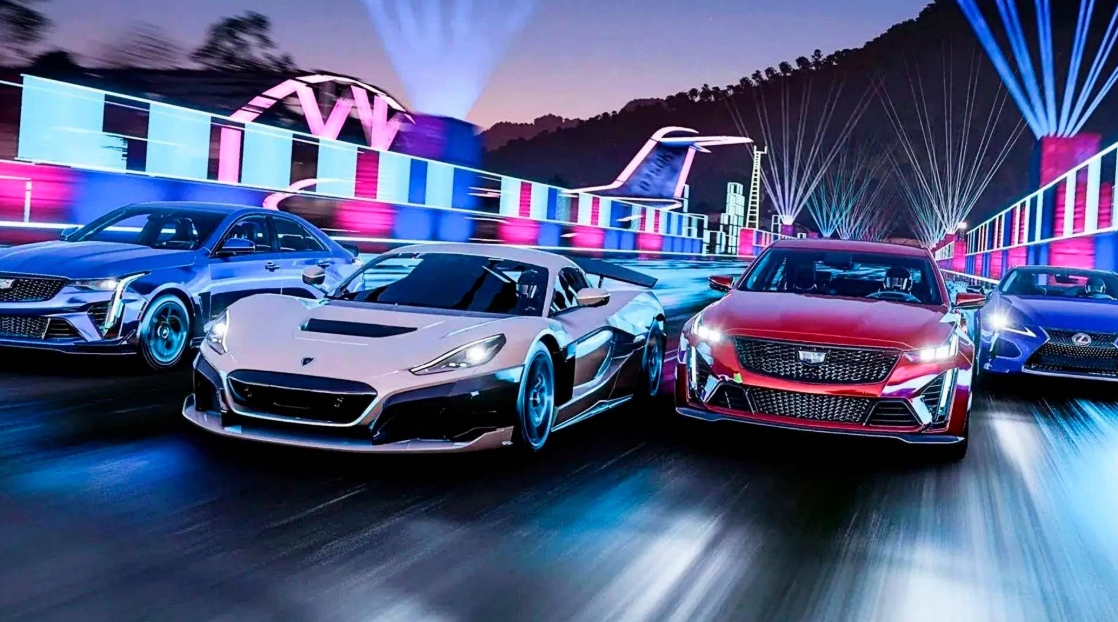
The cover cars say everything about the game’s priorities: 2025 Toyota GR GT Prototype — a race-derived road car making its video game debut here — and the 2025 Toyota Land Cruiser. Both are unmistakably Japanese, both are modern, and both signal how seriously Playground Games took the setting.
Key car categories:
-
JDM classics: Nissan GT-R (R35 and R34), Mazda RX-7, Toyota Supra A80, Subaru WRX STI, Honda NSX, Mitsubishi Lancer Evo, 1983 Nissan Tomica Skyline Turbo Super Silhouette
-
Modern Japanese performance: Toyota GR GT Prototype, Honda Civic Type R, Nissan Z, Mazda MX-5
-
Kei cars and kei vans: a dedicated category celebrating uniquely Japanese automotive culture
-
European hypercars: Porsche 911 GT3, Ferrari, Lamborghini
-
American muscle: Ford Mustang, Dodge Challenger, Chevrolet Camaro
-
Legacy rewards: Mercedes-AMG One from FH5 (for players with an FH5 save file), 2014 Lamborghini Huracán LP-610-4 (for FH2 save files)
The Forza Edition system has been fundamentally reworked. Where previous Forza Edition variants offered mild stat boosts, FH6’s versions are effectively separate builds with extreme factory modifications — the most dramatic examples jump five performance classes above the base vehicle (D Class to S2). They’re closer to separate cars than upgrades.
A new R Class sits between X and S2, designed primarily for proper racing machinery.
How to acquire cars in FH6:
| Acquisition Method | Description |
|---|---|
| Autoshow | Standard purchase with in-game credits |
| Aftermarket Cars | Vehicles parked in driveways across the map — test drive or buy |
| Treasure Cars | Abandoned vehicles found through exploration, restored and added to garage |
| Barn Finds | Classic hidden cars, returning from previous entries |
| Legacy Save Rewards | Bonus cars unlocked by having FH5 or FH2 save data |
| Car Pass / DLC | Additional premium purchases via editions or standalone packs |
The Open World of Forza Horizon 6 — Exploration, Collectibles, and Seasons
If FH5 was wide, FH6 is wide and tall. The topographic variety here reaches a new level for the series — snow corridors, rice paddies, packed city streets, and coastal highways shift naturally as you travel, making each biome feel like a discovery rather than a palette swap.
Collectibles return in force. More than 200 regional mascots are hidden across the map — figurines referencing Japanese food culture (edamame, onigiri, dango, curry rice) that each reward credits when found. Dedicated explorers can earn substantial in-game currency without entering a single race. The classic 200 XP boards are back as well.
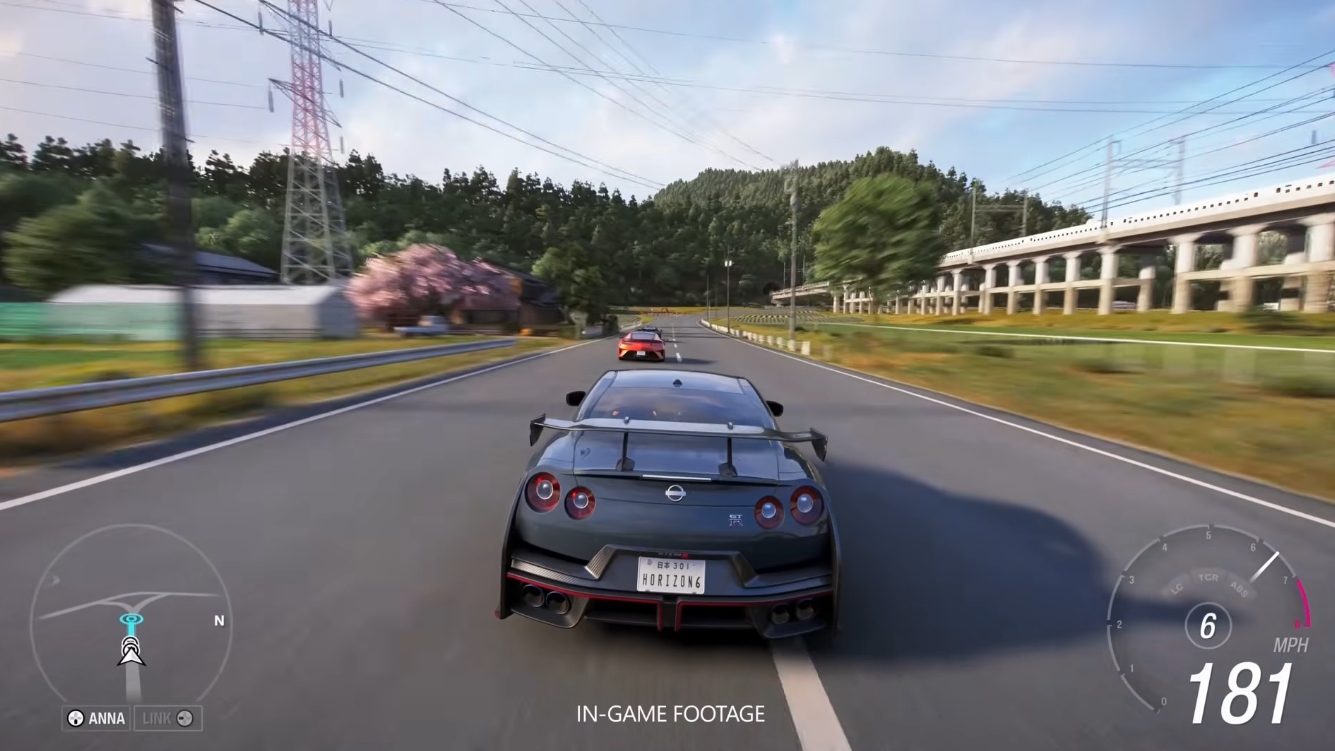
The Collection Journal is the new backbone of progression tracking, logging every car added to your garage, every event entered, and every region of Japan explored. It replaces the more scattered approach of FH5 and gives the game a cleaner sense of forward momentum.
Seasons return and are notably better than in FH5, partly because Japan’s climate actually suits them. The winter snow corridor in the Japanese Alps — impassable without the right car setup, visually stunning — is the kind of seasonal content that feels earned rather than cosmetic.
Valley Estate, Horizon CoLab, and the New Progression System
Valley Estate is one of FH6’s headline additions to the meta-game. It’s a personal residence that players develop over the course of the game — a place to display car collections in customizable garages, host gatherings with other players, and participate in car meets across Japan. The design intent echoes the “base of operations” feeling from earlier Horizon entries, which many players feel was diluted in FH5.
The companion system is Horizon CoLab, which expands the EventLab creative toolkit to allow collaborative event creation. For the game’s creative community, this is a meaningful upgrade.
Progression overall has been redesigned around the Collection Journal, and reviewers consistently note that FH6 better captures the feeling of “starting from the bottom” that defined the early games in the series. You begin as a tourist; you work your way up to Horizon Legend status.
Driving Physics and Audio — How FH6 Feels Behind the Wheel
Forza Horizon 6 remains an arcade racer with moderate simulation depth — that’s a deliberate choice, not a gap. Playground Games isn’t trying to compete with Gran Turismo or Assetto Corsa on simulation fidelity, and FH6 doesn’t pretend otherwise.
The handling model is intuitive but has enough nuance to keep experienced players honest. Touge events and standard races make genuinely different demands: in touge, sloppy driving costs you the race outright; in cross-country events, you can bounce off a few barriers and still take first. Both modes feel valid. Neither feels like filler.
Audio is noticeably better. Engine sounds are more realistic, positional audio has been improved, and the difference is most obvious in tunnels — the confined acoustics come through in a way previous entries never quite nailed. Review flagged the audio redesign as one of the game’s standout technical achievements, and it’s hard to disagree once you’re actually in it.
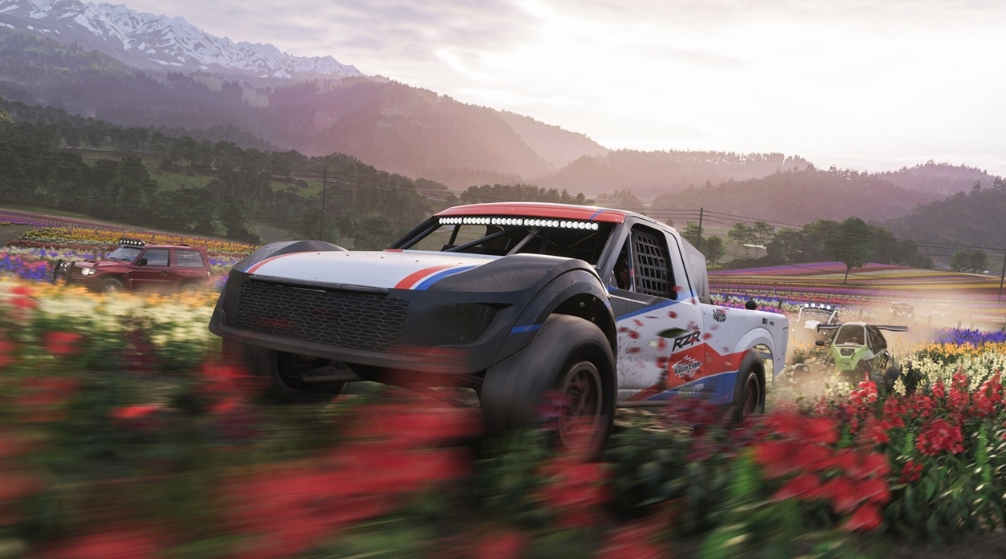
The soundtrack keeps the Horizon tradition of genre-spanning radio stations, with particular attention to Japanese artists given the setting. Worth mentioning because the right song at the right moment in a Forza game is still one of gaming’s underrated pleasures.
One honest disappointment: nighttime Tokyo doesn’t have the neon. Players expecting Akihabara-level visual overload — that sensory saturation you see in every piece of iconic Japanese night photography — will find the city atmospheric but subdued. The streets are there. The visual punch isn’t quite. For a game leaning this hard into Japanese aesthetics, that’s a real missed swing.
In general, free steam accounts are often used just to get familiar with the platform.
Forza Horizon 6 vs Forza Horizon 5 — What Actually Changed
The FH5 comparison is unavoidable. Here’s an honest breakdown:
| Feature | FH5 (Mexico, 2021) | FH6 (Japan, 2026) |
|---|---|---|
| Map size | ~10 miles north-south | ~21 miles north-south |
| Launch car count | ~500 | 550+ |
| New mechanics | Expedition Events, Horizon Arcade | Touge Battles, Treasure Cars, Horizon Rush, Valley Estate, Aftermarket Cars |
| Platforms | Xbox One, Series X/S, PC, PS5 (later) | Xbox Series X/S, PC only (PS5 later) |
| Metacritic score | 92 | 92 |
| Game Pass | Yes | Yes |
| Seasons | Yes | Yes (improved) |
| Last-gen support | Yes (Xbox One) | No |
Dropping Xbox One support was the right call. It’s what allowed the map to nearly double in size, the cities to be more densely detailed, and the terrain to be more topographically complex. The generational ceiling has been removed.
For players still active in FH5, the move to FH6 isn’t “the same game with a new coat of paint.” The map scale, the pace of exploration, and the event design all feel different. The core Horizon DNA is immediately recognizable — but the execution has more room to breathe.
Forza Horizon 6 System Requirements for PC
| System Requirement | Minimum | Recommended |
|---|---|---|
| Operating System | Windows 10 22H2 (64-bit) | Windows 10/11 22H2 (64-bit) |
| Processor | Intel Core i5-8400 or AMD Ryzen 5 1600 | Intel Core i5-12400F or AMD Ryzen 5 5600X |
| Memory | 16 GB RAM | 16 GB RAM |
| Graphics Card | NVIDIA GTX 1650 / AMD RX 6500 XT / Intel Arc A380 | NVIDIA RTX 3060 Ti / AMD RX 6700 XT / Intel Arc A580 |
| DirectX | Version 12 | Version 12 |
| Storage | 167 GB available space | 167 GB available space |
| Internet Connection | Broadband Internet connection | Broadband Internet connection |
| Additional Notes | SSD Required | SSD Required |
When Is Forza Horizon 6 Coming to PS5?
A PS5 version has been officially confirmed, with Microsoft describing it as a “post-launch” release set for later in 2026. No specific date has been announced. The FH5 precedent suggests several months between the Xbox/PC launch and the PS5 version. Players without an Xbox Series console or Game Pass access who want to play now will need to either wait or consider a PC copy via Steam.
Is Forza Horizon 6 Worth Buying? Final Verdict
Forza Horizon 6 didn’t reinvent the wheel. What it did instead is arguably more valuable: it took everything the series has refined over 14 years, put it in the one location fans have been asking for since the beginning, and executed it at the highest level the franchise has reached. The Japan setting isn’t just backdrop — it actively shapes the mechanics (Touge Battles), the car roster’s JDM weighting, the seasonal texture, and the cultural depth of the world.
Touge battles change how you think about driving within Forza. Valley Estate gives you an actual stake in the world. And the map — the verticality of it, the way mountain roads and city streets coexist without feeling forced — is the best open-world canvas this series has ever given you to work with.
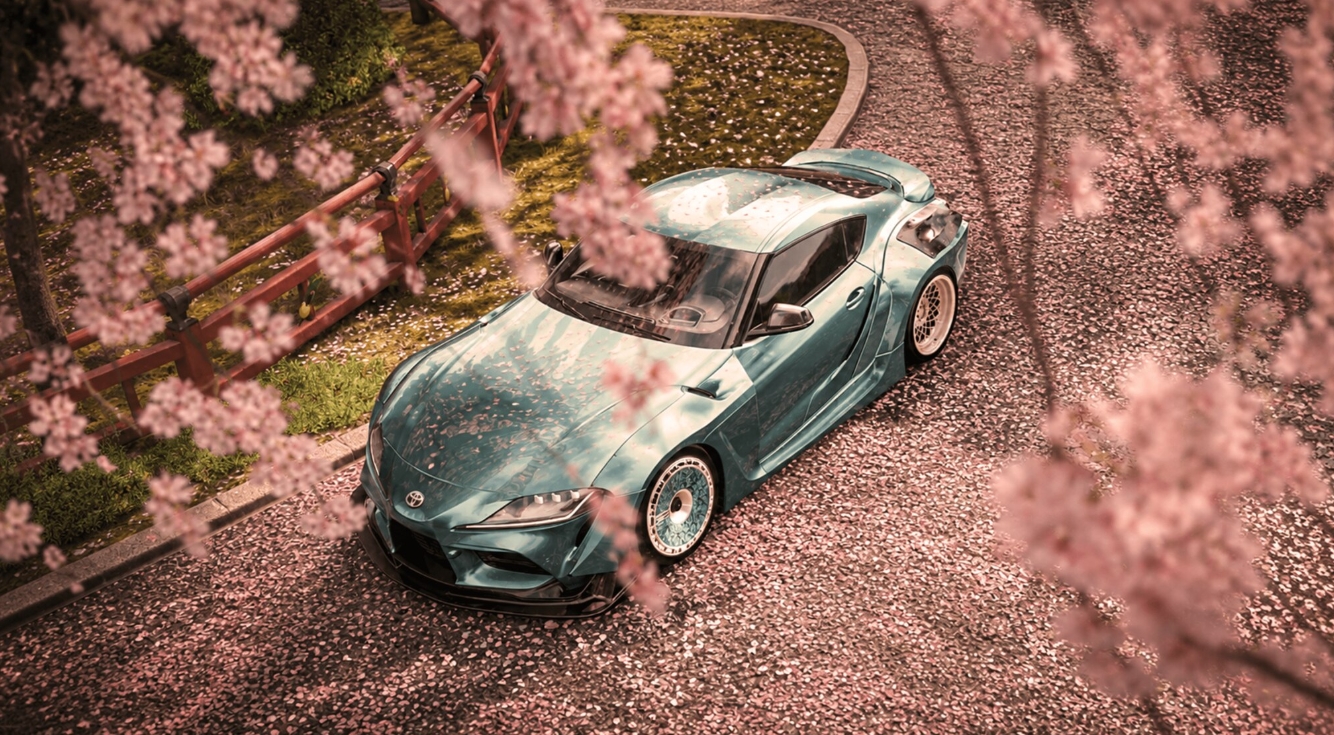
Critics are largely in agreement: open-world racing doesn’t get better than this. Reviewers praised it as the cleanest, most engrossing experience the series has produced, with some calling it an outright masterpiece.
The honest counterpoint: if you’re burned out on the Horizon formula, FH6 won’t fix that. If you want simulation depth, this still isn’t the place. And if the monetization structure — premium early access, Car Pass, DLC packs layered on top — feels increasingly hard to justify, those are fair concerns that don’t disappear.
For everyone else — especially Game Pass subscribers who get in on day one at no extra cost — Forza Horizon 6 is one of the strongest cases for this genre in years.
How to play Forza Horizon 6 for free on Steam via VpeSports
Imagine: you’re sitting behind the wheel, surrounded by picturesque landscapes, and hundreds of horsepower are roaring under the hood. This is exactly the feeling of Forza Horizon 6, a game that has long been more than just racing. It’s a whole world that you want to come back to again and again. And now you can get into it absolutely for free.
We did everything on purpose so that nothing would distract from the main thing — from the game itself. No confusing instructions or setup hours. You register on the website, log into your personal account, and everything is ready. There you will find either a detailed launch guide or a ready-made Steam account. Just a couple of minutes — and you’re already taxiing to the start.
And finally, don’t miss anything interesting. There’s always something going on in our Telegram channel: fresh accounts, patches, news, and live discussions with fellow fans of the game. And if something went wrong or you still have questions, the “How to play for free – the complete guide” section closes most of them, but the chat is always open for you personally.