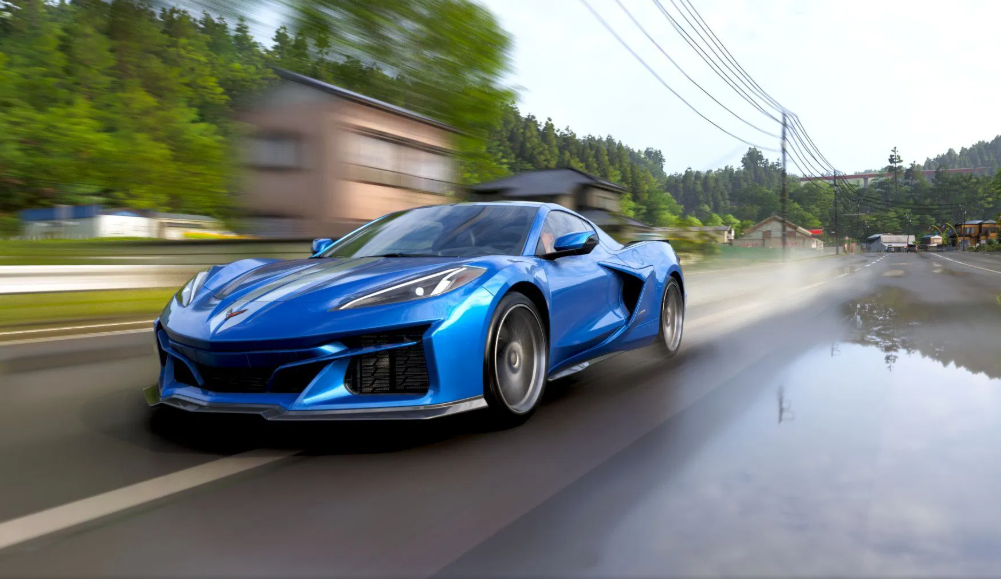
A car in Forza Horizon 6 can fly like a rocket, or it can crawl along – the difference often lies in a couple of settings that most players overlook. Tuning here gives you complete control over the car’s character: from traction to how it handles in corners if you overdo it with the input.
Sound like a manual for mechanics? In reality, it’s simpler. Most changes are subtle, but the effect on the track is colossal. We’ll now go over each option in simple terms, without delving into the intricacies of suspensions and differentials. Learn what each slider does, and choosing a setup will no longer be a lottery.
Table of Contents
Where to find tuning menu in Forza Horizon 6?
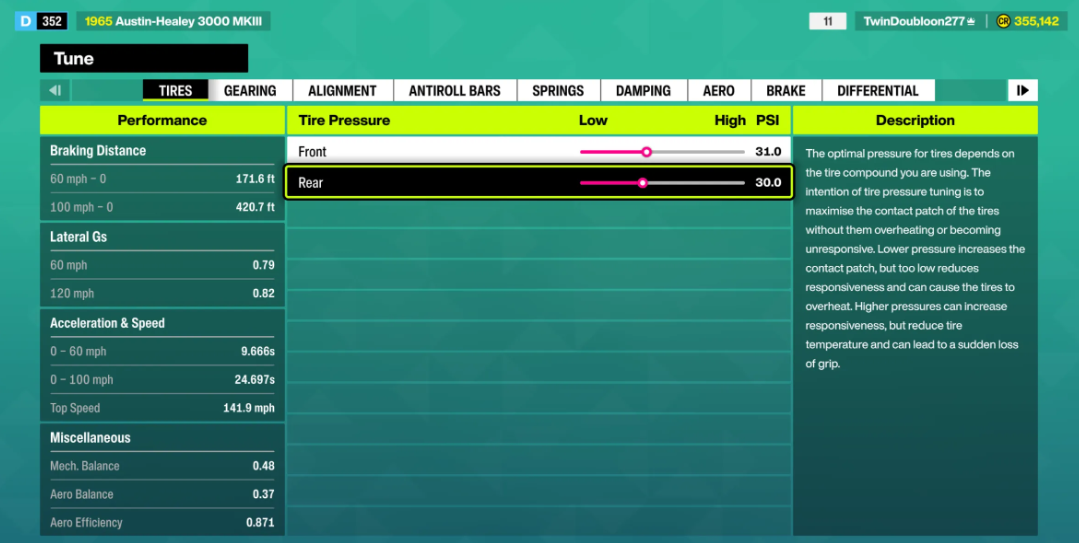
Open the main menu, go to the “Cars” tab, select your car, and click “Tuning Car.” Voila – you have a full range of adjustments: handling, transmission, suspension, brakes, even tire pressure.
Basic Principles and Setup Preparation
The list below is your best friend. It contains all the main tuning parameters, their impact on performance, and specific tips. Don’t try to tackle too much at once—start with tires and suspension, and then delve into complex things like toe angles.
Tire Pressure and Gear Ratio Adjustment
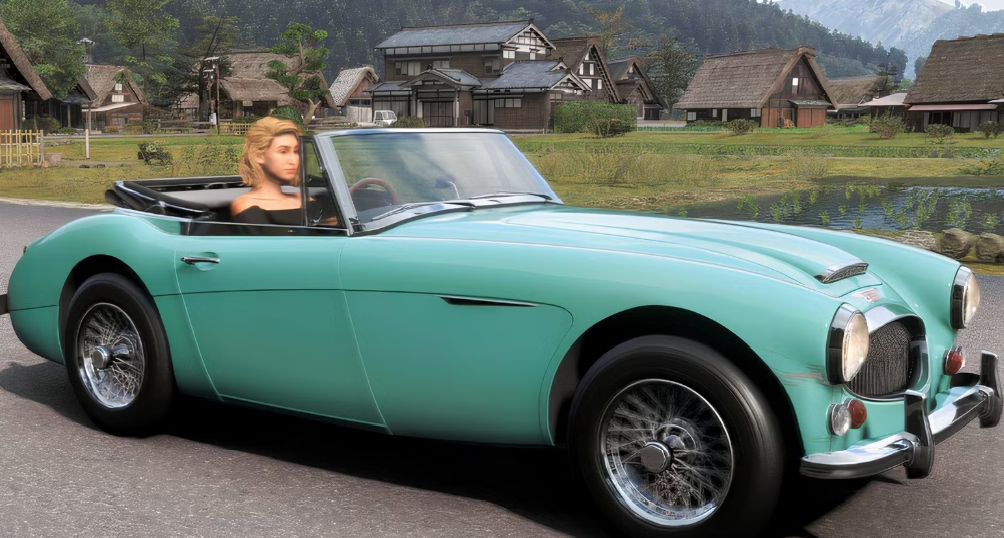
Let’s go step by step. Below are all the key tuning parameters in Forza Horizon 6, without further ado. Just go ahead and tweak them.
-
Tire Pressure
This affects traction. Is the car struggling to corner? Reduce the pressure at the front. Is it sliding excessively? Reduce the pressure at the rear. However, if you increase the pressure, the car will be faster on straight lines, but will start sliding around corners like it’s on ice. It’s a compromise, in short. -
Gear Ratios
This affects acceleration and top speed. Are you quickly hitting the speed limit and can’t go any further? Increase the gears. Slow to accelerate from a standing start? Shorten the camber—it’ll give the car a more agile start.
Wheel Geometry: Camber and Toe in FH6
Here, we help the tires better engage the pavement when cornering. Add a little negative camber—you’ll get better grip in turns. Is the steering wheel stiff? Add a little toe-out to make corner entry quicker. But don’t overdo it: too much camber will ruin handling.
Suspension and anti-roll bar setup for racing
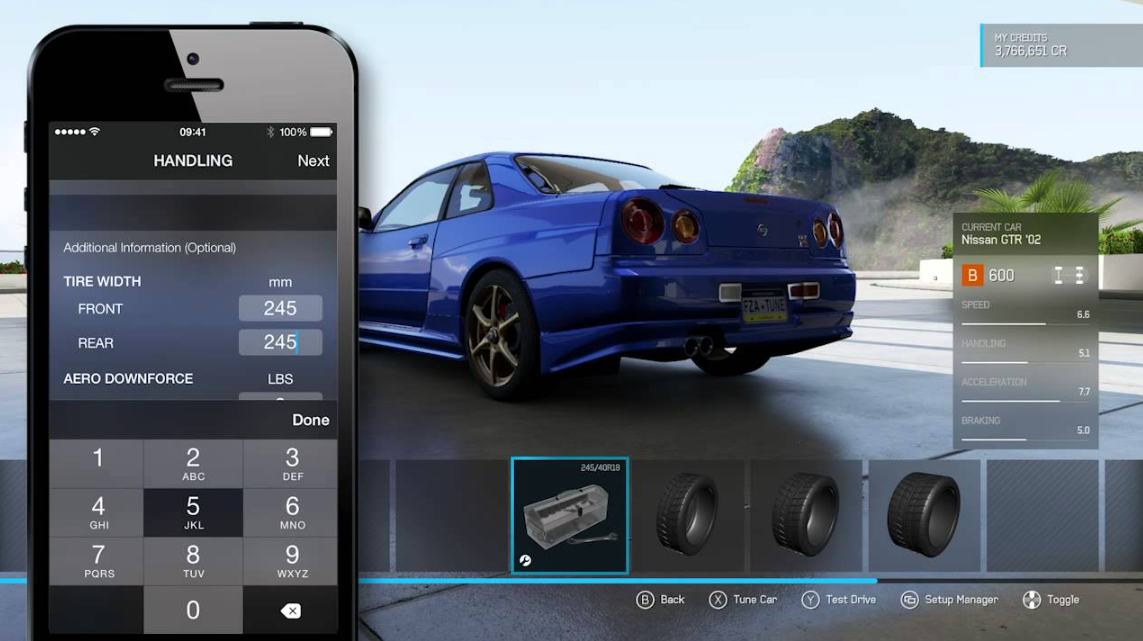
Let’s move on to what dampens roll and pitch.
-
Anti-roll bars
These control how much the car rolls when cornering. Is the car reluctant to turn? Soften the front anti-roll bar or stiffen the rear. If the car is too loose and slides, do the opposite. -
Springs
These determine the suspension stiffness and ground clearance. Is it bouncing like a ball? Stiffen them. Is the ride too harsh, shaking the car over every bump? Soften them. Lowering makes the car faster and more stable, but you may scrape the bottom on rough roads—keep that in mind.
Working with damping and shock absorption
This controls the car’s response to bumps and turns. Does the car continue to bounce after bumps? Increase the damping. Too harsh, shaking? Reduce. Change gradually, otherwise you’ll lose control.
Aerodynamics and Differential Lock
And a couple of settings that make all the difference at high speeds.
-
Aerodynamics
Ground pressure at high speeds. Sliding in fast corners? Increase downforce (especially at the rear). Need more top speed on a straight? Reduce. The rule is: more downforce means more grip, but lower speed. -
Brakes
Control the force of deceleration. Are the wheels locking under braking? Reduce the pressure. Is the car decelerating too sluggishly? Increase it. You can also adjust the brake balance—this helps maintain stability when stopping. -
Differential
Controls how power is transferred to the wheels. Is the car pulling out when you press the gas? Reduce the differential acceleration setting. Unstable when decelerating? Increase the deceleration setting. This really helps control both acceleration and braking.
It’s worth clarifying here: all these values are changed not just for fun, but for specific tracks and your driving style. There’s no single ideal setup—there’s one that suits you. Experiment.
How to Fix Car Handling Problems
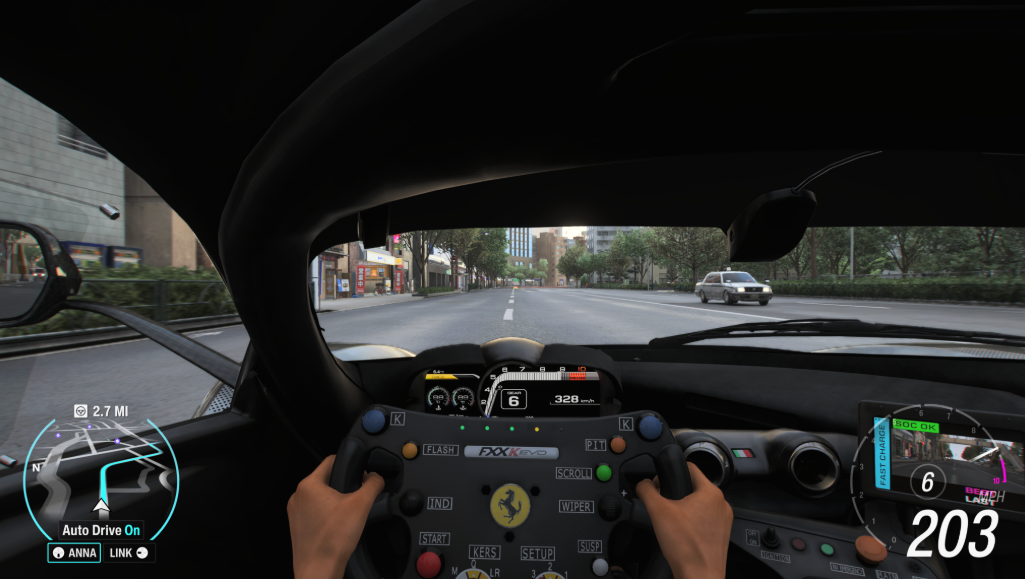
It’s a familiar story: your car is behaving erratically on the track, and in the garage you’re faced with a wall of dozens of non-obvious sliders. The cheat sheet below is designed specifically for such situations (so you don’t have to guess). Spot the symptom, look it up in the list, and you’ll immediately know where to look. In FH6, there’s one golden rule: fix the problematic part. Is the rear end flying off? First, turn the rear axle. If the front end is ploughing past the apex, then you need to address the front.
-
The front end is pulling away on turn-in (understeer). The prime suspects are overinflated front tires or an overly stiff front anti-roll bar. The solution is easy: loosen the front anti-roll bar. Then reduce tire pressure to 28-30 PSI. Still not turning? Then soften the front springs.
-
The rear oversteers the front in a corner (oversteer). This is caused by insufficient rear downforce, soft springs, or an overcompressed stabilizer. First, soften the rear stabilizer. Add downforce to the rear. If there’s no traction, compress the rear springs.
-
Oversteer occurs when the throttle is opened. Excessive rear pressure or an overly open diff. Boldly increase the differential boost (optimally, keep it at 65-75%). At the same time, release pressure from the rear tires.
-
Front understeer during acceleration (relevant for FWD/AWD). Soft front rebound or excessive diff boost. Reduce the differential boost. Increase the rebound damping on the front shocks.
-
The car wobbles and bounces for a long time after bumps. Dampers are critically soft. First, increase the rebound damping. Then carefully adjust the compression damping. Change only one parameter at a time!
-
Wobbling on straights at high speed. Caster has dropped below 6.0°, soft rebound damping, or a simple lack of downforce. Increase the overall downforce on both axles. Stiffen the rebound damping. Set the caster within a safe range of 6.0–7.0°.
-
Wheel locking when braking. Brake pressure is too high. Reduce the overall brake pressure. Slightly shift the balance forward to 51–52%.
-
Oversteer under hard deceleration. Soft rear shocks or the balance has shifted too far back. Adjust the brake balance to 48–50%. Raise the rebound damping on the rear axle.
-
Drifting off-track. Soft rear anti-roll bar or lack of differential acceleration. Raise differential acceleration. Clamp the rear anti-roll bar. A caster angle of 6.0–7.0° will provide the desired stability.
-
Sluggish start or early acceleration to top speed. Incorrectly selected gear ratios. Shorten final drive for a quick start. Stretch it out for maximum speed. This is your main gearbox adjustment lever.
And a couple of critical nuances (which many guidebookers conveniently forget). First, toe-in (also known as toe-in) in the FH6 is extremely unpredictable. Noticed chassis instability? Don’t even think about touching toe-in first. Start fiddling with the anti-roll bars or differential—at least their logic is clear. The second point concerns the springs. The in-game values here are significantly higher than in real-life prototypes. Forget about absolute numbers. You need to look exclusively at the balance of front-to-rear stiffness.