

Sometimes it seems that the genre of urban planning strategies has already said everything it could. Classics like Caesar III set the bar back in the late 90s, and modern projects either go into a complex economy or turn into visual sandboxes without depth. Citadelum is trying to take an intermediate position — to bring back the spirit of the “old school”, but at the same time not to look archaic.
And, surprisingly, he almost succeeds.
After several dozen hours in the game, it feels like you’re not just looking at another Caesar clone, but a neatly reinterpreted formula where familiar elements are combined with unexpected solutions — especially in terms of mythology and interaction with the gods.
Table of Contents
First impression: graphics, atmosphere and soundtrack
When launching Citadelum for the first time, I expected something strictly functional: clear textures, a clean interface, but without any special visual revelations. However, even in the first minutes, the game surprises with its attention to detail.
The city here is not just a collection of buildings — it lives. The narrow streets are gradually filling up with residents, the markets are bustling, and the roads are lined with neat rows of houses that evolve over time into richer neighborhoods.
Light and shadows play an important role: in the morning, the city looks calm and measured, and in the evening it becomes almost theatrical — especially when torches and lanterns are lit.
The music doesn’t come to the fore, but it perfectly complements what is happening. It creates a sense of grandeur and tranquility without overloading the player. At some point, you catch yourself thinking that you’re just watching the city without speeding up time — a rare feeling for strategists.
Why does the Citadelum Look like a Caesar III Fan’s Dream
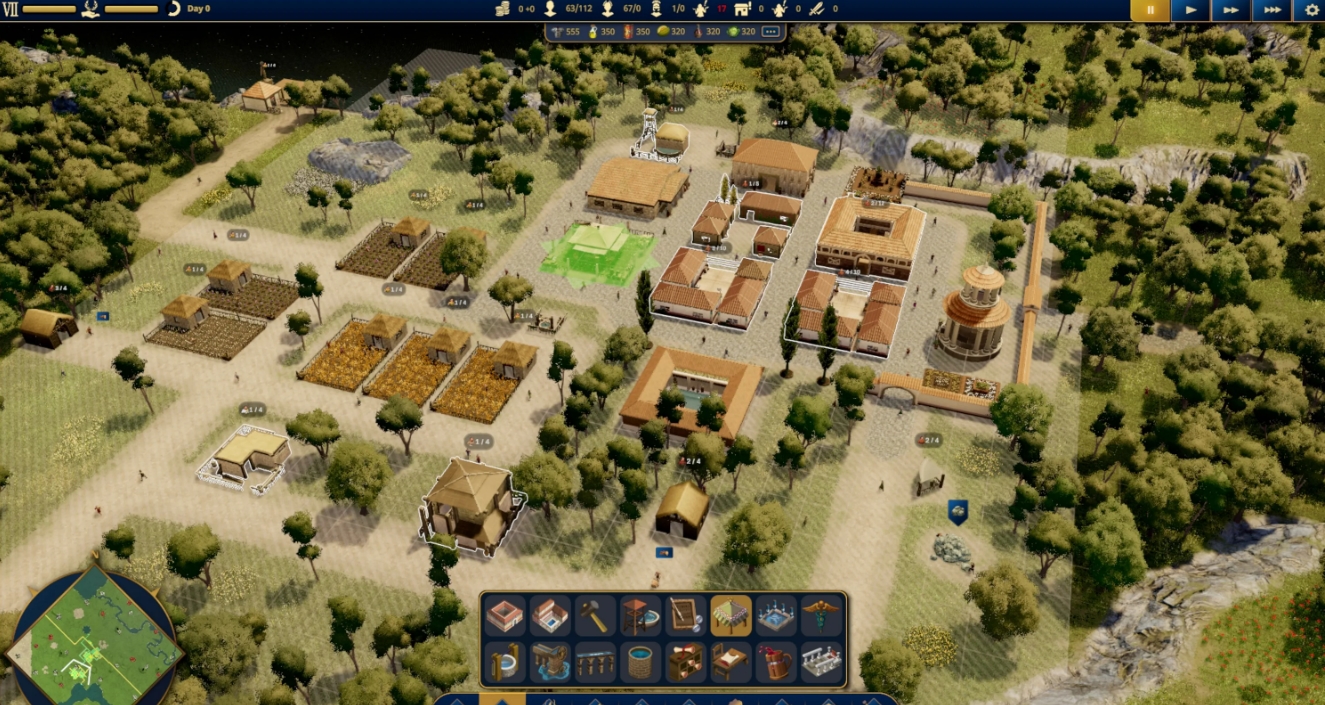
If you’ve ever spent hours in Caesar III, the Citadelum evokes an almost nostalgic reaction. But this is not a copy — it is rather an “alternative version” where the familiar formula has received a new breath.
What is especially catchy:
-
organic building without the feeling of a grid
-
visual evolution of houses depending on the standard of living
-
live NPCs who don’t just “walk the route”, but create a sense of society.
-
attention to detail — from statues to temples and decorative elements
This is a rare case when developers clearly understand why people loved old games — and don’t try to break it.
Basic Mechanics: How to Build a Prosperous Roman City
The beautiful exterior hides a rather strict and demanding city management system. Citadelum is not about a relaxed build — it’s easy to lose control here if you don’t take into account the basic needs of the population.
The city does not develop linearly, but through a balance of resources, infrastructure, and social strata.
Economy, production chains, and the Plebeian-patrician system
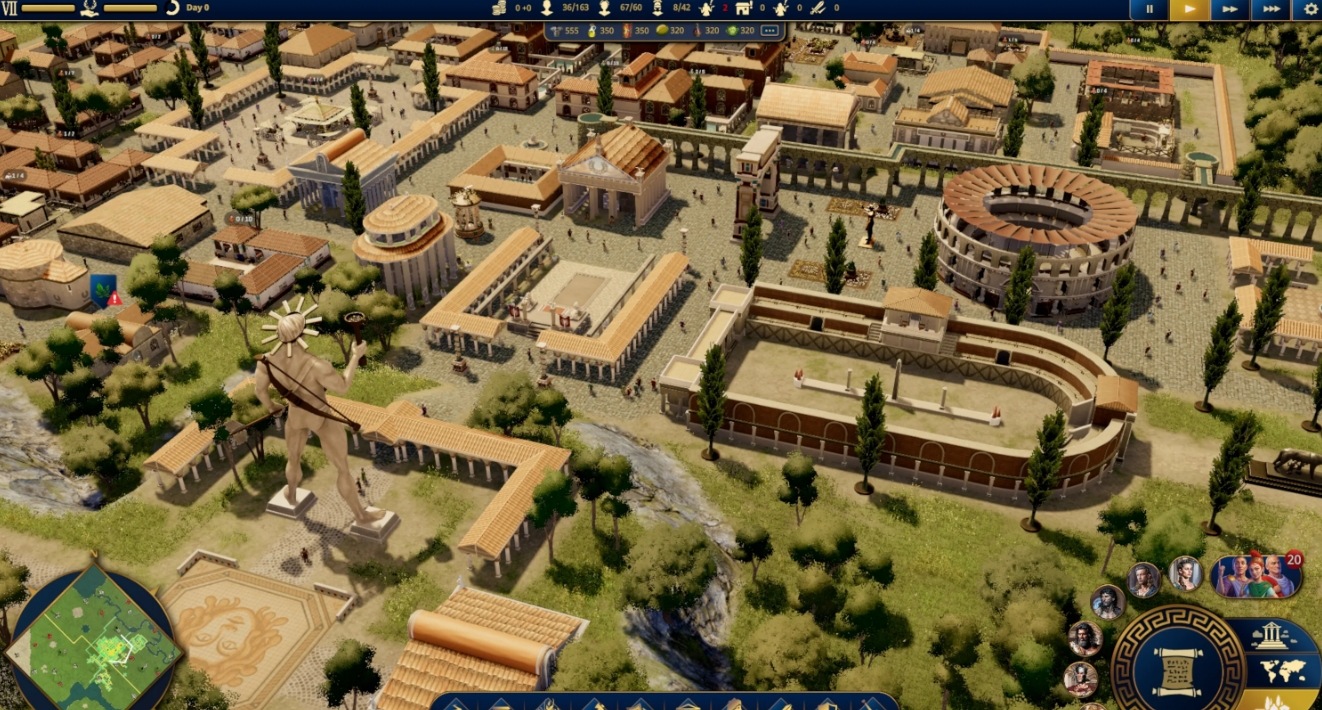
Economics is the heart of the game. And it doesn’t work according to the “built and forgotten” principle.
It’s important here:
-
build logistics between production and markets
-
make sure that resources are not idle.
-
consider the needs of different segments of the population
The plebeians are the backbone of the city. They provide the workforce and the basic economy. But without the patricians, it is impossible to reach a higher level of development.
And that’s where the fun begins:
the patricians demand more—food, entertainment, infrastructure. They are moody, but they are the ones who move the city forward.
This creates constant tension: you want to develop quickly, but if you jump over your head, the economy can collapse in just a few minutes.
Aqueducts, sanitation and the happiness of the inhabitants — there is nowhere without it
One of the strengths of Citadelum is its attention to “invisible” systems.
Water, sanitation, access to baths — all this directly affects the development of the city. You can’t ignore such things, even if at first glance it seems that everything is working.
The city may look prosperous, but just one problem with the water supply is enough — and a chain reaction begins:
-
The level of happiness is falling
-
Houses stop developing
-
Residents are starting to leave the areas
-
The economy is sagging
It adds depth: You don’t just build buildings, you manage a system where everything is interconnected.
Gods and mythology are the main highlight of the Citadelum
That’s where the game really takes a step forward from the classics.
The gods in the Citadelum are not just a decorative element. This is an active part of the gameplay, which can both help and destroy everything that you built.
Each deity has its own influence. If you ignore it, you get problems. If you’re satisfied, you get bonuses.
But the main thing is the feeling that you really are in a world where mythology is part of reality.
Sometimes events occur that cannot be explained by the logic of economics. And it works for the atmosphere: the game becomes less “dry” and more lively.
Battles, expansion, and a strategic world map
Citadelum is not limited to building a city. At some point, it becomes clear that you will not be able to sit still.
There is an external map where conflicts, expansion and the struggle for resources are unfolding.
The military system is not overloaded with microcontrol, but it requires attention. You can’t just ignore the threats, otherwise the consequences will be tangible.
It’s especially interesting how the game connects economics and warfare:
The stronger the city, the more opportunities there are for expansion. But any war is a strain on resources.
This creates a dilemma:
develop peacefully or take risks for the sake of accelerated growth.
Game modes and content in 2026
At the moment of 2026, Citadelum offers enough diverse content not to get bored after a couple of sessions.
Campaign, Sandbox and DLC (Britain, Punic Wars)
A campaign is not just a set of missions. This is a gradual introduction to mechanics, where each new task complicates the usual formula.
The sandbox gives you freedom, but that’s where you can best see how well the balance of the game works.
The additions add new scenarios and context:
-
Britain — harsh conditions and limited resources
-
Punic Wars — Focus on conflict and strategy
-
New mechanics related to politics and territorial management
There is enough content to keep coming back to the game over and over again — especially if you like to experiment with different strategies.
Sometimes it’s easier to start with free steam accounts, especially if you just want to explore different genres.
Citadelum System Requirements for PC
If you’re planning to dive into Citadelum, the good news is that the game doesn’t demand ultra-modern hardware to run smoothly. Even with a relatively modest setup — like an older Intel i5 or AMD FX processor paired with a GTX 1050 — you’ll be able to explore its world without major issues. That makes it quite accessible for players who haven’t upgraded their PCs in a while.
At the same time, if you want a more stable and visually polished experience, especially during larger scenes or more demanding moments, the recommended specs offer a noticeable step up. A stronger CPU like the i7-4770 and a GTX 1660 will give you smoother performance and better overall responsiveness.
What stands out is the balanced optimization: Citadelum doesn’t try to push your system to the limit, but it still benefits from better hardware if you have it. In other words, it’s easy to get into — but also scales nicely if you’re aiming for a more comfortable and smooth gameplay.
| Specifications | Minimum | Recommended |
|---|---|---|
| Operating System | Windows 7 (64-bit) | Windows 10 (64-bit) |
| Processor | Intel Core i5-2300 / AMD FX-4300 | Intel Core i7-4770 / AMD FX-8350 |
| Memory | 16 GB RAM | 16 GB RAM |
| Graphics | NVIDIA GeForce GTX 1050 or equivalent | NVIDIA GeForce GTX 1660 (6 GB) or equivalent |
| DirectX | Version 11 | Version 12 |
| Storage | 8 GB available space | 8 GB available space |
The pros and cons of Citadelum — an honest analysis
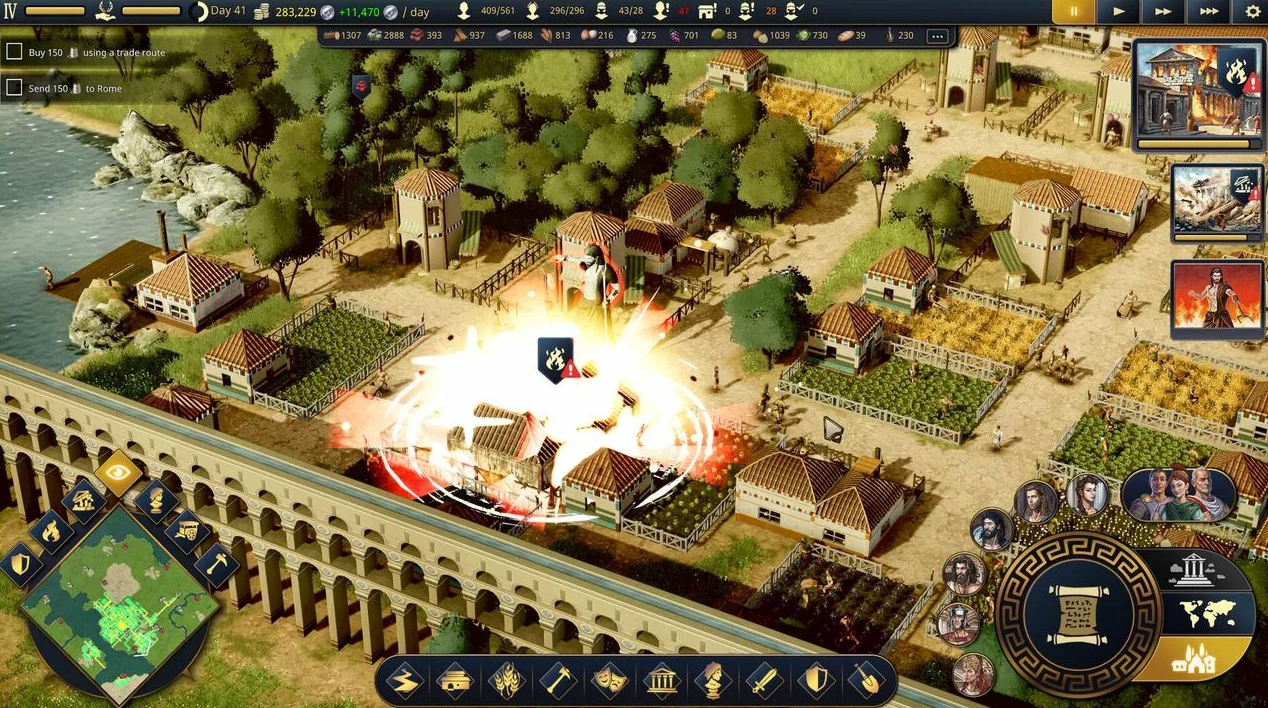
After playing for a long time, it becomes easier to separate the impressions from the actual assessment.
What turned out particularly well:
-
atmospheric and lively visual part
-
A deep but understandable economy
-
An interesting system of gods
-
The balance between construction and strategy
Where the game still stumbles:
-
Sometimes there is not enough transparency mechanic
-
Residents’ AI may behave strangely
-
The warhead feels simpler than it could
-
The interface is overloaded in some places
These are not critical problems, but they are noticeable — especially if you are used to the most polished strategies.
Citadelum or Caesar III, Anno, Builders of Greece — what to choose in 2026?
It is inevitable to compare Citadelum with the classics. But it’s important to understand: this is not a direct replacement, but rather an alternative view of the genre.
In short:
-
Caesar III — pure classics and nostalgia
-
Anno is a complex economy and scale
-
Builders of Greece — a more “academic” approach
-
Citadelum — a balance of atmosphere, mythology and strategy
Citadelum benefits from the mood. It’s not as complicated as Anno, but it’s also not as simple as it might seem at first glance.
This is a game that you want to “dive into” rather than just optimize the numbers.
Is it worth playing Citadelum in 2026 — summary and verdict
Citadelum is not a revolution, but a very competent evolution of the genre.
He doesn’t try to surprise with complexity for the sake of complexity. Instead, it offers a seamless experience: a city that lives; an economy that requires attention; a world in which logic and mythology have a place.
This is a game about the process. It’s about how a city gradually grows out of an empty piece of land — with its own problems, successes and unexpected crises.
If you like urban planning strategies — especially those with a focus on atmosphere and “manual” management — Citadelum is definitely worth your time.
But if you are looking for the deepest possible simulator with perfect optimization of all systems, it may be worth waiting for patches or future updates.
In any case, Citadelum is one of the most interesting representatives of the genre in recent years. And, perhaps, one of the few who really understands why we still remember Caesar III.
How to play Citadelum for free on Steam via VpeSports
Sometimes you catch yourself thinking that you don’t just want to “play”, but disappear from reality for a while and end up somewhere else – calmer, slower, but much deeper. Citadelum gives exactly this feeling. You don’t rush into the world with loud explosions or endless battles, but as if you are gradually getting used to it. At first, you just watch the empty land begin to come to life, then you notice the details — how buildings grow, how people appear, how everything begins to work as a single organism. And at some point you realize: It’s not just a game anymore, it’s your little world that you create yourself.
The best part is that you don’t have to go through the usual headache of installing and searching for the right files. Everything has already been done for you so that you can get straight to the fun part. You register on the website, log in to your account, and return to the beginning of the article, where there is a GET AN ACCOUNT button. You click, follow the simple steps, and you’re already inside, without unnecessary difficulties and wasting time.
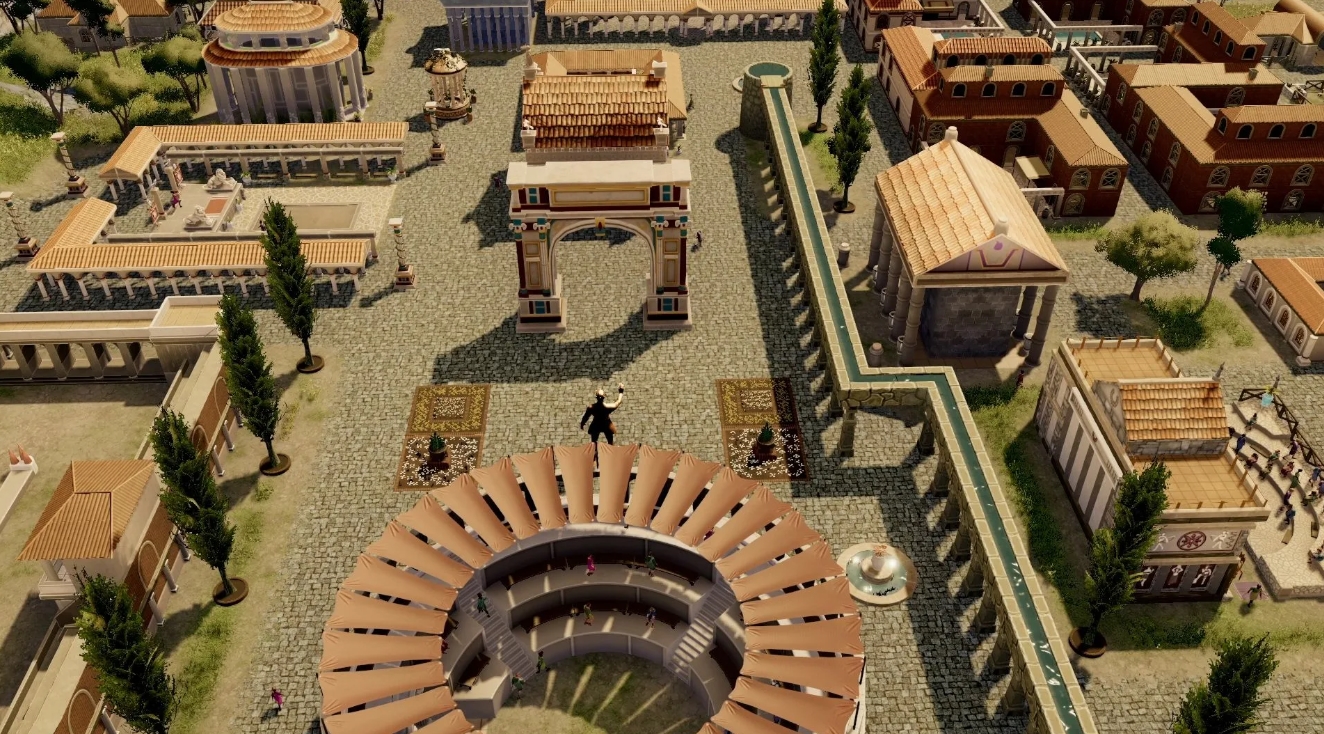
And then everything depends on you: if you want, you build the perfect city, if you want, you experiment and see what happens. And this is exactly the case when the process is more important than the result.
If you want to keep up to date and not miss new giveaways or updates, it’s better to subscribe to our Telegram channel. Everything appears there faster than anywhere else: new accounts, fresh patches, discussions, sometimes even just live communication without too much pathos. And if something goes wrong, don’t worry, you’re not alone. There is a detailed guide, there is a chat where you can always ask a question and get a normal human answer, not a dry instruction.