

The release of Beholder: Conductor was a real surprise. After the controversial third part, many had already written off the series, deciding that it had finally lost its magic. It was even more unexpected to see the first responses from players – they say that the spin-off brings back that very atmosphere and revives the legend. But is everything really as good as they write?
Table of Contents
Beholder: Conductor Free Steam Account
The Beholder series has lived a rather typical fate for independent games. The first release, released in 2016, was a real breakthrough. It was developed by our guys from Warm Lamp Games, a studio from Barnaul, previously associated with Alawar. The game immediately caught the attention of its concept: you are a building manager in a gloomy dystopia, where you are expected to not only fix light bulbs, but also install hidden cameras, inform on residents, collect dirt and, if you want, blackmail people. And if your conscience is not locked, you can always become a secret assistant to the opposition and try to somehow resist the system.
Yes, references to Papers, Please and George Orwell’s “1984” were obvious, but Beholder had its own soul and its own atmosphere. Despite its controversial moments — too strict timings, no free save, and not always smooth texts — the game stood out thanks to its lively characters, freedom of choice, and multiple forks in the plot. It is not surprising that the project collected a bunch of awards with phrases like “best indie game.” Later, a short film was even made based on the game — and by the same people who worked on the film based on Papers, Please.
The second part appeared two years later — and again from Warm Lamp Games. This time, everything took place in the same dark universe, but now the player had to transform into an employee of the Ministry. He could not only consider requests and applications, but also build a career, rising higher and higher, all the way to the very top of power. Moreover, the methods were at your choice: step on heads or try not to betray the remnants of humanity.
Beholder 2 became much more variable, with a new time system, which now represented a valuable resource. But along with this, there was also more routine – to move forward, you had to complete the same tasks over and over again. But the third part, which came out two years later, was a complete failure. I wrote it in the review back then – “the tyranny of boredom and routine.” It was no longer made by Warm Lamp Games, but by the German studio Paintbucket Games, and that special atmosphere simply evaporated.
Never be bored again with a free steam account with games!
Beholder: Conductor – Plot, Mechanics, and Player Choice Overview
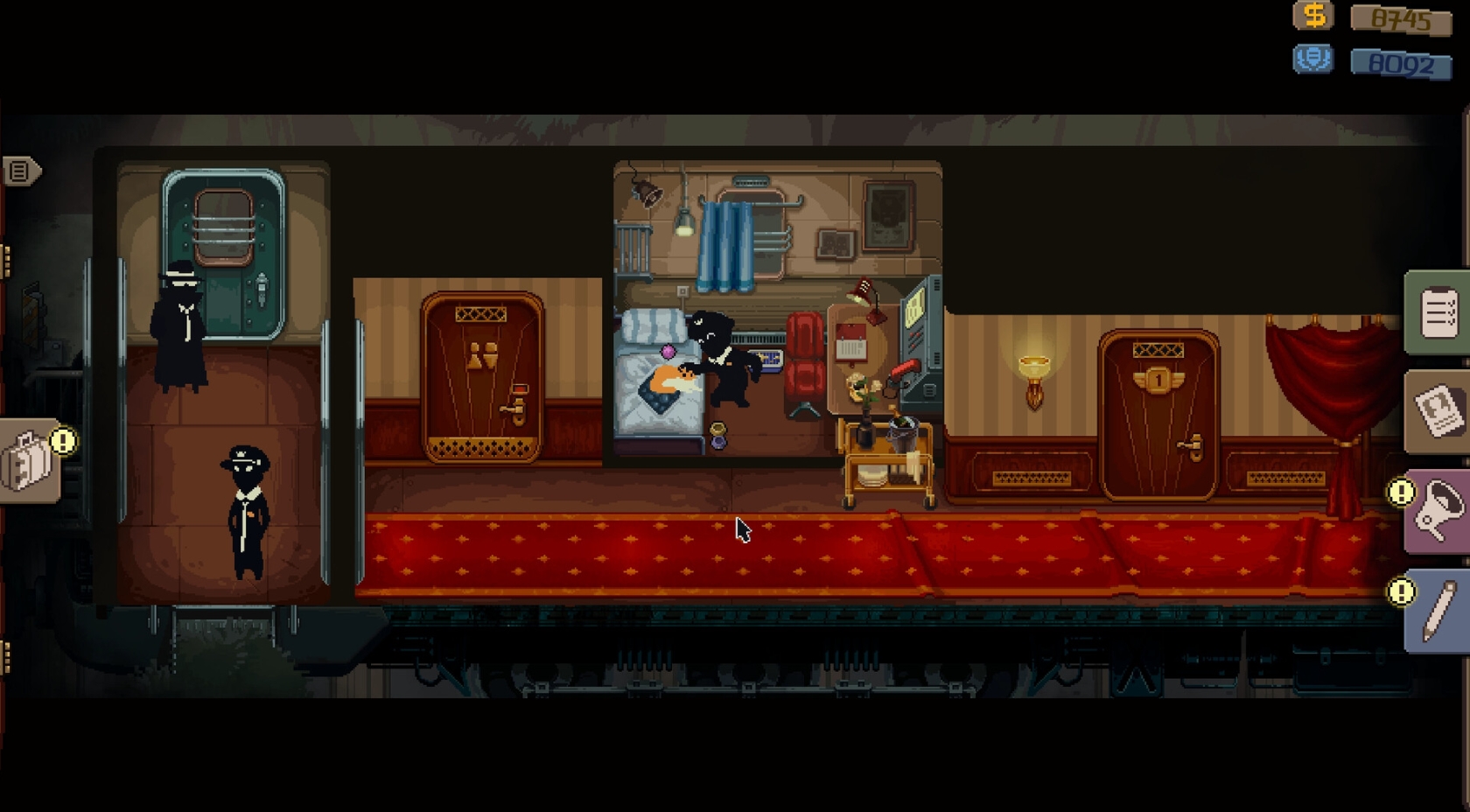
After the controversial third part, many had already managed to mentally bury the Beholder series. But in 2024, Warm Lamp Games unexpectedly released Beholder: Conductor, and it was a real surprise. And a pleasant surprise: the new part is much closer in spirit to the original dilogy than to the third game. It looks and feels like a return to the roots – but not without fresh ideas and original finds. This time, the developers have radically changed the visual style: instead of the usual “paper” 3D, we are greeted by pixel graphics. And, it must be admitted, it only benefited the game – a gloomy atmosphere, laconic forms, muted colors and a slightly retro entourage create a very coherent and expressive picture. The familiar interface looks especially good – it seems to have been pulled out of the first part and slightly modernized.
The plot still takes place in a fictional totalitarian state, where the personality of a person is not worth a penny. We find ourselves again in the city of Helmer – the capital of oppression and endless absurd decrees. But now we are not a house manager or a clerk. Now you are a conductor of a long-distance train. The main character has a tragedy: he believes that he has lost his family, who died under mysterious circumstances. His life is going downhill … until one day a certain group contacts him. Who are they – blackmailers? Oppositionists? Or maybe both at the same time. They need him to help them secretly transport people and objects. In return, they promise the impossible – to help reunite with the family, who, according to them, may be alive. And now you are faced with a moral choice: to take a risk, get involved in the game and carry illegal parcels and papers through the train cars – or immediately inform the guards and curry favor. As before, Beholder does not give clear answers. Here, every step can turn into disaster – or give a chance for salvation. The main thing is to understand who you want to be: a quiet traitor or an imaginary hero.
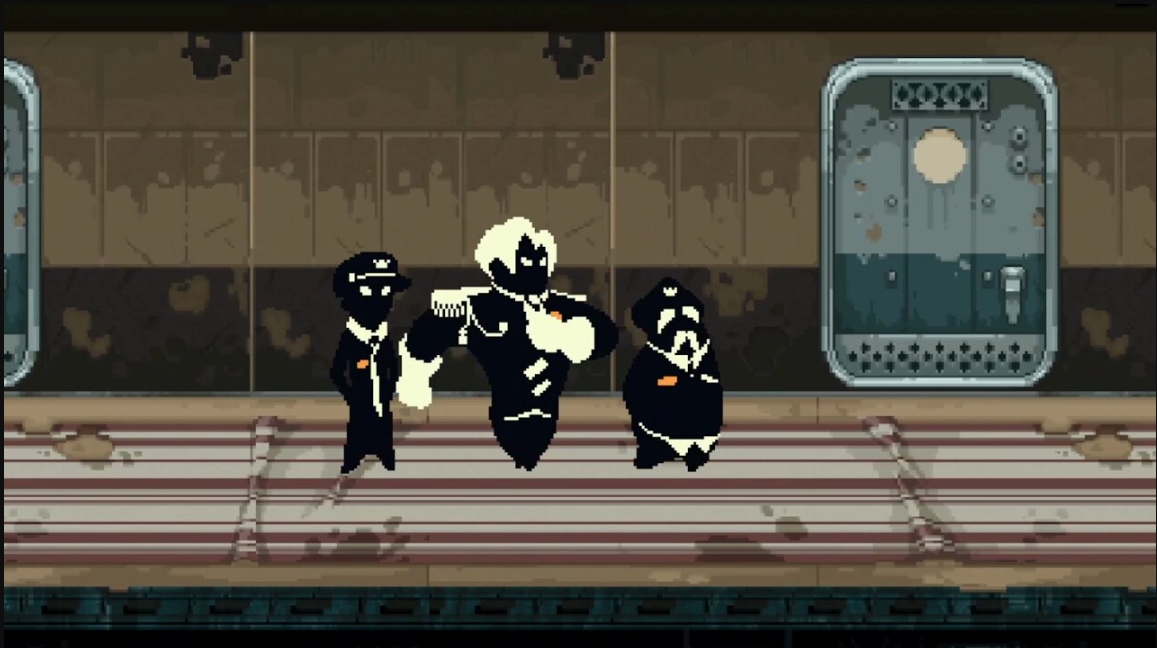
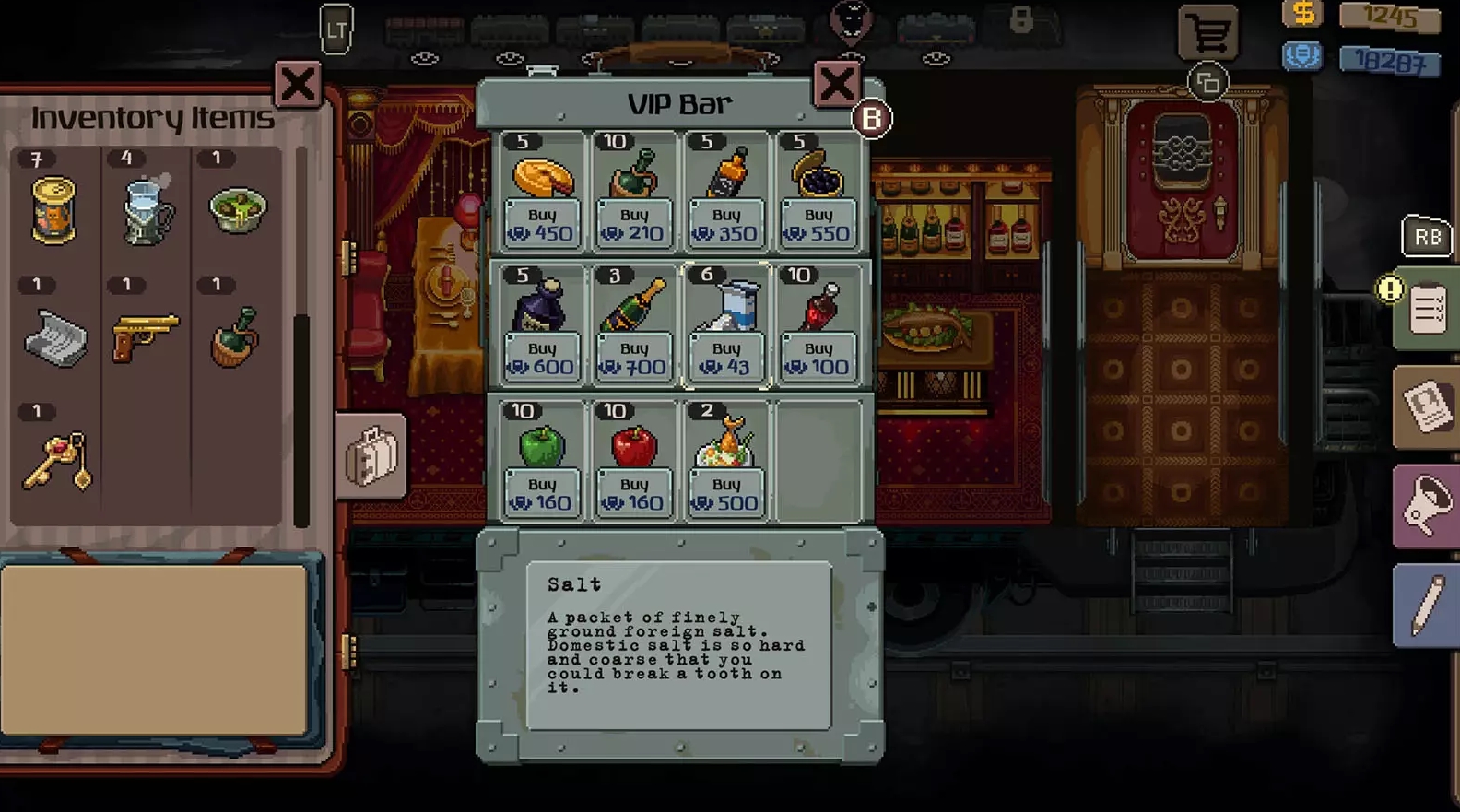
The job of a conductor is not that simple. Checking tickets is your routine: you need to check the name, surname, compartment number and routes. Every mistake is a fine. But it doesn’t stop there. You can follow passengers, check their belongings, look for illegal items – and choose what to do with them. Smuggling? Hand it over – get authority. Or sell it – get money. Or you can even extort – who knows what you found in your suitcase. Meanwhile, the state continues to churn out increasingly absurd bans: jeans are banned, then soda, then Western music, and sometimes even displays of emotion. At one point, a decree is issued banning… crying. Any little thing is a reason to denounce. And therefore, for career advancement. Only now, instead of floors, as in the second part, you go up the train – from cheap cars to luxury cars.
You compile dossiers again, write reports, attach evidence. Sometimes – just because you can. Sometimes – because you have to. But always with consequences. Denunciations lead to arrest, and along with the passenger, the side quests, lines and events associated with him disappear. Make a mistake – you lose an important piece of the story. Be late – and the plot goes in a completely different direction. You can play fair, you can be hypocritical, you can try to blackmail and benefit. But whoever you are – you will not come out clean. This system will stain even those who came with good intentions.
The game, like the first part, works on strict time frames. Each task, each important step has clear deadlines. If you didn’t manage to earn 20 thousand authority points in a week, now you have to collect 15 thousand in cash. And this is a completely different level of pressure: you will have to steal, blackmail, sell evidence and walk over heads. It’s too late to start feeling sorry. This system does not forgive the weak.
How to Make Tough Decisions in Beholder: Conductor
But in key quests and plot twists, no one rushes you — you can think calmly before making a difficult decision. Should you let a woman go who created a whole drama to run away with her criminal husband? Or should you detain her? Should you allow a young stowaway to reach his destination or throw him off the train? Should you help a colleague buy drugs — and if so, what should you choose: a cheap domestic product or an expensive imported drug?
This is only a small part of the moral choices that the player faces. For example, if you decide to shelter a kitten, be prepared for the fact that the train conductor will soon find out about it. And he will give you a deadline — to get rid of the animal. Will you cope? Or will you still leave the fluffy one at the nearest station? Beholder: Conductor generously sprinkles such situations. Almost every episode tests your moral bar. And the longer you play, the more you understand — this is not just the hero’s story, it is your story. You decide whether to help a stranger with tears in your eyes or abandon her to her fate. You decide what is more important – money or conscience.
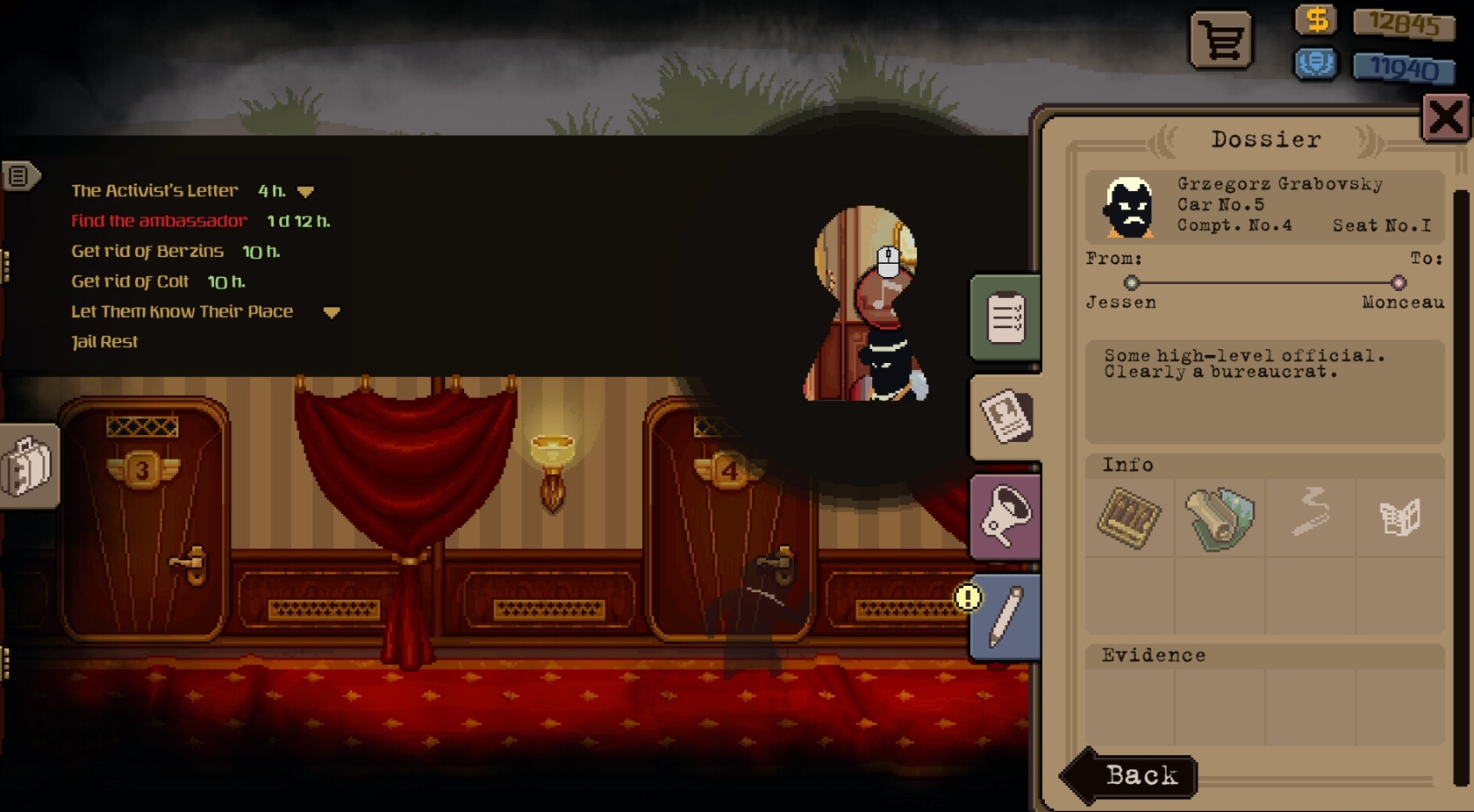
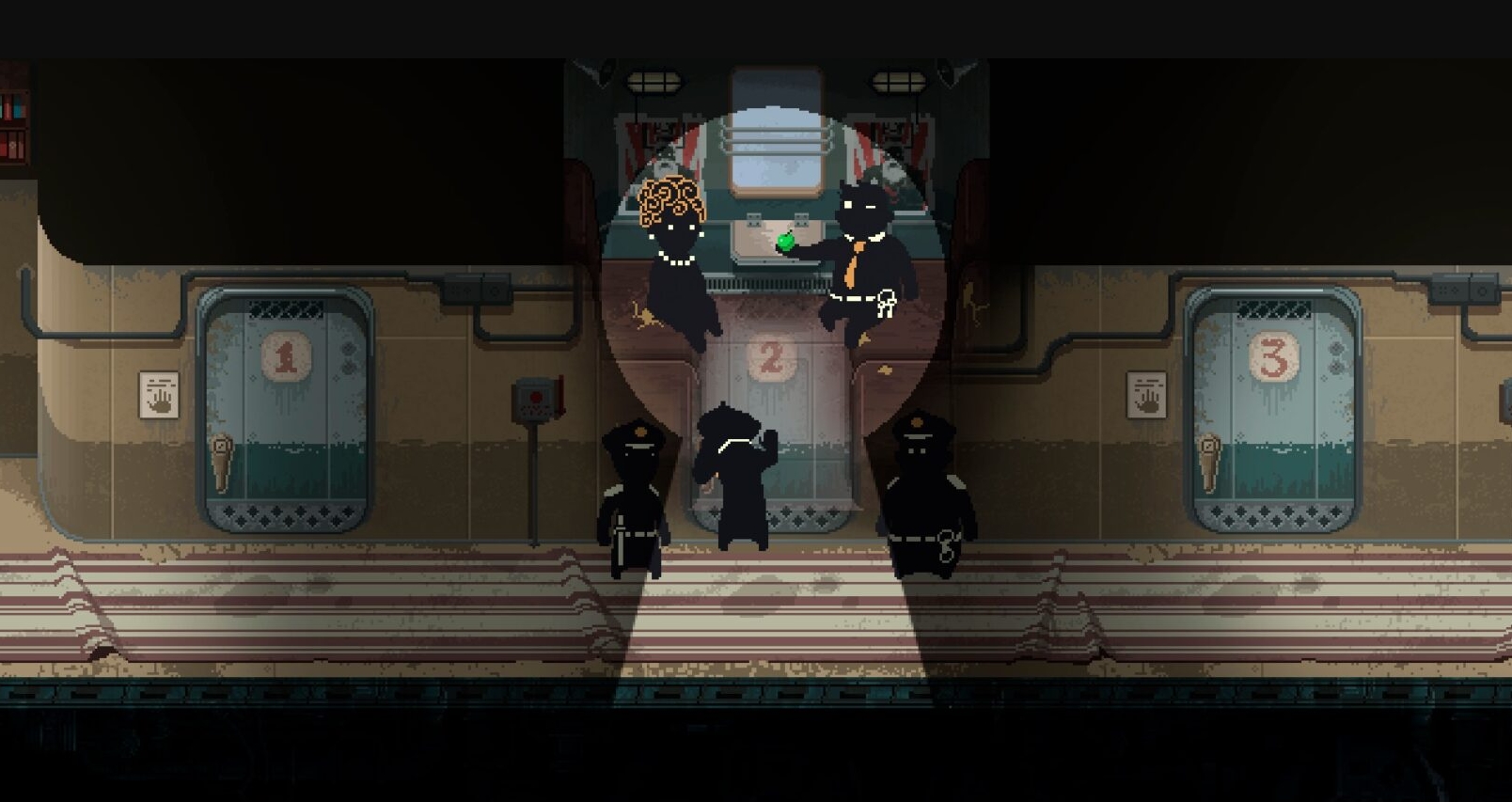
And the hardest choices are not those where everything is obvious. The real dilemmas come later: here is a train car with “golden youth” – impudent, rich, without tickets, demanding drugs, alcohol and entertainment. Hand them over to the guards? Or fulfill their wishes, having received decent money and connections with high-ranking people? They threaten – their parents are in power. Or maybe it is worth the risk?
And what about the opposition? If you immediately rat on the smugglers, you can quickly settle a bunch of problems. But what if along with this the chance to get to the truth about your own family disappears? It’s not that simple, and in this sense Conductor seems to inherit the spirit of the first Beholder – with its multi-level morality and chains of consequences. You want to play the game again and again: to see what will happen if you choose a different path. Or take a look at the walkthrough – maybe the “correct” option was somewhere nearby? But the main thing is that you want to play here. Because every decision leaves a trace. And you really want to know where it all leads.
What Went Wrong in the Second Half of Beholder: Conductor
The main problem is that all the most interesting things are concentrated in the first half of the game. That’s when you feel the excitement: you need to earn enough money and gain authority to move to the next car. Everything is alive here: dynamics, tension, elections. You even need to run to the calling boss on time – as if the game is testing your endurance. And how much stress a new batch of passengers causes – check documents, make beds, respond to requests like “bring chess” or “find a battery” while the timer is ticking. All this keeps you in constant tension and does not allow you to relax for a minute.
But as soon as you achieve a promotion – it’s as if a completely different game is turned on. Interesting situations suddenly come to naught, and instead of dramatic forks in the road, there is a dull wait, which the developers only allow you to speed up by turning on the time skip. The narrative begins to fail: the scriptwriters, it seems, simply did not know what to do with the player. And now, by chance, a certain key that you had long forgotten is returned to your hands – and, lo and behold, it suddenly becomes the most important item in the entire story. The plot literally rests on such strained assumptions.
To be honest and without embellishment, it feels like the game simply wasn’t finished yet. The contrast between the intense beginning and the dull second half is too striking. And although the project as a whole turned out to be far from bad, it can’t yet be called a full-fledged successor to the first part – it is too uneven to leave the same strong impression.
Beholder: Conductor – is it worth playing the sequel to the cult series?
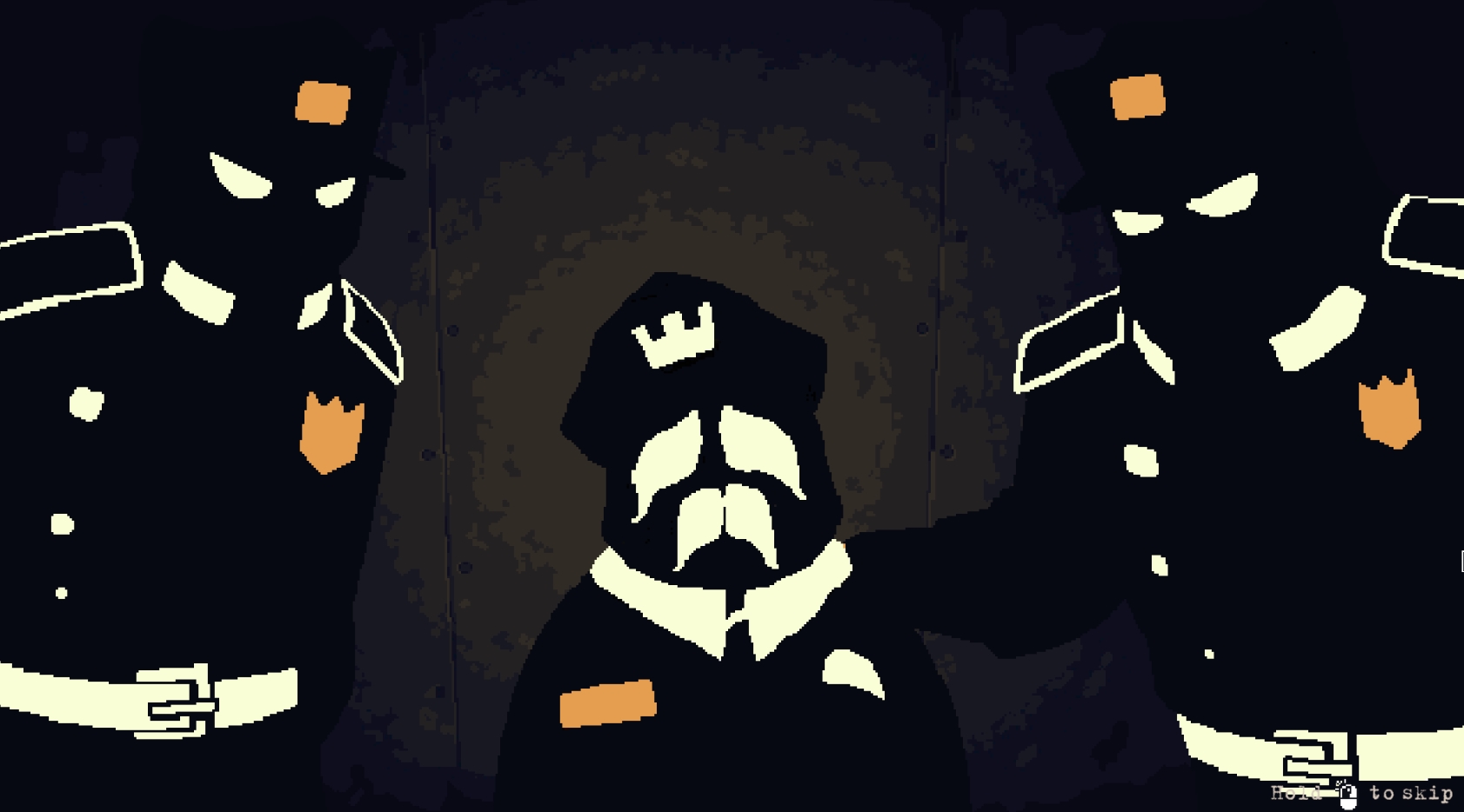
Beholder: Conductor is not a perfect sequel, but it is still a step in the right direction. Yes, it could not reach the heights of the first part, which set a powerful tone for the entire series. But instead of scolding it for this, I want to thank the developers for taking the risk of returning to the roots at all. Conductor reminded us that video games are not only about entertainment, but also about dialogue with the player. About an attempt to touch the soul, to remind about conscience and moral choice – those things that make games alive and necessary. In Conductor, we again find ourselves in a dark totalitarian world, but now – in the role of a train conductor. The situations in which the game puts us are sometimes cruel, ambiguous and morally exhausting. Depending on how we act in a particular scene, not only the ending changes, but also our attitude towards ourselves. What was especially pleasing was those moments where the game makes you think. Is it worth indulging the system if it saves you? Or go against it – knowing that you can lose everything? These questions are not rhetoric here – they are built into the gameplay, and therefore work especially hard.
Strengths of the game:
-
A deep plot that intertwines the hero’s personal tragedy with large-scale political intrigue.
-
A living world populated by contradictory characters – there are no clearly “good” or “bad” ones.
-
Non-linear gameplay – a lot really depends on many decisions.
-
A lot of moral choices: help a stowaway or throw him out into the cold? Hand over the fugitives or cover for them?
-
A wonderful visual style – pixel art is made with soul, atmosphere and attention to detail.
Weaknesses:
-
Time limits are sometimes too intrusive. It seems that the game is rushing you even where you want to stop and think.
-
The second half of the game is noticeably weaker: the pace is lost, the plot becomes less exciting, and some scenes feel unfinished or hastily inserted. At some point, the feeling of tension goes away – only a routine wait for the outcome remains.
Beholder: Conductor is not a perfect return of the legend, but it still reminds us why we loved this series. The game speaks to the player in the language of conscience and moral trials, and this is a rarity in our time. Although not without flaws, this is an important and bold project that is worth the attention of anyone who loves serious topics and difficult choices.
Beholder: Conductor System Requirements
System Specs for Beholder: Conductor
| Basic Setup | Optimal Setup |
|---|---|
| Operating System: 64-bit Windows 7 or 10 | Operating System: 64-bit Windows 10 or 11 |
| Processor: Dual-core Intel i3 / AMD FX series | Processor: Quad-core Intel i5 / AMD Ryzen 5+ |
| Memory Required: 4 GB | Memory Recommended: 8 GB |
| Graphics Card: GeForce GTX 650 / Radeon HD 7700 | Graphics Card: GTX 1050 Ti / RX 560 or newer |
| DX Support: DirectX 11 | DX Support: DirectX 11 |
| Disk Space: At least 3 GB | Disk Space: SSD drive preferred |
How to play Beholder: Conductor for free on Steam via VpeSports
You’re not saving the world. You’re not leading a revolution. You’re just a man in uniform, working the night shift on a train that never really sleeps — a train slicing through the veins of a state that sees and hears everything. In Beholder: Conductor, nothing is simple. Not even kindness.
Every carriage holds secrets. Passengers whisper, beg, lie — and sometimes, just break. You’ll be the one deciding whether to report them or help them disappear. The Ministry demands obedience, but your gut says otherwise. And somewhere between the dirty sheets and fake smiles, you’ll realize: survival is easy — it’s living with yourself that’s hard.
We’ve made it incredibly easy to step into this grim world. No tech headaches, no waiting. Just grab your free Steam account, log in, and the game will be right there — no strings, no payments, just you, the train, and the choices that will haunt you.
And when the journey’s over — whether you’ve stayed loyal or crossed the line — don’t keep it to yourself. We’d love to know how you saw the story. Share your experience. If your review doesn’t show up right away, don’t worry — we read and approve each one by hand. Once that’s done, you’ll receive everything you need via email.
Want to stay in the loop? We’re building a community of watchers, thinkers, and quiet rebels on Telegram — news, patches, new account drops, all in one place. And if you’re just getting started, our complete “How to Play for Free” guide is there to walk you through every step — no guesswork, just clarity. Beholder: Conductor doesn’t ask you to win. It dares you to choose — and to carry the weight of what you’ve done when the train keeps moving.