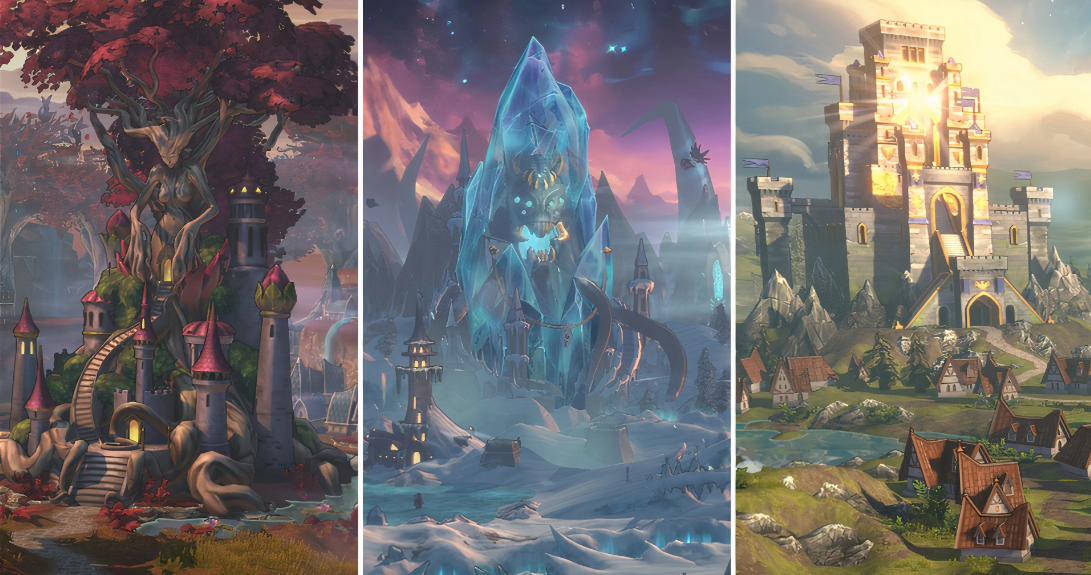
Choosing a starting faction in Heroes of Might and Magic: Olden Era is not a task for the faint of heart. There are six at the start of Early Access, each with its own personality, heroes, creature tree, and two unit upgrade paths. This isn’t your typical “who’s stronger than whom” scenario. Mechanically, Olden Era is deeper than it seems at first glance.
Apparently, the developers have ensured that all factions are viable. The difference lies in strategic flexibility, the difficulty of the first turns, and how much the game rewards your prior knowledge of the series. Balance can be adjusted at any time—the game is still in Early Access.
Table of Contents
An overview of all six factions in Heroes of Might and Magic: Olden Era
Below is a detailed breakdown of all available armies. From classic knights and undead to demonic swarms and Abyssal cultists, each faction has a unique playstyle, development mechanics, and tactical options on the battlefield.
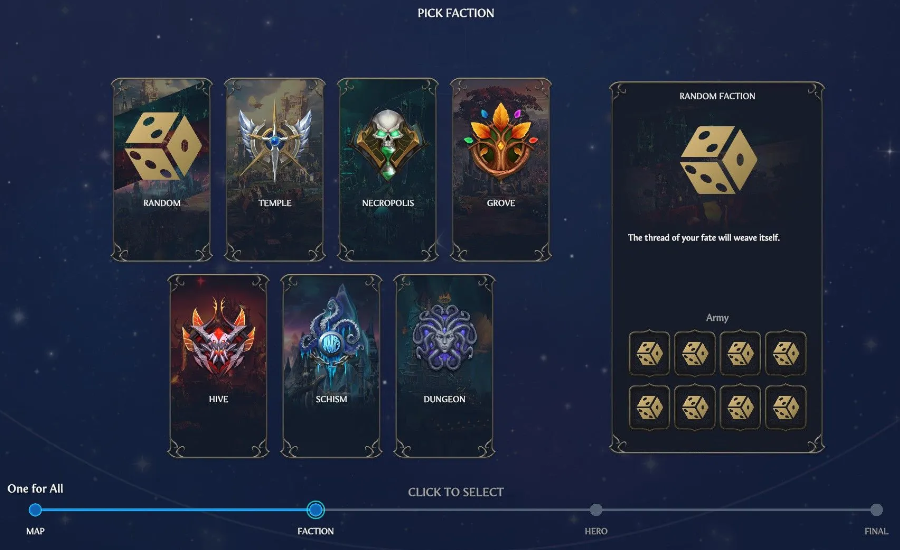
Temple (Temple)
A balanced human faction that thrives on buffs and synergies. Their signature trait is Morale, which encourages a homogeneous army. Temple is strong in the mid-game and late-game, but ramps up slowly: the initial Focus generation literally crawls, and buildings are more expensive than their neighbors.
Their units include infantry, cavalry, ranged units, and even celestial warriors. The Lightweaver is especially good—a powerful hybrid ranged unit that carries the mid-game and paves the way to endgame angels. Temple heroes are divided into combat leaders and divine mages. The best starting choice is one that gives you early access to high-tier units. This provides tempo, and tempo is everything in Heroes.
Beginner-Friendly: ★★★★☆
A familiar structure for those who played classic Heroes. The early game plan is clear. However, the Temple unfolds more slowly than the top factions.
Necropolis
A faction of attrition. It works on the principle of “the more enemies you kill, the stronger you become.” After each battle, the Necromancy mechanic raises some of the fallen enemies into skeletons. The army replenishes itself. It’s like a snowball: slowly at first, then unstoppable.
The units here are fragile, but have passive regeneration. Early upgrades turn basic units into ranged units, and survivability skyrockets. At mid-level, you already have vampirism, and at later levels, powerful ranged spellcasters. Necromancer heroes are the engine of the whole operation. Necromancy resources are needed to raise skeletons. Invest in the faction’s unique magic – both the number of skeletons and their strength in battle will increase. Beginner Friendliness: ★★★☆☆
The mechanic is powerful, but tricky. Not every enemy will drop a skeleton. At first, the faction seems weak—until the effect builds up. So, a beginner will have to be patient.
Grove Faction Guide and Ranged Tactics
A nature faction with a clear rule: ranged units fire, melee units cover them. And ranged units are present at almost every level—consistent damage from the very early game, with no dips. Plus, there’s a unique network of teleports between cities. On large maps, this adds an extra layer of strategy and makes movement mistakes for beginners easier.
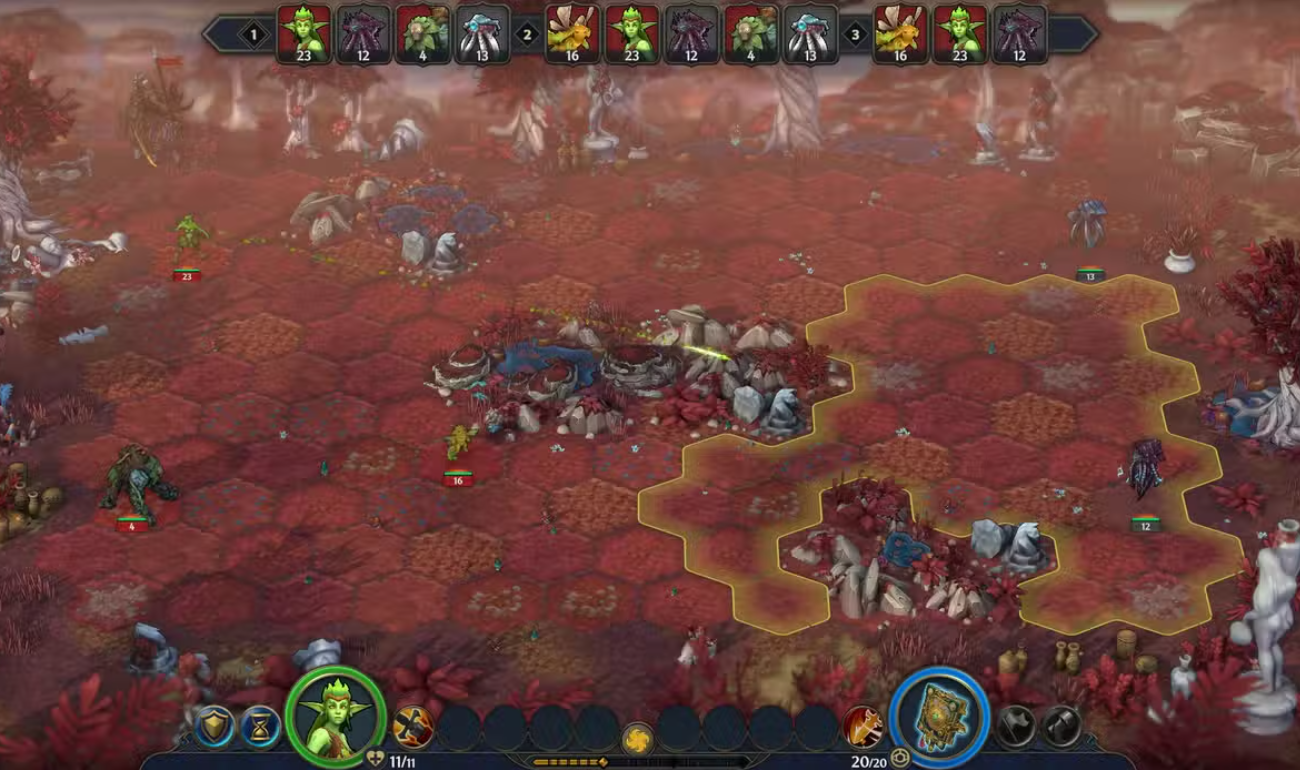
Ranged units are available at every tier, so you’ll never be stuck in a “but your backline just can’t handle it” phase. Melee combat is all about shields. The frontline is deliberately modest to keep priorities clear. Heroes are divided into fighters and nature mages. Guardians strengthen the front line, while druids make ranged units even more dangerous. The choice is yours.
Beginner Friendliness: ★★★★★
The friendliest faction. Intuitive tactics, teleports are forgiving, and a level one marksman displays real power in the very first battle.
Dungeon Strategy and Motley Hero Build
Dark Elves. The entire early game hinges on one exceptional marksman. After upgrading, his Initiative skyrockets, becoming one of the best damage sources in the game. And in the late game, Dragons come into play, raising the power ceiling even higher.
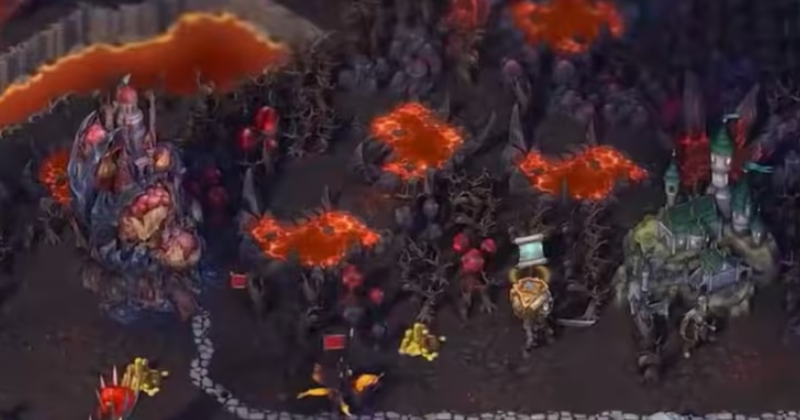
Composition: cheap, fragile dud units (to distract the enemy) and a few elite units that are worth investing in completely. A key marksman with transformation should consume most of the early recruitment budget. Minotaurs provide high Morale, and level seven Dragons are one of the strongest endgame threats. The best starter is the hero Motley. His starting army is entirely made up of elite marksmen: you get a mid-game composition from day one, but at the cost of a lack of cheap units. Beginner Friendliness: ★★★☆☆
Strong, but requires knowledge: which units should not be leveled at all. The ceiling is one of the highest. To reach it, you must resist the urge to build a balanced army.
Hive Swarm Mechanics and Taunt Strategy
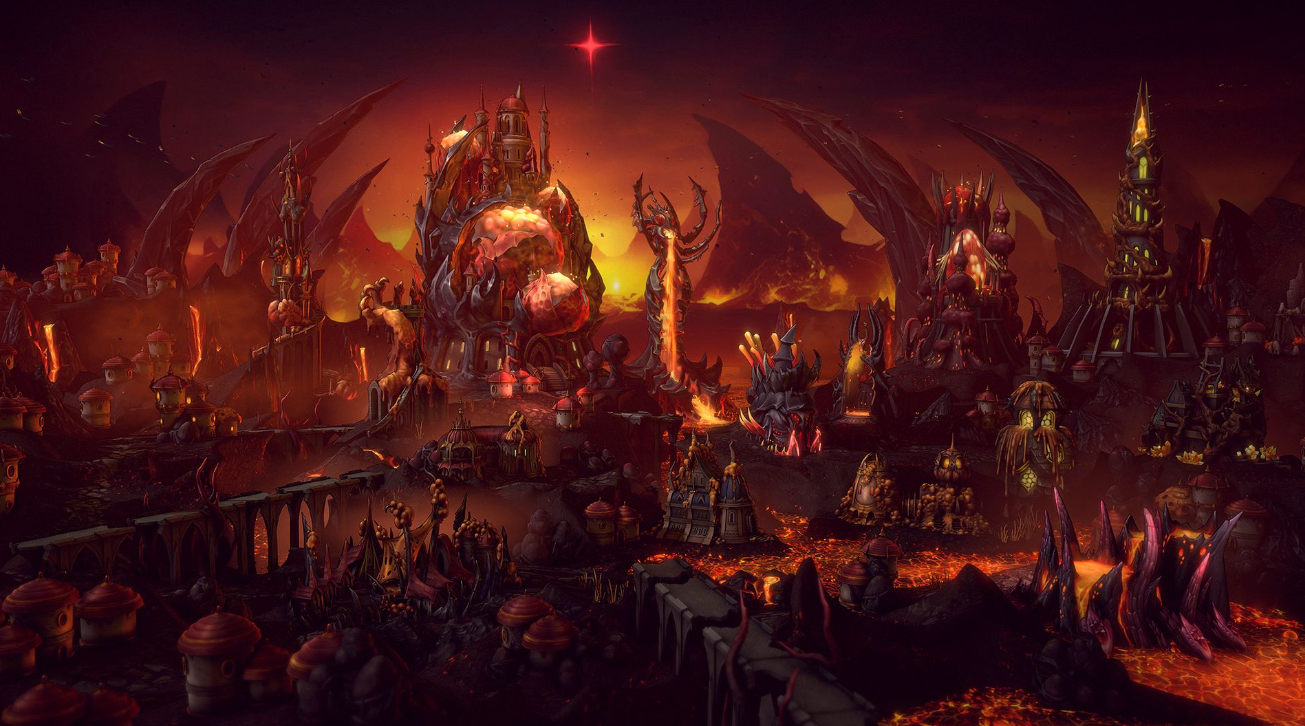
A demonic swarm faction focused on aggression and recovery in battle. Units devour fallen enemies and heal. A late faction Law grants one unit “Taunt,” forcing enemies to attack it, which blocks their counterattacks.
Fast, durable for their tier, they are designed for protracted battles. The recovery mechanic means the Hive suffers less in prolonged engagements. The unit with Taunt itself is modest, but after activating the corresponding Law, it becomes the center of a combo. Heroes gravitate toward aggressive builds, their abilities often supporting specialized unit growth. Beginner Friendliness: ★★☆☆☆
The swarm and recovery mechanics are enjoyable, but the combo with Taunt requires some practice. Not the most straightforward faction to get started with.
Schism Gameplay and Abyss Communion
A cult of renegade elves who opened a rift to the Abyss. Their key mechanic is “Communion with the Abyss”: each consecutive victory increases the size of their army in battle. However, each defeat resets the counter. Some units can summon stack replacements once per battle, which prolongs battles and opens up opportunities for resource farming.
The most fragile composition at equivalent tiers. This is a conscious tradeoff for the resurrection and Communion mechanics. Mid-tier units with summoning are a crucial tool. A level 6 marksman removes blocking units from the line of fire. And a level 7 unit is completely immune to magic, opening up unique endgame strategies. Both hero archetypes gravitate toward magic. A hero specializing in magic can clear difficult objectives on the map with pure spell damage much earlier than other factions. Newbie Friendliness: ★☆☆☆☆
The most demanding faction. A fragile roster, win streak mechanics (punishing every mistake), and systems that only unlock after significant investment. It’s worth trying something else first.
Best Starting Factions for Beginners in Olden Era
All six factions in Olden Era are viable. Even the challenging Shattering has its place. But “best” is a fluid concept: balance changes will be frequent in Early Access. If your goal is to understand the game, not survive against it, choose the Grove.
Why the Grove is Best for New Players
The Grove’s combat cycle is as transparent as possible: ranged units fire, melee units take a beating. This division of labor is easily recognizable from any turn-based strategy game. This means you can focus on the specific systems of the Olden Era (Focus generation, spell upgrades, hero chains) instead of wasting your time trying to figure out what your faction actually does.
Furthermore, the Faunus Archer is available from the first unit building. He provides consistent ranged damage even before you invest in a city. This takes the pressure off early map clearing.
Another important point: the Mycelial Roots teleport network. Many underestimate it, but for a new player, it’s literally a safety net. The rapid transfer of reinforcements between cities forgives mistakes in positioning and timing—and such mistakes are inevitable in early games. The mechanics are forgiving: one unfortunate mistake won’t ruin the entire game.
Skill Leveling Priorities in Olden Era Early Access
In Olden Era, the concept of a “universal hero” is dead. To avoid losing the game in the second month, you need to understand the skill hierarchy—timing matters more than the amount of meat in your stacks.
-
Logistics is an axiom. Without it, your main turns into a slow target that your opponent will outplay based on tempo. In Heroes of Might and Magic: Olden Era, a one-turn advantage can cost you a captured mine or a well-timed intercepted caravan.
-
Magic of the chosen school. Don’t spread yourself too thin. You need to push your specialized school to expert level as quickly as possible. With this approach, second-circle spells provide a +50% increase in effectiveness—a colossal boost, allowing you to take out neutrals with minimal losses.
-
Wisdom by week four. If you don’t have access to the Third Circle Mages Guild by this point, you automatically lose the late game.
-
Luck and Morale. Wasting precious skill slots on them is a dubious idea. In 2026, the meta dictates saving slots: boost these stats through artifacts and visiting map objectives.
Pan Build and Grove Archer Synergy with Holy Magic
In the right hands, Roots (Grove) becomes a machine gun point. The key to success here is the synergy between specialization and a specific school of magic. The ideal setup looks like this: take a Druid hero whose talents are focused on ranged combat and rely on Pan archers. But they themselves are a target for enemy cavalry. The School of Holy improves this situation. As soon as you reach Haste and Precision, the gameplay changes. With buffs, a Pan stack can go twice before the enemy even realizes what’s happened. The combination really starts to breathe in the third week. By this time, you should have both tiers of marksmen built and the second guild circle unlocked. By the way, don’t forget about Mycelial Root Teleports—it’s a legitimate way to keep one hero farming and the other defending the borders without breaking up the main army.
Necropolis Strategy and Immortal Vampire Build
The classic Necropolis gameplay in Olden Era has been given a new lease of life by the reworked resource conversion system. It’s no longer about resurrection, but pure mathematics. The main unit is upgraded Vampires at level four. Their regenerative abilities, combined with Earth Magic (which we’re interested in Animation of the Dead and Weakness), make the army practically immortal. Skeleton marksmen act as a renewable DPS resource here. Every skirmish with neutral mobs becomes an investment: you feed the enemy cannon fodder, which is immediately replenished through Necromancy. If done correctly, by the end of the second month, your stack of skeletal ranged units will exceed 200—a force to be reckoned with by any opponent.
Dungeon Endgame Tactics and Control Magic
The Dungeon faction has always been known for its aggression, and the hero Motley is the perfect example. He starts with elite marksmen, which effectively eliminates the issue of survival in the midgame. The main strategy for Dungeon is strict economy. Don’t waste gold on low-tier units; they only hinder development. Save up for Minotaurs and Dragons. In terms of magic, the School of Darkness is a must: the spells Berserk and Blindness work perfectly in tandem with the high morale of Minotaurs. An extra turn of morale plus Berserk on the enemy’s most dangerous stack—and you control the battlefield while Tier 7 Dragons mop up the remaining stacks.
Hive Meat Shield Tactics and Taunt Mechanics
The Taunt mechanic in Hive is a unique control element for the entire series. This build is for those who like to play defensively and wear down their opponents. The entire calculation is based on the central tank—a unit with the active Taunt skill, adorned with defensive artifacts. Enemy units are automatically prevented from attacking anyone else. Meanwhile, your main strike force (mobile flanking units) methodically mops up the enemy’s support. A hero with a focus on Fire Magic or Resistance is best suited to strengthen this combination. Important: don’t activate the Law of Taunt too early—the Hive must remain mobile until the decisive moment of the confrontation.
Summary Table of Best Hero Army and Magic Combos
Weapon Type Specifications
Read on for a guide about Magic Schools & Builds.