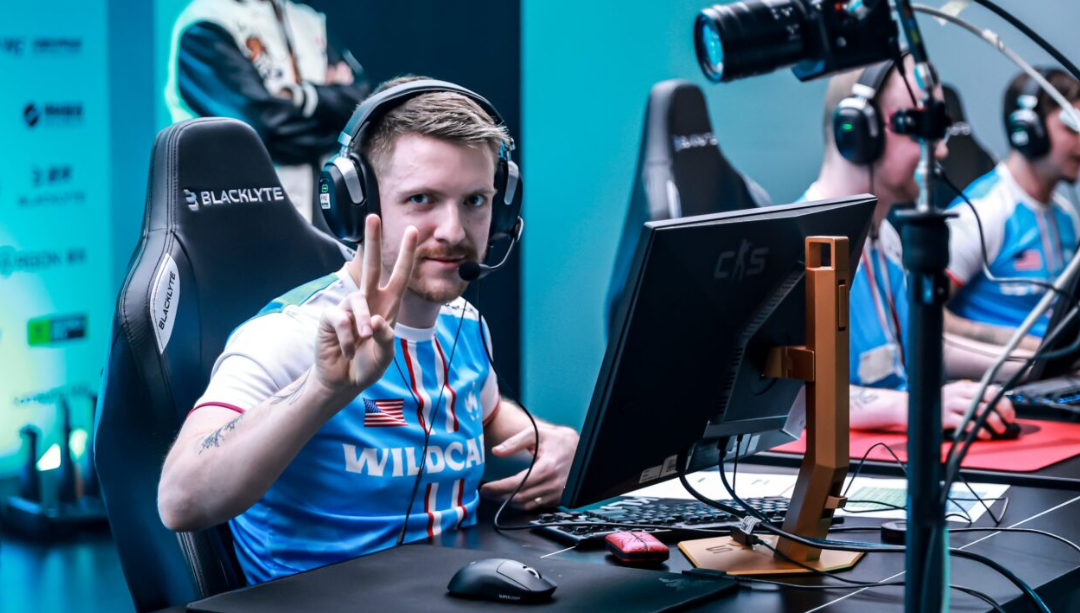
The North American Wildcard tag has officially entered the 2026 season with a radically updated lineup. After a series of failed reshaffles in 2025, management took a risk by building a new five around the only remaining player, Jaxson “Peeping” Cornwell. The team was joined by fresh blood from its own incubator, as well as experienced shooters from the regional top.
Who joined the new Wildcard roster
-
Peeping (Jaxon Cornwell) is the only asset from the old guard.
-
mhL (Miłosz Knasiak) — promoted from the Wildcard Academy.
-
sSen (Simon Solnæs Iversen) — transferred from the youth team.
-
CLASIA (Anthony Kearney) is a veteran of the stage (ex-Gaimin Gladiators, BLUEJAYS).
-
reck (Ethan Serrano) is a former M80 rifler who spent four months inactivated.
Table of Contents
Why was the old Wildcard line-up disbanded
Perestroika began after a high-profile fiasco in November 2025. Then Peter “stanislaw” Yarguz, Joshua “JBa” Barutt and Love “phzy” Smidebrant did not qualify for the StarLadder Budapest Major. The management did not give a second chance and immediately sent the trio to the reserve. The signing of Ethan “reck” Serrano looks like an attempt to add firepower to the team that BLAST lacked.tv Austin Major, where the player, along with the M80, finished in the top 22.
How Wildcard plans to regain its position in the Valve rating
The situation is critical for the organization. As of December 2025, Wildcard was ranked only 83rd in Valve Regional Standards (VRS). With the departure of three players, the points actually reset to zero. Now the team will have to grind hard at the Tier-2 and tier-3 tournaments to get on the coveted list of 32 teams competing for slots in the majors.
The first test will be Miami Frag2 from Fragadelphia, starting on January 2. Not only the modest $8,000 is at stake, but also vital VRS points. Mixes from Europe and strong American teams are expected to participate, so there won’t be an easy ride for the updated Wildcards. A disastrous start in Miami could put an end to the club’s ambitions before the middle of the season.
Economic explosion in NA CS2: How Wildcard nullifies the dominance of Liquid and Complexity
The North American transfer market is in a fever in 2026: Wildcard is breaking into the game not as a participant, but as a disruptor of an established monopoly. The signing of reck (ex-M80) and the CLASIA veteran is not just a roster update, but a strategic diversion against the pricing policies of Team Liquid and Complexity. If earlier the path of talent from tier-2 ended with waiting for an offer from the “blue” or “star”, today Wildcard forms an alternative gravity center, inflating the value of assets throughout the region.
| Criterion | Team Liquid | Complexity | Wildcard (New Force) |
|---|---|---|---|
| Recruitment vector | Global Tier-1 stars (NiKo, ZywOo) | Local upgrades + targeted imports | Aggressive Tier-2 star hunting + academy |
| Transfer budget | Unlimited (market benchmark) | Medium / High (pragmatic) | Growing (investment in potential) |
| Impact on VRS | Stable Top-10 | Top-20 with leadership ambitions | Fast climb from Top-80 to elite tier |
Market Inversion: Why Liquid no longer dictates terms
For a long time, Liquid held the upper limit of salaries and buybacks in NA, effectively sterilizing the market. The appearance of a Wildcard with an international roster hits the most painful thing — the status of “no alternative”. When a project at the Nouns or M80 level sees that their players can go to Wildcard for competitive salaries and gain access to the majors, the negotiating position of small clubs is dramatically strengthened. Now it will not be possible to buy the young rifler “for food”.
The foundation of a new ecosystem:
-
Trajectory 2.0: The route “Shooting range-2 → Wildcard → global shooting range-1” becomes legitimate. This breaks the psychological dependence of the players on the slot in Liquid.
-
Buyout inflation: Competition for reck and talent from the academy forces Complexity and Liquid to invest more actively in scouting at an early stage in order not to overpay 300-400% of the cost for a ready-made player in a year.
Behavioral Engineering: Profit for stakeholders
For investors, the NA-scene is finally no longer a binary swamp. Wildcard’s organization creates several entry points into the region, reducing the risks of “death of discipline” if one or two grandees fail.
For professionals, this means one thing: 10 people in the region no longer decide the fate of all contracts. Increased competition is pushing clubs to renegotiate contracts, introduce long-term bonuses, and really fight for staff loyalty. If Wildcard cements its success with a series of LAN exits, the balance of power in North America will mirror Europe’s —vibrant, aggressive, and financially capacious.