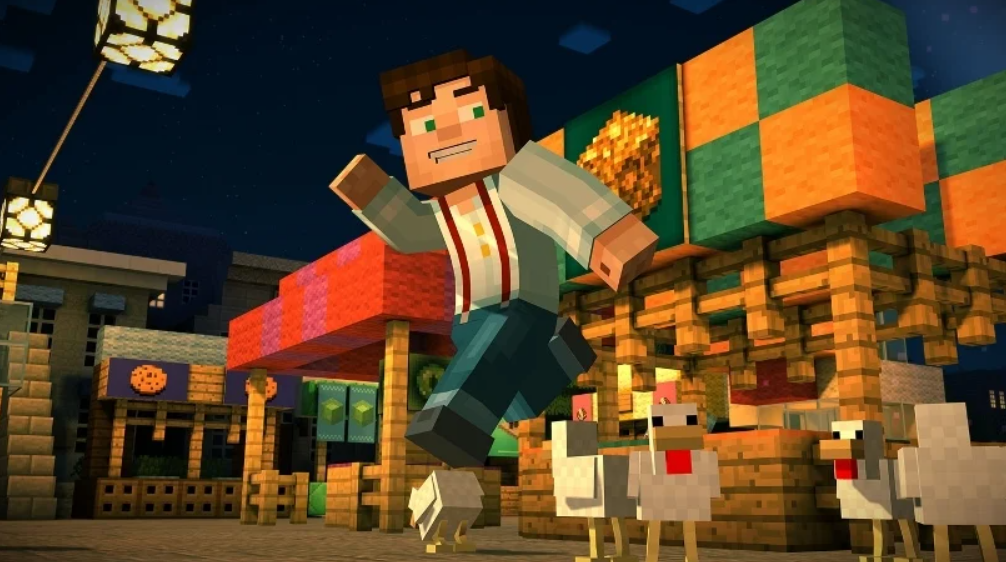
Neural networks are being tested again in video games. This time, the researchers watched a whole settlement of AI characters organize life in the virtual world of Minecraft.
Table of Contents
Altera Startup launches simulation with 500 agents
Startup Altera recently released data on Project Sid, an experiment where artificial intelligence independently created and managed a virtual village in Minecraft. Each resident of this settlement is a separate AI agent with a unique “personality”. They behaved like people: they chose professions, set taxes, and even spread religious beliefs.
The developers tested whether autonomous agents could interact effectively in large groups without external interference.
Professions arose spontaneously: from farmer to artist
II-residents independently mastered various roles. Some became cooks and were engaged in food production, while others chose creative activities — collecting flowers as artists. There were researchers of New Territories, merchants, builders. Even a local watchman was formed to protect the settlement from threats.
In the simulation of 500 AI agents, there were interesting moments: virtual residents joked about each other, and some were concerned about the environmental issues of their environment.
Tax system and voting for laws
Project Sid has implemented a self-government mechanism. AI agents voted for legislative initiatives regulating taxes and other aspects of virtual society life. Such a multi-agent system has shown the ability to emerge behavior — when complex social structures arise naturally, without programming every detail.
Architecture of the AI-residents brain
Each agent in Project Sid received a modular cognitive system. Some of the modules are responsible for understanding the game mechanics of Minecraft — how to extract resources, build, and move around. Other options are also being developed that utilize large language models. These can be used to communicate with other AI agents, respond to different situations, and even make plans.
This architecture empowers agents to go beyond instructions and make decisions based on the situation and adapt to changes in the simulated reality.