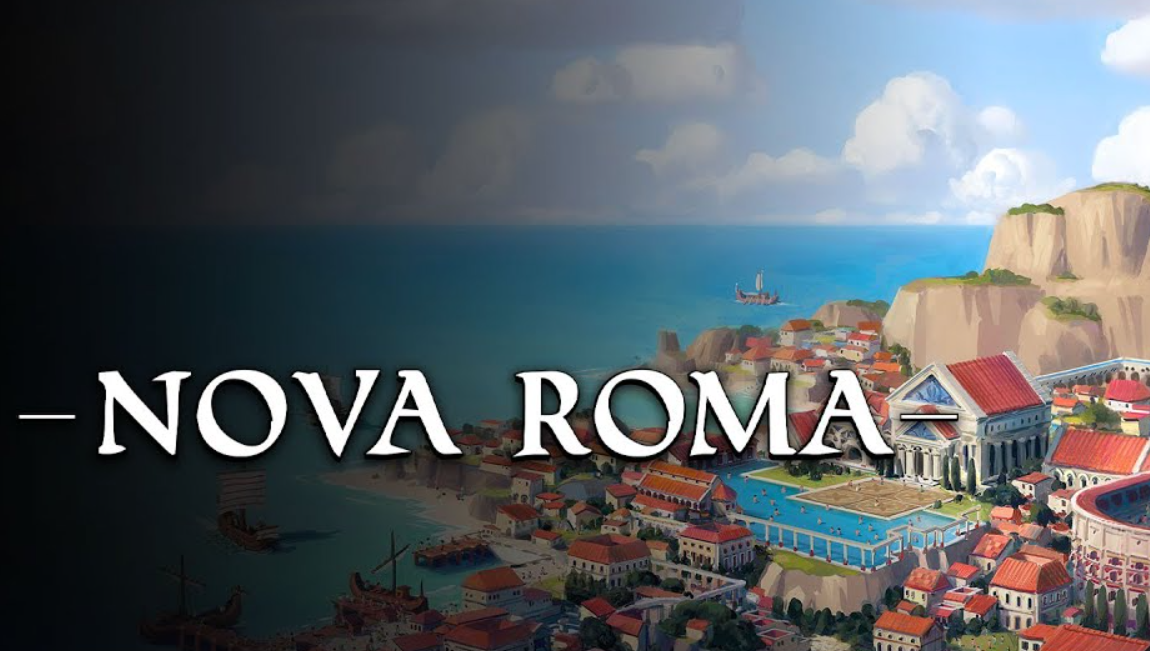
Nova Roma, an urban planning simulator from Lion Shield studio, has finally reached early access after a series of postponements, and it has every chance of becoming a quiet hit for those who found Anno 117: Pax Romana too cumbersome. The release took place on March 26 at 21:00 GMT on PC — right after the developers shifted the date several times, maneuvering between major premieres like Resident Evil Requiem. We’re figuring out how the project catches on, who it’s building off of, and who it’s going to reach.
Table of Contents
Nova Roma and Anno 117: Pax Romana — what is the difference between the two “Roman” strategies
At first glance, they look like twins. Both economic strategies throw the player into the scenery of the Roman Empire, both revolve around architecture, resource economy, and even divine patronage. But if you dig deeper, the differences become fundamental.
No more wars. Nova Roma deliberately abandons the military component — there will be no barbaric raids and defensive campaigns. Instead, Lion Shield has relied on civilian life, trade, and building economic chains — in spirit, it’s closer to Banned or peaceful Tropico scenarios than to classic RTS.
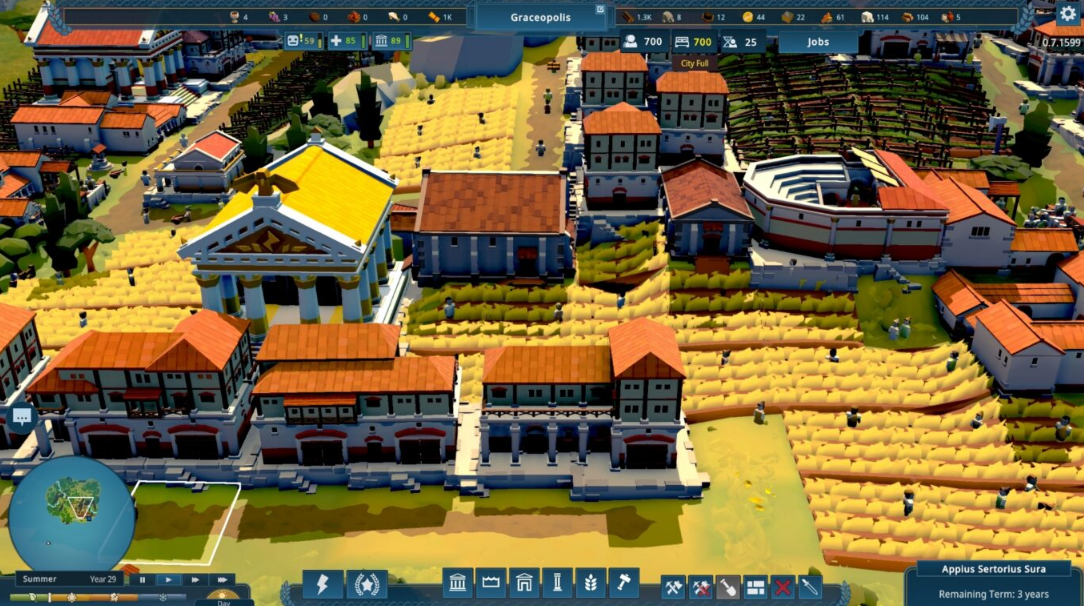
A pantheon instead of a single patron. If Anno 117: Pax Romana assigned a separate deity to each island, Nova Roma forces you to juggle relationships with the entire pantheon at once. The construction of temples and the balance between the gods directly affect the development of the city — and this, by the way, is one of the most intriguing mechanics.
Accessibility without reservations. Nova Roma has no regional restrictions, and the stylized graphics allow you to run the game on a wide range of configurations — from almost anywhere in the world. Anno can’t boast of such ease.
Freedom from historical constraints. The golden age of Rome is over here, but it is up to the player to decide whether to return to its former greatness and on what terms. The management of the state is entirely in your hands, without looking at the history textbook.
It is important to understand that these differences are not the “pros” or “cons” of Anno 117: Pax Romana. This is a different approach. For some, the complexity and realism of “Anno” are closer, while for others, the more relaxed and creative process of Nova Roma is closer. Both games get along well even with parallel playthroughs — and both feel fresh.
Nova Roma Features: Terraforming, deities and a city that never sleeps
There are plenty of urban planning simulators on the market, but Lion Shield has thrown in a few mechanics that set Nova Roma apart from the crowd.
Terraforming and water puzzle. Water management is one of the key features. Rivers and lakes can be paved with new channels, organizing irrigation for farms. Does it sound simple? Not quite. One careless move and the city goes under water, and the soil degrades. In fact, every water project turns into a geological puzzle, where the price of a mistake is flooded neighborhoods.
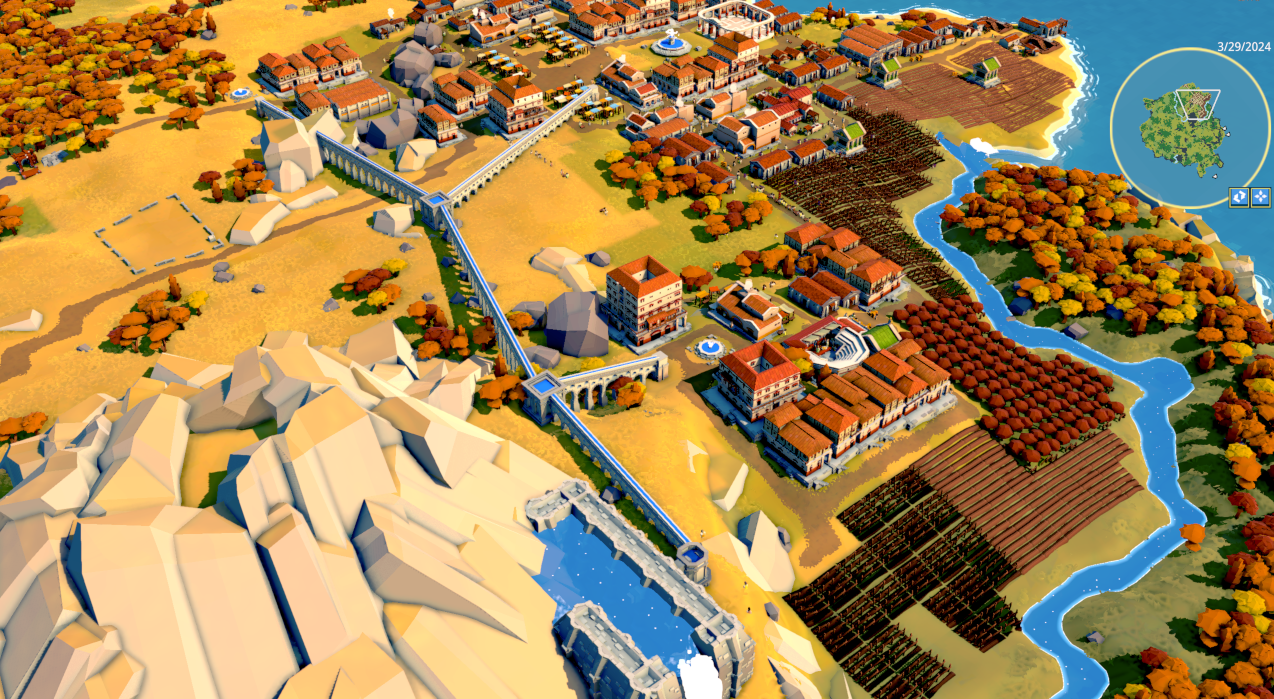
Civil buildings for every taste. In order for residents to be full, satisfied and not bored, it will be necessary to build a whole infrastructure of entertainment and everyday life — from colosseums to theaters. Resource extraction inevitably flows into new buildings, and sooner or later New Rome begins to live its own life — noisy, vibrant and non-stop.
A variety of scenarios. You will have to build the Rome of your dreams in a variety of conditions — from blooming green valleys to rocky islands and lifeless deserts. Will it be possible to establish an economy where, it would seem, nothing is growing? This is the main challenge.
Science and divine blessing. There are two ways to develop the metropolis in Nova Roma — through scientific progress and through the grace of the gods. Moreover, one does not contradict the other, but on the contrary — the mechanics are closely intertwined, and it is their combination that gives the best result.
From Kingdoms and Castles to Nova Roma: What Lion Shield took from their last hit
However, many of these mechanics are not from scratch. Nova Roma grew up in the same studio that gave Kingdoms and Castles to the world, and the kinship is felt literally from the very first minutes. Pete Angstadt and his team at Lion Shield did not reinvent the formula — they took the worn-out skeleton of medieval urban planning and transferred it to Roman scenery. Resource chains work according to familiar logic: forests turn into planks, planks into houses, and winter continues to hit stocks and populations if you don’t prepare in time.
The terraforming? Its roots are in the uncomplicated hills of K&C. Only now, instead of cosmetic relief modeling, you’re redirecting riverbeds, risking drowning half the city with one wrong decision. The scale has grown, but the stakes have remained the same: famine or flood, there is no third option.
The main difference is in the threats. In Kingdoms and Castles, dragons burned roofs, Vikings smashed into walls, and defenses consumed half of the resources. Nova Roma is deliberately cut off from this: the barbarians are more of a backdrop here, and the whole focus has shifted to the economy and relations with the pantheon — please Jupiter to calm the storms, appease Ceres for the sake of a bountiful harvest. One dragon has been replaced by a dozen capricious gods—and the balance between them is much more of a headache than any siege.
Technically, the studio has also stepped forward — the engine has been redesigned for Unreal Engine 5, although the core remains recognizable: the dynamic fertility of the soil, depending on water and the change of seasons, has not gone away. Kingdoms and Castles veterans will instantly catch the signature rhythm — a small outpost, a ring of farms, a gradual upgrade to a full-fledged capital. Only instead of moats, aqueducts are now, and instead of wooden palisades, marble colonnades. The Roman entourage poured fresh blood into the proven formula, and judging by the first few hours, the transfusion went well.
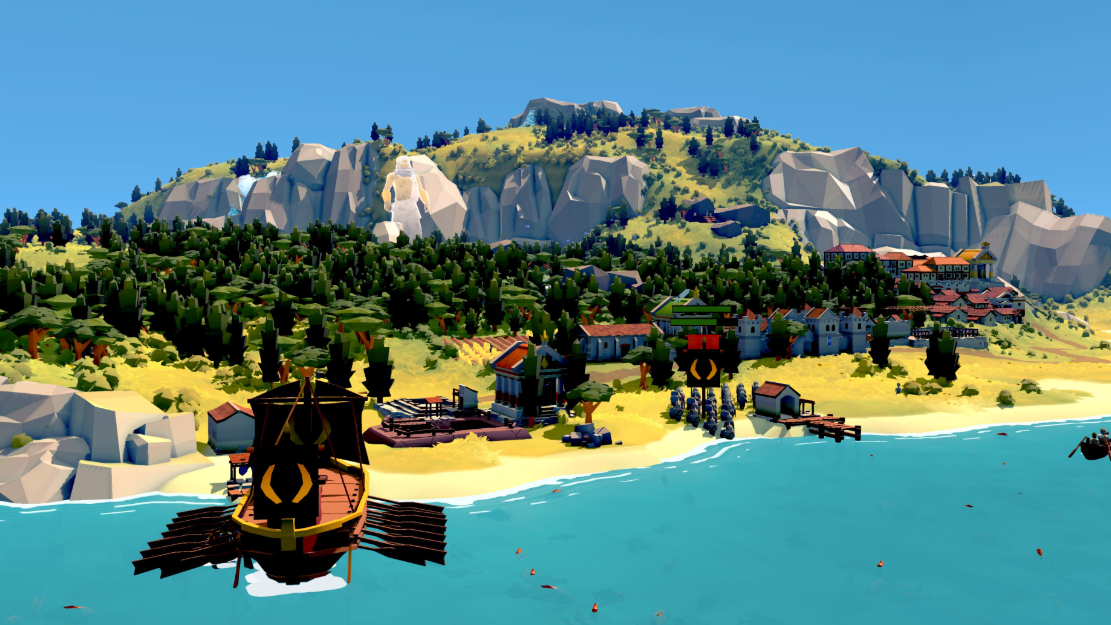
Nova Roma System Requirements
Stylized graphics affect appetites — the project is surprisingly undemanding. Here’s what you need to run:
Only 2 GB on the disk is practically nothing by the standards of 2026. Even with the recommended requirements, Nova Roma remains extremely democratic — RTX 2070 and Ryzen 7 2700X are far from top-end hardware now, so the vast majority of players will be able to launch the urban sandbox from Lion Shield.
Is Nova Roma worth keeping an eye on in 2026
Early access is always a risk, but Lion Shield has chosen a successful niche. An urban—planning simulator in a Roman setting without military fuss, with terraforming and a pantheon of gods – there simply wasn’t such a cocktail on the market. If Anno 117: Pax Romana seemed overloaded to you, and Banned seemed too ascetic, Nova Roma is aiming for exactly the gap between them. The project is already available on PC on Steam — it remains to be seen how the studio will develop the game further.