

The horror genre is going through hard times today. It’s like the big studios have forgotten how to really scare the players. The reason is simple: the audience of horror films remains niche, and this is not enough to feed the appetites of large publishers. The irony is that the “top league” of the gaming industry is afraid of fear — the very feeling for which we launch horror games. After EA finally closed the door to the Dead Space series, no major publisher dared to dive deeper into this dark genre than into superficial experiments and light flirtations with the theme of horror.
Table of Contents
The Coma 2: Vicious Sisters Free Steam Account
Many modern horror films from major publishers like Capcom and Bethesda look impressive, but rarely truly scary. Take at least the last parts of Resident Evil — at first they give the player that very familiar shudder when a step into a dark corridor can cost a life. But a little time passes, and the protagonist, armed to the teeth, turns into a ruthless monster fighter. Bethesda’s The Evil Within suffers from a similar problem: no matter how much blood and madness there is on the screen, fear almost doesn’t live there — the developers seem to have forgotten how to make the player truly afraid.
For large studios, horror is more like a seasoning that is added “for flavor” to the main course of the action. But the indie scene, although closer to the spirit of the genre, often suffers from the opposite extreme: a huge number of projects made in a hurry. For one really worthwhile Darkwood, there are a dozen of the same type of “runners” with curved monster models and assets downloaded from open Unity libraries.
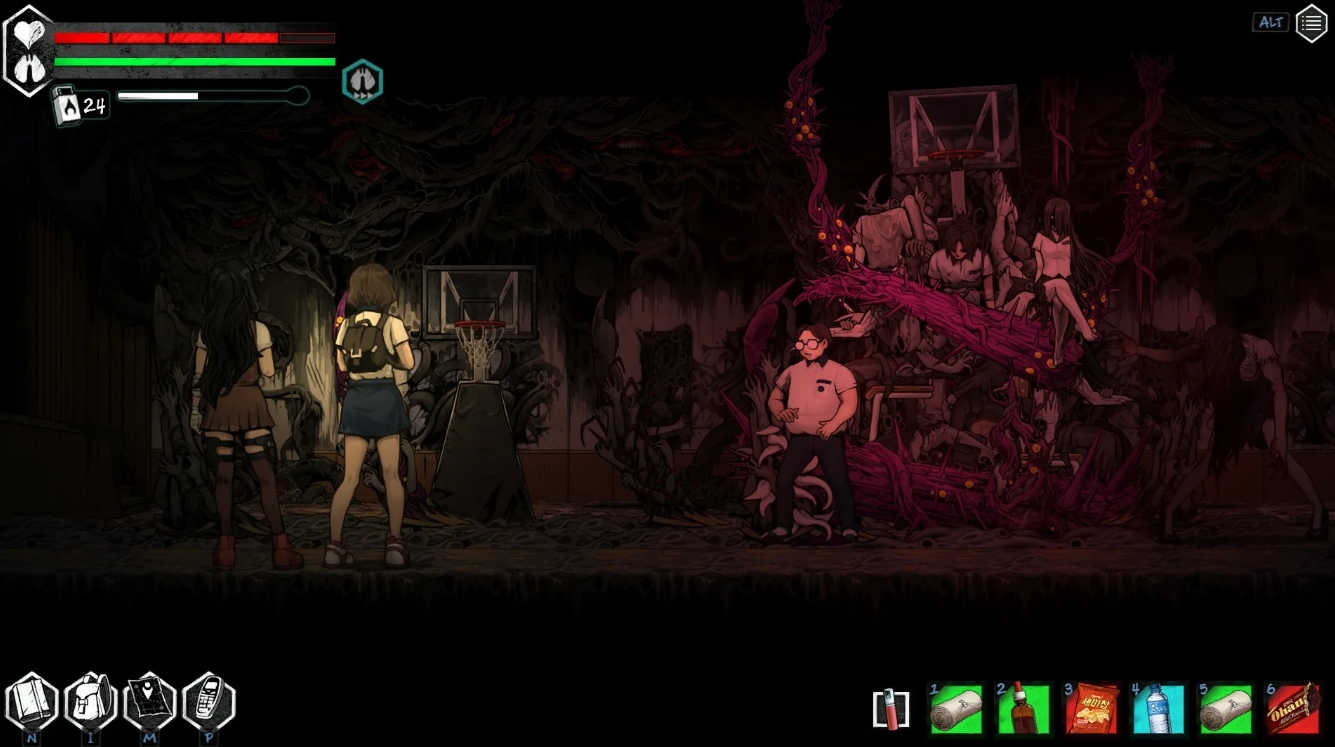
And it is against this background that The Coma 2 stands out most vividly — a game that not only demonstrates respect for the genre, but also offers something fresh in it. The developers managed to create a dynamic stealth horror where fear does not go away from the first scene, but lives until the very end.
Have you ever heard this phrase – “dynamic stealth horror”? Unlikely. And for good reason: Coma 2 is one of the few games that can really earn this title. If you are close to projects where the atmosphere of tension does not disappear for a second, and every mistake can cost your life, welcome to the South Korean nightmare, from which it is impossible to break away.
Have fun reading — and yes, be prepared for the fact that after Coma 2, the rest of the horror films will seem to you just funny walks in the dark.
Take the shortcut to full content with a steam account free.
Why does The Coma 2: Vicious Sisters Evoke the Same Fear as Silent Hill 2
Why are we still afraid of the Pyramid Head? Is fear born only from his monstrous cleaver, bloodstained apron, and heavy metal helmet hiding his face? Unlikely. These details are just a shell. The real terror of the Pyramid Head lives somewhere deeper – in the silent power that it radiates. And that’s why no clone, no matter how frightening it was outwardly, could not repeat its effect. Take, for example, Safehead from The Evil Within: frightening design, personal DLC — everything is in place, but there is no inner strength, that primordial energy of horror.
Having first appeared in Silent Hill 2, the Pyramid Head immediately became not just a part of the plot, but a symbol of fear. His subsequent appearances in other parts of the series no longer carried the same weight— like a shadow of a great image that had lost its essence. And it’s not about appearance. He scares not with the form, but with the meaning behind it. Pyramid Head is not just a monster. It is the epitome of punishment, a living metaphor for guilt, pain, and payback. He does not pursue for the sake of killing — he exists to remind of sins, of the inner darkness from which it is impossible to escape.
When the player first meets him, the only barrier between them is a grid. He doesn’t attack, he doesn’t growl, he doesn’t move. He just stands there and watches. And that’s the scariest part. Up to this point, all the enemies in the game acted instinctively: they either rushed forward or retreated. And he is aware. There is something eerie, almost human, about his stillness. The player feels that this is not a stupid monster, it is a reasonable evil. It understands who it sees in front of it, and it knows that its victim has nowhere to go. This moment creates tension that no screamer can achieve.
When the next encounter takes place, it becomes clear that the Pyramid—headed is not just a threat, but the supreme predator. He demonstrates absolute dominance by dealing with other monsters like insects. The main character hides, unable to intervene, because even an attempt at resistance seems pointless. The pyramid head is not in a hurry, he is not angry — he does what he sees fit. His indifference is scarier than any scream. He doesn’t enjoy violence, he just exists in it, as if it were part of his being. He doesn’t need a huge cleaver to strike terror. His strength lies in the feeling that everything around him is subject to his will.
Then everything gets even darker. The player can only run away. A fight is impossible. Victory is unattainable. And even when the final clash finally arrives, the game knocks out the last pillar — there are more than one like him. There are two of them. Maybe more. At this moment, the illusion of control collapses. The pyramid—headed man is no longer just a character – he is turning into a symbol of hopelessness. The formula for his fear is simple and ingenious: absolute power, demonstrated with frightening calm. He rules over everyone — over the monsters, over the hero, over the player himself, who can only wait for a new meeting.
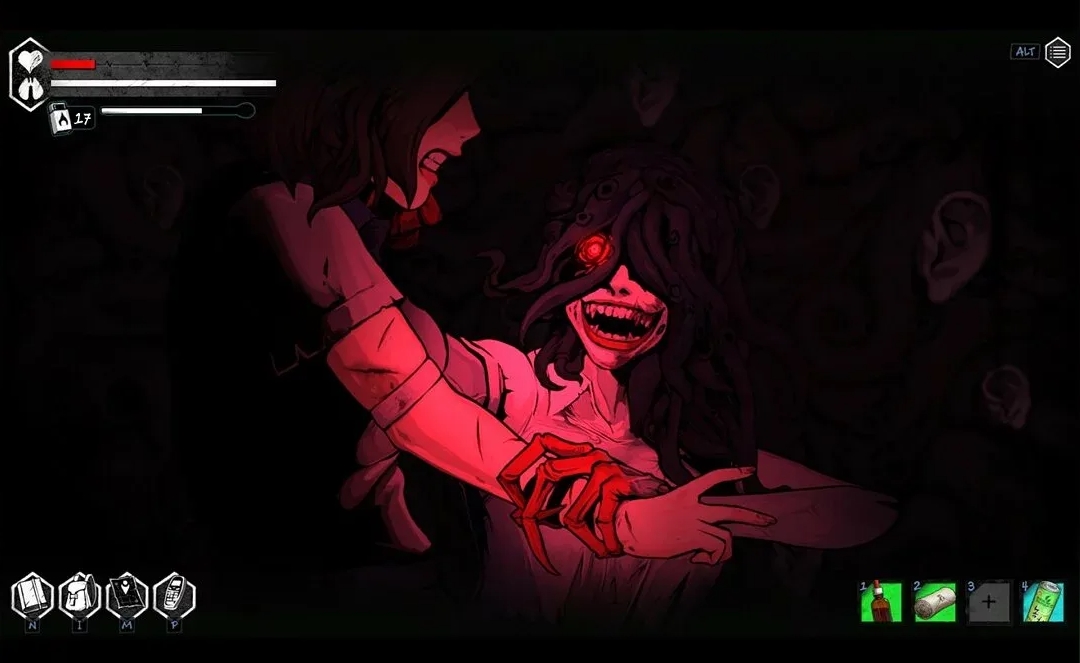
Interestingly, years later, the same formula was repeated where no one expected it — in The Coma 2. Flesh Thrall, or Enslaved Flesh, was just one of the typical pursuers in the first part. She did not cause trepidation, the chases quickly ended, and the fear was based only on the oppressive atmosphere of the Korean school. But in the second part, everything changed. From the very first minutes it is clear: this is not just an enemy, but a predator dominating its possessions. Her movements are fast and precise, like an animal scenting prey. When the player sees her tearing through metal with her bare hands, it becomes clear that this is a force that cannot be resisted.
It is this feeling of hopelessness that makes horror truly scary. Not the screams, not the blood, but the realization that you are helpless. That you have something so powerful in front of you that the very idea of fighting looks ridiculous. Pyramid Head became the perfect embodiment of this feeling. He doesn’t persecute, he judges. He’s not angry, he’s just executing the sentence. His silence is louder than any roar, and his presence destroys the player’s confidence in their own salvation.
And that’s why, no matter how many years have passed, he remains the standard of fear. He cannot be defeated, he can only be remembered — as a reminder that the most terrible monsters do not always run after you. Sometimes they just stand in the shadows and wait for you to come closer.
The Coma 2: Vicious Sisters gameplay
The main problem with most horror games with stealth elements is their monotony. Players have been hiding behind the same drawers and cupboards for years, watching dumb monsters roam nearby, oblivious to the obvious. All this stopped scaring me a long time ago and became more of a routine. But The Coma 2 violates the familiar laws of the genre, turning survival into an intense endurance game where every second, every move, and every breath counts.
This is a stealth horror game with a side view and light elements of metroidvania, in which there is no place for overstrain. From the very first minutes, we are immersed in the world of “Coma” — a distorted, gloomy reflection of reality, where everything alive seems to be infected with fear. The main character accidentally gets there and realizes that she has to get out before the blood-red moon rises. That moment is approaching, and with it, something terrible.
The world around us seems to come alive. The shadows are watching, the walls are whispering, the plants are trying to grab you with their poisonous appendages. Every move is perceived as a test. But true terror comes with the “Enslaved Flesh”—a creature that hunts you tirelessly. She could appear at any second. Her footsteps, wheezing and sudden screams make my heart stop. You see her jump off right in front of you, and there’s a terrible silence for a couple of seconds. These few moments are the scariest in the game, because they are the ones that fill the whole body with panic.
You rush to run, blindly rushing down a dark corridor, hoping that you will find salvation behind another door. But it’s empty inside — the cabinets are wrapped in tentacles, and the monster’s breathing can already be heard behind my back. You dodge, spray the pepper spray, buying a tiny amount of time. Hiding under the bedside table. The space is cramped, it’s scary to breathe. The monster walks nearby, scratches on the floor, but at some point decides to leave. Your heart is still beating, your hands are shaking, but you are alive. And there are still several floors of hell ahead.
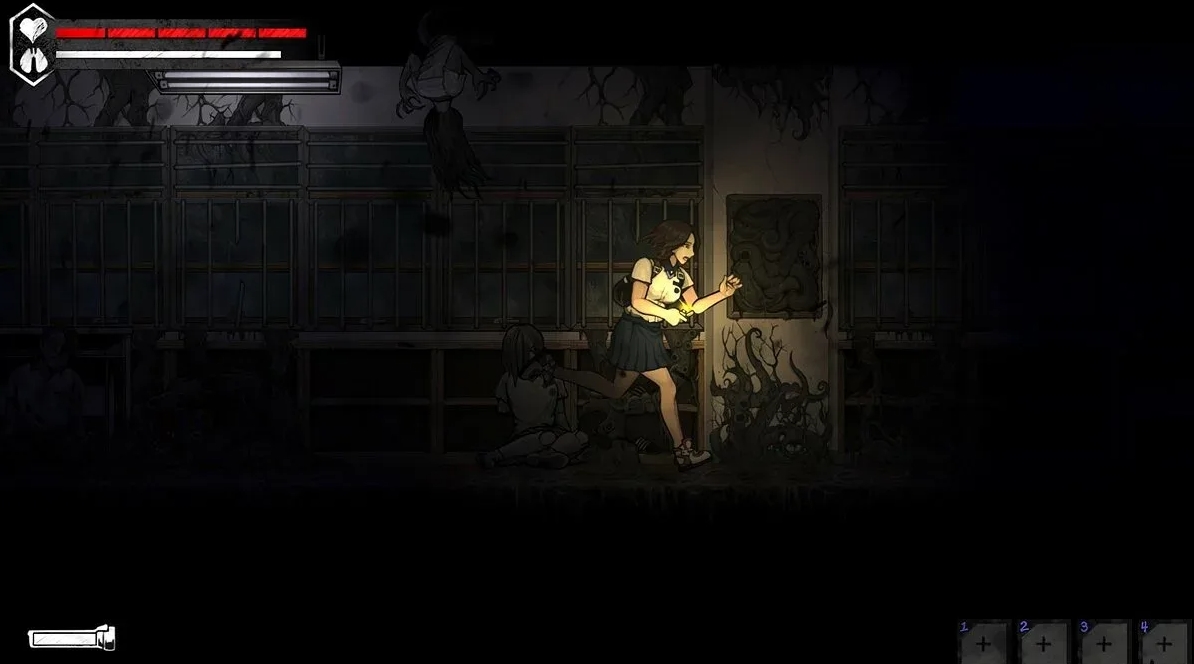
It’s at moments like this that you realize how The Coma 2 differs from other games. There is no need to crawl on all fours, looking for the perfect moment to escape. The game does not encourage excessive caution — on the contrary, it makes you move. The monster is fast, but you have to be even faster. It’s faster to think, make decisions, and navigate. This is not a survival horror game where you survive against all odds, but a dynamic game of reaction and intelligence, where rhythm and instinct are important.
Consumables and items are needed here not only for survival, but to make it beautiful. Using a first—aid kit or buying off danger is not an act of desperation, but part of the gameplay rhythm. The developers make you feel every second of the chase, every movement of the hero. Your body reacts to what is happening: your palms are sweating, your breathing is getting short, and one thing is throbbing in your head — run!
The only drawback is that the start is too slow. For the first few hours, the game is careful not to reveal all the cards, and only by the middle it turns into the very dynamic horror that you came for. But as the action gathers momentum, The Coma 2 becomes literally relentless. It takes about seven to eight hours to complete, of which at least half will be spent in constant tension, on the edge between fear and delight.
At the same time, the plot plays a practical role — it explains why the heroine found herself in this nightmare and where she needs to go. It has some unexpected twists, not always logical, but they work in the context of the game. The main thing is not the story, but the experience, what you feel at the moment of the chase. But the characters are written much better. The heroine turned out to be alive and real: she is afraid, angry, finds the strength to resist, makes mistakes, loses hope, but does not give up. There’s a humanity in her reaction that’s rare in horror movies.
The atmosphere is particularly admired. It’s thick, viscous, and almost physically palpable. It gets darker and more disturbing with each new location. In the first part of Coma, the atmosphere of fear was intimate, almost intimate, but here everything is bigger: schools, hospitals, streets, dungeons — everything is permeated with anxiety and a sense of impending doom. And the “stalker” is the very element that makes the game breathe. He’s not just an enemy, he’s a symbol of your fear, the epitome of hopelessness.
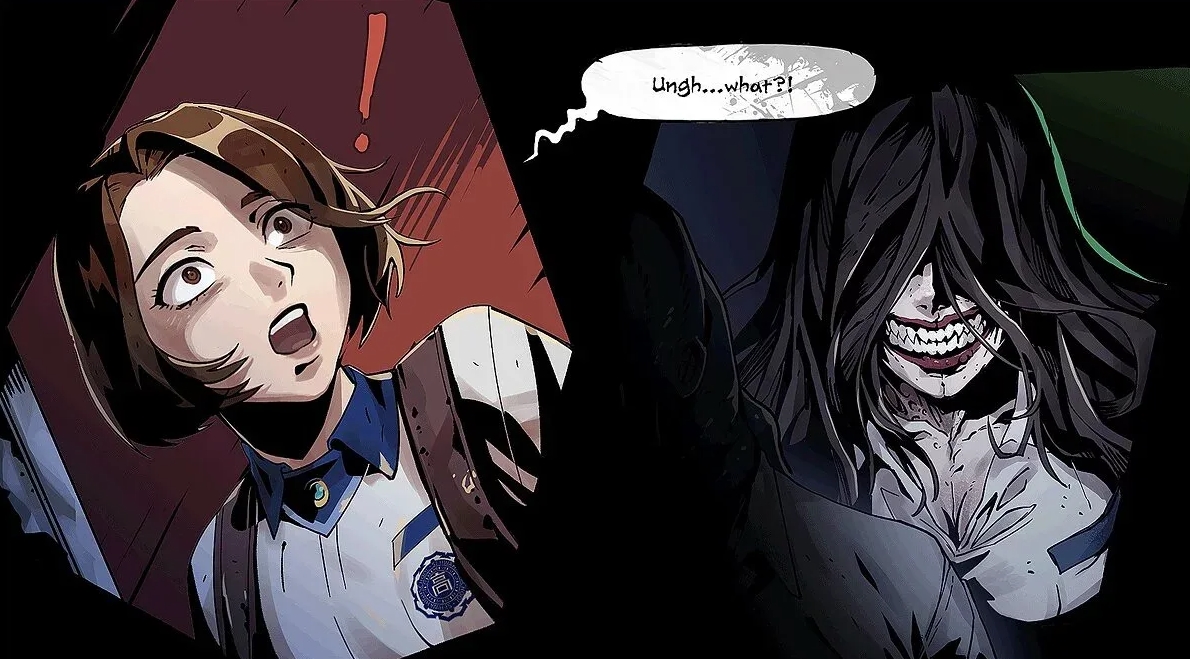
The world of The Coma 2 is full of mysteries and secrets that affect the ending and reveal new details of the universe. If you search carefully, you can stumble upon mysterious objects, additional scenes, and even hidden locations. They stand out especially:
-
Notes and documents revealing the ENT of the game and the fate of the characters.
-
Phone calls to the dead, which add to the mystique and may give unexpected answers.
-
Hidden objects that unlock bonuses and improve the chances of a good ending.
-
Side routes leading to completely new areas where fear is felt even more strongly.
Each such find makes the passage richer and deeper, allowing you to look at the story from a new angle. And notes and calls from the “other side” add a special charm to the game — gloomy, but fascinating. Yes, you can call the dead here — and sometimes they answer.
The Coma 2 is not just a horror movie, it’s an experience, a test of your nerves and reactions. It’s not those who hide who survive here, but those who act. This is a game about speed, about fear, about courage. She teaches you not to freeze in horror, but to run towards the unknown. And when you burst into a room once again, escaping from the “Enslaved Flesh,” you realize that The Coma 2 is not just a nightmare, but a living, breathing work where fear does not paralyze, but makes you live faster.
The Coma 2: Vicious Sisters System Requirements
System Specs — The Coma 2: Vicious Sisters
| Required (Minimum) | Suggested (Optimal) |
|---|---|
| Windows 7 / 8 / 10 — 64-bit version | Windows 10 / 11 — 64-bit platform |
| Processor: Intel Core i3-530 or AMD FX-4100 | Processor: AMD Ryzen 5 1600 or Intel Core i5-7600 |
| RAM Memory: 4 GB | RAM Memory: 8 GB |
| GPU: AMD Radeon HD 5750 / NVIDIA GTX 460 | GPU: NVIDIA GTX 750 Ti / AMD R7 370 |
| DirectX Support: Version 11 | DirectX Support: Version 11 |
| Free Disk Space: 4 GB available | Free Disk Space: 4 GB required |
How to play The Coma 2: Vicious Sisters for free on Steam via VpeSports
Are you ready to plunge into a nightmare from which you cannot escape even in a dream? Welcome to The Coma 2: Vicious Sisters, a grim tale of survival where every step may be the last. Ordinary schoolgirl Mina Park finds herself trapped in a mutilated version of her school, where the walls breathe evil, and something hunts her in the dark… familiar and terrible. There is no place for accidents here — only cold, silence and panic fear of every rustle.
And the best part is that you can experience it all for free! We’ve already done everything for you: no complicated settings, no extra time. Just visit our website, register and log in to your account — The Coma 2: Vicious Sisters is already waiting for you with detailed launch instructions or in a free Steam account.
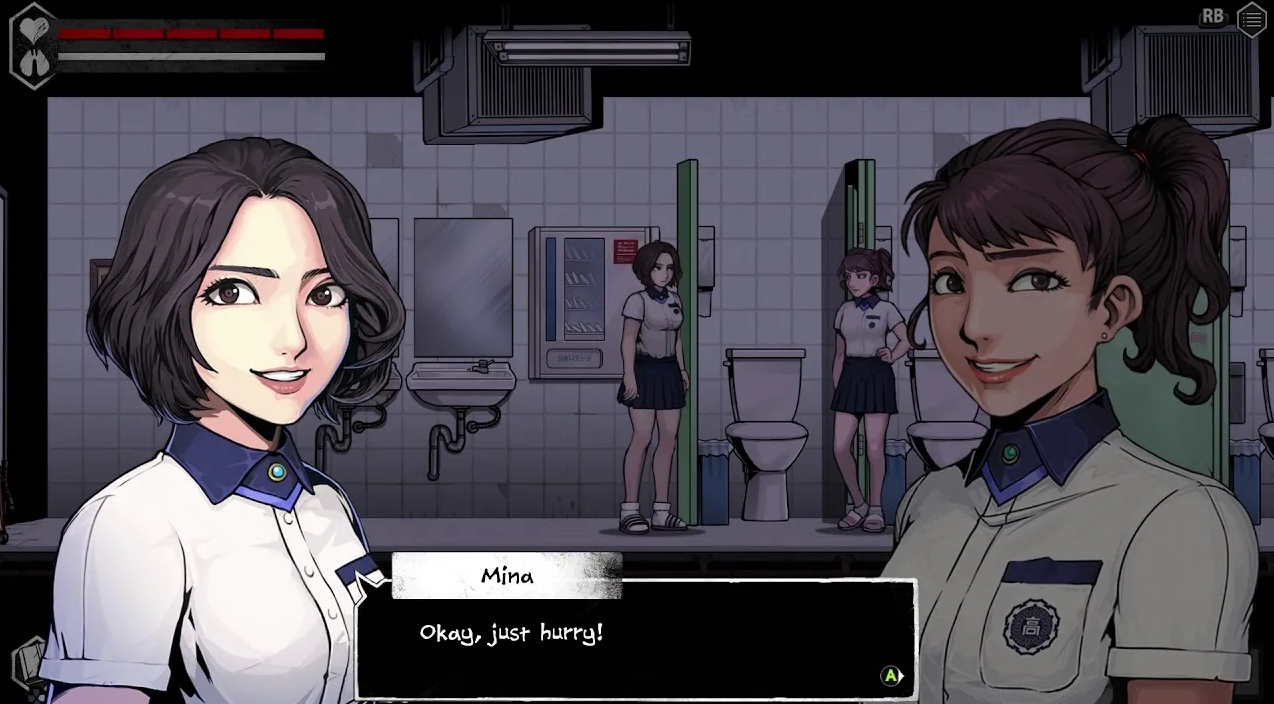
Don’t know where to start? Take a look at the “How to play for free – Complete guide” section. There we have collected step—by-step tips, hints and answers to frequently asked questions so that you can immediately immerse yourself in the game, rather than searching for instructions.
After you get out of the nightmare (if you do), be sure to share your impressions! It is important for us to know how you felt wandering through the gloomy corridors of Sehwa High. All reviews are moderated. If your comment does not appear immediately, just change it a little, and after approval, all the necessary login information will be sent to your email.
Do you want to keep up to date with new giveaways, updates, and game discussions? Subscribe to our Telegram channel — there we post fresh accounts, news, patches and arrange live conversations with players. And if you encounter difficulties or something goes wrong, just write to us in the chat – we are always there to help you get out of any darkness.