

The horde-survivor genre, or as it is also called “bullet heaven”, has literally experienced a second birth in recent years. The success of Vampire Survivors launched an avalanche of imitators, and now dozens of projects that somehow borrow its ideas enter the market every year. Against this background, Jotunnslayer: Hordes of Hel tries not to get lost in the crowd. The developers took the familiar mechanics of survival surrounded by endless hordes of enemies and transferred it to the harsh world of Scandinavian mythology. And the game is also a pleasant surprise – instead of the usual simplicity of the genre, it offers atmospheric and well-developed graphics, which really sets it apart from its competitors.
Table of Contents
Jotunnslayer: Hordes of Hel Free Steam Account
Jotunnslayer: Hordes of Hel is the very roguelite where every minute in the arena feels like a fight for life. The hero himself deals blows to the nearest enemies, and your role is reduced to the main thing – not to stand still, to evade attacks and to pick up experience and gold that remain after fallen opponents. From the first seconds you are a simple warrior, but step by step, level by level you turn into an inexorable death machine. Each upgrade is a choice between personal skills and “gifts” of the Scandinavian gods. From these decisions a build is gradually born, a unique combination of skills that will determine whether you will survive until the end of the run.
It is impossible to play statically here – monsters roll in from all sides, and the further, the denser the ring. A mistake is expensive: hesitated, did not have time to press the dash – and the horde sweeps you away without unnecessary ceremony.
To keep the player from getting bored while grinding, each map throws up additional challenges. Sometimes you need to collect mushrooms in the middle of chaos, sometimes you need to kill elite monsters, close a portal to the underworld, or survive with a curse. These tasks appear randomly, change from run to run, and always reward gold. But what’s more important is that they open access to bosses: having completed enough quests, you get a chance to perform a summoning ritual and face the main enemy of the arena.
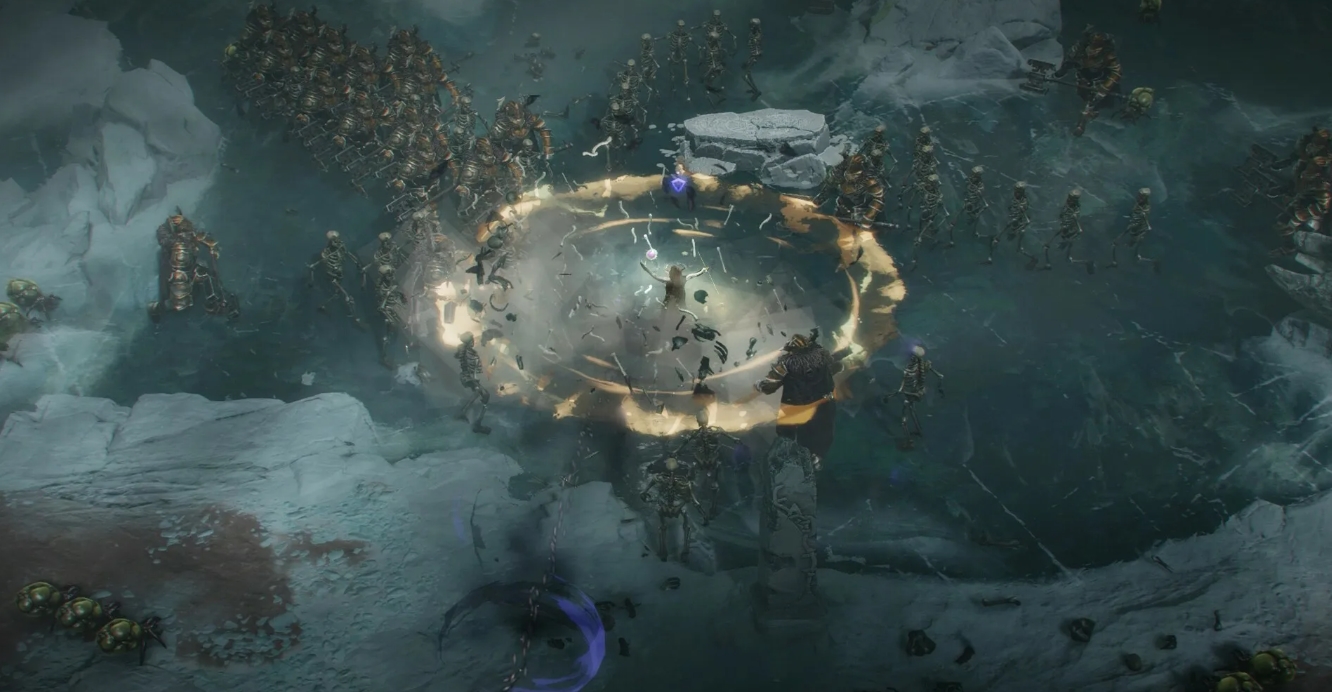
Time is against you – the timer is ticking, and the balance between farming and risk becomes a real test. On higher difficulty levels, the tension increases so much that each run turns into a race with death. And although the bosses themselves do not always pose a mortal threat, battles with them are presented as epic events, and this makes them especially enjoyable.
Even defeat is not the end of the road. After the run, you return to the base, keeping the gold you have earned. It can be spent on meta-progression: unlocking new skills, strengthening your character, and forming a long-term strategy. The system is honestly time-consuming — the coins go quickly, and you’ll have to farm quite a bit. But it’s this slow, tangible progression that creates the sense of growth that keeps you coming back for more.
Browse, click, and play with your free steam account with!
Gameplay Jotunnslayer: Hordes of Hel
Instead of standard fantasy maps, Jotunnslayer takes the player through the worlds of Scandinavian myths. Each stage is a separate legend: icy and gloomy Niflheim, flaming Muspelheim, the gloomy mines of Svartalfheim and the windy expanses of Jotunheim. With the release of version 1.0, the final chord was added to the game – Helheim, the realm of the dead. It is designed as a multi-level dungeon, where each break between halls feels like a break before a new nightmare. Fighting through its narrow corridors is much harder than running through the open arenas of past worlds. And the finale feels worthy of the culmination: a long, grueling run and a powerful – and also damn charismatic – boss at the end. Each world is unique not only in the picture, but also in the challenges. In Niflheim, icicles fall right on your heads, in Muspelheim the ground is torn apart by streams of flame, and mortars strike from the depths. Svartalfheim hides enemies and chests in the darkness of the mines, while Jotunheim greets you with ice storms and ends the march with a fight with a giant. Such details force you to constantly rethink your tactics and do not let you get bored even after the tenth raid.
Mythology is not a background here, but part of the mechanics. In Helheim, you are confronted by draugrs and revived undead, in Muspelheim – fire demons, and wolves and jotuns roam the northern plains. Side quests also play into the atmosphere: somewhere you need to collect horns and mushrooms, somewhere destroy a cursed idol or find ancient runes. The pantheon of gods is also generously represented: Thor and Odin, the treacherous Loki, Freya, Skadi, Njord, the blacksmiths Brokk and Sindri, as well as Nidhogg himself, gnawing at the roots of Yggdrasil. All this creates an atmosphere in which fans of the Scandinavian sagas will feel at home.
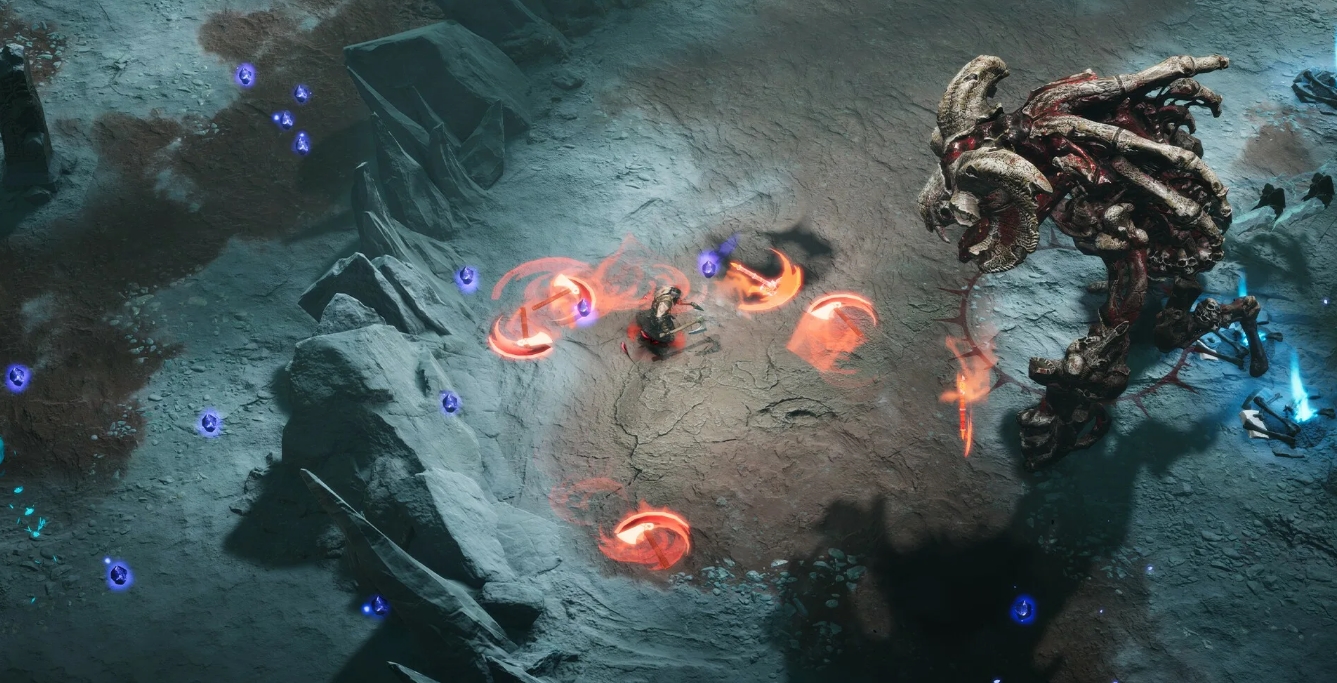
At first, the choice of heroes is small, but the further you go, the more characters are unlocked. The full roster includes six classes: Berserker, Prophetess, Fire Sister, Revenant, Guardian and a fresh newcomer – Fallen Valkyrie. Each hero really changes the style of play, and to unlock a new one, it is usually enough to fulfill a simple condition. The Berserker is a proven classic: a hefty melee fighter who only enjoys pain. The more hits he receives, the stronger he becomes. His axes are good both in throwing and in circular strikes that mow down crowds. The Prophet is the complete opposite: a fragile but cunning ranged sorceress. She relies on curses, protective barriers and control of space, and her automatic shield saves her from death more than once. The Revenant is a gloomy archer who sends rains of arrows and summons ghostly assistants.
The Fire Sister is a fast and daring rogue with flaming blades. She relies on damage and status effects, but pays for this with low survivability. The Guardian is the opposite: a small but strong dwarf, capable of taking control of the battlefield with one blow of a hammer and shield. But the Fallen Valkyrie is the main newcomer of the release. According to the plot, she is an exiled warrior of the heavenly army, and according to mechanics, she is a mid-range universal. She wields a magical spear, and her hovering spirit adds long-range strikes. In the end, the class turned out to be the most balanced: fast enough to dodge, and strong enough to withstand blows.
Overall, the roster of characters is pleasing: it is diverse, but not overloaded. Each class changes the pace of the game in its own way and encourages trying new styles of passing. True, the balance is still lame: some heroes are frankly weaker than others. And the appearance is too stereotypical in places – I would like a little more originality. But these are already nitpicks: in battle, they look brutal and convincing, and this is quite enough.
Build Combination
The system of divine blessings for the roguelike genre is nothing new, such mechanics are encountered all the time. But in Jotunnslayer this idea is presented freshly and organically, intertwined with the atmosphere of Scandinavian myths. During each run, the player is accompanied by up to eight gods, and at each level you have to decide: to develop your own hero skills or accept the gift of one of the patrons. Gradually, a build is formed – and the gods themselves can be pumped up for in-game currency, opening up new opportunities.
Each deity has a distinct character. Thor brings lightning strikes to the arsenal and increases health with damage – a godsend for those who like to go hand-to-hand. Loki offers cunning: poisonous attacks, double spells, a bonus to gold and accelerated strikes. Freya maintains survivability by summoning Valkyries and restoring health after defeating enemies. Njord controls storms and sends sea creatures. Brokk and Sindri, the blacksmith brothers, enhance weapons and grant useful passives like vampirism or speed boost. The others also add their own twist, so experimenting with builds in Hordes of Hel is truly addictive.
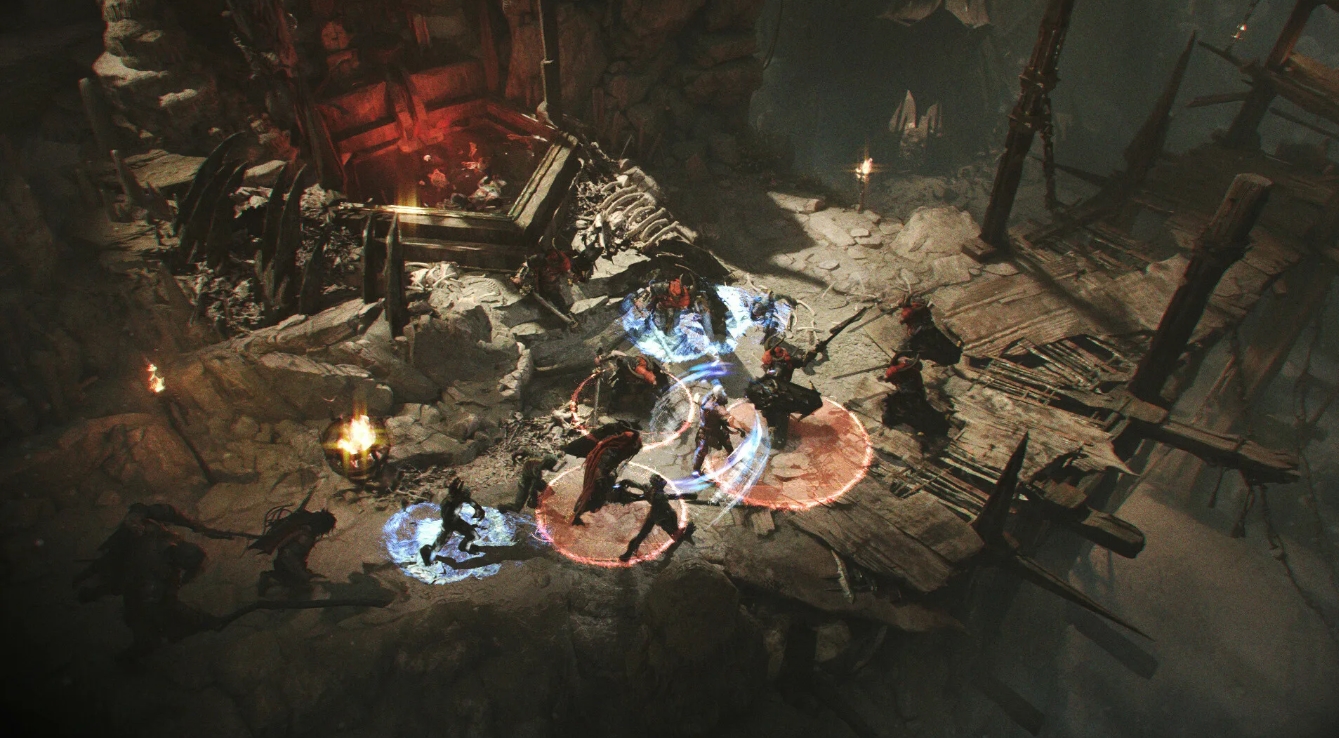
The player can combine gifts from different gods, creating a universal character, or focus on one patron, turning into his living embodiment. There are enough options to make each playthrough feel new, but monotony sooner or later begins to appear – individual gods do not have that many buffs. Interestingly, here you can completely abandon divine bonuses and assemble a build only on class skills – and often they turn out to be even stronger than the gifts of Scandinavian legends. The balance feels uneven: Thor, Loki or Nidhogg are almost mandatory at high difficulty levels, while Njord or Skadi are noticeably inferior in usefulness.
Overall, the build system in Jotunnslayer is not overloaded with hidden math and intricacies, but there is enough freedom. The game encourages you to find successful combinations, even if at high levels the strategy eventually comes down to the most effective set. All this creates the feeling that the potential of some gods is only half revealed. It’s a shame, because the idea itself feels very strong and clearly made with love.
Graphics Jotunnslayer: Hordes of Hel
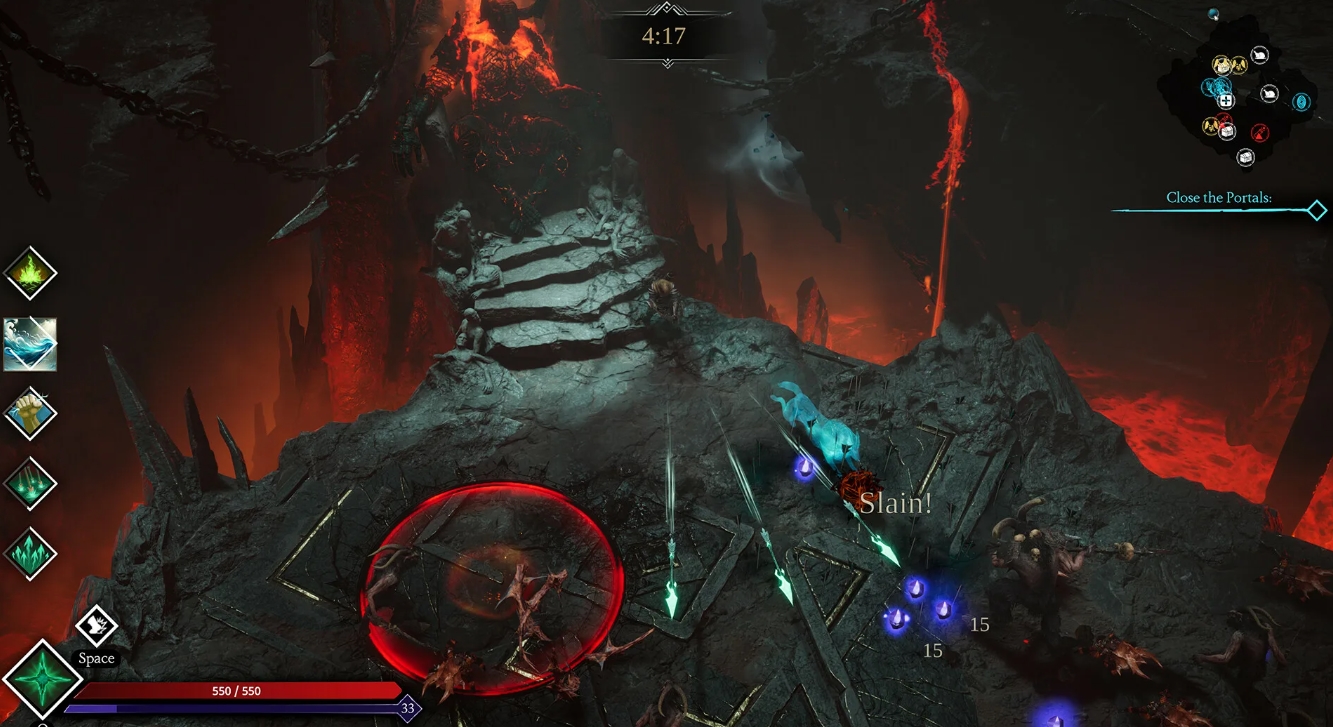
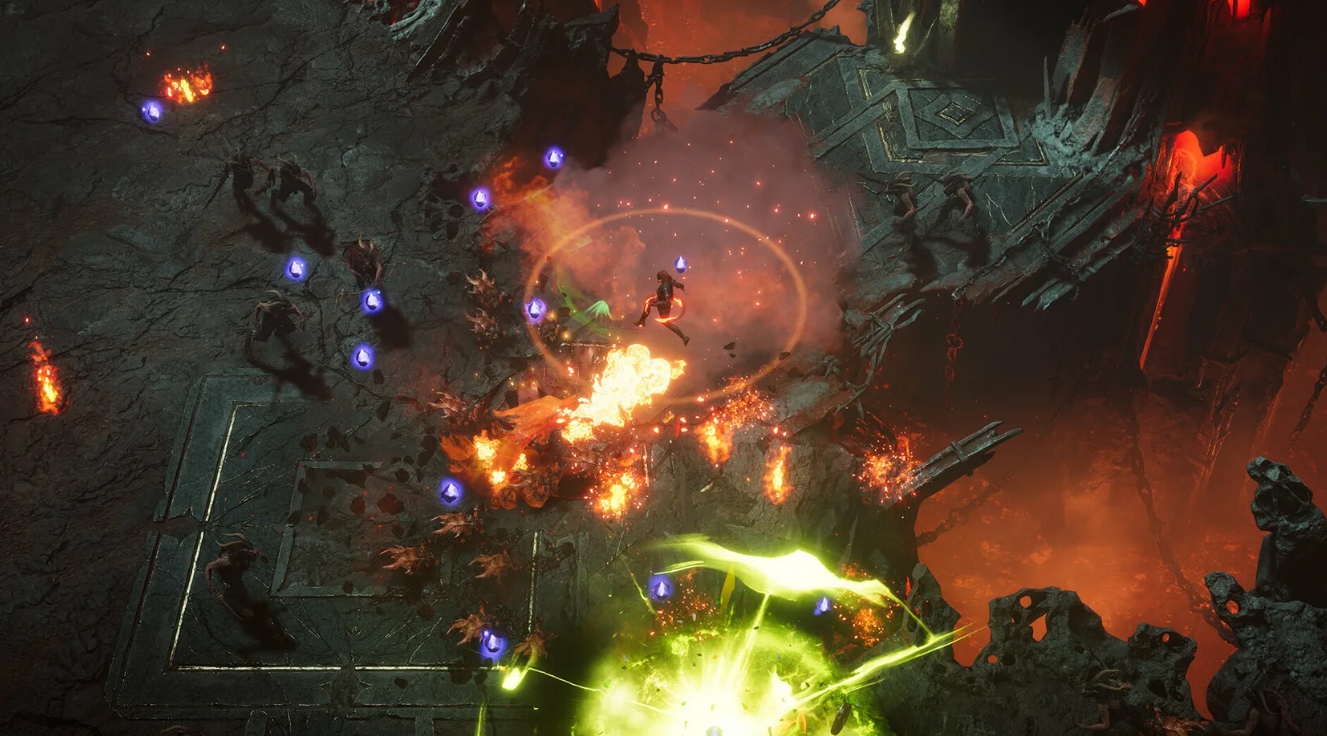
The first thing that catches your eye in Jotunnslayer is its visual design. There is no usual pixel style or bright acid palette that are often found in such games. Instead, the developers have focused on realism – not flashy, but detailed, somewhat reminiscent of the latest parts of Diablo. If you glance at the screenshots, the game can easily be confused with a serious AAA project: the characters are drawn to the smallest detail, the environment creates a gloomy atmosphere, and the lighting effects pleasantly enliven the picture. As a result, a complete image of a harsh Scandinavian fantasy is born on the screen.
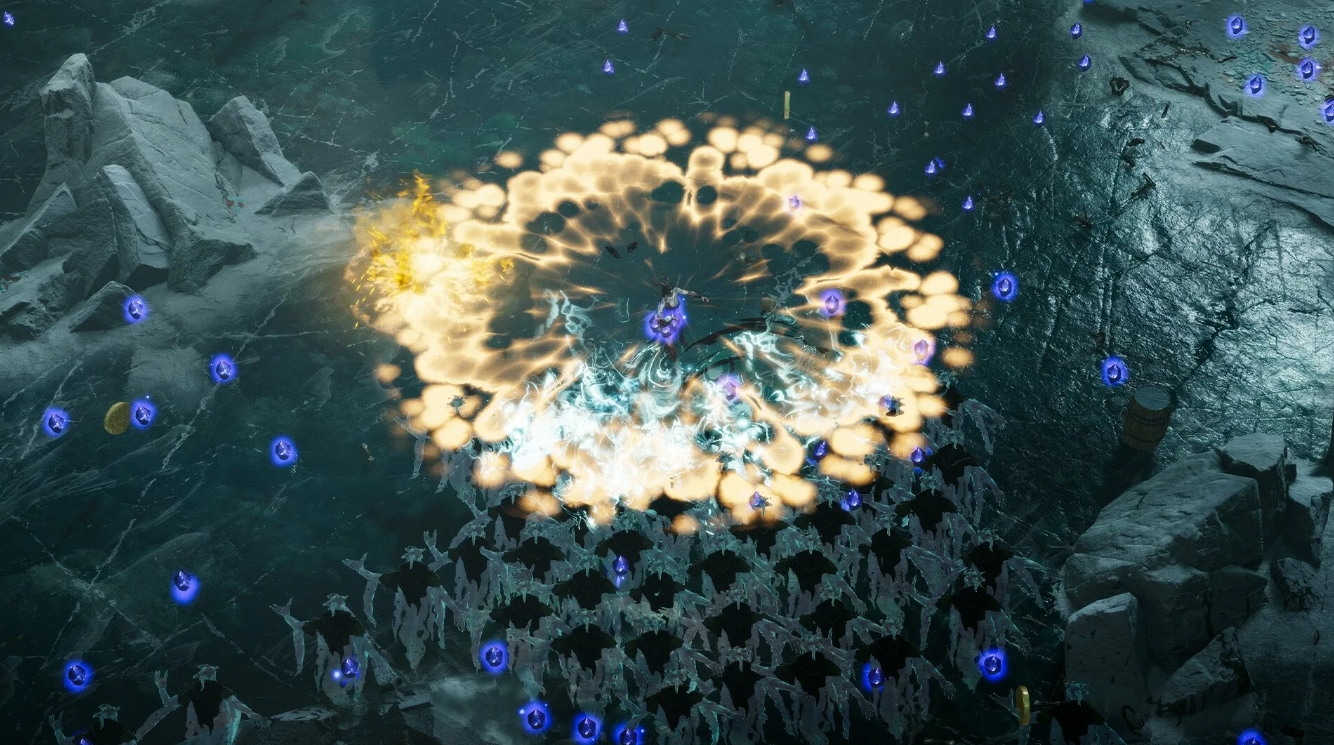
The heroes’ skills look no less impressive. Thor’s lightning cuts through space, his hammer flies through enemies with a roar, fire spheres turn into bright explosions, and ice strikes cover the ground with a crust of frost. Revenant’s summoned wolves look so detailed that they are perceived as separate characters. At the same time, everything remains legible in combat: even in the chaos of battle, it is easy to understand where your hero is, where the opponents are, and the zones of deadly attacks of bosses and elites are highlighted very clearly. A pleasant bonus is that the game does not sag even in the most intense moments, although it is worth considering that it was tested on fresh hardware.
The sound deserves a special mention. The soundtrack is based on the motives of northern folk: booming drums, hoarse throat singing, bagpipes. The music adapts to the dynamics of the battle and creates the necessary tension, turning each clash into a small saga.
Of course, graphics are a matter of taste. Some will find the style of Jotunnslayer too gloomy and “gray” for a genre where players are used to seeing a riot of colors. But it is precisely thanks to this restrained, serious presentation that the game stands out among similar projects. As for what it would look like in pixel or hand-drawn form, we can only guess.
Is Jotunnslayer: Hordes of Hel worth playing in 2025?
Jotunnslayer: Hordes of Hel makes exactly the impression you expect from the first minutes. The game does not try to seem like something radically new, but it honestly captivates and draws you in. The atmosphere of gloomy Scandinavia, heavily seasoned with myths and legends, grabs you right away, and the divine builds give you room for experimentation. True, not everything is perfect: the balance is sometimes lame, the leveling system is quite limited, and there could be more content. But do you really want to nitpick when you turn on the berserker mode and happily destroy another wave of enemies? I think the answer is obvious.
What I liked:
-
the atmospheric world of Scandinavian myths and jotuns;
-
“one more run, and I’ll definitely go to bed” – a high level of involvement;
-
spectacular bosses and stylish locations;
-
strict, brutal presentation.
What’s disappointing:
-
character balance imbalances;
-
“perfect” builds are found too quickly;
-
some divine patrons look weak.
Jotunnslayer: Hordes of Hel System Requirements
Jotunnslayer: Hordes of Hel – System Requirements
How to play Jotunnslayer: Hordes of Hel for free on Steam via VpeSports
Jotunnslayer: Hordes of Hel takes you to a world where every crack in the ice echoes ancient battles, and every shadow can turn into an enemy. There is no place for the weak here: the winds from the North whip your face, the mountains rise above the world like eternal guards, and hordes rise from the depths of Hel, ready to sweep away all living things. From the first minutes it seems that this is not just a game – it is a legend in which you become its main character.
We have done everything possible to make the path to this adventure simple. Register, log in to your profile, and Jotunnslayer: Hordes of Hel is already waiting for you, fully prepared. Even if you use a free steam account, access remains just as easy: no unnecessary barriers, just a direct step into a world where swords ring and blood boils in your veins from the excitement of battle.
When you finish another battle, do not forget to share your impressions. Your words are part of our shared saga, and it is thanks to your feedback that a community is created where each hero can tell about their exploits. Once the comment is verified, all the details and necessary data will be sent to your email. To stay up to date with updates and news, join our Telegram channel: there is always something useful there – from new accounts to hot discussions of the latest patches. And if you have any questions along the way, visit the section “How to play for free – Complete guide” or write to us directly in the chat.