

Space has always attracted humanity as the last frontier of the unknown. Here you can launch ships into the endless darkness, land on mysterious planets, encounter alien civilizations and find new life forms. True, along with discovery almost always comes conflict – and here you can’t do without fighting, no matter how contrary it is to the spirit of the Star Trek universe and the famous “Order No. 1” of the Star Fleet.
The Paradox studio has long proven that it feels like a fish in water in the genre of complex strategies: it is worth remembering its legendary series Hearts of Iron, Crusader Kings and, of course, the space Stellaris. Now the developers decided to take a risk and transferred the action to the world of “Star Trek”. But not abstract, but concrete – in the era of “The Next Generation”. Such a choice will certainly please some fans and raise questions for others. What came out of this bold experiment – let’s figure it out.
Table of Contents
Star Trek: Infinite Free Steam Account
Here is a strategy that seems to echo Stellaris, but with a strong bias towards the Star Trek universe. Here, too, you will have to try on the role of the ruler of the galaxy, and there are plenty of ways to achieve dominance: you can put pressure by force, weave diplomatic intrigues with spies, or simply win on points. Four main forces are offered for the start: the United Federation of Planets, the Klingon Empire, the Romulan Empire, and the Cardassian Union. Each of them has its own character: the Federation relies on diplomacy and science, the Klingons prefer direct clashes, the Romulans are known for their ability to build a strong state, and the Cardassians represent the golden mean.
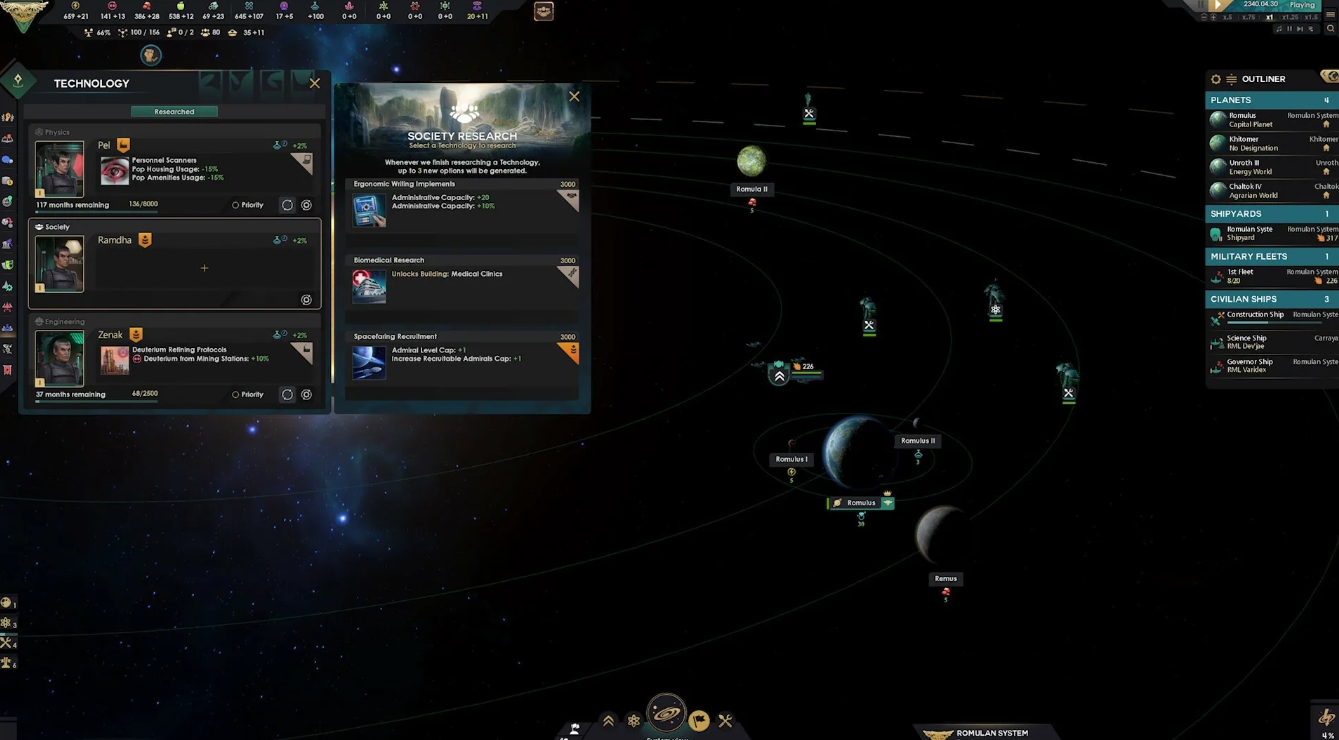
After choosing a faction, the path begins with small ones. The first steps are sending scientific ships for reconnaissance, building mining stations, collecting resources and colonizing new worlds. In parallel, you will get to know your neighbors, conclude treaties and issue your first laws. Time in the game can be controlled: slow down the events, speed them up, or even pause everything to calmly assess the situation. And behind each of these seemingly simple functions, there is a whole abyss of mechanics that can easily take away your sleep and free time.
Even the science ships play a much more important role here than it seems. They not only scan systems in search of suitable worlds and resources, but also explore anomalies and come into contact with primitive civilizations. This turns into a kind of mini-quests with unexpected solutions. For example, you can stumble upon a planet inhabited by children and face a choice: to intervene or remain faithful to the “Non-Interference Directive”.
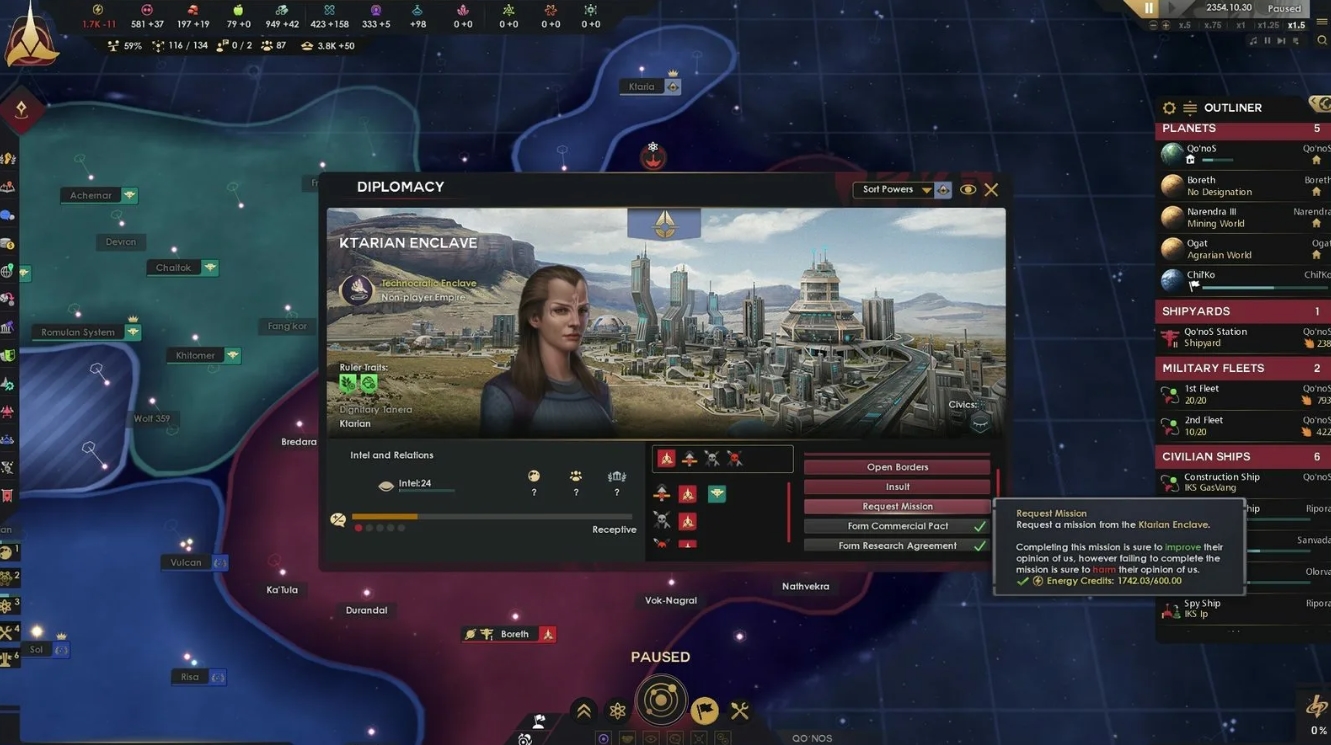
Planet management is also impressive. The window of each colony displays a lot of parameters – from the level of stability and production to areas with buildings. To avoid drowning in micromanagement, you can assign a development profile to a planet: let one specialize in energy, another in science, and a third in resource extraction. This is especially useful when you have dozens of worlds, and you clearly don’t feel like doing the daily work of farmers.
But you can’t just expand. To capture systems, you need resources and influence points, and also build a space station. Therefore, at the beginning of the game, you often have to negotiate rather than fight: open embassies, exchange gifts and promises of friendship. Nature also adds a headache: resource-rich planets may turn out to be uninhabitable without terraforming, and ideal worlds are found where there are almost no valuable minerals. Sometimes you have to colonize a planet just for its strategic position, otherwise your neighbors will do it. Progress is driven by laws, technologies and traditions. The player can issue decrees that bring bonuses (although often with their own downsides), open new scientific branches and choose social development perks. There’s also an Operations Tree, which reveals important milestones as the empire grows, from the construction of the Enterprise to the creation of Mr. Data’s positronic brain.
And of course, there’s no way around leaders. Admirals and generals lead fleets and armies, ambassadors are responsible for diplomacy, governors inspire the populace, spies conduct covert operations, and scientists drive progress forward. Each character has unique traits, and they’re what give the game that feeling of a living galaxy, where destinies are hidden behind cold numbers.
Gaming on a budget? You need our steam free accounts.
How to Build a Fleet and Maintain Power in Space
No matter how peaceful the development of your civilization may seem, sooner or later you will still have to face conflicts. Scientists made a mistake and fell under the hot hand of aggressive natives? Then you will have to assemble a battle fleet and engage in, so to speak, “diplomacy of forceful arguments.” A war broke out somewhere? It is logical to intervene, support one of the sides and snatch some of the spoils, while strengthening relations with the winner. It also happens that your ally unexpectedly decides to put pressure on a weak faction like the Betazoids – the same ones that fans will recognize from Captain Picard’s advisor. Or you yourself, driven by ambition, invade the territories that the Romulans hold on to – here passions seriously heat up. And if you openly challenge one of the three main powers of the galaxy, then be ready to turn on the phasers and load the torpedo compartments.
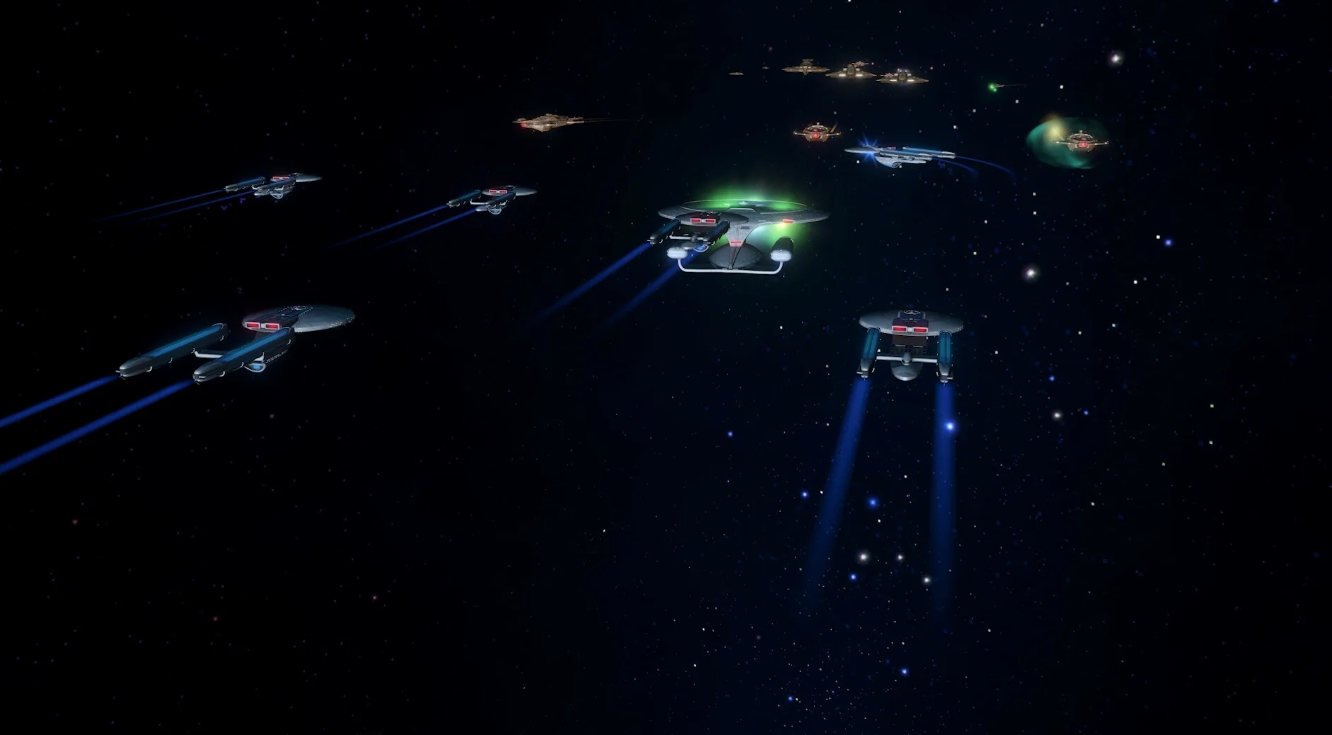
The main weapon in the game is ships. They are built in shipyards, formed into flotillas and entrusted to the command of admirals. But resources are not endless: you need deuterium for fuel, alloys for the hull, crews for control. And all this is limited. And you still need expenses for maintenance, repairs, upgrades… It turns out that a simple “rattle your weapons” costs the budget a tidy sum.
You can design a fleet using ready-made schemes like the Intrepid or Defiant, but nothing prevents you from coming up with your own project, adjusting the balance between armor and weapons and giving the ship a name to your taste. For lovers of special solutions, unique ships are provided – for example, the legendary Enterprise. It is useful in scientific missions, and good in battle, can revive after death, and only Captain Jean-Luc Picard can lead it.
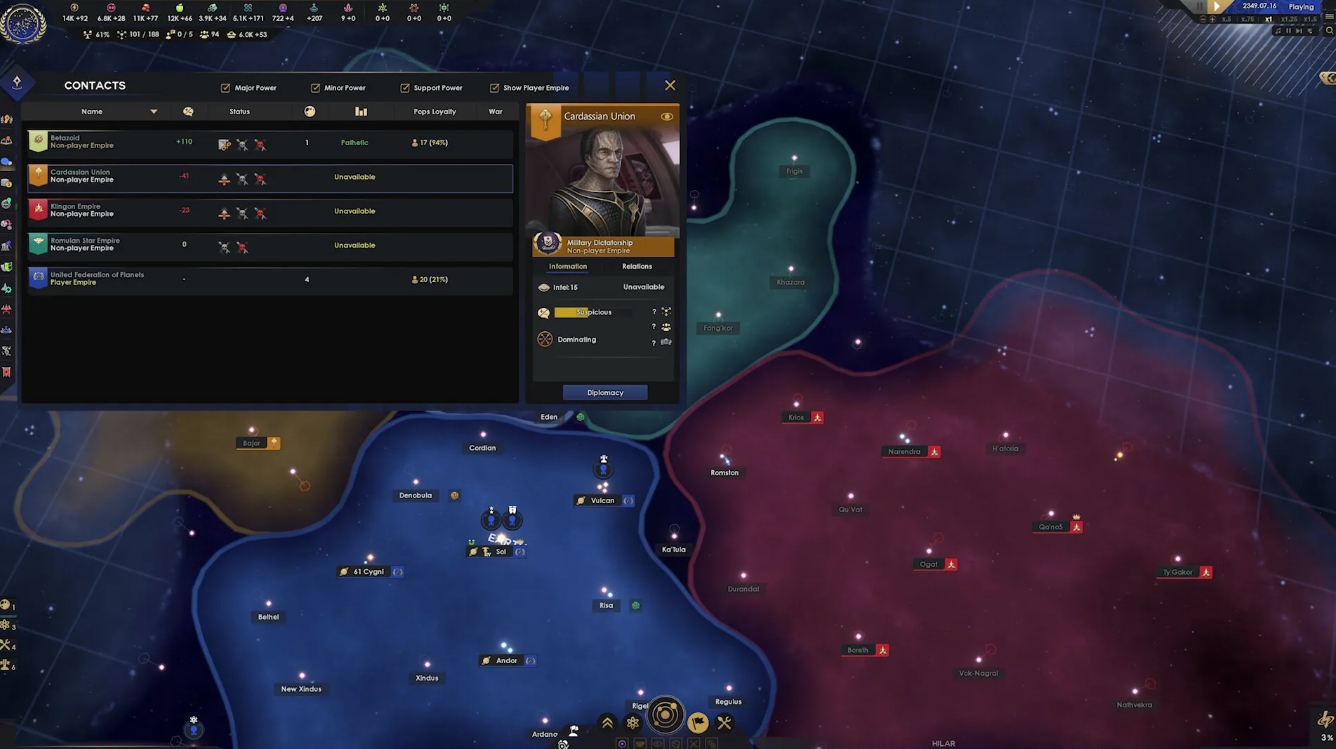
Like other Paradox projects, this strategy is built on clear principles, but the deeper you dive, the more you discover. Gradually, you master trade, understand the mechanics of migrations, and learn to maneuver in politics during war. The initial properties of the chosen faction are just a starting point. If you want, play for peace-loving explorers repeating “We come in peace.” Or develop a trading empire that has showered everyone with energy credits. And if peaceful slogans are not for you, build up your military power and advise your neighbors to urgently “master bipedal walking so they can run away faster.”
Being the ruler of the stars is not easy. As soon as you go too far ahead, the game turns on a balancing mechanism: opponents receive bonuses to keep up. And in parallel with your conquests, events beyond your control flare up in the galaxy. For example, invasions of barbarian armadas from the outskirts of space – they break into systems and sow chaos, like the Mongols once did in 13th-century Europe. And the global plot develops through the “Operation Tree” and is reflected in the tension scale, which shows how close everything is to a galactic catastrophe.
Star Trek: Infinite Gameplay
In short, the feeling is familiar. From the first minutes you catch déjà vu — the interface design, the usual restrictions, and even those minor inconveniences that cannot be automated. Everything seems to have been copied from old strategies: you cannot simply break in and seize other people’s territories, as was done in “Civilization”. Everything is bureaucratic here — first, cook up a claim, outline the goal of the campaign, and follow a strictly defined route. Try to step to the side — and all efforts will be nullified, as if you are playing not for the Klingons, but for the European feudal lords from Crusader Kings III. But at the same time, Star Trek: Infinite does not look like a copy of Stellaris. It has its own character, and the main reason is the legendary universe of “Star Trek”.
The factions are written with love: each has its own habits, architecture, technologies, lines in tasks. The starting bonuses are in keeping with the spirit of the series — people really do strive for dialogue and alliance, not for aggression with a phaser at the ready, as Captain Kirk sometimes practiced. The Klingons, as expected, can immediately threaten to commit genocide. The game features iconic elements of the franchise: time distortion fields, the Memory Alpha knowledge library, as well as resources like dilithium, without which it is impossible to launch warp engines. All this creates an atmosphere, but at the same time leads to the main question: how important are these details for the player if he is not a fan of Star Trek?
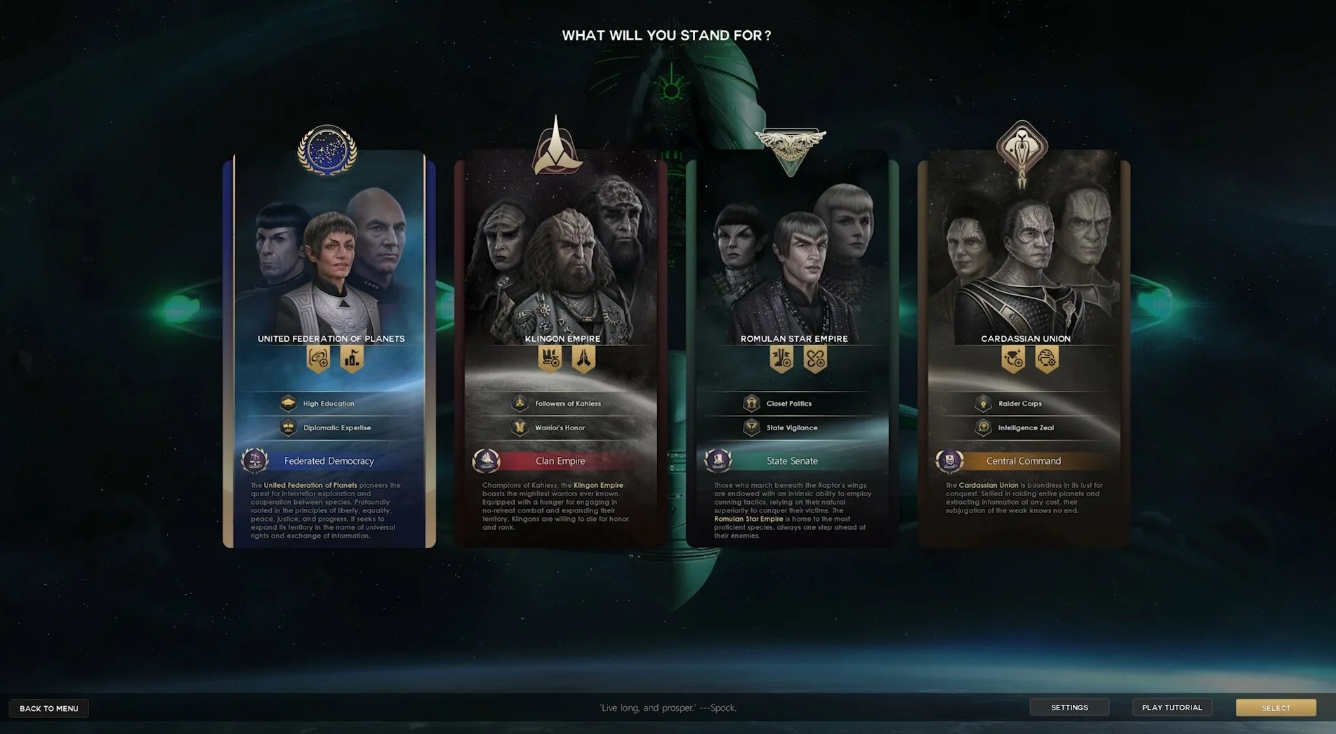
Of course, it is nice to see Picard’s shiny head on the bridge, appoint Spock or Riker to the council, give orders to Luther Sloane, study the Genesis project or encounter events related to Troi and La Forge. But let’s be honest: how many Klingons or Romulans can you remember by name? A couple at most. Can you name their ships without searching on Google? Probably not. But the Enterprise or the planets Earth and Vulcan are another matter, they are on everyone’s lips. Therefore, for most players, only one faction will be truly interesting – the United Federation of Planets.
And yet, there were some pleasant innovations. One of the most noticeable is the rejection of narrow corridors between systems. Now you can move directly from point A to point B, without zigzagging in endless zigzags. Plus, they added space highways between black holes, which allow you to quickly transfer your fleet. They also updated the spy mechanics: you no longer need to dig into diplomatic menus, just hire an agent, like any other leader, and send him to sabotage or counterintelligence. It’s a pity that there are few such improvements from Nimble Giant – there are clearly fewer of them than we would like.
How Star Trek Games Differ From the TV Series
In conclusion, it is worth saying frankly: strategy is perhaps the least suitable genre for the Star Trek universe. In the original series, in The Next Generation or in Discovery, people (and not only people) always came first – their characters, their actions at turning points, their encounters with difficult choices. Then came space battles, diplomacy with alien races and exploration of new worlds. It was this “human” component that made each iteration of Star Trek special: in the old series it was often frivolous humor, sometimes on the verge of absurdity, and in the new ones – an emphasis on current social issues, sometimes with excessive straightforwardness. To feel this difference, you don’t even need to know the classics – it is enough to remember Futurama, where early Star Trek was parodied without pity. After all, Zapp Brannigan is not so much a joke as a caricature-accurate reflection of Captain Kirk.
And it is precisely this subtle charm that is lost when you look at Star Trek through the prism of dry strategy, as if from a distance of several light years. In the game, you will not encounter absurd but memorable episodes, like the one where Genghis Khan fights Abraham Lincoln, and a race of intelligent stones watches everything, trying to weigh good and evil. Yes, there is a planet Eden, but it is turned into just a piece of space landscape with a set of characteristics: minerals, strategic value, class of planet. But the spirit, the very one that in the third season of the original turned even hippies with guitars into an unexpected challenge for Kirk, is no longer here.
Is Star Trek: Infinite worth playing?
Star Trek: Infinite feels like a fan mod for Stellaris, made with love for the Star Trek universe. The developers from Nimble Giant do not hide their inspiration. Fans of Star Trek, especially the Next Generation, will certainly be pleased. But if you look at the project through the eyes of a simple fan of the genre, you may ask: why pay for a less comprehensive experience if Stellaris itself with a set of add-ons gives much more freedom?
Pros
-
the strengths of Stellaris are inherited;
-
own gameplay solutions are added;
-
the scale of space battles and the development of empires is felt;
-
a lot of fan service for fans of Star Trek;
-
a pleasant soundtrack;
-
there is a translation into Russian (albeit of dubious quality).
Cons
-
along with the advantages of Stellaris, its disadvantages have migrated;
-
only the Federation is really interesting;
-
routine and monotonous missions when dealing with primitive civilizations;
-
there are complaints about corrupted saves.
Star Trek: Infinite System Requirements
Star Trek: Infinite – PC Specs
How to play Star Trek: Infinite for free on Steam via VpeSports
Imagine: beyond the porthole there is boundless space, and ahead there are uncharted sectors, new civilizations and decisions on which the future of entire worlds depends. Star Trek: Infinite invites you not just to play, but to live your own odyssey in a universe where politics, diplomacy and military campaigns are intertwined into a single flow of events. You will become a captain, a leader and a strategist at the same time – someone who is able to lead the fleet forward and open new horizons.
We have done everything to make this interstellar journey as easy as pressing the start button. Registration on the site will take only a couple of minutes, and after logging into your profile, the game will be ready to fly. Moreover, for maximum convenience, access is possible even through a free steam account – no barriers between you and space.
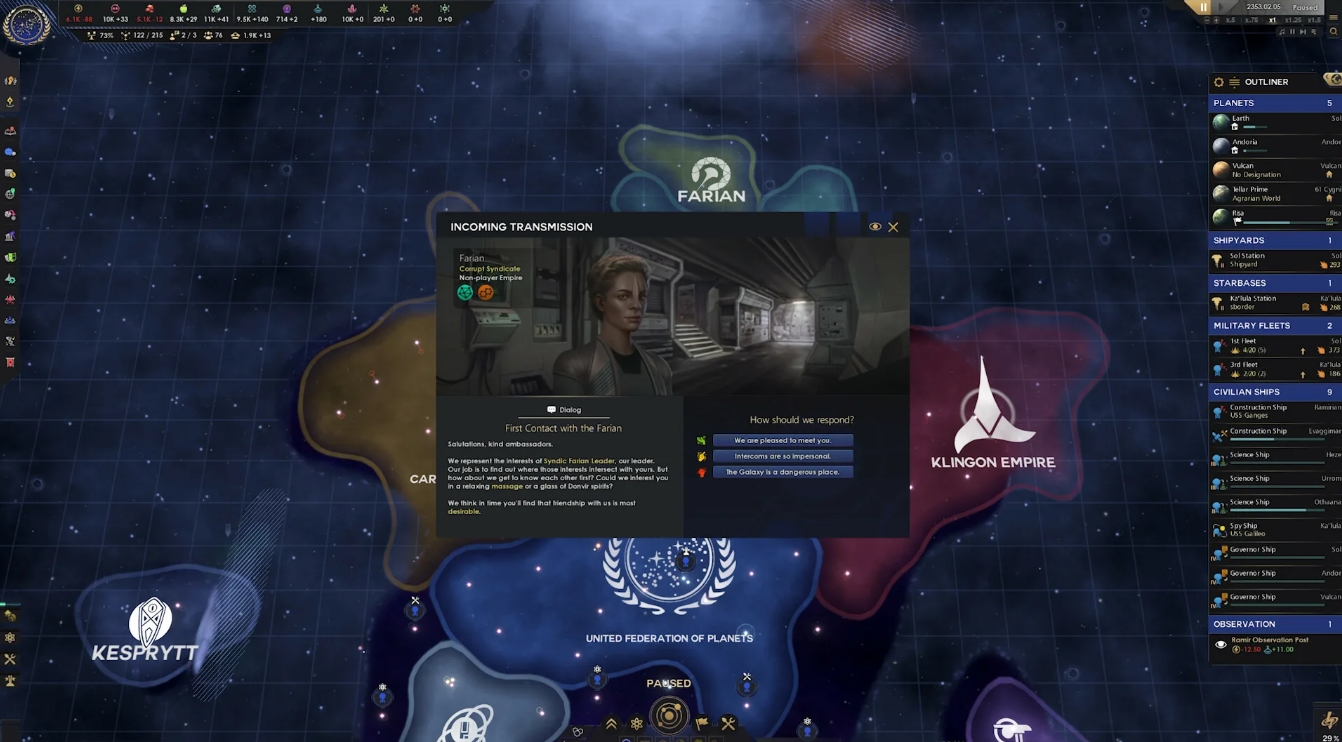
From the first minutes of immersion, you will feel that this is not just a strategy: each mission here turns into a story that you write yourself. Enter into negotiations, explore nebulae, build alliances or wage decisive battles. Everything you do will leave a mark on the galaxy. And when you finish the first campaign, share your impressions – we read all the reviews, and they help make the game even closer to the players.
Don’t forget to check out our Telegram channel or online chat: there are always fresh accounts, news, updates and live discussions. And if you encounter difficulties, the section “How to play for free – Complete guide” will become your navigator for all questions.