

Last year’s Unpacking won over many players with its soulful approach and leisurely gameplay. It was warmly received by critics, and some publications even named it the game of the year. However, the most unexpected triumph was the prize for “Best Narrative” at the prestigious BAFTA Games Awards.
This is not the first time that BAFTA has surprised with its choices – remember at least 2017, when the title of best game went to What Remains of Edith Finch, beating out even the legendary Zelda: Breath of the Wild. But the question still remains: what was it about Unpacking that impressed the jury so much that it left behind such large-scale and story-rich projects as Marvel’s Guardians of the Galaxy, It Takes Two and Psychonauts 2?
Table of Contents
Unpacking Free Steam Account
The idea for Unpacking came to creative director Ren Brier and her partner in the most mundane of moments — when they were unpacking their things after moving. So in a way, the game grew out of the boxes. The concept is simple and honest: you find yourself in different apartments, where you need to open boxes and put everything inside in its place.
Sounds boring? Well, it’s not. There are no dialogues, cutscenes or explanations in the game, but with each object you learn more and more about the person to whom they belong. Unpacking tells a story without words — only through the environment. We never see the heroine, but by the end she seems almost familiar. With each move, with each room, you piece together her biography like a puzzle — from childhood to adulthood.
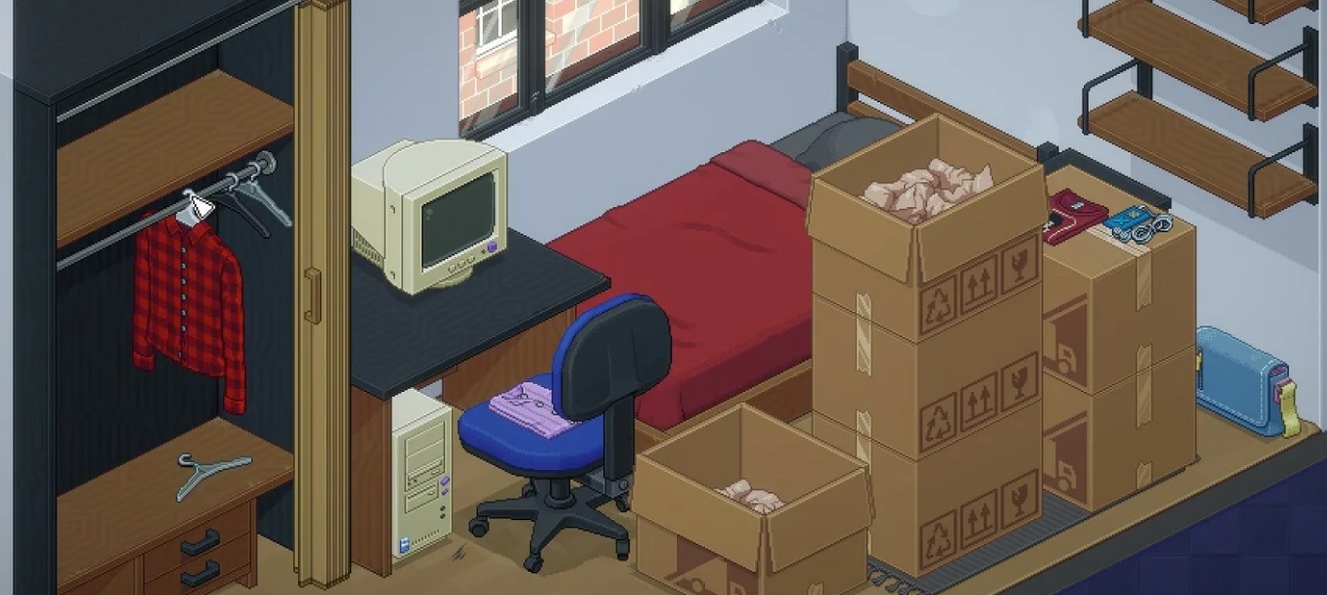
The first apartment is a kind of introduction. We are transported to 1997, to a cozy children’s room: a bunk bed, toys, a diary with a lock. You unpack the boxes and get to know her world. Here is a football, here is a cup – she clearly played football and achieved success. And then – an album, pencils, a ruler. Little things? Yes, but they tell a lot about her. You could just show the finished room – you say. But then you would miss all these details. In Unpacking, it is important not just to see, but to do – to take out the thing, examine it, decide where it belongs. And you begin to remember every trinket. Because these are not just objects – they are fragments of life.
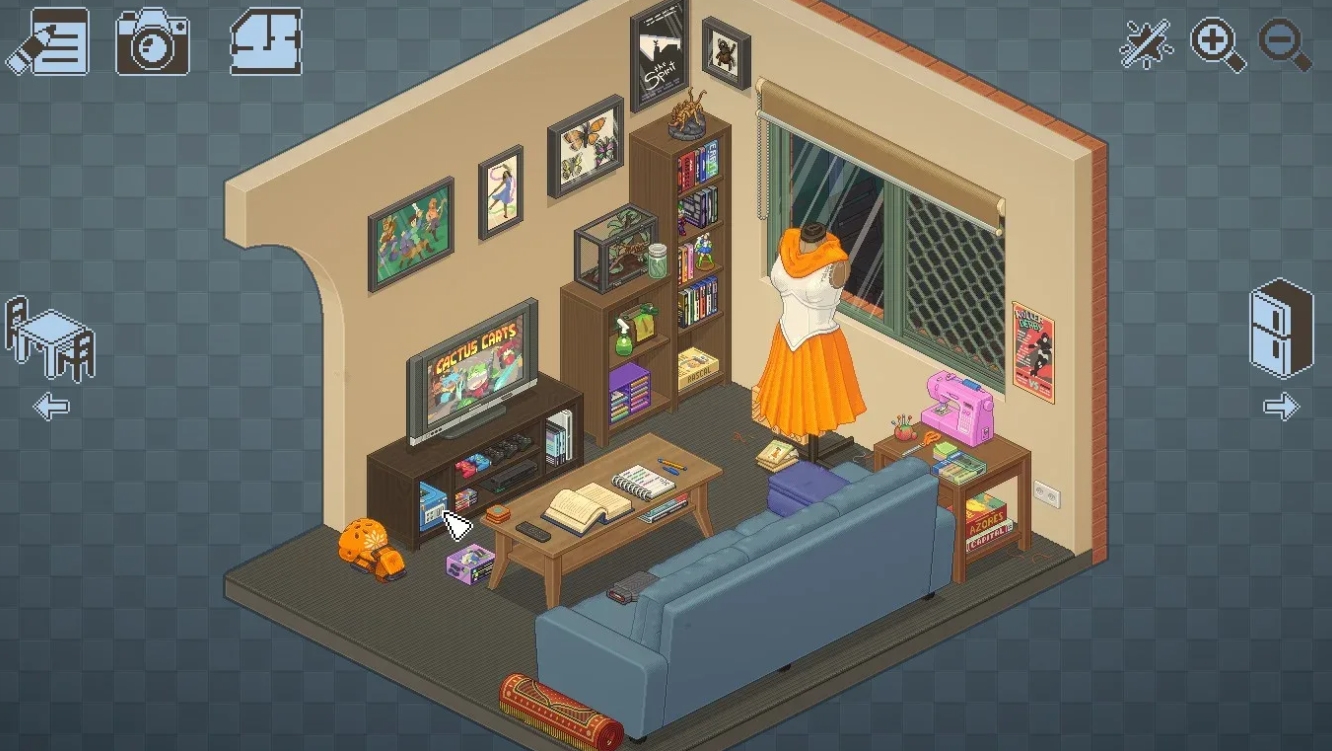
With each new apartment, you notice what she takes with her, and what appears for the first time. A toy pig – the heroine’s mascot – goes with her from house to house. At first new and neat, then with holes, and closer to the finale – with a neat patch. She grows, matures, and the toy changes with her. There are other iconic things. For example, a collection of miniatures: a red bus from London, the Eiffel Tower, the Leaning Tower of Pisa. No one tells you that the heroine has traveled – you guess it yourself. And somehow it is immediately clear that these are not online purchases, but memories of real trips made at different times.
The heroine’s interests also evolve. Football becomes a thing of the past, but drawing becomes a part of her life. You see it in her things: first a sketchbook and pencils, later – a graphic tablet, an easel, a printer. All this speaks of a person searching for herself, trying, developing. And then – framed paintings on the walls. She found herself. Unpacking is a meditative experience in which there is no haste, only respect for details and a subtle sense of history. This is a game in which silent things tell more than any dialogue.
You bring the passion – we’ll bring the free steam account with games!
Unpacking Gameplay
Unpacking is not about how to quickly unpack boxes after moving. This game is about how things can tell a story. Here you can’t just throw everything wherever you want — you have to put your pajamas in a drawer, arrange your books neatly on the shelves, put your shampoos in the bathroom, and if something is “not there,” a red frame will appear. It’s a silent reproach — find a worthy place for this thing.
One of the moments in the game was especially memorable. The main character moves in with her boyfriend, who, judging by the surroundings, is a musician. Usually the shelves and nightstands are half empty, but here — everything is cluttered, there is almost no space for her things. And so, I unpack the boxes, and among other things — a certificate in a frame, with a medal. Before, I always hung it on the wall — it’s my pride. But here it doesn’t hang on any wall, and it doesn’t fit on a shelf either. In despair, I hide it under the bed — and the frame disappears.
This moment turned out to be unexpectedly powerful. A simple game element suddenly makes it clear: she doesn’t belong here. Her successes, her personal achievements — don’t fit into someone else’s space. When in the next episode it becomes clear that the couple has broken up, it’s no longer a shock, but a logical development of events. But what’s nice is that the heroine didn’t just survive the breakup. If earlier she brought a ukulele, now she already has a self-study guide on how to play it. This is evident from the cover of one of the books — in the game, you can rarely make out what is depicted, but here the developers clearly wanted the player to notice it. A small but important detail: she is developing, growing.
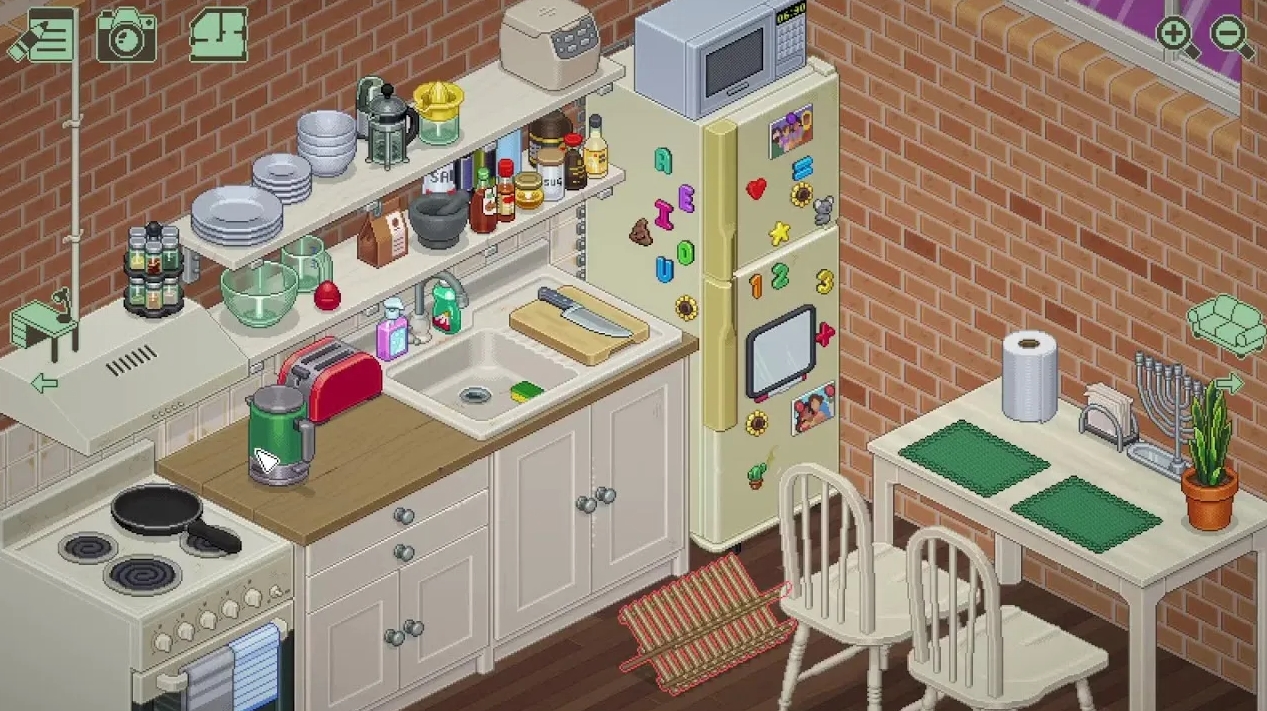
In general, the entire Unpacking is built on such details. The things that you operate from level to level become markers of change. If something doesn’t return from previous apartments, it means more than it seems. And when the boxes become bigger and contain more dishes, pots, spices and kitchen utensils, it becomes obvious that the heroine is growing up.
Here’s how it manifests itself:
-
As a child, the kitchen is not used at all – there are no of her things in it;
-
In her first apartment, she has a toaster and one frying pan;
-
Later, the kitchen fills up: a board, a rolling pin, thermoses, measuring cups and a whole collection of spices appear.
The final chapters are especially touching. After an unsuccessful romance, she finds a new partner – and she herself becomes a part of someone’s life. Now she needs to put away not only her things, but also other people’s. Previously, there was one toothbrush by the sink – now there are two. It would seem like a small thing. But there is so much trust, comfort and warmth in this. It is as if you are arranging your life not alone, but together – and you no longer need to ask if it is possible to hang a certificate on the wall. You are simply given a place.
Unpacking – is it worth playing?
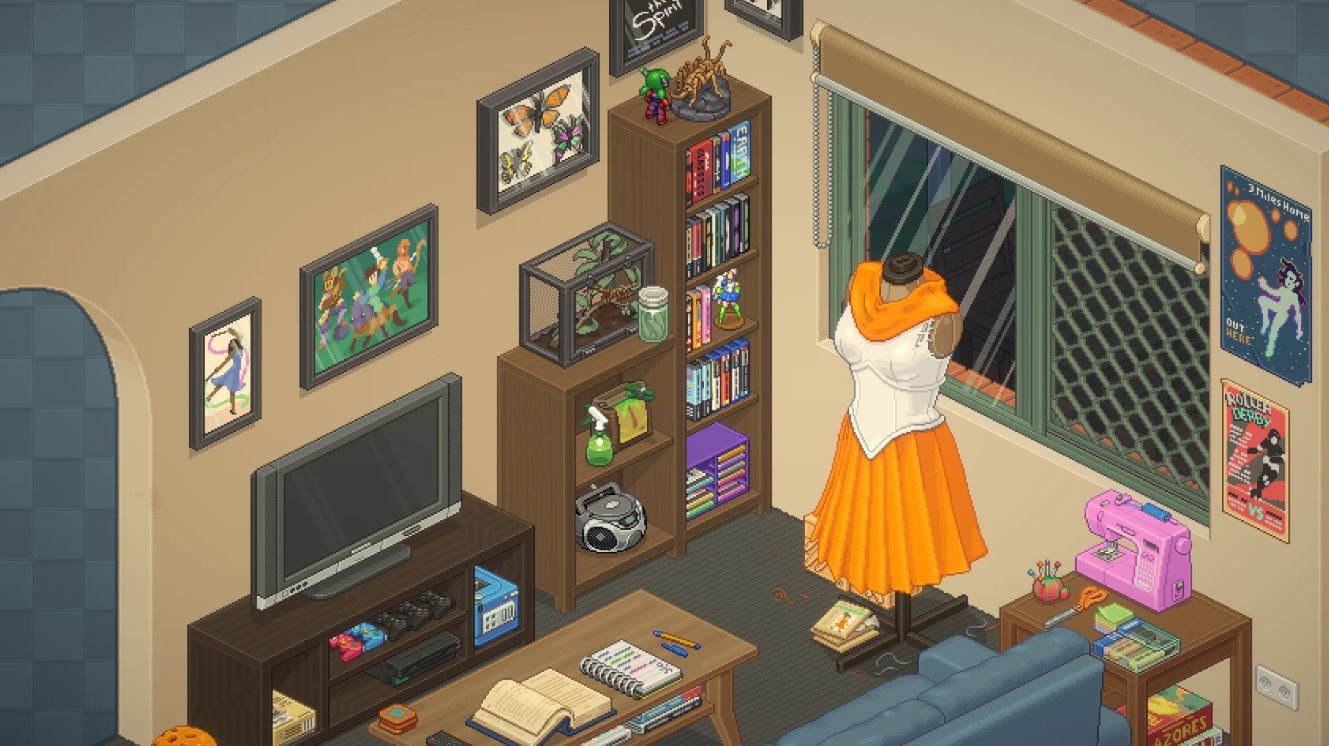
The phrase “storytelling through the environment” has long been a classic in game development – it is used by everyone and their dog. Especially in immersive sim games, where almost the whole point is to understand the plot from scraps of notes, audio logs and letters on abandoned computers. In other genres, like Life is Strange, players are given the opportunity to listen to the hero’s thoughts about each object – almost a monologue on any little thing. In blockbusters, of course, they try to work out the environment, but they still can’t do without dialogue and action – otherwise it is difficult to hold the attention of a wide audience. But Unpacking goes a different way. There are no words, no action, no obvious clues. Just you, boxes and things that need to be put in place. And through this – through objects, their location and context – a story is born. Everything is built on little things:
-
photographs hidden in boxes,
-
souvenirs from previous trips,
-
a diploma that didn’t have a worthy place,
-
things from different stages of life that accidentally ended up together.
And through these details – without unnecessary explanations and dialogues – you yourself begin to understand what happened, who is in front of you and where it all leads.
Did it work? More than. It’s hard to say whether it’s better than dozens of other stories that we’ve seen over the past year. But there’s no doubt that Unpacking deservedly won a BAFTA award. This is not just a successful experiment, it’s a reminder to all developers: sometimes you don’t have to say anything to say a lot. We hope others will follow this example.
Unpacking System Requirements
Can You Run Unpacking?
How to play Unpacking for free on Steam via VpeSports
Unpacking is a surprisingly warm story without words. There are no enemies, no timers, no points. Just you, boxes of things, and the leisurely unpacking of objects, each of which means something. A new apartment, a new stage of life, a new chapter — and you live through all of this together with the heroine, not knowing her name, but feeling every change as if it were yours.
Every mug on the shelf, every T-shirt in the drawer is not just an object, but a part of someone’s story. The important thing here is not to win, but to feel. To feel the comfort. To feel the silence. To feel how order slowly comes — not only in the room, but also inside you.
To start playing, you don’t need to configure or install anything manually. We’ve already prepared everything. Just register on the website, log in to your account — and Unpacking will be available through a free Steam account, which we issue with detailed instructions on how to launch. Everything is as simple as possible, so that you can focus on the main thing — emotions.
If the game touches you (and it probably will), don’t forget to leave a few lines. Sometimes one sentence is enough to convey the feeling. Your reviews are checked, and as soon as they are published, all access data will be sent to your email.
And in order not to miss new warm stories, free games and fresh accounts, visit us on Telegram. There is a lively community, news, advice and just good people. And if something goes wrong, you can always find help in the “How to play for free” section or write to us directly in the chat. We are here.