

For many years now, there has been a heated debate in the gaming community: what exactly makes a project a real game? Some insist that the core is the gameplay. Everything else, be it the plot, graphics or music, are just nice additions that cannot replace the mechanics. If a game has “nothing to play”, it is often labeled a “movie” or a “walking simulator” — they say it’s beautiful to look at but boring to play.
But in recent years, things have changed a lot. Some projects today are so far removed from the usual framework that it is becoming increasingly difficult to call them “games” in the classical sense. They are more like interactive art objects. Take Gris, for example — it is simply mesmerizing visually and musically, but in terms of gameplay, it is a rather simple platformer for a couple of evenings. And there are more and more such projects, as well as those who sincerely admire them. Why? Because ultimately, people don’t care about rules or genre boundaries, but how much they enjoy spending time. What brings pleasure – mechanics or atmosphere – is a matter of taste.
And today we will talk about a game that embodies this approach one hundred percent. Dorfromantik is not exactly a puzzle, and not even exactly a game in the usual sense. Points, tasks, goals – all this is there, but not the main thing. The main thing is the process. Here you build cozy landscapes, enjoy the views, relax to calm music. No battles, timers or impending threats – just you, nature and inner zen.
Just sit down, exhale – and allow yourself to be a little nostalgic about the world in which you want to live. Ready to plunge into peace and quiet? Then go ahead – Dorfromantik is waiting.
Table of Contents
Dorfromantik Free Steam Account
Dorfromantik can hardly be called a revolution — rather, it is a continuation of a long-familiar idea. Its roots lie in the genre of city-building simulators, where pleasure comes not only from the process of building houses and laying roads, but also from the atmosphere itself — from how your world comes to life right before your eyes. Remember Anno or Cities: Skylines — how many hours can you spend glued to YouTube videos where players show their cities? And they don’t watch them because of income figures or population density. They watch them because they are beautiful. Because they inspire.
A serious impetus for the development of this aesthetic branch can be considered the release of Townscaper in the summer of 2020 on Steam. The store described it simply — “a simple city-building toy.” And this is the pure truth: no economy, no residents, no quests. Only a boundless ocean and your flight of fantasy. Change colors, experiment with shapes, build whatever you want — and in just a couple of clicks, a cozy town with bridges, towers, secret courtyards, and hanging ladders can grow in front of you. All these details make each creation unique, and the process itself meditative and surprisingly exciting.
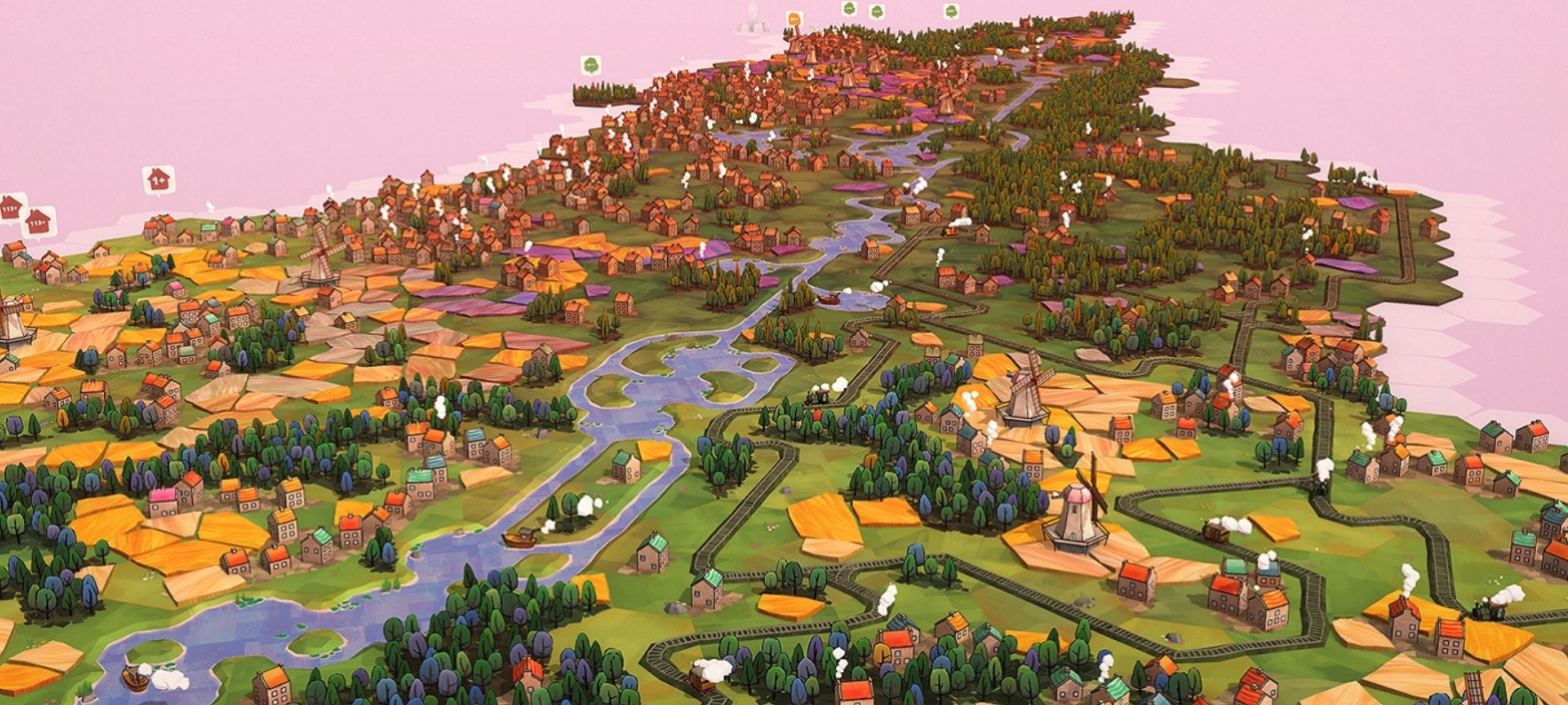
But this beauty has a downside. Townscaper, like its peers — Atlas Architect, The Architect: Paris — suffers from one simple problem: boredom. And this is not a paradox. This is reality. Even the most enchanting things — be it mountains, a starry sky, or an ancient cathedral — become tiring if you look at them not for five minutes, but for several hours in a row. Townscaper is like a beautiful background for your desktop: you admire, you admire, but then you want some action, a goal, a meaning. If there is no desire to create something global inside, sooner or later the game will begin to tire. No matter how you look at it, aesthetics without tasks quickly loses its magic.
Steam has never been so easy – get a steam account free today.
Dorfromantik Gameplay
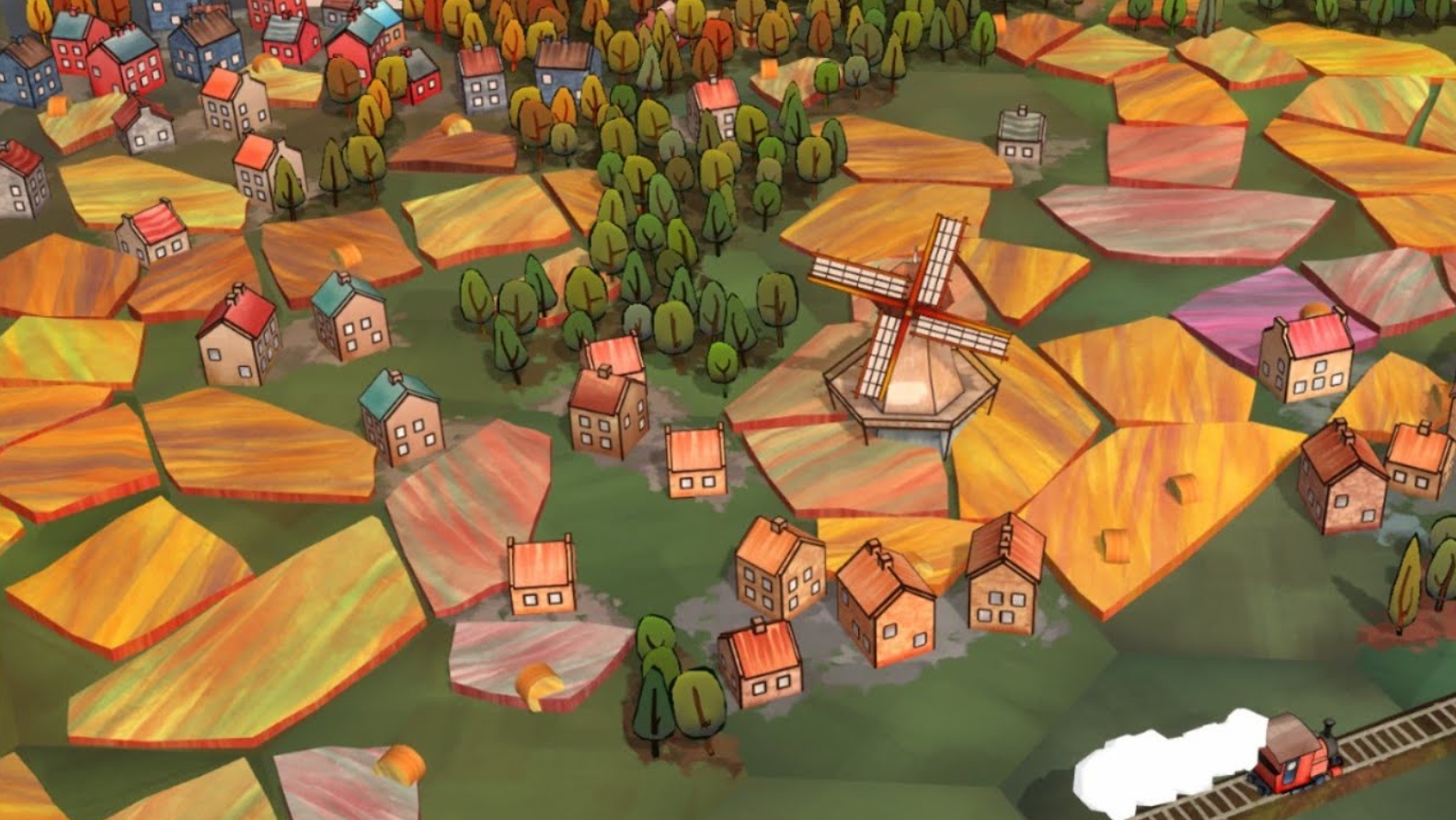
The main magic of Dorfromantik is in its subtle balance between meditative aesthetics and simple but exciting gameplay. Unlike Townscaper, where you just create beautiful landscapes for the sake of the process itself, here you always have a goal. And this makes the process much more exciting. The game mechanics are built around the placement of tiles – small fragments of the landscape: fields, forests, ponds, houses. They are given to you randomly, and you attach them to the existing world, gradually forming a picturesque mosaic. But there is one nuance: the number of tiles is limited. Run out – the game is over. And to get new ones, you need to complete quests.
The quests are intuitive and clear. On some tiles, an icon with a number appears – this is an indication of how many tiles of a certain type (for example, forests or houses) need to be connected into a single area. Moreover, the system dynamically tracks how close you are to the goal. Once you complete the task, you get additional tiles — and can continue to expand your world.
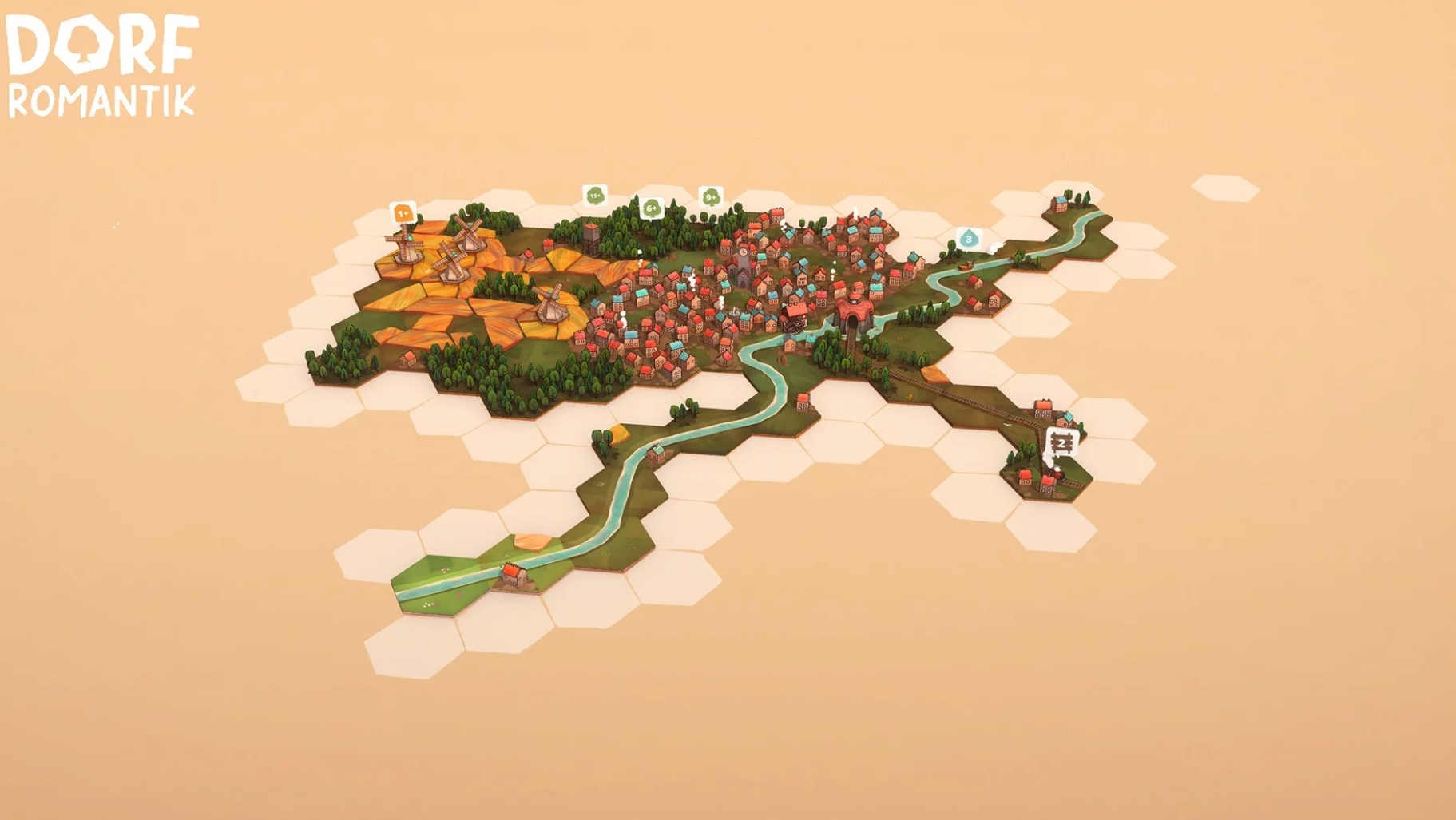
At first glance, everything is trivially simple. But the longer you play, the more you begin to think through each of your actions. Gradually, rivers and railways are added to the game, requiring continuous connection, and now you are not just putting together beautiful pictures, but strategically planning each step. Plus, global tasks open up, which bring bonuses in the form of new biomes and skins for tiles. With them, your world becomes not only larger, but also more diverse — and at the same time more beautiful.
Dorfromantik cleverly deceives with its simplicity. It all starts as a leisurely, relaxed entertainment, but imperceptibly draws you in. Time flies — and you still think about how to score even more points, how best to place tiles so as not to break the chain… And now it’s already four o’clock in the morning, and you click “Try again” again, simply because you feel that this time you will definitely build the perfect world.
For those who like to just build without any limits, there is a creative mode. Personally, I find it less exciting, because the competitive element is lost. But in it, you can realize any fantasy. There are already hundreds of such creations in the Steam community — from fairy-tale villages to entire continents.
Graphics by Dorfromantik
The graphics in the game are pleasing to the eye – they are made in a cozy low-poly style that does not overload the visuals, but at the same time conveys the atmosphere. I was especially pleasantly surprised by the elaboration of the biomes: thanks to the efforts of the artists, they organically flow into one another, without abrupt transitions or visual noise. Each of them is beautiful in its own way, and examining the details is a real pleasure. The only thing that is a little lacking is a more pronounced interaction between the tiles. I would like the environment to react to neighboring cells, creating even more coherence and smoothness – as was implemented, for example, in Townscaper.
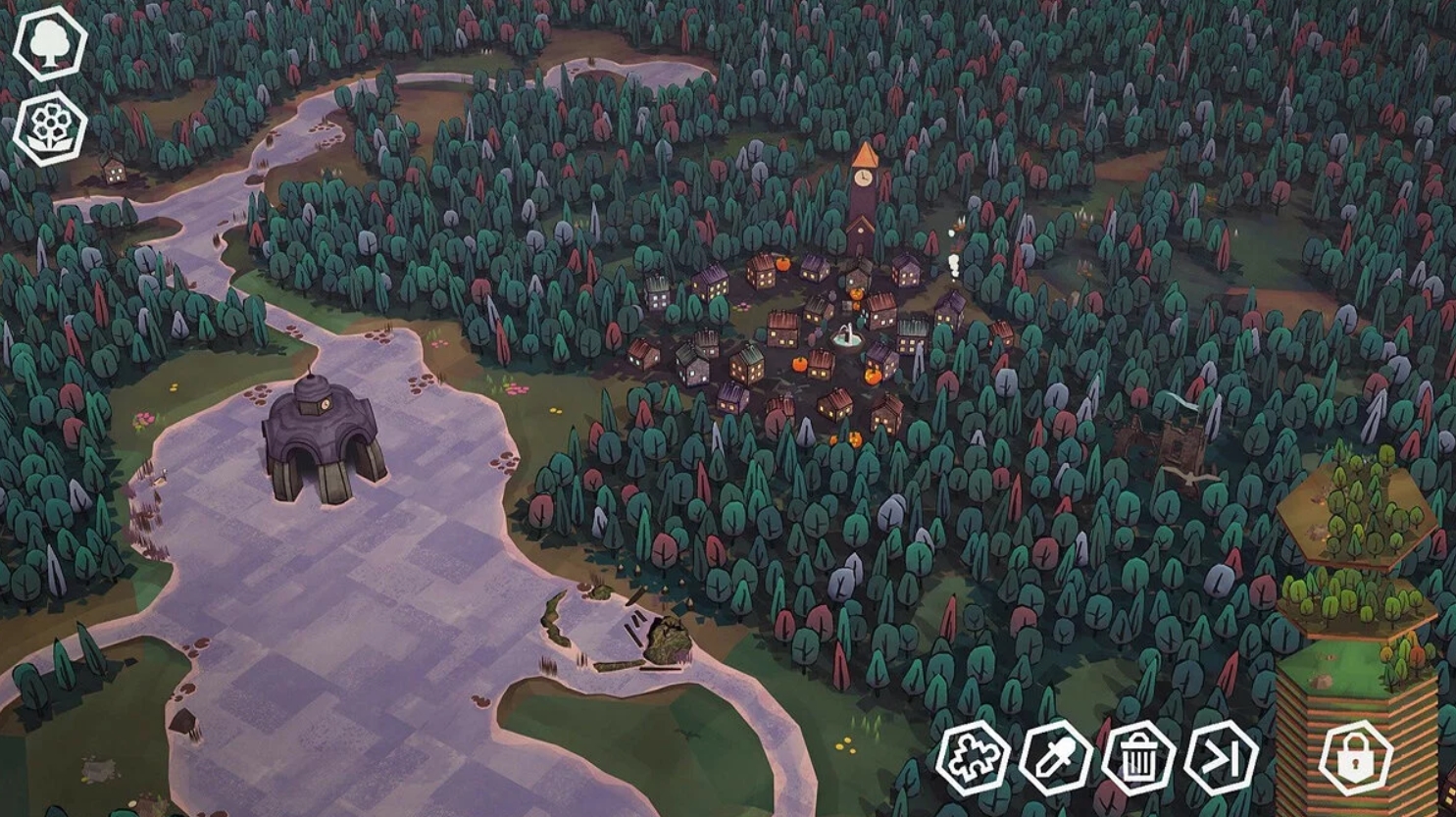
I was especially pleased that the player can independently adjust the frequency of appearance of all five biomes. This allows you to adapt the visual style to yourself and even experiment: turn on another set – and you have a completely different picture in front of you, with a different mood and color.
And, of course, the music. The soundtrack here is a separate story. It is unobtrusive, soft, with a slight note of melancholy. It seems to accompany the player delicately, without interrupting, but creating the right mood. I especially recommend listening to the tracks Beerenweg and Schabernack – they perfectly convey the spirit of the game and sound like a musical continuation of the visual style.
Is Dorfromantik Worth Playing?
Sometimes the most memorable experiences don’t come from large-scale blockbusters created by hundreds of developers and filled with effects, dialogues and endless mechanics. No, sometimes something simple, intimate, made with soul really grabs your attention. It happens that large studios spend millions and years to create a game in which you can get lost for hundreds of hours – but after 15 minutes you catch yourself wanting to close it and never come back. And sometimes it’s the other way around: a modest team of students makes a small project that is impossible to tear yourself away from. Not because of the graphics. Not because of ambition. But because it is real. Because it knows how to please.
Dorfromantik is exactly such a game. Cozy, unobtrusive and incredibly relaxing. This is the rare case when you are not offered to save the galaxy or decide the fate of the world. Here, everything is much simpler and more enjoyable: you lay out hexagonal tiles, build forests, fields, rivers, connect villages and railroads — and watch as a whole world is born before your eyes. You don’t have to hurry. You don’t compete with others. You just create, meditate, relax.
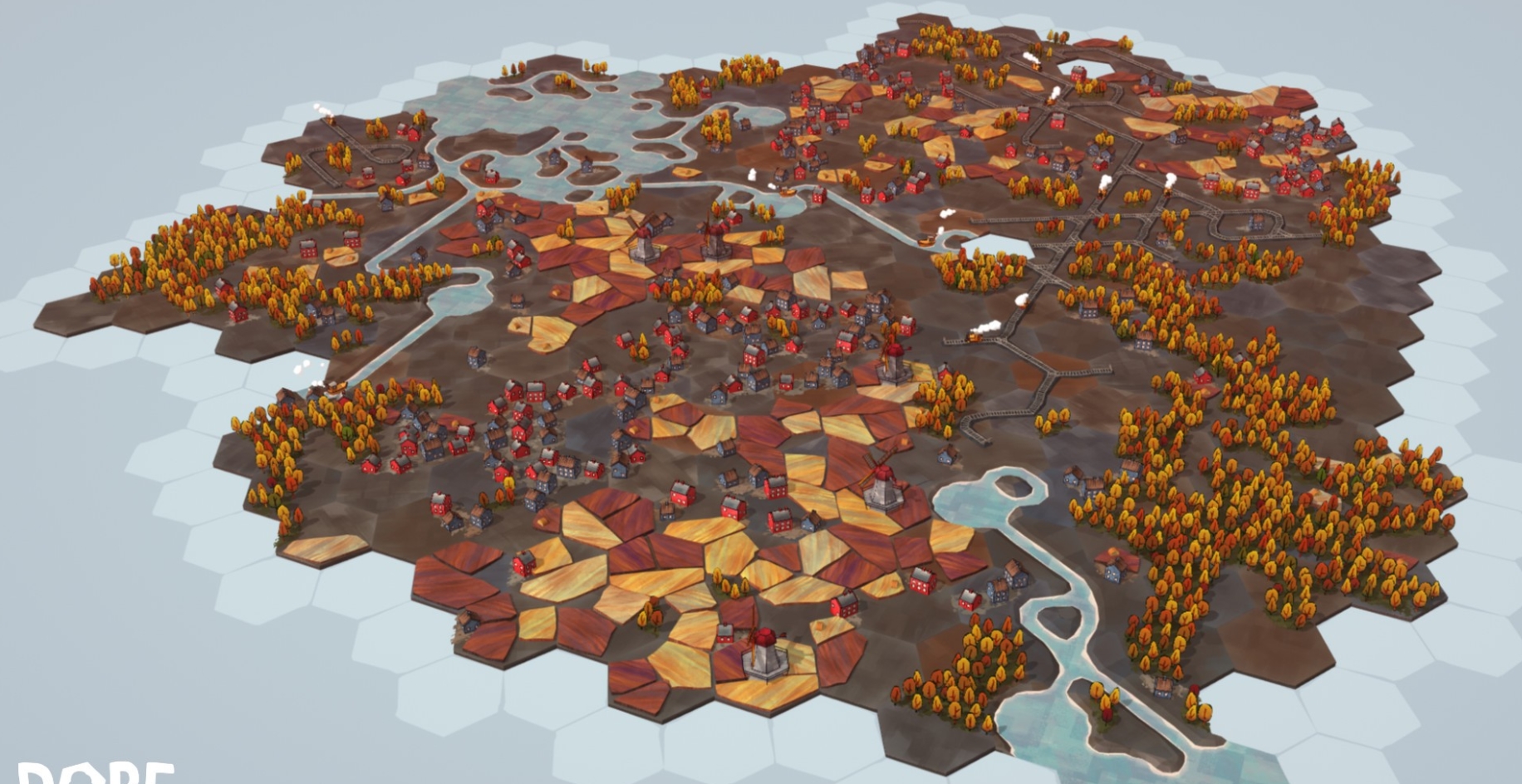
This is the perfect game for a quiet evening. Make some tea, get comfortable and let yourself forget about everything. Listen to calm music, watch how biomes intertwine, how symmetry is born, how nature itself dictates where the next tree or river will be. This is not just gameplay — it is a feeling of harmony and inner balance.
And with all its calm, Dorfromantik knows how to throw up a challenge. In normal mode, you will have to plan every move: the tiles are running out, and there are more and more tasks. Where to place a house so that it completes the quest and at the same time opens up new opportunities? How to carefully lay a railroad through the forest? These questions draw you in, and you start a new game over and over again, hoping to build an ideal world.
What makes Dorfromantik especially attractive:
-
Ease of learning — intuitive interface and clear rules;
-
Visual comfort — pastel palette, smooth animations and pleasant graphics;
-
Harmony and meditativeness — the game does not press, does not rush and does not overload;
-
A choice — a sandbox mode for relaxation or a classic mode for those who want a challenge;
-
Excellent optimization and low price — accessible to everyone.
With its approach and atmosphere, the game has become a real pearl among projects of a similar genre. It combines relaxation and challenge, aesthetics and mechanics, accessibility and depth. And at the same time, it is very inexpensive, does not require powerful hardware and runs on literally everything.
Dorfromantik is an ideal gift. For a friend who is tired of heavy games. For a mother who has never played, but loves puzzles. Or just for yourself – to relax your soul. This is a game that does not try to be everything at once. It just wants to be kind, beautiful and calm. And it copes with this brilliantly.
Dorfromantik System Requirements
PC Specs for Playing Dorfromantik
How to play Dorfromantik for free on Steam via VpeSports
Sometimes all you want is a little silence. To get away from the city noise, forget about deadlines and just dissolve in something warm and calm. Dorfromantik is like a cup of tea on a cool evening. Here you build a world yourself, where everything comes together in harmony: forests, fields, villages, rivers – every movement brings satisfaction, as if you are painting a picture stroke by stroke in which you want to stay.
To immerse yourself in this atmosphere, you do not have to set up anything or search for instructions for a long time. Everything is ready: go to our website, register, log in to your account – and the game is almost in your hands. We even provide a free Steam account so that you do not have to think about buying – just enjoy the process.
After a walk through your little perfect world, you can always share your impressions. We read all reviews carefully, so do not be surprised if it does not appear right away – sometimes the system asks to correct the text a little. As soon as everything is in order, you will receive an email with access.
And if you want to know what will happen next, visit us on Telegram. There we post new accounts, news about updates, share tips and just chat. And if any difficulties arise, everything is described step by step in the section “How to play for free – Complete guide”. Or write to us – we are nearby and will always answer.