

Quite recently, players had the opportunity to try out Total War: Pharaoh as part of early access, which lasted until October 2 last year. During this period, you could play for one of two factions and make up to 60 moves in one session – and there were no limits on attempts to start over.
To participate, you had to pre-order Total War: Pharaoh. Although the strategy was not available on Russian Steam, I did not regret that I bought the new product in advance. During the game, the thought arose more than once: if something does not suit you, there is always the option to return your money. Perhaps this experience will be useful to those who are still thinking about buying.
Now my impressions of “Pharaoh” remain quite contradictory. For veterans of the series, there is little that is new, and I would rather advise beginners to start their acquaintance with Total War with other, more classic parts.
Table of Contents
Total War: Pharaoh Free Steam Account
Total War: Pharaoh was developed by the same guys who made Total War Saga: Troy. Remember Troy? The game was raw at the start, bugs, shortcomings — everything as it should be. But we turned a blind eye to it: after all, the project was given away for free. Now it’s a different story. They ask for money for Pharaoh (and not in rubles), and the game itself is surprisingly similar to Troy, only on a larger scale… although this scale raises questions. The intimacy is gone, the exciting atmosphere is gone — it has become somehow impersonal.
Someone might add here less diverse gameplay for local leaders. However, at the early access stage, you could only play for two factions — and even they offered different styles of play. There is a chance that the release will expand the experience and will be able to pleasantly surprise. The global map shows the initial location of all eight factions. Each area, limited by lines, is a region. Several of these regions form a province, where you can issue decrees with useful bonuses. All of this sounds painfully familiar if you have already played previous parts of Total War.
In early access, you could try yourself as Ramesses (yellow lands) and Irsa (red). Both offer rapid expansion – especially Irsa, where conquest is literally at a gallop. But at the same time, you have to monitor the happiness of your subjects and the level of influence in the provinces – otherwise chaos will begin. And then – large-scale decisions: choose whose side to take (the Egyptian Pharaoh or the ruler of Hatti) and what goal to set for yourself. This can be control over the wonders of the world, diplomacy with vassals or the path to total domination.
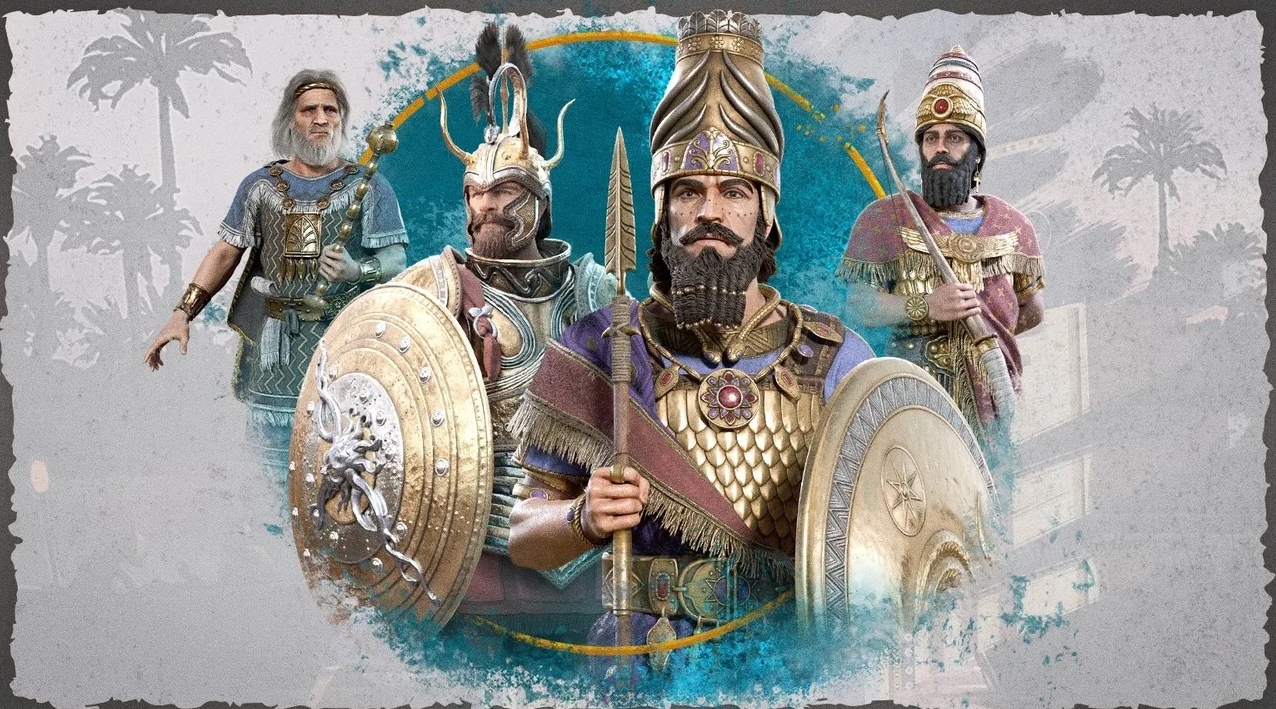
Each of the eight factions has its own leaders, troops and unique buildings. Egyptian dynasties, Canaanites, Hittites – only three cultural groups, two or four factions for each. And they really differ not only in appearance, but also in mechanics. Now to the map. At first glance, it seems spacious, but after a couple of hours you realize: the world is quite compact. There is no fast forwarding, like in “Fall of the Samurai”, but armies move on land quite briskly. And if you approach the water, the troops automatically turn into a fleet and sail along the Mediterranean Sea or the Nile – simple and convenient.
Additionally, the map is diluted with outposts. These are special buildings near settlements, which can be built up to four per region. There are military, economic, religious and administrative – each type gives bonuses: faster movement, increased morale, reduced costs, etc. In one region, you can build one building of each type – no more. And if an army passes through such an outpost, it receives a bonus, and the effects are cumulative.
And here it becomes interesting: at the beginning, you really think about what and where to build. And later, outposts begin to play a strategic role – they help to overcome deserts, provide logistics and give a tactical advantage in war. But the more you use them, the clearer it becomes: the world of “Pharaoh” is still a bit cramped. And although there is nothing critical about this, the feeling of “epicness” begins to dissolve a little.
A free account in steam is the best-kept secret in gaming.
Total War: Pharaoh Gameplay
In Total War: Pharaoh, everything again comes down to the confrontation between two powerful powers. Just as Rome once competed with Carthage, and China with Japan, here on the historical arena southern Egypt led by the Pharaoh and the northern kingdom of Hatti under the leadership of the Great King clash. The choice is yours – join one of the sides or completely abandon the rules of others and go your own way to the top of power.
Each state is based not only on the leader, but also on his close associates. In Pharaoh, this is expressed in five key positions: someone manages finances, someone commands elite units or organizes secret liquidations. Having received one of these posts, you open up access to unique opportunities. For example, the vizier can eliminate unwanted people without unnecessary noise – everything is like in the best palace intrigues. The main thing is that the vacancy is free and you have the required amount of gold. Well, if ambitions do not give rest, no one forbids you to unleash a civil war and challenge the Pharaoh or the Great King himself.
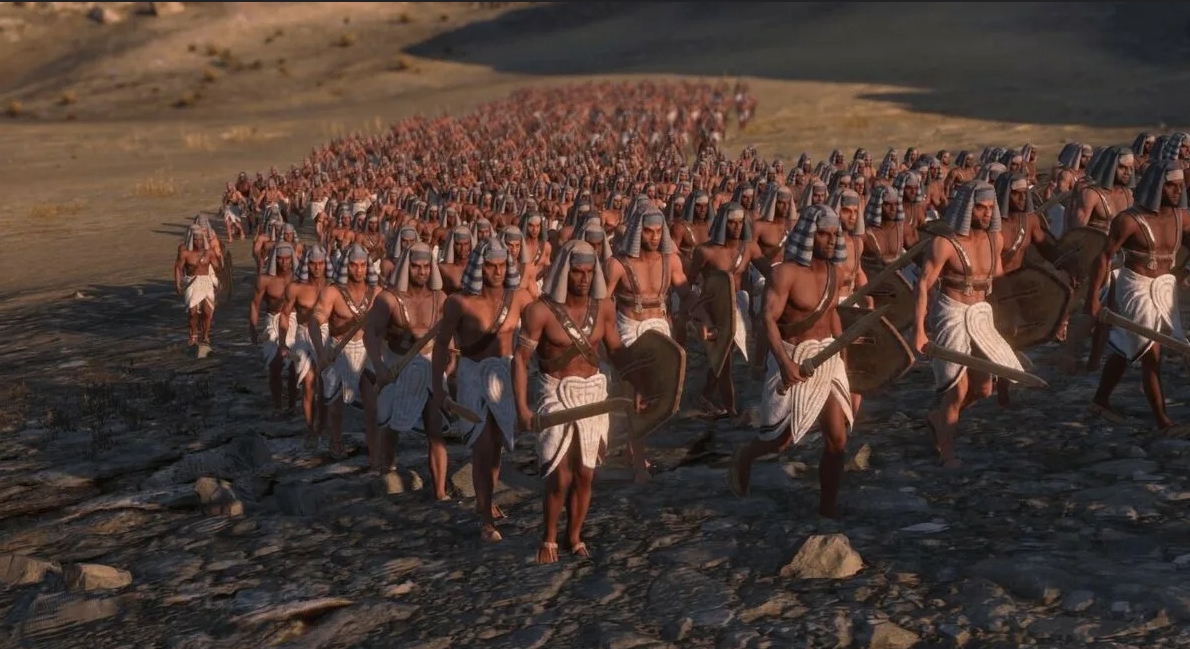
At this stage, the real political game begins. Bribery, treacherous deals, requests for favors – all this becomes part of your daily routine. Allies can help strengthen your legitimacy, and enemies can always be eliminated. However, do not forget: it is not only you who weave intrigues. The higher you rise, the more dangerous every step becomes. The gods in this world do not stand aside either. Each faction worships one or more deities, and much depends on this choice. By building temples and sanctuaries, you receive various bonuses – the more religious objects, the more tangible the support of higher powers. This is a delicate balance between faith and pragmatism, which requires attention.
In addition, your empire is constantly under threat of crisis. There is a special scale on the global map showing the state of the state – from stability to complete collapse. The higher the tension, the closer the catastrophe: the barbarians become more active, resources run out, the situation gets out of control. It is impossible to negotiate with the marauders – all that remains is to strengthen the borders and hope that the artificial intelligence makes mistakes.
The economy of Pharaoh is built on five key resources. Each of them is important, and here is how they are used:
-
Food is the main resource for hiring and maintaining an army;
-
Bronze is needed to produce weapons and equip soldiers;
-
Stone is used in the construction of durable defensive and infrastructure buildings;
-
Wood is a key material for construction and some types of troops;
-
Gold is a universal resource needed for diplomacy, as well as for hiring, building and bribery.
Regions in the game specialize in different resources, so if you lack something, there are two options: send an army for loot or turn on the diplomatic mode and enter into a profitable alliance. At the beginning of the game, resources will be in short supply, especially food and bronze. But gradually you can build a balanced system that will ensure a stable increase in all stocks. The main thing is time and strategy.
But this is not enough. Even with overflowing warehouses, you will not be able to immediately build the most important buildings – this requires labor. Each building has a requirement for the number of “workers”, and until the corresponding indicator reaches the required level, construction is impossible. This scale will constantly fluctuate, and you will have to make sure that it does not roll back too low. The growth of the labor force depends on many factors: the satisfaction of the population, the level of influence, the development of infrastructure. Fun places, temples, administrative buildings – all this contributes to the growth of productivity.
And finally, technologies. There are not as many of them here as in other parts of the series, but each discovery affects all aspects: from the economy and diplomacy to the army. A smart choice in the research tree can change the course of the entire campaign.
AI in Total War: Pharaoh
Sometimes our protagonist is offered to make a choice — to outline his ambitions. Simply put, to choose a goal for the achievement of which a reward is due. Sometimes it is something simple like constructing a certain building, but more often — military tasks: training an army, capturing territories, participating in battles. And this is where the most interesting part begins…
The artificial intelligence in Total War: Pharaoh sometimes behaves as if it deliberately wants to ruin everything. If there is even the slightest opportunity to do something stupid — rest assured, it will definitely take advantage of it. A few illustrative cases. A tactic worthy of applause. Imagine: the AI gathers an entire army — 19 squads — and sets off on a campaign through the desert. Straight through the parching sands, without logistics or support. Only a third of the army reaches its destination, and they die in the very first battle. Why? Because the route was chosen absolutely thoughtlessly.
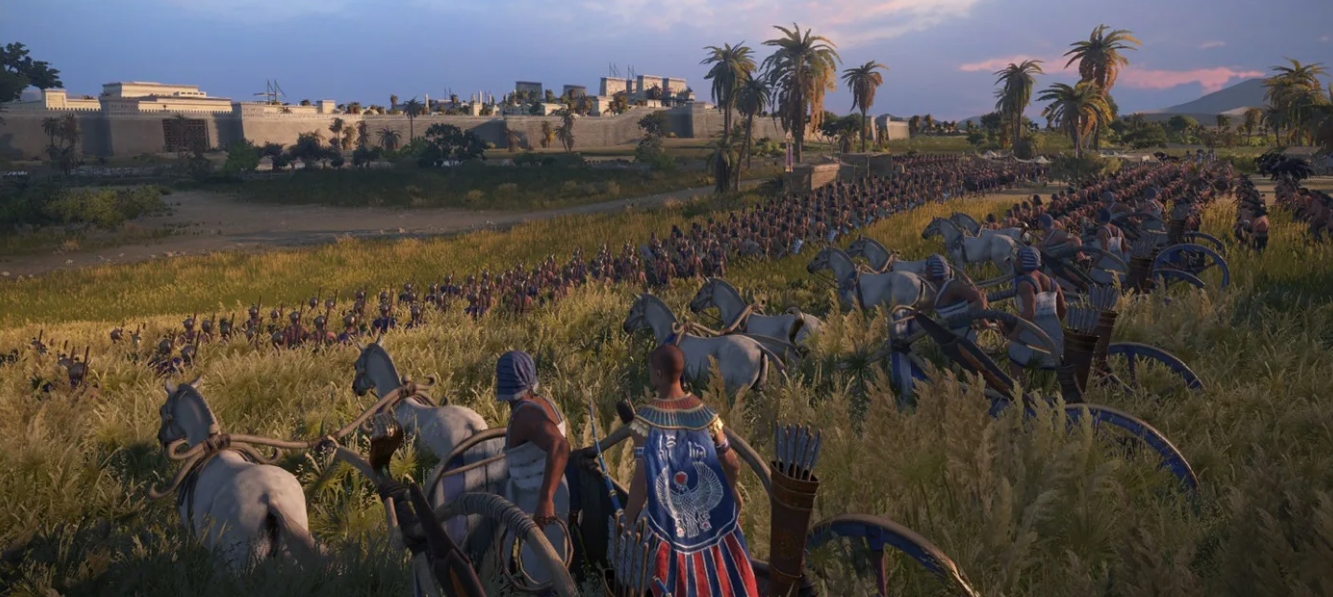
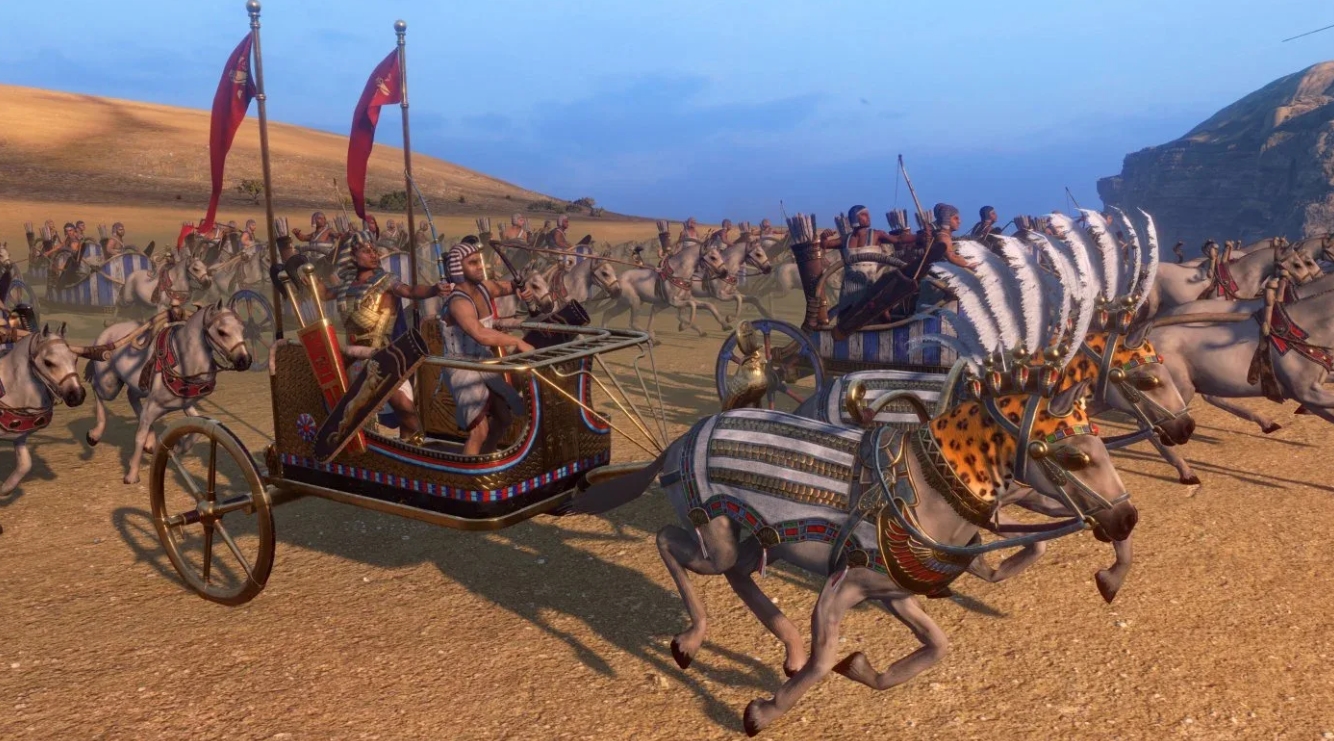
By the way. It seems that there are no agents in the game at all that could mess around on the global map, sabotage enemy cities or support their own. In one and a half campaigns, I have not encountered such a thing even once. City defense, Egyptian style. When the AI defends a city, it really does deploy troops along all approaches. But as soon as we touch one of the flanks, it immediately breaks into a frontal attack, as if forgetting that it was defending itself. As a result, there is a crush at the city gates, one flanking maneuver on our part – and its entire army retreats in panic. Especially if chariots enter the battle.
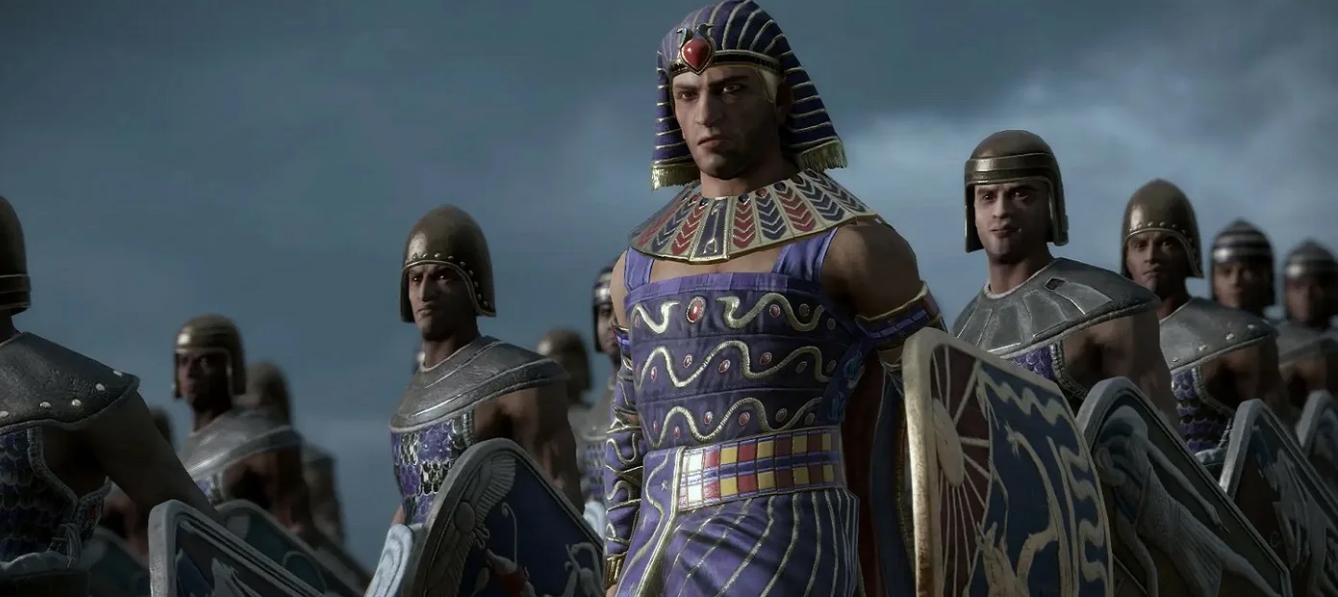
And this happens all the time. Even when the AI has an excellent position or a numerical advantage, it behaves illogically. Let’s say it has three times more archers – and? It just goes forward without using them. Is there a convenient hill or field for maneuver? No, it rushes across the river. Instead of forcing us to attack in unfavorable conditions or outflank. Even when he has an obvious advantage, he most often does not try to encircle us. Instead, he simply pushes the army head-on, and then even one of your units, striking from the rear, can stop three opponents. Let me remind you that this happens on standard difficulty. I would like to believe that on high, everything is different… but, alas, no.
Attack or defense? As we know, it is always easier to defend. But in Pharaoh, it has become almost too easy. You can declare war yourself, provoke the enemy – and he will definitely go to you. And not just go, but literally run into a trap. Ambushes in such cases work perfectly. And the enemy, as a rule, loses faster than you have time to enjoy the victory. As a result, it turns out that the artificial intelligence in the game loses both in the strategic and tactical arenas. The game is interesting – but if you are looking for a challenge, you will have to create it yourself.
Is Total War: Pharaoh Worth Playing? The Main Pros and Cons
Total War: Pharaoh takes us to a difficult period – around 1200 BC. These are the times on the eve of the Trojan War, which Creative Assembly already talked about in Troy. Just look at the map of “Pharaoh” and it’s easy to imagine: somewhere in the West, much larger and more dramatic events are about to break out.
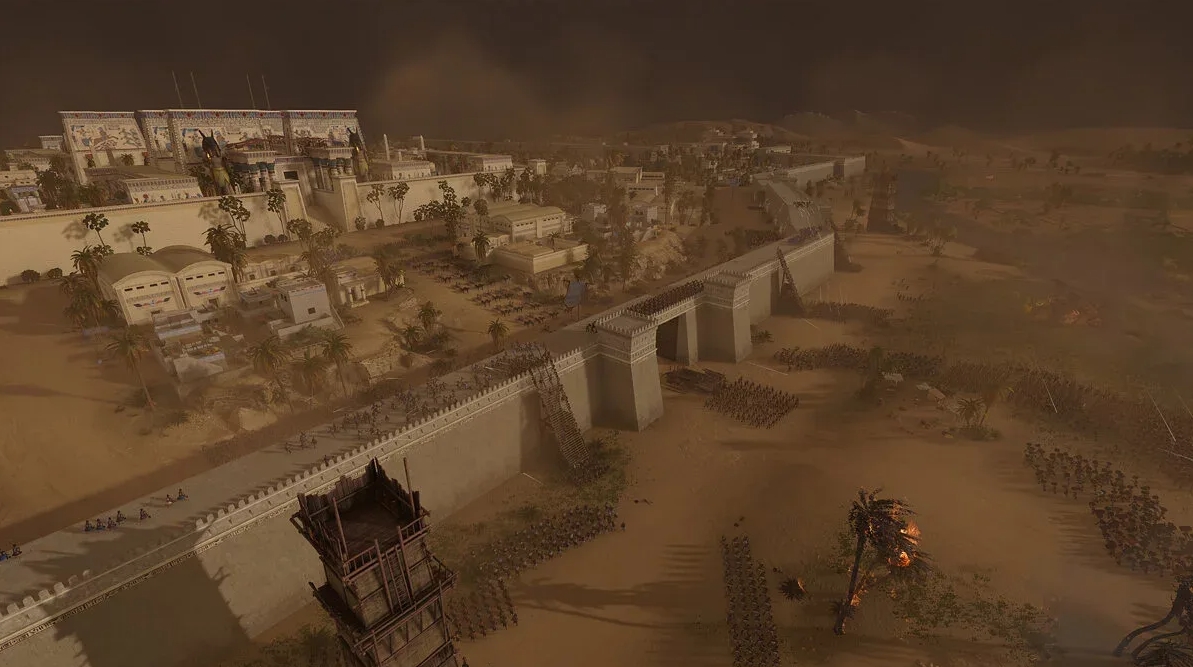
Sometimes it seems that the studio from Sofia could unite both worlds – Egyptian and Greek – into a single universe, as they did with Warhammer. And who knows, maybe someday this will happen. But for now, such a unification does not seem necessary at all – and it is unlikely that it would change the situation much. Serious shortcomings of the game should be added to the performance issues. On the same settings where Starfield ran smoothly and confidently, “Pharaoh” sometimes frankly stalls. After a couple of dozen moves, it becomes difficult to play:
-
FPS drops almost constantly;
-
AI moves are drawn out to the point of absurdity;
-
the interface and animations start to “slow down” so much that everything looks like a parody of “Six Frames”;
-
the game requires regular reboots to bring it to its senses.
Yes, of course, you can lower the graphics settings. But a logical question arises: why did Starfield not require such sacrifices, but here you have to make compromises? Moreover, Bethesda itself set the game parameters too modest – I even had to manually improve the image quality. Maybe one day they will add Russian to Total War: Pharaoh. Maybe they will optimize the code, tighten up the performance, refresh the visuals or deepen the mechanics. But, to be honest, this is unlikely to help the game get rid of its main drawback – a feeling of secondary and boredom. Especially if you are already familiar with the past historical Total War – this release seems unnecessary and does not grab.
I really don’t want the studio to take on such an incomprehensible project after the run-of-the-mill “Pharaoh”. Let this game serve as a lesson – and an impetus for creating a truly powerful, large-scale and truly desirable strategy.
Total War: Pharaoh System Requirements
System Specs for Total War: Pharaoh
How to play Total War: Pharaoh for free on Steam via VpeSports
Have you ever wondered what it would be like to rule an ancient civilization, with the fate of entire nations at stake and every mistake you make that could spell the end of an era? Total War: Pharaoh is not just a strategy game, it is an invitation to the most heated period of Egyptian history, where dust rises from the hooves of chariots and decisions are made in the shadow of the pyramids.
And we want you to experience it yourself – without unnecessary fuss, without complicated instructions. Everything is as simple as possible: go to our website, go through a quick registration – and you’re done. You will already have access to Total War: Pharaoh, plus a detailed guide that will tell you how to launch the game or activate it through a free Steam account. No headaches, just take control and dive into the fight for the throne.
We really care what you think. Will you play the campaign? Plunge into political intrigue? Share your impressions – we read every opinion. Sometimes the review doesn’t appear right away, especially if it’s full of emotions (and how can you avoid them when your army is being washed away by a flood?), but don’t worry – just edit it a little, and it will definitely appear. And as soon as it does, the necessary data will be sent to your email.
Don’t want to miss anything important? Then welcome to our Telegram channel. Our gaming community lives there – we publish fresh accounts, announce updates, share news and argue until the night about who is worthy of becoming a real pharaoh. If you suddenly get confused or something doesn’t work out – we have a detailed guide “How to play for free“, as well as a support chat. We won’t abandon you.
This world has been waiting for you for thousands of years. And now the moment has come: your era begins. Welcome to Total War: Pharaoh.