

To the Moon is not just a game, but a true work of art. If the task of art is to awaken deep feelings in a person and find a response in the soul, then the developers from Freebird Games managed to do this with incredible precision.
At first glance, this is a simple indie game made on RPG Maker – nothing foreshadows an emotional storm. But it was this game that made thousands of players cry their eyes out. The story of two employees of the Sigmund company, who implant artificial memories in the minds of dying people so that they can “relive” the fulfillment of their last dream, touched hearts all over the world.
Three years after the release, a small prequel A Bird Story was released, but the real sequel had to wait six whole years. And here it is – familiar and at the same time completely different from the original.
Table of Contents
Finding Paradise Free Steam Account
To be honest, it’s hard to talk about To the Moon without getting a lump in your throat. It’s not just a touching story – it’s almost a textbook example of how you can subtly but intentionally play on the strings of the player’s soul. Kan Gao, the author of the game, touches you from the very first minutes: the dying Johnny asks to fulfill his last dream – to visit the Moon. Not because he always dreamed of becoming an astronaut, but because as children he and his beloved promised to meet there if they ever got lost. Just the description of the plot twist is enough to make you feel emotional.
And yes, even if it looks like emotional manipulation, this is not some cheap drama. Everything is done with taste and care: the story is built with a subtle understanding of dramaturgy, with an excellent denouement that brings real emotional cleansing. Atmospheric music, deep dialogues, touching details and, what is especially nice, sincere humor – all this does not allow the player’s heart to resist. But Finding Paradise no longer tries to wear you down with emotions. It works differently: quieter, deeper, smarter. There are no tears on the surface, but reflections on what makes a person happy in general. What do we regret before we have time to change? Is it possible to change anything at all? Where is the line between a dream and reality? And what is left of us when it all ends?
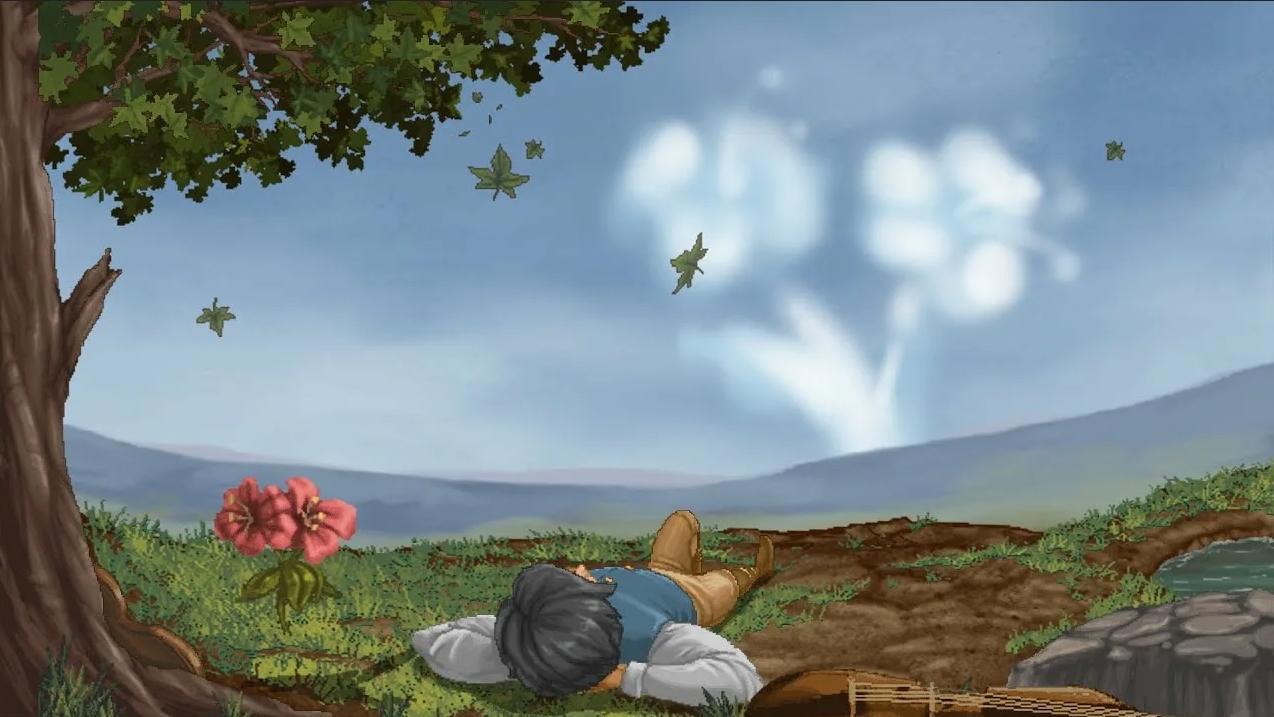
This time, doctors Eva Rosalyn and Neil Watts receive a new patient – Colin, a man who has fallen into a coma. We already saw him as a boy in A Bird Story, when he launched paper airplanes. Now he has lived, it would seem, a rich, happy life: he was a musician, then became a pilot, married his beloved, raised a son. But Colin himself is not sure what exactly he lacks. He himself cannot really formulate his last wish. To understand what is troubling him, Eva and Neil go deep into Colin’s memory, study his recollections in order to correct them and give the client peace of mind. And soon it turns out that there was another important figure in his life – a girl from his childhood, with whom he had something subtle but significant in common.
And here the real magic begins. Kan Gao, as an experienced playwright, first hangs a gun on the wall, which is silent throughout the first act, and then – in the best traditions of Chekhov – lets it shoot so that goosebumps run down your skin. Intrigue, emotion, surprises – all this in Finding Paradise is no worse than in To the Moon, it just sounds on different, deeper notes.
The key to fun is a single account steam free.
Slow Start: What’s Stopping You From Getting Right Away Into Finding Paradise
Another thing is that you still have to get to the climax and the denouement — and, let’s face it, this may require patience. Fans of Freebird Games, of course, will endure everything. Not only will they stay until the end, but they will also consider the idea of leaving early almost blasphemy. But newcomers, especially those who have not yet felt the magic of To the Moon, may find themselves in a difficult situation.
The problem is that the first chapter of Finding Paradise drags on noticeably longer than you would like. Where in the previous game the drama, death and tears covered the viewer almost from the threshold, here the first four or even five hours unfold a surprisingly ordinary narrative. We watch how Colin grew up, met a neighbor who became his best friend, how he learned to play musical instruments, became a pilot, met his love, proposed, went on a honeymoon … All this is touching, beautiful in places, but without a sense of internal anguish.
In the same amount of time, you could easily watch a couple of Tarkovsky or Zvyagintsev films, or even read Virginia Woolf’s Waves – works in which the same themes are presented more deeply, more subtly, with real artistic power. In comparison, Finding Paradise may seem too simple, even naive.
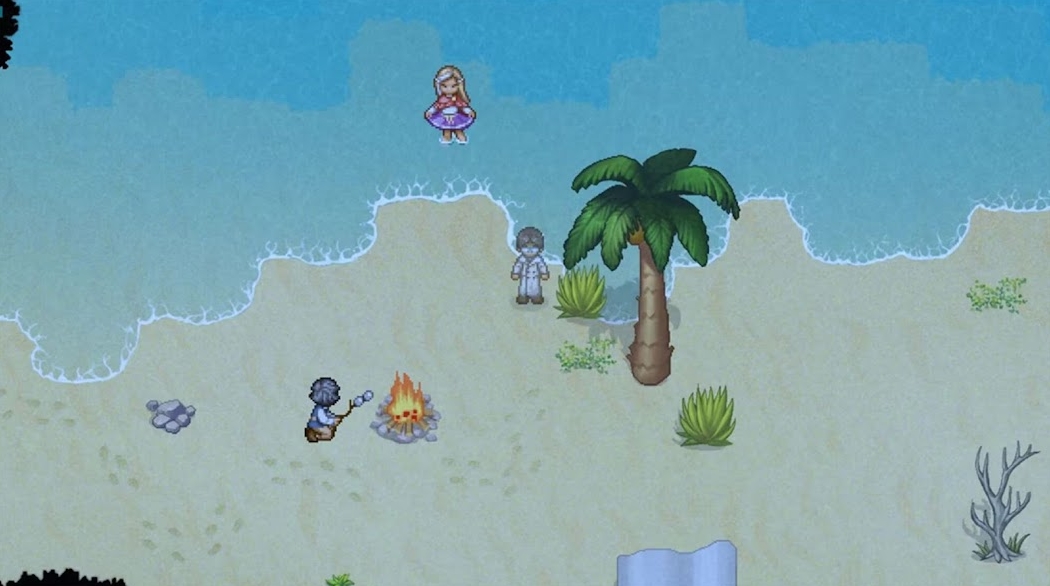
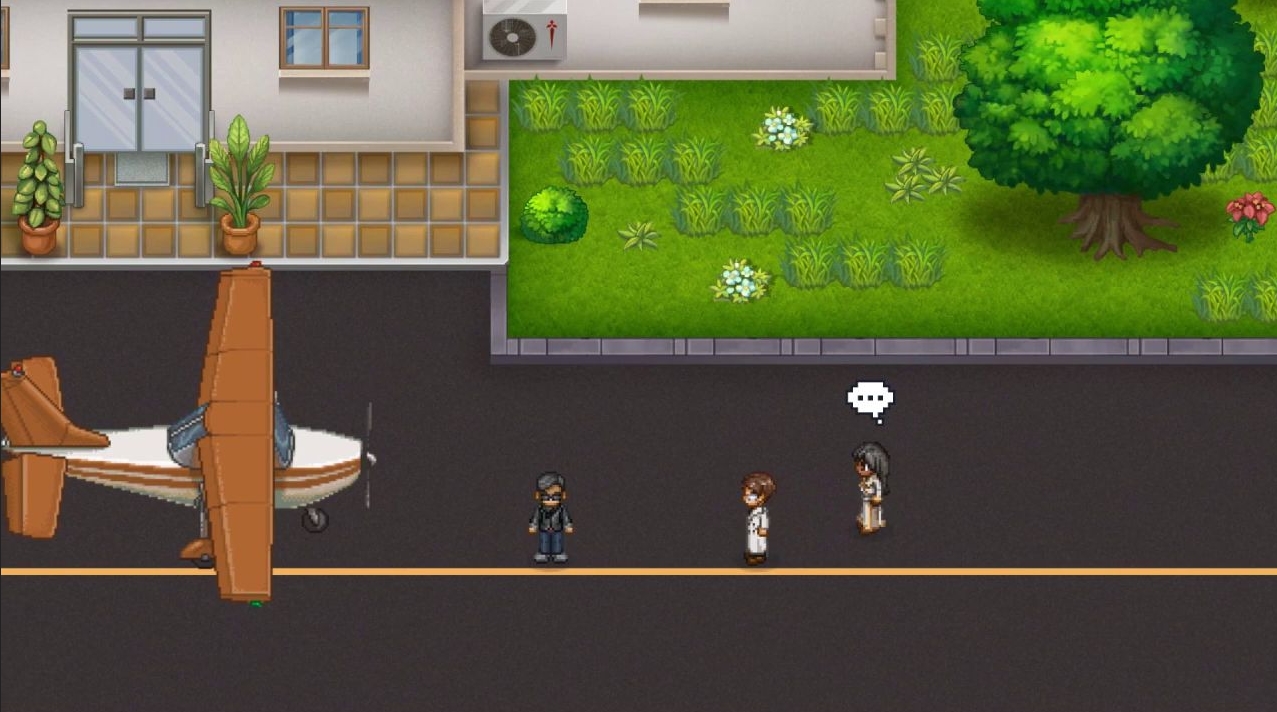
Especially when you are once again collecting fragments of Colin’s memory to activate another plot node in the format of a mini-game (now these are, by the way, variations on “three in a row”), fatigue from repetition begins to accumulate. Yes, arcade inserts with QTEs and excellent humor appear in between – just one moment at the airport with a parody of The Godfather is worth something! – but the general feeling of protractedness does not go away.
And here, the intrigue seems to begin to unfold too early. The narrative does not follow a strict chronology: we jump from Colin’s childhood to his old age, then back to his youth, then forward again. This gives a more complete picture of the hero’s life, but also takes away the mystery. Somewhere around the middle of the game, the thought appears that you may have realized where all this is heading. And then the question arises: was all this really worth the time?
Why the ending wouldn’t work without a “boring” introduction
And here is the very moment for which everything was started: like a “gun” according to Chekhov’s testament, it finally fires in the second act — and the world of the story begins to collapse, revealing unexpected depths beneath it. And you suddenly realize: without that very drawn-out, thoughtful, almost meditative first chapter, the effect would not have been so strong. All these seemingly drawn-out dialogues, calm scenes — they were needed to prepare the ground for the blow to come suddenly and straight to the heart.
From this moment, everything begins to change. It’s as if Kang Gao takes off his mask and shows that in fact he is capable of much more than just a touching drama. Before us is a real kaleidoscope of genres and moods. The story now and then goes off on a tangent: here you have atmospheric elements of horror, and unexpected inserts in the style of old Japanese RPGs, fighting games and scrollers, where the author is clearly having fun, playing with templates and expectations. Sometimes it looks like a meta-comedy, sometimes like an outright parody, but all of this is so organically woven into the main line that it does not irritate, but on the contrary, adds life and freshness.
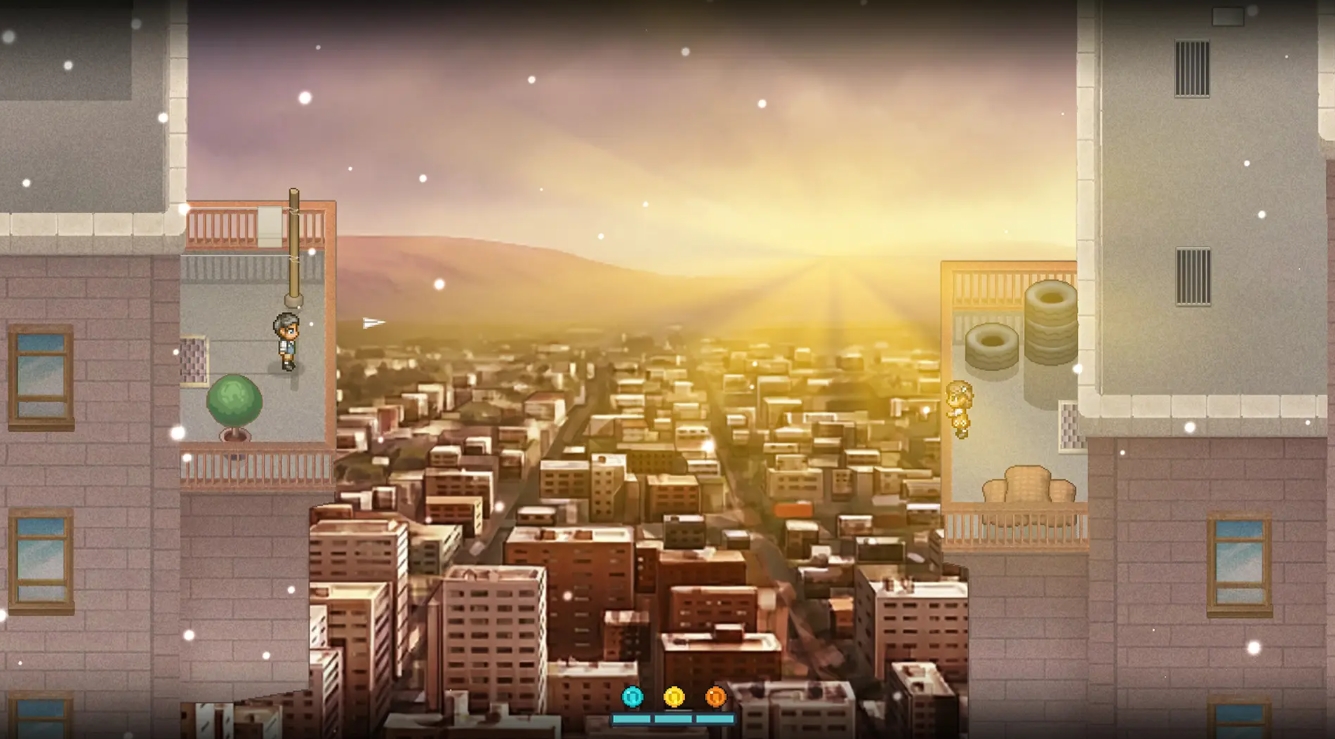
There is noticeably more humor here than in To the Moon. But these are not silly jokes for the sake of jokes – this is exactly the same “smart” humor, imbued with love for geek culture. References to “The Godfather” and superhero comics flash in the frame, the heroes shamelessly break the fourth wall and involve the player in this game – not only in the plot, but also in style. It feels like you are not just watching, but becoming part of the narrative, with all its twists and paradoxes.
And all of this ultimately works for the main effect: the tension, which sometimes builds up, sometimes drops, makes the ending especially intense. It may not be as heartbreaking as To the Moon – it doesn’t make you cry out loud – but it shouldn’t. Its power is in something else: in maturity, in subtlety, in the silence that remains after. This is no longer a teenage tragedy, but something deeper – meaningful, wise, adult. The ending of Finding Paradise leaves a mark not with a sharp pain, but with a soft shadow in the soul – one that stays with you for a long time.
Why You Should Play Finding Paradise
Let me repeat: in the world of art-house cinema and literature, there have long been works that tell about similar topics in a deeper, more original and, in places, even more elegant way than the story told in Finding Paradise. Where directors and writers often take risks and experiment, this author chooses a simpler and more accessible language – the language of video games. And it is in this language that he truly reveals himself. Within the framework of interactive storytelling, he is, without exaggeration, one of the most talented storytellers of our time.
His strength is not in technical innovations, but in the ability to convey emotions: warm, poignant, painful, inspiring. He knows how to talk about the most difficult things – life, memory, regrets, love and missed chances – in a way that touches even those who are far from gaming culture.
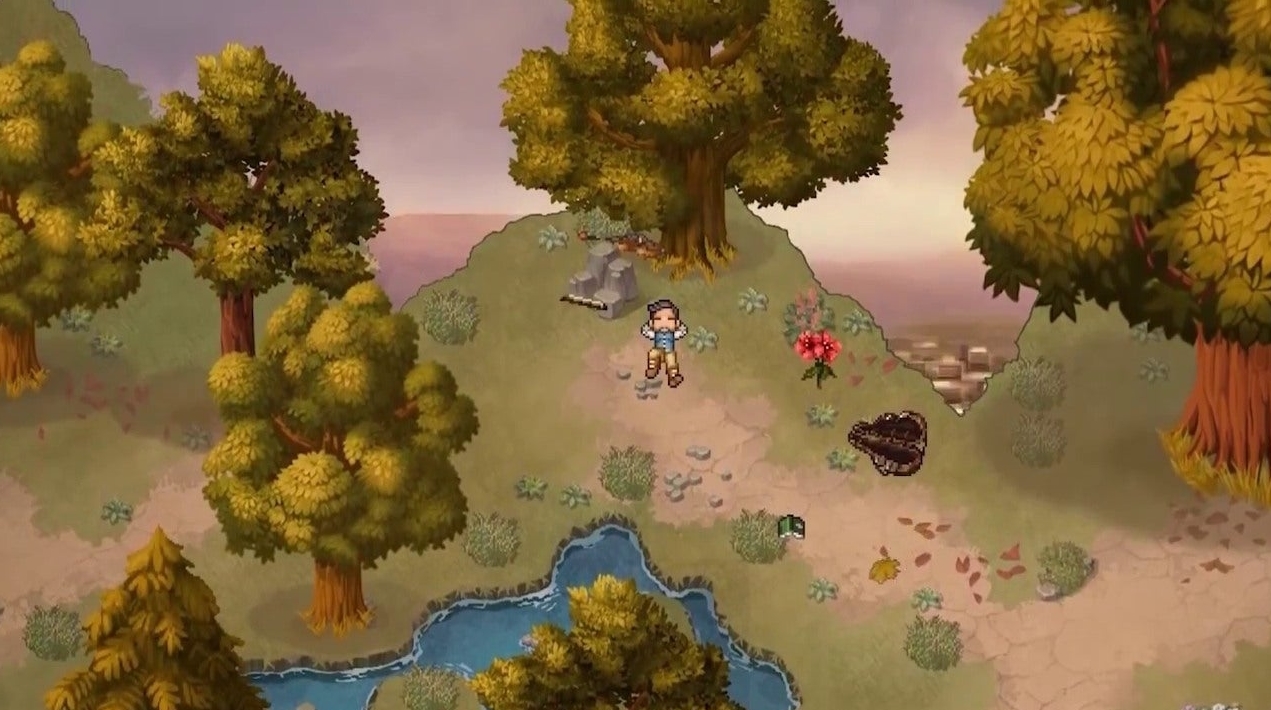
Yes, the new part had its own ambitions. Some might say that it has lost the edge that To the Moon had: there is more space, humor, allusions, arcade inserts. And it would seem that with all this, the game could lose its emotional focus. But in fact, it has simply grown. The story here is not weaker, but different. More mature, multi-layered, with questions that you don’t always want to answer, but are worth looking for. This is not the kind of plot that will make you cry at the end credits. This is a story that stays with you for a long time, like a quiet aftertaste.
Strengths:
-
A story that grabs you not at first glance, but from a deep look — mature, philosophical, subtle.
-
The gameplay has become more diverse: now it is not just an interactive novel, but a full-fledged game with small mechanical elements, which adds pace.
-
The visual style has been enriched with details: the picture is now not only atmospheric, but also truly beautiful.
-
The music, as always, is top-notch – it doesn’t just accompany what’s happening, it feels it, amplifies it, explains it without words.
What you might not like:
-
Sometimes the game can seem too drawn out – especially in moments where the pace drops and the plot seems to take a break. But even this feels more like an opportunity to catch your breath and think about what you’ve seen.
Finding Paradise System Requirements
System Specs for Finding Paradise
How to play Finding Paradise for free on Steam via VpeSports
Sometimes the most powerful journeys don’t involve dragons or explosions — they begin with a whisper, a memory, a regret. Finding Paradise isn’t about saving the world. It’s about understanding one man’s quiet wish to relive his life differently — a touching tale where two doctors travel through his memories, stitching together moments of joy, sorrow, and everything in between.
This game doesn’t shout. It speaks gently, through soft music, bittersweet flashbacks, and the kind of storytelling that makes you pause and reflect. You won’t be asked to master combos or defeat bosses — instead, you’ll witness a beautifully human story unfold at its own rhythm.
Getting started is effortless. You don’t need to tweak files or search for cracked versions — we’ve made sure the game is available to you in just a few clicks. After registering and logging into your account, you can play Finding Paradise through a free Steam account provided by our service — no strings attached, just the game as it was meant to be experienced.
Once the credits roll, take a moment to share how it made you feel. Maybe it made you cry, maybe it reminded you of someone. Whatever it stirred in you, your review means a lot to us. And if it doesn’t appear right away — no worries, just tweak it slightly and try again. After moderation, we’ll send your access details straight to your inbox.
If you’d like to stay in the loop about new game drops, account giveaways, or updates, our Telegram channel is where the real-time action happens. And if anything feels unclear — whether it’s launching the game or navigating features — our “How to play for free” guide has everything covered. Or just message us. A real person will reply.