

It is not uncommon to hear the opinion that modern games have become too politicized. But it is important to remember: politics in video games is not a new thing. It has always been there. Another thing is how it is presented. The problem, as a rule, is not in the topic itself, but in its intrusive and clumsy implementation. When political elements become part of the game world, logically woven into the plot or even reflected in the mechanics, they are perceived completely differently. In such cases, players are much more likely to accept this as part of the artistic concept, and sometimes even note how subtly the developers approached the disclosure of serious topics.
Tropico, released in 2001, is a great example of how to competently integrate a political context into a game. The appearance of the hero-ruler and the hot island setting clearly referred to certain real countries. But the game did not force you to choose a side – on the contrary, it gave you freedom: you could rule with an iron fist, building a dictatorship, or you could win the people’s love with reforms and benefits. Everything depended on the player. The developers, in fact, removed the label of propaganda from themselves, handing over the reins of morality to the user himself. And this decision made Tropico not only a satirical, but also a truly profound game.
Table of Contents
Tropico 6 Free Steam Account
I must admit right away that I am rather superficially familiar with the Tropico series. Mainly through reviews, videos and stories from friends who could not tear themselves away from these “banana dictatorships”. But I really sat down to play Tropico 6 without the baggage of previous parts, so I perceive the game with fresh eyes. And I must say that it left a strong impression. Especially in comparison with other city-building simulators that I have played personally. For example, with the same Cities: Skylines. At first glance, the games have similar goals – we manage the territory, build buildings, try to please the residents and develop the infrastructure. But if Cities: Skylines is about the scale, where each resident exists as if “in the general flow” and can magically appear where needed at any moment, then Tropico 6 is about attention to each person. Here, not a single Tropican is teleported to the workplace. If the path is closed or too long, he will go around. If he gets tired, hungry or gets into trouble, all this will affect his productivity, and sometimes even his fate.
This principle of individual simulation of each inhabitant sets a completely different rhythm of the game. You begin to perceive your citizens not as statistics, but as living people, with their habits, weaknesses and needs. It is not enough for them to just be within the radius of a school or temple – they must get there, and at the same time they must have money to pay for the entrance. Some buildings serve only the wealthy population, and this automatically divides your wards into classes. This means you will have to think about the balance between the elite and the poor. Such a complex and meticulous simulation cannot but affect the technical side. Tropico 6 is quite demanding on resources, especially when the island begins to come to life. There is even a slider in the settings that limits the number of simulated citizens – the default is 2000, but even this figure needs to be reached by building everything necessary.
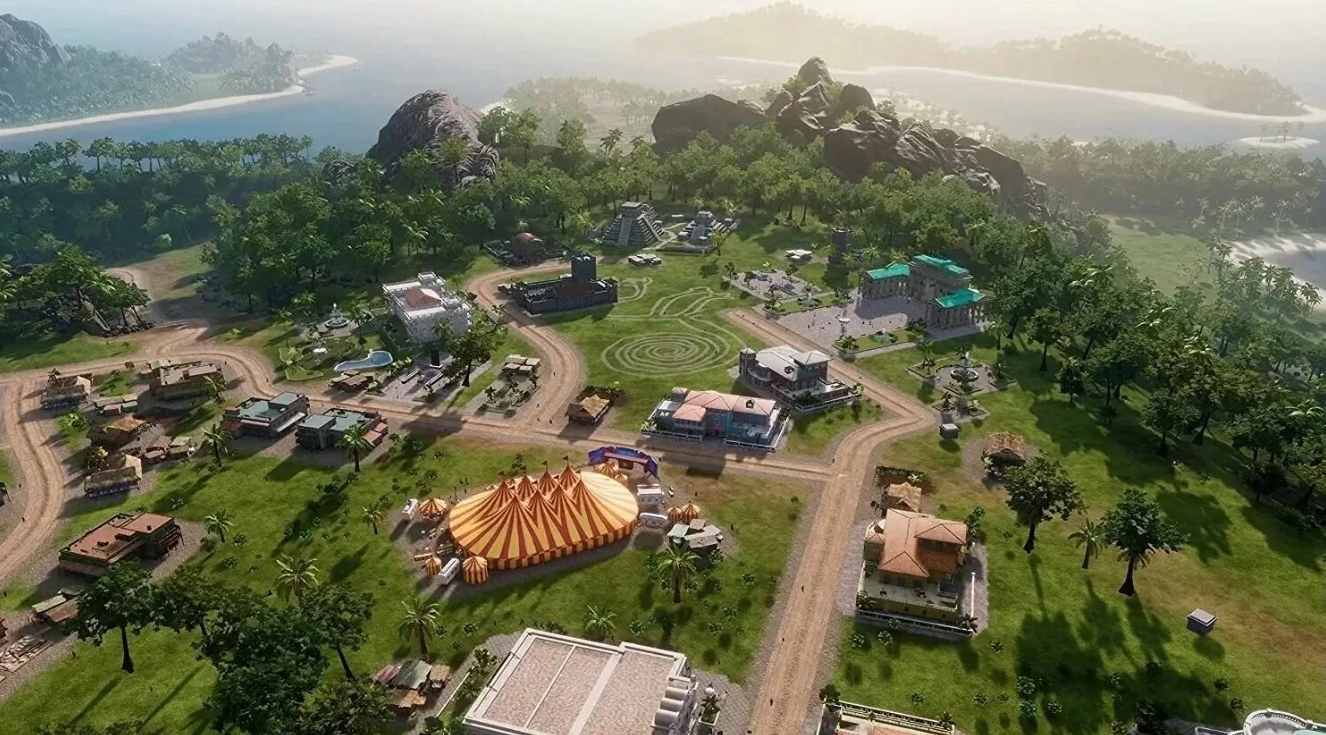
And necessity is food, housing, security, medicine, leisure, religion. All this requires buildings, workers, supplies, and in some cases – political decisions. Laws can both make your life easier and threaten the entire economy. For example, raising the minimum wage means making people happier, but also spending more of the budget. And banning alcohol or controlling the media is already playing with fire. One wrong step – and the people can rebel. It is important to find a fine balance: on the one hand, take care of people and create comfort, on the other – not to go broke. Because in Tropico, the dissatisfied do not just “lose happiness.” They can leave the island or even go into the forests, become rebels and start attacking your buildings. This means that managing is not just about constructing buildings, but also about thinking about how to keep people within the system without driving them to despair.
Tropico 6 is not about an ideal city from glossy postcards. It is about life. Sometimes hard, sometimes unfair, but almost always real. If you give yourself time to understand, you can immerse yourself in this virtual archipelago completely. And even forget a little that you are not the real El Presidente, but just a player at the keyboard.
You’ve got goals – meet them with a free steam account with now!
Internal and External Politics Explained in Tropico 6
If you think that managing an island in Tropico 6 is just a construction site and taking care of the people’s happiness, then I hasten to disappoint you: everything is much more complicated and interesting. The world of your banana republic is a real chessboard, where the pieces are not only individual citizens, but also powerful political factions, each with its own interests, whims and ambitions.
Your domestic policy will revolve around such groups as communists, monarchists, militarists, capitalists, environmentalists and religious fanatics. And these are not just abstract statistics – each faction has a leader, and therefore a person with whom you can interact directly. Sometimes this interaction takes on a very… pragmatic nature: by sending a suitcase with money to the right person, you will ensure a temporary increase in approval from the entire group. And when support for a faction grows, the part of the population belonging to this ideology automatically becomes more loyal.
However, bribery is more of a method for when “everything is on fire”. It is expensive, short-term and ineffective in the long term. It is much more reasonable and cheaper to fulfill requests from factions. These requests are essentially your quests for building relationships. Sometimes they require you to accept a particular decree, build a specific building (for example, a prison, chapel or hospital), establish the import of raw materials or start exporting a certain product. Moreover, the tasks are generated with elements of randomness, and this is the whole beauty – you never know what the next leader will ask for. A militarist may want rum, and a capitalist – a shelter. But if you fulfill the request, especially if it is related to construction, you can get a permanent bonus to relations. This is no longer a temporary suitcase, but an investment in stability.
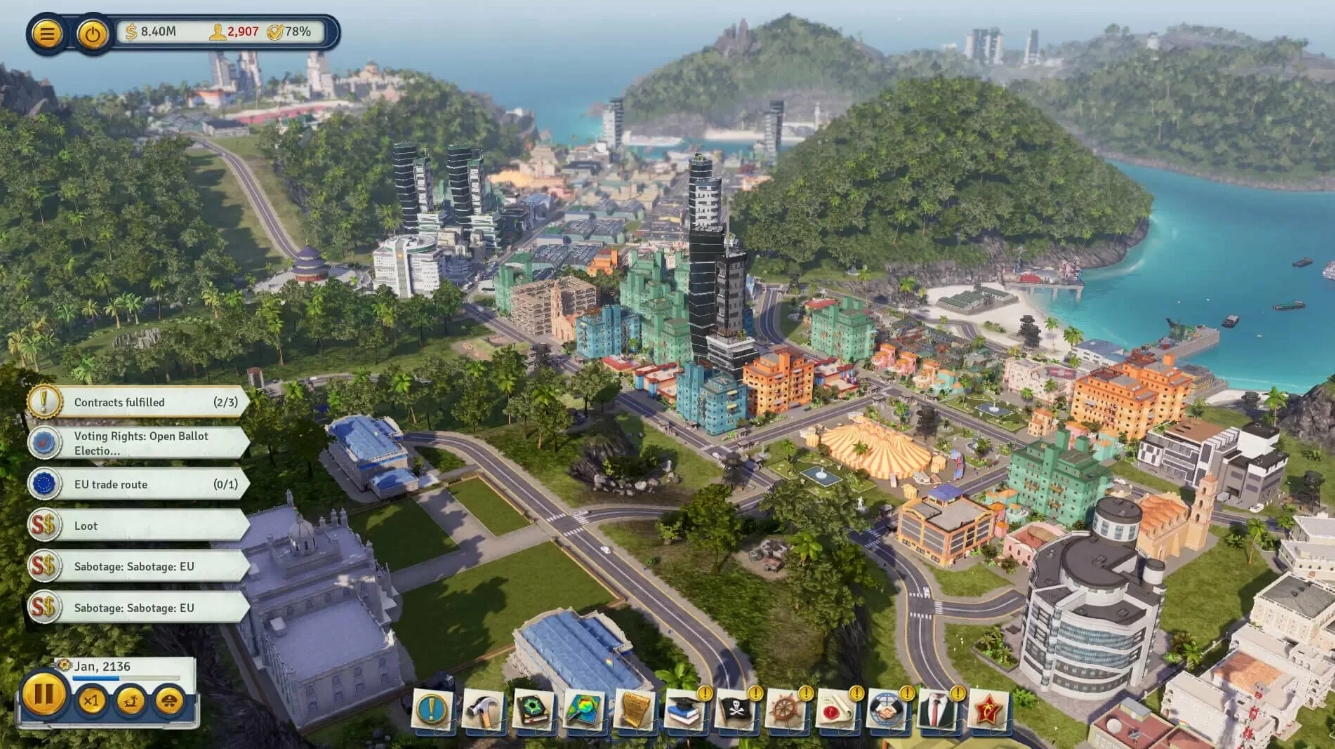
It is important to remember that each faction has its own character. Religious ones will be delighted with the construction of churches and cathedrals, but will start to grumble about casinos and nightclubs. Communists will support affordable medical institutions and jobs, but will not tolerate luxurious mansions and villas. And the capitalists, on the contrary, are for elite housing, business, profit. Therefore, every decision you make echoes across the entire political map of the island.
But politics is not only about internal affairs. There is also an external arena, where powerful countries and international alliances operate. They are represented by ambassadors, each of whom can become both your ally and your sworn enemy. These external forces do not directly influence the population, but they have significant control over the economy and security of the island. Be friends with them – you will receive profitable export contracts, financial assistance, special bonuses. Quarrel – you will face a trade block, economic sanctions and even enemy sabotage that can destroy important buildings.
As in real diplomacy, you will have to skillfully maneuver between opposing interests. Some like your policy, others are unhappy with it. You will not be able to please everyone – but you will be able to choose who exactly is more profitable to please at the moment. Sometimes you have to give up a good deal because it will ruin your relationship with another influential player. Sometimes, on the contrary, you have to take a risk for the sake of a major breakthrough. And yet, if the situation gets out of control, there is a proven way to regain favor – that very suitcase of money. In Tropico, as in life, money opens many doors, but it is better to act wisely and build your policy so that suitcases are needed as rarely as possible.
Military strategy in Tropico
If you have not managed to establish friendship with all factions and powers, it is time to think about protection. Watchtowers, forts and other defensive structures will help with this. Their garrisons will automatically enter the battle to repel attacks from both outside and inside.
However, you should not count on direct control of the army – everything is decided by strategy here. You can only indicate which of the attacked buildings should be protected first. Garrisons will move there, and only then will they deal with the rest of the threats. And if the enemy decides to strike in several directions at once, many objects can be damaged at once. Military buildings are also useful in “calm” times. Watchtowers help to identify underground rebels and lawbreakers, and at checkpoints you can organize the collection of tolls, replenishing the budget.
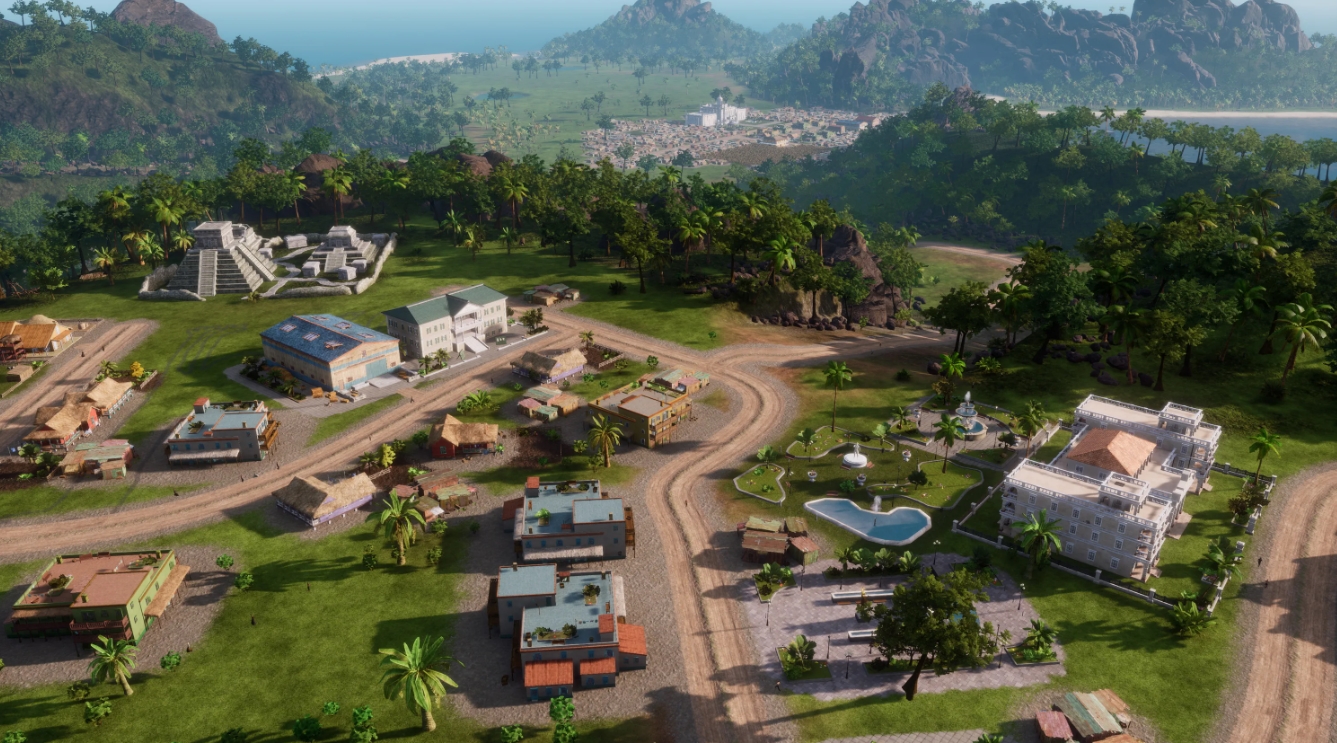
Raid buildings bring real exoticism. With each new stage of history, you get unique tools for covert operations:
-
Pirate Lair – send teams to search for treasures and rare resources;
-
Commando Base – carry out subversive activities in neighboring countries, increasing the attractiveness of your archipelago;
-
Spy Academy – conduct reconnaissance, weaken opponents and obtain secret data;
-
Cyber Operations Center – hack foreign servers, steal technology and save on research.
What is especially nice is that new buildings do not cancel the capabilities of previous eras, but expand your arsenal. Even in the newest era, your pirates will still be useful, special forces will cause chaos outside the country, and hackers will provide you with advanced developments without unnecessary costs.
There is also a special category of raids – real thefts on a global scale. For example, you can “borrow” Stonehenge or the Eiffel Tower and transport it to Tropico. Such trophies will not only increase the tourist appeal, but also provide a solid global bonus. However, be prepared for a long preparation of the operation, the need to obtain rare resources or carry out a cunning multi-move. It seems that someone in the development team was definitely a fan of Evil Genius…
Tropico Story Campaign
Tropico immediately makes it clear: this is not just an island management simulator, but a real performance with elements of political satire and absurd humor. The game constantly jokes about history, world powers and the very essence of power, but it does so with such charm that it is simply impossible not to smile. Sometimes the militarists demand to buy rum to maintain morale, sometimes a storyline suddenly appears in which you need to steal the Eiffel Tower – and this is presented not as a joke, but as an absolutely serious task.
The factions and representatives of the superpowers are a separate theater. Each character is like a caricature come to life, and even without explanations it is clear who became the prototype of this or that hero. Communist Marco Moreno with a fiery look, Russian ambassador Vlad Orlov with a distinctive appearance and accent – these are not just decorations, but participants in the action, each of whom makes caustic comments. They can make fun of corruption, philosophize about the futility of self-sacrifice, or ask for resources with absurd motivations. They all contribute to the atmosphere of the game, where serious things are served under the sauce of the grotesque.
But the king of this farce is undoubtedly Penultimo. He is your personal assistant, herald, advisor, comedian, historian, and sometimes even the voice of conscience. His speeches are a symbiosis of madness and common sense. He can offer crazy ideas, like using llamas as an economic lever, and then suddenly suggest a truly effective strategy. He despises the people, fears any danger, but is ready to throw himself into the breach for the sake of his beloved President. His sarcasm, pathos, and devotion make every line memorable, and every task with his participation a small show.
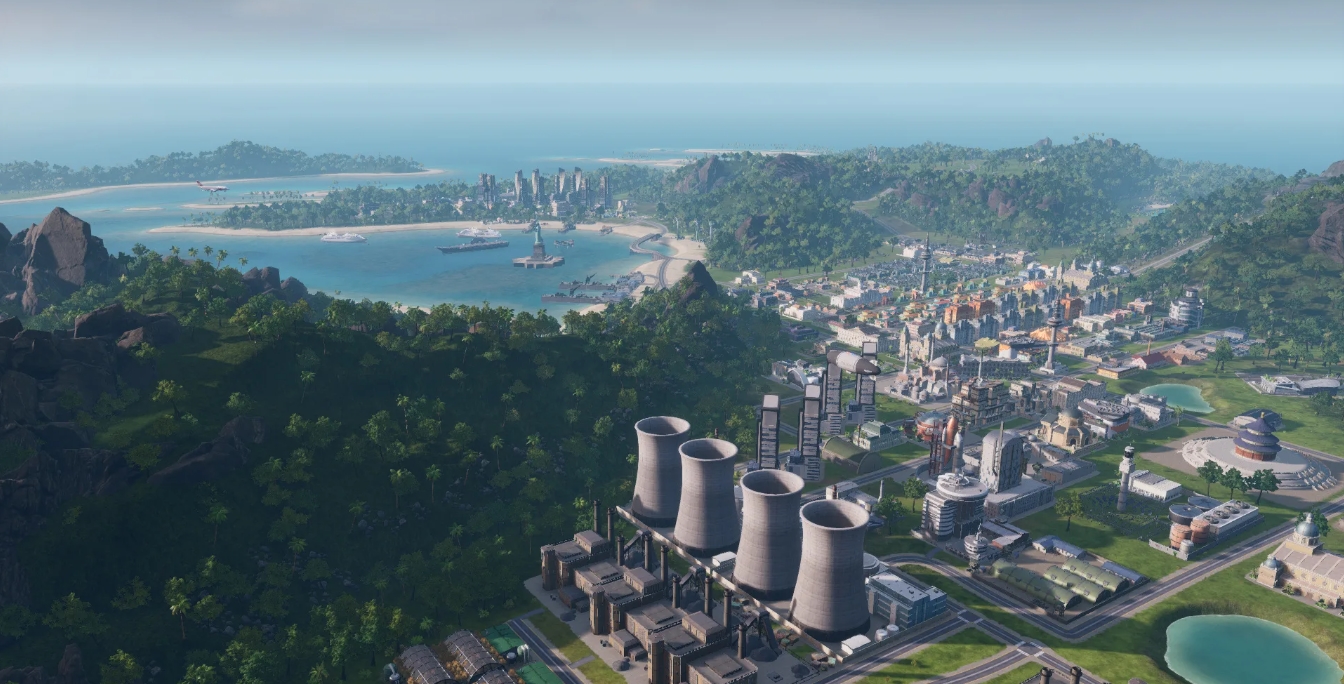
The story campaign here is more a series of bright episodes from the biography of El Presidente than a single plot. Each mission is like a new chapter: first you are a nameless governor in the colonial era, and after a couple of tasks you are already the ruler of a young state with superpower ambitions. Scenarios range from classic economic growth to real scams with elements of a political thriller and fantasy.
For example, here is one of the first missions: you open gold mines, but do not want to share the profits with the Crown representatives. Then Penultimo comes to the rescue – and offers a cunning plan: hide gold bars in coconuts and smuggle them abroad. To do this, the player will really need to set up coconut production, build warehouses and switch the mines to “secret mining” mode. This is not just a funny quest – this is a real economic task, wrapped in a joke.
And then it gets even more interesting. The chapter on “prohibition” will force you to juggle the interests of the state and the criminal world: on the one hand, the fight against the mafia, on the other, cooperation with it, because the underground rum trade brings in too much money to simply shut it down. Later, you will have a mission about creating a park with animals cloned according to the model of “that very Hollywood franchise” – with the corresponding catastrophic consequences.
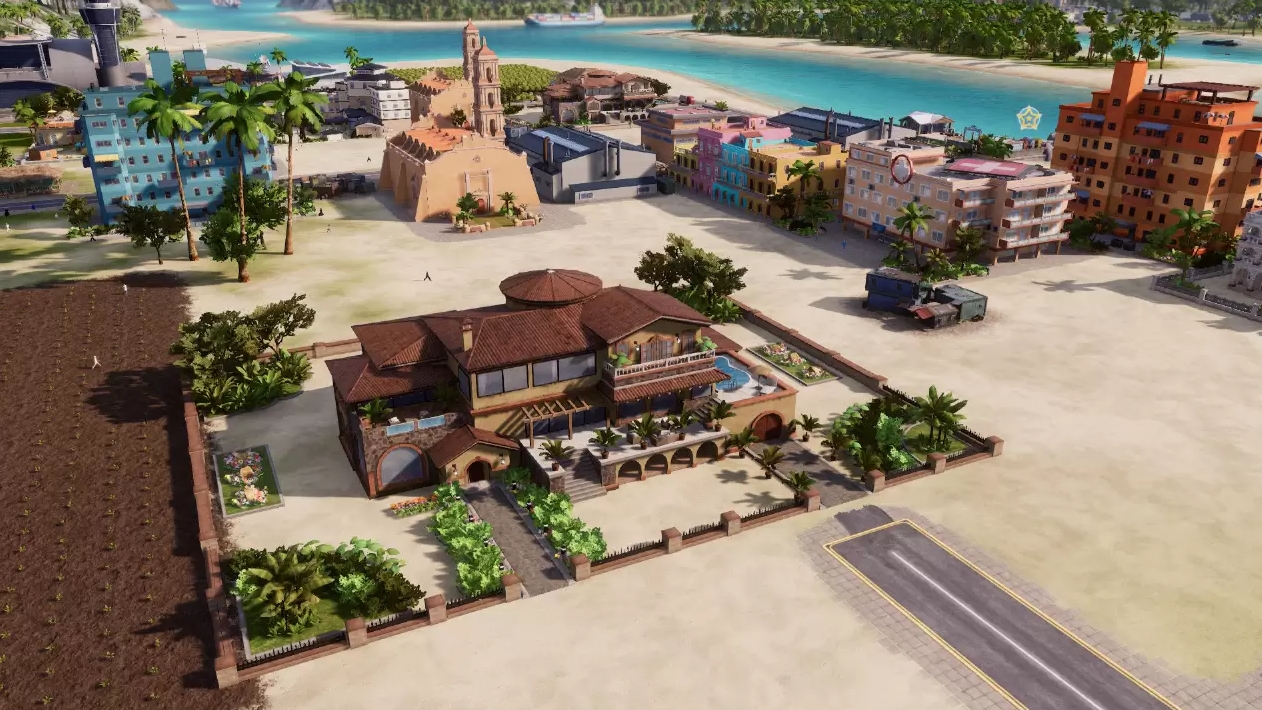
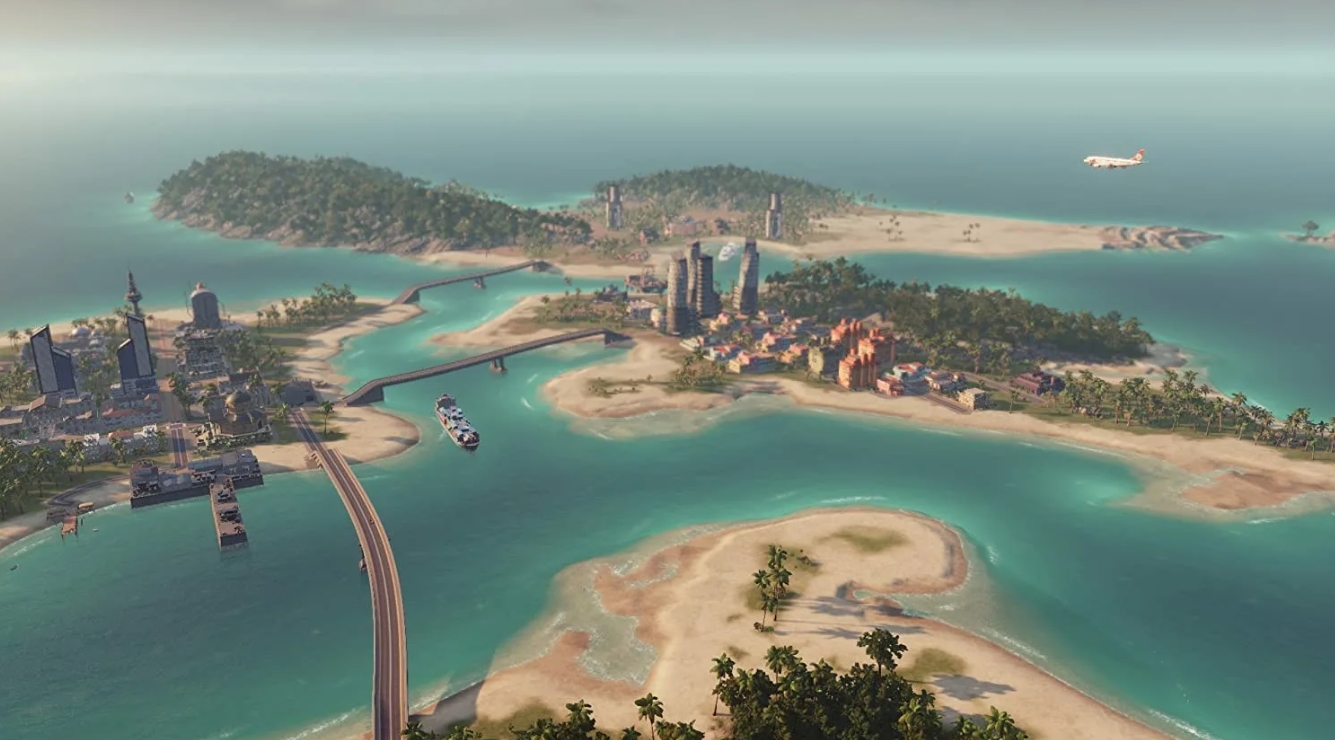
All these stories are organically woven into the gameplay. Tropico requires not only the ability to develop the economy, but also to solve logistical problems, especially when the map is divided into several islands. You need to build ports, establish sea routes, take into account the location of buildings and plan growth in advance. And all this happens against the backdrop of endless diplomacy: some factions demand equality and education, others – suppression and militarization, and foreign powers maneuver between them, offering deals and simultaneously threatening sanctions.
What’s particularly impressive is how the developers managed to combine all of this: colorful characters, satire, an ironic plot, and engaging management. Tropico is not just a construction game, but a living, breathing political theater, with you in the lead role. And even if things don’t go according to plan, Penultimo will always find a way to present it as a triumph – or, at worst, as another reason for the grand plan to save the country.
Tropico 6: Interface issues and control flaws
What really spoils the impression of Tropico 6 is the lack of convenient tools for management and analysis. And if you can still understand why you can’t give orders directly here – after all, the game is about “inspired” management, not manual control – then the need to guess about basic things like “where did the resource go” or “why did the approval level suddenly drop” is already puzzling. This is, without exaggeration, a design miscalculation of the interface.
The most annoying example is working with trade contracts. Let’s say you want to conclude an export deal. Sounds simple? In fact, it is not. To understand what exactly can be sold, you have to jump between two menus: the contracts tab and the almanac, which displays current stocks. Why didn’t the developers add this information directly to the contract description? Why can’t you immediately see: do you have, say, 1200 tons of coffee to sell them profitably?
And after the deal is concluded, new adventures begin. Let’s say you produce both raw materials and goods from them. Now, it’s impossible to predict where the next batch will go – to the factory or for export. Trucks decide this, as if tossing a coin. Sometimes I had nothing exported at all for years until I manually turned off the processing plants. This was the only way to “convince” the transport to send the goods to the port, and not to another warehouse.
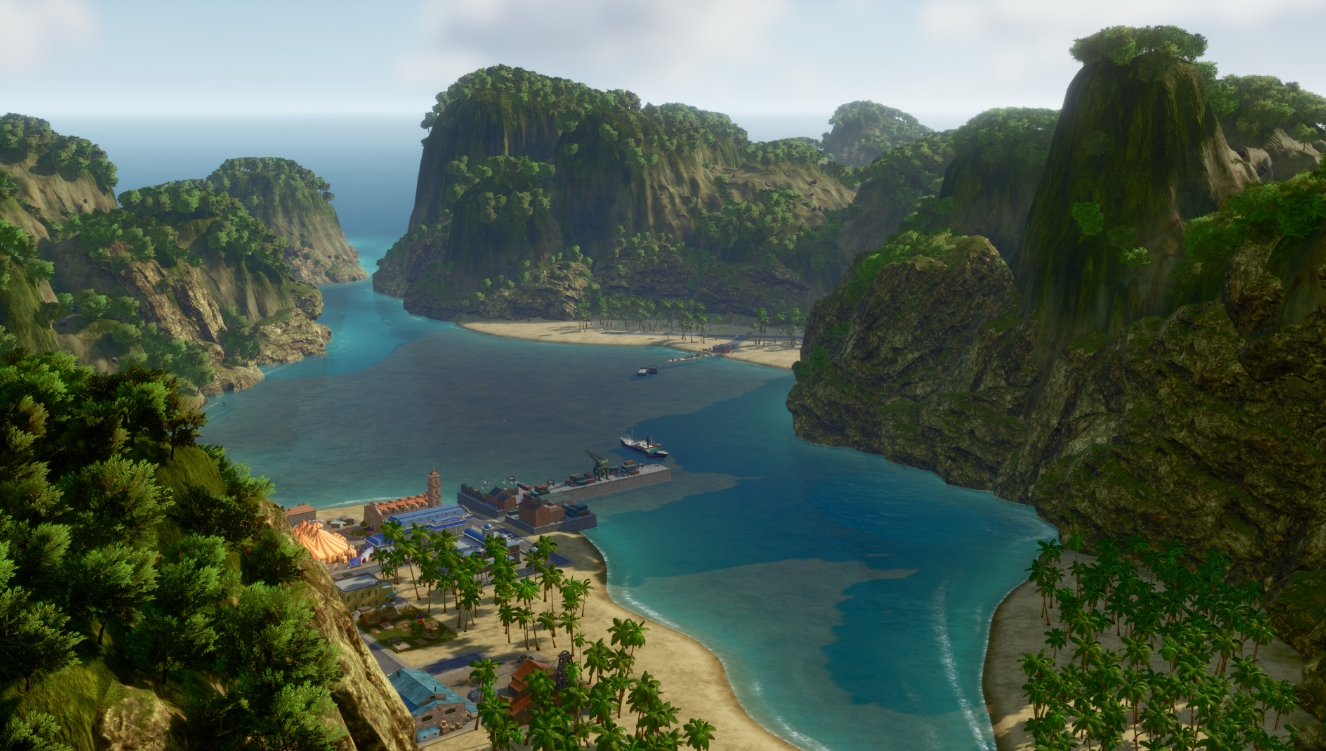
The same thing with the population satisfaction assessment system. The “Almanac” displays the general level, everything seems stable. But if you look deeper, you see that in one part of the island everything is fine, and in another, people live for years without food, health care and entertainment. To find out, you need to manually click on each tropical, study the tabs of their dossier and try to piece together the overall picture bit by bit. In a strategy game of this level, this feels like a step back.
And this is not just an inconvenience. Sometimes one dissatisfied person can bring down the percentage of support. Someone didn’t buy rum, someone couldn’t get into a bar, and someone’s favorite faction rating dropped by 5 points – and that’s it, your electorate suddenly starts to doubt. You have to throw away suitcases of money, include a property qualification in the constitution and look for any way to artificially maintain popularity. But it’s impossible to predict the result of these measures – the game simply does not provide the necessary feedback.
And now on the topic of user content, where Tropico 6 unexpectedly turns out to be very poor. When you go to the Steam workshop, you will find that almost all the content is maps. And not made by hand, but generated by a tool that you will not even see – there is no full-fledged editor. No new buildings, no interesting scenarios, no mods that change the balance or mechanics. All this could add depth and replayability, as in other city-building strategies – but for some reason it is simply not here. So, despite its charisma, style, and interesting ideas, Tropico 6 sometimes feels like a game that leaves you guessing too much. And not because it’s designed that way — but because the right tools for analysis simply aren’t there.
Is Tropico 6 worth playing in 2025?
My acquaintance with Tropico 6 turned out to be much deeper than I expected. At first it seemed like just another city-building strategy with a tropical setting and political jokes. But the more I played, the more clearly I realized that I had a real immersive sim in front of me, albeit disguised as an economic strategy. The same genre as Deus Ex or BioShock, only instead of weapons – decrees, taxes and decisions that affect the fate of an entire country.
The main task here is not just to build a working economy. No, the game wants you to feel what it is like to be El Presidente. To sit in your luxurious palace, listen to reports, receive delegations, maneuver between the interests of factions and world powers. And at the same time not to miss the main thing – the people. After all, if you do not please the residents, you will be demolished. If the superpowers do not like you – sanctions, or even a military invasion. This is not just building buildings – it is a game of politics, psychology and balance of power.
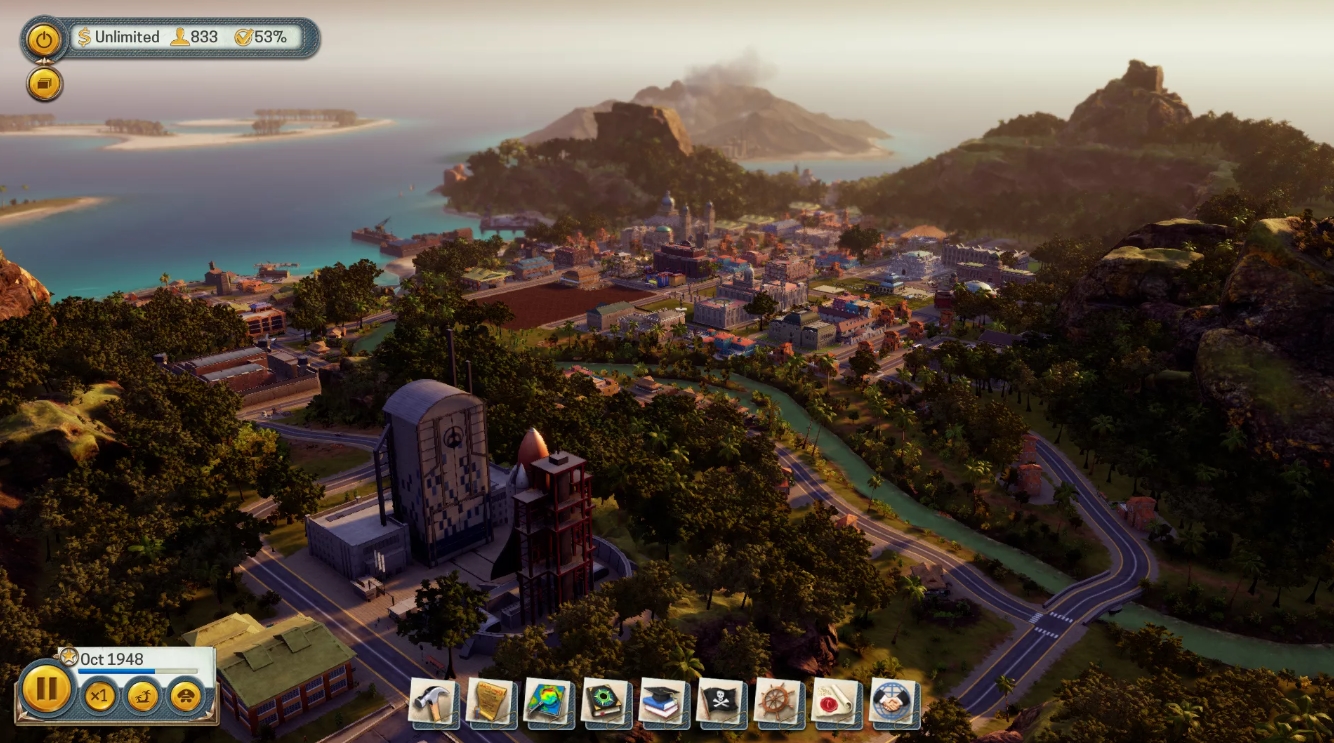
It is especially great that the role of the ruler is not abstract here. You literally create your President from scratch – from appearance to clothes. Do you want a serious leader in a suit? Or a female dictator with a cigar? Yes, please. This character will appear in cutscenes, give speeches, visit important places. And all these “public appearances” are part of the mechanics. For example, a well-written election speech with the right promises can significantly increase the level of public support. And if you drop in at a theater or a factory – the people will notice this and become more loyal.
What makes Tropico 6 especially memorable? Here are just a few reasons:
-
Complete freedom of political choice: from socialism to a harsh dictatorship – your power is in your hands.
-
A living and rich world: each Tropican has their own schedule, job and simulated life.
-
A deep economic system: export, processing, taxes and subsidies – everything is intertwined.
-
Bright satire and charismatic factions: with humor, recognizable characters and caustic remarks.
-
Customization and visual presence of the president: you really “live” inside the world, and not just watch it.
But do not think that everything will come down to funny speeches and cute hats. Tropico 6 is merciless to those who do not follow the economy or ignore domestic politics. Delay in building housing – and unemployment will instantly increase, protests will begin. Get carried away with the export of raw materials – and processing plants will stand without work. Appease one faction, and another will hold a grudge. It’s a constant diplomatic juggling act, where every move you make can turn into a crisis… or a triumph.
And it’s in moments like these that Tropico really shines. You’re not just playing – you’re living this life. Decisions are hard, but the results are real. When your island finally starts to prosper, when the factions are happy, when tourists come to admire the beaches and statues of your face – you feel proud. Because you built it all yourself. You maintained the precarious balance of power and economy.
Tropico 6 is not just a strategy game. It’s a whole role that you live. And if you like the idea of governing a country, even a fictional one, with all its nuances, dramas and satire – welcome. The archipelago is waiting for its El Presidente.
Tropico 6 System Requirements
System Specs for Tropico 6
How to play Tropico 6 for free on Steam via VpeSports
Have you ever dreamed of ruling an entire archipelago, where your word is law, and the fates of thousands of people depend on a single stroke of the pen? In Tropico 6, you don’t just play — you become El Presidente. This is not another strategy game — it’s a power simulator in which you decide whether your nation will prosper or fall into the abyss of corruption and chaos.
Welcome to a world where coconut palms hide military bases, and loud speeches from a balcony can either save a career or cause a popular uprising. All you need to start your reign is to register on our website and log in to your account. We’ve already prepared everything: Tropico 6 will be waiting for you with detailed instructions on how to launch. No confusion with installation — just log in and build the empire of your dreams.
We believe that every ruler deserves to be heard. So after the game, be sure to tell us how you dealt with corruption, uprisings, and bargaining with world powers. Comments are moderated – if the review does not appear immediately, do not worry, slightly correct it, and as soon as it is approved, all the necessary data will be sent to your email.
And if you want to stay up to date with new accounts, fresh updates, patches and news about the game – subscribe to our Telegram channel. There you can also ask any questions or discuss how to properly negotiate with communists if you have just made a deal with capitalists. And if something went wrong – take a look at the section “How to play for free – Complete guide” or just write to us in the chat. In Tropico, even dictators have questions.