

Today we celebrate the long-awaited release of FlatOut 4: Total Insanity, a fresh chapter in the legendary racing saga that once won the recognition of gamers around the world. Over the years of its existence, the series has gone from cult popularity to critical declines, turning into a true symbol of contrasting emotions and unpredictable development.
What does this new incarnation of chaos on wheels have in store for fans? It will become clear soon. In the meantime, let’s take a fascinating journey through the history of FlatOut – from its first steps to the present day, to understand why even after not the most successful releases, the franchise still evokes genuine interest and nostalgia.
One of the most anticipated returns was the beloved stunt mode, in which players literally launch the driver through the windshield, creating crazy and bizarre scenes. This carefree, chaotic element returns in a new guise, complemented by five other time-tested challenges that have won the love of devoted fans of the series.
Table of Contents
FlatOut Free Steam Account
When it comes to FlatOut, few realize that its origins lie in the northern land of lakes and pine forests: Finland. This is no coincidence, but one of the cornerstones that explains the spirit and character of the entire series. The Finns have had a special passion for speed and control at the limit for decades – motorsport is not just a hobby for them, but almost a national trait. In the world of rallying, Finland is not just a dot on the map, but a breeding ground for champions. Legends like Marcus Gronholm, Tommi Mäkinen, Juha Kankkunen and Ari Vatanen didn’t just win titles – they literally rewrote the driving textbooks. In total, these masters have collected fourteen championships, making Finland the epicenter of global rally culture.
Their success is not limited to rallying. Formula 1 also knows the Finnish name: Keke Rosberg, Mika Hakkinen and Kimi Raikkonen are forever inscribed in the pantheon of the best. These drivers are proof that northern restraint can be combined with icy precision and a steely character on the track. Even if the number of titles has decreased in recent years, Finland’s influence on world motorsport remains enduring. Without the contribution of the “Flying Finns”, it is impossible to imagine either the WRC or Formula 1 – they have shaped the very essence of these competitions, setting standards of skill and courage.
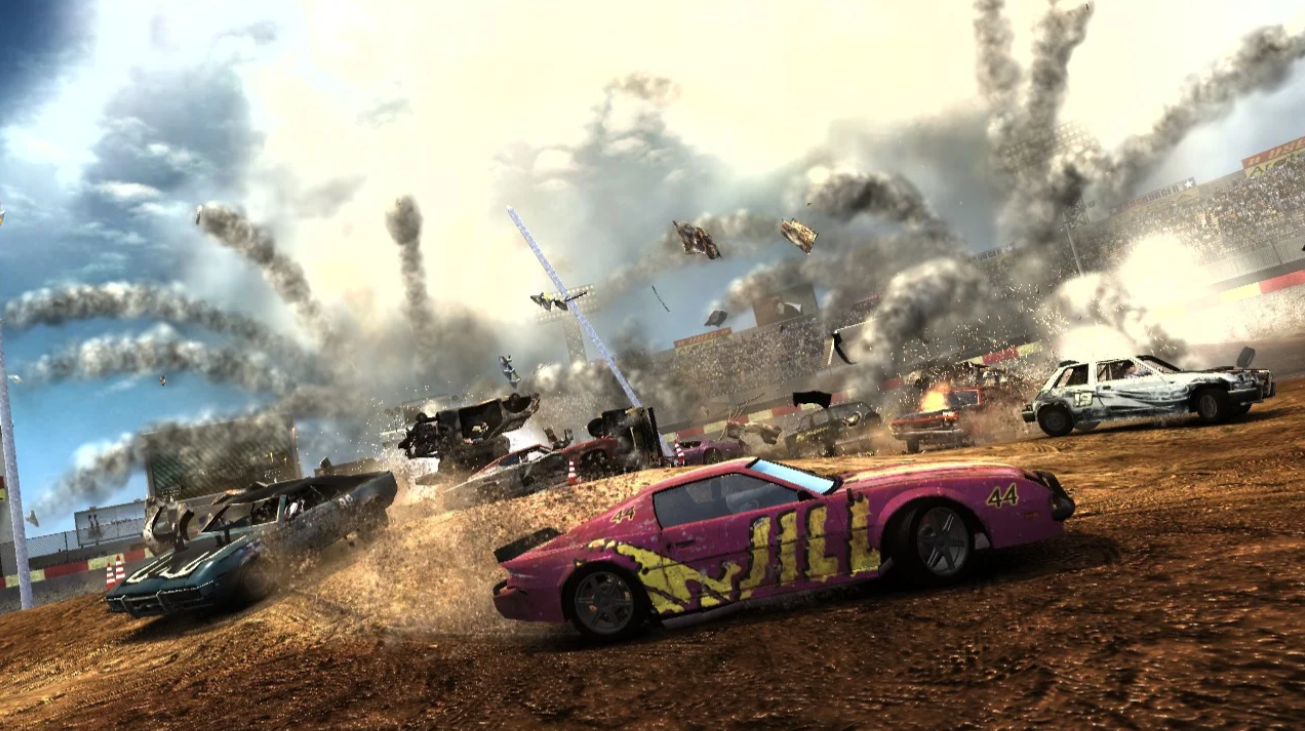
It is noteworthy that the passion for driving here is born not on the tracks, but among snowy plains and forest roads. Finnish children, growing up in remote villages, learn to operate equipment off-road from an early age. For them, driving is not exotic, but an everyday thing that requires endurance and intuition. This natural simulator forms future champions long before they put on a helmet. It’s no surprise that FlatOut inherited this wild energy and intensity. The game’s visual language, from wrecked cars to rugged landscapes, references the rugged beauty of Finnish roads and the mentality of those who drive them. Every race feels like a challenge, every collision like the untamed elements that are so close to the heart of a Finnish racer. The FlatOut series is more than just a simulation of destructive racing. It’s a digital metaphor for an entire culture where speed is a philosophy and every crash is an act of freedom.
Why Rally Trophy Became a Cult: Analyzing Bugbear’s Success
Founded in 2000 in the vibrant city of Helsinki, the studio behind FlatOut, Bugbear, made a bold entrance into the gaming world. Although they lacked prior experience in horror or adventure game development, they chose a playful name—Bugbear, which translates to “scarecrow.” Their debut project was anything but modest: in November 2001, they released Rally Trophy, a heartfelt homage to the exciting realm of serious rally racing.
At that time, we enthusiastically awarded Rally Trophy a commendable eight out of ten.
Today, the game is somewhat of a hidden gem, but it was a remarkable success fifteen years ago. Critics praised it for its outstanding gameplay, leading to an impressive average score of around eighty-two on Metacritic. Both the press and fans celebrated its realistic physics and its earnest dedication to the intricacies of rally racing. Rally Trophy featured nearly forty meticulously designed tracks set in various countries, each offering unique challenges. It also included a sophisticated simulation of changing weather conditions and diverse road surfaces, enhancing the overall experience. Plus, the game showcased a lineup of licensed vehicles, including iconic models like the Ford Escort MK1 RS2000 and the legendary Lancia Stratos, which thrilled car enthusiasts everywhere.
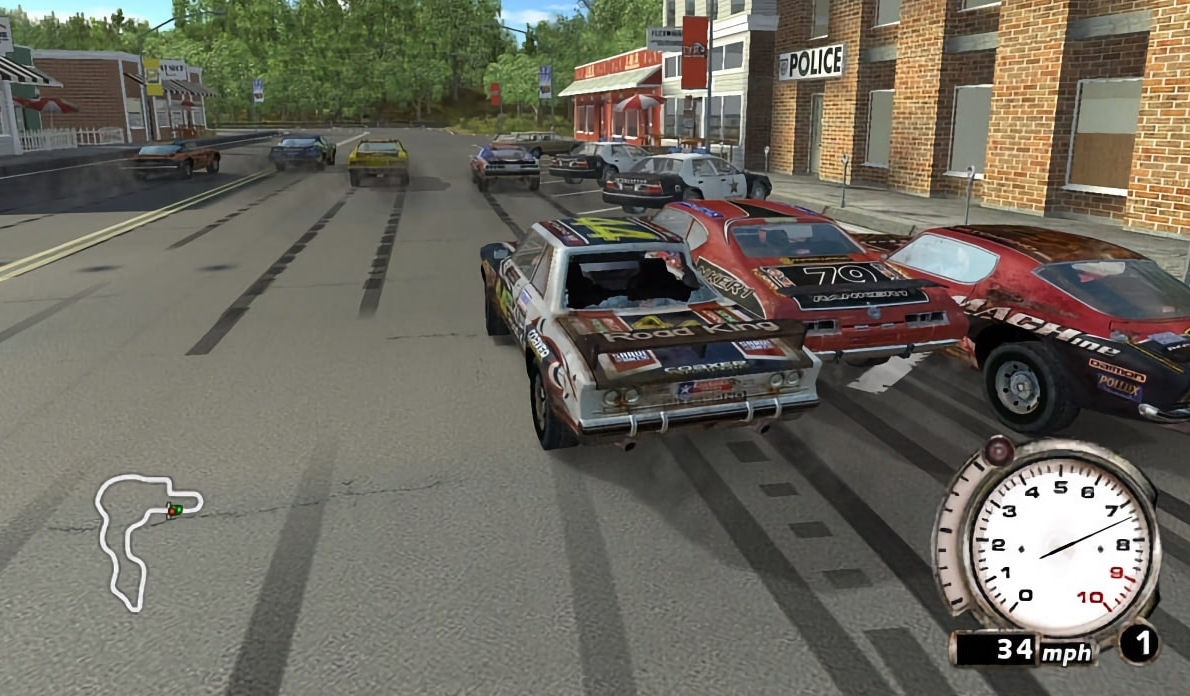
Bugbear’s commitment to quality and attention to detail truly set Rally Trophy apart, leaving a lasting impression on both players and critics alike.
Interestingly, the Finns didn’t place much emphasis on their previous success, quickly shifting from serious racing to the more playful excitement of monster truck mayhem in their next project. Sadly, Tough Trucks: Modified Monsters didn’t achieve significant recognition, but the developers still managed to glean some valuable insights from the experience. Their subsequent game turned out to be a major breakthrough, as it masterfully combined innovative elements drawn from both of their earlier efforts.
The Initial Steps
In November 2004, a game titled FlatOut made its debut in the UK. The cover featured a dramatic collision between two battered old vehicles, complete with a person hurtling through the windshield—seemingly nothing too extraordinary at first glance. However, those who decided to purchase it at that time generally felt quite satisfied with their investment, as the game offered an exhilarating experience that kept players engaged and entertained for hours on end.
The original FlatOut remains a standout game that delivers entirely fresh experiences, setting it apart in the racing genre. Although destruction-themed racing games have come and gone over the years, few have matched its vibrant, slightly rebellious “redneck” vibe. The races often unfolded on muddy backroads or basic asphalt tracks, accompanied by fantastic garage rock from lesser-known artists blasting through the speakers. The vehicle lineup showcased old, rusty clunkers decorated with inexpensive stickers, adding to the game’s unique charm.
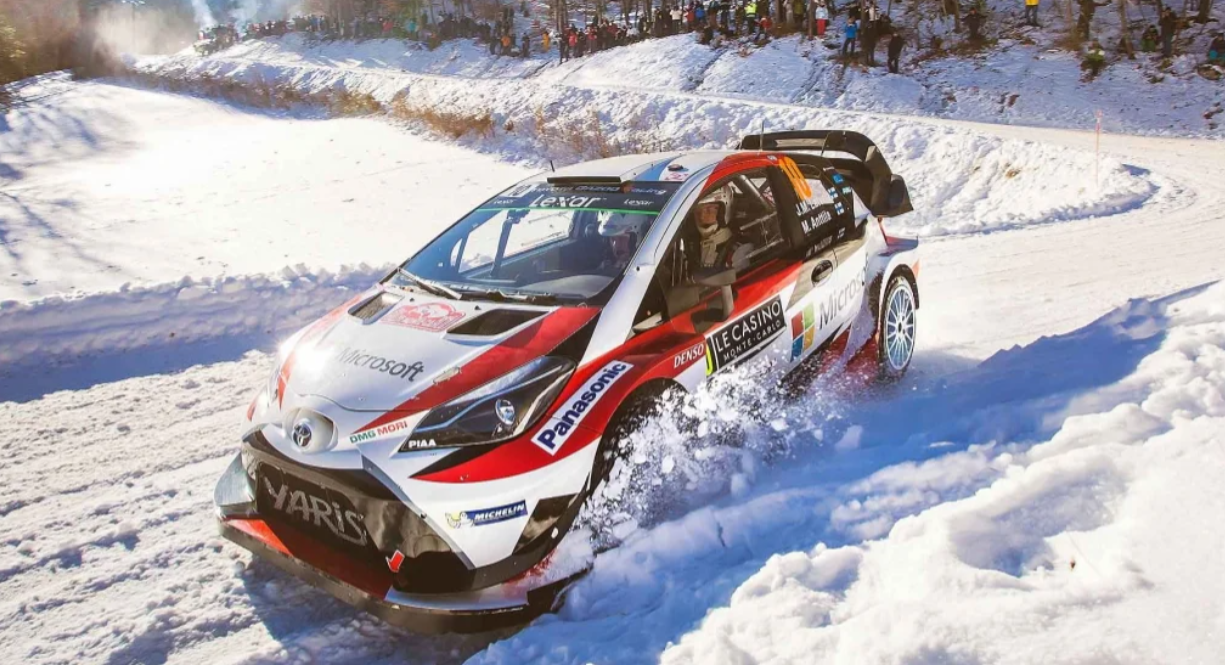
Drivers flying through windshields became the game’s hallmark, creating unforgettable moments.
This aspect had its own appeal, particularly since the primary aim wasn’t merely to finish first, but to create a multitude of spectacular crashes. The remarkable damage system, fierce opponents, and numerous destructible objects on the tracks all encouraged this delightful chaos. Players were incentivized to push the limits of their vehicles and their skills. Additionally, the “Derby” mode gained immense popularity, featuring eight cars clashing in a stadium, where the only rule was to “destroy all opponent vehicles and survive.” This mode captured the thrill of demolition and camaraderie among players, solidifying FlatOut’s legacy as a beloved classic in racing games.
Fans seeking pure racing thrills found their needs met as well. FlatOut captivated players with its engaging physics—cars responded sharply to steering and clung tightly to the track, transforming controlled drifts into a delightful experience. The real challenge in races lay in navigating the chaotic circus unfolding on the track, where every turn could lead to unforeseen chaos. Plus, the opponents really put up a fight, which adds significantly to the series’ allure and keeps players on their toes.
In addition, the first game featured a robust car upgrade system, allowing tweaks down to individual components, so players could fine-tune their vehicles to perfection. Any collision notably affected vehicle performance, making every crash feel impactful. However, by the time the sequel arrived, many of these intricate aspects were streamlined, simplifying what was once a rich experience.
Each rival came with a distinct name and uniquely decorated car, contributing to the game’s vibrant atmosphere. Most importantly, they all had different driving styles, adding layers to the competition. You could easily spot someone during a race by observing how aggressively and swiftly they maneuvered their vehicle through tight corners and obstacles. Over time, particularly tenacious competitors became targets of genuine frustration—a rarity in the racing genre that made the experience feel personal and engaging. This emotional connection to the rivals, alongside the thrilling gameplay, kept players coming back for more, eager to prove themselves on the track.
However, the real highlight was undoubtedly the racers’ “dolls” that spectacularly soared through the windshield during chaotic crashes. This quirky feature inspired a series of entertaining contests where players could compete to see whose character would fly higher or farther. Additionally, they could use their avatars for a fun game of bowling or curling, adding a humorous twist to the racing experience. Overall, FlatOut proved to be the ultimate game for a lively gathering of friends or a perfect way to unwind after a long, stressful day.
The higher you soar…
The first installment was praised by critics and achieved solid sales, paving the way for a much-anticipated sequel in 2006. FlatOut 2 elevated the series in nearly every aspect, from innovative gameplay mechanics to overall quality and presentation. With a significantly larger budget, the developers were able to deliver stunning visuals and an impressive soundtrack that really enhanced the gaming experience. This included popular artists such as Alkaline Trio, Papa Roach, Nickelback, Yellowcard, Rise Against, Fall Out Boy, Rob Zombie, Wolfmother, Audioslave, and many others. With its second release, the FlatOut series reached entirely new heights, captivating both fans and newcomers alike.
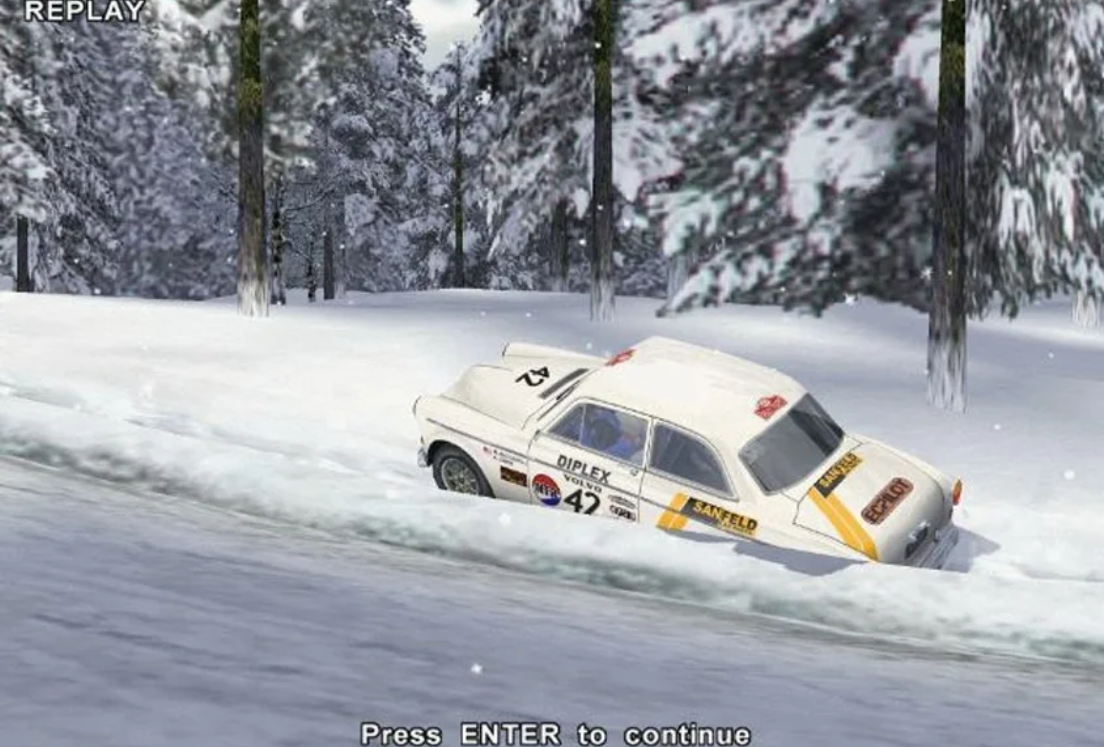
For many fans, the second part emerged as the best in the entire series, capturing their hearts in a way that resonated deeply. It’s unfortunate that this was where the loud successes came to an end.
Nearly everything that captivated players in the first installment was further developed and expanded upon. The career mode introduced comprehensive championships, complete with a detailed scoring system and fierce competition that often stretched to the thrilling final turn of the last race. Tracks became significantly more interactive: landslides could crash down from cliffs unexpectedly, and logs might tumble onto the road right in front of drivers, transforming the races into even more exhilarating spectacles filled with surprises.
Alongside the classic rides, gleaming sports cars made their exciting debut, adding a new layer of appeal. The outrageous stunts involving the driver’s “body” evolved dramatically with new, wild challenges—everything from intense baseball matches to launching hapless drivers through flaming rings, making each race an unforgettable adventure.
The personalization of competitors has truly evolved to a remarkable degree. Beyond their driving styles becoming more distinct and recognizable, these racers now sport unique appearances and even brief backstories (and who wouldn’t appreciate that?). Competing against the stunning Katie Jackson, the audacious Jack Benton, or the incredibly fast Sophia Martinez has transformed the experience into something even more exhilarating.
While the game lacks dialogue and a traditional narrative, players manage to grasp the essence of each rival’s character through the intensity of the races. At times, the rivalry escalates into a matter of pride—especially when someone has wronged you in a previous race. Or it could be because they are your primary contender in the championship, where every single point holds immense significance.
The sequel enjoyed even greater success, selling impressively and garnering a rich harvest of praise from critics and fans alike. However, despite this initial triumph, things took an unfortunate turn for the worse afterward, leaving many fans disappointed.
How a Change of Developers Destroyed the FlatOut Series
No, the next installment, Ultimate Carnage, can’t really be called a failure. It was an impressive game—essentially the same as the second one, just with enhanced graphics, a fresh soundtrack, and made for next-gen consoles. Along with the improved visuals, FlatOut introduced four new competitors and several modes—commendable additions, yet they disrupted the near-perfect balance of the second game. At times, the new rivals seemed far too weak, while at other moments they felt unbeatable, which slightly worsened the racing experience.
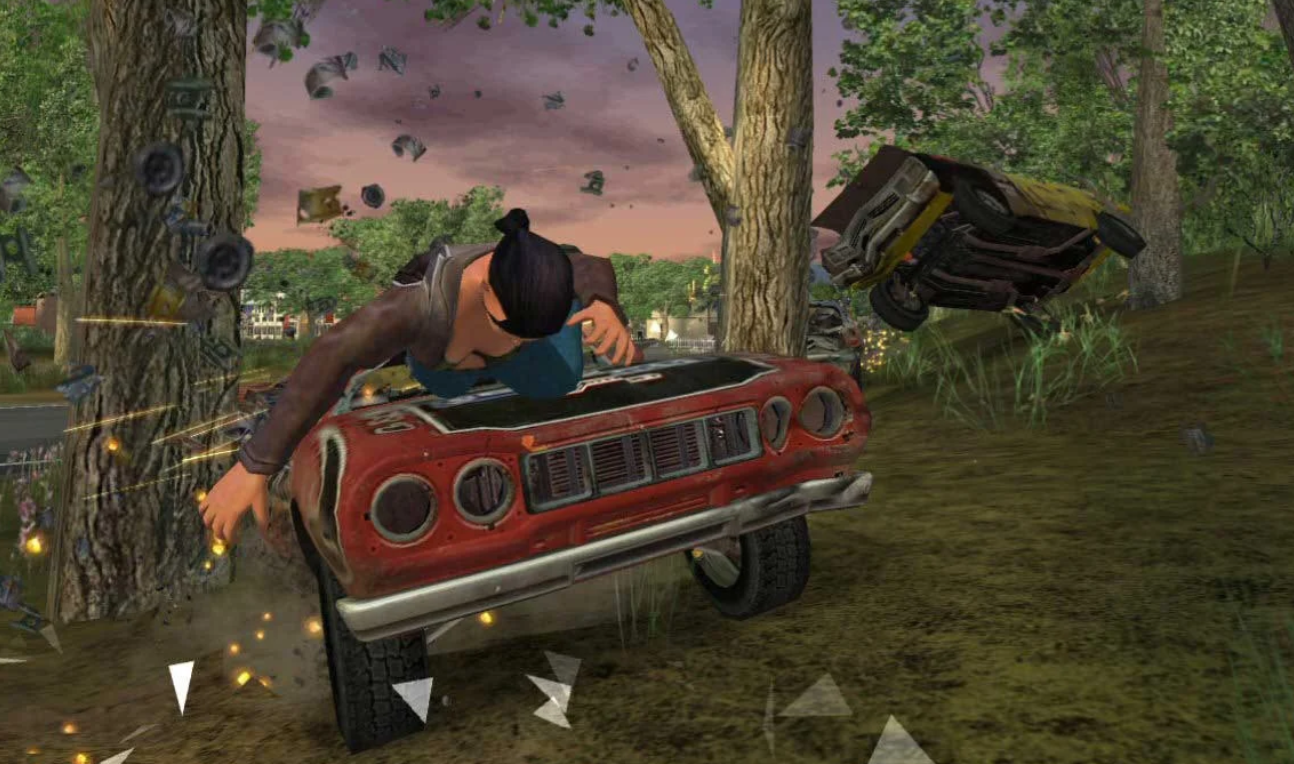
Eventually, FlatOut: Head On was released—essentially a version of Ultimate Carnage for the PSP. Then the series shifted developers, marking the start of its steep decline.
Before the console launch, the developers worked hard to polish the graphics, completely revamped the soundtrack, and added four new opponents. It’s tough to identify what went wrong, but with the arrival of Ultimate Carnage, the series seemed to lose something important.
The Finnish team at Bugbear moved on to create Ridge Racer Unbounded, while FlatOut, regrettably, landed in the hands of the Dutch studio Team6. Throughout their history, Team6 has released around forty games, none of which were particularly noteworthy. Even after taking on the FlatOut brand, they failed to improve the series: in 2010, they delivered the disappointing FlatOut Wii for Nintendo’s console, followed by the lackluster FlatOut 3: Chaos & Destruction the very next year.
No, the next installment, Ultimate Carnage, can’t honestly be labeled a failure. It was an impressive game—essentially the same as the second one, just with enhanced graphics, a fresh soundtrack, and designed for next-gen consoles. Along with the upgraded visuals, FlatOut introduced four new competitors and several exciting modes—commendable additions, yet they disrupted the near-perfect balance established in the second game. At times, the new rivals seemed far too weak and easy to beat, while at other moments they felt nearly unbeatable, which slightly worsened the overall racing experience.
Eventually, FlatOut: Head On was released—essentially a portable version of Ultimate Carnage for the PSP. It maintained much of the core gameplay but struggled to capture the same magic. After that, the series shifted developers, marking the start of its steep decline, which was disappointing for fans.
Before the console launch, the developers worked hard to polish the graphics, completely revamped the soundtrack, and added four new opponents. It’s tough to pinpoint exactly what went wrong, but with the arrival of Ultimate Carnage, the series seemed to lose something vital that had made it so appealing in the first place.
The Finnish team at Bugbear moved on to create Ridge Racer Unbounded, while FlatOut, regrettably, ended up in the hands of the Dutch studio Team6. Throughout their history, Team6 has released nearly forty games, none of which were particularly noteworthy or well-received. Even after acquiring the FlatOut brand, they were unable to revitalize the series: in 2010, they delivered the disappointing FlatOut Wii for Nintendo’s console, which fell flat with critics and gamers alike, followed by the lackluster FlatOut 3: Chaos & Destruction the very next year, which further tarnished the franchise’s reputation.
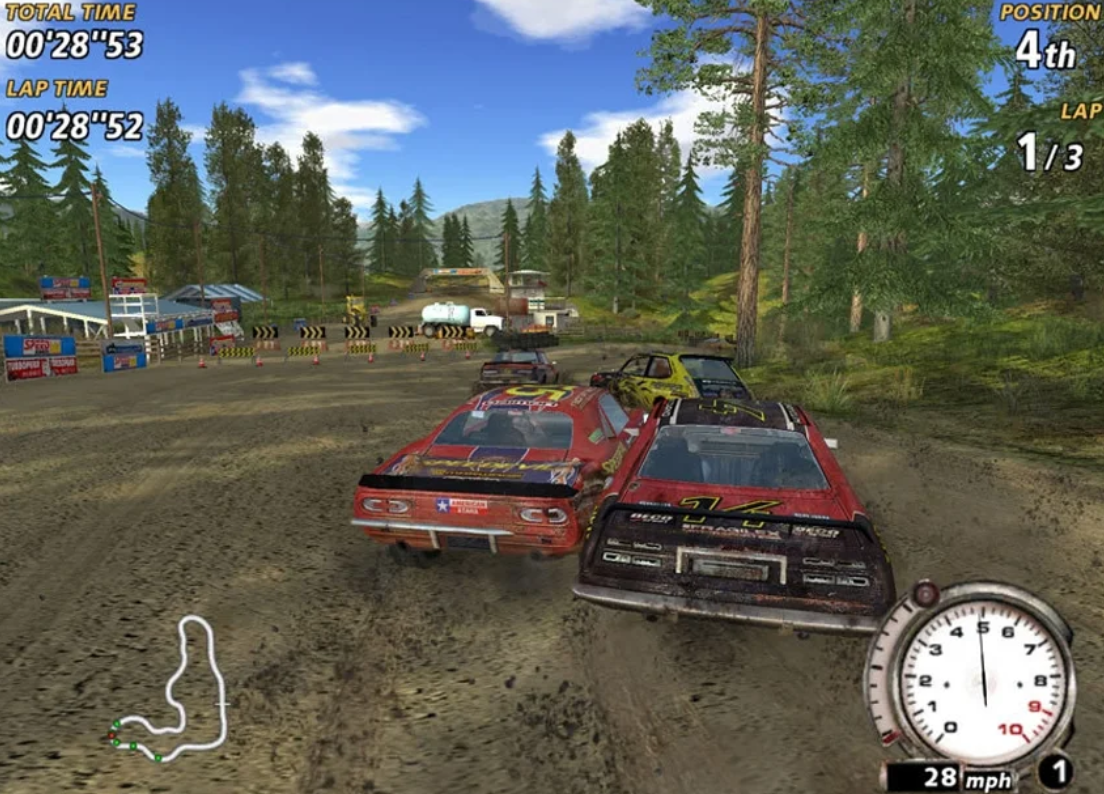
When you look at this screenshot from the third installment, it’s hard to believe it’s a game from 2011, and certainly not a mobile one, which adds to the disbelief.
Talking about the shortcomings in this game is genuinely painful because everything feels lacking. The vehicles, which were once depicted as rusty old wrecks full of character, have now transformed into poorly crafted “plastic” replicas of familiar brands. Controlling this mess was nearly impossible, leading to frustration. The visuals, astonishingly, regressed to the era of the original PlayStation, leaving players longing for better graphics. And as for quality music, realistic physics, or engaging enemies—none of these elements were present, making the experience even more disappointing.
In 2013, Team6 solidified their so-called “success” with the mobile title FlatOut Stuntman, ultimately delivering a final, crushing blow to a franchise that once had so much potential. Many fans were left disheartened, wishing for the glory days of the series.
Can Kylotonn Save FlatOut? A New Chapter Is Coming
If the title of the project is not the most important thing for you, and the key factor is the gameplay itself, it is quite reasonable for you to wait for the release of Wreckfest, also known previously as The Next Car Game.
After a series of failures with the Ridge Racer series, the Bugbear studio decided to return to its roots and once again plunge into the atmosphere of crazy, truly “village” car racing, to which it has always had a special sympathy. However, the implementation of this plan was far from cloudless. The Kickstarter campaign was not very successful, and only thanks to the launch in “early access” on Steam, the game gained its first wave of popularity, allowing players to try the project long before its final release. Even today, the Finnish team continues to actively improve its brainchild.
Despite all the difficulties, Wreckfest stands out with its impressive car physics, the iconic Derby mode that never fails to delight fans, and an amazing damage system – cars here crumple and fall apart with such authenticity that racing feels especially sharp and realistic.
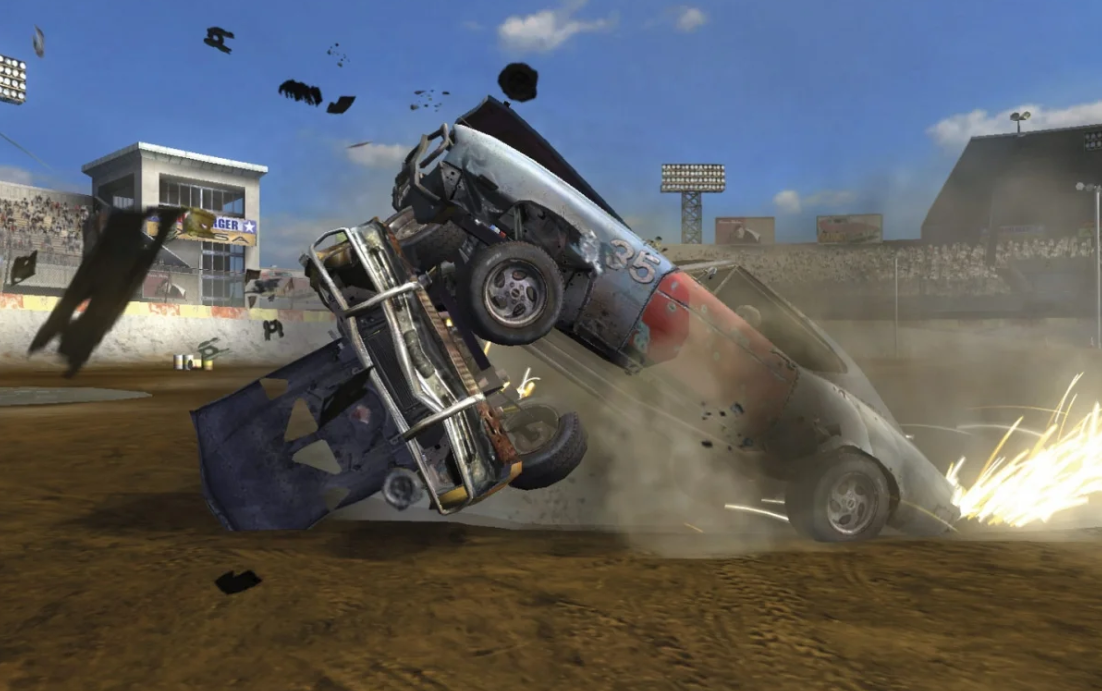
Indeed, Wreckfest isn’t officially part of the FlatOut franchise, but many consider it a genuine successor that captures the spirit of the series.
What’s truly disheartening (aside from the lengthy wait) is that the developers seem to have no intention of including iconic elements like flying drivers, garage rock music, memorable characters, or outrageous stunts that fans loved. Still, who knows? Perhaps the best is yet to come! The game is set to launch this year on PC, PS4, and Xbox One, and players are eagerly anticipating its release.
Thankfully, there’s still a glimmer of hope that the beloved classic FlatOut will make a triumphant return one day. Today marks the release of the fourth installment in the series, crafted by the French team at Kylotonn. While they aren’t exactly celebrated developers in the gaming community, they do have a few successful titles under their belt—like the rally simulator WRC 5, which boasts a respectable score of 70 on Metacritic. Will they manage to achieve at least that level of acclaim this time around, or will fans be left wanting more? We’ll find out very soon, and the excitement is palpable.
FlatOut System Requirements
The system requirements for running FlatOut indicate the computer specifications that ensure stable and smooth operation of the game. Compliance with these parameters guarantees a high frame rate and fast loading, which creates comfortable conditions for the gaming process.
How to play FlatOut for free on Steam via VpeSports
Do you dream of breaking into the crazy world of racing and destruction without a penny in your pocket? Great news – FlatOut is waiting for you!
FlatOut is not just racing. It is a wild mix of speed, cars flying to shreds, explosive tracks and complete freedom of action. Here, the winner is not the one who steers carefully, but the one who presses the gas to the floor and flies into the wall first – with a scream and a smile! And now the best part: you can get the game absolutely free, and it’s easier than flying out of the windshield in FlatOut!
Here’s what you need to do: go to the VpeSports website, create an account and log in. After that, go to a special section where Free Steam accounts with already installed games are collected. Among them is FlatOut, your personal pass to the world of explosive racing!
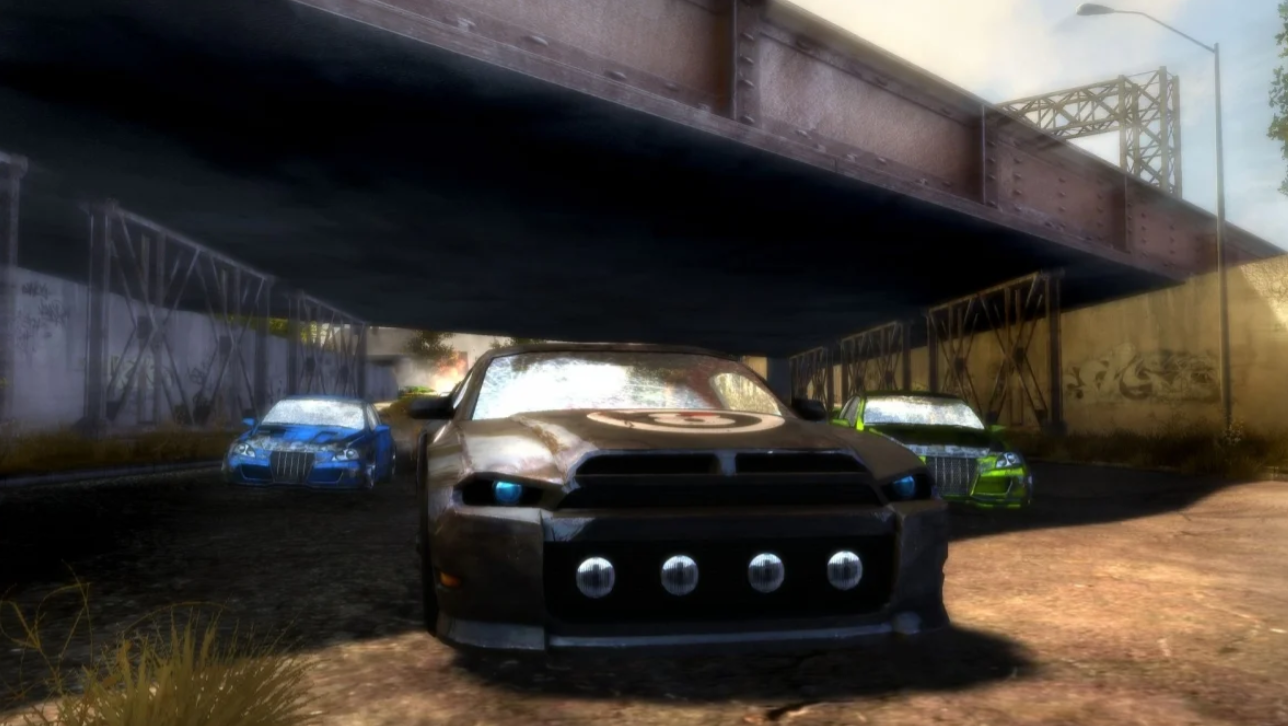
On the game page, you will find a download button and detailed instructions on how to gain access. To confirm your application, leave a comment under the review. Don’t worry if the moderator doesn’t let you through the first time — just change the text a little, and everything will work out. After approval, the login details will be sent to the email address you specified during registration.
Don’t forget to check out our Telegram channel and chat — a real gang of daredevils, stuntmen, and racers on the edge awaits you there! There you will be the first to learn about new free giveaways, you can ask any question, and always be aware of all the updates. Not a single event in the FlatOut world will pass you by!
Something went wrong? No problem! We have a clear rescue plan — detailed instructions “How to play for free” that will help you out in any situation.
Press the pedal to the metal, smash the metal — FlatOut starts right now!