

You know, in tabletop Warhammer Fantasy, the main thing is not even the battles themselves, but the whole process around them. Everything here is based on a love of detail and calm, almost meditative creativity. You buy a box of miniatures of the Bretonnian knights, carefully assemble them, prime them, then start painting — you try not to leave the lore and not mess up anything. And the battles… come on. Let these fighters stand proudly on the shelf and look slightly askance at the guests who whisper behind their backs: “Wow, he’s twenty-seven, and he’s playing soldiers.”
Previously, when “Warhammer” and “Total War” were in the same sentence, almost everyone immediately thought about mods. Almost every part of the series has been overgrown with fan—made alterations in the spirit of fantasy: the Empire is kneading Skaven, orcs are fighting elves – in fact, just a repaint and nothing more. That’s why we were afraid that Total War: Warhammer would turn out to be the same Rome 2, only in a different wrapper: magic instead of catapults, but everything is the same inside.
But the fears, fortunately, were not justified. Yes, we still have a recognizable Total War in front of us — the developers did not break the foundation of the series and did not step on the rake of Rome 2. No revolution. And that’s exactly what, oddly enough, played into the hands. Instead of chaotic innovations, there are targeted, well—thought-out changes. Everyone is in their place, and everything works together as it should.
Will an experienced commander who chased heretics across Europe and conquered the treasures of the East be able to cope? He’ll figure it out literally from the first minute. Before him is a new, but very promising Empire. Cities are growing by leaps and bounds: mines are being built, taverns are being opened, fields are being sown, and military infrastructure is being tightened. The generals here don’t just flaunt in gold — they really benefit, seize lands and repel invasions. It seems to be a classic of the genre. But from the very first steps, the game carefully hints that everything is arranged a little differently than before.
It all starts with choosing a faction. And here is the first surprise: instead of dozens of states, there are only four main forces. People of the Empire, hardened dwarves, green-skinned barbarians, and grim vampires. Each has essentially one state and a rather limited set of leaders. Modest? Only at first glance. Because the differences between the factions here are not cosmetic or nominal — they are deep. Playing as dwarves and vampires is like running two different games with your own logic and pace.
The Empire, for example, acts as something of a benchmark. This is a faction with a familiar management system, developed politics, economy and army. Everything is familiar, everything is clear — if you have played the previous parts of Total War, you will quickly get used to it. But there are nuances here too. For example, the title system: a witcher who has been appointed a “secret adviser” becomes noticeably more effective, and his actions are cheaper. And now you’re not just moving the hero around the map, but thinking over the career of each valuable character. This adds depth and makes even non-combat heroes useful one hundred percent.
Vampires act very differently. They don’t really have any money. Their economy is based on magic—dark, viscous, dead. And this is not just an entourage, but a full-fledged currency. Magic includes building materials, salaries, and taxes. And at the same time — the opportunity to raise the fallen directly on the battlefield. Yes, their troops are weaker in terms of characteristics, but they are literally being restored “on the spot.” There is no need to return to the cities, build barracks and wait for reinforcements. The vampire snaps his fingers — and a new crowd of skeletons and zombies is already nearby.
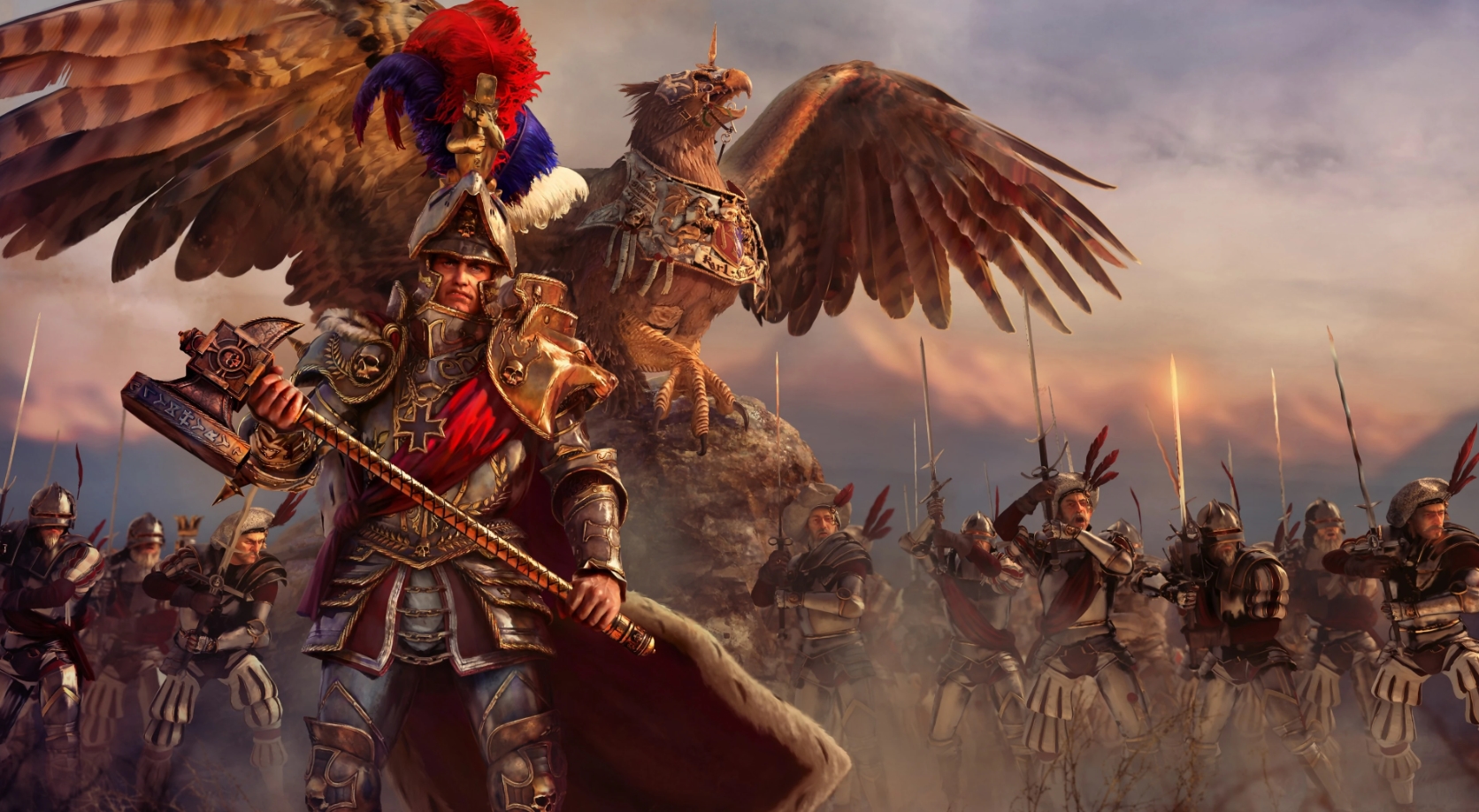
Greenskins are a completely different story. They can’t be kept idle. If you get bored, they start cutting each other up. Morale is falling, the crowd is running wild. But as soon as the war begins, everything changes: victories, looting, raids — and now a new army is born, shouting WAAAGH! It is important here not just to fight, but to do it actively and successfully. You can’t lose: defeats break the spirit of the horde. No trade, no civilization — these are Orcs, they care about fighting, not diplomacy. Such mechanics literally force you to keep up the pace and not slow down.
Dwarves are the epitome of stubbornness and memory. They have a Book of Grievances. Any crime against the people is recorded there: a destroyed city, a murdered merchant, an unsuccessful performance involving the undead — everything is recorded. And until the grievances are avenged, discontent is growing. People are grumbling, order is falling, and if you ignore the Book for a long time, real problems will begin: riots, sabotage, and the decline of public order. We have to send separate armies on punitive campaigns. This “revenge mechanic” makes the Dwarves one of the most cohesive and logical factions.
The technology in the game is also tasteful. Yes, the wording is familiar: “+5 to attack”, “+10 to morale”, “+20 to income from mines”. But each faction has its own path to these bonuses. Someone goes through magic, someone goes through engineering, and someone goes through military exploits. This adds depth and highlights the uniqueness of each nation. Of course, not everything is perfect. Unified buildings that differ only in their icon and name look more like a compromise. Orcs suddenly capable of diplomacy is also a strange solution, although not critical. But all this is drowned out by the overall feeling of freshness. Total War: Warhammer is really perceived as something new. Each faction affects the very foundation of gameplay: management, logistics, army, economy — everything is tied to unique mechanics.
Even prisoners are treated differently here. The Imperials are acting in the spirit of the old school — diplomatically. The dwarves are tough and straightforward: execute or release. Vampires? Their “persuasion” turns enemies into new fighters of the army of the dead. Orcs can roast a prisoner, just for fun. It’s these details that turn the game from another part of Total War into a truly reimagined experience. This is no longer just a new shell on the global map — it is a deep reworking of the very essence of the game.
Top-rated titles are free with our free steam accounts with games!
Table of Contents
Total War: Warhammer Gameplay Features
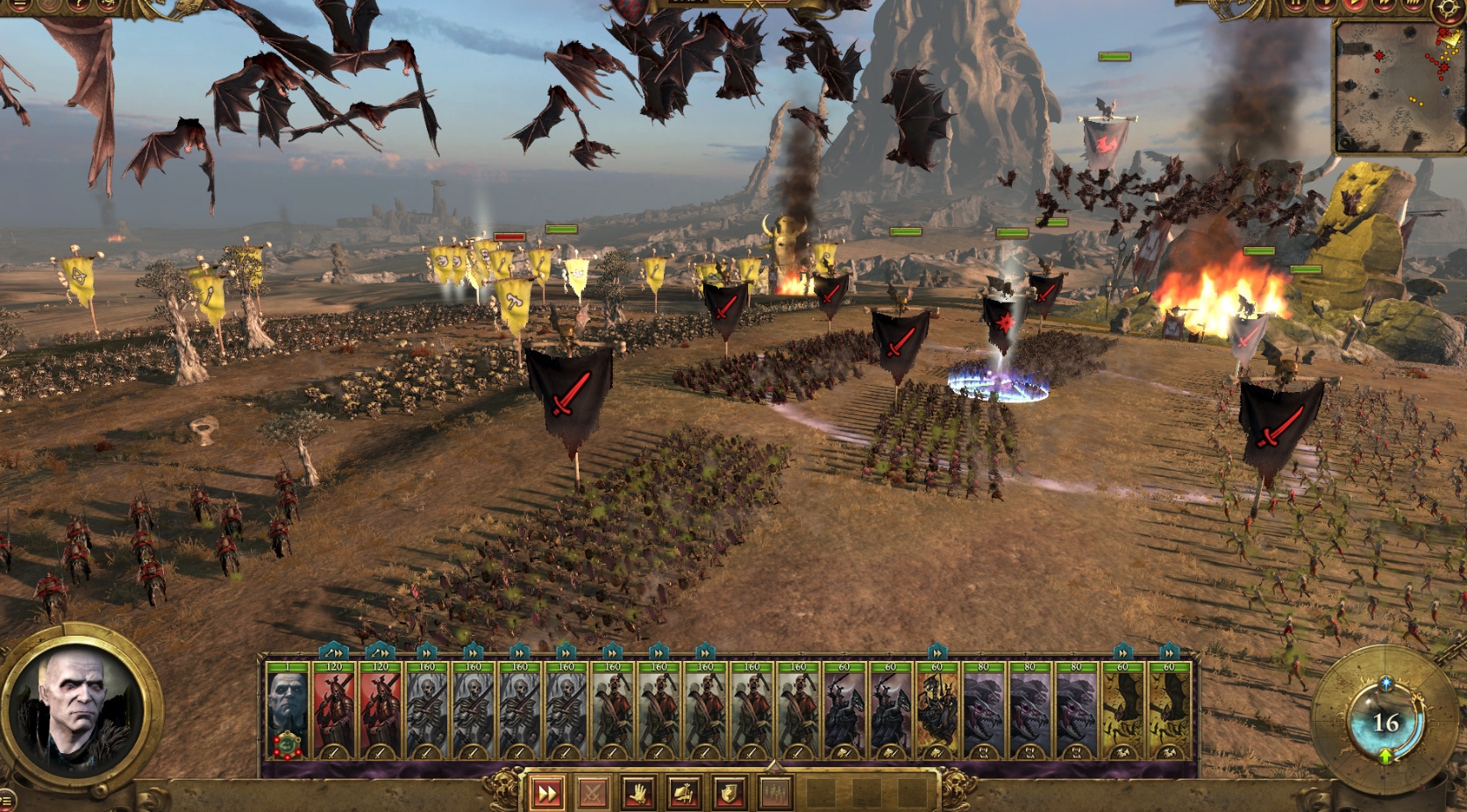
On the battlefield, the difference between the factions is immediately noticeable. The Imperials are a classic: orderly ranks, cavalry, infantry – everything according to the regulations. But the dwarves, for example, act completely differently. They have neither cavalry nor spearmen, and they run as if every step is taken through force. This makes them vulnerable in a head-on skirmish with enemy horsemen. But do not rush to write off the bearded men – they have such things in their arsenal that the enemy has never dreamed of: heavy guns, bombers, and – hold on tight! – flamethrowers. All these technical wonders force you to play for them differently: fortify yourself, stand still and take as much equipment as possible into battle. There are factions that cannot be helped at all. For example, some units simply fall apart from ordinary human infantry, not holding out for a couple of rounds. And it was not possible to overwhelm them with numbers.
Vampires aren’t afraid to lose: the dead don’t complain. Skeletons and zombies go into battle, crumble like dust, but against their backdrop, real horrors come out into battle – ghostly wolves, flocks of bats, monstrous ghoul-musclemen… Of all the monsters, these are definitely the ones who got lucky. Although the orcs and goblins also have a rich fauna – but without much creativity. But the goblins don’t demand anything: hire a pack for fifty kopecks – and they’re already running squealing at the enemy. True, a minute later they can just as quickly run back.
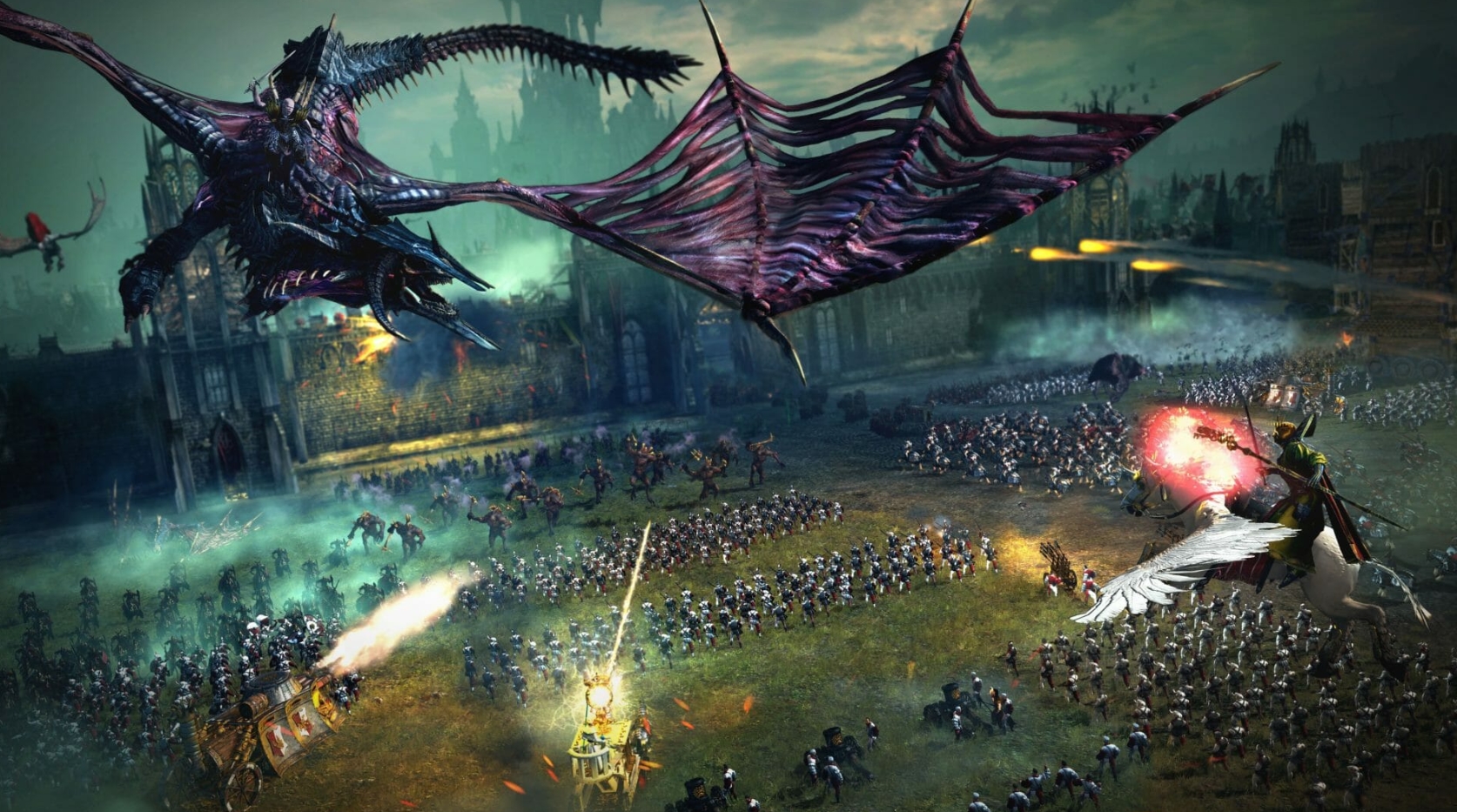
But the battles in Total War: Warhammer really come alive thanks to the mages and shamans. There were once fears that magic would simply displace artillery – and in some places that’s what happened. If you want, you can pound the enemy with fireballs, if you want, you can turn your mage into a walking buff that fills the soldiers with courage and armor. Or you can even curse the enemy army so that their armor rots right before your eyes.
The stronger the Wind of Magic blows in the region, the more active the spells are — and the battlefield becomes an arena of fantasy chaos. At the same time, the game has remained itself — it is still Total War, and not some Stronghold Legends or Rise of Nations. Success still depends on how you command: squeeze the enemy in pincers, give the order to the archers in time, aim correctly — then victory is near. But if you throw magic blindly and throw units anywhere — even the coolest spells will not save you.
Commanders now play an important role. They are not just commanders with guards, but real titans. Lords, as they are called in the game, gain levels, learn skills and turn into combat machines. Moreover, the skills are now branched, and each player can choose in which direction to develop their hero:
-
Combat branch — increases the personal power of the lord in battles, makes him tenacious and deadly.
-
Global branch — increases the efficiency of province management, income and diplomatic influence.
-
Army branch — increases the combat characteristics of the entire army, improves morale, movement speed and other parameters.
Assistants have also appeared — as many as six of them, each with its own trick, like equipment in a good RPG.
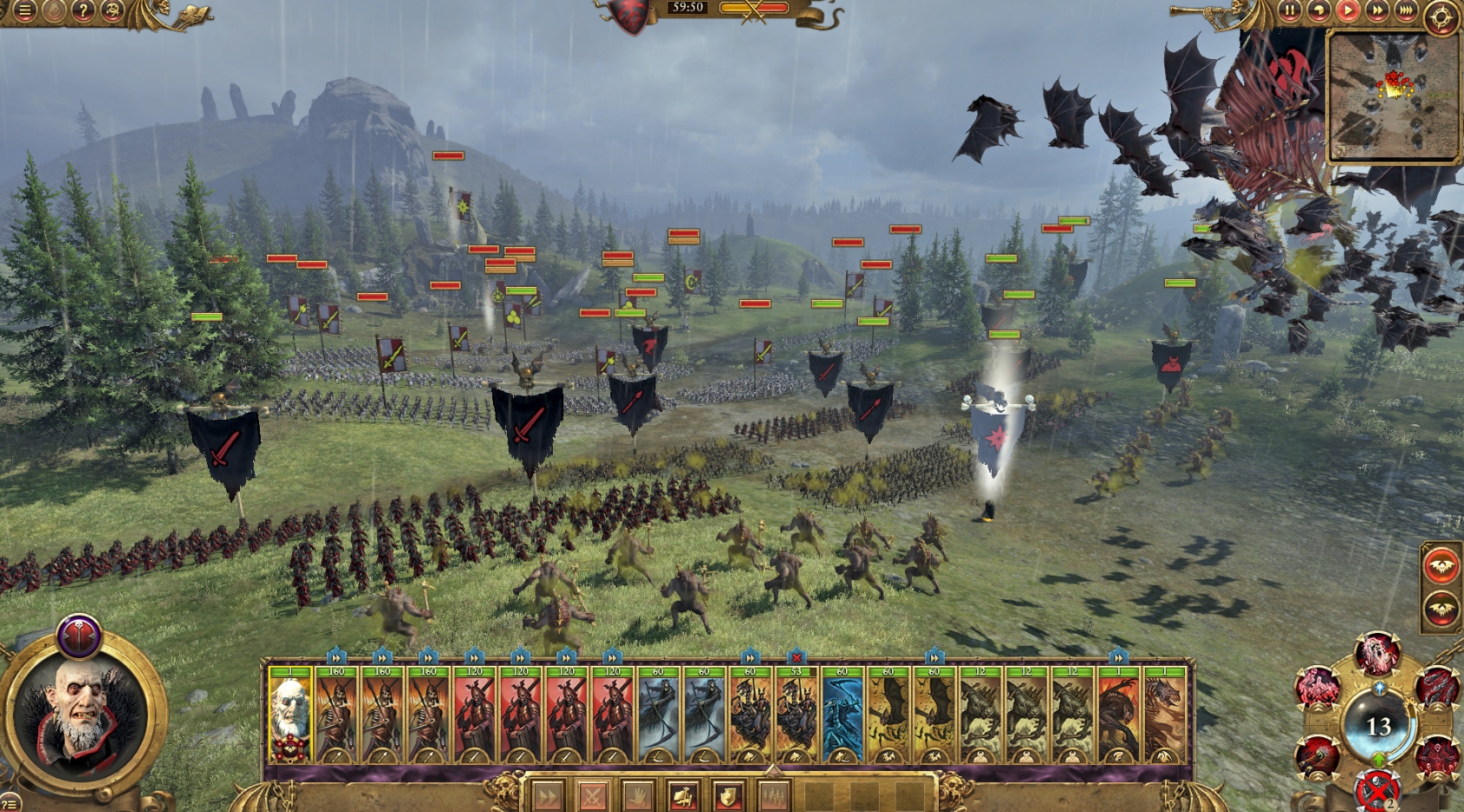
And this is one of the main reasons to love Total War: Warhammer again. The commander is no longer just a pawn on the chessboard — he is a full-fledged hero, whom you want to pump up, hang artifacts on and lead into battle yourself. If before you were attached to the character in Skyrim or Dragon Age, now — to your lord. And a properly trained, equipped and battle-hardened lord is, if not half of the victory, then definitely its key element. Previously, commanders did not have such influence even in Rome 2 or Attila. And now — this is the basis of the gameplay, which cannot be brushed aside.
Why Total War: Warhammer Removed Politics and Internal Conflicts
From the very beginning, the developers made it clear: complex political intrigue is not about Warhammer. Their focus is on individuals, heroes fighting chaos, not bureaucrats. The logic is generally clear. For the Warhammer Fantasy universe, this really works. But for Total War, it’s a step back. Players have already been accustomed to internal conflicts, cunning hierarchy, betrayals and civil wars right in the midst of power. And then all this was simply cut out. Only the Empire of Sigmar can still hand out titles, but even there there is no room for heirs or a “personnel reserve” – only generals, lords and heroes. That’s it.
-
Lords, by the way, are immortal – and this justifies any investment in them.
What instead of internal politics? In the later stages of the game, you will find… “education” of heroes. That is, a series of personal tasks that replace the main plot. In fact, these are special battles with pre-set enemies and conditions. And you won’t be able to complete them with auto-battle – you’ll have to really think. As a reward, you’ll get armor, artifacts, magic things – and yes, it’s worth fighting for. Does this compensate for the cut politics? In some places – yes. But it’s still strange to watch how strategic mechanics are being cleaned out of a global strategy.
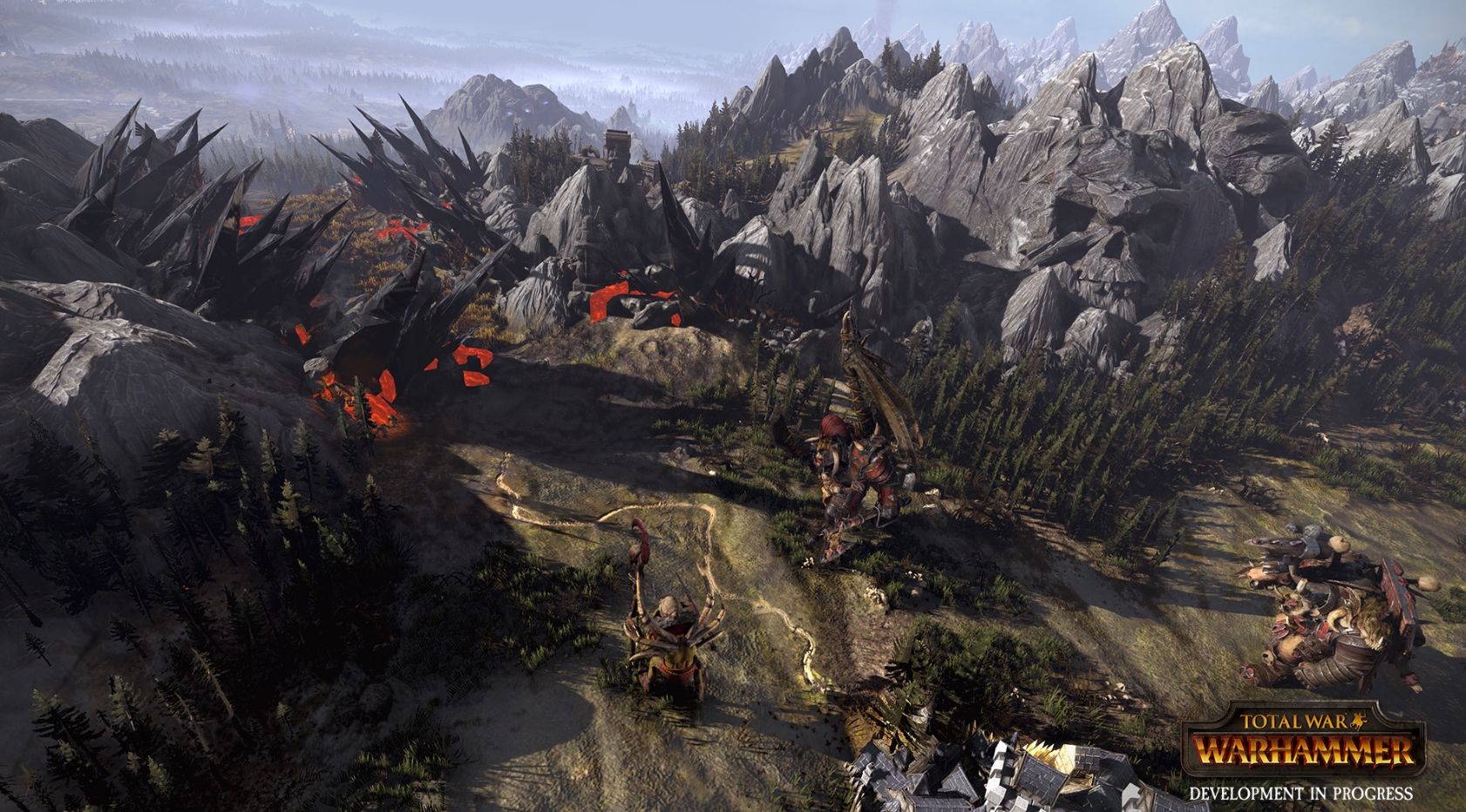
And the losses didn’t end there. The taxes, diseases, and unsanitary conditions that impressed us so much in Total War: Attila have disappeared. Corruption and religions have also disappeared. Instead of all this – the corruption of Chaos and vampires. Even food is now just a plus figure: there are farms, there is growth, but there is no hunger. In principle. Okay, the lack of corruption can still be justified – Warhammer does not strive to copy the real economy. But why did hunger disappear? In a gloomy world full of death, disease and cults, shouldn’t there be epidemics and a lack of resources? This isn’t a rainbow fantasy like Might and Magic.
Yes, Total War: Warhammer is still a lively game. But it has taken away important dilemmas – where to build mines so as not to drown the city in mud, or what land to give to arable farming so that neighboring regions don’t die out. Apparently, in this world, the survivors ask themselves completely different questions.
Is the linearity of the Total War: Warhammer campaign a plus or a minus for the player?
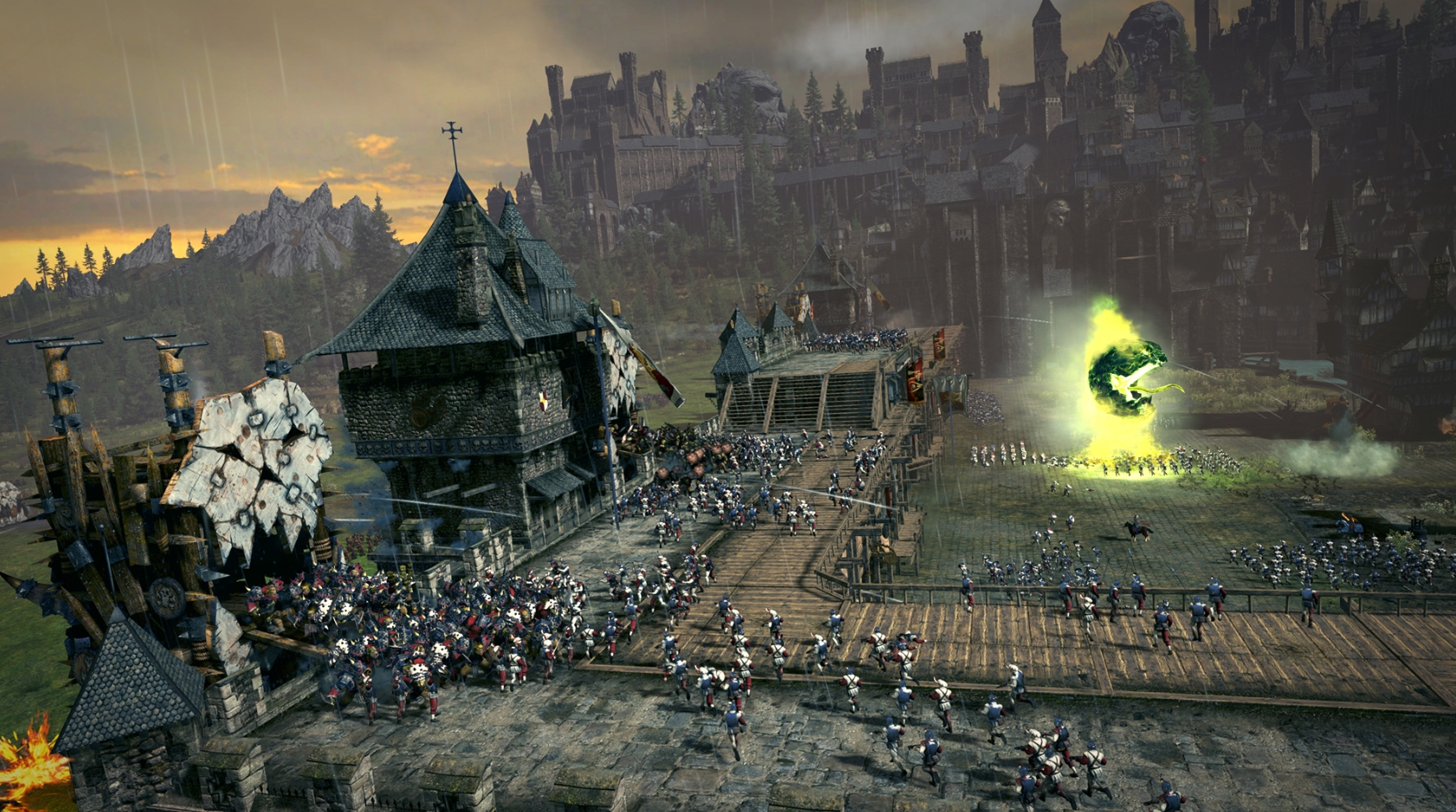
The campaign has become much more straightforward: instead of the usual branching paths for the Total War series, the player now has a brightly lit, neon path. Proud bearded dwarves immediately head to the southern wastelands to crush orcs. Vampires first need to restore order at home – and, as a rule, with their fists. The same must be done by orcs and goblins scattered across clans. And the Empire, led by Karl Franz, initially represents a set of disparate principalities that need to be reunited into a great power. But at its core, everything is the same: we start with one town and not the most formidable army. So that you don’t get lost at the very beginning, the game even tells you who to hit first – it highlights the enemy right on the map. Then delicate game design comes into play, which gently but persistently leads the player along the desired route. One of the tools is a system of restrictions on the capture of settlements. People cannot settle where vampires rule, and vice versa. But the green skins feel quite comfortable both in their lairs and in underground dwarven fortresses. True, they, like the dwarves, have a persistent allergy to human cities: you can capture and plunder them, but you can’t live there – no way.
-
The dwarves, of course, will not miss the chance to grind a human settlement to pieces, but they will not be able to settle in it – not the same climate, not the same walls.
-
The Empire of Sigmar is similar in structure to the Holy Roman Empire, but here it is divided into a set of independent, unrelated principalities.
But it has become easier with armies: their number is now again limited only by your wallet. And to prevent the AI from running around the entire map with tiny remnants of units, the developers strengthened the garrisons. Up to fifteen units can now be stationed in the provincial capital from the very beginning – impressive, right? This reduces the need to keep a bunch of small armies for defense. Plus, each faction has either a convenient mountain range to cover the rear, or a safe position at the edge of the map – like the dwarves. As a result, the campaign feels more focused. Or, to be honest, more linear. The first step is already suggested to you, then forward, beat this enemy and gain a foothold in this gorge. Beginners will benefit from this approach: there is less chance of getting lost in the strategic wilds. But veterans accustomed to freedom of choice may find this focus limiting.
Pros and Cons of Total War: WARHAMMER
Total War decided not to stand still – and rightly so. Instead of delving into familiar worlds again, the developers took a risk and stepped in a new direction. The move into fantasy opened up a lot of possibilities, although in some places it is a pity that the mechanics that used to work well were lost.
Pros
-
The change of scenery has clearly benefited the series.
-
There are not many factions, but each has a distinct style and mechanics, now they are truly different.
-
The leveling of commanders has become more like a full-fledged RPG system.
-
Magic in battle is not only spectacular, but also tactically useful.
Cons
-
A lot of what worked well in Rome 2 was cut out – it did not fit into the new concept.
-
The campaign now feels more straightforward, there is less freedom to maneuver.
-
The developers did not dare to make bold innovations – the game is more of an evolution than a revolution.
Total War: WARHAMMER System Requirements
System Specs for Total War: WARHAMMER
How to play Total War: WARHAMMER for free on Steam via VpeSports
Want to find yourself in the heart of a legendary world where magic meets cold steel and the fate of entire civilizations is decided on the battlefield? Total War: WARHAMMER is not just a strategy game, it is a real fantasy confrontation where you control armies, form alliances, weave intrigues and crush enemies with the power of gods and animal fury. Do you want to capture Altdorf? Or wipe Ulthuan off the map? Everything is possible here – and every decision is yours.
And you know what’s best? You can play absolutely free. We provide a ready-made free steam account with the game installed, so you don’t even need to search or configure anything. Just register on our website, go to your personal account – and in a couple of minutes you will have full access to Total War: WARHAMMER. Everything is official, legal and simple. No extra steps: just log in, load up, and you’re already commanding the army of chaos or fighting for the wood elves.
It’s very important that you like it. After you’ve played a little, be sure to leave a review – it helps other players and lets us know that everything is working as it should. Don’t be alarmed if your comment doesn’t appear right away – we’ll just check it. After moderation, all the information for logging in and continuing to play will be sent to your email.
And if you want to always be up to date with new free Steam accounts, fresh patches, and events – subscribe to our Telegram channel. There we regularly post new data, news on Total War, and hold live discussions. If something is not clear – just take a look at our guide “How to play for free“, it is as detailed as possible. Or write to us in the chat – we are nearby.
The world of WARHAMMER is calling. Take control of an army, build an empire, write your own history – right now, for free, through a ready-made Steam account.