

At first glance, Pax Dei seems like a huge and expensive project — one that you want to consider, not just play. The spaces are large-scale, the visual style is neat, and the world breathes potential. But it’s worth spending a little time in it, and a strange feeling arises: as if you were inside a beautiful blank, where the shape is already there, and the content is still being outlined.
Formally, the game has all the attributes of a great adventure. There are dungeons hiding somewhere under the surface, monsters live in the shadows, and future events and mechanics that are “about to” change the gameplay are being actively discussed within the community. The problem is that at this stage, it all feels more like a promise than a piece of live gameplay.
Table of Contents
Pax Dei Free Steam Account
Mainframe Industries studio has released its most ambitious project, Pax Dei, in early access, positioning it as an AAA—MMO sandbox with elements of survival and a strong focus on the social ecosystem. On paper, everything looks impressive, but the reality turned out to be noticeably more modest than the stated expectations: the current version of the game still does not reach even half of the promised functionality.
The audience’s reaction confirms this feeling. At the moment, Pax Dei holds about 51% of positive reviews on Steam — an alarming signal for a project that claims to have a long life and an active community. Even benevolent players often make a reservation: the game is harsh, overloaded with basic mechanics, and makes little attempt to be friendly to newcomers. Without patience and willingness to understand complex gameplay systems, entering this world can end in disappointment.
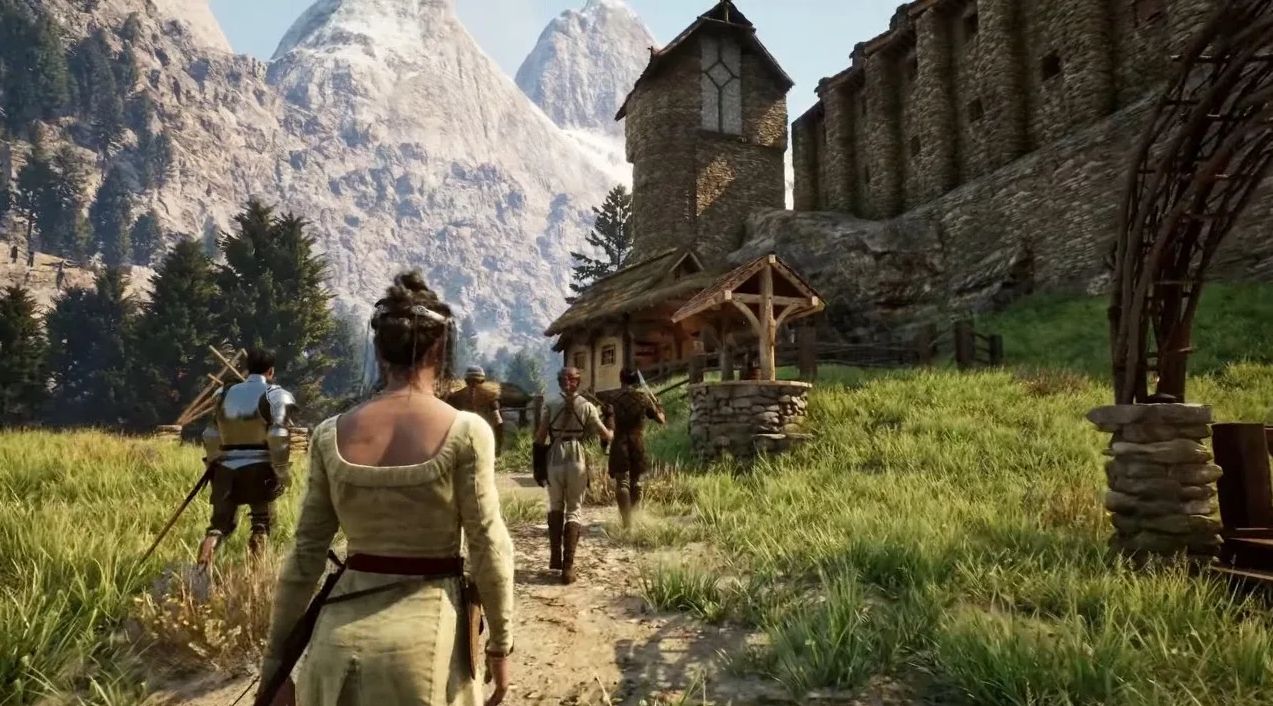
The contrast is especially noticeable against the background of the image that the developers actively formed in trailers and interviews. Pax Dei is conceived as a huge open world where users independently build houses, villages and even entire castles, uniting into clans and communities. The key idea of the sandbox is not scenarios and quests, but live players who shape the economy, culture and rhythm of the world through interaction and joint survival.
Additional weight to the project is given by the figure of the head of development, Reynir Hardarson, one of the creators of EVE Online. His participation automatically raises the bar of expectations: Pax Dei was supposed to be an equally addictive and deep MMO, where everything rests on the players. According to the idea, there will be no familiar friendly NPCs in the world — trade, religion, caravans, resource extraction and infrastructure development fall entirely on the shoulders of users. In the meantime, this philosophy feels more like a concept than a well-established game system.
Stay ahead of the curve with free steam accounts!
Gameplay and first impressions of Pax Dei
My first ten hours at Pax Dei were almost completely silent. The huge open world turned out to be unexpectedly deserted, and instead of exploring and discovering, I spent most of my time fighting not with enemies, but with the interface and construction logic. The crafting and building system is overloaded with details, poorly explains itself, and requires patience, turning survival into a meditative but tedious gathering of fruits, vegetables, and resources.
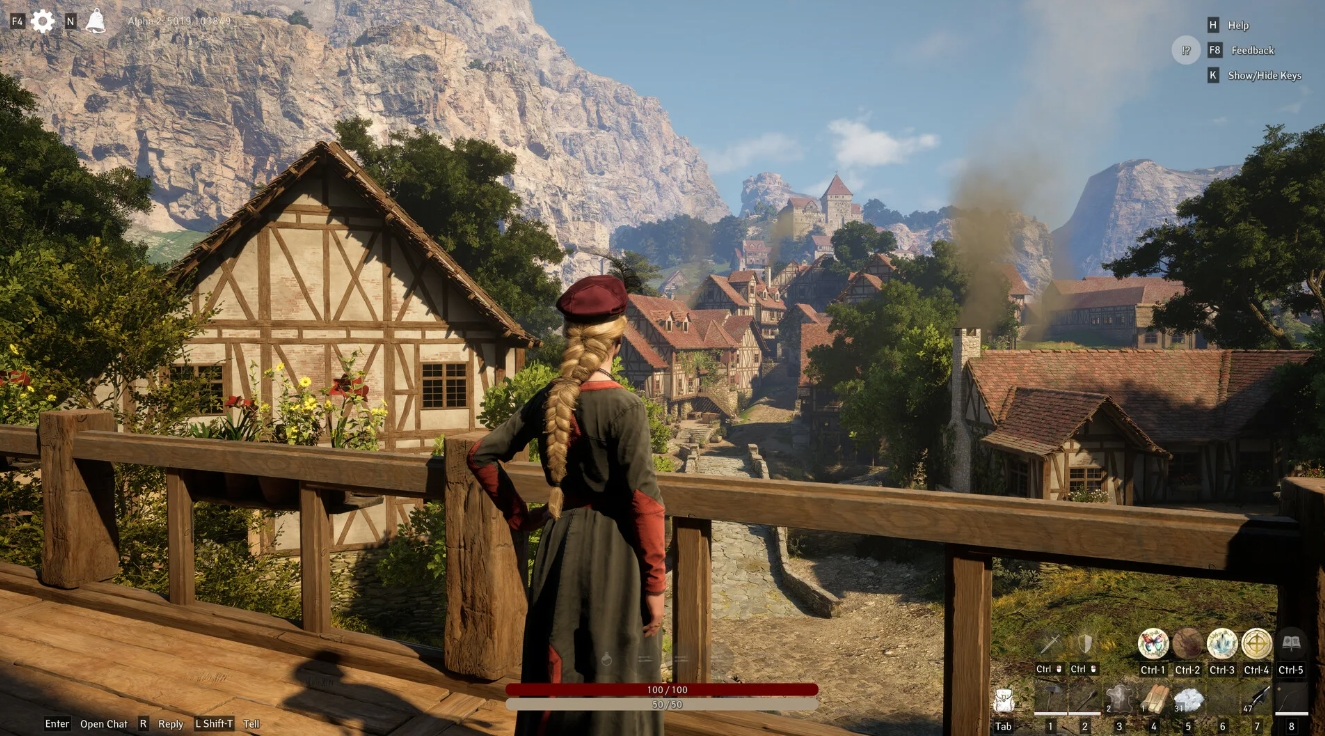
Sometimes other players appeared on the horizon, silent figures engaged in chopping down trees or harvesting materials. These rare meetings were supposed to be moments of social contact, but in fact they only emphasized loneliness. The attempt to write to the chat looked almost symbolic: the communication system is either unstable or not yet ready for full use. This is critical for an MMO project – without live interaction, the world loses its pulse.
As a result, Pax Dei is now an honest early access without illusions. The game does not pretend to be finished, does not try to hide the roughness, and does not lead the player by the hand. Here you are not just a user, but a tester, an accomplice in the process, a person who helps the project find depth, balance and meaning. This world has potential — the only question is whether it can eventually turn from a beautiful idea into a truly lively game.
Pax Dei System Requirements
Pax Dei – PC
| Minimum | Recommended |
|---|---|
| Operating System: Windows 10 (64-bit) | Operating System: Windows 10 / 11 (64-bit) |
| CPU: Intel Core i5-7600K or AMD equivalent | CPU: Ryzen 7 3700X or comparable Intel processor |
| RAM: 16 GB | RAM: 16 GB |
| GPU: NVIDIA GeForce RTX 2060 (12 GB) or Radeon RX 5700 XT | GPU: GeForce RTX 3060 or Radeon RX 6600 XT (8 GB VRAM) |
| DirectX: 12 | DirectX: 12 |
| Storage: 80 GB available (SSD required) | Storage: 80 GB available (NVMe SSD recommended) |
| Network: Broadband Internet connection | Network: High-speed Broadband Internet |
How to play Pax Dei for free on Steam via VpeSports
Sometimes there is a rare desire — not to “play”, but to live in another world. Pax Dei is just such a game. This is not an attraction or a set of ticked-off tasks, but a slow, meaningful immersion into a common medieval space where every house, every road and every settlement exists because they were created by living people. Time, effort, and the ability to negotiate with others are valued here, and the feeling of presence arises by itself — without loud cutscenes and pathos.
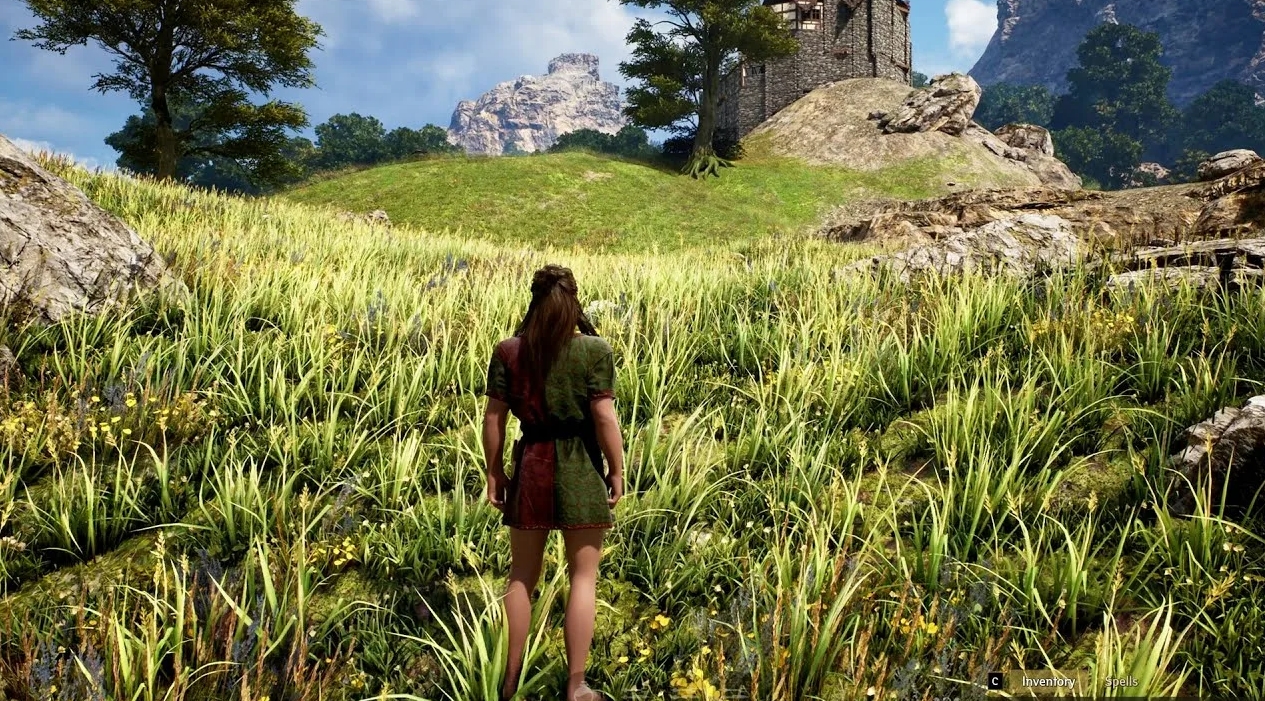
The beginning of the path should not be difficult, so we have simplified the entrance as much as possible. No dancing with a tambourine and endless instructions. You register on the website, log in to your account and return to the beginning of the article, where the GET AN ACCOUNT button is waiting for you. Then everything happens quickly and clearly: a few steps — and you are already in the world of Pax Dei, and not trying to figure out what to do next.
If it’s important for you to be a part of the community and feel the pulse of the game, it’s worth taking a look at our Telegram channel. There we share Pax Dei news, discuss updates and patches, post new accounts and just communicate without formalities. And if you suddenly have any questions or something goes wrong, you can always refer to the detailed guide “How to Play for Free” or write to the chat. Real people are responsible here, and it’s really important to them that everything works out for you.