

The independent Belgian studio Pajama Llama Games has embarked on the creation of a truly unusual urban planning simulator, where the usual rules of survival are turned upside down. The project is based on a world resembling the atmosphere of the “Water World”: the planet has sunk under water, and the few survivors have to adapt to the new reality, collecting everything that once belonged to civilization on the ocean surface.
The developers call Flotsam a “garbage urban planning simulator”, and this definition perfectly conveys the spirit of the game. We have to lead a brave group of survivors, guide them to collect debris, plastic, wood and other junk, and then turn these finds into full-fledged buildings. A floating city grows right on the water: residential platforms, walkways, processing stations and equipment for obtaining resources appear here — everything that is necessary for the functioning of a mini-civilization in the middle of an endless ocean.
But static is impossible here. At some point, there may not be enough garbage deposits, or players will face threats rising from the depths of the sea. Then the only way out is to equip your water city with sails and improvised oars, turning it into a mobile base. Ocean voyages open up new locations, expand horizons and throw up unexpected encounters that change the survival strategy and add dynamics and adventurous romance to the gameplay.
Table of Contents
Flotsam Free Steam Account
December 4, 2025, was a truly fateful date for Flotsam: after many years of waiting, the game finally left early access and went into full release. The independent studio Pajama Llama Games, known for its warm approach to creating cozy worlds, has released a project that stands out even in the oversaturated city builder market. Here you are not offered to build another stone empire — instead, you are building a floating city drifting across a boundless post-apocalyptic ocean. The world has literally disappeared under the water, and it is in these soft waves that the special magic of Flotsam is hidden.
The gameplay is based on a surprisingly calm, almost meditative rhythm: you collect garbage, recycle it into useful materials, expand platforms, take care of survivors and explore the islands of civilization, barely peeking out of the water. Despite the apparent simplicity, the internal structure of the game is thought out to the smallest detail — from the logistics of resources to the planning of the base and building production chains. This process is so exciting that sometimes you forget about time: it’s incredibly pleasant to watch a real houseboat being born out of the chaos of debris.
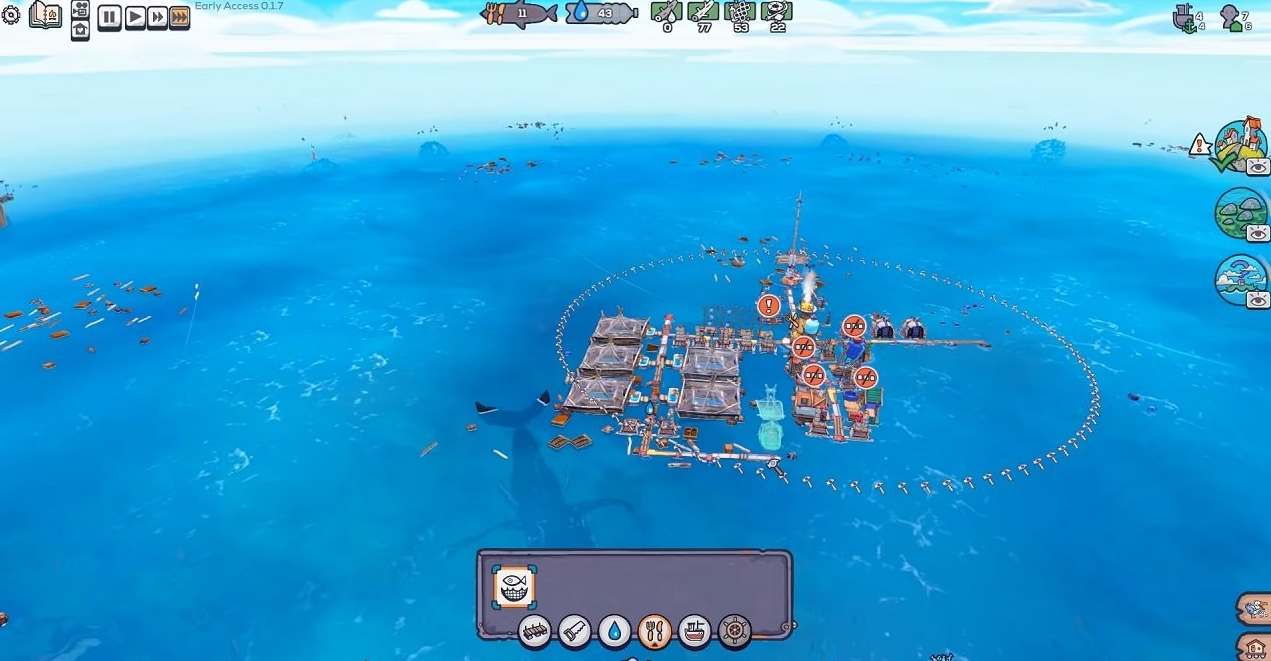
Most of the community greeted the release with genuine delight: Flotsam received an overwhelmingly positive rating — and this is not just a formality. Players write that the game literally “breathes” comfort: bright stylized graphics, soft animation, calm music and an overall sense of bright adventure turn every gaming session into a mini escape from the daily hustle and bustle. Many people compare the project to a warm blanket — it does not press, does not rush, but gently guides through the gameplay, allowing you to enjoy the very process of construction and research.
But there are no perfect games, and Flotsam also received a portion of constructive criticism. The most common complaint is the excessively long early access period, which has stretched for almost six years. Some fans expected faster content development and a clearer end goal that would guide the game in its later stages. Along the way, users note several “everyday” inconveniences: the interface requires refinement in some places, and when the camera rotates, individual buildings are lost in a bunch of details, which complicates planning.
Nevertheless, even with all the rough edges, Flotsam gives the impression of a sincere, kind and unusual project. He doesn’t try to compete with the giants of the genre — he goes his own way, offering players a measured journey through the waves, where the focus is not on disaster, but on the ability of people to create comfort and life even among the endless ocean.
Keep the excitement going thanks to a free account in steam.
Flotsam gameplay and graphics
Flotsam welcomes the player not from the threshold with bright visual fireworks, but with a soft, almost chamber-like atmosphere. The view from above seems familiar, but if you zoom in on the camera, the world comes alive. The little men, as if they had stepped out of the pages of a good cartoon story, go about their business, and the water plays with highlights and moves so realistically that you want to reach out and touch its surface. The art style creates a feeling of warm, cozy post—apocalypse – a rare combination for games of this genre.
The musical accompaniment works as a background meditation: calm melodies, the cries of seagulls and the quiet lapping of waves create a real sound shelter. The funny voices of the characters, reminiscent of the cartoon intonations of the Minions, add humanity to the game — as if the inhabitants of your floating city have become a little closer.
Flotsam’s controls remain as friendly as its visual style. Several keys adjust the camera, the Z and X buttons are responsible for the scale of the collection area, and the rest of the work is done with the mouse — from installing buoys to placing buildings. The tutorial, a small interactive book, is neatly positioned in the upper—left corner of the screen and helps you quickly get used to even those who are encountering similar strategies for the first time.
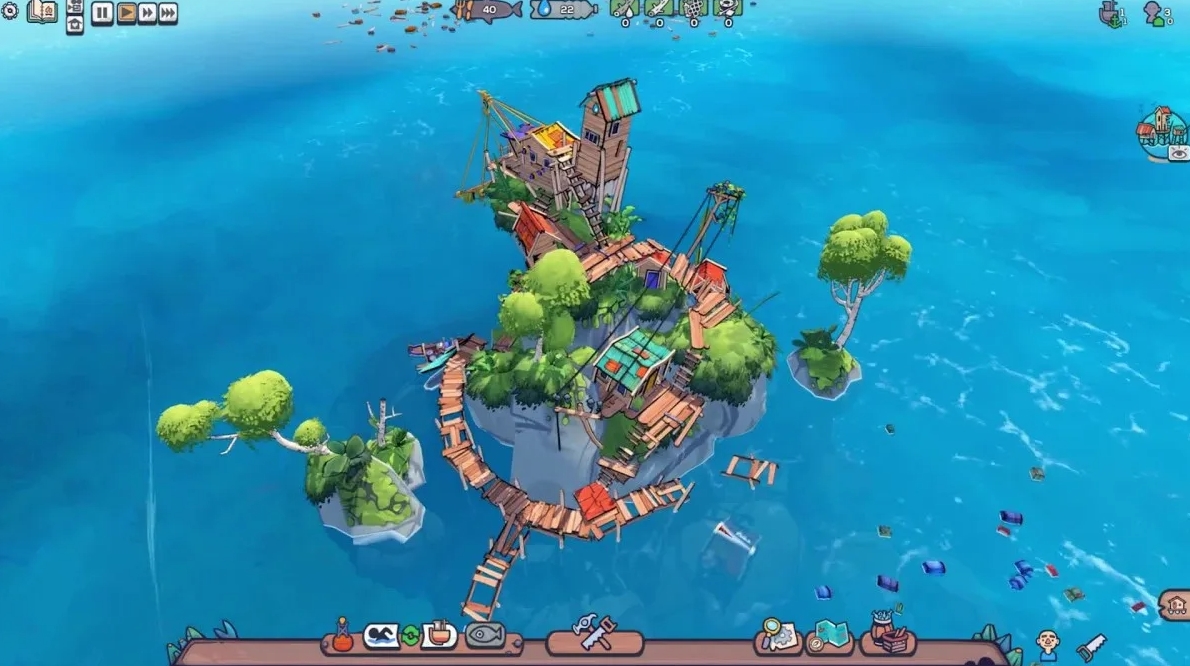
But the real life in the game begins when the illusion of simplicity disappears. The first few minutes give the impression that survival is quite possible: some residents are fishing, others are exploring the wreckage, and others are maintaining order in the settlement. And suddenly the world reminds us of itself: drinking water is running out. It is at this point that Flotsam reveals its depth and the chain of interrelated processes.
To survive, the player needs to organize production according to the principle:
-
get seawater;
-
install distillers;
-
provide them with firewood;
-
to make firewood in the workshop;
-
collect wet wood;
-
dry it in the dryers;
-
prepare the fish and place additional warehouses for stocks.
This circular structure of survival does not pressure, but draws into the process: I want to improve, rebuild, optimize everything — and at the same time preserve the comfort of residents who also need to sleep, drink and eat.
Fauna also enlivens the world of Flotsam: a giant whale sometimes swims by, as if welcoming you from the depths, and seagulls can become faithful helpers. The rescued birds work side by side with humans, but they also require care — a place to rest, food and water. Such a small thing creates the feeling of a small but vibrant ecosystem in which every creature plays a role.
Unfortunately, the travel map is small. It consists of repeating types of locations: zones with animals, oil, ruins, abandoned objects, and rare resources. There are also bugs, for example, when a fish is nearby, but it is still impossible to install a buoy for an angler. Such moments can be out of rhythm, but they don’t spoil the impression globally.
The positive thing is that the developers are actively supporting the project. Regular patches, discussion of innovations with players, balance improvements — all this creates the feeling that the game is alive and developing. Among the upcoming updates, we discuss the change of day and night, as well as weather events that may affect resource extraction and movement on the map — such elements can significantly enliven the gameplay.
Flotsam System Requirements
How to play Flotsam for free on Steam via VpeSports
Sometimes it seems that the world has drowned not only in water, but also in silence. You look around, and all around you are the swaying wreckage of an old civilization, creaking lazily in the morning sun. This is how your life begins in Flotsam: not with loud battles and pathos, but with small steps in a vast ocean, where a single board can become the foundation of a future home. At first, everything looks fragile and uncertain, but once you pull a couple of planks out of the water and rekindle hope in the hearts of the drifters, your tiny town suddenly begins to breathe.
So that you don’t have to spend the first hours struggling with the settings, we have prepared a cozy corner — a personal account that greets you with simple and understandable tips. It explains everything: why plastic bottles are gold on a local scale, how to turn rainwater into salvation for the whole team, and how ordinary trash turns into a pillar for the future. You get there immediately after registration, and it’s like there’s an experienced friend nearby who calmly, without fuss, shows: you’ll build a kitchen here, it’s better to put a pump here, and here you can save space for something important that you’ll come up with later.
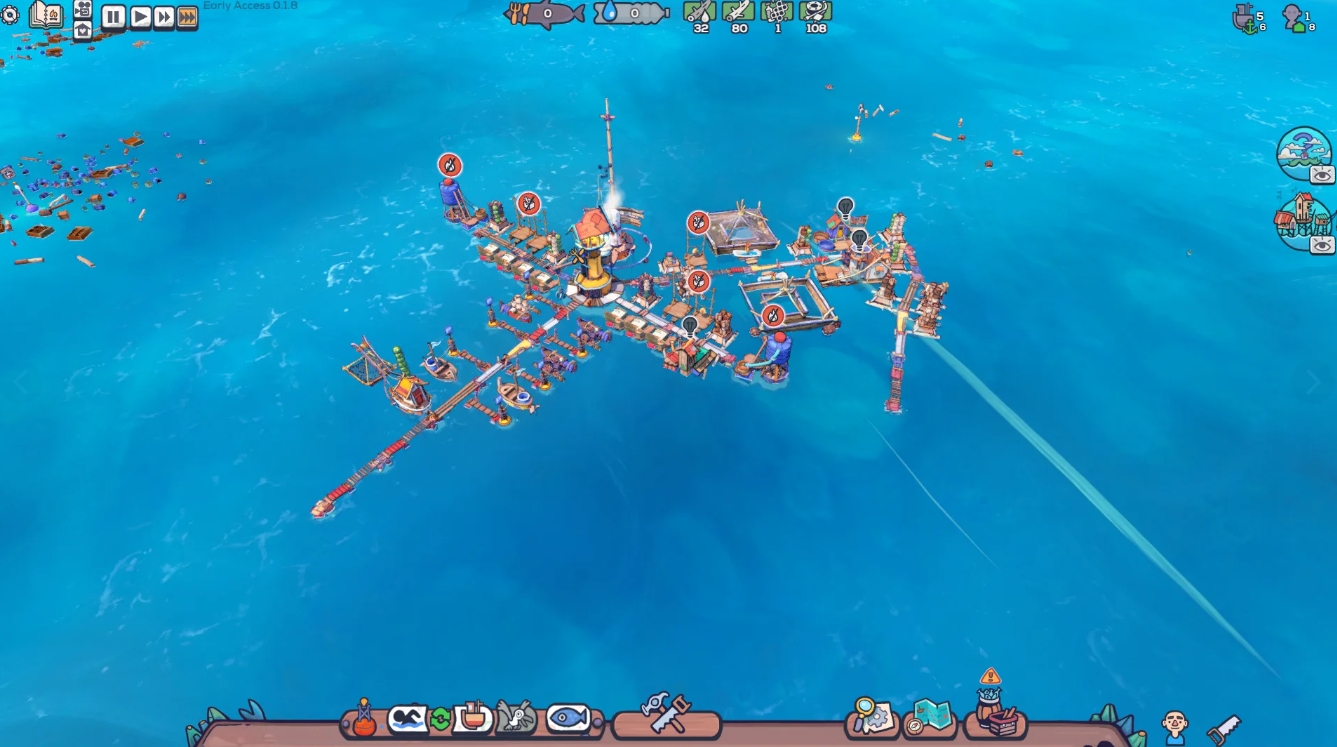
When you take your first steps on the waves, whether it’s a successful rescue of a traveler or the most crooked, but such a native bridge on the water, we are incredibly pleased to read your impressions. Reviews sometimes don’t appear instantly — we really read each one so as not to miss anyone. If your response is delayed, try slightly tweaking the wording — sometimes one word can solve everything.
In order not to feel like a captain among the endless waves, join our Telegram channel. There’s always someone discussing a new update, sharing their findings, or just laughing at how another drifter managed to fall into the water at exactly the moment when no one was looking. And if you have a question that no manual reveals, take a look at the “Complete Beginner’s Guide” section or write to us in the chat. Here, no one will leave you to figure out the storm alone — even if the storm is just about where to put the next water collector.