

Reviewing a game that has barely been released into early Access is not an easy task. The format itself suggests rough edges: almost no project at this stage is complete without bugs, incomplete optimization, and a noticeable shortage of content. This is logical — early access was created as a platform for getting the first feedback, testing mechanics and collecting feedback from the community, and not as a showcase of a fully finished product.
Nevertheless, The Forever Winter forces us to look at the situation from a different angle. In an amicable way, it would be worthwhile to postpone a full review until at least 2026, so that the studio could bring the gameplay systems to mind, expand the game world and polish the technical part. But curiosity won out: I wanted to understand how the project lives now, what kind of atmosphere it creates and whether it is able to surprise players who are accustomed to a high level of quality today.
And, most interestingly, it can really surprise you, even if not always with what you expect from a game at such an early stage of development.
Table of Contents
Forever Winter Free Steam Account
Forever Winter is an unusual hybrid of an extraction shooter and a third-person cooperative survival game. From the first genre, the game got short but intense gaming sessions, alternating with menu preparation: mission selection, equipment selection, inventory resource management, interaction with merchants, and planning the next raid. The project inherited another important element from Survivor — a high density of opponents and their almost endless spawn, which constantly keeps the team on its toes and emphasizes the importance of mutual assistance within the cooperative.
If you try to find an analog, PAYDAY 2 will be the closest to the feeling: there, as here, players collect valuables, improve the shelter, develop characters and conduct missions in different styles — from secretive to openly noisy. But in the harsh world of Eternal Winter, the stakes are higher: an ally can only be raised while he is still alive. If the team didn’t have time to help, that’s final. The character dies without the possibility of rebirth, and the only chance to rehabilitate himself is to try again in the next raid. This kind of mechanics increases the tension and makes every collision truly meaningful.

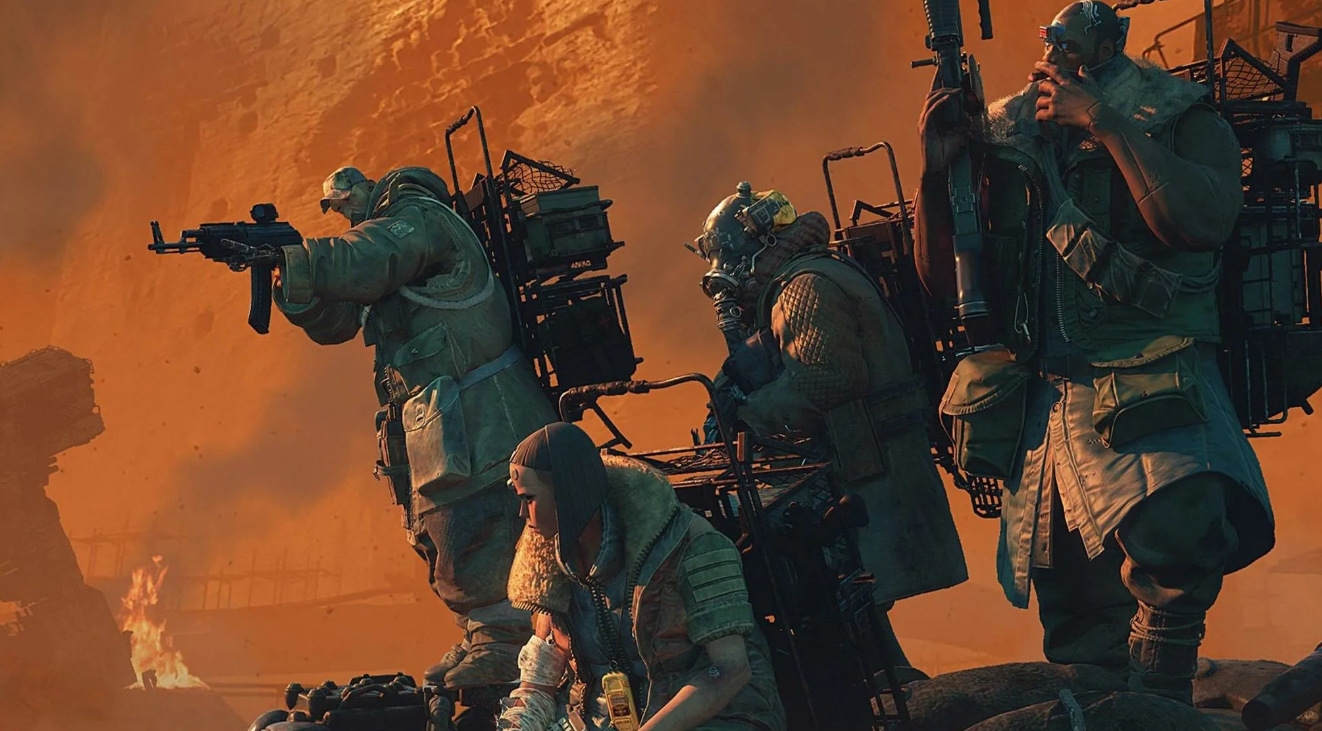
The cooperative component is also enhanced by the variety of playable characters. Each character has its own set of characteristics: some are more resilient and can carry an impressive supply of game resources, others are distinguished by their high mobility and fast movement around the map, and others have a unique “flair” and the ability to spot targets at a great distance. This role distribution affects the squad’s strategy, forcing players to think through tactics, adapt to situations, and use the team’s strengths to survive in an aggressive gaming environment.
Everything you need to play is inside your free steam account with games.
What is the game like at the moment?
Despite all the comparisons mentioned above, The Forever Winter remains an original project that immerses players in the gloomy setting of a nuclear winter. Mechanical creatures roam the snowy wastelands, resembling killer cyborgs from James Cameron films, and this cold technogenic aesthetic perfectly emphasizes the post-apocalyptic atmosphere of the world. It is the combination of a harsh environment, robotic opponents and a constant sense of threat that forms a unique visual style of the game, enhancing the immersive effect.
Interestingly, there is no habitual “humans versus machines” conflict in this universe. Instead, the developers have built a three-way confrontation between the factions of the states: Europe, Eurasia and the bizarrely named Euruska. Each of them simultaneously acts as an employer, a supplier of equipment, and an enemy that will have to be encountered in the field. The player acts on behalf of the fourth party, the scavengers. These are simple survivalists wandering through dead zones in search of useful belongings to exchange for resources and somehow stay afloat in a ruined world. This positioning adds mundane motivation to the gameplay: we’re not saving the planet, we’re just trying to live another day.

While the main factions are fighting for their own ideals and spheres of influence, the scavengers are guided by a much more understandable goal — ordinary survival. For her sake, you have to fulfill contracts, collect loot and bargain for every valuable item. The most important resource is water, not only as a symbol of life, but also as a kind of base progression system. The more stocks you manage to accumulate, the more new areas open up in the shelter: retail outlets, workbenches, functional modules. However, water remains a consumable resource that is constantly decreasing, so its level should be monitored no less closely than the condition of the equipment.
Five unique locations
There are currently five unique locations available for players to explore. They differ not only in scale, but also in the nature of the collisions, which directly affects the gameplay experience. Conventionally, the cards can be divided into three types:
-
Compact combat arenas are cramped spaces where fast and hard shootouts take place;
-
Long “corridors” are maps with minimal detour routes that make every step risky;
-
Mixed territories are areas with open areas and narrow passageways that require flexible tactics.
Despite the different structure, all locations look expressive and authentic. The architecture, the design of the surroundings, and the gloomy palette create a sense of anxiety and desolation — exactly the kind of emotional depth that the best post-apocalyptic games are famous for.
An interesting feature is the weather variability. Maps can be immersed either in a stormy environment — with rich orange lighting and sandstorms — or in a snowy silence, more traditional for the world of Eternal Winter. In the second version, the space is covered with light fog and snow, and creepy mountains of charred skeletons protrude from under it in places, creating an even more gloomy and memorable visual image.
Forever Winter gameplay
The gaming experience in The Forever Winter does indeed refer to PAYDAY 2, but with a noticeable bias towards the PvE format and survival. The main focus here is not so much on firefights as on collecting resources and searching everything that might be of any value, from abandoned villages to the bodies of defeated opponents. The loot system turns into a key gameplay mechanic, setting the rhythm for the entire adventure. At the same time, the developers tried to simultaneously adhere to the hardcore ideas of Escape from Tarkov and maintain the accessibility of the arcade shooter, which makes the game an unusual mix of genres.
Hardcore is felt primarily in relation to the character’s life: there is only one in the raid. This forces you to plan your route in advance, choose equipment for specific quests, and be prepared for any unforeseen encounter. The tension increases due to the variety of enemies. There are cyberzombi, well-trained soldiers, and massive combat vehicles that seem to have stepped right out of the worlds of Hideo Kojima. Such a variety of opponents creates a unique atmosphere of danger and constantly tests the player’s ability to adapt.
No matter what you do, any location will be overrun with enemies. Some of them can withstand more than one headshot, others require heavy weapons like grenade launchers — and even this is sometimes not enough. A mass shootout usually ends with new patrols pulling up to you after just a couple of minutes, and the ammunition melts away faster than you have time to recharge. Therefore, stealthy movement and avoiding unnecessary collisions become part of the tactical gameplay. The installed silencer doesn’t help much: enemies are guided by the noise of their allies, so a firefight will attract attention anyway.
An additional threat is posed by “Killer hunters” – special forces soldiers who react to too much loot in a backpack. They are not much stronger than regular enemies in terms of characteristics, but they have a key advantage: they know exactly where you are and will pursue you until the end of the raid. This creates an additional layer of tension and makes greed a real risk.

However, the game also has an insurance system: after death, the character can return to the place of death and try to pick up the abandoned equipment. The mechanics are similar to collecting lost souls from the Souls series — there is only one attempt available. If you die before the inventory is returned, all the loot will have to be considered irretrievably lost. Such rules enhance the value of each item and make you more thoughtful about equipment.
But behind the hardcore facade, there are also a number of simplified mechanics. The artificial intelligence of opponents regularly demonstrates strange behavior: enemies do not shoot well in bursts, their volleys often fly to one point, and the detection system is easy to deceive. Local stealth sometimes works too gently — some enemies do not react to the player even within five meters. Drones only start to notice you when you’re moving or shooting, which makes them less intimidating than they should be.
A similar situation is observed with large targets. Most of them do not show much interest in the player, and the only real problem can be giant robops — fast, sharp-sighted and extremely dangerous. Fortunately, even they are limited in movement and are unable to overcome all obstacles, which allows them to be shot from afar. However, the ammunition may not be enough even for one such “boss”, so you should not relax.
At the same time, The Forever Winter has the full potential to become a prominent player in the market and attract a large audience — especially among those who love evacuation gameplay, loot search and dynamic PvE battles. But it is important to keep in mind two points: the project is a service game and is in early access. These features inevitably entail certain disadvantages and difficulties, which should be discussed separately.
Strange leveling system
Like most service games, The Forever Winter has a whole set of systems designed to keep the player engaged for as long as possible. But, unlike some large projects, it’s not about early donation or aggressive monetization. The main focus is on gameplay mechanics related to progression, challenges, and regular forays into dangerous areas.
The developers position the game as a PvE extraction shooter, but they have added elements to this format that do not always harmonize with the idea of quickly entering a location and then exiting. In particular, we are talking about tasks and customization of weapons. The range of missions is made in the spirit of Escape from Tarkov and Arena Breakout: “find-bring”, “destroy the target”, “visit a specific point”. At first, these quests help you get comfortable, but they quickly begin to repeat themselves, depriving the process of freshness and creating a routine.
Tasks related to the search for rare resources become a separate challenge. Some items practically do not drop out, and certain opponents appear so rarely that players have been discussing on forums for two weeks where to look for them at all. Therefore, it is not surprising that the “Scorched Enclave” has become the main area for completing quests — a small map, dense enemy population and a decent amount of loot make it the most effective choice for farming.

The pumping system looks no less controversial. There are four major branches of development, each of which operates according to its own rules. To make it easier to navigate, they can be roughly divided as follows:
-
Leveling classes — improving the chosen hero through raids and completing tasks;
-
Modification of weapons — opening of body kits and gradual pumping of barrels;
-
Reputation with factions — improving relationships by selling loot;
-
The development of the shelter is the expansion of functional areas due to the extracted water.
At the beginning of the game, we are asked to choose one of five classes that improve in combat missions and through completing tasks. But all progress is tied to the “Prestige” system. Unlike Call of Duty, where prestige is a reward for the highest level, here it turns into a barrier. Until you unlock prestige, you will not be able to develop the skill tree further, and all the accumulated experience will simply not count. This creates unnecessary friction and a sense of delayed progress.
There are also problems with pumping weapons. The customization is done carefully and allows for a noticeable improvement in the characteristics of the trunks, but the pace of development leaves much to be desired. To open the body kits, you have to take weapons with you on a raid dozens of times and destroy enemies in packs. Even if, like me, you only run with AK and PKK most of the time, progress is minimal — only a small part of the modules available in the game are opened. This slowdown hinders experimentation and makes the weapon system less flexible.
The third branch of development is related to relations with factions and merchants. To improve their reputation, it’s enough to sell them the trash they find. Once you reach the 100,000 threshold, you’re already on the neutral side. Another hundred and you become a full—fledged ally. The system, though simple, is completely devoid of tension: the punishment for killing fighters is extremely mild, and lost trust is restored almost instantly. This reduces the impact of player choice and reduces strategic depth.
The last progression system is directly related to the shelter. To develop it, you need water, which can be found in raids or rewarded for completing missions. The more water you manage to accumulate, the more new areas open up: workshops, recreation rooms, themed corners like a prayer place or a doghouse. So far, most of them perform mainly a decorative function, but it is the water that determines how long you will stay in service. If her supplies run out, the merchants will leave first, and then the entire resource warehouse will disappear.
Thus, the game literally pushes you to return to the raids over and over again — not with a soft motivation, but with a hard necessity. And the philosophy of game services is clearly visible in this: progress must be maintained constantly, otherwise the consequences will be too tangible.
Is Forever Winter worth playing?
Being a project that is still “breathing” development, The Forever Winter naturally resembles a draft of a good idea: it already has potential, but it is hidden under a mountain of bugs and strange design solutions. Some mistakes make you smile, others are genuinely surprised, and still others make you wonder what was going on in the minds of game designers at the time of making these decisions.
Let’s start with shooting. The weapon sounds convincing, the recoil feels good — it seems that this is the fulcrum. But once you take aim, all the magic instantly collapses. The bullets steadily go below the target, as if trying to dig a tunnel into the ground. And this is not about simulating realistic ballistics: misses happen even at point blank range. In the dynamics of the battle, it doesn’t just feel strange — in some places it seems as if the game is conducting its own independent dialogue with the laws of physics.
Further — more. The enemy spawn system sometimes resembles an overly active ghost: enemies appear literally from the vacuum behind you, and the only signal about this is a leaden “hello” flying into your back. And the contents of their pockets are a separate comedy show. Ammo? Medicines? OK, that makes sense. But why do they need so much alcohol? The community is already joking that the factions are fighting not for resources, but for strategic booze reserves. It is especially touching that most of the “liquid gold” can be found… in cyber zombies. And one can only wonder where these guys manage to keep it.
If the problems were limited to just that, it would be easier. But the loot system itself is noticeably stalling. The game tries to repeat the “pixel-hunting” of extraction shooters when you need to aim at an object in order to pick it up. But with so many trophies, after each battle, the process turns into a real fuss. Important things are obscured by less valuable ones, weapons are not picked up because someone else’s bag gets in the way, and the game stubbornly considers some containers already inspected. As a result, instead of a pleasant feeling of reward, irritation appears — they say, I see an object, but the game does everything so that I don’t get it.

Although The Forever Winter is presented as a cooperative adventure, in fact, players are forced to conduct most of the raids in the “lone wolf” mode. The network code still works every other time — connecting to a friend is sometimes more difficult than going through the raid itself. The developers have provided a way out — allied bots. The idea sounds tempting: mercenaries and robots who will help, insure, and carry off the loot. But in reality, it’s more of a comical misunderstanding. They die quickly, shoot poorly, and sometimes become literally a wall between you and the doorway. There have been cases when a player died precisely because the “helper” blocked the escape route.
Optimization is also lame on both legs. The game takes a long time to cook the shaders, and the locations load up so slowly, as if it’s the last day of winter and there’s no hurry. Therefore, it is actually most comfortable to play on low settings — at least the downloads take place there without visible suffering.
And the bugs… the bugs in The Forever Winter are like a lottery. You never know what’s going to happen this time. Maybe a flying tank that crosses the sky majestically, like a steampunk-era airship. Or a giant unit that launches a finishing move at a target five meters away from it. And sometimes — especially the “lucky ones” — they get a critical error that makes an entire location inaccessible. The Elephant Mausoleum is exactly like that right now: going in there means instantly getting kicked out of the game.
But, strangely enough, all this creates a special atmosphere of early access — chaotic, sometimes absurd, but lively in its own way. The Forever Winter is trying to grow, albeit stumblingly, and watching this process is sometimes no less interesting than participating in the raid itself.
Forever Winter System Requirements
How to play Forever Winter for free on Steam via VpeSports
There is a special cold in Forever Winter — not the one that feels on the skin, but the one that creeps inside and makes the heart beat quieter so as not to betray itself with an unnecessary sound. Every step here reminds us of how fragile we are, and how much we want to hold on to life, even when gigantic shadows float overhead, like living storms. And yet it is this fear that makes the moments of survival real—human.
We want your journey into this gloomy world to begin not with confusion in the settings, but with the feeling that you were expected here. Simple registration, login to your account — and you already have instructions in front of you, compiled so as not to cling to technical details. Sometimes it seems that no one helps anyone in the world of Forever Winter, but there are people behind the screen who tried to keep you from wandering alone in the dark.
When you complete several missions, listen to the snow crunching under your feet, and your scared teammates breathing softly next to you, tell me what you felt. Honest impressions are important. It happens that the review does not appear immediately: moderation allows only clear, calm comments. If the text is delayed, just paraphrase it and it will definitely come through. An email will be a small confirmation that your voice has been heard.
And if you want to be a part of something more than solo survival, take a look at our Telegram channel. There, people share experiences, laugh at failures, discuss updates, and sometimes just support each other, because in this world, even messages can feel warmer than the winter wind. And if you ever get confused or stuck at some point, our guides and support chat are always there. We answer not because we have to, but because we know what it’s like to move forward when eternal winter reigns around.