Riot Games— a studio that everyone knows who has ever launched League of Legends or Valorant, decided to fight cheaters not by the textbook. Instead of quiet bans and closed patches, the company made an unexpected move: it launched a reward program for found vulnerabilities. The amounts there are quite serious — up to $ 100,000. Anyone who finds weaknesses in Vanguard, Valorant’s anti-cheat system, can get them.
The logic is simple, but bold. If you can’t completely defeat the cheaters, why not win over those who best understand where and how everything breaks? Riot is actually offering the hacker community a role change: not to bypass protection, but to strengthen it. This approach allows you to close the holes faster and, importantly, maintain a fair competitive environment in the game.
Launching a bounty program is not a gesture of goodwill for the sake of PR, but a fully conscious strategy. Riot makes it clear that fair play and player comfort are not empty words for them. Financial motivation plays a key role here — finding a bug legally and getting paid for it is much more pleasant than using it quietly with the risk of consequences. Ideally, this should lead to the outcome of the match being determined by reaction, tactics, and teamwork, rather than third-party software. By investing in security, the company strengthens the trust of players and demonstrates that control over the integrity of matches is a priority, not a formality.
Table of Contents
Riot Offers Up to $100,000 for Hacking Vanguard
At the same time, Vanguard itself has long been one of the most discussed topics in the community. And for good reason. Players are alarmed by his “aggressive” approach and the level of access to the system. The anti-cheat is installed with Valorant and works with elevated privileges, actually gaining access to a significant part of the computer hardware. From a technical point of view, this makes it possible to detect cheats more effectively, but from the point of view of privacy, it looks, to put it mildly, alarming.
Riot assures that Vanguard does not collect personal data and uses only the information that is necessary for the anti—cheat to work – at about the same level as protection in League of Legends. However, many people are confused by the fact that the system starts immediately when the computer is turned on. The players have a logical question: is it really impossible to do without such total control?

The developers insist — there is no other way. According to them, it is deep integration that allows Vanguard to track complex and non-standard ways of cheating, maintaining fair conditions for everyone. But even with these arguments, some of the audience remains wary. People are concerned about the potential risk of leaks, abuse, or vulnerabilities in a program that runs at the system level.
To reduce the degree of tension, Riot engaged in dialogue. The company has published detailed technical explanations on exactly how Vanguard works and what data it uses. In addition, the Trusted Mode mode has been added, which allows you to partially restrict anti-cheat access. Nevertheless, the controversy has not subsided. Some players believe that it would be possible to look for less invasive solutions, such as running anti—cheat only during matches or conducting random checks.
As a result, Riot found itself between two fires: on the one hand, the need to protect the game from cheaters, on the other, users’ fears for their privacy. It is extremely difficult to find a balance here, but the trust of the community and the future of the project largely depend on it. Vanguard has become a clear example of how modern security systems can both be effective and raise serious questions.
Riot calls it a compromise
Despite the criticism, Riot Games continues to defend its position. The company believes that the mandatory use of Vanguard is a necessary but justified measure. In their opinion, the potential dissatisfaction of some players is incomparable with the damage that cheaters cause to the competitive environment. As a result, most get a more honest and predictable gaming experience.
Riot continues to invest in the development of Vanguard and plans to use it not only in Valorant, but also in its other games. The vulnerability reward program is an important part of this strategy. By encouraging hackers to look for weaknesses, the company can respond faster to threats and close problems before they are exploited by intruders. This collaborative approach transforms security into teamwork and enhances protection against foul play.
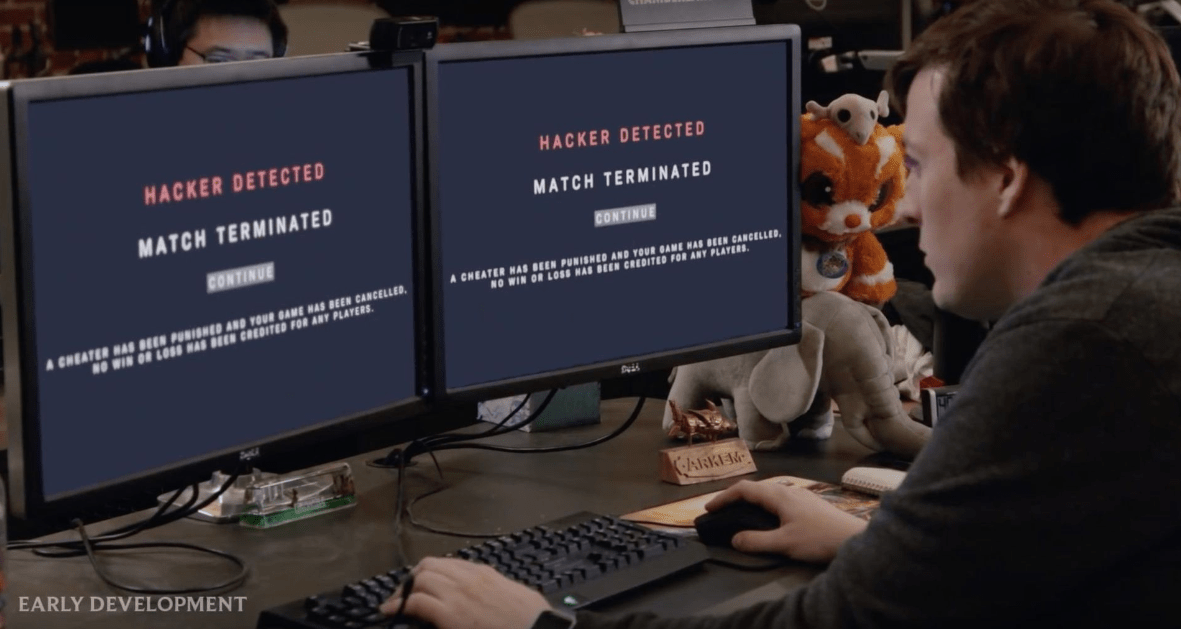
At the same time, the issue of privacy remains a personal choice for everyone. Even with all the openness of Riot, not everyone is ready to put up with this level of access to the system. The developers understand this and emphasize that they will continue to listen to feedback, adapting Vanguard to the expectations of the players.
Anti-cheat, like online games themselves, will continue to evolve. Some will still criticize the mandatory Vanguard, while others will accept it as an inevitable part of modern competition. But one thing is clear: by launching the bounty program, Riot is demonstrating its willingness to act proactively and look for solutions, rather than hiding from problems. And whether to agree to this compromise or not is up to each player to decide for himself.
A discussion about ethical hacking
The story of the Vanguard bug bounty program has once again brought to the surface an old but still pressing question: where is the line between ethical hacking and ordinary hacking? It would seem that the topic is not new, but disputes have flared up with renewed vigor. Both players and cybersecurity experts quickly got involved in the discussion — everyone has their own truth, their own view and their own concerns. Some are sure that bug bounty actually pays potential attackers, while others, on the contrary, see such programs as a reasonable way to channel hacker energy into a peaceful channel and make the product safer.
Emotions aside, the idea of a bug bounty looks pretty logical. The company is creating a controlled platform where security researchers can legally search for vulnerabilities and report them. The basic message is simple: if you find a problem, tell us about it honestly, help us close it, and don’t use it for selfish or malicious purposes. Financial reward here plays the role of motivation, a kind of “thank you” for the time and knowledge spent. In return, companies get access to the expertise of a huge hacker community and a chance to eliminate weaknesses before real attackers become interested in them.
Proponents of bug bounty programs often refer to them as an amplifier in the fight against cyber threats – and this makes sense. When a direct dialogue is established between developers and researchers, many vulnerabilities surface much earlier. The ones that no one even knew about. This approach allows you not just to patch holes in fact, but to act ahead of the curve, gradually making software products more stable and reliable. Although, to be fair, even supporters admit that there are no perfect systems.
Bug bounty’s opponents look at the situation from a different angle. Their main fear is blurring the line between ethical hacking and outright illegal activities. Money can attract people with dark intentions, and it’s not always clear who’s in front of you: a researcher or a future attacker. There is another disturbing scenario: a vulnerability has been found, it has been reported, a payment has been received — and then the information suddenly “leaks” or is used to circumvent the agreements. Such risks are difficult to ignore, and that’s why the rules of the game are critically important here.
In order for bug bounty programs not to turn into a lottery with a dubious outcome, companies have to build clear and thoughtful frameworks. It is necessary to determine in advance what is considered ethical hacking, how exactly to report vulnerabilities, and what checks the reports undergo. Transparency is equally important. When participants understand that they are being heard, are kept informed of the status of corrections, and really appreciate the contribution, the level of trust increases markedly. And without trust, such initiatives simply don’t work. Plus, the reaction speed. The faster the company closes the vulnerabilities found, the less likely it is that they will have time to take advantage of them.
As a result, bug bounty programs remain a living, evolving tool in the field of cybersecurity. Yes, they have weaknesses and controversial points. But with proper implementation and clear rules, they really work. Cooperation between companies and security researchers is gradually forming a stronger and more stable digital environment — one in which there are fewer risks and a little more trust.