Players should prepare for a major meta shift, especially in competitive titles. While the industry genius polishes his action game, fans of turn-based strategy are already exploring the early access of Heroes of Might and Magic: Olden Era, where the question of choosing the right character is more pressing than ever.
Table of Contents
Subclass mechanics and tier ranking criteria

In Heroes of Might and Magic: Olden Era, each side fields 18 characters. The roster is evenly divided: nine skilled Warriors and nine adepts of magic. While the balance may seem balanced, the gap between the top heroes and the underdogs is clearly visible.
The main drawback of this mechanic is that starting skills are permanently imprinted on a character’s profile. Retraining them is impossible—they are the foundation on which you will build your strategy (or suffer from the lack thereof). Our Temple Hero guide, current as of May 10, 2026, is based on three pillars: the usefulness of the starting skill, the power of the unique specialization, and—critically—the proximity to unlocking a subclass.
Important note: Heroes of Might and Magic: Olden Era is still in Early Access. The developers at Unfrozen will likely be tweaking the numbers in upcoming patches, so the current balance of power isn’t the final word.
Rank classification: from S-tier to personnel ballast
All Temple heroes are equipped with Righteousness by default, but their fate is determined by their second, unique skill. It either provides an instant boost to combat effectiveness or serves as a shortcut to a subclass.
To reach the coveted subclass, you need to level up five specific skills to Expert. If your protégé already has one of the required skills at level 1, consider yourself a head start. Those without such a connection can also take the subclass path, but it will be long, painful, and not necessarily effective.
-
S-Tier: True machines of war. They have either a broken (in a good way) specialization or an ideal start for a subclass. They dominate in any mode.
-
A-Tier: Solid professionals. The difference with S-rank is purely cosmetic—they have a slightly lower development ceiling, but otherwise, they are an excellent choice for stable play.
-
B-Tier: Workhorses. They require a thorough understanding of specific tactics. In skilled hands, they reveal their full potential, but are reluctant to forgive mistakes.
-
C-Tier: Part-time heroes. Typically, these are scouts or couriers. They’re poorly suited as a main for map capture, as they lack tempo.
-
Tier D: A dead weight. Specializations here are weak, and starting skills often conflict with the Temple’s aura. Pick only if the randomness leaves absolutely no choice.
Looking at the current changes in the esports segment and the recent announcements for BLAST Open Spring 2026, such in-depth meta-analyses are becoming the standard for surviving in the top search results. Relevance is everything.
Temple’s Best Heroes: A Look at the S-Tier Leaders
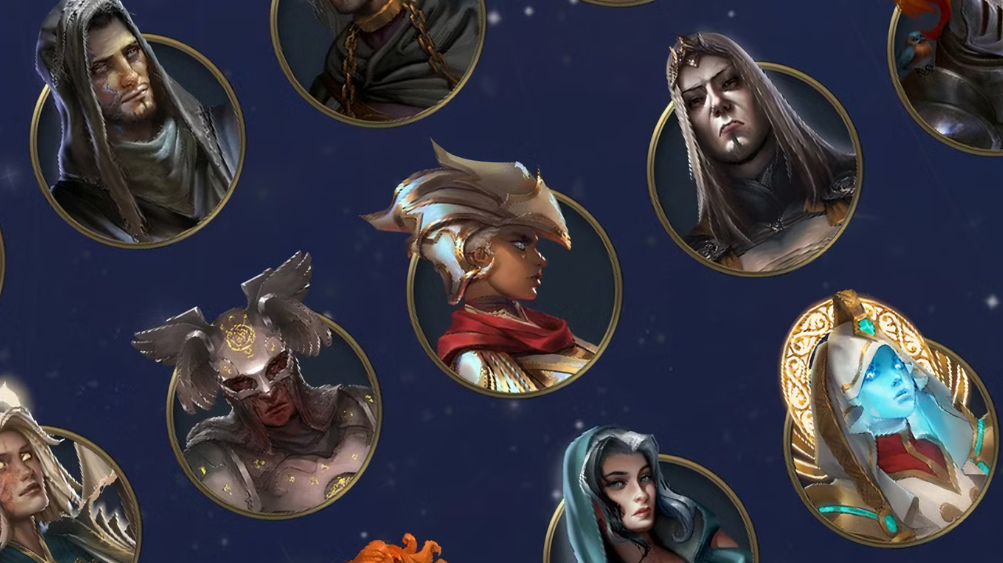
The gap between the leaders and the rest of the roster in Heroes of Might and Magic: Olden Era is more pronounced than in previous games in the series. While most Temple heroes are “normal,” two Cleric heroes disrupt the usual pace of play. We’re talking about Pip and Zenith. These two aren’t just strong starters, but long-term investments in your victory that pay off by the middle of the first week.
Pip: Meta Leader and Law Point Master
Pip deservedly ranks first in all current metas. His secret is both simple and terrifying: he disrupts the game’s economy through Law Points. His starting skill, “Insight,” allows him to learn “Civic Innovation,” which doubles his Law Point generation. And if you add “Leadership,” the point influx becomes obscene.
The main goal of any Temple player is “Architect Mastery.” This Level 3 Law allows you to construct two buildings per turn. While your opponents are painfully crawling through the tech tree, Pip will breeze through the first two levels. As a result, you build your city twice as fast as your competitors. On the game’s official portal, olden-era.com, this character is directly called the ultimate choice for the faction, and it’s hard to argue with that. Control over the entire Law tree is too compelling an argument.
Zenit: Aggressive start through Svetotkachi
Zenith plays to another of the Temple’s strengths—unit superiority. She’s the only hero who rushes into the first battle with Lightweavers (T4) in hand. In the realities of Early Access, this feels like a legal cheat.
Key Features of Zenith:
-
Fast T4 unit: You skip the construction of expensive barracks and the gold costs at the start.
-
Lightweaver Specialization: Not only does it increase the weekly Lightweaver growth in all your settlements, but it also provides them with direct stat buffs.
-
Expansion Pace: Where others need to amass an army of crossbowmen, Zenith goes and clears the mines.
While other players are still planning their budgets for creature dwellings, Zenith is already converting the power of her ranged units into experience and control of key points. This advantage doesn’t fade over time, but rather scales, making her an ideal hero for better leadership on large maps. A solid choice for those who don’t like to wait.
Alternate A-Tier Heroes: Aeos and Lord Edgar
If Pip and Zenith seem too specific to you or didn’t drop at the start, the Temple unleashes the heavy artillery of the second tier. Tier A heroes don’t disrupt the economy as radically, but in terms of combat power and development flexibility, they give anyone a run for their money.
Aeos the Exalted is a true nightmare for those accustomed to protracted battles. His Leadership becomes a crucial factor in controlling the army and the pace of development from the very beginning of the game. Aeos’s passive ability transforms the standard Temple Morale into a tool of total destruction. The higher the hero’s level, the more terrifying his army becomes. In the endgame, when levels are through the roof, Aeos can overwhelm almost any opponent with endless turns and critical Morale hits.
Lord Edgar is perhaps the most stable Knight in the roster. His main draw is that he starts with Advanced Righteousness. Seems like a small thing? Not at all. While others are wasting points on upgrading their base, Edgar is already looking for open slots.
Why choose Lord Edgar:
-
More slots: He has more wiggle room when shaping your subclass path.
-
Minimal randomness: You’re less dependent on the skills the game offers as you level up.
-
Versatility: He’s less dependent on specific conditions than Aeos and shows excellent results in any scenario.
Incidentally, while Aeos is a bet on a spectacular victory, Edgar is a pragmatic choice for a professional who doesn’t want to lose due to poor skill drops.
Julius: The Best Build for the Ascension Subclass
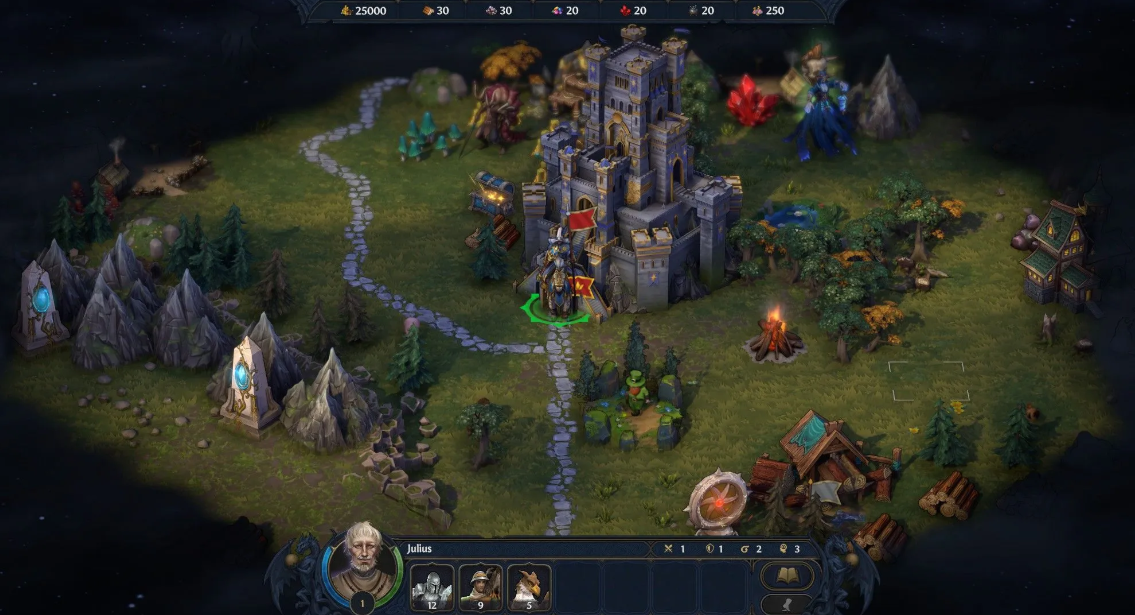
Julius rounds out the top Cleric builds thanks to his Resistance. In the world of Heroes of Might and Magic: Olden Era, where crowd control can decide the outcome of a duel, this skill is invaluable. But more importantly for the May 10, 2026 meta, Julius has the highest statistical probability of reaching the Ascension path. His starting kit perfectly synergizes with the requirements of this subclass. If you plan to play the magic tree and don’t want to rely on luck, Julius will be the best foundation for your magic tower. The combination of protection from enemy spells and easy access to elite abilities makes him an extremely dangerous opponent for any caster.
B-Tier Characters: Kestrel Leah and Clarissa
Choosing a main in Heroes of Might and Magic: Olden Era is no easy task, especially when top-tier heroes are unavailable. If A-tier heroes haven’t caught on, consider Tier B. Keandra and Kestrel are solid combat knights who can carry the deck with the right build. While they’re slightly less versatile than the meta favorites, their late-game potential can’t be discounted.
Analysis of B-Rank Hero Skills and Starting Bonuses
The strength of these characters lies in their specializations and the ability to quickly access the necessary skill trees. Unlike situational mages, these heroes offer consistent impact from the very first turns.
-
Keandra (Knight): Her starting Combat Mastery is the foundation. This skill directly impacts attack accuracy, ability usage, and initiative management. This is a long-term investment that pays off in protracted battles. The Paragon Path clearly defines the development vector, although its narrow specialization on cavalry doesn’t provide the same crazy faction-wide boost as the leaders in the ratings.
-
Kestrel (Knight): If you like to play aggressively, this is your choice. The starting Assault unlocks the Dandy Path literally from the start. This is the easiest way to boost the damage of crossbowmen, who form the backbone of the Temple army. More attack means fewer problems with enemy survivability.
-
Clarissa (Cleric): An economical hero. With her, you’ll always have extra coin in your pocket thanks to Economy. When you need to quickly build a costly Temple, Clarissa becomes an indispensable second hero or even a temporary main for a quick start.
-
Leah the Unbound (Cleric): A master of support. Daylight Magic is immediately available to her, perfectly fitting into the Temple’s buff-based strategy. You won’t have to rely on randomness to find the right school of magic—Leah is ready to distribute buffs from the very first battle.
Ultimately, B-tier heroes in Heroes of Might and Magic: Olden Era are the workhorses. They’re reliable, predictable, and, with proper resource management, can dominate the map just as well as established IMBs. Where should you begin your expansion? If you have Kestrel or Keandra in your pool, the answer is obvious.
C-Tier Heroes: Situational Choice and Intelligence

If top-tier heroes and solid mid-tier B heroes are busy or unavailable, C-tier heroes remain in the pool. These aren’t “junk” options, but rather highly specialized tools. In Heroes of Might and Magic: Olden Era, heroes in this category often lack subclass paths, which seriously limits their late-game potential. However, in specific scenarios—for example, when playing Classic mode—they can be useful.
The main problem with C-tier is the lack of scalability. While competitors’ mains are accumulating powerful subclass passives, these heroes rely on their starting features.
-
Anastasia Krotkaya (Cleric): Her specialty is Thaumaturgy. This skill reduces the cooldown of spells, allowing her to spam magic more often. This sounds good for long campaigns, but in practice, the benefit is too limited. The lack of a subclass path makes her a dead-end build for the main hero.
-
Vesper (Cleric): Essentially a budget copy of Leah. She has the same Daylight Magic, which is vital for the Temple’s buffs. The problem is that Leah is more effective in this regard, while Vesper has no prospects for long-term growth. She’s a solid backup option, but nothing more.
-
Old Lord Mandall (Knight): A master of survival. His Resistance helps him survive the magical burst of strong opponents, but it’s difficult to make a foundational skill for a build. Empowered Heroic Strikes are interesting, but they synergize poorly with the overall tempo of Temple play.
-
Heretic Avis (Knight): A true quartermaster. Starting Recruitment is invaluable in Classic mode, when you need to quickly bulk up two or three armies. The passive bonus for extra gems is a nice bonus, but in a serious fight, Avis is useless. He’s the perfect “second choice” for logistics and resource gathering.
Characteristics and roles of C-category characters
Ultimately, choosing C-tier heroes as mains in Heroes of Might and Magic: Olden Era is a questionable decision. Vesper is a “second Leah,” slightly weaker than the original in every way. Heretic Avis can be a great support thanks to Recruit, helping keep your main army from running dry. But if you’re looking for a hero capable of single-handedly turning the tide of a game, it’s best to look for options in the higher tiers.
D-Tier Underdogs: A List of the Worst Main Heroes
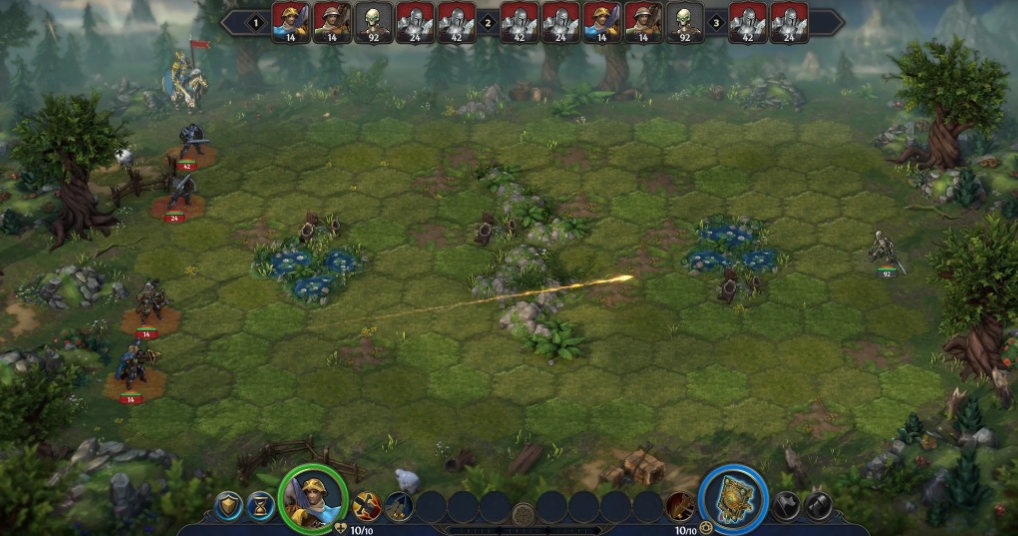
In the Heroes of Might and Magic: Olden Era tier list, D-tier characters occupy a place of honor as underdogs. This doesn’t mean they’re completely useless—they have their uses in Classic mode. But if your goal is to create an unbeatable main hero, avoid these guys. Their skills either don’t scale or are downright detrimental to their faction.
The main problem with D-tier heroes is their complete inability to perform in prolonged battles and the lack of a clear path to subclass advancement. You’ll hit your development ceiling much earlier than your opponent.
-
Nadir (Cleric): The strangest character in the roster. His starting Nightshade Magic is more of a plot device from the developers than a real build. Dark spells and debuffs categorically clash with the Temple philosophy, which is tied to Fighting Spirit and Daylight Magic. Interesting? Possible. Effective? Never.
-
Easter (Knight): The king of the empty roads. Logistics makes him a great courier or scout, but in a real fight, Easter is a nobody. He has nothing to help his troops survive or deal more damage.
-
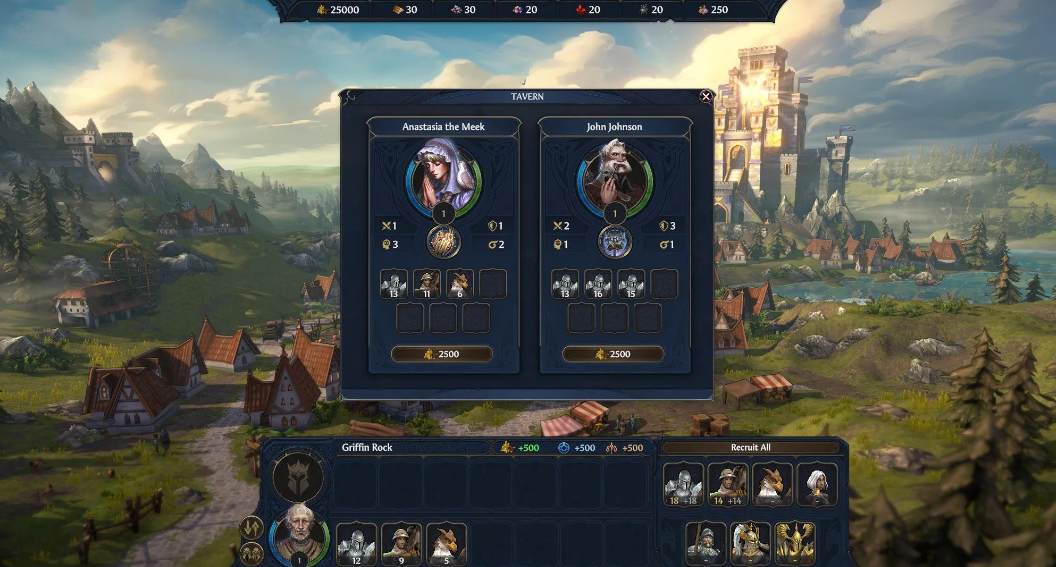
John Johnson (Knight): A mystery. Defense seems useful, but as a starting option, it’s incredibly lackluster. Without a clear specialization, John is a knight without a face or prospects.
-
Leon Stickyfingers (Knight): His Reconnaissance can be useful on huge maps to spot threats early. However, as a main, Leon crumbles at the first encounter with a serious opponent.
-
Merry Elias (Cleric): Betting on Diplomacy is always a casino. If the map is littered with neutrals eager to join your army, Merry can “shoot.” In the remaining 95% of cases, this is the weakest foundation for leveling.
By the way, if you play classic, don’t be too quick to write off Easter and Leon. As secondary heroes for resource gathering and logistics, they are quite competent. As the engine of your expansion in Heroes of Might and Magic: Olden Era, they will inevitably lose to any character from the higher tiers. Especially Nadir, whose build on the “thread” looks like a deliberate attempt to sabotage his own Fighting Spirit economy.
How does map size affect the balance of power in HoMM?
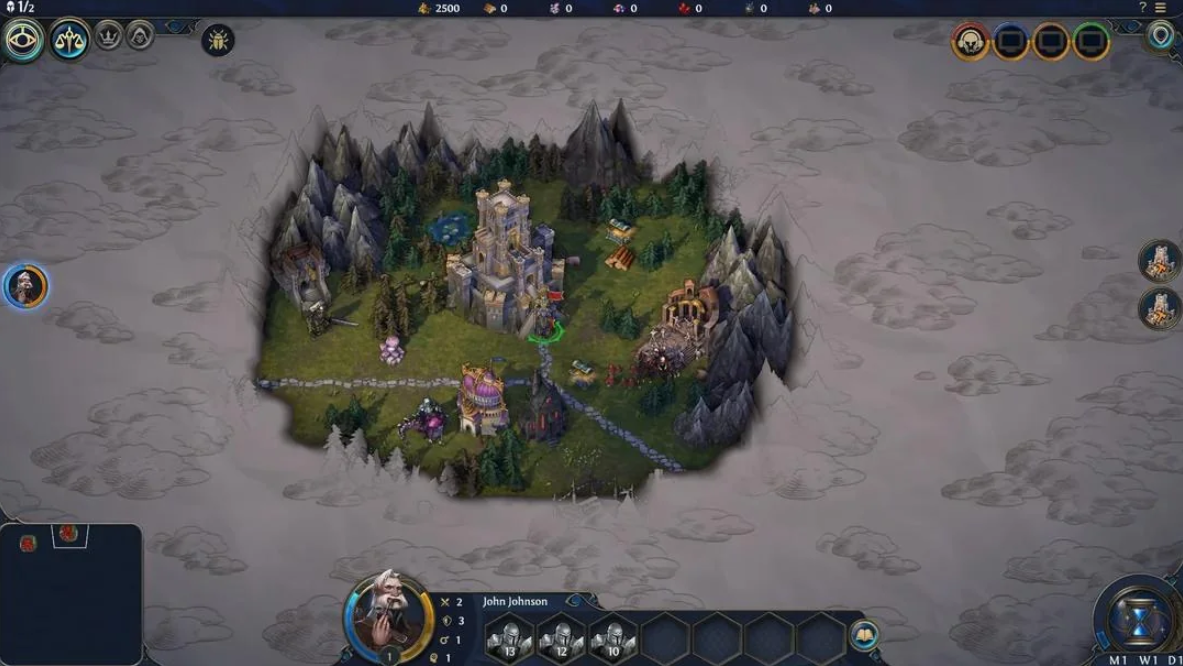
The battlefield scale in Heroes of Might and Magic: Olden Era is a fully-fledged balancing tool, influencing not only visual perception but also the tactical depth of battles. On cramped S-level maps, the Temple faction often feels uneasy, losing to opponents with a strong starting tempo. The Templars are critically lacking in speed: while they’re building an economic base and spending money on Law packages, the enemy is already knocking on the door. Here, it’s not the army’s late-game potential that matters, but the ability to clear points of interest “here and now.” Therefore, at close range, Zenit or Pip are much more advantageous than heroes who rely on long subclass leveling.
Стратегия доминирования Храма на XL-локациях
In spacious maps, the situation reverses itself—Temple begins to methodically increase its dominance. A large number of mines and neutral units allow the faction to realize its main advantage: high-quality scaling. Zenith shines on these maps. Starting with Lightweavers, it seizes control of resources without investing heavily in construction in the first week. As a result, by mid-game, Temple’s army becomes an unstoppable steamroller.
On small maps, Temple suffers not from weak units, but from a slow preparation for first contact. But in protracted games on March 19th and beyond (relatively speaking), all the trump cards are revealed: morale bonuses and a powerful economy allow the faction to survive until its peak. If the outcome of the match is decided in one quick skirmish, choose units with instant damage. But if a long siege lies ahead, Temple will not miss its chance.