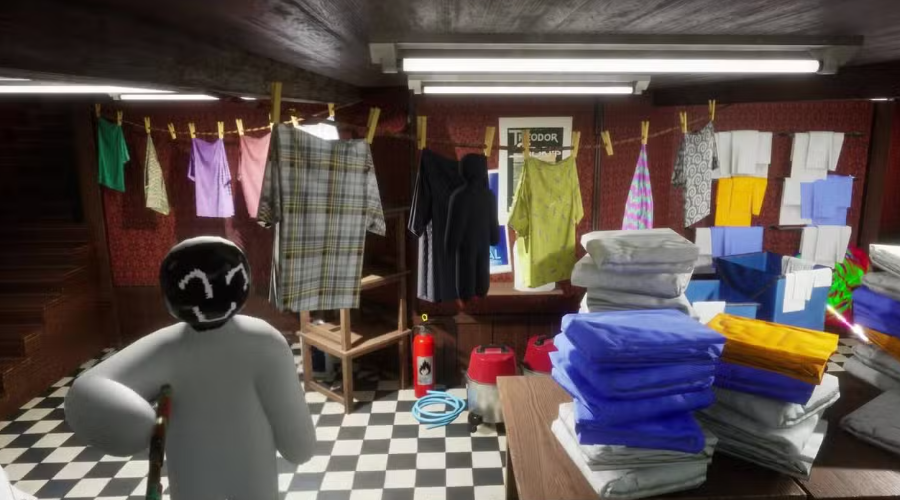
Meccha Chameleon isn’t just a game of hide-and-seek. It’s a psychological duel where your weapon isn’t a shotgun, but the ability to dissolve into textures and colors. Inspired by Prop Hunt, the developers created mechanics that force players to become part of the environment rather than hide. And believe me, when you successfully disguise yourself as a brick wall for the first time, you’ll understand why this game is so addictive.
The game has already attracted an active community that creates maps, turning each level into a new challenge. This isn’t just a collection of locations, but a space for creativity—for both camouflaged players and hunters.
Table of Contents
How Camouflage Works in Meccha Chameleon
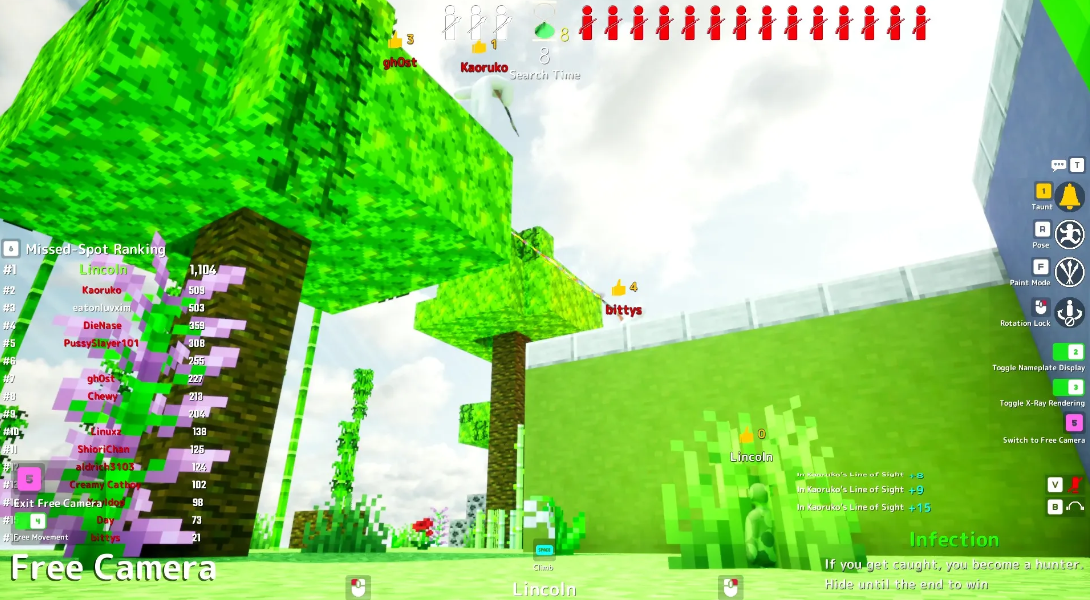
Unlike classic Prop Hunts, where you transform into a pre-made object, Meccha Chameleon gives you a canvas and paints. Literally: after the round starts, you have a few seconds to use a brush and eyedropper (yes, like in good old MS Paint) to select a color and texture to blend into the background. This requires not only speed but also artistic flair—you need to guess where the hunter’s gaze will fall. And, characteristically, the most successful disguises often emerge not in dark corners, but in prominent places, just above eye level. I’ve tested this myself: I’ve sat for minutes while crowds of hunters ran past, and I stood there, painted like a green bush, holding back my laughter. Each map is a world unto itself, and the community has already generated so many variations that there’s never a dull moment.
Psychological Tricks to Deceive Hunters
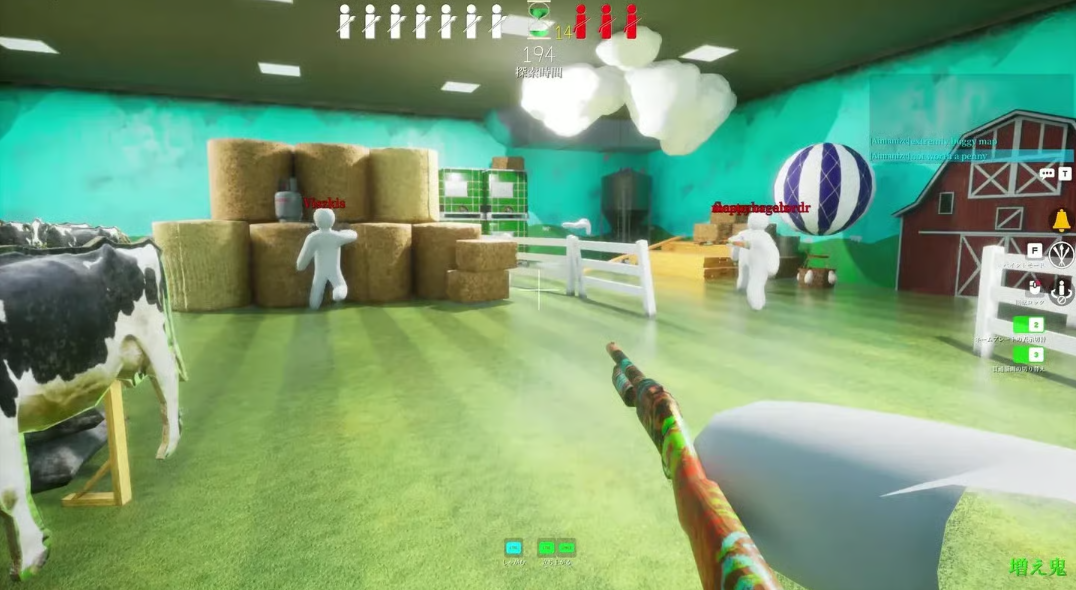
In fact, the main secret of Meccha Chameleon isn’t in accurately replicating colors, but in understanding how human attention works. Our brains are trained to ignore static objects that pose no threat or benefit. If you turn into a piece of decor a hunter has seen a hundred times, they’ll pass you by, even if you’re standing right in front of them. This is a game played with the subconscious, and it’s no less satisfying than a well-aimed shot.
When you manage to fool an entire team, the feeling of superiority is off the charts—especially if you’ve chosen an open space for camouflage, where it seems impossible to hide. In short, Meccha Chameleon teaches you to see the world differently, and that’s perhaps its greatest value. So, if you haven’t tried this game yet, I highly recommend it—but be warned: you risk losing track of time, as I did. Each session is a new performance, where you are the star actor and director of your own invisibility.
Secrets of Perfect First-Person Camouflage
The effect of inattention to static objects is a key weapon that gives the gamer a colossal advantage. The human brain is designed lazily: it constantly filters enormous amounts of incoming information. Our attention is geared toward detecting movement, sharp contrast, and potential threats, while a stationary object with a familiar texture is simply dismissed as background noise. In Meccha Chameleon, this feature works to your advantage. If your camouflage perfectly matches the surroundings in color, texture pattern frequency, and spatial orientation, an enemy is guaranteed to fly past. A hunter searches for a target, but sees only an extension of the wall.
Why Open Areas Are Safer Than Dark Corners
A standard behavior pattern for any gamer is to check obvious hiding spots. A pursuer’s gaze first scans dark alcoves, corners, and spaces behind furniture, expecting to spot an ambush there. In Meccha Chameleon, open, illuminated surfaces paradoxically become a “blind spot,” as they are initially perceived as a safe background mass.
This approach offers two powerful advantages:
-
You completely fall out of the “hot spots” that opponents automatically check or spam.
-
Contextual perception is activated—objects in plain sight appear to be part of the scene’s original geometry if their dimensions and shape match their surroundings (for example, a rectangular block mimicking brickwork right in the middle of a wall).
Cognitive Biases for Game Dominance
-
Inattentional Blindness. Players often overlook even the most obvious things if they aren’t specifically focused on seeing them. Periodically changing familiar elements of the environment is enough to make a pursuer ignore your presence time after time.
-
Gestalt principles and the desire for completeness. Our brain automatically completes unfinished visual forms. When your camouflage is perfectly synchronized with adjacent decorations in terms of line geometry and shadow casting, magic happens—the object literally dissolves into the overall composition.
-
Selective attention deficit. The ability to concentrate is an extremely limited resource, especially in dynamic team battles. In the heat of a match, opponents are forced to divide their attention across many factors, allowing a well-designed static camouflage to survive even several waves of thorough inspections.
-
Stereotyped gamer expectations. Hunters always look for standard hiding spots. Unusual, yet contextually appropriate, points on the map remain untouched in the vast majority of cases.
A Checklist for Setting Up Perfect Camouflage
-
Color and grain synchronization: it’s not enough to simply match the tone; you need to meticulously select the density and “grain” of the texture itself.
-
Line geometry and shadow direction: align the object’s position strictly along the axes and pay attention to falling shadows to avoid ruining the illusion of integrity.
-
Absolute stillness: fix your position after final adjustments—the slightest micro-movement will instantly give you away to your opponent.
-
Environment logic: choose shapes that look appropriate in a specific location (a flower pot in the middle of an office hallway will arouse much less suspicion than one on top of an industrial crate).
-
Deceiving viewing angles: try to occupy positions above or below the standard line of sight for most gamers—vertical game design is excellent at concealing from inattentive eyes.
-
Combat glare: Avoid glossy and mirrored surfaces completely, as any reflections will immediately attract your opponent’s focus.
Main Target Detection Triggers for Players
Object Detection Priorities
Psychology Tips for Map Makers and Fans
Developers and creators of custom maps should place so-called “noise” zones with an abundance of small moving parts precisely in areas where they plan to provoke active combat encounters and searches. At the same time, it’s better to fill open areas with logical, plausible objects – this will give camouflaged players an excellent chance to demonstrate tactical flexibility. To reduce frustration among newcomers, it would be a good idea to add neat markers or cues to the Meccha Chameleon interface, pointing out the reflective properties of specific surfaces.
This would significantly improve the overall skill level of the community. As for the players themselves, I can offer one piece of advice: practice more often in locations with varying object densities, as the ability to read the context of a scene is much more valuable here than simply adjusting pixel color.
Technical Issues and Bugs in the Indie Version of the Game
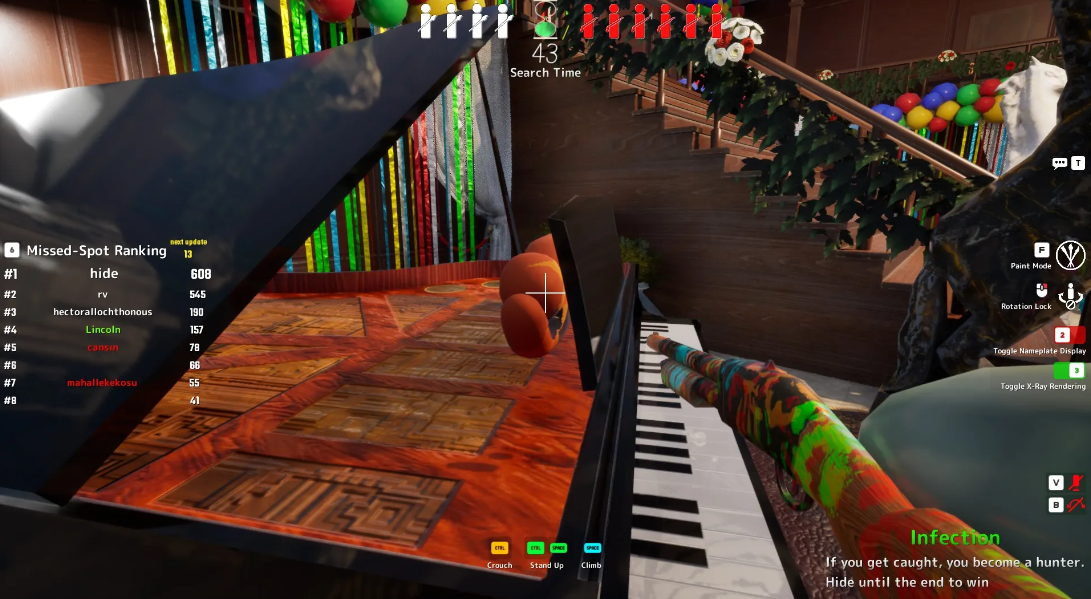
On the other hand, behind all this creative freedom and the joy of fooling around lies the harsh reality of indie development. Meccha Chameleon is being developed by just two Japanese enthusiasts—and this is undoubtedly a heroic endeavor. However, budget constraints make themselves felt at every turn. Collisions with objects, desynchronized player positions, and sudden crashes are all common. Patches intended to fix problems sometimes roll back changes, because the new update breaks more than it fixes. The game costs only $6, but even for that price, some aspects are jaw-dropping.
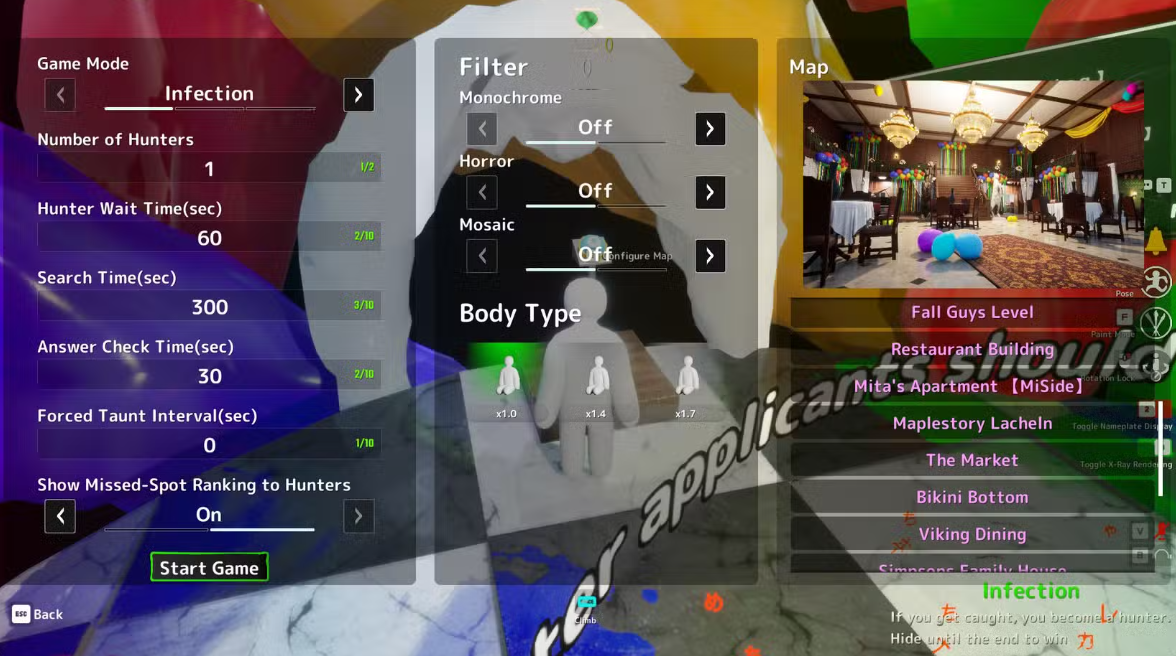
Take, for example, the eyedropper—the game’s primary camouflage tool. There are two in the game, but the one that actually works properly is hidden behind a nondescript interface. And even it doesn’t always accurately detect surface reflectivity: instead of a matte wall, you might get a glare that completely gives you away. The interface is endearingly primitive at best; at worst, it feels unfinished. And just getting into a match requires patience and perhaps a quick prayer: there’s no quick search, and the server list doesn’t display ping. You choose a lobby at random, hoping the host isn’t from the other side of the world (spoiler: they almost always are), and assess whether the name contains offensive words—which, by the way, is the only indicator of quality.
Moderation Issues and Toxic Players in the Lobby
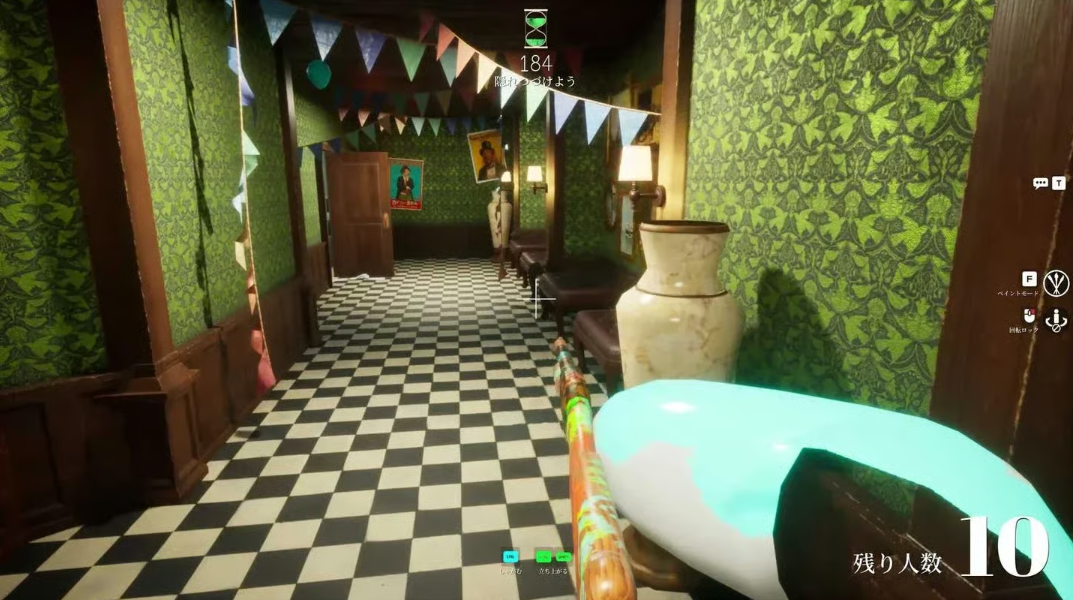
Moderation is a whole other story. It’s practically nonexistent. You can find some buttons in the menu that, based on their placement, should serve as a report form, but they’re empty and unlabeled. So, when a player shows up in the lobby who thinks it’s funny to spray-paint themselves with hate symbols, your options are limited.
You can ask the host to kick the offender. Or, as my personal experience shows, you can drive them crazy by hiding so well that they simply leave, unable to find you among the holiday lights. It’s a peculiar form of justice, you know. And yet, despite all these rough edges, Meccha Chameleon remains a unique experience. The competitive environment, coupled with visual creativity, evokes that carefree joy many of us have lost in endless shooters. Even if you’ve never drawn dragons in your school notebooks, the game provides a simple and accessible entry into the world of artistic problem solving. Art is all about seeing the unobvious, and Meccha Chameleon demonstrates how little it takes to achieve that.
Score: 82. Verdict: Despite its indie-like underdevelopment, this competitive camouflage is worth your time if you’re willing to forgive minor sins for the sheer joy.