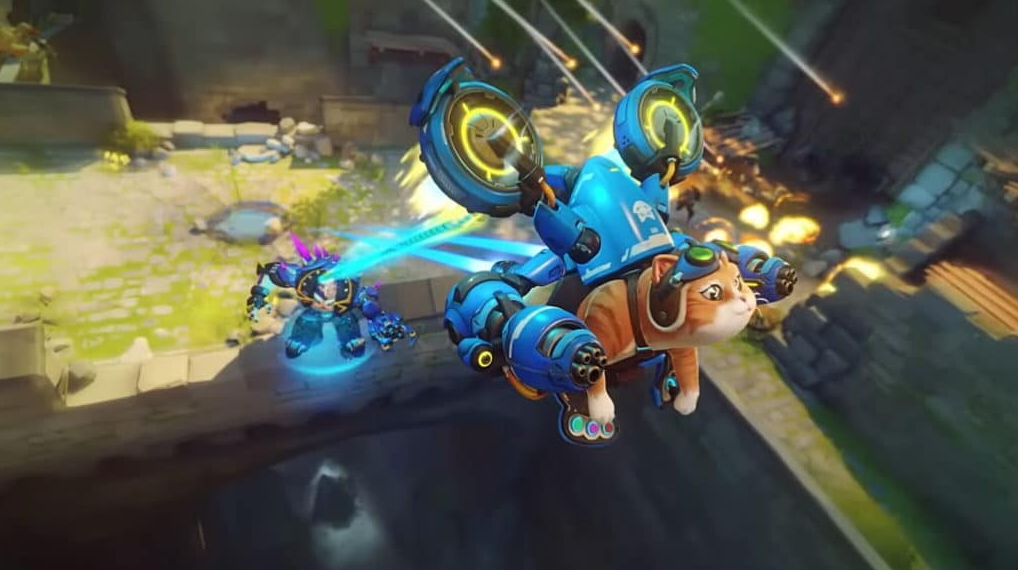
Overwatch officially launched season 1, and with it Blizzard pulled off a massive rebranding, finally burying the number 2 in the title. The game returns to its roots, but with an updated vector: now the priority is on the plot and the Stakhanov pace of character release. The main star of the patch and the entire Internet was Jetpack Cat, a fluffy support that fans have been waiting for for years.
Table of Contents
Fika Story and the Arrival of Jetpack Cat in the Hero Roster
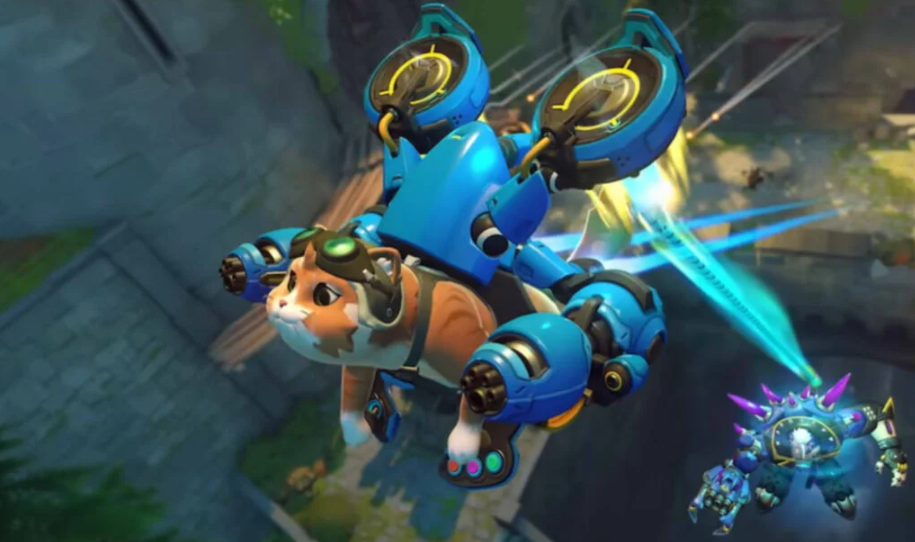
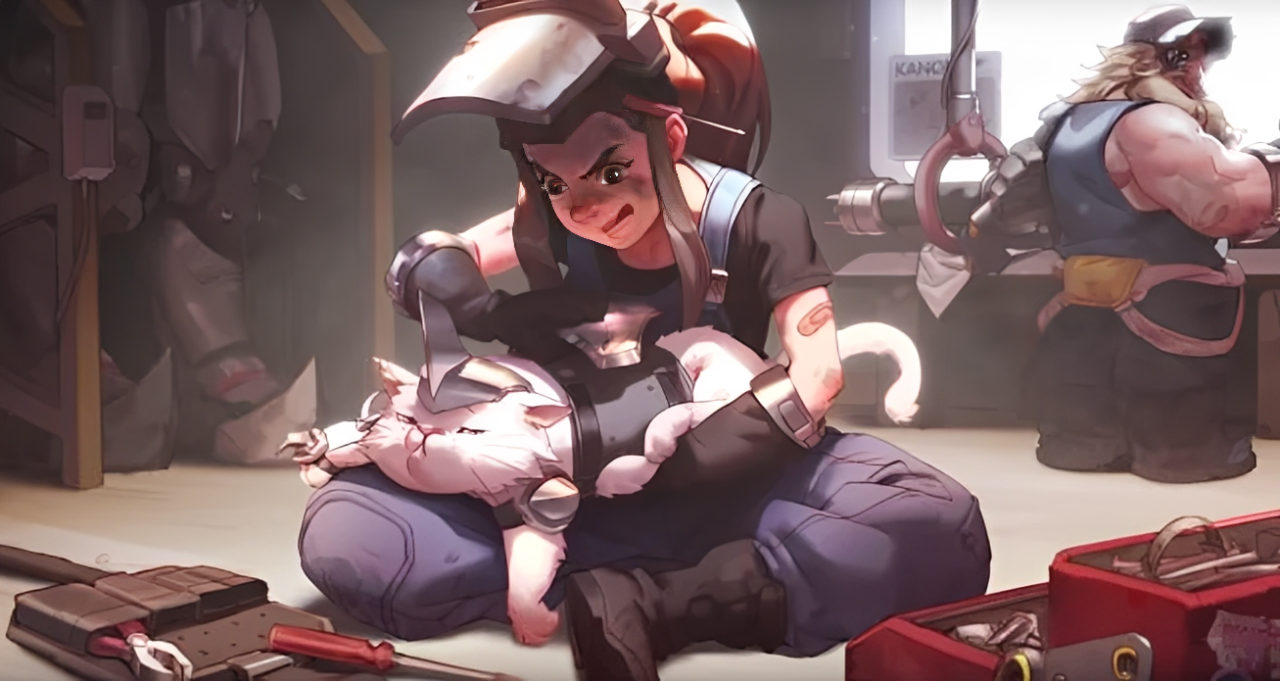
The plot background of the hero’s appearance is as lamp-like as possible. According to Laura, Brigitte found a stray cat on Watchpoint: Gibraltar and named it Fika. But just a pet was not enough for the engineer. Brigitte has designed a high-tech jetpack for her, turning her into a full-fledged combat comrade. Fika is now a Jetpack Cat, a support hero for the “Tactician” subclass, capable of not only patching holes in the health of allies, but also creating controlled chaos on the battlefield.
The launch of the 1st season of Overwatch was accompanied by the introduction of five new faces at once, but it was the cat with the satchel that caused the most powerful resonance in the community. While some are arguing about balance, others are mastering the unique mechanics of binding. Admittedly, Blizzard took a risk by adding such a bizarre character, but the result was worth it. Jetpack Cat is not just a meme concept, but a complex unit that can fly, drag players across the map and deliver solid damage.
Jetpack Cat Ability Guide and Biotic Paws Mechanics
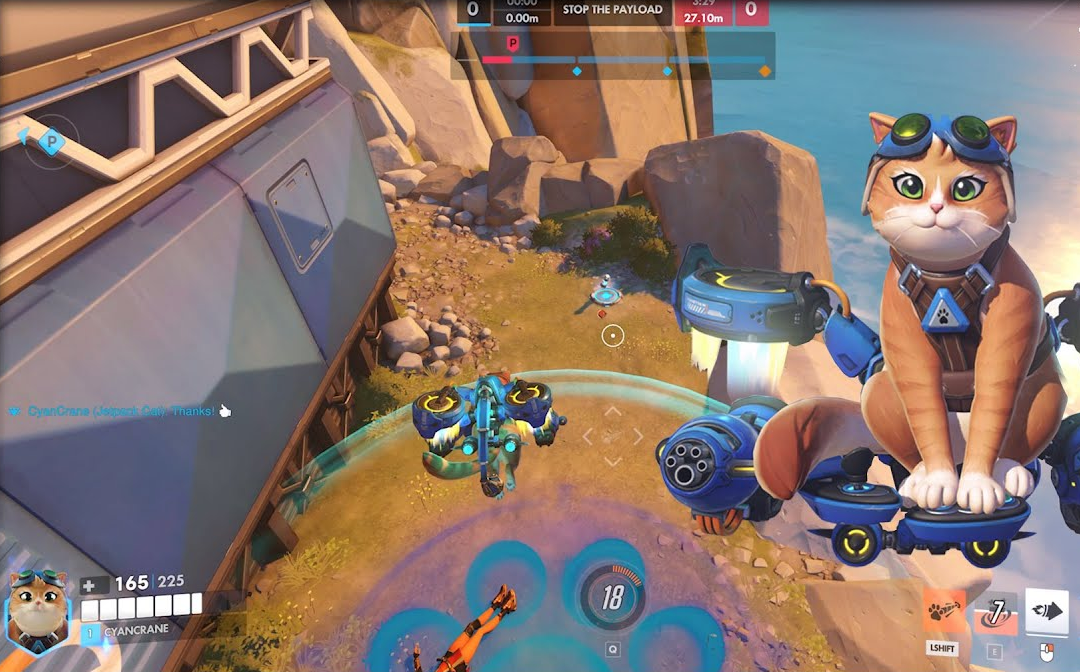
The functionality of the Fiki satchel is impressive. She uses dual—purpose projectiles: some heal their own, others significantly sting their opponents. However, the main trick lies in mobility and the ability to influence the positioning of both enemies and teammates. Before evaluating the viability of Jetpack Cat in the current meta, you need to carefully study its buttons. The developers clearly aimed at those who like active and aggressive gameplay in a support position.
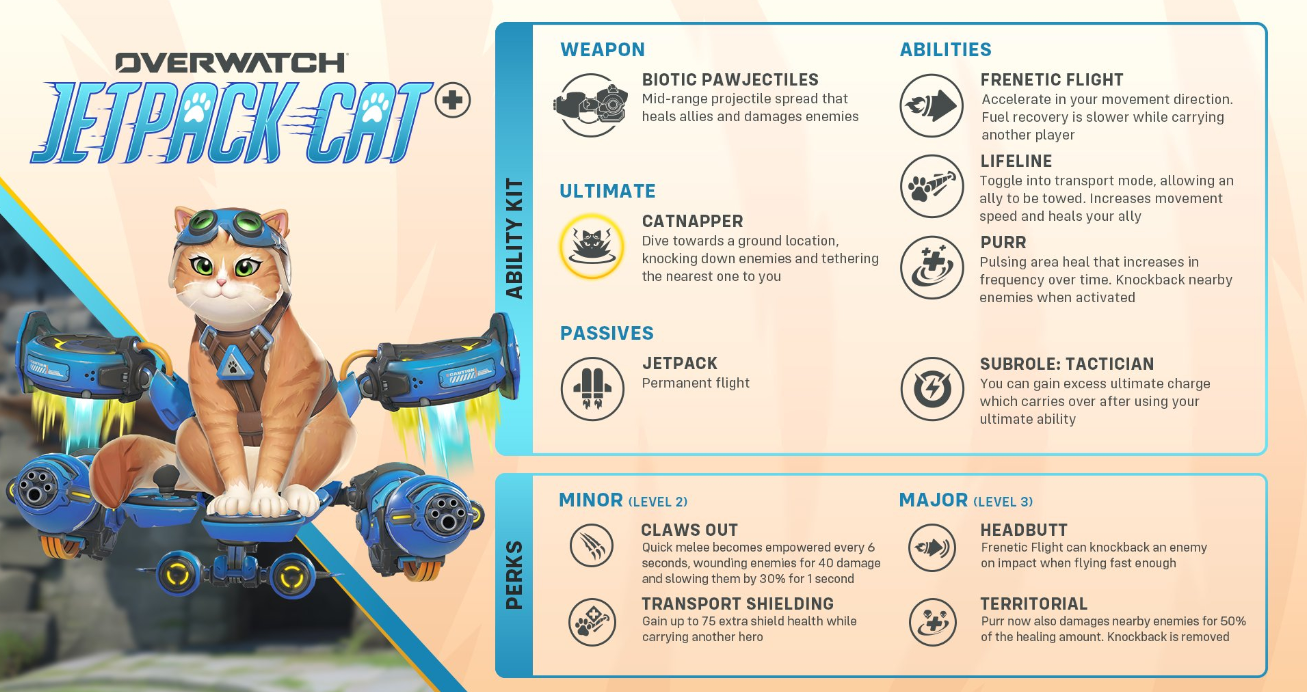
The Fiki arsenal is an explosive mix of classic hilarity and aggressive control. The main thing to understand is that the character doesn’t just “fly and heal”, but literally changes the geometry of the battle. The cat’s main weapon, Biotic Paws, fires 4.4 volleys per second with a range of up to 40 meters. At the same time, each salvo is equally effective both for supporting allies and for pressing opponents (24 units of damage or healing). By the way, the spread increases depending on the distance, so it becomes much more dangerous near the Fika.
Character Specs — Abilities
Weapon and mobility characteristics of the Fiki support
Fika is the only hero whose flight is conditioned by the passive Jetpack, which gives her a permanent advantage in the air. Moreover, as a representative of the “Tactician” subclass, she receives an ultimate bonus charge, which persists even after activating the “Cat Thief”. This is a serious bid to dominate the pace of skill set. (Yes, Blizzard obviously didn’t skimp on buffs for the new favorite).
Do not forget about the additional effects. For example, the Claws Out skill turns a normal quick elbow (or paw) strike into a venomous attack every 6 seconds.: 40 points of instant damage plus 30 points of damage for a second and slow down. If you actively use towing, the “Transportation” bonus will give you up to 75 shield units.
For fans of an aggressive style of play, there are “basic” bonuses. “Headbutt” allows you to turn an ordinary flight into a battering ram, knocking back enemies. And if you replace the discarding of the “Purr” ability with the “Territorial Damage” bonus, the cat will begin to burn out the space around itself, converting 50% of its healing volume into pure damage to nearby targets. Questionable solution for pure support? Maybe. But for the aggressive gameplay of 2026, it’s just right.
Why Jetpack Cat Became a Sensation in the Blizzard Community
Fika, better known as Jetpack Cat, completely changed the Overwatch meta on May 1, 2026 — a cat with a jetpack became the third hero beast in the Blizzard roster after Winston and Hammond. The character’s rapid popularity is due not only to its cute design, but also to its extremely annoying ability to hurl allies and enemies across the map. While artists are churning out fanarts, players in competitive mode are trying to figure out how to deal with it. For the rebranding of the franchise, this case has become perhaps the most high-profile in recent years.
Reasons for High Win Rate and Jetpack Cat Bans in Ranked Play
Statistics are a stubborn thing, and right now they don’t speak in favor of seal lovers. The frequency of Jetpack Cat bans exceeded the 50% mark in all regions and on all ranks, including consoles and PCs. Players simply don’t want to see this character in their matches. The reason is simple: the mechanics of moving Fics break the usual positioning. It seems that Blizzard has created a support team that is simply unpleasant to play against, which is confirmed by the abnormal win rate and the associated percentage of locks in the ranking.
Best Synergies with Fika: Boosting DVa Bastion and Cassidy
Jetpack Cat’s main strength is in vertical gameplay. An experienced Fika mainer is able to throw an allied D.Va or Cassidy to positions they never dreamed of before. Bastion, broadcasting from an unexpected high ground thanks to the cat’s pull, turns into an unstoppable turret. The problem is that regular players rarely look at the sky often enough. As a result, Jetpack Cat creates chaos, which is extremely difficult to cope with without clear coordination in voice chat.
Jetpack Cat Role in the 2026 Meta and Future of Support Heroes
Many skeptics initially perceived Jetpack Cat as an ordinary gimmick to attract an older audience, but Blizzard is no stranger to making full-fledged fighters out of animals. Think of the space gorilla or the hamster in the steel ball — they have long been the base of Overwatch. Fika is following in their footsteps. This is not just a “meme cat,” but a deeply researched support character with unique tools. Behind the facade of frivolity lies a character capable of delivering solid damage and effective heal if the timings of abilities are observed.
To be honest, playing for her in quick play is probably the best Overwatch experience in the last few years. Even if someone considers its appearance to be a cheap trick to return online, it is foolish to deny the functional value of the Feature. The heroine has a huge potential, and if Blizzard tweaks the ban numbers a little, she will stay in the support S-dash for a long time. At the moment, the balance between mobility and usefulness for the team is almost perfect, which makes Jetpack Cat an important link in the updated ecosystem of the game.
Who’s cooler: Jetpack Cat compared to other support services
It is not necessary to figure out what the Fiction drags and where it merges positions through dry shooting lists. It is important to understand the functionality: what exactly the hero gives to the team and under what introductory conditions he turns into an imba. In Overwatch, the context decides everything.
Hero Comparison Stats
Jetpack Cat vs Lucio: Battle of tactics for pace
Both heroes belong to the “Tactics” subclass and, characteristically, accumulate ulta faster than most of their colleagues. This is their common base. However, Lucio is about horizontal gameplay. He drives teammates across the ground, and his Sound Barrier serves as a shield before a head-on collision. Fika plays vertically. She literally reshapes the geometry of the location, throwing allies into positions where the enemy hitscan simply does not have time to turn the scope.
There is a nuance here. On maps with long straight corridors like Esperanza or Blizzard World, the good old Lucio looks objectively more solid. He has no vulnerability to aerial shooters, and speed boost does not require personal contact. But as soon as it comes to multi—level zones and open space, the Jetpack Cat takes its toll.
Jetpack Cat vs Mercy: why “Angel” is inferior in pace
Here we see a complete juxtaposition of mechanics. Mercy is a classic “pocket” support, whose potential is 90% dependent on the effectiveness of DPS-care. In the realities of 2026, the passive “Medic” allows Kiriko and Lifesaver to survive by converting heal into self-medication. Mercy looks pale against this background: the lack of sane self-defense and solo-targeted heal make her an easy target at a high-tempo game against the same Diva.
Yes, resurrection can still turn the round, but it’s too situational a bonus. Jetpack Cat is proactive — it creates conditions in which a teammate simply does not reach a critical state. Fika delivers 50 hp/s in area and provides instant evacuation from the high ground. If you look at the pick rate on PC-Americas, the numbers are funny: Mercy has 17.7%, while Fiki has only 4.4%. But don’t jump to conclusions — this difference is caused solely by bans. According to Mobalytics, Fika is blocked in every second match, whereas Mercy is almost always in the pool.
Jetpack Cat vs Kiriko: Who’s the boss in S-dash
This is the key clinch of the current meta. Kiriko is a medic with the makings of a duelist, and Jetpack Cat is a mobile tactician who breaks the usual positioning. Kiriko is irreplaceable as a point response: her Protection Suzu is the perfect way to “kill” a Gravitational Flux or Dragon Strike. Fika is needed to destroy the enemy’s plan even before he presses the ultimate button.
A curious fact from ExitLag: in the first season, Lúcio + Kiriko are considered to be the ideal duo, rather than bundles with a cat. Without bans, Kiriko holds the slot due to stable control, and Jetpack Cat is taken by the second number to create chaos. But as soon as Kiriko gets banned, Fika automatically becomes a priority ultimator.
The bottom line is simple: Jetpack Cat is not a replacement for the usual stuff, but a unique tool. Pick it up when the team needs vertical mobility and there is a normal connection in the voice. For a simple “pouring” of hp allies into the line, it is better to choose someone simpler.