French presidential candidate Jean-Luc Mélenchon defended physical media, and simultaneously exposed something players have been discussing for a long time. The reason for this was two decisions: Rockstar is selling GTA 6 in boxes without a disc, and Sony will stop releasing physical games for PlayStation starting in January 2028. Mélenchon stated that players pay but receive nothing in ownership. They can’t sell it, they can’t give it away, they can’t even be sure the game will stay in their library forever. He proposed launching a legislative process in 2027 to recognize video games as cultural property, like books and films.
Table of Contents
What’s wrong with “buying” a digital game? The difference between a disc and a code
At first glance, there’s no difference: pay—play. But legally, these are fundamentally different things. With a disc, you own the media. You can resell it, give it to a friend, or put it on a shelf. With a digital version, you buy a license to use it. Essentially, a perpetual lease. The publisher or platform can revoke it at any time. Technically, they can. In practice, cases are rare, but there have been precedents. And most importantly: you can’t manage your purchase as you normally would.
Physical Disc vs. Digital Version
In France, this issue has already reached court. In October 2024, the Court of Cassation ruled that a digital game purchased on Steam cannot be resold, unlike a disc. In other words, the law has confirmed that a digital copy is not a product, but a service. Players pay for access, not for ownership. This is precisely the inequality Mélenchon wants to correct. “Tomorrow you’ll pay, but you’ll never have anything”: what Mélenchon said
A quote that went viral on social media: “Tomorrow you’ll pay, but you’ll never have anything. Neither to lend, nor to resell, nor to guarantee that what you bought will stay with you.” Translated: tomorrow you’ll pay, but you’ll never have anything. Neither to lend, nor to resell, nor to guarantee that what you bought will stay with you.
Mélenchon is no newcomer to politics. In 2022, he won almost 22% of the vote in the first round of the presidential election. And he’s not just expressing outrage—he’s proposing a concrete plan. In 2027, before the next elections, he’ll launch legislation to protect players’ rights. Video games, he believes, should be given the same status as books and films in France—a “cultural exception.” This means special rules and protection from market arbitrariness.
Critics, however, are skeptical. The French law against American and Japanese corporations is attractive, but practically impossible to implement. The real fight will be at the EU level. Especially since the European Commission is already working on the Digital Fairness Act.
Why Rockstar and Sony are removing discs: money, leaks, and trends
Rockstar has at least two reasons for this decision. The first is to prevent leaks. If there are no discs to get their hands on ahead of time, there are no plot leaks a month before release. The second is economics. Digital distribution is cheaper, and the secondary market doesn’t bring in a penny for the publisher. Removing discs means eliminating resale.
Sony is going even further: starting in 2028, the company will stop releasing physical media altogether. Officially, it’s due to demand. Digital sales on PS4 and PS5 have already reached 78%. Shareholders approved the idea: Sony shares rose by almost a dollar after the announcement. Players are outraged—the market votes with its wallets.
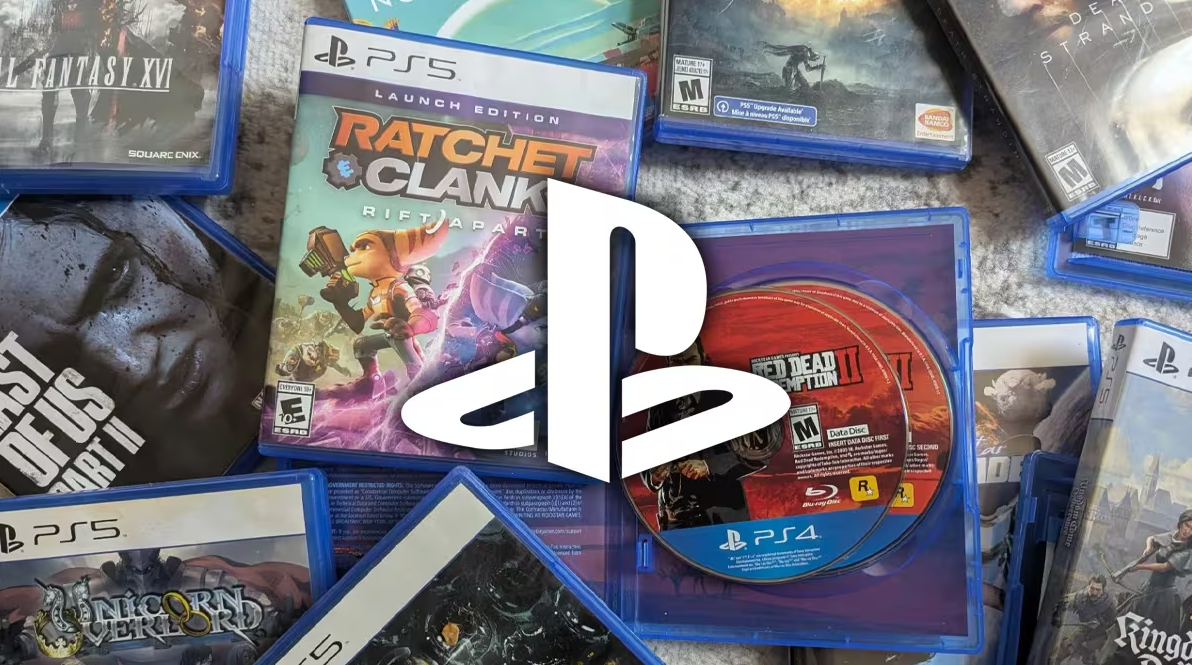
However, not all retailers agree. The Canadian chain Video Games Plus, which has been in business for almost 40 years, has refused to sell GTA 6 in a box without a disc. Loot Box Gaming has done the same. For them, it’s a matter of principle: you can’t call a box a physical edition if it only contains a code. Large retailers like GameStop and Amazon haven’t joined the boycott.
What the Player Loses: A Comparison of Ownership Rights
The difference isn’t in convenience—it’s in rights. Here’s what you lose when you buy a digital copy instead of a disc:
-
Resale rights. With a disc, you can return the game to a store or sell it on the secondary market and get a partial refund. With a digital version, you can’t.
-
Transfer rights. You can give a disc to a friend for the weekend. You can’t give a digital license.
-
Preservation rights. You’ll keep the disc even if the servers are down or the store closes. A digital library is linked to your account. Lose access—you lose your games.
-
Inheritance rights. A digital library can’t bequeath. A physical collection can.
By the way, this issue is also being raised in Russia. Anton Gorelkin, First Deputy Chairman of the State Duma Committee on Information Policy, stated that discrimination against digital buyers is unfair and proposed equal rights. While these are just words for now, the fact itself suggests that the issue is not limited to France.
“Code in a Box” – a New Reality That’s Already Here
GTA 6 will be released on November 19, 2026, on PS5 and Xbox Series X|S. The Standard Edition is $80, the Ultimate Edition is $100. Physical boxes will go on sale on November 12, a week before release. Inside is an activation code. Players will be able to download the game in advance and start playing at midnight.
Convenient? Yes. Fast? Yes. But this is no longer a physical purchase. It is a digital purchase in cardboard packaging.
In a world where PlayStation goes fully digital in 2028 and GTA 6 sets the tone for the entire industry, the question “who owns the game?” ceases to be technical. It becomes political, legal, and cultural. Mélenchon is right about one thing: players do pay. And they do have something to lose.