The game is over a decade old, yet conversations about its graphics never seem to die down. Only this time, it’s not about mods or ENB presets — a YouTuber picked up something far more powerful: NVIDIA DLSS 5 and a neural network that literally redraws each frame on top of the original. The result is stunning, controversial, and deeply revealing.
Table of Contents
What Is NVIDIA DLSS 5 and How Is It Different from Previous Versions
Before looking at the results, it’s worth understanding what we’re actually dealing with. DLSS 5 is not just another upscaler. The technology was unveiled at GTC 2026, where Jensen Huang called it “the GPT moment for computer graphics” — which says everything about the ambitions behind it.
Every previous version of DLSS had one core goal: boost FPS without losing too much visual quality. The fifth iteration is looking in a completely different direction.
| Feature | DLSS 4 and Earlier | DLSS 5 |
|---|---|---|
| Primary Goal | Performance boost | Photorealism and image quality |
| How It Works | Upscaling + frame generation | Neural rendering of the scene |
| Lighting | Standard | AI reconstructs physically accurate light |
| Material Detail | Basic | Skin, hair, fabric — separate AI models |
| Full Release Date | Already available | Fall 2026 |
The neural network inside DLSS 5 receives basic data from the game engine — object colors, motion vectors — and then takes over from there: reconstructing lighting, simulating subsurface scattering on skin, adding fabric sheen. Things that were previously only possible in offline cinematic rendering are now being pushed into real time.
What the YouTuber Did with GTA V
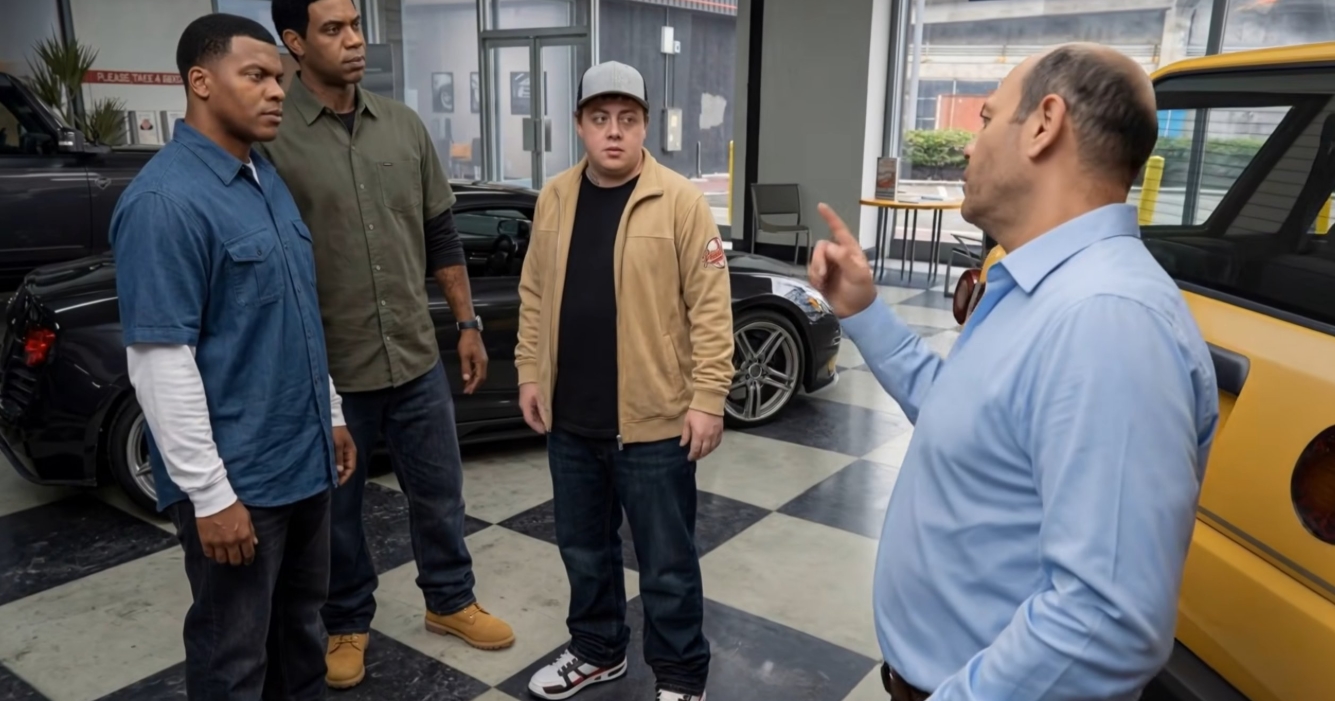
For the experiment, a YouTuber chose the second story mission in GTA V — “Franklin and Lamar.” The choice makes sense: the mission features plenty of close-up character shots, dynamic street scenes across Los Santos, and transitions between wildly different lighting conditions — from bright daylight to deep bridge shadows. It’s a solid stress test for any graphics technology.
The footage was processed using artificial intelligence — not a native DLSS 5 integration into the GTA V engine (which obviously doesn’t exist), but AI-based post-processing applied on top of recorded gameplay. The result is a video that gives a glimpse of what Los Santos could look like in the future.
The Results: Realism with a Side of Glitch
The outcome is genuinely mixed — and that’s precisely what makes it interesting.
What works well:
-
Franklin, Lamar, and other characters look significantly more realistic — skin has real depth, and facial features remain recognizable
-
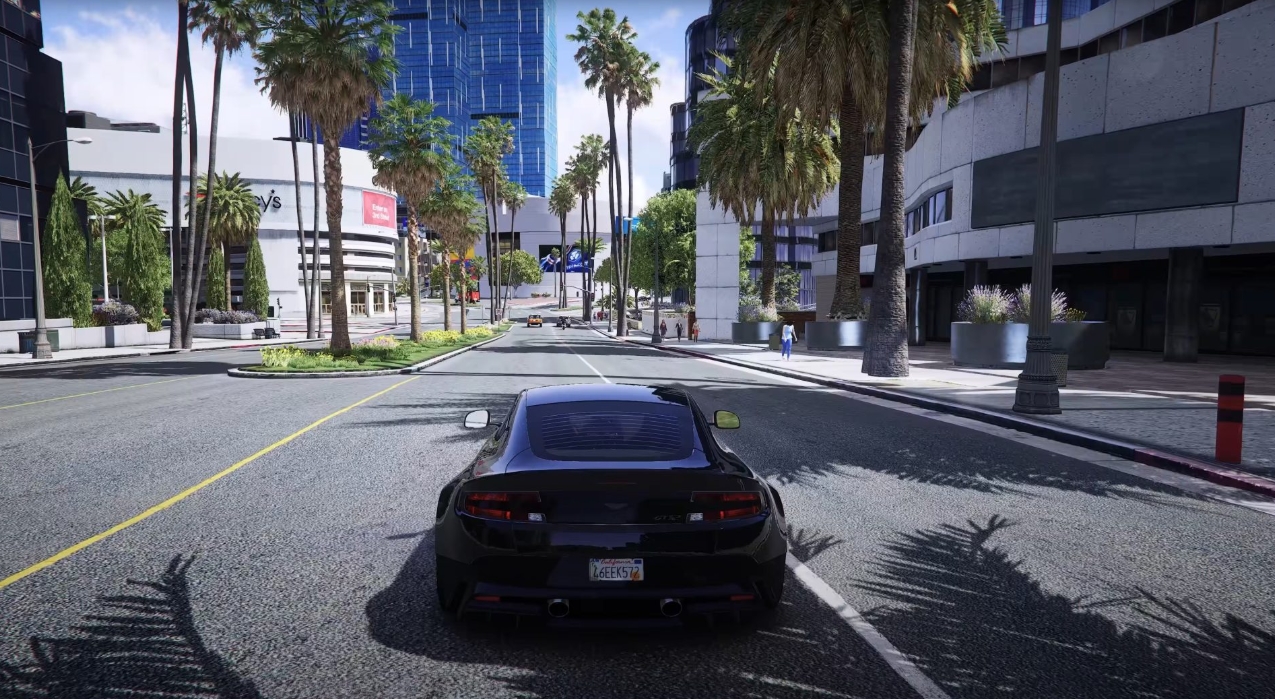
Daytime street lighting looks convincing and noticeably closer to a cinematic standard
-
Clothing and environment textures occasionally look like they belong in a next-gen title
Where the AI breaks down:
-
The background glitches periodically — the rendering style of objects can shift within seconds mid-shot
-
Lighting is inconsistent: one moment it looks cinematic, the next it feels like the engine toggled to a different renderer
-
Lamar comes out looking distinctly off in certain frames — the neural network clearly doesn’t always recognize that it’s dealing with a known character
Viewers in the comments picked up on it immediately. One viewer put it plainly: some character models look photorealistic, others are barely distinguishable from the original — and Lamar is the most obvious example. It’s an honest take, and it accurately captures where the technology stands right now.
Why the Artifacts Are a Feature of the Moment, Not a Fatal Flaw
The glitches in the video aren’t a reason to write off DLSS 5. They’re a predictable result of the neural network operating on top of an already-rendered image rather than being embedded inside the engine itself.
When DLSS 5 is integrated natively, the engine will feed the AI complete scene data in real time: geometry, materials, light sources, depth information. At that point, the network won’t be guessing what’s in the frame — it will know exactly.
That’s why comparing this post-processed video to what NVIDIA is promising at launch isn’t entirely fair. But that’s also exactly why these experiments are valuable: they show the raw potential of the technology, stripped of any marketing polish.
DLSS 5 and GTA VI: The Most Obvious Question
One viewer raised the question that was hanging in the air the whole time: will developers be able to use this level of AI-powered graphics in upcoming games? Specifically — in GTA VI?
There’s no answer yet. Rockstar has not announced DLSS 5 support, and the technology itself doesn’t launch until fall 2026. But the context is telling: NVIDIA has already secured backing from major publishers, and GTA VI is arriving right in the window when neural rendering will start appearing in actual shipped titles.
If GTA VI receives native DLSS 5 support — rather than bolted-on post-processing — the gap between this YouTuber’s video and the real in-game image could be enormous. In the best possible way.
GTA V with DLSS 5 — Key Takeaways
-
A YouTuber applied AI post-processing to GTA V gameplay, simulating what NVIDIA DLSS 5 could look like in practice
-
The “Franklin and Lamar” mission was chosen for its close-up character shots and varied lighting conditions
-
Result: more realistic faces and deeper textures — alongside unstable backgrounds and visual glitches
-
DLSS 5 uses neural rendering, not just upscaling — a fundamentally different approach to graphics
-
The official release of the technology is scheduled for fall 2026
-
Native engine integration will produce far better results than video post-processing
What This Means for Players
This video isn’t a product demo. It’s a provocation — it shows where game graphics are heading while honestly exposing how unstable the technology still is outside of controlled conditions.
DLSS 5 with neural rendering represents a paradigm shift. Not upscaling, but a full reimagining of what a frame looks like. And the debates around this approach — about whether the artistic vision of game developers gets lost when a neural network starts “improving” things on its own terms — aren’t going away anytime soon.
Fall 2026 will bring the technology into real games. That’s when we’ll find out whether this becomes a revolution or just an expensive filter with artifacts. For now, we watch the experiments and draw our own conclusions.