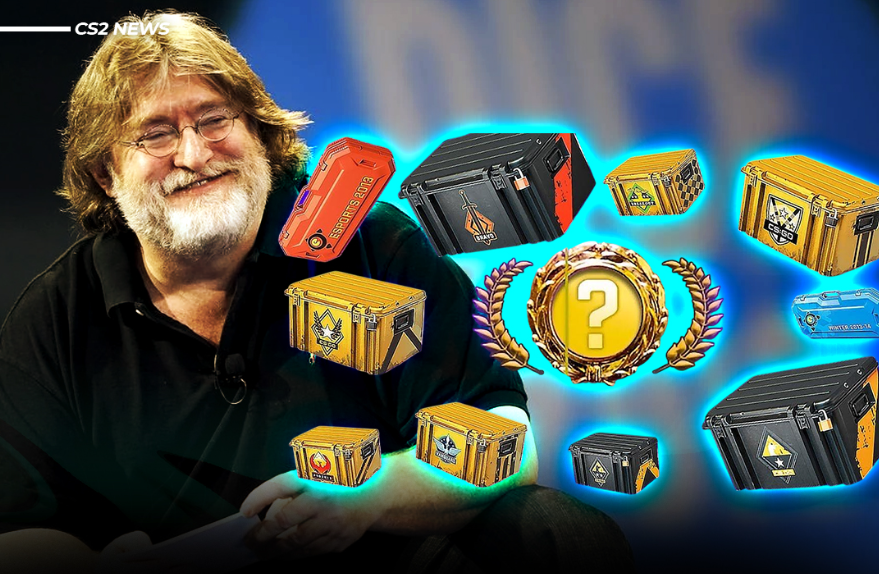
Valve is back in court — lawyers from Hagens Berman have launched a massive offensive. This time, a second lawsuit was filed against the creators of Steam, accusing the company of organizing illegal gambling through loot boxes. Not only users from Washington and Texas were involved in the case, but they also used “heavy artillery” in the form of mentioning minors. The amount of claims has already exceeded $5 million, and the outcome of the process is being closely monitored by lawyers from Roblox and Epic Games.
Table of Contents
The second lawsuit against Valve: who filed it and what CS2 is being sued for
The new lawsuit filed in Washington State practically duplicates the claims of the previous proceedings. The focus is on Ivan Galas and Robert Brogan. Over the past three years, both plaintiffs have been actively spending money on keys in Counter-Strike: Global Offensive and Counter-Strike 2. The lawyers’ main argument is simple and hits the nail on the head: opening a case for $2.49 is pure slot machine psychology. Players do not pay for “junk” skins, which fall out in 99% of cases, but for a ghostly chance to knock out a rare and expensive knife or gloves.
By the way, this time Hagens Berman added an important detail to the complaint. One of the plaintiffs, Robert Brogan, bought loot boxes not only for himself, but also for his “minor son.” This is a wake—up call for Valve – the use of children in such cases always increases pressure from regulators and the public. Lawyers are already openly calling on parents whose children spent money in Counter-Strike 2, Dota 2 or Team Fortress 2 to join the class action.
Such activity by law firms is far from an accidental outbreak, but rather a natural ending to the ten—year history of Valve’s confrontation with regulators around the world.
The history of Valve Loot boxes: from the first CS case:GO to the courts of 2026
The current litigation did not arise out of nowhere — Gabe Newell has spent a decade of positional battles with officials, where each new skirmish costs the company more and more.
Arms Deal 2013: How Valve Launched a Chance Selling Machine
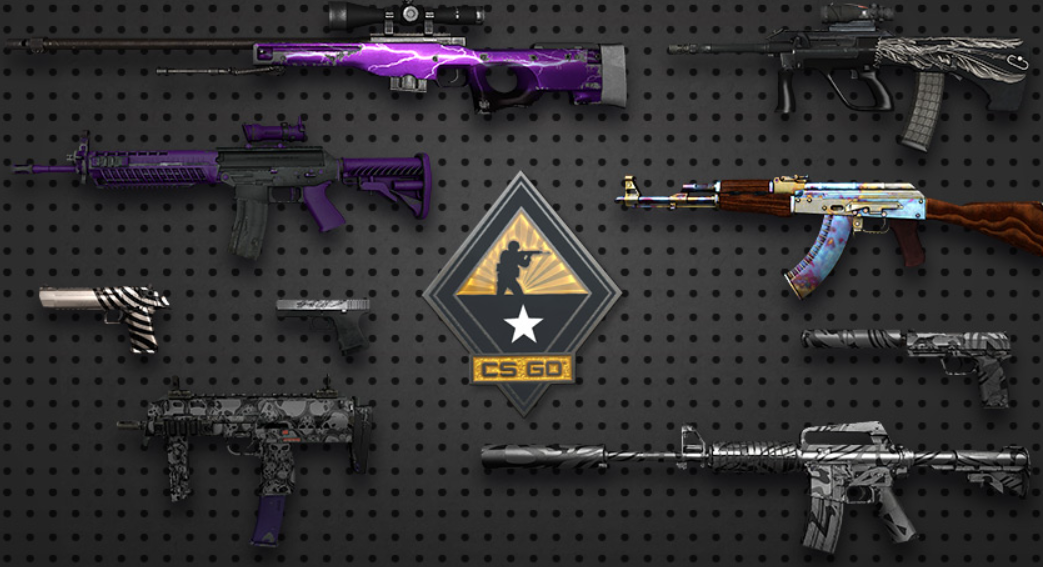
It all started on August 14, 2013, when CS:The Arms Deal update has arrived. It was then that the skin trade was legalized in the shooter and the same cases were introduced. The mechanics were built elegantly: the box itself fell for free after the match, fueling excitement, but the lock on it required a paid key for $ 2.49. Valve created an ideal consumption cycle — a free drop provokes curiosity, and curiosity is converted into a direct purchase. Tellingly, the chances of a “knife” falling out remained a mystery until 2017. Valve was forced to disclose the probabilities only by Chinese laws — for the sake of launching CS:GO in China had to go for transparency, while Western fans have been playing roulette blindly for years.
Scandal of 2016: Third-party casinos and the first class action lawsuits
By 2016, the situation had escalated to the limit — then Forbes openly accused Valve of turning gamers into full-fledged ludomaniacs. The company was hit by lightning from the Washington State Gambling Commission, and at the same time, the “gray” economy of third-party roulette flourished. These casino sites accepted skins as bets and paid out winnings with them, existing in a legal vacuum. As a result, Valve had to send ultimatums to 20 large resources, demanding their closure. At the same time, the first class action lawsuit from the parents happened — however, at that time the court sided with the corporation. The logic was simple: in 2016, loot boxes in the United States were not yet considered gambling, and the plaintiffs themselves did not even use Steam personally.
Belgium and the Netherlands banned Valve loot boxes: the first European precedent

Only European regulators were able to really bend the giant in 2018. The Belgian Gambling Commission was the first to recognize cases in CS:GO violated the law and threatened Valve with fines of up to € 800 thousand. The Netherlands went even further: after checking ten top games, the local government recognized the loot boxes as gambling in four of them. Valve didn’t have time to maneuver — the company simply blocked the possibility of opening cases for players from these countries. Instead of the usual animation, users saw a laconic inscription: “It is impossible to open in your country.” This precedent has become living proof that jurisdictional pressure is a working thing.
October 2019: Valve banned the resale of keys and closed gray schemes
In October 2019, Valve dealt another blow to the “gray” schemes by banning the resale of loot box keys on the Steam trading platform. From that moment on, the purchased key was firmly linked to the account. Officially, this was called the fight against fraudsters, but insiders understood that the keys had turned into an anonymous currency for gambling sites. The scheme “I bought the keys — I leaked them to roulette — I transferred them to real money through skins” worked flawlessly. After being blocked, this convenient financial route took a long time to live.
Timeline of Key Events
It is important to understand that the ice has already broken in Europe. Recently, an Austrian player was able to sue Valve for more than $15,000 spent on CS cases:The GO court declared the mechanics illegal. What the American courts dismissed as “insufficiently substantiated” in the period from 2016 to 2022 is already turning into working court decisions in the Old World. And in 2026, lawyers from Hagens Berman intend to use all this accumulated arsenal of precedents to put the squeeze on Valve in their own field.
How Valve defends itself from a lawsuit: the company’s position and arguments in court
Valve itself has so far refrained from direct comments on the new case, but its position is clear from the responses to New York Attorney General Letitia James. Gabe Newell’s company stands its ground: loot boxes are not casinos, but collectibles, like Pokémon cards. They say that you always get some kind of product for your money, which means that there is no gambling.
Moreover, Kojima Productions might envy such secrecy, but Valve prefers to act in numbers. In an official statement on Steam, the company emphasized that it is waging a merciless war with third-party roulette sites. To date, more than a million accounts have been blocked, implicated in fraud and gray schemes with in-game items.
Why Valve is more vulnerable than Fortnite and Roblox: Legal Risks in Washington State

The process is closely monitored by Adam Starr, general Counsel at Do Big Studios (a major developer on the Roblox platform). In his opinion, Valve is in a much more vulnerable position than Epic Games. There are several reasons:
-
Geography: Valve is based in Washington State, where the definition of gambling is one of the broadest and strictest in the United States. Local authorities already have experience in “dispossessing” online casinos for tens of millions of dollars.
-
Direct transactions: In CS2, keys are purchased directly for US dollars, while in Fortnite and Roblox, intermediate currencies are used — V-Bucks and Robux. This creates a legal layer.
-
Secondary Market: Valve receives a percentage of each skin sale on the Steam marketplace. In Roblox and Fortnite, trading between players is officially prohibited, which theoretically puts them out of harm’s way.
However, Roblox doesn’t sleep well either. The company is already a defendant in a case involving assistance to third-party gambling sites. And although CEO David Baszuki sees nothing wrong with the gambling elements inside the platform, California judges have already allowed the parents to continue reviewing claims of negligence. It looks like 2026 will be a crucial year for the entire loot box industry — the rules of the game may change forever.